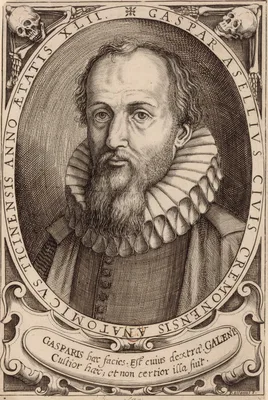
1627 ASELLI, Gaspare (1581 – 1626)
De lactibus sive lacteis venis.
Records the discovery of the lacteal vessels. While performing vivisection on a dog that had recently fed, Aselli noticed a network of vessels in the mesentery and along the peritoneal surface of the intestine. The ve…
GMN 1094 · https://historyofmedicine.com/id/916
1731 CLIFTON, Francis ( – 1836)
Tabular observations recommended as the plainest and surest way of practising and improving physick. In a letter to a friend.
Clifton argued that physicians should base their judgments about the effects of treatments on a sufficient number of their own observations, or trusted observations by other physicians, rather than on the correlation …
GMN 9461 · https://historyofmedicine.com/id/11644
1732 CLIFTON, Francis ( – 1836)
The state of physick, ancient and modern, briefly considered: with a plan for the improvement of it.
Instead of assessing the efficacy of therapies by their correlation with theories, Clifton argued that physicians should base their judgments about the effects of treatments on a sufficient number of their own observa…
GMN 9460 · https://historyofmedicine.com/id/11643
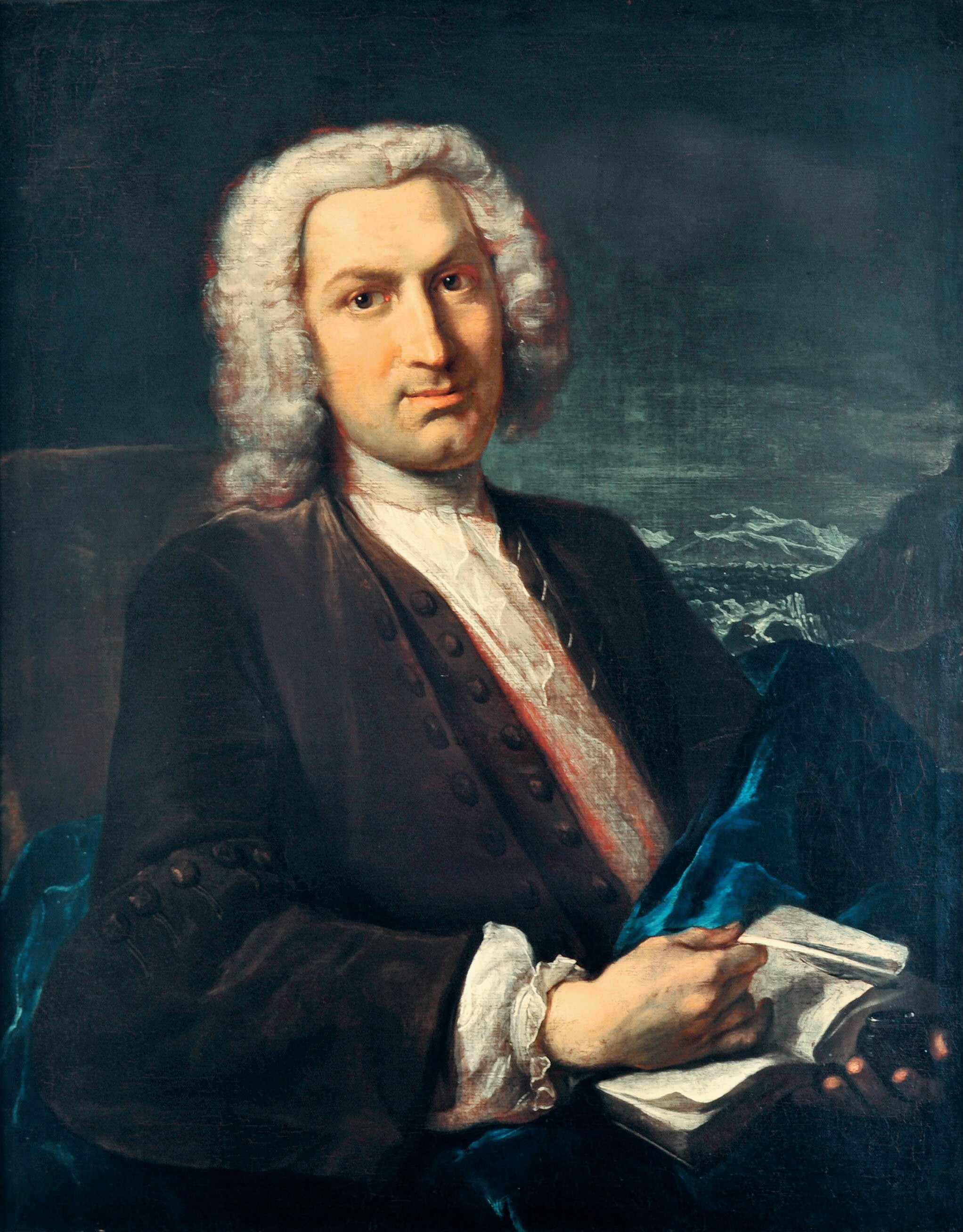
1756 HALLER, Albrecht von (1708 – 1777)
Deux mémoires sur le mouvement du sang, et sur les effets de la saignée, fondés sur des experiences faites sur des animaux.
In these memoirs Haller described the results of 235 vivisections. Haller has been called "the founder of modern haemodynamics." "The myogenic theory of the heartbeat can be traced to Haller, who concluded on the basi…
GMN 11607 · https://historyofmedicine.com/id/13807
1760 STÖRCK, Anton von (1731 – 1803)
An essay on the medicinal nature of hemlock.
"Störck is remembered for his clinical research of various herbs, and their associated toxicity and medicinal properties. His studies are considered to be the pioneering work of experimental pharmacology and his metho…
GMN 9902 · https://historyofmedicine.com/id/12090
1827 JAMESON, Horatio Gates (1788 – 1855)
Observations upon traumatic haemorrhage, illustrated by experiments upon living animals.
Jameson was surgeon to Baltimore Hospital for 20 years. This essay described some of the earliest multiple animal experiments used in American medical research.
GMN 5589 · https://historyofmedicine.com/id/7041
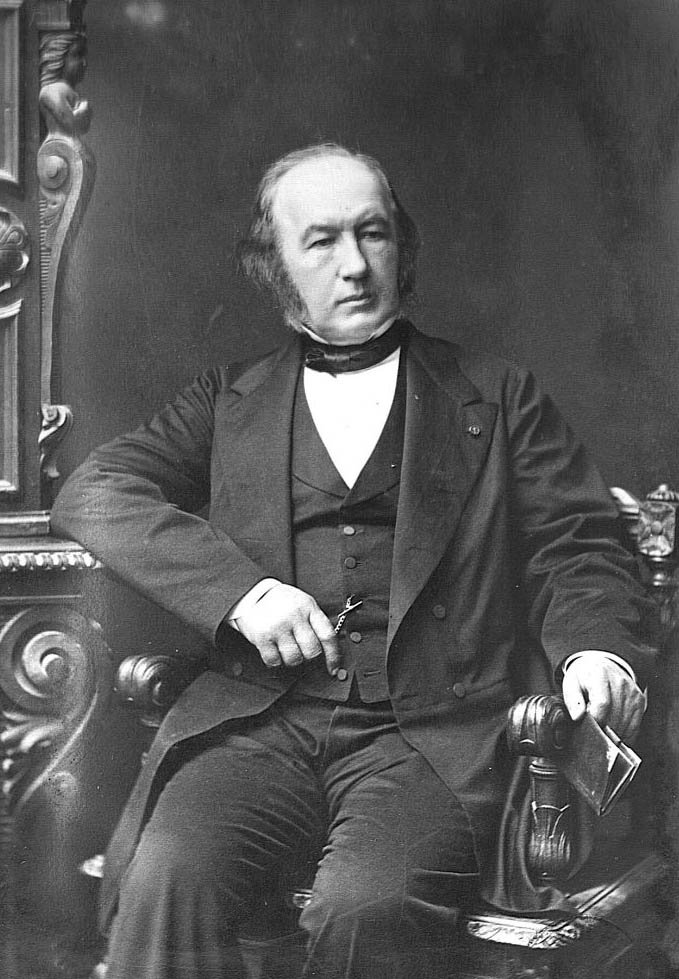
1865 BERNARD, Claude (1813 – 1878)
Introduction à l’étude de la médecine expérimentale.
Probably the greatest classic on the principles of physiological investigation and of the scientific method as applied to the life sciences. English translation, New York, 1927. See P.F. Cranefield, Claude Bernard’s r…
GMN 1766.501 · https://historyofmedicine.com/id/3211
1875 DALTON, John Call (1825 – 1889)
Experimentation on animals, as a means of knowledge in physiology, pathology, and practical medicine.
Digital facsimile from the Hathi Trust at this link.
GMN 10829 · https://historyofmedicine.com/id/13025
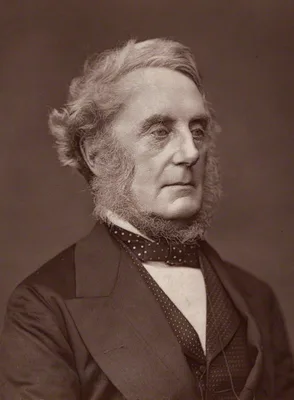
1876 CARDWELL, Edward, First Viscount Cardwell (1813 – 1886)
Report of the Royal Commission on the Practice of Subjecting Live Animals to Experiments for Scientific Purposes: With minutes and evidence and appendix.
This commission, or others with a similar name, seems to have continued intermittently in England for several decades, with the fourth report of the Royal Commission on Vivisection issued as late as 1908. Digital facs…
GMN 10839 · https://historyofmedicine.com/id/13035
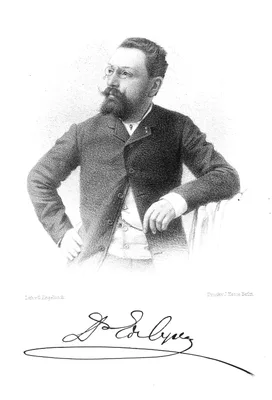
1876 CYON, Elias von (Elie de Cyon; Ilya Fadeyevich Tsion) (1842 – 1912)
Methodik der physiologischen experimente und vivisectionen. 2 vols.
"This textbook and its remarkable atlas [of 54 plates] was used by Europe's leading physiologists as they expanded animal experimentation in an attempt to understand human function in health and disease" (W. Bruce Fye…
GMN 11574 · https://historyofmedicine.com/id/13773
1882 DALTON, John Call (1825 – 1889)
The experimental method in medical science.
Dalton, Professor of Physiology at the universities of Buffalo and Vermont, and the College of Physicians and Surgeons, New York, was the first American to devote his time exclusively to that subject. He was present a…
GMN 1571 · https://historyofmedicine.com/id/1297
1882 LIVON, Charles
Manuel de vivisections.
Extensively illustrated study of methods of conducting experiments involving vivisection.
GMN 11683 · https://historyofmedicine.com/id/13884
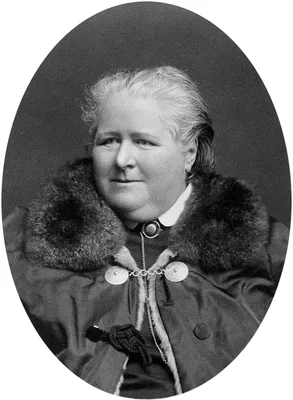
1884 BRYAN, Benjamin; COBBE, Frances Power (1822 – 1904)
The vivisectors' directory; being a list of the licensed vivisectors in the United Kingdom; together with the leading physiologists in foreign laboratories. Compiled from authentic sources. Edited by Benjamin Bryan, with a preface by Frances Power Cobbe.
A remarkably detailed listing of scientific and medical researchers conducting research involving vivisection with address information and details of their research. This information was published in order to supply d…
GMN 11682 · https://historyofmedicine.com/id/13883
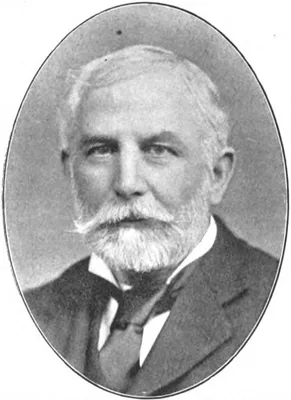
1896 RICHARDSON, Sir Benjamin Ward (1828 – 1896)
Biological experimentation: Its function and limits.
Digital facsimile from Google Books at this link.
GMN 10836 · https://historyofmedicine.com/id/13032
1897 CAJAL, Santiago Ramón y (1852 – 1934)
Fundamentos racionales y condiciones téchnicas de la Investigación biológica.
For the second edition (Madrid: Fortanet, 1899) Ramón y Cajal changed the title to Reglas y consejos sobre investigación cientifica. He added Los tónicos de la voluntad to the fourth ediition (Madrid: Fortanet, 1916).…
GMN 8881 · https://historyofmedicine.com/id/11059
1901 LEFFINGWELL, Albert (1845 – 1916)
The vivisection question.
Leffingwell sought a middle ground between the anti-vivisectionists, who callled for the abolition of all experimentation, and vivisectionists who rejected any restraint. Digital facsimile from the Internet Archive at…
GMN 10833 · https://historyofmedicine.com/id/13029
1902 ERNST, Harold Clarence (1856 – 1922)
Animal experimentation: A series of statements indicating its value to biological and medical science.
Contributors included Charles Elliot, G. Stanley Hall, William T. Sedgwick, James J. Putnam, Henry P. Bowditch, William T. Porter, William T. Councilman, Theobald Smith, and members of the religious community. Digital…
GMN 10830 · https://historyofmedicine.com/id/13026
1910 MCCREA, Roswell Cheney (1876 – 1951)
The humane movement: A descriptive survey.
Concerns the origins and evolution of the humane movement that played a significant role in the emergence and growth of the antivivisection movement in the United States. Digital facsimile from Google Books at this link.
GMN 10835 · https://historyofmedicine.com/id/13031
1914 KEEN, William Williams (1837 – 1932)
Animal experimentation and medical progress.
Digital facsimile from Google Books at this link.
GMN 10832 · https://historyofmedicine.com/id/13028
1924 COLEMAN, Sydney H.
Humane society leaders in America. With a sketch of the early history of the humane movement in England.
Digital facsimile from the Hathi Trust at this link.
GMN 10828 · https://historyofmedicine.com/id/13024
1935 FLIEGEL, Ludwig (1865 – 1947)
1000 Ärzte gegen die Vivisektion (wissenschaftliche Tierfolter) wegen ihrer Grausamkeit und Nutzlosigkeit.
Considered a classic of the anti-vivisection movement.
GMN 10831 · https://historyofmedicine.com/id/13027
1975 FRENCH, Richard D.
Antivivisection and medical science in Victorian society.
GMN 10263 · https://historyofmedicine.com/id/12454
1979 BAKER, Henry J.; LINDSEY, J. Russell; WEISBROTH, Steven H.
The laboratory rat, Volume 1: Biology and disease. Edited by Henry J. Baker, J. Russell Lindsey, Steven H. Weisbroth.
Chapter 1: Historical Foundations by J. Russell Lindsey.
GMN 8474 · https://historyofmedicine.com/id/10651
1981 MAGEL, Charles R. (1920 – 2014)
A bibliography on animal rights and related matters.
"... restricted to literature in the English language, with over 3200 entries; it is also confined to the thought and practices of the Western world, from Biblical times to 1980." Concerns much on animal experimentati…
GMN 10834 · https://historyofmedicine.com/id/13030
1986 ALTMAN, Lawrence K. (1937 – )
Who goes first? The story of self-experimentation in medicine.
GMN 10095 · https://historyofmedicine.com/id/12284
1987 RUPKE, Nicolaas Adrianus (1944 – )
Vivisection in historical perspective. Edited by Nicholaas A. Rupke.
GMN 10264 · https://historyofmedicine.com/id/12455
1997 LEDERER, Susan E. (1955 – )
Subjected to science: Human experimentation in America before the Second World War.
GMN 10361 · https://historyofmedicine.com/id/12553
1999 MAEHLE, Andreas-Holger (1957 – )
Drugs on trial: Experimental pharmacology and therapeutic innovation in the eighteenth century.
"This book demonstrates that the basic methodology of the field, including chemical analysis, in vitro testing, animal experimentation and human research, was already developed in the course of the seventeenth and eig…
GMN 9468 · https://historyofmedicine.com/id/11651
2001 RUDACILLE, Deborah (1958 – )
The scalpel and the butterfly: The war between animal research and animal protection.
GMN 10838 · https://historyofmedicine.com/id/13034
2003 FIKS, Arsen P. (1930 – 2001)
Self-experimenters: Sources for study.
Grouped by category of experiment, and then by the name of the self-experimenter, this is a guide to their biographies and the articles that reported their results.
GMN 8643 · https://historyofmedicine.com/id/10820
2003 GUERINI, Anita (1953 – )
Experimenting with humans and animals: From Galen to animal rights.
GMN 9898 · https://historyofmedicine.com/id/12086
2007 GLASS, David J.
Experimental design for biologists.
Explains how to establish the framework for an experimental project, how to set up all of the components of an experimental system, design experiments within that system, determine and use the correct set of controls,…
GMN 7972 · https://historyofmedicine.com/id/10148
2017 BATES, A. W. H.
Anti-vivisection and the profession of medicine in Britain: A social history.
GMN 10231 · https://historyofmedicine.com/id/12421