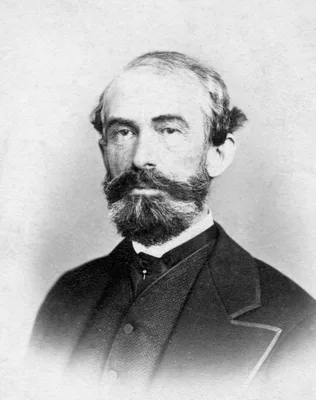
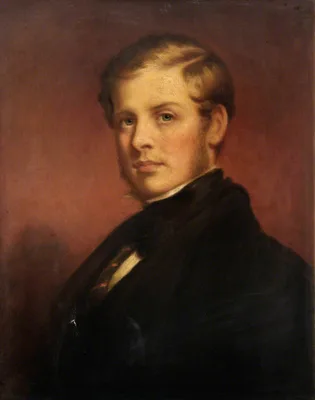
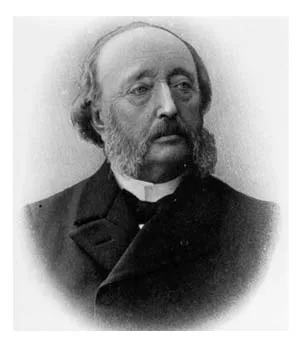
1854 HAMILTON, Frank Hastings (1813 – 1886)
Elkoplasty, or anaplasty applied to the treatment of old ulcers.
Hamilton was among the first to treat ulcers by skin-grafting. He made the flap smaller than the space which it was intended to fill, “trusting to growth and expansion of the graft to complete the cure”. Also publishe…
GMN 5747 · https://historyofmedicine.com/id/6590
1870 REVERDIN, Jacques-Louis (1842 – 1929)
Greffe épidermique. Expérience faite dans le service de M. le docteur Guyon à l’hôpital Necker.
Reverdin’s work on the transplantation of free skin, as contrasted with the previous method of pedunculated flaps, attracted much attention. English translation in No. 5768.2.
GMN 5750 · https://historyofmedicine.com/id/6597
1871 POLLOCK, George David (1817 – 1897)
Cases of skin-grafting and skin-transplantation.
Pollock used Reverdin’s skin-grafting technique in the treatment of burn contractures.
GMN 2248.1 · https://historyofmedicine.com/id/2772
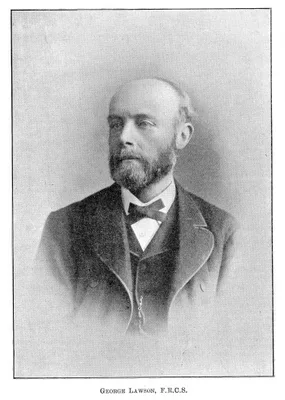
1871 LAWSON, George (1831 – 1903)
On the transplantation of portions of skin for the closure of large granulating surfaces.
Lawson, surgeon to the Middlesex Hospital, London, was the first successfully to transplant sizeable areas of skin, as compared with the small grafts of Reverdin, and of whole thickness skin as well. Reprinted in No. …
GMN 5751 · https://historyofmedicine.com/id/6599
1872 OLLIER, Louis Xavier Édouard Léopold (1830 – 1900)
Greffes cutanées ou autoplastiques.
First description of intermediate thickness skin grafts. Ollier used large grafts and carried out complete excision of scar tissue and its replacement with skin.
GMN 5752 · https://historyofmedicine.com/id/6601
1874 THIERSCH, Carl (1822 – 1895)
Ueber die feineren anatomischen Veränderungen bei Aufheilung von Haut auf Granulationen.
Thiersch’s first paper on transplantation of skin. Simultaneous publication in Arch. klin. Chir., 1874, 17, 318-24. English translation in No. 5768.2.
GMN 5753 · https://historyofmedicine.com/id/8657
1875 WOLFE, John Reissberg (1824 – 1904)
A new method of performing plastic operations.
Wolfe insisted that in free skin grafts the subcutaneous tissue at the site of the graft must be removed, and that the graft should consist of skin only. His name is perpetuated in the “Wolfe-Krause graft rest”.
GMN 5754 · https://historyofmedicine.com/id/6620
1889 MANCHOT, Carl (1866 – 1932)
Die Haut Arterien des menschlichen Körpers.
Manchot was the first to describe the vascular territories of the human skin. This work was translated into English by J. Ristic with an introduction by William D. Morain as The cutaneous arteries of the human body (N…
GMN 14299 · https://historyofmedicine.com/id/16624
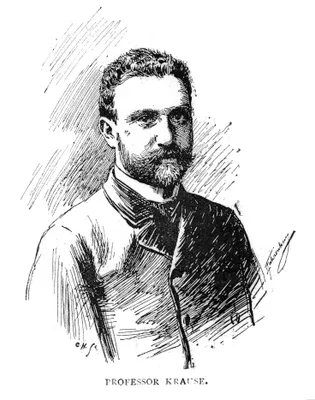
1893 KRAUSE, Fedor (1856 – 1937)
Ueber die Transplantation grosser ungestielter Hautlappen.
Krause popularized the use of whole thickness skin grafts. English translation in No. 5768.2.
GMN 5755 · https://historyofmedicine.com/id/6635
1909 DAVIS, John Staige (1872 – 1946)
A method of splinting skin grafts.
The Davis graft was devised by Halsted but Davis popularized its use.
GMN 5756.3 · https://historyofmedicine.com/id/6660
1929 BLAIR, Vilray Papin (1871 – 1955); BROWN, James Barrett (1899 – 1971)
The use and uses of large split skin grafts of intermediate thickness.
Split-skin grafts for covering large areas of granulating surfaces introduced.
GMN 5761.1 · https://historyofmedicine.com/id/6704
1939 PADGETT, Earl Calvin (1893 – 1946)
Calibrated intermediate skin-grafts.
Padgett dermatome.
GMN 5763.1 · https://historyofmedicine.com/id/6717
1940 ESSER, Johannes Fredericus Samuel (1877 – 1946)
Esser inlay (Epithethelial inlay).
Though he developed the "skin graft inlay technique" or epithelial inlay during World War I, Esser did not fully publish it until this very extensively illustrated monograph, with about 1500 images, issued in 1940.
GMN 7727 · https://historyofmedicine.com/id/9899
1943 SANO, Machteld Elisabeth (1903 – 1993)
Skin grafting. A new method based on the principles of tissue culture.
First use of fibrin glue for skin grafting. See also Surg. Gynec. Obstet., 1943, 77, 510-13.
GMN 5765 · https://historyofmedicine.com/id/6725
1950 MCINDOE, Sir Archibald Hector (1900 – 1960); FRANCESCHETTI, Adolphe (1896 – 1968)
Reciprocal skin homografts in a medico-legal case of familial identification of exchanged identical twins.
Skin grafting used to decide the relationship of identical twins who had been accidentally separated at birth.
GMN 1757 · https://historyofmedicine.com/id/3151
1981 KLASEN, Henk J.
History of free skin grafting.
Comprehensive work, with hundreds of bibliographical references. No index.
GMN 5768.4 · https://historyofmedicine.com/id/6772