1586 DONATI, Marcello (1538 – 1602)
De medica historia mirabili.
An early history of diseases, with extensive sections on ophthalmology (ff. 66-77) and urology (ff. 260-271). Lib. IV, Cap. iii, page 196 contains the first recorded case of gastric ulcer. Lib. VI. cap. iii contains t…
GMN 3417 · https://historyofmedicine.com/id/5319
1653 HARTMAN [HARTMANNUS]
Thesis de carbunculo.
GMN 5160 · https://historyofmedicine.com/id/6222
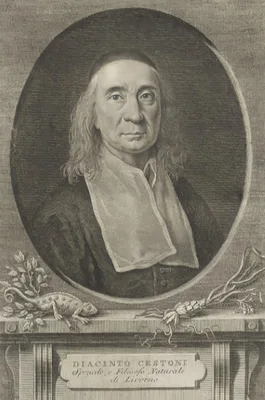
1687 BONOMO, Giovanni Cosimo (1663 – 1696); CESTONI, Giacinto (Diacinto) (1637 – 1718)
Osservazioni intorno a’ pellicelli del corpo umano.
First clinical and experimental proof of infection by a microparasite. Bonomo observed Sarcoptes scabiei, the scabies mite. This gave researchers grounds to think in terms of objective, exogenous pathogenic agents as …
GMN 2529.1 · https://historyofmedicine.com/id/5177
1731 MACHIN, John ( – 1751)
An extract from the minutes of the Royal Society, March 16, 1731, containing an uncommon case of a distempered skin.
First known description of Ichthyosis hystrix, a group of rare skin disorders in the ichthyosis family of skin disorders characterized by massive hyperkeratosis with an appearance like spiny scales. Digital facsimile …
GMN 4013 · https://historyofmedicine.com/id/5180
1754 CRUSIO, Carlo [CURZIO] (1725 – )
An account of an extraordinary disease of the skin and its cure. Extracted from the Italian of Carlo Crusio, with a letter of the Abbé Nollet to Mr. William Watson by Robert Watson.
The early history of scleroderma is confused with that of leprosy, ichthyosis, and keloid. Crusio appears to be the first to differentiate it. Gintrac in 1847 coined the term “scleroderma”. It is now included among th…
GMN 4014 · https://historyofmedicine.com/id/5202
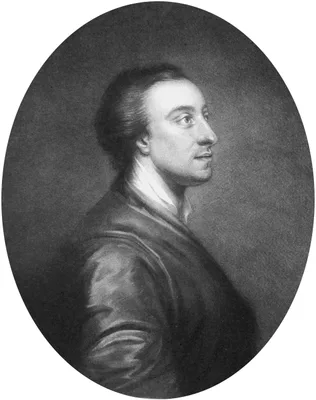
1768 AKENSIDE, Mark (1721 – 1770)
Observations on cancers.
First recorded description of multiple neurofibromatosis. Akenside was better known as a poet; he was caricatured as the republican doctor of Tobias Smollett's The Adventures of Peregrine Pickle.
GMN 4015.1 · https://historyofmedicine.com/id/5252
1786 WICHMANN, Johann Ernst (1740 – 1802)
Aetiologie der Krätze.
Wichmann definitely established the parasitic aetiology of scabies.
GMN 4016 · https://historyofmedicine.com/id/5254
1791 HOME, Sir Everard (1756 – 1832)
Observations on certain horny excrescences of the human body.
Original description of cornu cutaneum.
GMN 4017 · https://historyofmedicine.com/id/5256
1796 –1808 WILLAN, Robert (1757 – 1812)
On cutaneous diseases. Vol. 1 [All published].
Modern dermatology may be said to start with Willan. His classification of skin diseases gained him the Fothergillian Medal of the Medical Society of London in 1790. He established a standard nomenclature which is sti…
GMN 3985 · https://historyofmedicine.com/id/4992
1802 TILESIUS VON TILENAU, Wilhelm Gottlieb (1769 – 1857)
Ausführliche Beschreibung und Abbildung der beiden sogenannten Stachelschweinmenschen aus der bekannten engelischen Familie Lambert, oder, the porcupine man.
Tilesius continued the study of the Lambert family of sufferers from ichthyosis hystrix begun by Machin and Baker (see No. 4013). Notably Tilesius illustrated the bizarre condition with several color plates. In 2016 o…
GMN 7971 · https://historyofmedicine.com/id/10147
1806 ALIBERT, Jean Louis Marc (1768 – 1837)
Description des maladies de la peau observées à l’hôpital Saint Louis.
The largest and most spectacular of the early classics of dermatology, with hand-colored illustrations unsurpassed for their quality of execution. The illustrations are also the first on the subject in a French book. …
GMN 3986 · https://historyofmedicine.com/id/4998
1807 –1808 STOKES, Whitley (1763 – 1845)
On an eruptive disease of children.
First description of ecthyma terebrans, “pemphigus gangrenosa”.
GMN 4020 · https://historyofmedicine.com/id/5272
1813 BATEMAN, Thomas (1778 – 1821)
A practical synopsis of cutaneous diseases according to the arrangement of Dr. Willan.
This was the most influential textbook of dermatology of the 19th century, and the work which conveyed Willan’s system to most of the medical world. Included in the book was material by Willan which remained unpublish…
GMN 4021 · https://historyofmedicine.com/id/5276
1814 WILLAN, Robert (1757 – 1812); SMITH, Ashby ( – 1831)
Practical treatise on porrigo, or scald head, and on impetigo, the humid or running teter
This treatise on infantile eczema is the only fascicule of the second volume of Willan’s On cutaneous diseases (No.4018) that ever appeared in print. It was edited for publication after Willan's death by his stepson-i…
GMN 4021.1 · https://historyofmedicine.com/id/5282
1814 CARMICHAEL, Richard (1779 – 1849)
An essay on the venereal diseases which have been confounded with syphilis, and the symptoms which exclusively arise from that poison. Illustrated by drawings of the cutaneous eruptions of true syphilis, and the resembling diseases.
Carmichael "subdivided venereal infections into four major classes, each of which he maintained had a distinct exciting poison, a peculiar primary manifestation and a separate series of constitutional affections. From…
GMN 12762 · https://historyofmedicine.com/id/15008
1816 ALIBERT, Jean Louis Marc (1768 – 1837)
Note sur la keloide.
First accurate description of keloid (“Alibert’s keloid”), although it was mentioned by Retz in 1790.
GMN 4023 · https://historyofmedicine.com/id/5293
1817 BATEMAN, Thomas (1778 – 1821)
Delineations of cutaneous diseases exhibiting the characteristic appearances of the principal genera and species comprised in the classification of the late Dr. Willan; and completing the series of engravings begun by that author.
Bateman, the pupil of Willan, continued his teacher’s classification of skin diseases. The above work is notable for its 72 colored plates. Strictly speaking it is the first atlas of dermatology, as Willan’s work fall…
GMN 3988 · https://historyofmedicine.com/id/5006
1825 ALIBERT, Jean Louis Marc (1768 – 1837)
Description des maladies de la peau. 2me. édition. 2 vols.
Contains (vol. 2, p. 214) first description of sycosis barbae (“Alibert’s mentagra”).
GMN 4024 · https://historyofmedicine.com/id/5296
1826 –1827 RAYER, Pierre François Olive (1793 – 1867)
Traité théorique et pratique des maladies de la peau. 2 vols, and atlas.
In this summary of dermatological literature of the period Rayer first described adenoma sebaceum and xanthoma multiplex. He was the first to differentiate between acute and chronic eczema. The second edition, Paris, …
GMN 3989 · https://historyofmedicine.com/id/5009
1827 JACOB, Arthur (1790 – 1874)
Observations respecting an ulcer of peculiar character, which attacks the eyelids and other parts of the face.
Arthur Jacob, Professor of Anatomy and physiology in Dublin, described “Jacob’s ulcer”, rodent ulcer attacking the face, especially the eyelid.
GMN 4025 · https://historyofmedicine.com/id/5299
1834 RASPAIL, François-Vincent (1794 – 1878)
Mémoire comparatif sur l'histoire naturelle de l'insecte de la gale.
Raspail first described and illustrated the Sarcoptes scabei, diffrentiating it from the horse's sarcopt and the cheese moth that Galès and Patrix, followed by Alibert, had confused with the scabies parasite. Raspail …
GMN 13415 · https://historyofmedicine.com/id/15687
1835 RENUCCI, Simon François (1794 – 1874)
Thèse inaugurale sur la découverte de l’insecte qui produit la contagion de la gale, du prurigo et du phlyzacia.
Demonstration of the human itch-mite, Sarcoptes scabiei. It was due to Renucci that the Sarcoptes was recognized as the one cause of scabies and its parasitic nature finally accepted.
GMN 4027 · https://historyofmedicine.com/id/5301
1838 CAZENAVE, Pierre Louis Alphée (1795 – 1877); SCHEDEL, Henry Edward (1804 – 1856)
Abrégé pratique des maladies de la peau. 3me. éd.
Laurent Théodore Biett (1781-1840), was a pupil of Alibert, Willan, and Bateman. His classic description of lupus erythematoides migrans (“Biett’s disease”) occurs on pp. 11 and 415 of the above work.
GMN 4028 · https://historyofmedicine.com/id/5305
1839 SCHÖNLEIN, Johann Lucas (1793 – 1864)
Zur Pathogenie der Impetigines.
The discovery of a fungus as the cause of favus (Achorion schönleinii). Schönlein communicated this important discovery in a letter of less than 200 words and one illustration. It represents the first conspicuous step…
GMN 4029 · https://historyofmedicine.com/id/5312
1841 GRUBY, David (1810 – 1898)
Mémoire sur une végétation qui constitue la vraie teigne.
Independently of Schönlein (No. 4029) Gruby discovered the achorion of favus, describing it definitely as the cause of the disease, a point about which Schönlein was in doubt.
GMN 4030 · https://historyofmedicine.com/id/5317
1841 HENDERSON, William (1810 – 1872)
Notice of the molluscum contagiosum.
See No. 4032.
GMN 4031 · https://historyofmedicine.com/id/5320
1841 PATERSON, Robert (1814 – 1889)
Cases and observations on the molluscum contagiosum of Bateman, with an account of the minute structure of the tumours.
Henderson and Paterson described the inclusion body of molluscum contagiosum, “Henderson–Paterson body”.
GMN 4032 · https://historyofmedicine.com/id/5324
1842 BOECK, Carl Wilhelm (1808 – 1875)
Om den spedalske sygdom. Elephantiasis graecorum.
Boeck, eminent Norwegian dermatologist and syphilologist, was the first to describe Norwegian itch, scabies crustosa (“Boeck’s scabies”).
GMN 4033 · https://historyofmedicine.com/id/5327
1842 GRUBY, David (1810 – 1898)
Sur une espèce de mentagre contagieuse résultant du développement d’un nouveau cryptogame dans la racine des poils de la barbe de l’homme.
First accurate description of Trichophyton mentagrophytes, the fungus responsible for sycosis barbae. English translation of this and Gruby’s other five papers read to l’Académie des Sciences in Zakon & Benedek, David…
GMN 4034 · https://historyofmedicine.com/id/5330
1843 GRUBY, David (1810 – 1898)
Recherches sur la nature, le siège et le développement du Porrigo decalvans ou phytoalopécie.
First accurate description of Microsporon audouini, the fungus of Willan’s porrigo decalvans, tinea tonsurans, “Gruby’s disease”.
GMN 4035 · https://historyofmedicine.com/id/5333
1844 GRUBY, David (1810 – 1898)
Recherches surles cryptogames qui constituent la maladie contagieuse du cuir chevelu décrite sous le nom de Teigne tondante (Mahon). Herpes tonsurans (Cazenave).
Gruby discovered a fungus, Trichophyton tonsurans, in ringworm of the scalp.
GMN 4036 · https://historyofmedicine.com/id/5335
1844 CAZENAVE, Pierre Louis Alphée (1795 – 1877)
Pemphigus chronique, générale; forme rare de pemphigus foliacé; mort: autopsie; altération du foie.
First description of pemphigus foliaceus, “Cazenave’s disease”. The article is unsigned.
GMN 4037 · https://historyofmedicine.com/id/5337
1846 EICHSTEDT, Carl Ferdinand (1816 – 1892)
Ueber die Krätzmilben des Menschen, ihre Entwicklung und ihr Verhältniss zur Krätze.
GMN 4038 · https://historyofmedicine.com/id/5340
1846 EICHSTEDT, Carl Ferdinand (1816 – 1892)
Pilzbildung in der Pityriasis versicolor.
Eichstedt discovered Pityrosporum orbiculare, fungus of pityriasis versicolor (“Eichstedt’s disease”).
GMN 4039 · https://historyofmedicine.com/id/5344
1848 SIMON, Gustav (1824 – 1876)
Die Hautkrankheiten durch anatomische Untersuchungen erläutert.
The first textbook of dermatopathology. "Simon dated the preface of his book April 1st, 1848 and wrote (p. vi and vii) that much has been achieved by meticulous clinical description of diseases of the skin but now att…
GMN 7314 · https://historyofmedicine.com/id/9484
1849 SMITH, Robert William (1807 – 1873)
A treatise on the pathology, diagnosis, and treatment of neuroma.
Smith’s large and beautifully illustrated atlas contains the first clear description and illustration of neurofibromatosis, published 33 years before von Recklinghausen’s account of the disorder (see No. 4566). This d…
GMN 4529 · https://historyofmedicine.com/id/391
1850 CAZENAVE, Pierre Louis Alphée (1795 – 1877)
Des principales formes du lupus et de son traitement.
Lupus erythematosus – “Cazenave’s disease”.
GMN 4040 · https://historyofmedicine.com/id/5348
1851 ADDISON, Thomas (1793 – 1860); GULL, Sir William Withey (1816 – 1890)
On a certain affection of the skin, vitiligoidea: α Plana, β tuberosa.
In their classic account of xanthoma multiplex, Addison and Gull believed they were describing a new disease, but Rayer had been the first to mention it. (See No. 3989; see also the later paper by Gull, Guy’s Hosp. Re…
GMN 4041 · https://historyofmedicine.com/id/5352
1853 BAZIN, Pierre Antoine Ernest (1807 – 1878)
Recherches sur la nature et le traitement des teignes.
Bazin proved the fungal origin of favus and tinea; this was the first work to incorporate mycotic skin diseases into dermatological literature. Digital facsimile from BnF Gallica at this link.
GMN 7313 · https://historyofmedicine.com/id/9483
1854 ADDISON, Thomas (1793 – 1860)
On the keloid of Alibert, and on true keloid.
Addison described two forms of keloid, that described by Alibert, and the “true keloid” (the skin disease morphoea, “Addison’s keloid”).
GMN 4042 · https://historyofmedicine.com/id/5354
1854 BÄRENSPRUNG, Friedrich Wilhelm Felix von (1822 – 1864)
Ueber die Folge und den Verlauf epidermischer Krankheiten.
First description of tinea cruris (eczema marginatum, “Bärensprung’s disease”).
GMN 4043 · https://historyofmedicine.com/id/5359
1856 DEVERGIE, Marie-Guillaume-Alphonse (1798 – 1879)
Pityriasis pilaris, maladie de peau non décrite par les dermatologistes.
Devergie is remembered for his clear description of pityriasis rubra pilaris, (“Devergie’s disease”). He was the first to demonstrate the presence of a fungus in eczema marginatum.
GMN 4044 · https://historyofmedicine.com/id/5364
1857 HEBRA, Ferdinand Karl Franz Schwarzmann, Ritter von (1816 – 1880)
Lichen exsudativus ruber.
First description of this condition (“Hebra’s pityriasis”).
GMN 4045 · https://historyofmedicine.com/id/5367
1857 –1858 LE ROY DE MÉRICOURT, Alfred (1825 – 1901)
Sur la coloration partielle en noir ou en bleu de la peau chez les femmes.
Chromidrosis first described.
GMN 4046 · https://historyofmedicine.com/id/5374
1860 GIBERT, Camille Melchior (1797 – 1866)
Traité pratique des maladies de la peau. 3 éd., 2 vols.
Gibert’s name is associated with pityriasis rosea, which he first established as a definite clinical entity. His complete and accurate description of this condition is on page 402 of vol. 1 of the above work.
GMN 4048 · https://historyofmedicine.com/id/5382
1860 HEBRA, Ferdinand Karl Franz Schwarzmann, Ritter von (1816 – 1880)
Das umschriebene Eczem. Eczema marginatum. In Virchow’s Handbuch der spec. Path. u. Therap., 3, 1 Abt., 361-63.
Complete description of tinea cruris (eczema marginatum), first described by Bärensprung in 1854.
GMN 4049 · https://historyofmedicine.com/id/5390
1860 LUTZ, Henri Charles
De l’hypertrophie générale du système sébacé.
First description of keratosis follicularis.
GMN 4050 · https://historyofmedicine.com/id/5392
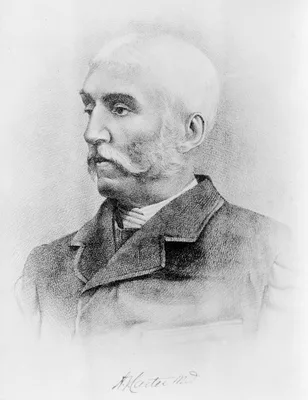
1861 CARTER, Henry Vandyke (1831 – 1897)
On a new and striking form of fungus disease, principally affecting the foot, and prevailing endemically in many parts of India.
First modern description of mycetoma of the foot – “Madura foot”, “Carter’s mycetoma”. It was mentioned by E. Kaempfer in his Amoenitates exoticae, Lemgo, 1712, p. 561. Colebrook at the Madura Dispensary is said to ha…
GMN 4047 · https://historyofmedicine.com/id/5379
1861 BAZIN, Pierre Antoine Ernest (1807 – 1878)
Leçons théoriques et cliniques sur la scrofule considérée en elle-même et dans ses rapports avec la syphilis, la dartre et l'arthritis. 2me édition.
Erythema induratum scrophulosorum (“Bazin’s disease”) first described.
GMN 4051 · https://historyofmedicine.com/id/5399
1861 WILKS, Sir Samuel (1824 – 1911)
A peculiar atrophy of the skin (Lineae atrophicae).
First description of lineae atrophicae.
GMN 4052 · https://historyofmedicine.com/id/5403