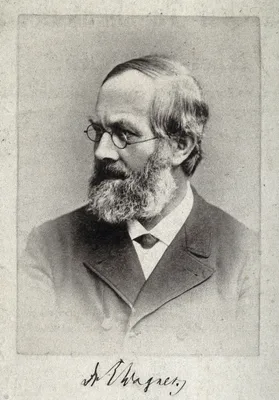
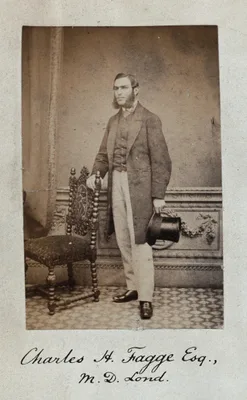
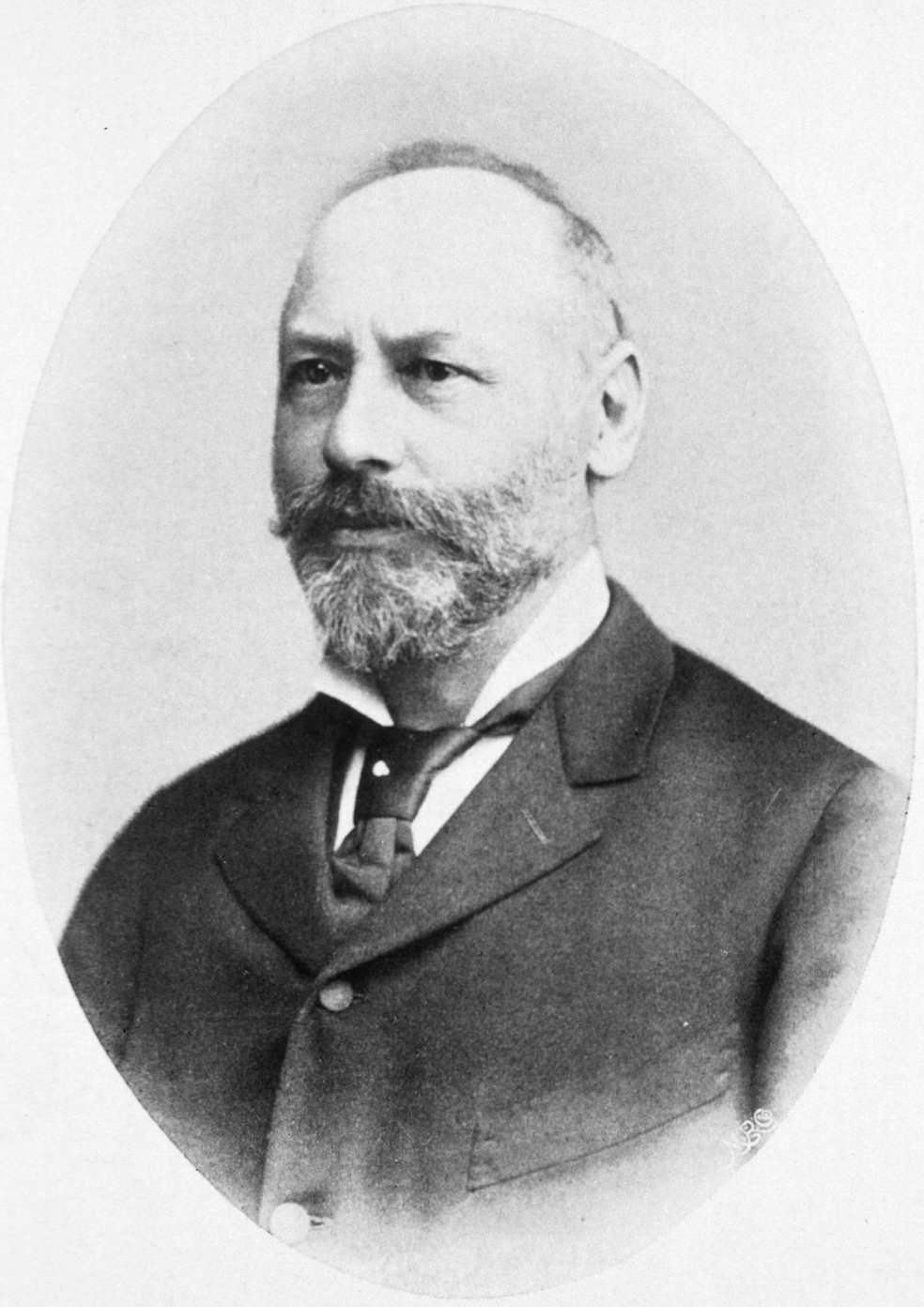
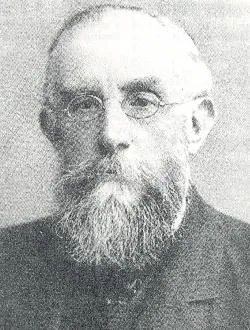
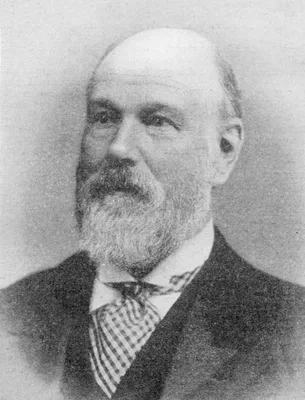
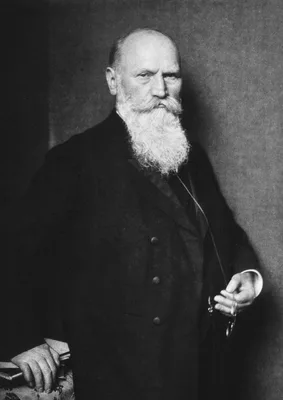
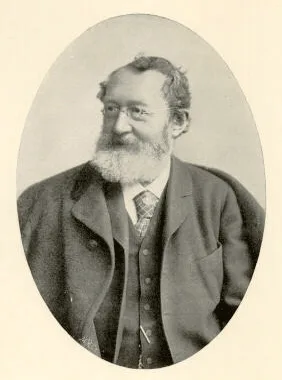
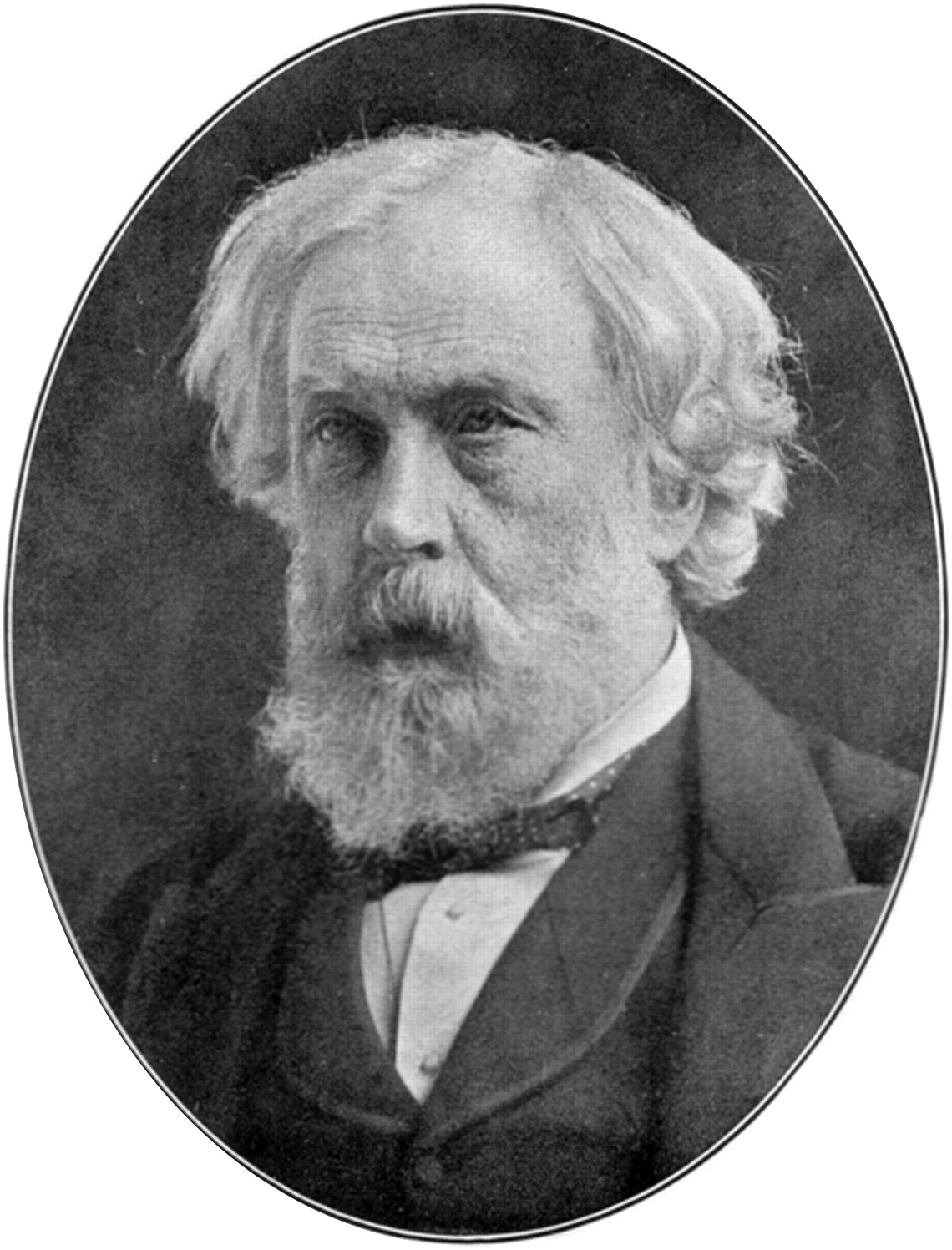
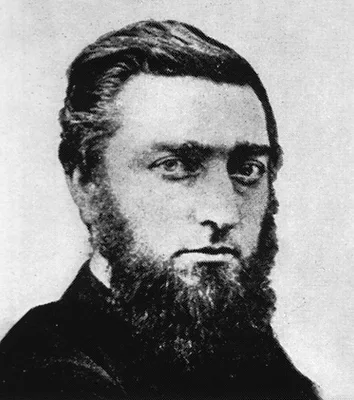
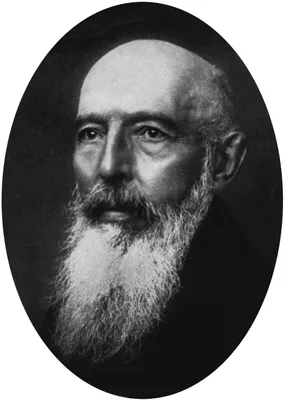
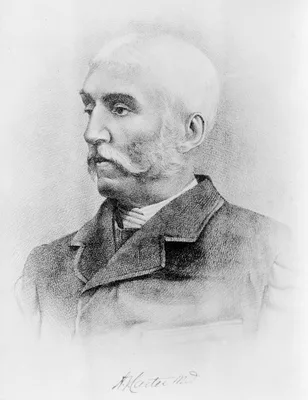
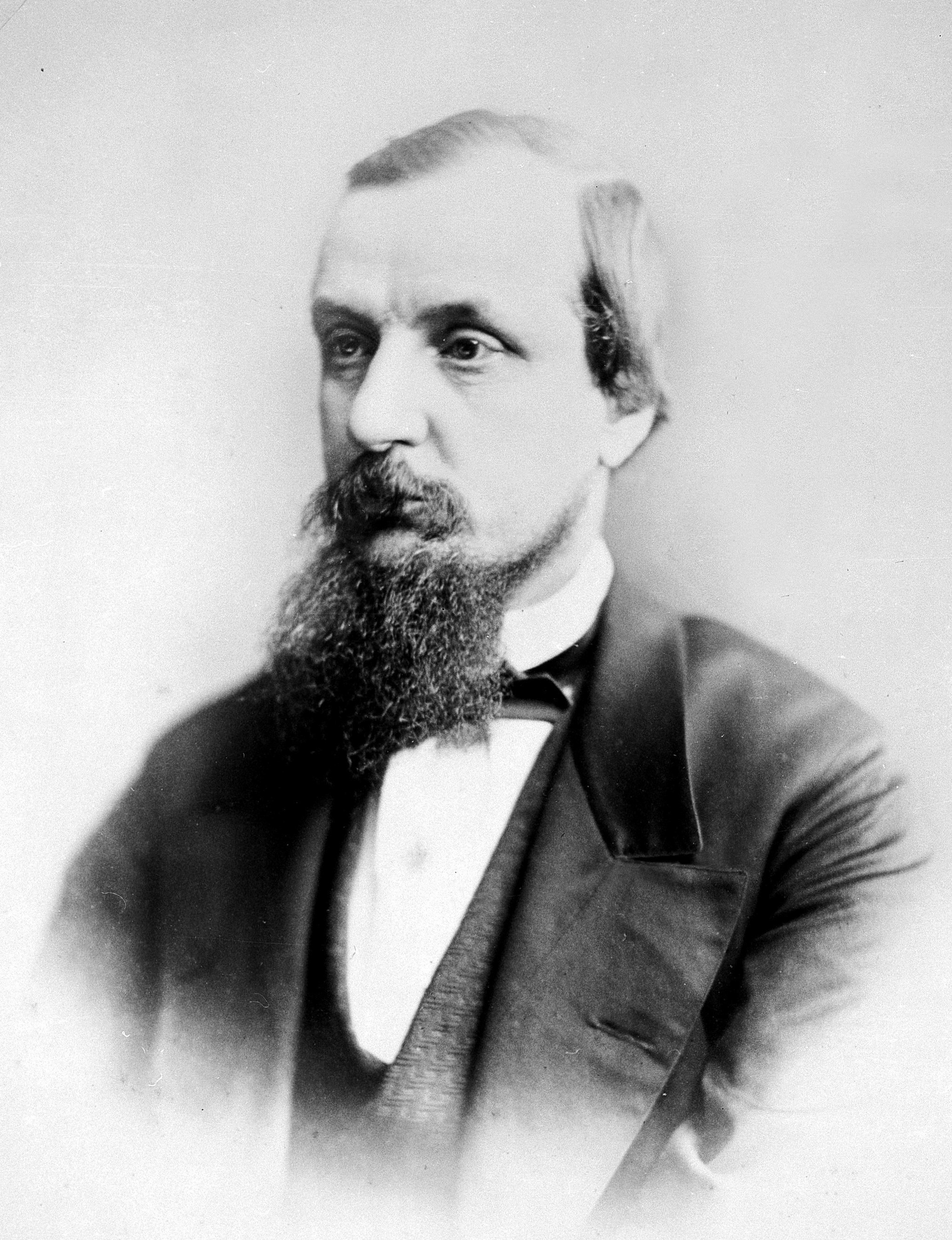
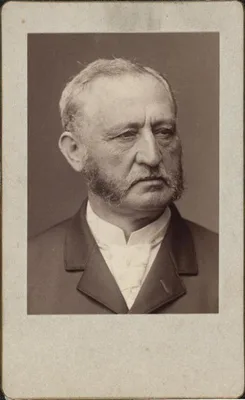
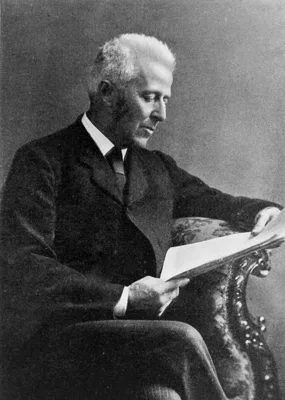
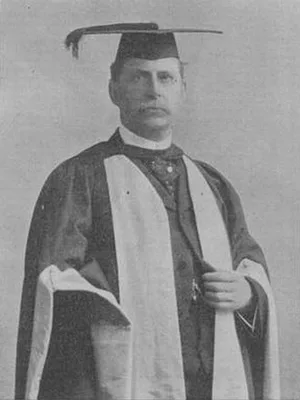
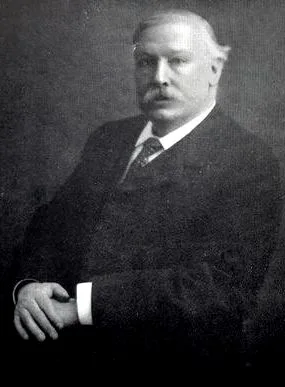
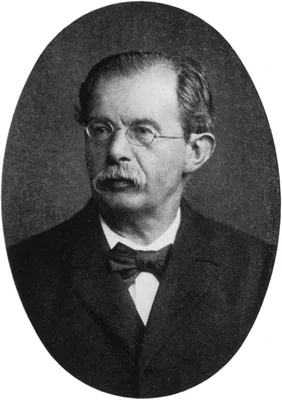
1866 WAGNER, Ernst Leberecht (1829 – 1888)
Das Colloid-Milium der Haut.
Colloid degeneration of the skin (“Wagner’s disease”) was first described by Wagner who gave it the name “Colloid milium”.
GMN 4056 · https://historyofmedicine.com/id/5413
1866 –1880 FAGGE, Charles Hilton (1838 – 1883); HEBRA, Ferdinand Karl Franz Schwarzmann, Ritter von (1816 – 1880); KAPOSI, Moritz Kohn (1837 – 1902); TAY, Waren (1843 – 1927); PYE-SMITH, Philip Henry
Diseases of the skin, including the exanthemata by Ferdinand Hebra. Vol. 1: Translated and edited by C. Hilton Fagge. Vol. 2: Tr. and ed
Digital facsimile of vol. 1 from the Hathi Trust at this link.
GMN 9969 · https://historyofmedicine.com/id/12158
1867 WALDEYER-HARTZ, Heinrich Wilhelm Gottfried von (1836 – 1921)
Die Entwicklung der Carcinome.
Waldeyer confirmed the work of Thiersch (No. 2618) on the epithelial origin of cancer, disproving Virchow’s theory (No. 2617). So great was the authority of the latter that it was not until the appearance of the secon…
GMN 2620 · https://historyofmedicine.com/id/3141
1868 ROTHMUND, August von (1830 – 1906)
Ueber Cataracten in Verbindung mit einer eigenthümlichen Haut-de-generation.
Poikiloderma congenitale (Rothmund).
GMN 4056.1 · https://historyofmedicine.com/id/5416
1868 HARDY, Alfred Louis Philippe (1811 – 1893); MONTMÉJA, Pierre Michel Arthur de (1841 – 1910)
Clinique photographique de l'hôpital Saint-Louis.
The first French dermatologic book illustrated with photographs. Originally issued in fascicules, 1867-68. The first edition includes 49 or 50 albumin photographs; second edition, entitled Clinique photographique des …
GMN 6872 · https://historyofmedicine.com/id/9036
1869 WILKS, Sir Samuel (1824 – 1911)
On markings of furrows on the nails as the result of illness.
GMN 2678 · https://historyofmedicine.com/id/3552
1869 NETTLESHIP, Edward (1845 – 1913)
Chronic urticaria leaving brown stains: nearly two years’ duration.
Urticaria pigmentosa (Mastocytosis of the skin) described by Nettleship, was named eponymically “Nettleship’s disease”.
GMN 4057 · https://historyofmedicine.com/id/5419
1869 PAXTON, Francis Valentine (1840 – 1924)
On a diseased condition of the hairs of the axilla, probably of parasitic origin.
Tinea nodosa (trichorrhexis nodosa, “Paxton’s disease”) first described.
GMN 4058 · https://historyofmedicine.com/id/5422
1869 –1870 TURNER, George Alexander (1845 – 1900)
Lafa Tokelau, or Tokelau ringworm.
First description, tinea imbricata. Turner described the disease while serving as a medical missionary in Samoa.
GMN 4059 · https://historyofmedicine.com/id/5424
1869 BEANEY, James George (1828 – 1891)
Syphilis: Its nature & diffusion popularly considered.
The first work on dermatology or syphilology written, printed and published in Australia. This work is illustrated with chromolithographed plates printed in Australia. This may be the earliest medical book printed in …
GMN 10890 · https://historyofmedicine.com/id/13086
1870 RITTERSHAIN, Gottfried von (1820 – 1883)
Dermatitis erysipelatosa; Gangraena; Enkephalitis.
First description of dermatitis exfoliativa neonatorum (“Rittershain’s disease”).
GMN 4060 · https://historyofmedicine.com/id/5432
1870 WILSON, Sir William James Erasmus (1809 – 1884)
On dermatitis exfoliativa.
Although Hippocrates mentioned this condition, Erasmus Wilson first named it and described it as we know it today. It has been called “Wilson’s disease”; an eponym discarded since its use to describe the progressive l…
GMN 4061 · https://historyofmedicine.com/id/5450
1871 –1878 WILSON, Sir William James Erasmus (1809 – 1884)
Lectures on dermatology. 4 vols.
Erasmus Wilson gave the original descriptions of several cutaneous diseases, and made a fine collection of dermatological preparations. He classified skin diseases on an anatomical basis. The above book consists of hi…
GMN 3994 · https://historyofmedicine.com/id/5047
1871 –1872 DUHRING, Louis Adolphus (1845 – 1913); MAURY, Francis Fontaine (1840 – 1879)
Photographic review of medicine and surgery. A bi-monthly illustration of interesting cases, accompanied by notes. Edited by F.F. Maury [and] L.A. Duhring. Vols. 1 & 2 (All published).
The leading 19th century American publication of artistic medical photography. Each of the two volumes includes 24 mounted photographs. The photographs ilustrate cases of unusual and extreme disease, such as gross def…
GMN 10585 · https://historyofmedicine.com/id/12778
1871 –1880 OLAVIDE Y LANDAZÁBAL, José Eugenio de (1836 – 1901)
Dermatología general y clínica iconográfica de enfermedades de la piel ó dermatósis.
This very large format publication was issued in four parts from 1871 to 1880. It included 168 large plates in the style of Alibert, and was the first major illustrated work on dermatology published in Spain. Digital …
GMN 12583 · https://historyofmedicine.com/id/14822
1872 HEBRA, Ferdinand Karl Franz Schwarzmann, Ritter von (1816 – 1880)
Ueber einzelne während der Schwangerschaft, dem Wochenbette und bei Uterinalkrankheiten der Frauen zu beobachtende Hautkrankheiten.
Hebra was the first to describe impetigo herpetiformis, more fully dealt with by Kaposi, his son-in-law.
GMN 4062 · https://historyofmedicine.com/id/5452
1872 KAPOSI, Moritz Kohn (1837 – 1902)
Idiopathisches multiples Pigmentsarkom der Haut.
First description of “Kaposi’s sarcoma” – multiple idiopathic hemorrhagic sarcoma. English translation in CA, 1982, 32, 342-47.
GMN 4063 · https://historyofmedicine.com/id/5455
1873 BAKER, William Morrant (1839 – 1896)
Erythema serpens.
First description of erythema serpens, usually called “erysipeloid of Rosenbach”, following the latter’s paper in Arch. klin. Chir., 1887, 36, 346.
GMN 4064 · https://historyofmedicine.com/id/5457
1873 FOX, William Tilbury (1836 – 1879)
On dysidrosis (an undescribed eruption).
Original description of dysidrosis (pompholyx).
GMN 4065 · https://historyofmedicine.com/id/5458
1874 HANSEN, Gerhard Henrik Armauer (1841 – 1912)
Indberetning til det Norske mediciniske Selskab i Christiania om en med understottelse af selskabet foretaghen reise for at anstille undersogelser angaende spedalskhedens arsager, tidels udforte sammen med forstander Hartwig.
Hansen discovered the leprosy bacillus on 28 February 1873. He had been stimulated by the previous work of Danielssen and Boeck, and his own demonstration of the leprosy bacillus is one of the earliest observations of…
GMN 2436 · https://historyofmedicine.com/id/2901
1874 CARTER, Henry Vandyke (1831 – 1897)
On mycetoma, or the fungus disease of India.
See No. 4047.
GMN 4066 · https://historyofmedicine.com/id/5459
1874 –1875 WEIGERT, Carl (1845 – 1904)
Anatomische Beiträge zur Lehre von den Pocken. 2 pts.
In the course of his important studies on smallpox, Weigert carried out the first successful staining of bacteria (see No. 2482). His fine description of the destructive effects of the smallpox virus on the skin led t…
GMN 5426 · https://historyofmedicine.com/id/7372
1874 THIERSCH, Carl (1822 – 1895)
Ueber die feineren anatomischen Veränderungen bei Aufheilung von Haut auf Granulationen.
Thiersch’s first paper on transplantation of skin. Simultaneous publication in Arch. klin. Chir., 1874, 17, 318-24. English translation in No. 5768.2.
GMN 5753 · https://historyofmedicine.com/id/8657
1875 –1888 HUTCHINSON, Sir Jonathan (1828 – 1913)
Illustrations of clinical surgery. 2 vols.
Vol. 1 pp. 49-52: Hutchinson’s classic description of cheiropompholyx, dysidrosis (“Hutchinson’s disease”). The first description and illustration of sarcoidosis is on p. 42.
GMN 4067 · https://historyofmedicine.com/id/5464
1875 NEUMANN, Isidor (1832 – 1906)
Ueber eine noch wenig gekannte Hautkrankeit (Dermatitis circumscripta herpetiformis).
First description of porokeratosis (Mibelli).
GMN 4068 · https://historyofmedicine.com/id/5466
1875 –1876 TAYLOR, Robert William (1842 – 1908)
On a rare case of idiopathic localized or partial atrophy of the skin.
First description of the condition called by Herxheimer and Hartmann in 1902 “acrodermatitis chronica atrophicans”, and known eponymically as “Taylor’s disease”.
GMN 4069 · https://historyofmedicine.com/id/5471
1876 KRIES, Nathanael von
Ueber den Druck in den Blutcapillaren der menschlichen Haut.
Kries attempted to measure blood pressure in the capillaries by using a skin blanching method.
GMN 781 · https://historyofmedicine.com/id/1767
1876 BELL, Joseph (1837 – 1911)
Paraffin epithelioma of the scrotum.
Shale oil shown to be a cause of skin cancer. A teacher of Sir Arthur Conan Doyle, Bell was the model for the character of Sherlock Holmes.
GMN 2127.1 · https://historyofmedicine.com/id/2657
1876 –1877 MILTON, John Laws (1820 – 1898)
On giant urticaria.
Although Quincke described angioneurotic edema with great precision and has given his name to it (“Quincke’s disease”, “Quincke’s edema”), Milton first noted it, calling it “giant urticaria”.
GMN 4070 · https://historyofmedicine.com/id/5477
1876 KOEBNER, Heinrich (1838 – 1904)
Zur Aetiologie der Psoriasis.
“Koebner phenomenon” – appearance at points of injury of any skin lesion that is not an ordinary manifestation or complication of the injury.
GMN 4070.1 · https://historyofmedicine.com/id/5483
1877 –1878 CROCKER, Henry Radcliffe (1845 – 1909); FOX, William Tilbury (1836 – 1879)
The minute anatomy of dysidrosis.
GMN 4073 · https://historyofmedicine.com/id/5495
1878 HUTCHINSON, Sir Jonathan (1828 – 1913)
Summer prurigo, prurigo aestivalis, seu prurigo adolescentium, seu acne-prurigo.
Hutchinson’s summer prurigo.
GMN 4074 · https://historyofmedicine.com/id/5504
1878 SQUIRE, Alexander John Balmanno (1836 – 1908)
On the treatment of psoriasis by an ointment of chrysophanic acid.
Introduction of chrysarobin in dermatology.
GMN 4075.1 · https://historyofmedicine.com/id/5512
1879 STURGE, William Allen (1850 – 1919)
A case of partial epilepsy, apparently due to a lesion of one of the vasomotor centres of the brain.
“Sturge–Weber syndrome” – association of a port-wine nevus in the skin of the face with a vascular abnormality of the meninges on the same side. See No. 4605.2.
GMN 4560.1 · https://historyofmedicine.com/id/426
1879 COTTLE, Ernest Wyndham (1847 – 1919)
Warty growths.
Original description of angiokeratoma (“Mibelli’s disease” – so named from the latter’s description of it in 1891; see No. 4105).
GMN 4071 · https://historyofmedicine.com/id/5489
1879 HUTCHINSON, Sir Jonathan (1828 – 1913)
Lectures on clinical surgery. Pt. 2.
On p. 298 is the first description of hydradenitis destruens suppurativa, later named “Pollitzer’s disease” from the latter’s important description of it in J. cutan. gen.-urin. Dis., 1892, 10, 9-24.
GMN 4075 · https://historyofmedicine.com/id/5508
1879 –1880 HARDAWAY, William Augustus (1850 – 1923)
A case of multiple tumors of the skin accompanied by intense pruritis.
First description of prurigo nodularis. In 1909 J. N. Hyde (Diseases of the skin, Philadelphia, p. 174) was responsible for its present name and for the eponym “Hyde’s disease”.
GMN 4076 · https://historyofmedicine.com/id/5517
1879 FOX, William Tilbury (1836 – 1879)
Notes on unusual or rare forms of skin disease. IV. Congenital ulceration of skin (two cases) with pemphigus eruption and arrest of development generally.
First description of epidermolysis bullosa.
GMN 4077 · https://historyofmedicine.com/id/5523
1879 PIFFARD, Henry Granger (1842 – 1910)
Bibliotheca dermatologica. Catalogue of cutaneous literature in the library of Henry G. Piffard.
Digital facsimile from the Hathi Trust at this link.
GMN 13855 · https://historyofmedicine.com/id/16145
1880 PASTEUR, Louis (1822 – 1895)
De l’extension de la théorie des germes à l’étiologie de quelques maladies communes.
In this study of furunculosis (“boils”) and osteomyelitis Pasteur left the first recognizable descriptions of staphylococcus and streptococcus. The term streptococcus had been coined by Billroth in 1874; however, Past…
GMN 2492.1 · https://historyofmedicine.com/id/3143
1880 FAULDS, Henry (1844 – 1930)
On the skin-furrows of the hand.
Faulds’s fingerprint method of identification.
GMN 177 · https://historyofmedicine.com/id/3340
1880 KAPOSI, Moritz Kohn (1837 – 1902)
Pathologie und Therapie der Hautkrankheiten.
English translation by J. C. Johnston in 1895.
GMN 3995 · https://historyofmedicine.com/id/5050
1880 FOX, George Henry (1846 – 1937)
Photographic illustrations of skin diseases.
Fox, who was Professor of Dermatology in New York, produced a valuable atlas of skin diseases.
GMN 3996 · https://historyofmedicine.com/id/5054
1880 FOX, William Tilbury (1836 – 1879)
A clinical study of hydroa.
First description of dermatitis herpetiformis (“Duhring’s disease”; see No. 4083).
GMN 4078 · https://historyofmedicine.com/id/5566
1880 GINÉ Y PARTAGÁS, Juan (1836 – 1903)
Tratado clinico iconografico de dermatologia quirurgica.
The first medical text in Spanish to use photographs as illustrations. Includes 17 lithographed plates (12 chromolithographs) and 3 original photographs (2 hand-colored). Giné y Partagás was a surgeon, dermatologist, …
GMN 6874 · https://historyofmedicine.com/id/9038
1881 MAFFUCCI, Angelo (1845 – 1903)
Di un caso di encondroma et angioma multiplo. Contribuzione alla genesi embrionale dei tumori.
“Maffucci’s syndrome” – cavernous hemangioma with enchondromas of skeleton, producing deformities.
GMN 4079 · https://historyofmedicine.com/id/5567
1881 HILLIS, John D.
Leprosy in British Guiana. An account of West Indian Leprosy. Illustrated with twenty lithographic plates, coloured and plain, from original drawings and photographs of patients at the asylum, and several engravings from camera-lucida drawings, by E. Noble Smith, of pathological specimens, mounted and prepared, with explanatory remarks by P. S. Abraham....
The author was medical superintendent of the General Leper Asylum, British Guiana, West Indies. Digital facsimile from the Internet Archive at this link.
GMN 13045 · https://historyofmedicine.com/id/15296
1882 KAPOSI, Moritz Kohn (1837 – 1902)
Xeroderma pigmentosum.
Excellent pathological study of this condition (“Kaposi’s disease”), which he first described in Virchow’s Handbuch der speziellen Pathologie und Therapie, 1876, 2, 182.
GMN 4080 · https://historyofmedicine.com/id/5568
1882 RECKLINGHAUSEN, Friedrich Daniel von (1833 – 1910)
Ueber die multiplen Fibrome der Haut und ihre Beziehung zu den multiplen Neuromen
One of Virchow’s distinguished pupils, von Recklinghausen gave a classic description of neurofibromatosis, adding much to the knowledge of the condition, which later became known as “Recklinghausen’s disease”. The art…
GMN 4082 · https://historyofmedicine.com/id/8624
1884 LANDOUZY, Louis Théophile Joseph (1845 – 1917)
Fièvre zoster etexanthèmes zosteriformes.
Landouzy first suggested the infective nature of herpes.
GMN 4642 · https://historyofmedicine.com/id/717