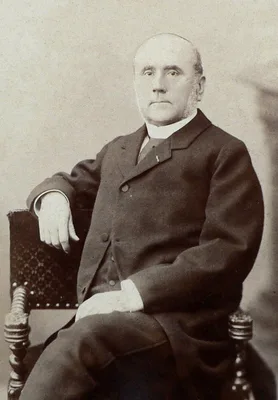
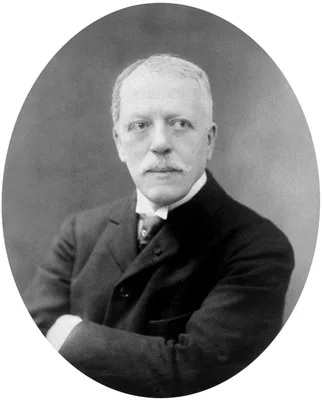
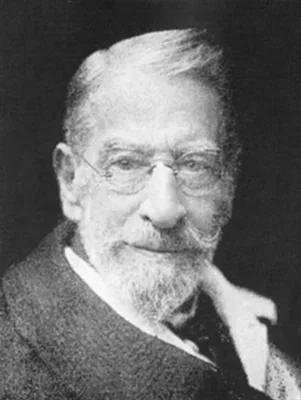
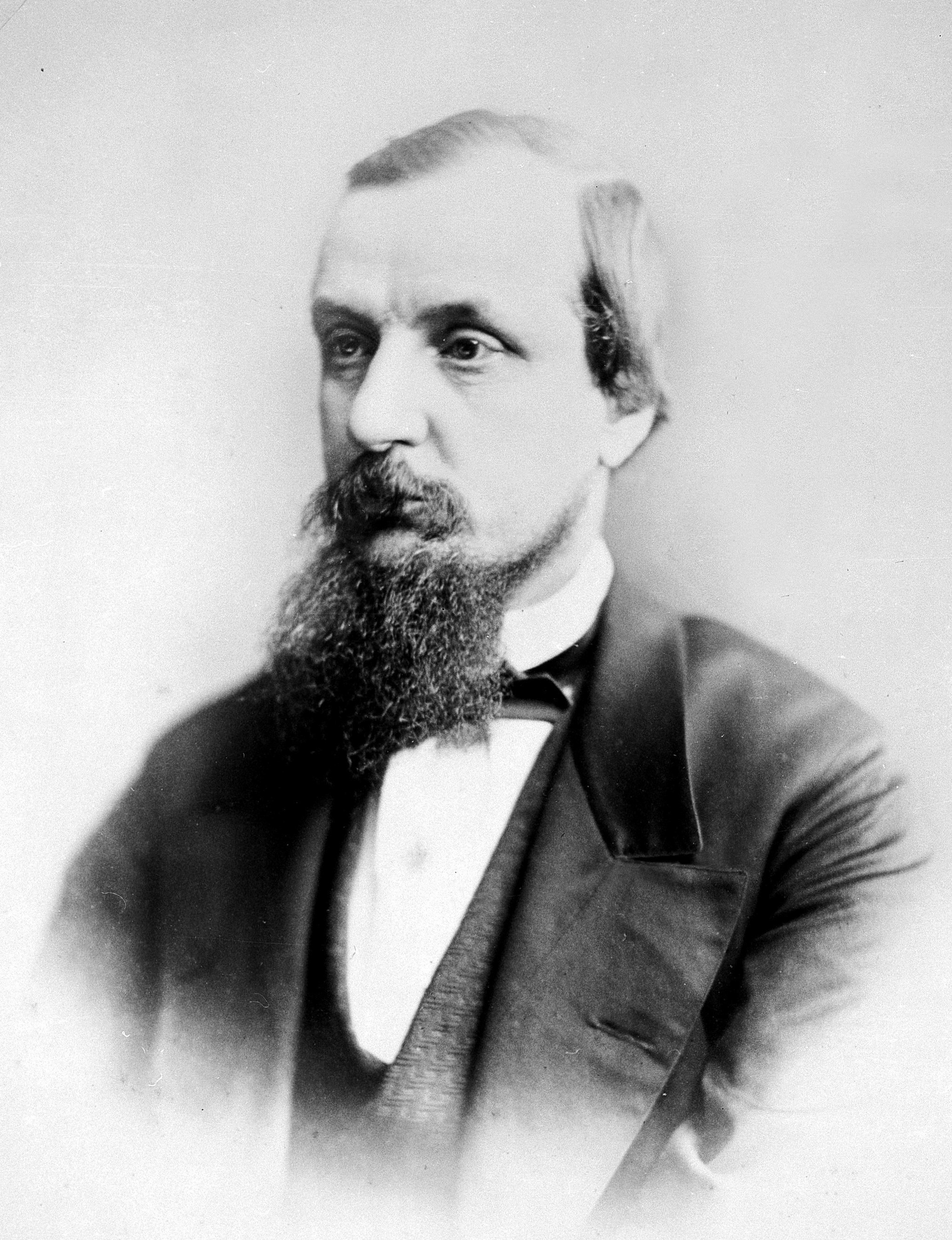
1884 HEBRA, Hans von (1847 – 1902)
Die krankhaften Veränderungen der Haut.
Hans von Hebra was the son of Ferdinand, whose work he continued. His textbook correlated skin diseases to diseases of the entire organism.
GMN 3997 · https://historyofmedicine.com/id/5057
1884 BALZER, Félix (1849 – 1929)
Recherches sur les caractères anatomiques du xanthélasma.
First description of skin changes and necropsy findings in pseudoxanthoma elasticum. See No. 4096.1 and Trans. St. John’s Hosp. Derm. Soc., 1972, 58, 235-50 (F.M. Pope).
GMN 4082.1 · https://historyofmedicine.com/id/5570
1884 DUHRING, Louis Adolphus (1845 – 1913)
Dermatitis herpetiformis.
Duhring’s best work in dermatology. He brought together, under the name of “dermatitis herpetiformis” (“Duhring’s disease”) the group of eruptions which morphologically lay between urticaria and the toxic erythemas on…
GMN 4083 · https://historyofmedicine.com/id/5573
1885 KAPOSI, Moritz Kohn (1837 – 1902)
Ueber eine neue Form von Hautkrankheit, “Lymphodermia perniciosa”.
First description of lymphoderma perniciosa, premycotic or leukemic erythrodermia.
GMN 4085 · https://historyofmedicine.com/id/5580
1885 CUNNINGHAM, David Douglas (1843 – 1914)
On the presence of peculiar parasitic organisms in the tissue of a specimen of Delhi boil.
Cunningham saw and described bodies in Delhi boil; these were almost certainly Leishman–Donovan bodies.
GMN 5293 · https://historyofmedicine.com/id/6419
1885 ESMARCH, Johann Friedrich August von (1823 – 1908); KULENKAMPFF, Diedrich (1846 – )
Die elephantiastischen Formen. Eine umfassende Darstellung der angeborenen und erworbenen Elephantiasis sowie aller verwandten Leiden.
This atlas illustrates the various changes that occur under the collective term elephantiasis, including tumors of the blood and lymphatic vessels, fibromas, neuromas, papillomas. Goldschmid 258.
GMN 9544 · https://historyofmedicine.com/id/11730
1886 UNNA, Paul Gerson (1850 – 1929)
Ichthyol und Resorcin als Repräsentanten der Gruppe reduzierender Heilmittel.
Unna introduced ichthyol and resorcinol into medicine. Supplement to Mh. prakt. Derm., No. 1.
GMN 1883 · https://historyofmedicine.com/id/2528
1886 KAPOSI, Moritz Kohn (1837 – 1902)
Lichen ruber monileformis – Korallen schnurartiger Lichen ruber.
Kaposi is credited with the first description of this condition, sometimes called “Kaposi’s disease”, and probably a rare variety of lichen planus.
GMN 4086 · https://historyofmedicine.com/id/5582
1886 NEUMANN, Isidor (1832 – 1906)
Ueber Pemphigus vegetans (frambösioides).
“Neumann’s disease” – pemphigus vegetans. This was first described by Alibert. English translation (New Sydenham Society), 1897.
GMN 4087 · https://historyofmedicine.com/id/5584
1886 VIDAL, Jean Baptiste Émile (1825 – 1893)
Du lichen (lichen, prurigo, strophulus).
“Vidal’s disease” – neurodermatitis.
GMN 4088 · https://historyofmedicine.com/id/5587
1886 –1890 MANSUROV, Nikolai Porfir'evich (1834 – 1892)
Klinicheskii sbornik po dermatologii i sifilologii. 4 vols.
Mansurov was the first dermatologist in Russia, and one of the first physicians to use photography systematically in medical illustration. This was a periodical, illustrated with original photographs, of which Manusro…
GMN 7744 · https://historyofmedicine.com/id/9916
1887 BOCKHART, Max (1883 – 1921)
Ueber die Aetiologie und Therapie der Impetigo, des Furunkels und der Sykosis.
First description of impetigo circumpilaris infantilis (“Bockhart’s impetigo”).
GMN 4089 · https://historyofmedicine.com/id/5589
1887 GIOVANNINI, Sebastiano (1851 – 1920)
Ueber die normale Entwicklung und über einige Veränderungen der menschlichen Haare.
“Giovanni’s disease”. He described the developmental defect of hair follicles known as pili multigemini.
GMN 4090 · https://historyofmedicine.com/id/5592
1887 KAPOSI, Moritz Kohn (1837 – 1902)
Impetigo herpetiformis.
Although not the first to describe this condition, Kaposi established its status.
GMN 4091 · https://historyofmedicine.com/id/5595
1887 UNNA, Paul Gerson (1850 – 1929)
Das seborrhoische Ekzem.
Unna’s seborrhoeic eczema.
GMN 4092 · https://historyofmedicine.com/id/5597
1887 WHITE, James Clarke (1833 – 1916)
Dermatitis venenata: An account of the action of external irritants upon the skin.
White, a pupil of Hebra, was an outstanding personality in American dermatology; he held the first chair in that subject in the U.S.A. The eponym “White’s disease” refers to his description of keratosis follicularis i…
GMN 4093 · https://historyofmedicine.com/id/5601
1887 UNNA, Paul Gerson (1850 – 1929)
Beiträge zur Anatomie und Pathogenese der Urticaria simplex und Pigmentosa.
Unna reported that skin lesions of urticaria pigmentosa contained numerous mast cells. This was the first report of a primary mast cell disorder. Digital facsimile from deutsche-digitale-bibliothek.de at this link.
GMN 14172 · https://historyofmedicine.com/id/16487
1888 CROCKER, Henry Radcliffe (1845 – 1909)
Diseases of the skin.
GMN 3998 · https://historyofmedicine.com/id/5063
1888 –1889 QUINQUAUD, Charles Eugene (1841 – 1894)
Folliculite épilante décalvante.
Folliculitis decalvans of Quinquaud first described. At about the same time, P. A. Robert described it independently in his thesis, Paris, 1889.
GMN 4094 · https://historyofmedicine.com/id/5604
1889 BESNIER, Ernest (1831 – 1909)
Lupus pernio de la face; synovites fongueuses (scrofulo-tuberculeuses) symétriques des extrémités supérieures.
Besnier–Boeck–Schaumann disease, Boeck’s sarcoid. Boeck (No. 4128) wrote a classic paper on the subject and later Schaumann’s paper (No. 4149) resulted in a triple eponym. (See No. 4067).
GMN 4095 · https://historyofmedicine.com/id/5608
1889 BURY, Judson Sykes (1852 – 1944)
A case of erythema with remarkable nodular thickening and induration of skin, associated with intermittent albuminuria.
Erythema elevatum diutinum (“Bury’s disease”).
GMN 4096 · https://historyofmedicine.com/id/5610
1889 CHAUFFARD, Anatole Marie Émile (1855 – 1932)
Xanthélasma disséminé et symétrique, sans insufficance hépatique.
In 1889 Chauffard gave an important description of pseudoxanthoma elasticum. Further reports on his patient were published by Besnier and Doyon, Darier, and Hallopeau and Laffitte, the last in Ann. Derm. Syph. (Paris)…
GMN 4096.1 · https://historyofmedicine.com/id/5614
1889 DARIER, Ferdinand-Jean (1856 – 1938)
De la psorospermose folliculaire végétante.
Dyskeratosis follicularis was so well described by Darier that it is universally known as “Darier’s disease”. J. C. White also described it (see No. 4093) and the first description is accredited to H.C. Lutz (No. 4050).
GMN 4097 · https://historyofmedicine.com/id/5616
1889 JACQUET, Lucien (1860 – 1915)
Des érythèmes papuleux fessiers post-érosifs.
“Jacquet’s disease”, “Jacquet’s dermatitis”, papulo-lenticular erythema of the napkin area.
GMN 4099 · https://historyofmedicine.com/id/5624
1889 TAENZER, Paul (1858 – 1919)
Ueber das Ulerythema ophryogenes, eine noch nicht beschriebene Hautkrankheit.
Ulerythema ophryogenes (“Taenzer’s disease”) first described.
GMN 4100 · https://historyofmedicine.com/id/5628
1889 HALLOPEAU, François Henri (1842 – 1919)
Sur une nouvelle forme de dermatite pustuleuse chronique en foyer à progression excentrique.
Pyodermite végétante. Hallopeau described a suppurative form of Neumann’s pemphigus vegetans.
GMN 4101 · https://historyofmedicine.com/id/5631
1889 –1890 HUTCHINSON, Sir Jonathan (1828 – 1913)
A rare form of lupus (marginatus).
“Hilliard’s lupus”. Hutchinson made an innovation in terminology when he named the disease after the patient instead of the physician describing it. The Archives, which ran to 11 volumes, were written entirely by Hutc…
GMN 4098 · https://historyofmedicine.com/id/8951
1889 MANCHOT, Carl (1866 – 1932)
Die Haut Arterien des menschlichen Körpers.
Manchot was the first to describe the vascular territories of the human skin. This work was translated into English by J. Ristic with an introduction by William D. Morain as The cutaneous arteries of the human body (N…
GMN 14299 · https://historyofmedicine.com/id/16624
1890 POLLITZER, Sigmund (1859 – 1937); JANOVSKY, Viktor (1847 – 1925)
Acanthosis nigricans. In: Int. Atlas seltener Hautkrankheiten, Heft 4, plates x-xi
First description of acanthosis nigricans.
GMN 4102 · https://historyofmedicine.com/id/5633
1890 PRINGLE, John James (1855 – 1922)
Ueber einen Fall von kongenitalem Adenoma sebaceum.
Sebaceous adenoma, type Pringle.
GMN 4103 · https://historyofmedicine.com/id/5637
1890 –1892 JADASSOHN, Josef (1863 – 1936)
Ueber eine eigenartige Form von Atrophia maculosa cutis.
“Jadassohn’s disease” – maculo-papular erythrodermia; Anetoderma erythematosum of Jadassohn.
GMN 4108 · https://historyofmedicine.com/id/5662
1891 MORAU, Henri (1860 – )
Inoculation en série d’une tumeur épithéliale de la souris blanche.
In 1889 Morau transferred epitheliomata in mice and by 1893 had carried his experiments through 17 generations, the first systematic survey of tumor-host relationships from a purely biological viewpoint.
GMN 2622.1 · https://historyofmedicine.com/id/3159
1891 –1892 HUTCHINSON, Sir Jonathan (1828 – 1913)
Infective angeioma or naevus-lupus.
Angioma serpiginosum.
GMN 4104 · https://historyofmedicine.com/id/5641
1891 MIBELLI, Vittorio (1860 – 1910)
L’angiocheratoma.
Mibelli gave the name to angiokeratoma although it had already been described by Cottle in 1877. It is also called “Mibelli’s disease”.
GMN 4105 · https://historyofmedicine.com/id/5646
1891 NONNE, Max (1861 – 1959)
Vier Fälle von Elephantiasis congenita hereditaria.
First description of hereditary oedema of the legs, generally known as “Milroy’s disease” or as “Meige’s disease” (No. 4129).
GMN 4106 · https://historyofmedicine.com/id/5648
1891 PIFFARD, Henry Granger (1842 – 1910); FULLER, Robert M.
A practical treatise on diseases of the skin
The first systematic treatise on dermatology published in America. Piffard was a pioneer of "indoor" magnesium flashlight photography, and took most of the 50 photographs reproduced in this book by this technique. Dig…
GMN 10598 · https://historyofmedicine.com/id/12791
1892 GALTON, Sir Francis (1822 – 1911)
Finger prints.
The use of fingerprints as identification marks was known to the Chinese, but Galton was among the first to explain their possibilities in the identification of criminals. “Galton’s delta” is a triangular area of papi…
GMN 186 · https://historyofmedicine.com/id/3435
1892 BESNIER, Ernest (1831 – 1909)
Première note et observations préliminaires pour servir d’introduction à l’étude des prurigos diathésiques (dermites multiformes prurigineuses chroniques exacerbantes et paroxystiques, du type du prurigo de Hebra).
“Besnier’s prurigo”.
GMN 4107 · https://historyofmedicine.com/id/5652
1892 MILROY, William Forsyth (1855 – 1942)
An undescribed variety of hereditary oedema.
Independently of Nonne (No. 4106) Milroy described congenital edema of the legs; it has been given the eponym “Milroy’s disease”.
GMN 4109 · https://historyofmedicine.com/id/5666
1892 UNNA, Paul Gerson (1850 – 1929)
Drei Favusarten.
Unna described the different fungi of favus. He founded the above-mentioned journal, and he is one of the most eminent figures in modern dermatology.
GMN 4110 · https://historyofmedicine.com/id/5671
1892 BÓKAY, János (1858 – 1937)
Das Auftreten von Varizellen unter eigentümlichen Verhältnissen.
Bokay was the first to suggest an etiological relationship between varicella and herpes zoster. See also his paper in Wien. klin. Wschr., 1909, 22, 1323-26.
GMN 5439.1 · https://historyofmedicine.com/id/7460
1892 –1896 BRAMWELL, Sir Byrom (1847 – 1931)
Atlas of clinical medicine. 3 vols.
Published at the end of the 19th century, and employing the wide variety of illustration technologies then available, including color lithography, lithography, and photography, this work testifies to the breadth and d…
GMN 10621 · https://historyofmedicine.com/id/12814
1893 ROBINSON, Andrew Rose (1845 – 1924)
Hidrocystoma.
Robinson wrote an excellent textbook on dermatology in 1884, the year in which he published the first description of hydrocystoma (“Robinson’s disease”).
GMN 4084 · https://historyofmedicine.com/id/5576
1893 DARIER, Ferdinand-Jean (1856 – 1938)
Dystrophie papillaire et pigmentaire.
Acanthosis nigricans.
GMN 4113 · https://historyofmedicine.com/id/5676
1893 MIBELLI, Vittorio (1860 – 1910)
Contributo allo studio della ipercheratosi dei canali sudoriferi (porokeratosis).
Mibelli is sometimes credited with the original description of porokeratosis (“Mibélli’s disease”), but Neumann described it in 1875 under the name of “dermatitis circumscripta herpetiformis”. See No. 4068.
GMN 4114 · https://historyofmedicine.com/id/5682
1893 RESPIGHI, Emilio (1860 – 1936)
Di una ipercheratosi non ancora descritta.
First description of hyperkeratosis excentrica, porokeratosis.
GMN 4115 · https://historyofmedicine.com/id/5686
1894 SABOURAUD, Raymond Jacques Adrien (1864 – 1938)
Les tricophyties humaines.
In his extensive studies of the role of fungi in skin diseases, Sabouraud revived and elaborated the discoveries of Gruby (Nos. 4030, 4034-36), which had remained neglected for half a century. See also No. 4116.
GMN 3999 · https://historyofmedicine.com/id/5065
1894 UNNA, Paul Gerson (1850 – 1929)
Die Histopathologie der Hautkrankheiten.
This monumental work is a landmark in dermatological history. Sir Norman Walker translated it into English in 1896. Unna, short in stature but a giant among dermatologists, initiated the study of the skin by means of …
GMN 4000 · https://historyofmedicine.com/id/5072
1894 SABOURAUD, Raymond Jacques Adrien (1864 – 1938)
La teigne trichophytique et la teigne spéciale de Grüby.
GMN 4116 · https://historyofmedicine.com/id/5690
1894 VINCENT, Jean Hyacinthe (1862 – 1950)
Étude sur le parasite du “pied de Madura”.
Isolation of Streptothrix (Actinomyces) madurae.
GMN 4117 · https://historyofmedicine.com/id/5703