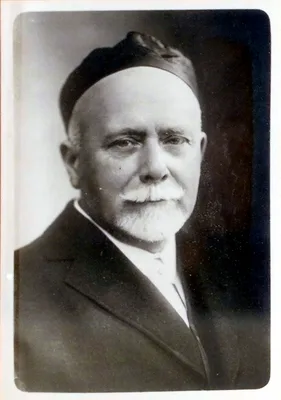
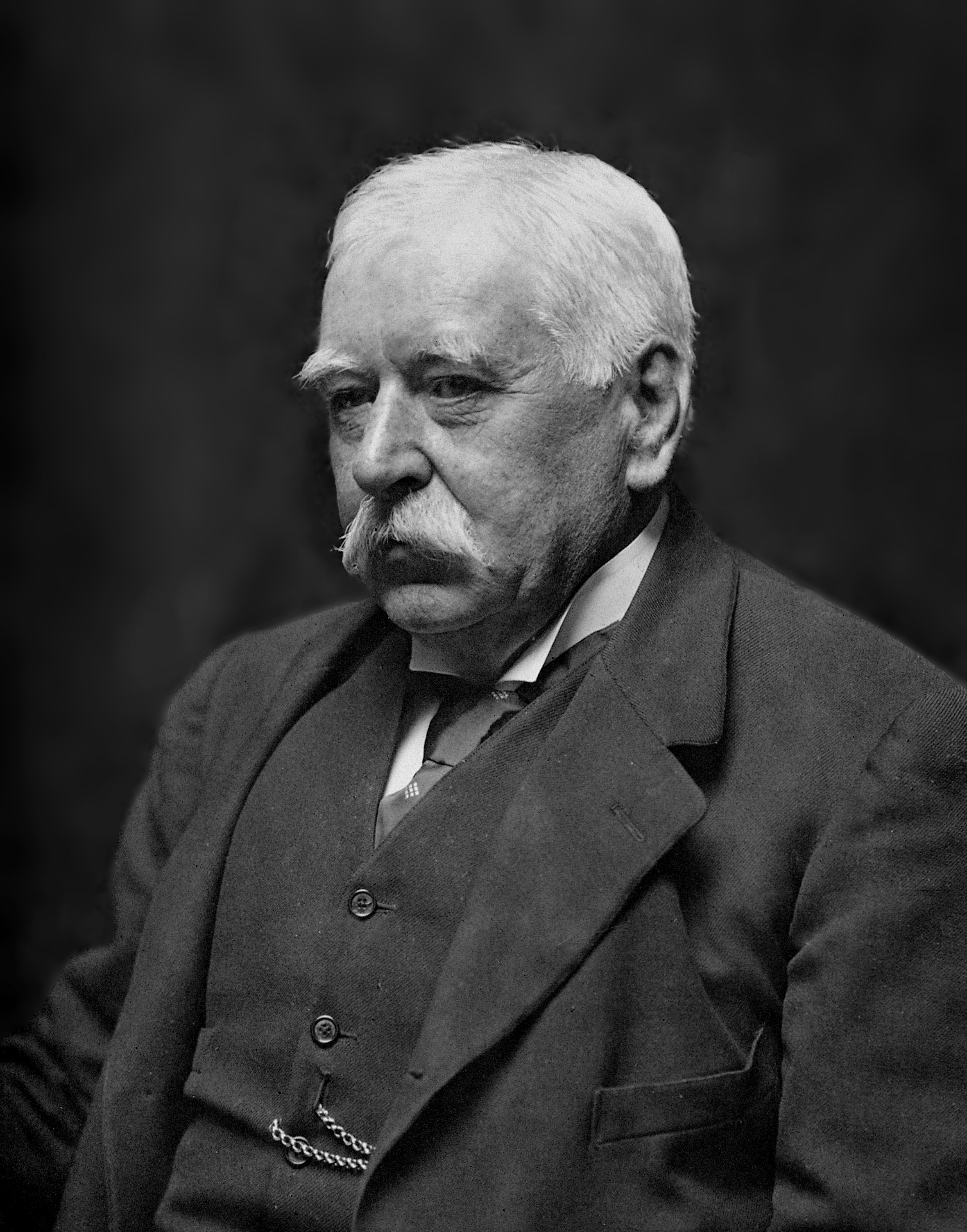
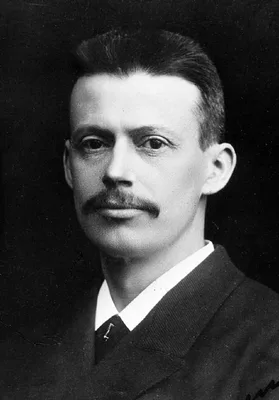
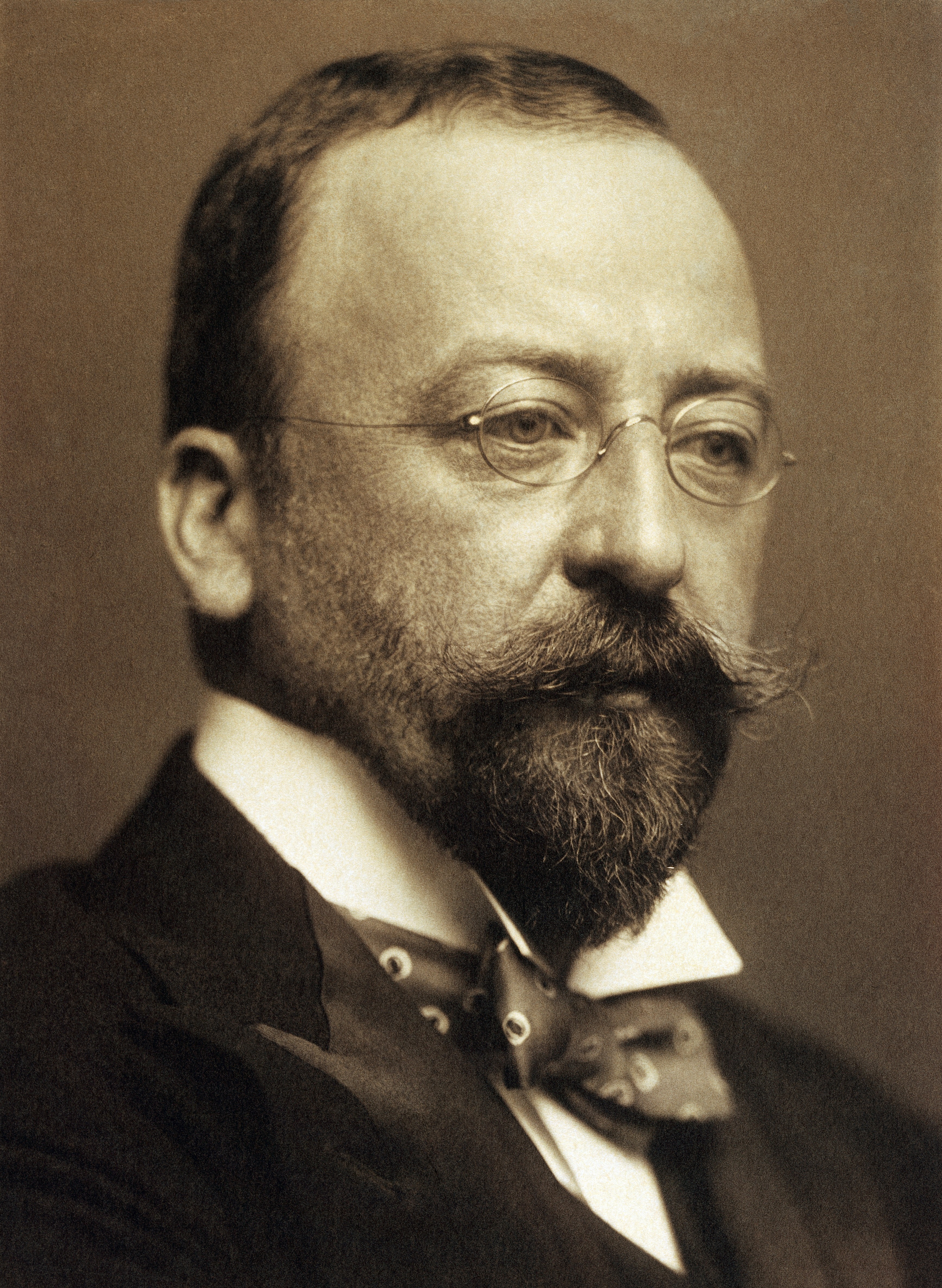
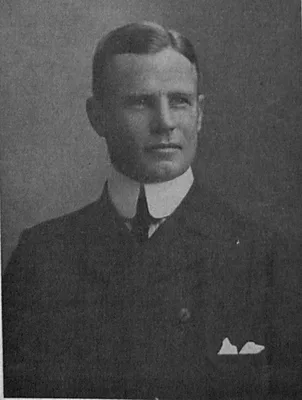
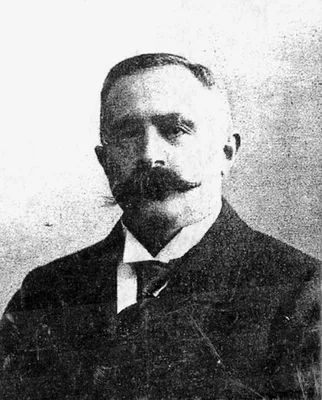
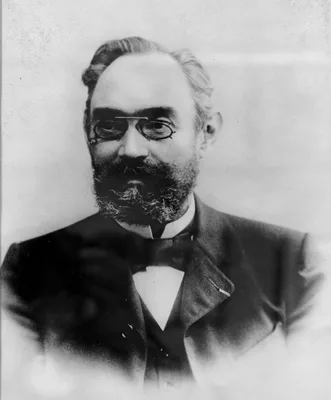
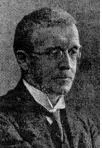
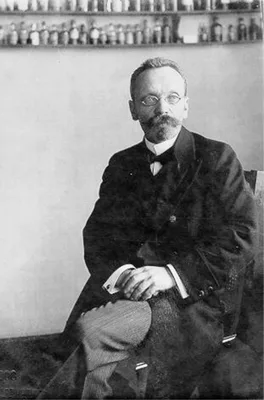
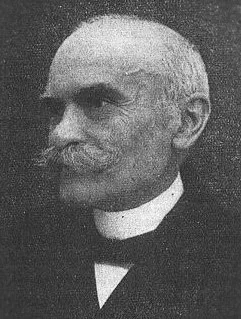
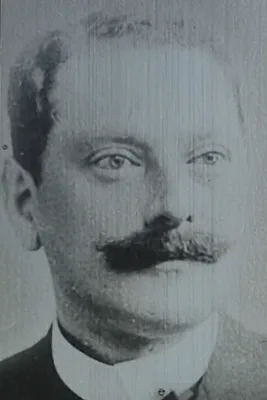
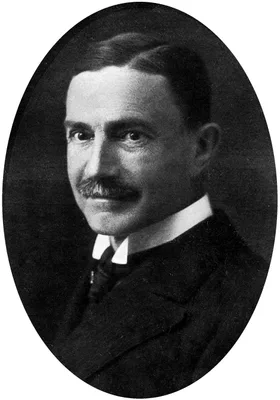
1895 REHN, Ludwig (1849 – 1930)
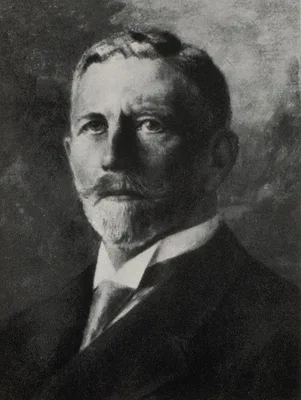
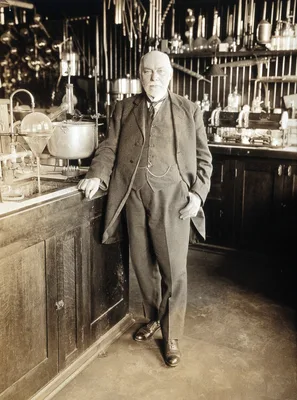
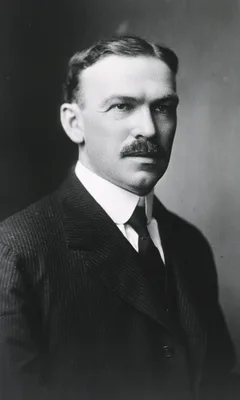
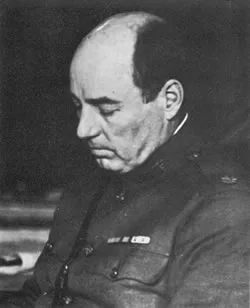
Blasengeschwülste bei Fuchsin-Arbeitem.
Rehn noted the frequent appearance of papilloma and carcinoma of the bladder among men employed in the aniline dye industry.
GMN 2128.1 · https://historyofmedicine.com/id/2659
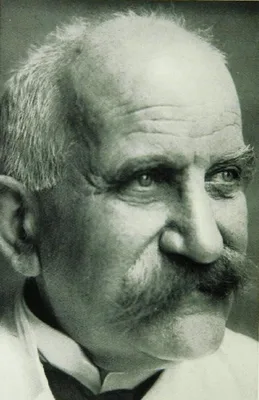
1895 KAPOSI, Moritz Kohn (1837 – 1902)
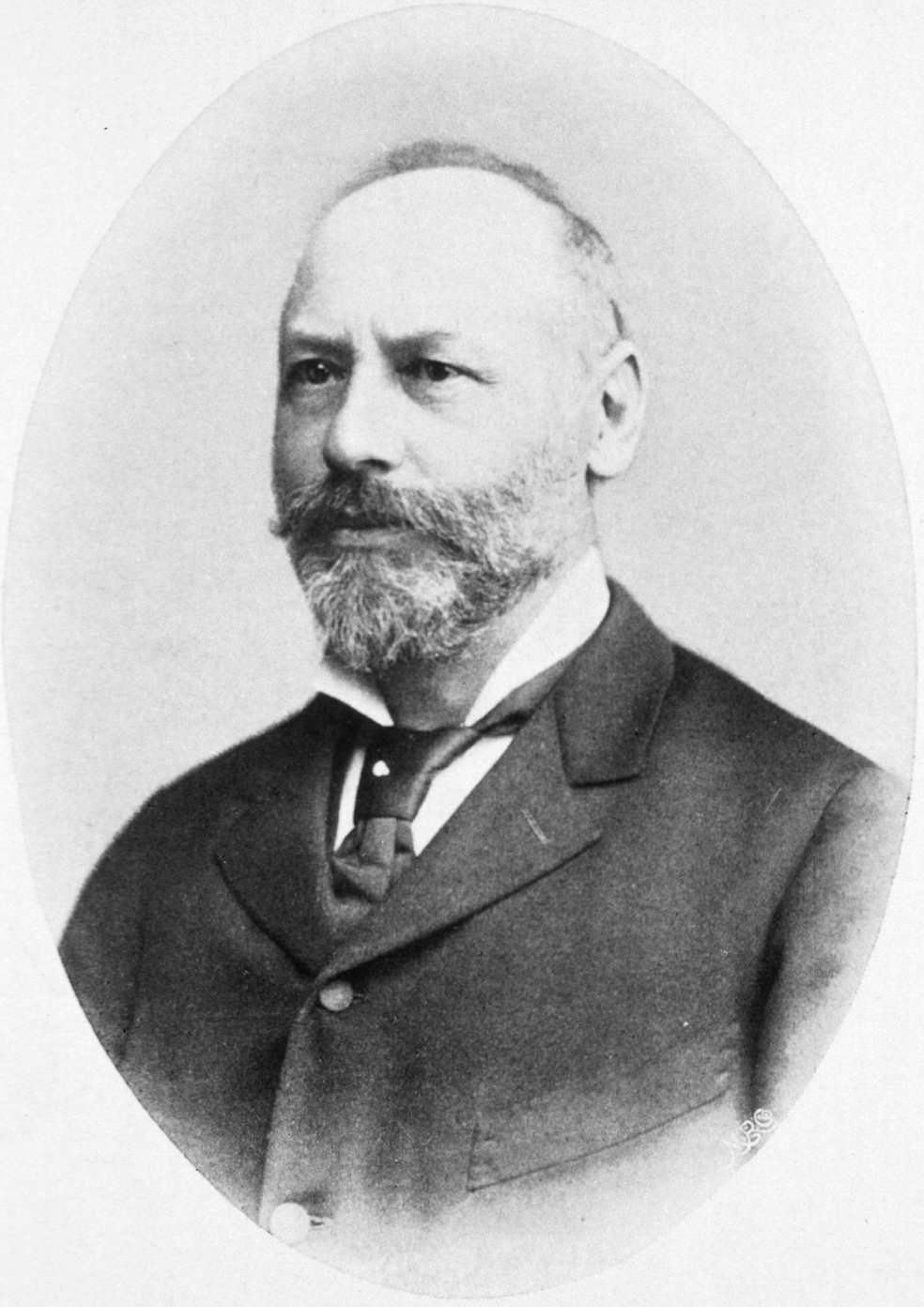
Lichen ruber acuminatus und Lichen ruber planus.
GMN 4120 · https://historyofmedicine.com/id/5707
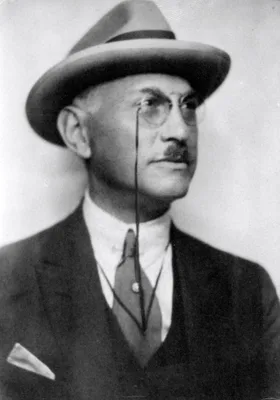
1895 OSLER, Sir William (1849 – 1919)
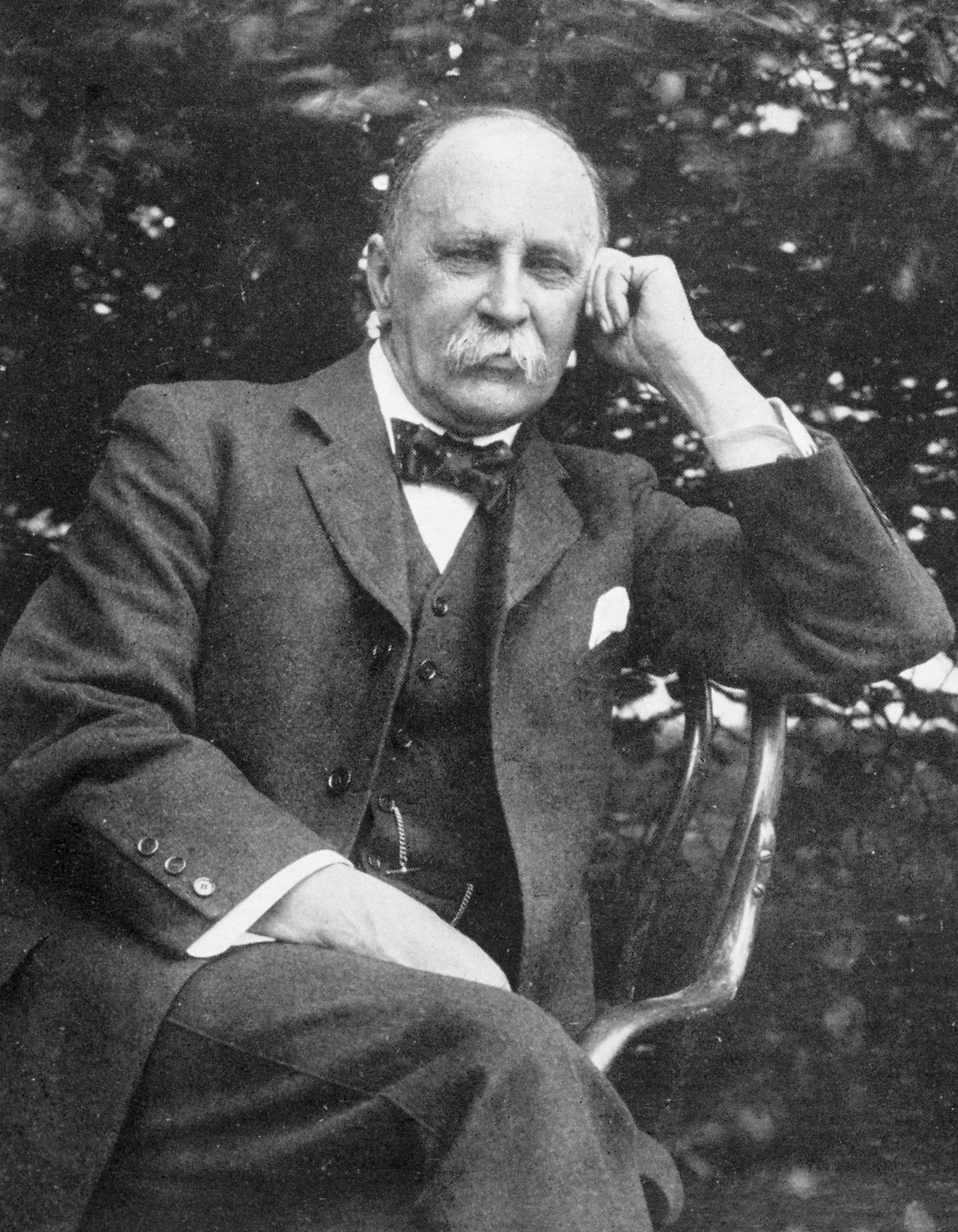
On the visceral complication of erythema exudativum multiforme.
GMN 4121 · https://historyofmedicine.com/id/5711
1895 BREDA, Achille (1850 – 1933)
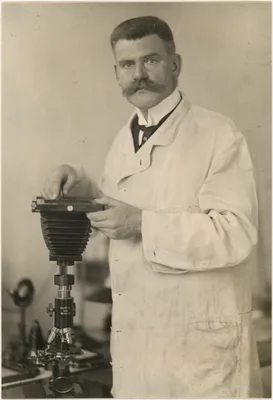
Beitrag zum klinischen und bacteriologischen Studium der brasilianischen Framboesie oder “Boubas”.
“Breda’s disease” – Brazilian yaws. English translation New Sydenham Society, 1897.
GMN 5293.1 · https://historyofmedicine.com/id/6435
1895 BUSSE, Otto Emil Franz Ulrich (1867 – 1922)
Ueber parasitäre Zelleinschlüsse und ihre Züchtung.
“Busse–Buschke disease” –blastomycosis of the skin due to Cryptococcus neoformans. See also No. 5529.2. Busse first described it in Zbl. Bakt., 1894, 16, 175-80.
GMN 5529.1 · https://historyofmedicine.com/id/6648
1896 DARIER, Ferdinand-Jean (1856 – 1938)
Des “tubercules” cutanées.
Darier grouped together, under the heading “tuberculides”, the skin eruptions associated with tuberculosis.
GMN 4122 · https://historyofmedicine.com/id/5719
1896 FORDYCE, John Addison (1858 – 1925)
A peculiar affection of the mucous membrane of the lips and the oral cavity.
Fordyce, remembered for the description of “Fox–Fordyce disease”, also described a pseudocolloid of the buccal mucosa, which is known as “Fordyce’s disease”.
GMN 4123 · https://historyofmedicine.com/id/5724
1896 MAJOCCHI, Domenico (1849 – 1929)
Sopra una dermatosi telangettode non ancora descritta “Purpura annularis” “Telangectasia follicularis annulata” studio clinico.
Purpuraannularis telangiectodes (Majocchi) first described.
GMN 4125 · https://historyofmedicine.com/id/5727
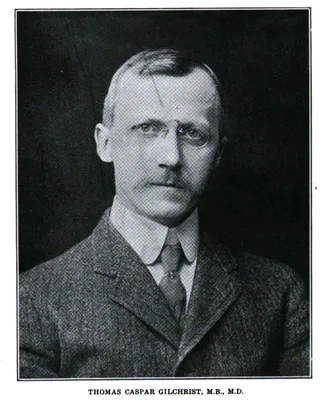
1896 GILCHRIST, Thomas Caspar (1862 – 1927)
A case of blastomycetic dermatitis in man.
Gilchrist’s description of blastomycosis (“Gilchrist’s disease”, “Busse-Buschke disease”, Nos. 5529.1 and 5529.2), is an important contribution to the knowledge of the infectious granulomata involving the skin.
GMN 5530.1 · https://historyofmedicine.com/id/6659
1896 ABEL, John Jacob (1857 – 1938); DAVIS, Walter S.
On the pigment of the negro's skin and hair.
"In the present state of our knowledge we can only say that it seems highly probable that the pigment of the negro's hair is not different from the dark pigment found in the hair of the white races, and we may infer t…
GMN 13072 · https://historyofmedicine.com/id/15324
1897 FREUND, Leopold (1868 – 1944)
Demonstration eines mit Röntgenstrahlen behandelten Falles von Naevus pigmentosus pilosus.
First use of x rays for deep irradiation therapy.
GMN 2002 · https://historyofmedicine.com/id/1909
1897 FREY, Maximilian (Max) Ruppert Franz von (1852 – 1932)
Untersuchungen über die Sinnesfunctionen der menschlichen Haut. I. Druckempfindung und Schmerz.
In his investigations on cutaneous sensibility Frey introduced his method of testing the sensitiveness of pressure points by means of bristles mounted in a handle.
GMN 1475 · https://historyofmedicine.com/id/2448
1897 SABOURAUD, Raymond Jacques Adrien (1864 – 1938)
La séborrhée grasse et la pelade.
Acne bacillus first cultivated.
GMN 4126 · https://historyofmedicine.com/id/5730
1897 FOX, George Henry (1846 – 1937)
Photographic atlas of diseases of the skin. A series of eighty plates comprising one hundred illustrations photographed from life and colored by hand.
Large folio, issued in 16 parts, each image hand-colored and signed by Fox. This was physically the largest work and presumably the most expensive work issued by Fox.
GMN 9567 · https://historyofmedicine.com/id/11753
1897 FOX, George Henry (1846 – 1937)
Skin diseases of children. With twelve photogravure and chromographic plates, and sixty illustrations in the text.
Digital facsimile from the Internet Archive at this link.
GMN 10597 · https://historyofmedicine.com/id/12790
1898 MANSON, Sir Patrick (1844 – 1922)
Tropical diseases.
Manson has been called the “father of modern tropical medicine”. He had vast experience of disease in the Tropics and himself made many valuable contributions to the knowledge of this subject. He described tinea nigra…
GMN 2266 · https://historyofmedicine.com/id/2823
1898 –1900 KAPOSI, Moritz Kohn (1837 – 1902)
Handatlas der Hautkrankheiten fur Studirende und Arzte. 3 pts.
An extensive and valuable collection of illustrations in dermatology. Includes 377 chromolithographs. "In publishing this hand atlas of skin diseases, I wish to provide students with an aid to their studies and genera…
GMN 4001 · https://historyofmedicine.com/id/5076
1898 SCHENCK, Benjamin Robinson (1873 – 1920)
On refractory subcutaneous abscesses caused by a fungus possibly related to the sporotricha.
Schenck first described a form of sporotrichosis, due to a pathogenic fungus, which later became known as Sporotrichum beurmanni, after more thorough studies upon it by de Beurmann in 1903.
GMN 4127 · https://historyofmedicine.com/id/5734
1898 FABRE-DOMERGUE, Paul-Louis (1861 – 1940)
Les cancers épithéliaux. Histologie - Histogenèse - Etiologie - Applications thérapeutiques.
GMN 11152 · https://historyofmedicine.com/id/13349
1899 SJÖGREN, Tage Anton Ultimus (1859 – 1939)
Fall af epiteliom behandladt med Roentgenstraler.
In June 1899 Sjögren was the first successfully to use Roentgen rays in the treatment of cancer.
GMN 2624 · https://historyofmedicine.com/id/3170
1899 FINSEN, Niels Ryberg (1860 – 1904)
La photothérapie. Les rayons chimiques et la variole. La lumière comme agent d’excitabilité. Traitement du lupus vulgaire par des rayons chimiques concentrés.
Finsen was a pioneer in the treatment of lupus by means of light. English translation, 1901.
GMN 4002 · https://historyofmedicine.com/id/5081
1899 BOECK, Caesar Peter Møller (1845 – 1917)
Multipelt benignt hud-sarcoid.
The syndrome of benign sarcoid (“Boeck’s sarcoid”) was first established by Boeck. English translation in J. cutan. gen.-urin. Dis., 1899, 17, 543-50. In 1940 Danbolt (Schweiz. med. Wschr., 1947, 77, 1149-50) reexamin…
GMN 4128 · https://historyofmedicine.com/id/5737
1900 HEAD, Sir Henry (1861 – 1940); CAMPBELL, Alfred Walter (1868 – 1937)
The pathology of herpes zoster and its bearing on sensory localisation.
Head and Campbell showed herpes zoster to be a hemorrhagic inflammation of the posterior nerve roots and the homologous spinal ganglia.
GMN 4644 · https://historyofmedicine.com/id/724
1900 BUSCHKE, Abraham (1868 – 1943)
Ueber Scleroedem.
Scleroedemaadultorum syndrome of Buschke.
GMN 4130 · https://historyofmedicine.com/id/5750
1900 KLIPPEL, Maurice (1858 – 1942); TRÉNAUNAY, Paul (1875 – )
Du naevus variqueux ostéo-hypertrophique.
“Klippel–Trenaunay syndrome”.
GMN 4131 · https://historyofmedicine.com/id/5754
1900 SEEBER, Guillermo Rodolfo (1876 – )
Un nuevo esporozoario parásito del hombre. Dos casos encontrados en pólipos nasales: Tesis presentada para optar al grado de doctor en medicina.
Rhinosporidiosis first described. Digital facsimile from bibliomedicinadigital.fmed.uba.ar at this link.
GMN 4131.1 · https://historyofmedicine.com/id/8628
1901 OSLER, Sir William (1849 – 1919)
On a family form of recurring epistaxis, associated with multiple telangiectases of the skin and mucous membranes.
“Rendu–Osler–Weber disease.” Multiple hereditary telangiectasis was first described by Legg (No. 2707) in 1876 and later by Rendu (No. 2710) and Weber (No. 2714). Reprinted in Medical Classics, 1939, 4, 243-53.
GMN 2711 · https://historyofmedicine.com/id/4430
1901 DANLOS, Henri-Alexandre (1844 – 1912); BLOCH, P
Note sur le traitement du lupus érythémateux par des applications de radium.
First application of radium in the treatment of lupus.
GMN 4003 · https://historyofmedicine.com/id/5090
1901 EHLERS, Edvard (1863 – 1937)
Cutis laxa. Neigung zu Haemorrhagien in der Haut, Lockerung mehrerer Artikulationen.
Description of the syndrome to which the name “Ehlers–Danlos syndrome” was later attached (see also No. 4144), earlier described by Tschernogubow: Cutis laxa, Mh. prakt. Derm., 1892, 14, 76.
GMN 4132 · https://historyofmedicine.com/id/5767
1901 JADASSOHN, Josef (1863 – 1936)
Ueber eine eigenartige Erkrankung der Nasenhaut bei Kindern (“Granulosis rubra nasi”).
In his important paper on granulosis rubra nasi, Jadassohn gave the condition its present name. Previously Pringle, 1894, and Luithlen, 1900, had described probable cases.
GMN 4133 · https://historyofmedicine.com/id/5769
1901 SCHAMBERG, Jay Frank (1870 – 1934)
A peculiar progressive pigmentary disease of the skin.
Schamberg’s progressive pigmentary dermatosis; first description.
GMN 4134 · https://historyofmedicine.com/id/5773
1901 LOOSS, Arthur (1861 – 1923)
Ueber das Eindringen der Ankylostomalarven in die menschliche Haut.
Looss discovered that hookworms can penetrate the skin; he himself became infected when hookworm culture accidentally spilled on his hands. English translation in Kean (No. 2268.1).
GMN 5362 · https://historyofmedicine.com/id/6971
1901 BLASCHKO, Alfred (1858 – 1922)
Die Neven-verteilung in der Haut in ihrer Beziehung zu den Erkrankungen der Haut. Beilage zu den Verhandlungen der Deutschen Dermatologischen Gesellschaft VII Congress.
At the Seventh Congress of the German Dermatological Society held in 1901Blaschko presented observations of a rare dermatological condition involving patterned skin lesions S-shaped on the abdomen, V-shaped over the u…
GMN 14092 · https://historyofmedicine.com/id/16403
1902 BROCQ, Louis Anne Jean (1856 – 1928)
Les parapsoriasis.
“Brocq’s disease”; he proposed the term “parapsoriasis” for the condition which had previously been described under various names and often mistaken for other dermatoses.
GMN 4135 · https://historyofmedicine.com/id/5776
1902 FOX, George Henry (1846 – 1937); FORDYCE, John Addison (1858 – 1925)
Two cases of a rare papular disease affecting the axillary region.
“Fox–Fordyce disease”. These writers described a papular, itchy eruption, confined to the axillae, nipples and pubes, and considered to be due to a dysfunction of the apocrine glands.
GMN 4137 · https://historyofmedicine.com/id/5783
1902 HERXHEIMER, Karl (1861 – 1944); HARTMANN, Kuno
Ueber Acrodermatitis chronica atrophicans.
Taylor described the condition in 1876 (No. 4069) and Herxheimer and Hartmann named it, separating it from other atrophies which had been called by a number of different names.
GMN 4138 · https://historyofmedicine.com/id/5786
1903 STEFANSKY, W. K.
Eine Lepraähnliche Erkrankung der Haut und der Lymphdrtüsen bei Wanderratten.
Murine leprosy described.
GMN 2436.2 · https://historyofmedicine.com/id/2905
1903 LONDON, Efim Semenovich (1869 – 1939); GOLDBERG, S. W.
Zur Frage der Beziehungen zwischen Becquerelstrahlen und Hautaffectionen.
Records the first successful employment of radium in the treatment of cancer.
GMN 2627 · https://historyofmedicine.com/id/3197
1903 PERTHES, Georg Clemens (1869 – 1927)
Ueber den Einfluss der Röntgenstrahlen auf epitheliale Gewebe, insbesondere auf das Carcinom.
Perthes was among the first to study the inhibitory effect of x rays on carcinoma; he was a pioneer in radiotherapy.
GMN 2627.1 · https://historyofmedicine.com/id/3198
1903 WRIGHT, James Homer (1871 – 1928)
Protozoa in a case of tropical ulcer (Delhi sore).
Wright found Leishmania tropica in Delhi sore. He was unaware of Borovskii’s paper (No. 5294).
GMN 5297 · https://historyofmedicine.com/id/8607
1903 MACLEOD, John MacLeod Hendrie (1870 – 1954)
Practical handbook of the pathology of the skin. An introduction to the histology, pathology, and bacteriology of the skin, with special reference to technique.
The first textbook on dermatopathology in English. Digital facsimile from Internet Archive at this link.
GMN 7315 · https://historyofmedicine.com/id/9485
1904 POWER, Frederick Belding (1853 – 1927); GORNALL, Frank Howorth
The constituents of chaulmoogra seeds.
Hydnocarpus wightiana or Chaulmoogra is a tree in the Achariaceae family. The oil from seeds of Hydnocarpus wightiana or Chaulmoogra, a tree in the Achariaceae family, was widely used in Indian medicine and Chinese tr…
GMN 2437 · https://historyofmedicine.com/id/2907
1904 SABOURAUD, Raymond Jacques Adrien (1864 – 1938)
Surla radiothérapie des teignes.
Sabouraud’s method of radiological treatment of ringworm.
GMN 4004 · https://historyofmedicine.com/id/5099
1904 SABOURAUD, Raymond Jacques Adrien (1864 – 1938)
Pityriasis et alopécies pelliculaires.
Classic account of the different varieties of Trichophyton.
GMN 4139 · https://historyofmedicine.com/id/5788
1905 JULIUSBERG, Max (1874 – )
Zur Kenntnis des Virus des Molluscum contagiosum des Menschen.
Juliusberg showed that the virus of molluscum contagiosum passed a Chamberland filter.
GMN 4140 · https://historyofmedicine.com/id/5793
1905 –1906 TYZZER, Ernest Edward (1875 – 1965)
The histology of the skin lesions in varicella.
Tyzzer was first to recognize inclusion bodies in varicella.
GMN 5440 · https://historyofmedicine.com/id/7464
1906 STRONG, Richard Pearson (1872 – 1948)
A study of some tropical ulcerations of skin with particular reference to their etiology.
Strong described organisms consistent with Histoplasma capsulatum before Darling, although his work was overshadowed by the latter.
GMN 5531.1 · https://historyofmedicine.com/id/6675
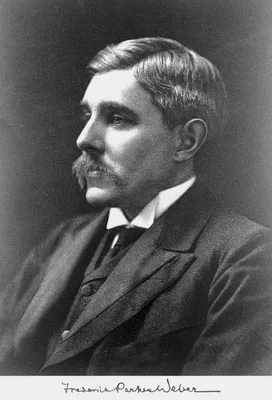
1907 WEBER, Frederick Parkes (1863 – 1962)
Multiple hereditary developmental angiomata (telangiectases) of the skin and mucous membranes associated with recurring haemorrhages.
“Rendu–Osler–Weber disease.”
GMN 2714 · https://historyofmedicine.com/id/4436
1907 JACOBI, Eduard (1862 – 1915)
Fall zur Diagnose (Poikiloderma vascularis atrophicans).
First description.
GMN 4141 · https://historyofmedicine.com/id/5796
1907 CIUFFO, Giuseppe (1870 – 1936)
Innesto positivo con filtrato de verruca volgare.
Ciuffo presented the first demonstration that a cell-free agent could induce a human tumor. He induced human warts on his own hand with a bacteria-free filtrate (a virus) prepared from excised wart tissue. The signifi…
GMN 4142 · https://historyofmedicine.com/id/5799