1895 FÜRBRINGER, Paul Walther (1849 – 1930)
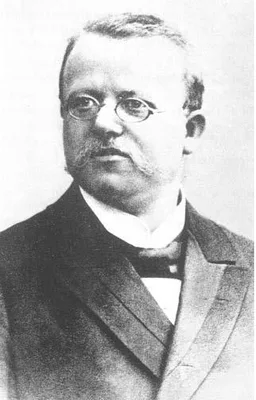
Zur klinischen Bedeutung der spinalen Punction.
Fürbringer demonstrated the diagnostic value of spinal puncture.
GMN 4873 · https://historyofmedicine.com/id/5715
1898 GIGLI, Leonardo (1863 – 1908)
Zur Technik der temporären Schädelresektion mit meiner Drahtsäge.
Gigli’s saw adapted for craniotomy. Translation in J. Neurosurg., 1962, 19, 1103.
GMN 4874 · https://historyofmedicine.com/id/5718
1900 CUSHING, Harvey Williams (1869 – 1939)
A method of total extirpation of the Gasserian ganglion for trigeminal neuralgia, by a route through the temporal fossa and beneath the middle meningeal artery.
GMN 4875 · https://historyofmedicine.com/id/5722
1901 SPILLER, William Gibson (1863 – 1940); FRAZIER, Charles Harrison (1870 – 1936)
The division of the sensory root of the trigeminus for the relief of tic douloureux; an experimental, pathological, and clinical study, with a preliminary report of one surgically successful case.
Introduction of intracranial trigeminal neurotomy, using a modification of the techniques of Horsley (No. 4865) and Krause (No. 4871). Also published in Philad. med. J., 1901, 8, 1039-49.
GMN 4876 · https://historyofmedicine.com/id/5732
1902 CUSHING, Harvey Williams (1869 – 1939)
Some experimental and clinical observations concerning states of increased intracranial tension.
According to Theodore Janeway (No. 11572), Cushing was the first to recommend routine measurement of blood pressure during surgery using the Riva Rocci sphygmomanometer.(See No. 2804). Cushing visited Riva Rocci at Pa…
GMN 11573 · https://historyofmedicine.com/id/13772
1904 CUSHING, Harvey Williams (1869 – 1939)
Pneumatic tourniquets: With especial reference to their use in craniotomies.
First report of tourniquet with pneumatic pressure of measurable degree. This inflatable cuff was the forerunner of the modern pneumatic tournequet cuff.
GMN 4877.1 · https://historyofmedicine.com/id/5738
1905 CUSHING, Harvey Williams (1869 – 1939)
Concerning surgical intervention for the intracranial hemorrhages of the new-born.
Successful operative intervention in intracranial hemorrhage of the new-born.
GMN 4878 · https://historyofmedicine.com/id/5742
1905 CUSHING, Harvey Williams (1869 – 1939)
The establishment of cerebral hernia as a decompressive measure for inaccessible brain tumors.
GMN 4879 · https://historyofmedicine.com/id/5745
1907 BALLANCE, Sir Charles Alfred (1865 – 1936)
Some points on the surgery of the brain and its membranes.
Ballance recognized and described chronic subdural hematoma with great accuracy, described a successful operation for it and also for subdural hygroma, discussed brain abscess fully and devoted 243pp. to brain tumors.
GMN 4879.01 · https://historyofmedicine.com/id/5749
1908 HORSLEY, Sir Victor Alexander Haden (1857 – 1916); CLARKE, Robert Henry (1850 – 1926)
The structure and functions of the cerebellum examined by a new method.
Stereotactic apparatus for the accurate location of electrodes in the brain. The apparatus devised by Horsley and Clarke opened the way to stereotactic surgery of the brain.
GMN 1435.1 · https://historyofmedicine.com/id/2230
1908 FOERSTER, Otfrid (1873 – 1941)
Ueber eine neue operative Methode der Behandlung spastischer Lähmungen mittels Resektion hinterer Rückenmarkswurzeln.
Foerster’s operation of rhizotomy for spastic paralysis.
GMN 4880 · https://historyofmedicine.com/id/5762
1908 CUSHING, Harvey Williams (1869 – 1939); KEEN, William Williams (1837 – 1932)
Surgery of the head. In: Surgery: its principles and practice, edited by William Williams Keen, 3, 17-276.
Cushing’s first treatise on neurosurgery. “As a result of this detailed monograph, neurological surgery became almost at once recognized as a clear-cut field of surgical endeavor” (J.F. Fulton, Harvey Cushing [1947] 2…
GMN 4880.1 · https://historyofmedicine.com/id/5765
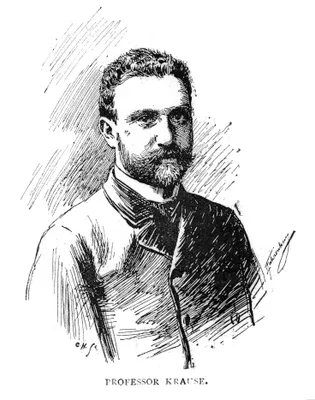
1908 –1911 KRAUSE, Fedor (1856 – 1937)
Chirurgie des Gehirns und Rückenmarks nach eigenen Erfahrungen. 2 vols.
With Macewen and Cushing, Krause pioneered the development of neurosurgery as a specialty. This is his most comprehensive work. English translation by H.A. Haubold and M. Thorek, 3 vols., New York, Rebman, [1909-12],
GMN 4880.2 · https://historyofmedicine.com/id/5768
1909 FOERSTER, Otfrid (1873 – 1941); KÜTTNER, Hermann (1870 – 1932)
Ueber operative Behandlung gastrischer Krisen durch Resektion der 7-10. hinteren Dorsalwurzel.
Foerster’s operation for tabes.
GMN 4881 · https://historyofmedicine.com/id/5772
1909 HORSLEY, Sir Victor Alexander Haden (1857 – 1916)
The Linacre lecture on the function of the so-called motor area of the brain.
Horsley demonstrated that removal of the precentral area in man abolished athetosis.
GMN 4882 · https://historyofmedicine.com/id/5777
1909 CUSHING, Harvey Williams (1869 – 1939); BORDLEY, James Jr. (1874 – 1956)
Observations on choked disc, with especial reference to decompressive cranial operations.
The diagnostic value for neurosurgery of changes in the optic nerve caused by increased intracranial pressure.
GMN 10720 · https://historyofmedicine.com/id/12914
1911 GOLDTHWAIT, Joel Ernest (1866 – 1961)
The lumbo-sacral articulation. An explanation of many cases of “lumbago”, “sciatica” and paraplegia.
Goldthwait suggested that lumbago and sciatica might be due to intervertebral disc injury.
GMN 4383 · https://historyofmedicine.com/id/5898
1911 TEACHER, John Hammond (1869 – 1930); MIDDLETON, George Stevenson (1854 – 1928)
Injury of the spinal cord due to rupture of an intervertebral disc during muscular effort.
Report of a case of “sciatica” due to rupture of an intervertebral disc.
GMN 4384 · https://historyofmedicine.com/id/5908
1911 CUSHING, Harvey Williams (1869 – 1939)
The control of bleeding in operations for brain tumors. With the description of silver "clips" for the occlusion of vessels inaccessible to the ligature.
Cushing introduced the use of silver clips in neurosurgery to control bleeding.
GMN 10719 · https://historyofmedicine.com/id/12913
1912 CUSHING, Harvey Williams (1869 – 1939)
The pituitary body and its disorders.
The first clinical monograph on the hypophysis. Cushing, outstanding neurological surgeon of the early 20th century, added much to our knowledge of the pituitary body and its disorders. The above work includes a descr…
GMN 3896 · https://historyofmedicine.com/id/4960
1912 SPILLER, William Gibson (1863 – 1940); MARTIN, Edward (1859 – 1938)
The treatment of persistent pain of organic origin in the lower part of the body by division of the anterolateral column of the spinal cord.
Cordotomy for the relief of intractable pain.
GMN 4883 · https://historyofmedicine.com/id/5781
1913 LUCKETT, William Henry (1872 – 1929)
Air in the ventricles of the brain, following a fracture of the skull.
Luckett’s finding of air in the ventricles gave Dandy (No. 4602) the idea for ventriculography.
GMN 4884 · https://historyofmedicine.com/id/5825
1913 OPPENHEIM, Hermann (1858 – 1919); KRAUSE, Fedor (1856 – 1937)
Operative Erfolge bei Geschwülsten der Sehhügel-und Vierhügel gegend.
Successful removal of pineal tumor.
GMN 4884.1 · https://historyofmedicine.com/id/5829
1914 DANDY, Walter Edward (1886 – 1946); BLACKFAN, Kenneth Daniel (1883 – 1941)
Internal hydrocephalus.
Dandy and the pediatrician Blackfan published two papers on the production, circulation, and absorption of CSF in the brain and on the causes and potential treatments of hydrocephalus. Hydrocephalus is the buildup of …
GMN 4597 · https://historyofmedicine.com/id/8926
1916 LERICHE, Henri Marie René (1879 – 1955)
De la causalgie envisagée comme une névrite du sympathique et de son traitement par la dénudation et l’excision des plexus nerveux périartériels.
Periarterial sympathectomy.
GMN 4885 · https://historyofmedicine.com/id/5832
1916 MOSHER, Harris Peyton (1867 – 1954)
The wire gauze brain drain.
Mosher initiated the modern method of trephining and draining inflammatory processes of the brain.
GMN 4886 · https://historyofmedicine.com/id/5834
1916 ELSBERG, Charles Albert (1871 – 1948)
Diagnosis and treatment of surgical diseases of the spinal cord and its membranes.
Elsberg, American pioneer in neurosurgery, made valuable contributions to the surgery of the spinal cord. on tumours of the cord in 1925. His final work was Surgical diseases of the spinal cord, membranes, and nerve r…
GMN 4910 · https://historyofmedicine.com/id/5988
1917 CUSHING, Harvey Williams (1869 – 1939)
Tumors of the nervus acusticus and the syndrome of the cerebello-pontile angle.
Reprinted 1963.
GMN 4601 · https://historyofmedicine.com/id/552
1918 DANDY, Walter Edward (1886 – 1946)
Extirpation of the choroid plexus of the lateral ventricles in communicating hydrocephalus.
GMN 4888 · https://historyofmedicine.com/id/5843
1918 PEET, Max Minor (1885 – 1949)
Tic douloureux and its treatment, with a review of the cases operated upon at the University Hospital in 1917.
Trigeminal nerve resection with conservation of the motor root, for treatment of trigeminal neuralgia.
GMN 4889 · https://historyofmedicine.com/id/5848
1919 BALLANCE, Sir Charles Alfred (1865 – 1936); GREEN, Charles David (1862 – 1937)
Essays on the surgery of the temporal bone. 2 vols.
Finely illustrated, and beautifully produced, with several historical chapters. Includes a history of the development of temporal bone surgery.
GMN 3403.1 · https://historyofmedicine.com/id/5186
1920 AYER, James Bourne (1882 – 1963)
Puncture of the cistema magna.
Introduction of cisternal puncture.
GMN 4890 · https://historyofmedicine.com/id/5865
1920 SICARD, R
Algievélo-pharyngée essentielle. Traitement chirurgical.
Idiopathic glossopharyngeal neuralgia described and treated.
GMN 4892 · https://historyofmedicine.com/id/5870
1922 BALLANCE, Sir Charles Alfred (1865 – 1936)
A glimpse into the history of the surgery of the brain.
Thomas Vicary Lecture. First published in Lancet, 1922, 1, 111-16, 165-72.
GMN 5008 · https://historyofmedicine.com/id/6581
1924 HUNTER, John Irvine (1898 – 1924)
The influence of the sympathetic nervous system in the genesis of the rigidity of striated muscle in a spastic paralysis.
Hunter believed in the sympathetic innervation of skeletal muscle and on this assumption devised the technique of sympathetic ramisection carried out by Royle (No. 4894). Biography by M.J. Blunt, Sydney, 1985.
GMN 4893 · https://historyofmedicine.com/id/5878
1924 ROYLE, Norman Dawson (1899 – 1944)
A new operative procedure in the treatment of spastic paralysis and its experimental basis.
Sympathetic ramisection. See also Surg. Gynec. Obstet., 1924, 39, 701-20.
GMN 4894 · https://historyofmedicine.com/id/5881
1925 JEFFERSON, Sir Geoffrey (1886 – 1961)
Report of a successful case of embolectomy.
First successful embolectomy in Britain.
GMN 3017 · https://historyofmedicine.com/id/5410
1925 COTTE, Gaston (1879 – 1951)
La sympathectomie hypogastrique a-t-elle sa place dans la thérapeutique gynécologique?
Presacral neurectomy.
GMN 4895 · https://historyofmedicine.com/id/5901
1925 DANDY, Walter Edward (1886 – 1946)
Section of the sensory root of the trigeminal nerve at the pons. Preliminary report of the operative procedure.
Intracranial section for glossopharyngeal neuralgia. For a more detailed account see his paper in Arch. Surg. (Chicago), 1929, 18, 687-734.
GMN 4896 · https://historyofmedicine.com/id/5904
1926 CUSHING, Harvey Williams (1869 – 1939); BAILEY, Percival (1892 – 1973)
A classification of the tumors of the glioma group on a histogenetic basis with a correlated study of prognosis.
From 1922 to 1925 Bailey undertook extensive pathological and histological studies of brain tumors, and based on cellular configuration, he created a classification system of thirteen categories. In 1927 he reduced th…
GMN 4608 · https://historyofmedicine.com/id/568
1926 PUUSEPP, Ludvig Martinovich (Pussep or Pousep; Людвиг Мартынович Пуссеп) (1875 – 1942)
Die Operationstechnik der Hirntumoren (nach eigenen Erfahrungen).
Puusepp, an Estonian, was the first professor of neurosurgery; he was particularly notable for his method of removing cerebral tumors. The above journal was founded and edited by him, and vol. 16 (1935) is a Festschri…
GMN 4897 · https://historyofmedicine.com/id/5905
1926 CUSHING, Harvey Williams (1869 – 1939)
Studies in intracranial physiology & surgery. The third circulation. The hypophysis. The gliomas. The Cameron Prize Lectures delivered at the University of Edinburgh October 19, 20, 22, 1925.
This series of three lectures was an analytical review by Cushing of the three main categories of scientific work that he had accomplished during the previous 25 years. Remarkably, Cushing completed this review and de…
GMN 14313 · https://historyofmedicine.com/id/16638
1928 TROTTER, Wilfred Batten Lewis (1872 – 1939); BIRLEY, James Leatham (1884 – 1934)
Traumatic aneurysm of the intracranial portion of the internal carotid artery. With a note by Wilfred Trotter.
In 1924 Wilfred Trotter(1872-1939) performed the first planned operation for intracranial aneurysm diagnosed pre-operatively.
GMN 3004.1 · https://historyofmedicine.com/id/5329
1928 CUSHING, Harvey Williams (1869 – 1939); BOVIE, William T.
Electro-surgery as an aid to the removal of intracranial tumors. With a preliminary note on a new surgical-current generator by W.T. Bovie.
Introduction of electrocoagulation in neurosurgery.
GMN 4897.1 · https://historyofmedicine.com/id/5906
1928 CUSHING, Harvey Williams (1869 – 1939); BAILEY, Percival (1892 – 1973)
Tumors arising from the blood-vessels of the brain. Angiomatous malformations and hemangioblastomas.
GMN 13778 · https://historyofmedicine.com/id/16065
1930 BREASTED, James Henry (1865 – 1935)
The Edwin Smith surgical papyrus. Published in facsimile and hieroglyphic transliteration with translation and commentary by James Henry Breasted. 2 vols.
At Luxor, Egypt, in 1862 the American collector and dealer in papyri Edwin Smith purchased the papyrus which bears his name. It is preserved at the New York Academy of Medicine. The original text was written about 300…
GMN 4850 · https://historyofmedicine.com/id/6807
1931 DOGLIOTTI, Achile Mario (1897 – 1966)
Traitement des syndromes douloureux de la périphérie par 1’alcoolisation sub-arachnoïdienne des racines postérieures à leur émergence de la moelle épinière.
Subarachnoid injection of alcohol for the relief of pain.
GMN 4898 · https://historyofmedicine.com/id/5920
1931 CUSHING, Harvey Williams (1869 – 1939)
Experiences with the cerebellar astrocytomas. A critical review of seventy-six cases.
Cushing's most extensive contribution to pediatric neurosurgery concerned his operative experience with these tumors (often benign) that most frequently occur in childhood.
GMN 11188 · https://historyofmedicine.com/id/13385
1932 BALLANCE, Sir Charles Alfred (1865 – 1936); DUEL, Arthur Baldwin (1870 – 1936)
The operative treatment of facial palsy by the introduction of nerve grafts into the Fallopian canal and by other intratemporal methods.
A classic paper which includes some history of the surgical treatment of facial palsy.
GMN 4899 · https://historyofmedicine.com/id/5927
1932 CUSHING, Harvey Williams (1869 – 1939)
Intracranial tumours.
Cushing’s operating technique reduced the mortality rate dramatically in intracranial surgery. This was his last published report on the statistical results of his operations on brain tumors-- essentially a summation …
GMN 4900 · https://historyofmedicine.com/id/5935