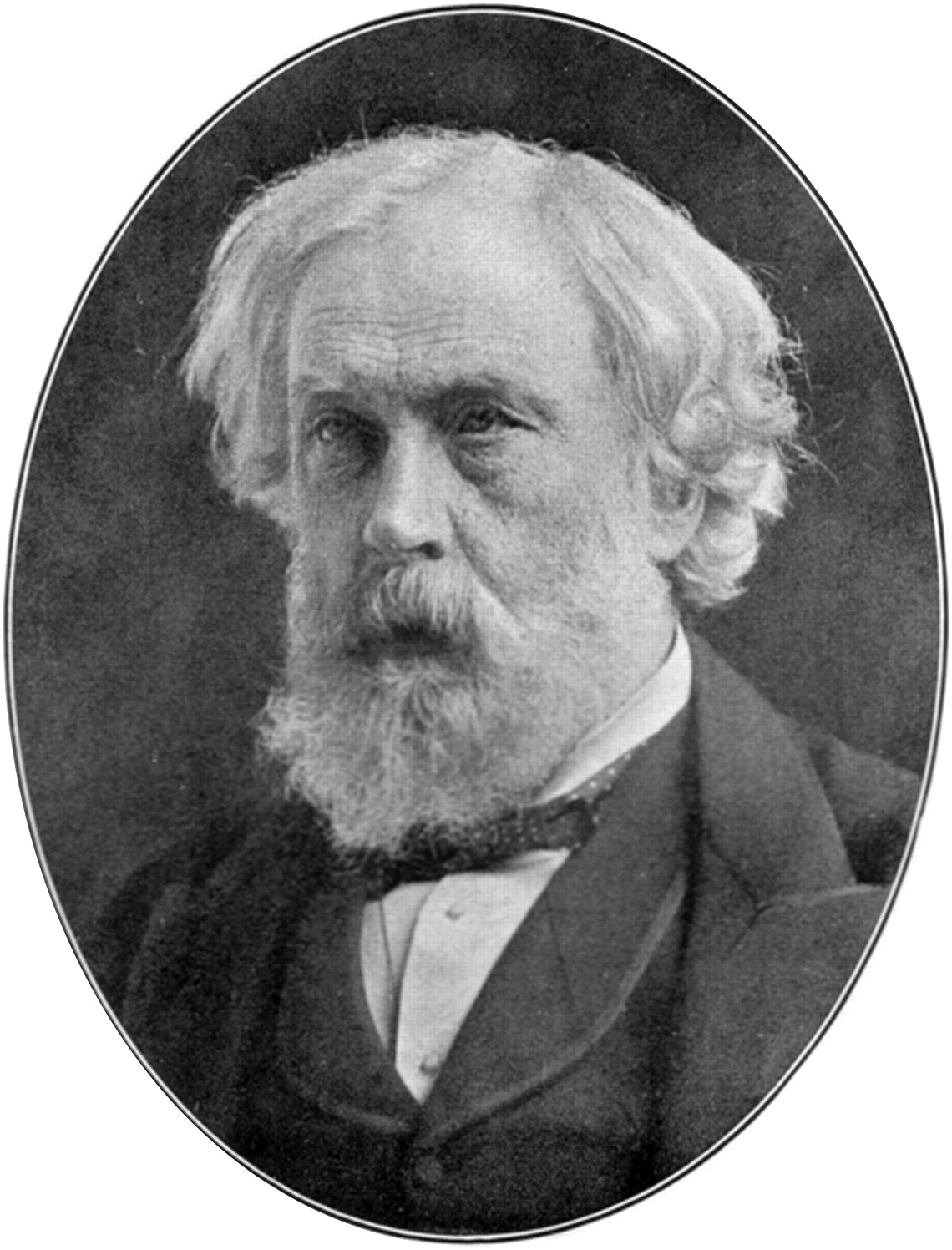
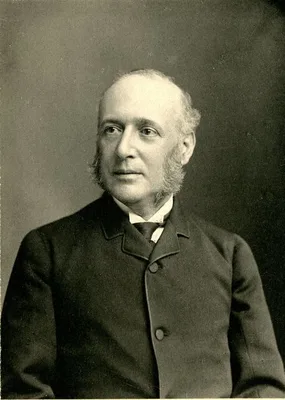
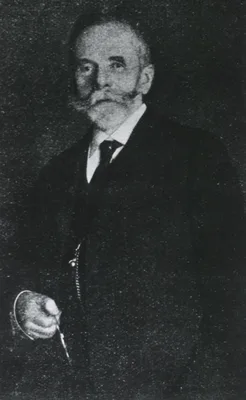
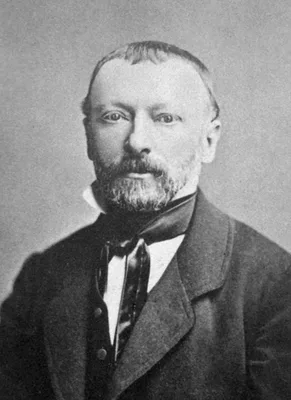
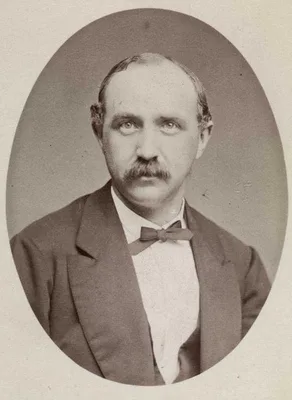
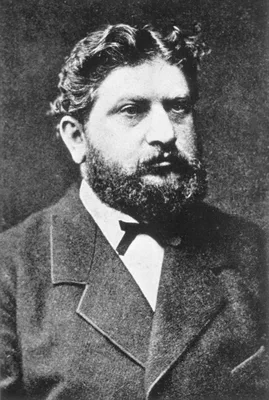
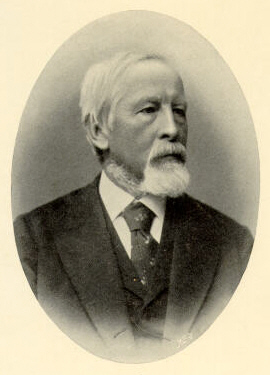
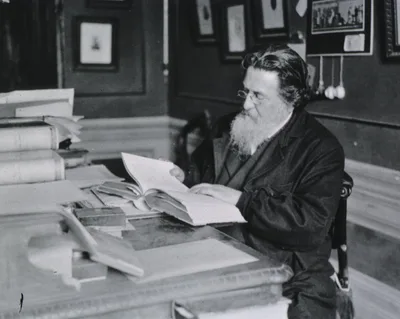
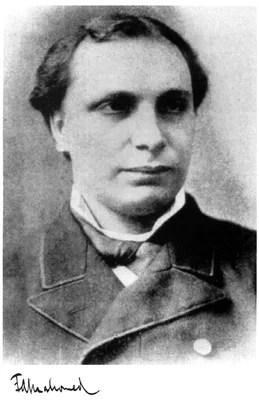
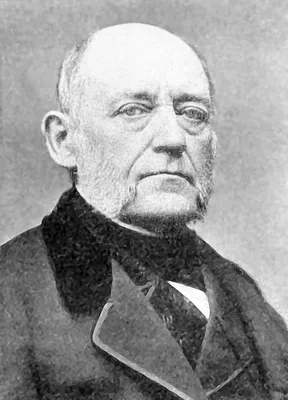
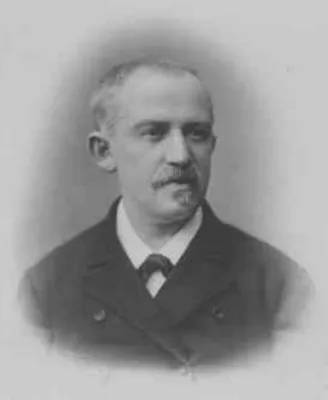
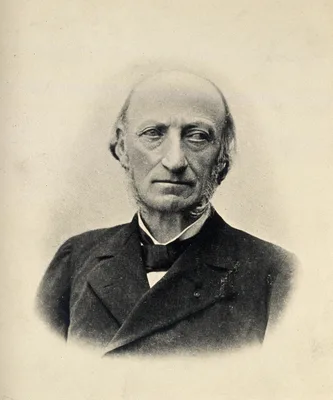
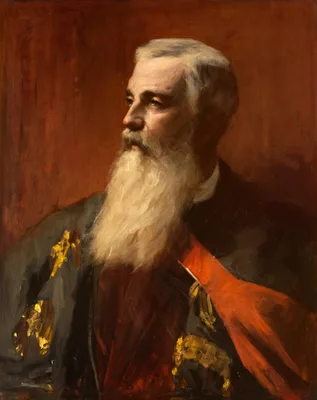
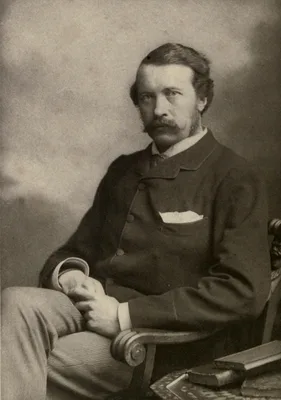
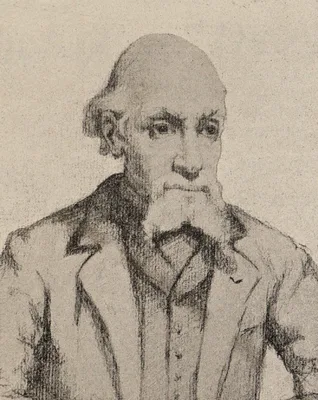
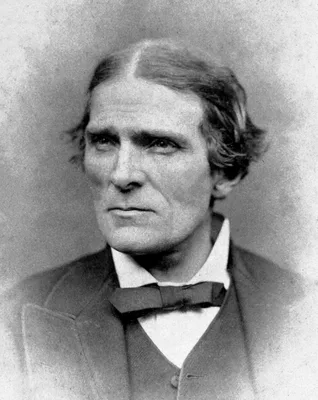
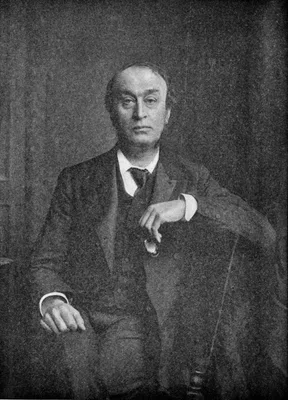
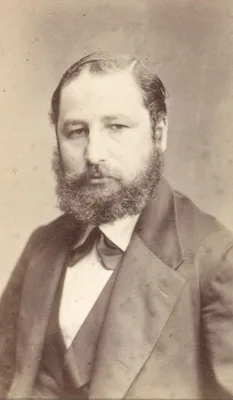
1869 WINGE, Emanuel Fredrik Hagbarth (1827 – 1894)
Mycosis endocardii.
Winge first suggested that endocarditis was due to microbial infection. A translation of part of his paper is in Major, Classic descriptions of disease, 3rd ed., 1945, p. 472.
GMN 2767 · https://historyofmedicine.com/id/4700
1870 FICK, Adolph Eugen (1829 – 1901)
Ueber die Messung des Blutquantums in den Herzventrikeln.
Fick principle for the calculation of cardiac output based on measuring the minute volume of oxygen consumption and the arteriovenous oxygen difference. Digital facsimile from the Hathi Trust at this link.
GMN 820 · https://historyofmedicine.com/id/251
1870 MYERS, Arthur Bowen Richards (1838 – 1921)
On the etiology and prevalence of diseases of the heart among soldiers.
First description of “Da Costa’s syndrome” – the “effort syndrome” of Sir Thomas Lewis.
GMN 2768 · https://historyofmedicine.com/id/4701
1870 WILKS, Sir Samuel (1824 – 1911)
Capillary embolism or arterial pyaemia.
One of the first accounts of bacterial endocarditis was given by Wilks, who, in his classic paper on the subject, called the condition “arterial pyaemia.” Reprinted in Willius & Keys, Cardiac classics, 1941, pp. 579-84.
GMN 2769 · https://historyofmedicine.com/id/4702
1870 FELTZ, Victor Timothée (1835 – 1893)
Traité clinique et expérimental des embolies capillaires.
GMN 3009 · https://historyofmedicine.com/id/5369
1871 SCHMIEDEBERG, Johann Ernst Oswald (1838 – 1921)
Untersuchungen über einige Giftwirkungen am Froschherzen.
First investigation of the effect of poisons on the frog’s heart. In some cases Schmiedeberg found that stimulation of the vagus after administration of poisons produced acceleration of the heart rate.
GMN 821 · https://historyofmedicine.com/id/255
1871 DA COSTA, Jacob Mendes (1833 – 1900)
On irritable heart; a clinical study of a form of functional cardiac disorder and its consequences.
“Da Costa’s syndrome.” This was first described by Myers (No. 2768) and is now known as “effort syndrome,” “soldier’s heart,” “disordered action of the heart.” More recently it has been considered an early recognition…
GMN 2770 · https://historyofmedicine.com/id/4707
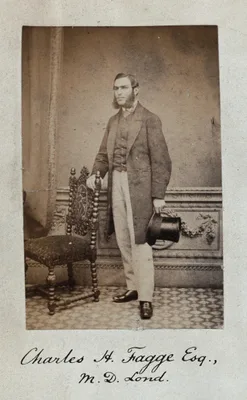
1871 FAGGE, Charles Hilton (1838 – 1883)
On the murmurs attendant on mitral contraction.
Important and exhaustive account of the knowledge of presystolic murmurs. Fagge’s paper also includes many clinical observations relating to the rhythm of heart murmurs and the state of the sounds of the heart in 67 c…
GMN 2771 · https://historyofmedicine.com/id/4711
1871 QUINCKE, Heinrich Irenaeus (1842 – 1922)
Ein Fall von Aneurysma der Leberarterie.
Quincke observed aneurysm of the hepatic artery in 1870.
GMN 2982 · https://historyofmedicine.com/id/5157
1871 –1878 TRAUBE, Ludwig (1818 – 1876)
Gesammelte Beiträge zur Pathologie und Physiologie. 3 vols.
Digital facsimile from Google Books at this link.
GMN 11715 · https://historyofmedicine.com/id/13916
1872 BOWDITCH, Henry Pickering (1840 – 1911)
Ueber die Eigenthümlichkeiten der Reizbarkeit, welche die Muskelfasern des Herzens zeigen.
Bowditch was the first to research the relationship between the strength of the heart beat and the interval between beats. He established the “all-or-nothing” principle of heart muscle contraction. He founded, at Harv…
GMN 822 · https://historyofmedicine.com/id/260
1872 MITCHELL, Silas Weir (1829 – 1914)
Clinical lecture on certain painful affections of the feet.
Mitchell suggested the name “erythromelalgia” for this condition, which is also known as “Weir Mitchell’s disease”. He records four earlier writers on the subject, the first being Graves in 1848. See also his paper in…
GMN 2706 · https://historyofmedicine.com/id/406
1872 BÄUMLER, Christian Gottfried Heinrich (1836 – 1933)
Cases of partial and general idiopathic pericarditis.
Pericarditis epistenocardiaca described.
GMN 2772 · https://historyofmedicine.com/id/4713
1872 BAMBERGER, Heinrich von (1822 – 1888)
Ueber zwei seltene Herzaffektionen, mit Bezugnahme auf die Theorie des ersten Herztons.
“Bamberger’s disease” (Pick’s disease, No. 2803).
GMN 2773 · https://historyofmedicine.com/id/4715
1872 HEIBERG, Hjalmar (1837 – 1897)
Ein Fall von Endocarditis ulcerosa puerperalis mit Pilzbildungen im Herzen (Mycosis endocardii).
Heiberg suggested the microbic nature of endocarditis. He described what appeared to him to be the mycelia of Leptothrix in the vegetations of a case of ulcerative endocarditis.
GMN 2774 · https://historyofmedicine.com/id/4719
1872 TRAUBE, Ludwig (1818 – 1876)
Ein Fall von Pulsus bigeminus nebst Bemerkungen über die Leberschwellungen bei Klappenfehlern und über acute Leberatrophie.
First clear description of pulsus bigeminus. Translated in Willius & Keys, Cardiac classics, 1941, pp. 590-99.
GMN 2775 · https://historyofmedicine.com/id/4724
1872 COHNHEIM, Julius Friedrich (1839 – 1884)
Untersuchungen über die embolischen Processe.
Cohnheim developed the doctrine of infarction as a result of occlusion of terminal arteries. He explained the haemorrhagic nature of certain infarcts on the basis of a reflux flow and diapedesis through the altered ca…
GMN 3010 · https://historyofmedicine.com/id/5370
1872 CERADINI, Guilio (1844 – 1894)
Der Mechanismus der halbmondformigen Herzklappen.
Using an excised pig heart preparation with tubes, a manometer, and a visualizing apparatus, Ceradini working in Carl Ludwig’s laboratory, illustrated the mechanism of closure of the semilunar valves. He was the first …
GMN 12225 · https://historyofmedicine.com/id/14437
1873 COHNHEIM, Julius Friedrich (1839 – 1884)
Neue Untersuchungen über die Entzündung.
Cohnheim was the master experimental pathologist of the 19th century. He was a pupil of Virchow and Kölliker; in contradiction of the former, he showed the essential feature of inflammation to be the passage of leucoc…
GMN 2302 · https://historyofmedicine.com/id/2941
1873 KUSSMAUL, Adolf (1822 – 1902)
Ueber schwielige Mediastino-Pericarditis und den paradoxen Puls.
Kussmaul introduced the concept of the “paradoxical pulse.”
GMN 2776 · https://historyofmedicine.com/id/4728
1873 REEVES, Charles Evans
Heart studies in Australia, with observations on aneurism of the aorta.
The first book on heart disease written by an Australian physician and published in Australia.
GMN 11749 · https://historyofmedicine.com/id/13949
1873 LUCIANI, Luigi (1840 – 1919)
Eine periodische Function des isolirten Froschherzen.
"Using an isolated frog heart preparation with ligatures around the atria, Luigi Luciani, an Italian physiologist working in 1873 in Carl Ludwig’s famous laboratory in Leipzig, was the first to demonstrate cardiac gro…
GMN 12261 · https://historyofmedicine.com/id/14478
1874 TALMA, Sape (1847 – 1918)
Beiträge zur Theorie der Herz-und Arterientöne.
GMN 823 · https://historyofmedicine.com/id/266
1874 MAHOMED, Frederick Horatio Akbar (1849 – 1884)
The etiology of Bright’s disease and the prealbuminuric stage.
Mahomed proved that cases of “arteriocapillary fibrosis” were hypertensive, and showed that they may occur without renal involvement.
GMN 2906.1 · https://historyofmedicine.com/id/4863
1875 THANHOFFER, Lajos (1843 – 1909)
Die beiderseitige mechanische Reizung des Nv. vagus beim Menschen.
GMN 780 · https://historyofmedicine.com/id/1888
1875 ROKITANSKY, Carl Freiherr von (1804 – 1878)
Die Defecte der Scheidewände des Herzens.
Rokitansky’s memoir on defects of the septum of the heart was his last work, and possibly his greatest. It represented 14 years’ study of the subject.
GMN 2778 · https://historyofmedicine.com/id/4739
1875 GALABIN, Alfred Lewis (1843 – 1913)
On the interpretation of cardiographic tracings, and the evidence which they afford as to the causation of the murmurs attendant upon mitral stenosis.
"The first case of heart block in a human documented graphically was reported in 1875 by British physician Alfred Galabin. He published an apical pulse tracing from a 34-year-old man with a two-year history of lighthe…
GMN 12235 · https://historyofmedicine.com/id/14449
1876 KRIES, Nathanael von
Ueber den Druck in den Blutcapillaren der menschlichen Haut.
Kries attempted to measure blood pressure in the capillaries by using a skin blanching method.
GMN 781 · https://historyofmedicine.com/id/1767
1876 STRICKER, Salomon (1834 – 1898)
Untersuchungen über die Gefässernerven-Wurzeln des Ischiadicus.
Stricker was the first to describe vasodilatation on stimulation of the posterior nerve roots.
GMN 782 · https://historyofmedicine.com/id/1892
1876 LEGG, John Wickham (1843 – 1921)
A case of haemophilia complicated with multiple naevi.
First description of multiple hereditary telangiectasis (“Rendu–Osler–Weber disease”).
GMN 2707 · https://historyofmedicine.com/id/4422
1876 POTAIN, Pierre Charles Édouard (1825 – 1901)
Du rhythme cardiaque appelé bruit de galop, de son mécanisme et de sa valeur séméiologique.
Analysis of “gallop rhythm.” Partial English translation in No. 2241 and No. 3160.1.
GMN 2777 · https://historyofmedicine.com/id/4733
1876 BALFOUR, George William (1823 – 1903)
Clinical lectures on diseases of the heart and aorta.
Includes “Balfour’s test” to ascertain whether the heart is still active, in cases of apparent death.
GMN 2779 · https://historyofmedicine.com/id/4741
1876 WELCH, Francis Henry (1839 – 1910)
On aortic aneurism in the army and the conditions associated with it.
Welch, an Army surgeon, supported the theory of a causal connexion between syphilis and aneurysm.
GMN 2983 · https://historyofmedicine.com/id/5160
1877 MARCHAND, Richard
Beiträge zur Kenntniss der Reizwell und Contractionswelle des Herzmuskels.
Marchand obtained the first electrocardiogram. Using the differential rheotome he measured the time course of the potential variations from the frog’s heart.
GMN 823.1 · https://historyofmedicine.com/id/271
1877 –1880 ROMANES, George John (1848 – 1894)
Observations on the locomotor system of Medusae. 3 pts.
Charles Sherrington described the significance of Romanes' research on jellyfish in terms of its impact on cardiac physiology: "Romanes's observations carried out with simple means were novel and fundamental. The ques…
GMN 632 · https://historyofmedicine.com/id/573
1877 –1880 COHNHEIM, Julius Friedrich (1839 – 1884)
Vorlesungen über allgemeine Pathologie. 2 vols.
Apart from Virchow’s Cellularpathologie, this was the most influential textbook of pathology during the 19th century. It includes (vol. 1, p. 38) a report on the experimental production of heart murmurs. English trans…
GMN 2303 · https://historyofmedicine.com/id/2943
1877 DUROZIEZ, Paul Louis (1826 – 1897)
Du rétrécissement mitral pur.
First description of congenital mitral stenosis, “Duroziez’s disease.”
GMN 2780 · https://historyofmedicine.com/id/4743
1878 HAMMER, Johann Adam (1818 – 1878)
Ein Fall von thrombotischen Verschlusse einer der Kranzarterien des Herzens.
First description of coronary thrombosis with diagnosis before death. English translation of original report, Amer. J. Cardiol, 1978, 42, 849-52.
GMN 2781 · https://historyofmedicine.com/id/4747
1878 KLEBS, Theodor Albrecht Edwin (1834 – 1913)
Weitere Beiträge zur Entstehungsgeschichte der Endocarditis.
Klebs "concluded that most cases of acute endocarditis were caused by 'monads' or by 'septic cocci' " (Bloomfield, Bibliography of internal medicine, selected diseases, 43-44). Klebs believed that all cases of endocar…
GMN 12257 · https://historyofmedicine.com/id/14473
1879 –1880 BURDON-SANDERSON, Sir John Scott (1828 – 1905); PAGE, Frederick James Montague (1848 – 1907)
On the time-relations of the excitatory process in the ventricle of the heart of the frog.
These workers were among the first to study the action currents of the heart, and made the first records (with the capillary electrometer) of the minute electrical current produced by the beating of the heart. See als…
GMN 824 · https://historyofmedicine.com/id/278
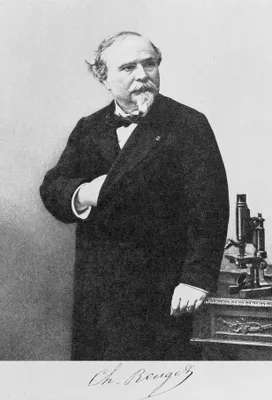
1879 ROUGET, Charles Marie Benjamin (1824 – 1904)
Sur la contractilité capillaires sanguins.
Rouget made an important investigation of the control of capillary circulation. He described cells (“Rouget’s cells”) on the outer surfaces of capillary walls, considered to be contractile. English translation in No. …
GMN 782.1 · https://historyofmedicine.com/id/1768
1879 ROGER, Henri-Louis (1809 – 1891)
Recherches cliniques sur la communication congénitales des deux coeurs par inocclusion du septum intervenniculare.
Roger drew attention to an important anomaly of the septum, interventricular patency (“maladie de Roger”), demonstrating the presence of a murmur in this condition. This is sometimes called “Roger’s murmur”, although …
GMN 2782 · https://historyofmedicine.com/id/3376
1879 MURRELL, William (1853 – 1912)
Nitro-glycerine as a remedy for angina pectoris.
Murrell introduced trinitrin (nitroglycerin, glyceryl trinitrate) in the treatment of angina.
GMN 2892 · https://historyofmedicine.com/id/4338
1879 WINIWARTER, Felix von (1852 – 1931)
Ueber eine eigenthümliche Form von Endarteriitis und Endophlebitis mit Gangrän des Fusses.
Early description of thromboangiitis obliterans (Buerger’s disease, No. 2912).
GMN 2907 · https://historyofmedicine.com/id/4865
1879 BURNETT, James Compton (1840 – 1901)
Gold as a remedy in disease, notably in some forms of organic heart disease, angina pectoris, melancholy, tedium vitae, scrofula, syphilis, skin disease, & as an antidote to the ill effects of mercury.
Burnett, a homeopath, provided an excellent summary of the history of gold as it was used in medicine, with extensive references to the historical literature. Digital facsimile from the Hathi Trust at this link.
GMN 8852 · https://historyofmedicine.com/id/11030
1879 MOSSO, Angelo (1846 – 1910)
Die Diagnostik des Pulses in Bezug auf die localen Veränderungen desselben.
Bedford 56: "Pulse reporting by hydrosphygmograph by Italian physiologist Angelo Mosso (1846-1910), who was professor of pharmacology at Turin University." Digital facsimile from the Internet Archive at this link.
GMN 12274 · https://historyofmedicine.com/id/14493
1880 TALMA, Sape (1847 – 1918)
Zur Genese der Herztöne.
GMN 825 · https://historyofmedicine.com/id/282
1880 –1882 RINGER, Sydney (1834 – 1910)
Regarding the action of hydrate of soda, hydrate of ammonia, and hydrate of potash on the ventricle of the frog’s heart.
“Ringer’s solution”
GMN 826 · https://historyofmedicine.com/id/292
1880 WEIGERT, Carl (1845 – 1904)
Ueber die pathologische Gerinnungs-Vorgänge.
First description (p. 106) of myocardial infarction. Leibowitz called this "the most significant contribution by a pathologist to the history of coronary heart disease." He also wrote, "This work not only provides a g…
GMN 2783 · https://historyofmedicine.com/id/3379
1880 WALDENBURG, Louis (1837 – 1881)
Die Messung des Pulses und des Blutdrucks am Menschen.
Probably the first book published on the messurement blood pressure in mankind. Mostly concerned with normal physiologic conditions, with a small section on fluctuations in illness. Digital facsimile from Google Books…
GMN 11721 · https://historyofmedicine.com/id/13922