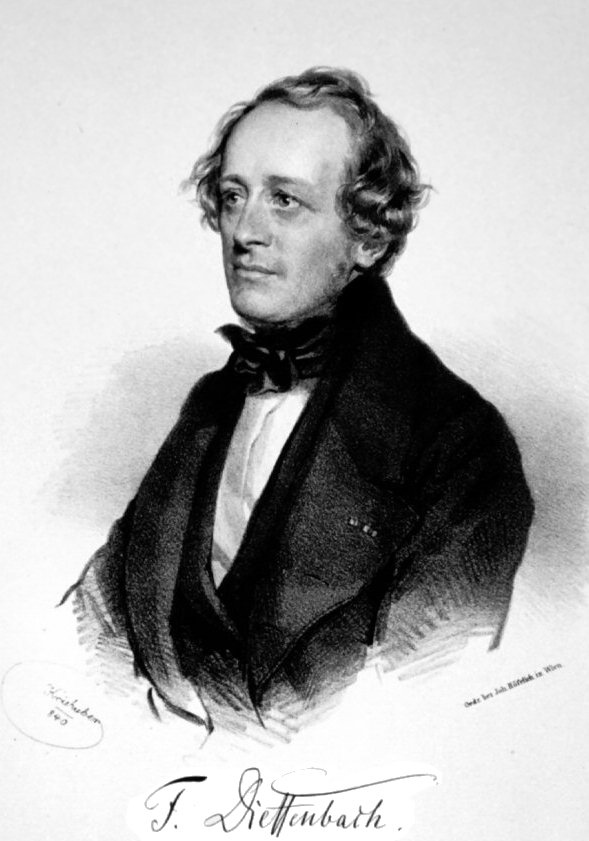
1832 DIEFFENBACH, Johann Friedrich (1792 – 1847)
Physiologisch-chirurgische Beobachtungen bei Cholera-Kranken.
First recorded example of cardiac catheterization, performed during an unsuccessful attempt to obtain blood from a patient suffering from cholera (p. 100). Second edition as separate pamphlet with a new Foreward, Güst…
GMN 2748.1 · https://historyofmedicine.com/id/4628
1839 MAGENDIE, François (1783 – 1855)
Lectures on the blood, and on the changes which it undergoes during disease: Delivered at the College of France in 1837-8.
Pp. 244-49: Magendie showed that secondary or subsequent injections of egg/albumin caused death in rabbits who had tolerated an initial injection. This was the first experiment in anaphylaxis, though Jenner in 1798 ha…
GMN 2585 · https://historyofmedicine.com/id/4372
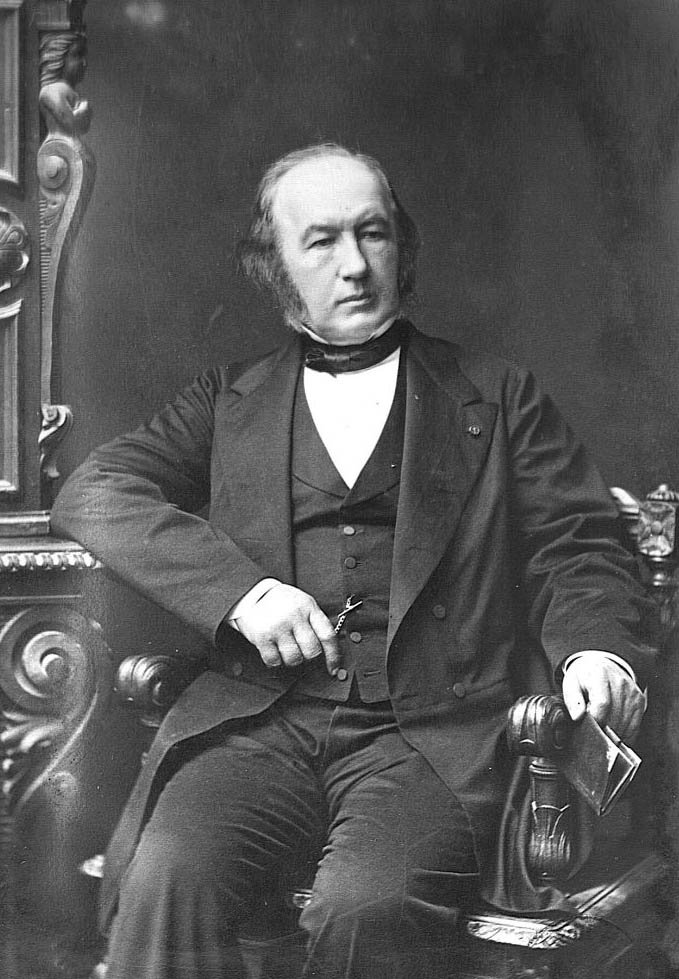
1854 BERNARD, Claude (1813 – 1878); ATLEE, Walter Franklin (1828 – 1910)
Notes of M. Bernard's lectures on the blood; with an appendix by Walter F. Atlee.
This record of Bernard's actual lectures contains the first published description of Bernard's technique of right and left heart cathererization, a technique that Bernard invented. The appendix includes notes of lectu…
GMN 11549 · https://historyofmedicine.com/id/13748
1855 –1856 BERNARD, Claude (1813 – 1878)
Leçons de physiologie expérimentale appliquée à la médecine. 2 vols.
Claude Bernard made strenuous efforts to introduce experimental methods into physiology. The above includes his classic work on the function of the liver, pancreas, and gastric glands. Vol. 1, p. 126: Catheterization …
GMN 615 · https://historyofmedicine.com/id/493
1863 MAREY, Étienne Jules (1830 – 1904)
Physiologie médicale de la circulation du sang basée sur l'étude graphique des mouvements du coeur et du pouls artériel avec application aux maladies du l'appareil circulatoire.
Marey first recorded atrial fibrillation in this work work in which he used pulse tracings to establish the interelationship of heart rate and blood pressure. The work also includes the first detailed description of t…
GMN 11690 · https://historyofmedicine.com/id/13891
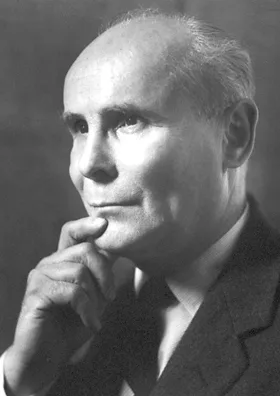
1929 FORSSMANN, Werner Theodor Otto (1904 – 1979)
Die Sondierung des rechten Herzens.
The first cardiac catheterization on a living person. Forssmann catheterized his own heart. Historical note by N. Howard-Jones, Bull. Hist. Med.,1973, 47,524-6. English translation in Callahan, Keys & Key, Classics of…
GMN 2858 · https://historyofmedicine.com/id/3654
1941 COURNAND, André Frédéric (1895 – 1988); RANGES, Hilmert Albert (1906 – 1969)
Catheterization of the right auricle in man.
First investigations with the cardiac catheter as a clinical method of investigation. In 1956 Cournand in 1956 shared the Nobel Prize in Physiology or Medicine with Forssmann (No. 2858) and Richards (No. 2883.2) "for …
GMN 2871 · https://historyofmedicine.com/id/4194
1945 BRANNON, Emmett S.; WARREN, James Vaughn (1915 – 1990); WEENS, H. Stephen
Atrial septal defect: Study of hemodynamics by the technique of right heart catheterization.
The first description of the use of a cardiac catheter as a diagnostic tool, in this case a congenital heart defect. The authors worked in the laboratory of Eugene Stead, Jr. at Grady Memorial Hospital, Atlanta, Georgia.
GMN 10653 · https://historyofmedicine.com/id/12846
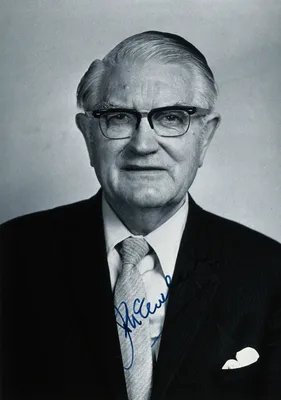
1947 MCMICHAEL, Sir John (1904 – 1993)
Circulatory failure studied by means of venous catheterization.
GMN 2877 · https://historyofmedicine.com/id/4205
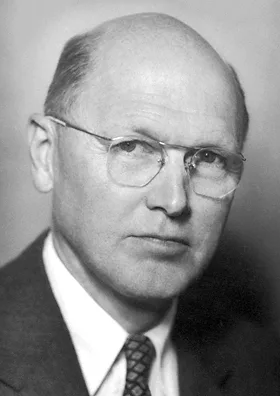
1957 RICHARDS, Dickinson Woodruff (1895 – 1973)
The contributions of right heart catheterization to physiology and medicine, with some observations on the physiopathology of pulmonary heart disease.
GMN 2883.2 · https://historyofmedicine.com/id/4250
1969 SCHERLAG, Benjamin J. (1932 – ); ET AL
Catheter technique for recording His bundle activity in man.
Scherlag was the first person to consistently record atrial ventricular bundle ("His bundle") potentials, which served as one of the cornerstones of clinical electrophysiology. With 5 co-authors.
GMN 2883.8 · https://historyofmedicine.com/id/4284
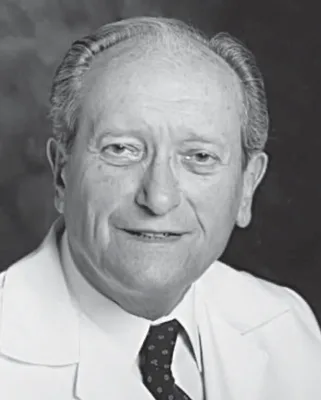
1970 SWAN, Harold James Charles "Jeremy" (1922 – 2005); GANZ, William (1919 – 2009); ET AL
Catheterization of the heart in man with use of a flow-directed balloon-tipped catheter.
The Swan-Ganz balloon flotation catheter, a flow-guided balloon-tipped catheter of flexible construction, which enabled “placement without associated ventricular arrhythmias, prompt and reliable passage to the pulmona…
GMN 2883.9 · https://historyofmedicine.com/id/4288
1972 FORSSMANN, Werner Theodor Otto (1904 – 1979)
Selbstversuch. Erinnerungen eines Chirurgen.
Translated into English by Hilary Davies as Experiments on myself. Memoirs of a surgeon in Germany (London: St. Martin's Press, 1974).
GMN 12233 · https://historyofmedicine.com/id/14447
1975 COURNAND, André Frédéric (1895 – 1988)
Cardiac catheterization: Development of the technique, its contributions to experimental medicine, and its initial applications in man.
GMN 12232 · https://historyofmedicine.com/id/14446
1992 ANDERSEN, Henning Rud; KNUDSEN, L. L.; HASENKAM, J. M.
Transluminal implantation of artificial heart valves. Description of a new expandable aortic valve and initial results with implantation by catheter technique in closed chest pigs.
Andersen and colleagues invented percutaneous aortic valve replacement (PAVR), also known as percutaneous aortic valve implantation (PAVI), transcatheter aortic valve implantation (TAVI) or transcatheter aortic valve …
GMN 13893 · https://historyofmedicine.com/id/16185
2006 BERTRAND, Michael
The evolution of cardiac catheterization and interventional cardiology.
GMN 12332 · https://historyofmedicine.com/id/14556