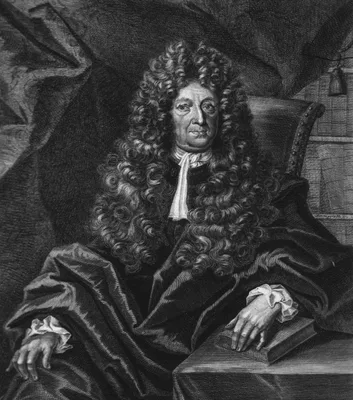
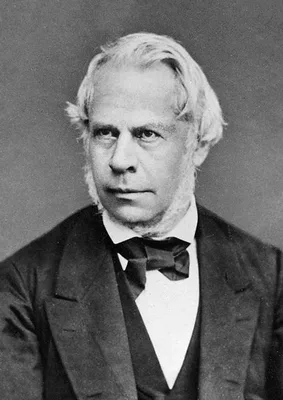
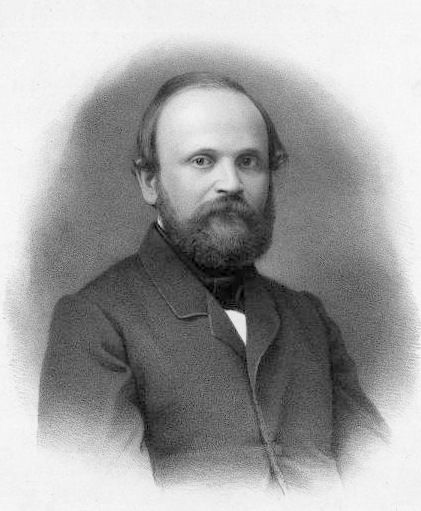
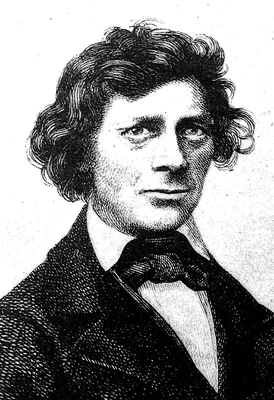
1533 PHILARETOS, (Philaretus) (820 – 1075); THORER, Alban (1489 – 1550)
De pulsuum scientia libellus utilis & necessarius. Theophili ... de exacta retrimentorum vesicae cognitione, commentariolus, Albano Torino interprete.
First separate, and perhaps the first complete printed edition of the Byzantine physician's De pulsibus, edited by Alban Thorer. This text, in the Galenic tradition "largely mediated through the pseudo-Galenic tract "…
GMN 12591 · https://historyofmedicine.com/id/14831
1551 RODRIGUES DE CASTELO BRANCO, João (Amato Lusitano; Amatus Lusitanus) (1511 – 1568)
Curationum medicinalium centuria prima, multiplici variaque rerum cognitione referta. Praexfixa est eiusdem auctoris commentatio, in qua docetur, quomodo se medicus habere debeat in introitu ad aegrotantem, simulque de crisi, & diebus decretoriis, in qui artem medicam exercent, & quotidie pro salute aegrotorum in collegium descendunt longe utilissima.
Lusitano has been credited with early recognition of the circulation of the blood. How much he might have understood the circulation remains in doubt; however, through dissections of the Azygos vein, he was the first …
GMN 12945 · https://historyofmedicine.com/id/15192
1553 SERVETUS, Michael [Miguel Serveto Conesa; also known as Miguel Servet, Miguel Serveto, Revés, or Michel de Villeneuve] (1511 – 1553)
Christianismi restitutio.
Contains (pp. 168-73) the first printed description of the lesser circulation. Because of the heretical nature of this book on the reform of Christianity, it was printed secretly and anonymously at Vienne, France. Cop…
GMN 754 · https://historyofmedicine.com/id/1741
1559 COLOMBO, Matteo Realdo [Renaldus Columbus] (1515 – 1559)
De re anatomica libri xv.
Colombo was a pupil of Vesalius, and succeeded him in the chair of anatomy at Padua before proceeding to chairs first at Pisa and later at Rome. His book, published just after his death, rectified a number of anatomic…
GMN 378.1 · https://historyofmedicine.com/id/560
1563 –1564 EUSTACHI, Bartolomeo [EUSTACHIUS] (1510 – 1574)
Opuscula anatomica.
Eustachius is credited with several anatomical discoveries, among them the tensor tympani muscle and the Eustachian tube, published in his chapter entitled De auditus organis. In the last respect, however, he was anti…
GMN 1093 · https://historyofmedicine.com/id/159
1571 CESALPINO, Andrea [CAESALPINUS] (1525 – 1603)
Peripateticarum quaestionum libri quinque.
Cesalpino preceded Harvey in the discovery of the concept of the circulation, and Harvey must have known of his ideas, but Cesalpino’s idea of the circulation was not supported by convincing experimental work or quant…
GMN 755 · https://historyofmedicine.com/id/1742
1587 RUDIUS, Eustachius (1551 – 1611)
De virtutibus et viciis cordis libri tres. Primus agit de virtutibus & functionibus cordis. Secundus de palpitatione cordis. Tertius de syncope.
The earliest separate treatise on cardiac physiology and pathology. Digital facsimile from Google Books at this link.
GMN 10660 · https://historyofmedicine.com/id/12853
1593 CESALPINO, Andrea [CAESALPINUS] (1525 – 1603)
Quaestionum peripateticum, libri V.
A greatly expanded second edition. The results of tying a vein and the centripetal flow in veins were first recorded in print by Cesalpino (lib. ii, Qu. xvii, p. 234). See the English translation, with commentary, of …
GMN 756 · https://historyofmedicine.com/id/1743
1597 PINEAU, Séverin ( – 1619)
Opusculum physiologum & anatomicum in duos libellos distinctum: In quibus primùm, de integritatis & corruptionis virginum notis, deinde, de grauiditate & partu naturali mulierum in quo ossa pubis & ilium distrahi, dilucidè tractatur ....
In 1595 Pineau demonstrated the vestigial foramen ovale in the adult heart, settling the question of the perviousness of the septum of the heart. His work was first published in 1597. He published this study in a fran…
GMN 802 · https://historyofmedicine.com/id/163
1603 FABRIZIO, Girolamo [FABRICIUS AB AQUAPENDENTE] (1537 – 1619)
De venarum ostiolis.
Fabricius, teacher of Harvey at Padua, discovered the venous valves, and illustrated them in life-size copperplates in this monograph. He failed to recognize their true function, however, considering their function si…
GMN 757 · https://historyofmedicine.com/id/1744
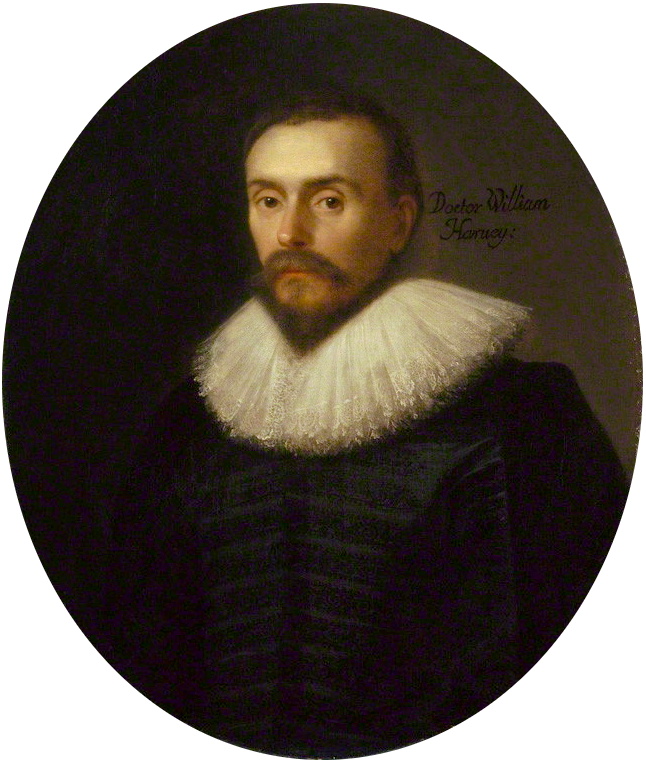
1628 HARVEY, William (1578 – 1657)
Exercitatio anatomica de motu cordis et sanguinis in animalibus.
Discovery and experimental proof of the circulation of the blood. Together with Vesalius’s Fabrica (1543), Harvey’s De motu cordus shares the honor as the greatest book in the history of medicine. Since antiquity, ide…
GMN 759 · https://historyofmedicine.com/id/1746
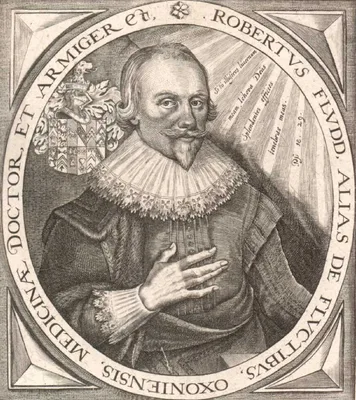
1629 –1631 FLUDD, Robert (1574 – 1637)
Integrum morborum mysterium, sive medicinæ catholicæ tomi primi tractatus secundus. [Pulsus seu nova et arcana pulsuum historia ... Hoc est, portionis tertiae pars tertia, de pulsuum scientia ... medicorum ... sive tomi primi tractatus secundi, sectio secunda, de morborum signis ... hoc est, divinatio per urinam.] In sectiones distributus duas : quorum ...
Fludd's Pulsus seu nova et arcana pulsuum historia contain's Fludd's chief medical writings. Dated 1629, but issued in this form, Fludd's Pulsus was the first published endorsement of Harvey's theory of the circulatio…
GMN 11597 · https://historyofmedicine.com/id/13796
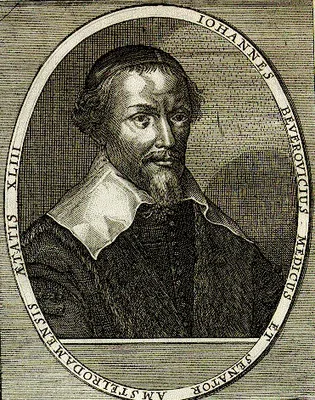
1638 BEVERWIJCK, Johan van (Johannes Beverovicius) (1594 – 1647)
De calculo renum & vesicae liber singularis. Cum epistolis & consultationibus magnorum virorum.
The first medical book to contain an endorsement of Harvey's theory of the circulation of the blood (originally published ten years earlier in 1628). Beverwijck began his work with a treatise on urinary and renal calc…
GMN 11647 · https://historyofmedicine.com/id/13848
1648 RIOLAN, Jean The Younger (1577 – 1657)
Encheiridium anatomicum, et pathologicum, in quo naturali constitutione partium, recessus a naturali statu demonstatur.
In book III, chapter 8 Riolan discusses the heart and presents his views on the circulation of the blood. "Riolan's opinion of the blood movement seems to have arisen from his attempt to reconcile strict Galenic belie…
GMN 11609 · https://historyofmedicine.com/id/13809
1660 BOTALLO, Leonardo (BOTALLUS) (1519 – 1587)
Opera omnia medica et chirurgica.
“Botallo’s duct”, the ductus arteriosus; “Botallo’s foramen”, the foramen ovale interauriculare; and “Botallo’s ligament”, the ligamentum arteriosum, are described in this work. However two of these traditional attrib…
GMN 802.1 · https://historyofmedicine.com/id/559
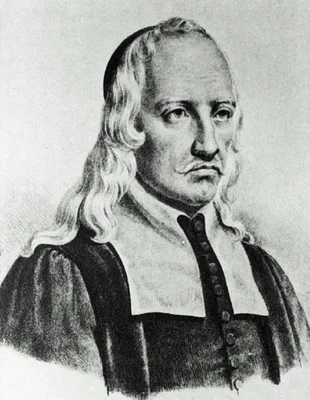
1661 MALPIGHI, Marcello (1628 – 1694)
De pulmonibus observations anatomicae.
Discovery of the capillary circulation. Malpighi demonstrated that the pulmonary tissues are vesicular in nature and showed that the trachea ends in bronchial filaments. His De pulmonibus includes his demonstration of…
GMN 760 · https://historyofmedicine.com/id/1747
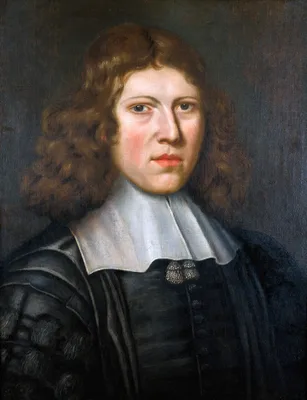
1669 LOWER, Richard (1631 – 1691)
Tractatus de corde.
Lower was the first to demonstrate the scroll-like structure of the cardiac muscle. He was one of the first to transfuse blood. Chapter III of the above work records how Lower injected dark venous blood into the insuf…
GMN 761 · https://historyofmedicine.com/id/1748
1680 –1681 BORELLI, Giovanni Alfonso (1608 – 1679)
De motu animalium. 2 pts.
Borelli originated the neurogenic theory of the heart’s action and first suggested that the circulation resembled a simple hydraulic system. He was the first to insist that the heart beat was a simple muscular contrac…
GMN 3669.3 · https://historyofmedicine.com/id/1749
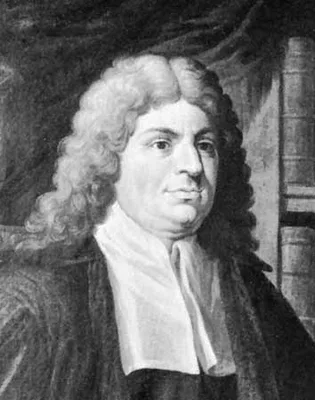
1683 BELLINI, Lorenzo (1643 – 1704)
De urinis et pulsibus de missione sanguinis de febribus de morbis capitis, et pectoris.
Bellini began to develop his hydraulic iatromechanics in this work, in which he considered the blood as a physical fluid with simple mechanical and mathematicizable properties. He realized the value of the urine as an…
GMN 4162 · https://historyofmedicine.com/id/1845
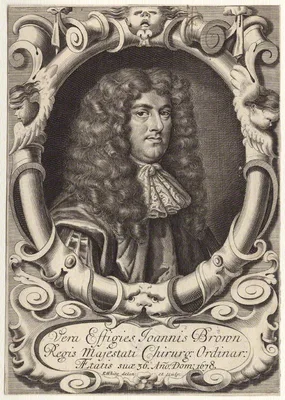
1684 LOWER, Richard (1631 – 1691); BROWNE, John (1642 – 1702)
Myographia nova, or a graphical description of all the muscles in the human body; with one and forty copper-plates.
Browne's treatise on the muscles consisted of six lectures, illustrated by copperplates. It was, however, a plagiarism, as was pointed out by James Yonge: it put together text from the Muskotomia by William Molins wit…
GMN 11684 · https://historyofmedicine.com/id/13885
1685 VOSSIUS, Isaak (Isaac Voss) (1618 – 1689)
Variarum observationum liber.
Vossius, a Dutch scholar and manuscript collector, was one of the first European writers to suggest that the Chinese had anticipated William Harvey's discovery of the circulation of the blood. In his chapter on Chines…
GMN 11718 · https://historyofmedicine.com/id/13919
1686 BOHN, Johannes (1640 – 1718)
Circulus anatomico-physiologicus.
Bohn's approach was mechanistic in that he grave predominately physical interpretations of vital processes. He experimented on the decapitated frog, declaring the reflex phenomena to be entirely material and mechanica…
GMN 1355 · https://historyofmedicine.com/id/1631
1698 CHIRAC, Pierre (1657 – 1732)
De motu cordis adversaria analytica.
In this pioneering experimental study of coronary function, describing the first experimental tying of a coronary vessel, Chirac demonstrated that cardiac arrest occurs in response to coronary ligation. “A special pos…
GMN 10657 · https://historyofmedicine.com/id/12850
1705 VIEUSSENS, Raymond (1641 – 1715)
Novum vasorum corporis humani systema.
Vieussens was among the first to describe the morbid changes in mitral stenosis, the throbbing pulse in aortic insufficiency, and the first correctly to describe the structure of the left ventricle, the course of the …
GMN 2729 · https://historyofmedicine.com/id/4484
1708 THEBESIUS, Adam Christian (1686 – 1732)
Disputatio medica inauguralis de circulo sanguinis in corde.
First description of the coronary valves and the venae thebesii.
GMN 763 · https://historyofmedicine.com/id/1750
1708 KEILL, James (1673 – 1719)
An account of animal secretion, the quantity of blood in the humane body, and muscular motion.
Keill applied measurement and mathematics in his researches, claiming the "first calculations of the absolute velocity at which blood travels through the aorta and smaller vessels; he also recognized that the blood's …
GMN 11673 · https://historyofmedicine.com/id/13874
1715 VIEUSSENS, Raymond (1641 – 1715)
Traité nouveau de la structure et des causes du mouvement naturel du coeur. IN: Oeuvres françoises de M. Vieussens dédiées a nosseigneurs des états de la province de Languedoc.
The first work on cardiac anatomy and pathology. Vieussens was the first to describe the course of the coronary arteries and the coronary sinus. He also described collateral vessels connecting the left anterior descen…
GMN 7247 · https://historyofmedicine.com/id/9416
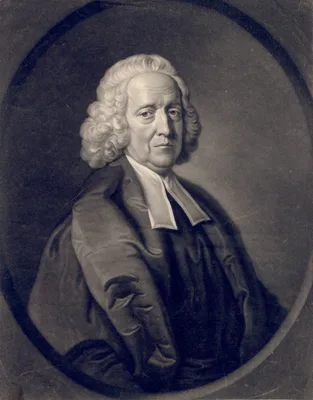
1727 –1733 HALES, Stephen (1677 – 1761)
Vegetable staticks: Or, an account of some statical experiments on the sap in vegetables. Statical essays, containing haemastaticks. 2 vols.
Hales initiated a new stage in physiological experimentation with his "statical" methods, which were characterized by precise quantitative measurements, repetition and the used of controls, and were based on the assum…
GMN 765 · https://historyofmedicine.com/id/1752
1740 VALSALVA, Antonio Maria (1666 – 1723)
Opera.
Valsalva described the aortic “sinus of Valsalva”.
GMN 803 · https://historyofmedicine.com/id/169
1743 TAUBE, Hartwig Wilhelm Ludwig (1706 – )
Dissertationem inauguralem de vera nervi intercostalis origine.
Taube described the carotid body and named it “ganglion minutum”, See J. Pick, J. Hist. Med., 1959, 14, 61-73.
GMN 765.1 · https://historyofmedicine.com/id/1753
1749 SÉNAC, Jean Baptiste (1693 – 1770)
Traité de la structure du coeur, de son action, et de ses maladies. 2 vols.
Senac’s valuable treatise on the heart added much to the knowledge of the anatomy and diseases of that organ; he mentioned the leucocytes, which he considered to belong to the chyle, and he described pericarditis. Sen…
GMN 2733 · https://historyofmedicine.com/id/4505
1756 HALLER, Albrecht von (1708 – 1777)
Deux mémoires sur le mouvement du sang, et sur les effets de la saignée, fondés sur des experiences faites sur des animaux.
In these memoirs Haller described the results of 235 vivisections. Haller has been called "the founder of modern haemodynamics." "The myogenic theory of the heartbeat can be traced to Haller, who concluded on the basi…
GMN 11607 · https://historyofmedicine.com/id/13807
1768 SPALLANZANI, Lazzaro (1729 – 1799)
Dell' azione del cuore ne' vasi sanguigni nuove osservasioni.
In this response to Haller's Deux mémoires sur le mouvement du sang (1756) (No. 11607) Spallanzani outlined his own findings on the action of the heart upon the blood vessels. "Haller's microscopic observations of blo…
GMN 11710 · https://historyofmedicine.com/id/13911
1773 SPALLANZANI, Lazzaro (1729 – 1799)
De' fenomeni della circolazione osservata nel giro universale de' vasi; de' fenomeni della circolazione languente; de' moti del sangue independenti dall'azione del cuore; e del pulsar delle arterie.
In four memoirs on the dynamics of the circulatory system resulting from 337 experiments recorded in this workSpallanzani studied the role of the circulation in every stage from embryo to adult, and it was through his…
GMN 11706 · https://historyofmedicine.com/id/13907
1800 BICHAT, Marie François Xavier (1771 – 1802)
Recherches physiologiques sur la vie et la mort.
When Volta questioned the validity of experiments claiming to show responsiveness of an ex vivo heart, devoid of blood flow and nervous connections, Bichat obtained permission to experiment upon the freshly killed bod…
GMN 597 · https://historyofmedicine.com/id/387
1812 LE GALLOIS, Julien Jean César (Legallois) (1770 – 1814)
Expériences sur le principe de la vie.
Le Gallois described the action of the vagus nerve on respiration. He showed that bilateral section of the vagus can produce fatal bronchopneumonia. The above work includes (p. 37) his location of the respiratory cent…
GMN 1389.2 · https://historyofmedicine.com/id/143
1815 CARSON, James (1772 – 1843)
An inquiry into the causes of the motion of the blood; with an appendix, in which the process of respiration and its connexion with the circulation of the blood are attempted to be elucidated.
Carson recognized the vital effect on venous return played by the negative pressure in the pleural cavity.
GMN 765.2 · https://historyofmedicine.com/id/1754
1816 PARRY, Caleb Hillier (1755 – 1822)
An experimental inquiry into the nature, cause and varieties of the arterial pulse: And into certain other properties of the larger arteries, in animals with warm blood.
This work "included a summary of more than two dozen experiments he [Parry] conducted on a variety of mammals. In this book he discussed the pulsatile expansion of the arteries and importance of collaterals. Parry ref…
GMN 2742 · https://historyofmedicine.com/id/4591
1825 WEBER, Ernst Heinrich (1795 – 1878); WEBER, Wilhelm Eduard (1804 – 1891)
Wellenlehre auf Experimente gegründet oder über die Wellen tropfbarer Flüssigkeiten mit Anwendung auf die Schall- und Lichtwellen.
The first work to apply hydrodynamics to the circulation of the blood.
GMN 766 · https://historyofmedicine.com/id/1755
1828 POISEUILLE, Jean Léonard Marie (1799 – 1869)
Recherches sur la force du coeur aortique.
Poiseuille was the first after Stephen Hales to make any important addition to the knowledge of the physiology of circulation. In his graduation thesis, above, he described a “hemodynamometer” invented by himself and …
GMN 767 · https://historyofmedicine.com/id/2024
1831 HALL, Marshall (1790 – 1857)
A critical and experimental essay on the circulation of the blood.
Marshall Hall clearly distinguished arterioles and venules from capillaries, and he described arteriovenous shunts.
GMN 768.1 · https://historyofmedicine.com/id/1757
1834 HÉRISSON, Jules
Le sphygmomètre; instrument qui traduit à l’oeil toute l’action des artères.
Hérisson invented an instrument for recording blood pressure. Translated into English as The sphygmometer, an instrument which renders the action of the arteries apparent to the eye. A memoir... with an improvement of…
GMN 2748.2 · https://historyofmedicine.com/id/4630
1837 ŠKODA, Josef (1805 – 1881)
Ueber den Herzstoss und die durch die Herzbewegungen verursachten Töne.
Skoda’s theory of the heart beat.
GMN 804 · https://historyofmedicine.com/id/172
1837 –1841 PIROGOV, Nikolai Ivanovich (Pirogoff) (1810 – 1881)
Anatomia chirurgica truncorum arteriarum nec non fasciarum fibrosarum.
An atlas of arterial stems and fasciae. Translated into German as Chirurgische anatomie der Arterienstamme und Fascien neu Bearbeitet von Julius Szymanowski. Leipzig und Heidelberg: C. F. Winter, 1850. Digital facsimi…
GMN 11697 · https://historyofmedicine.com/id/13898
1839 PURKYNĔ, Jan Evangelista [PURKINJE] (1787 – 1869)
Nowe spostrzezenia i badainia w przedmiocie fizyologii i drobnowidzowéj anatomii.
The “Purkinjĕ fibres”; identification of the conductor system of the heart. Reprinted in his Opera omnia, 1939, 3, 52-63. German version in Arch. Anat. Physiol, wiss. Med., 1845, 281-95; English translation by W. W. G…
GMN 805 · https://historyofmedicine.com/id/177
1839 MAGENDIE, François (1783 – 1855)
Lectures on the blood, and on the changes which it undergoes during disease: Delivered at the College of France in 1837-8.
Pp. 244-49: Magendie showed that secondary or subsequent injections of egg/albumin caused death in rabbits who had tolerated an initial injection. This was the first experiment in anaphylaxis, though Jenner in 1798 ha…
GMN 2585 · https://historyofmedicine.com/id/4372
1840 POISEUILLE, Jean Léonard Marie (1799 – 1869)
Recherches expèrimentales sur le mouvement des liquides dans les tubes de très petits diamètres.
Poiseuille’s law of the flow of liquids in tubes – fundamental in blood viscosimetry. Abstract; complete monograph in Mém. Acad. roy. Sci. (Paris), 1846, 9, 433-544. First book-form edition, Paris, 1844.
GMN 768 · https://historyofmedicine.com/id/1756
1841 HENLE, Friedrich Gustav Jakob (1809 – 1885)
Allgemeine Anatomie. Lehre von den Mischungs- und Formbestandtheilen des menschlichen Körpers.
Many of the histological discoveries of Henle are described in the above. He classified tissues histologically. In the section on Gefässnerven (pp. 510, 690) Henle demonstrated the presence of smooth muscle in the end…
GMN 543 · https://historyofmedicine.com/id/268
1844 REMAK, Robert (1815 – 1865)
Neurologische Erlauterungen.
Remak was first to describe the intrinsic ganglia of the heart.
GMN 806 · https://historyofmedicine.com/id/569
1845 WEBER, Eduard Friedrich Wilhelm (1806 – 1871); WEBER, Ernst Heinrich (1795 – 1878)
Experimenta, quibus probatur nervos vagos rotatione machinae galvanomagneticae irritatos, motum cordis retardare et adeo intercipare.
The discovery of the inhibitory power of the vagus. Also published in Wagner’s Handwörterbuch der Physiologie, 1846, 3, 45-51. Partial translation in J. F. Fulton’s Selected readings in the history of physiology, 2nd …
GMN 807 · https://historyofmedicine.com/id/183