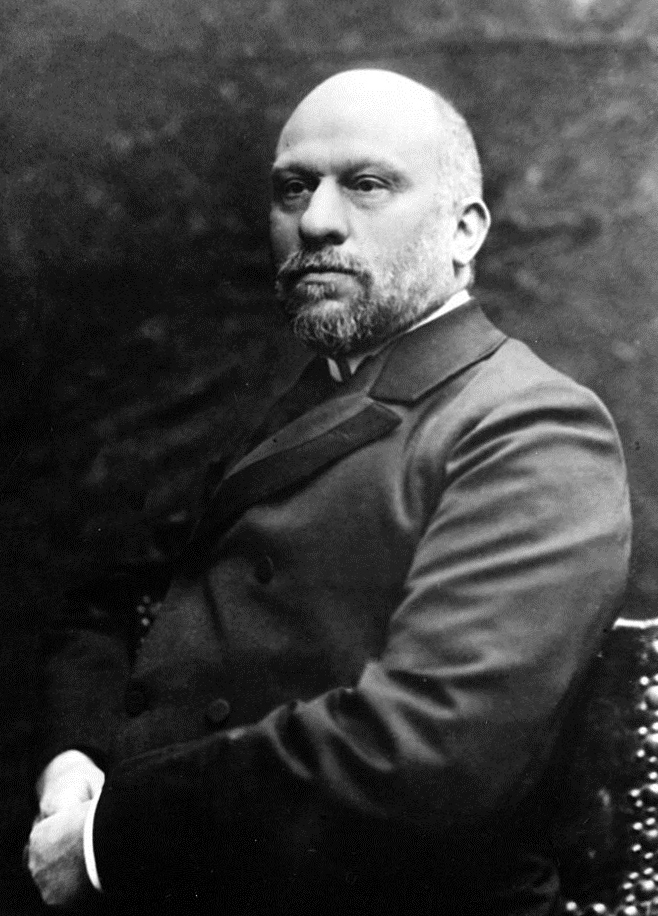
1895 MOSSO, Angelo (1846 – 1910)
Sphygmomanomètre pour mésurer la pression du sang chez l’homme.
A sphygmomanometer for registering the blood-pressure in the finger was invented by Mosso.
GMN 2801 · https://historyofmedicine.com/id/3425
1895 ASKANAZY, S
Klinisches über Diuretin.
In 1895 Askanazy proposed diuretin as a remedy for anginal pain.
GMN 2893 · https://historyofmedicine.com/id/4365
1895 DÖHLE, Karl Gottfried Paul (1855 – 1928)
Ueber Aortenerkrankung bei Syphilitischen und deren Beziehung zur Aneurysmenbildung.
Döhle clearly defined a specific syphilitic lesion of the aorta as a prerequisite of aortic aneurysm.
GMN 2985.1 · https://historyofmedicine.com/id/5176
1895 FRANK, Otto (1865 – 1944)
Zur Dynamik des Herzmuskels.
"In his postdoctoral work (Habilitationsschrift) Frank investigated the isometric and isotonic contractile behaviour of the heart and it is this work that he is best known for. Frank's work on this topic preceded that…
GMN 12284 · https://historyofmedicine.com/id/14505
1896 EWART, William (1848 – 1929)
Practical aids in the diagnosis of pericardial effusion, in connection with the question as to surgical treatment.
Pulmonary collapse at the left base in pericardial effusion – “Ewart’s sign”.
GMN 2802 · https://historyofmedicine.com/id/3427
1896 PICK, Friedel (1867 – 1926)
Ueber chronische unter dem Bilde der Leberzirrhose verlaufende Perikarditis (perikarditische Pseudoleberzirrhose) nebst Bemerkungen über die Zuckergussleber.
“Pick’s disease” – pericardial pseudocirrhosis of the liver.
GMN 2803 · https://historyofmedicine.com/id/3431
1896 WILLIAMS, Francis Henry (1852 – 1936)
A method for more fully determining the outline of the heart by means of the fluoroscope together with other uses of this instrument in medicine.
Estimation of heart size by fluoroscope, first application of x rays to cardiology.
GMN 2804.1 · https://historyofmedicine.com/id/3439
1896 WILLIAMS, Francis Henry (1852 – 1936)
A method for more fully determining the outline of the heart by means of the fluorescope together with other uses of this instrument in medicine.
Estimation of heart size by fluoroscope, first application of x rays to cardiology.
GMN 2686.1 · https://historyofmedicine.com/id/4210
1896 RENDU, Henri Jules Louis (1844 – 1902)
Epistaxis répété chez un sujet porteur de petits angiomes cutanés et muqueux.
Rendu’s account of multiple hereditary telangiectasis (“Rendu–Osler–Weber disease”).
GMN 2710 · https://historyofmedicine.com/id/4428
1896 THAYER, William Sydney (1864 – 1932); BLUMER, George Alder (1857 – 1940)
Ulcerative endocarditis due to the gonococcus; gonorrheal septicemia.
Thayer and Blumer found the gonococcus in cases of gonorrheal endocarditis.
GMN 5212 · https://historyofmedicine.com/id/7812
1896 DOCK, George (1860 – 1951)
Notes on the coronary arteries.
Dock recorded one of the earliest diagnoses of myocardial infaction in a living patient: "The diagnosis was mymalacia folling coronary sclerosis with secondary pericarditis. This was based on the history of increasing…
GMN 11584 · https://historyofmedicine.com/id/13783
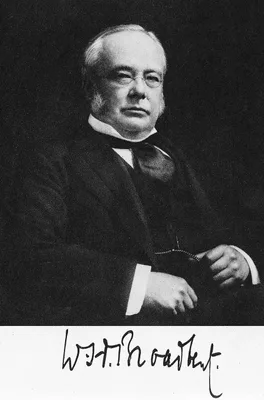
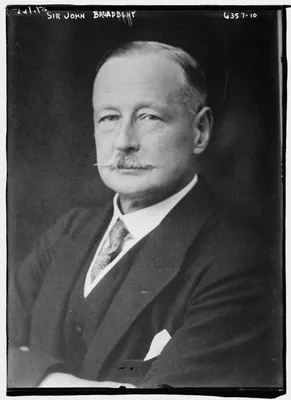
1897 BROADBENT, Sir William Henry (1835 – 1907); BROADBENT, Sir John Francis Harpin (1865 – 1946)
Heart disease.
Chapter 17 includes J. Broadbent’s classic description of adherent pericardium. See Willius & Keys, Cardiac classics, 1941, pp. 712-15, for reproduction of part of this chapter.
GMN 2805 · https://historyofmedicine.com/id/3442
1897 EISENMENGER, Victor (1864 – 1932)
Die angeborenen Defecte der Kammerscheidewand des Herzens.
“Riding aorta”, patent interventricular septum and right ventricular enlargement – the “Eisenmenger syndrome”.
GMN 2806 · https://historyofmedicine.com/id/3444
1897 HILL, Sir Leonard Erskine (1866 – 1952); BARNARD, Harold Leslie (1868 – 1908)
A simple and accurate form of sphygmomanometer or arterial pressure gauge contrived for clinical use.
Hill and Barnard made an important modification to the Riva-Rocci sphygmomanometer when they substituted a pressure gauge in place of the mercury manometer used for pressure readings.
GMN 2807 · https://historyofmedicine.com/id/3446
1897 CHURTON, Thomas (1839 – 1926)
Multiple aneurysms of the pulmonary artery.
Churton was the first to recognize this condition at necropsy.
GMN 2986 · https://historyofmedicine.com/id/5179
1897 OSLER, Sir William (1849 – 1919)
Lectures on angina pectoris and allied states.
"This monograph, based on seven lectures Osler delivered at Johns Hopkins, is his longest publication dealing with heart disease. He discusses the history of the recognition of angina, the pathophysiology of coronary …
GMN 11651 · https://historyofmedicine.com/id/13852
1897 MEIGS, Arthur Vincent (1850 – 1912)
The origin of disease, especially of disease resulting from intrinsic as opposed to extrinsic causes. With chapters on diagnosis, prognosis and treatment. With one hundred and thirty-seven original illustrations.
The most valuable features of this work are the exceptionally fine and delicate histologic illustrations engraved on steel and printed on thick paper to eliminate show-through. Each image is faced with detailed explan…
GMN 11875 · https://historyofmedicine.com/id/14079
1897 BÉCLÈRE, Antoine Louis Gustave (1856 – 1939); OUDIN, Paul Marie (1851 – 1923); BARTHÉLEMY, Toussaint (1850 – 1906)
Application de la méthode Roentgen à l'examen d'un anéurisme de la crosse aortique. Présentation du malade et de la preuve radiographique.
With the help of Oudin and Barthélemy Béclère established the first laboratory of radiology in Paris. This was among the first applications of x-rays for the diagnosis of aortic disease, and also one of the first pape…
GMN 12218 · https://historyofmedicine.com/id/14429
1897 STEWART, George Neil (1860 – 1930)
Researches on the circulation time in organs and on the influences which affect it.
This was a continuation of researches undertaken by Stewart for the Goodsir Prize Essay at the University of Edinburgh (1892). His autograph manuscript for the 1892 essay was digitized by the university at made availa…
GMN 12288 · https://historyofmedicine.com/id/14509
1898 BRAUN, Ludwig (1867 – 1936)
Ueber Herzbewegung und Herzstoss.
First employment of cinematograph to record the cardiac changes during all phases of heart contraction.
GMN 838 · https://historyofmedicine.com/id/583
1898 GIBSON, George Alexander (1854 – 1913)
Diseases of the heart and the aorta.
Includes among many other valuable descriptions, the description of the "Gibson murmur" also called the "machinery murmur"
GMN 2808 · https://historyofmedicine.com/id/3449
1898 RUMMO, Gaetano (1853 – 1917)
Sulla cardioptosi; primo abbozzo anatomo-clinico.
Rummo drew attention to a downward displacement of the heart – “Rummo’s disease”.
GMN 2809 · https://historyofmedicine.com/id/3452
1898 VIERORDT, Karl Hermann (1853 – 1943)
Die angeborenen Herzkrankheiten.
The first systematic treatise on congenital heart defects. Digital facsimile from the Internet Archive at this link.
GMN 11716 · https://historyofmedicine.com/id/13917
1899 DARLING, Eugene Abraham (1868 – 1934)
The effects of training. A study of the Harvard University Crews.
Pioneering study of the physiological effects of training.
GMN 4478.105 · https://historyofmedicine.com/id/83
1899 PRÉVOST, Jean-Louis (1790 – 1850); BATTELLI, Federico
La mort par les décharges électriques.
The first defibrillation. “Prévost and Battelli produced ventricular fibrillation in dogs by shocking with weak currents. They then shocked the fibrillating heart with a stronger current—the second, or counter, shock.…
GMN 838.1 · https://historyofmedicine.com/id/606
1899 WENCKEBACH, Karel Frederik (1864 – 1940)
Zur Analyse des unregelmässigen Pulses.
“Wenckebach phenomenon”, a form of arrhythmia.
GMN 2809.1 · https://historyofmedicine.com/id/3457
1899 FIEDLER, Carl Ludwig Alfred (1835 – 1921)
Ueber akute interstitielle Myokarditis.
“Fiedler’s myocarditis”.
GMN 2809.2 · https://historyofmedicine.com/id/3462
1899 GÄRTNER, Gustav (1855 – 1937)
Ueber einen neuen Blutdruckmesser (Tonometer).
Gaertner, an Austrian physician, invented an instrument for measuring blood-pressure by means of a compressing ring applied to the finger.
GMN 2810 · https://historyofmedicine.com/id/3467
1899 –1903 HUCHARD, Henri (1844 – 1910)
Traité cliniques des maladies du coeur et de l’aorte. 3 vols.
Third and best edition. "Huchard, physician to the Necker Hospital was a foremost teacher in Paris at the end of the 19th century, and a great authority on angina pectoris and arteriosclerosis. He was a powerful advoc…
GMN 2811 · https://historyofmedicine.com/id/3470
1899 DÖRFLER, Julius
Ueber Arteriennaht.
All-layer intima-to-intima arterial anastomosis.
GMN 2908.2 · https://historyofmedicine.com/id/4873
1899 HELLER, Arnold Ludwig Gotthilf (1840 – 1913)
Die Aortensyphilis als Ursache von Aneurysmen.
Heller established the fact that syphilis is a cause of aortic aneurysm.
GMN 2987 · https://historyofmedicine.com/id/5184
1899 WELCH, William Henry (1850 – 1934)
Thrombosis and embolism. In Allbutt, C., System of medicine, 4, 284-310; and in 2nd ed., 6, 691-821
GMN 3011 · https://historyofmedicine.com/id/5377
1899 CRILE, George Washington (1864 – 1943)
An experimental research into surgical shock.
Crile saw and recorded elevations in systemic and portal venous pressures under experimental shock.
GMN 5622 · https://historyofmedicine.com/id/7183
1899 MEIGS, Arthur Vincent (1850 – 1912)
The penetration of the muscular fibres of the human heart by capillaries, and the existence in that organ of very large capillaries.
Meigs discovered that the capillaries of the heart enter the heart muscle fibers. These became known as "Meigs capillaries." Digital facsimile from PubMedCentral at this link.
GMN 12268 · https://historyofmedicine.com/id/14485
1899 FRANK, Otto (1865 – 1944)
Die Grundform des arteriellen Pulses.
"The First Mathematical Description of the Pressure-Volume Diagram "Not until 60 years after 1899 Otto Frank's mathematical formulation of the volume-pressure diagram and his concept of the mechanism of the cardiac wo…
GMN 12286 · https://historyofmedicine.com/id/14507
1900 MACCALLUM, John Bruce (1876 – 1906)
On the muscular architecture and growth of the ventricles of the heart.
A classic account of the development and architecture of the muscular wall of the heart.
GMN 839 · https://historyofmedicine.com/id/603
1901 EINTHOVEN, Willem (1860 – 1927)
Un nouveau galvanomètre.
Einthoven directed much of his research to the development and perfection of recording instruments. His most famous work was in connexion with his string galvanometer, a perfection of the instrument invented by J. S. …
GMN 840 · https://historyofmedicine.com/id/598
1901 CRILE, George Washington (1864 – 1943)
An experimental and clinical research into certain problems relating to surgical operations.
Crile made important contributions to knowledge regarding shock. He originated the theory that it is due to exhaustion of the vasomotor center. (See also No. 5629.) Chapter V: On the physiologic action of cocain and e…
GMN 5624 · https://historyofmedicine.com/id/7198
1902 FRIEDENTHAL, Hans Wilhelm Carl (1870 – 1942)
Ueber die Entfemung der extracardialen Herznerven bei Saügethieren.
GMN 841 · https://historyofmedicine.com/id/614
1902 EINTHOVEN, Willem (1860 – 1927)
Galvanometrische registratie van het menschelijk electrocardiogram IN: Herinneringsbundel Prof. S.S. Rosenstein, pp.101-106.
First description of Einthoven's string galvanometer that recorded electrical changes occurring in the human heart. Includes the first illustration of an EKG (ECG) recording. Modern electrocardiography became a realit…
GMN 842 · https://historyofmedicine.com/id/618
1902 MACKENZIE, Sir James (1853 – 1925)
The study of the pulse.
In his classic monograph Mackenzie included (p. 10) a description and illustration of his polygraph, with which he made simultaneous tracings of the pulse, apex beat, etc.
GMN 2812 · https://historyofmedicine.com/id/3474
1902 MORITZ, Friedrich (1861 – 1938)
Ueber orthodiagraphische Untersuchungen am Herzen.
Orthodiagraphy of the heart.
GMN 2813 · https://historyofmedicine.com/id/3479
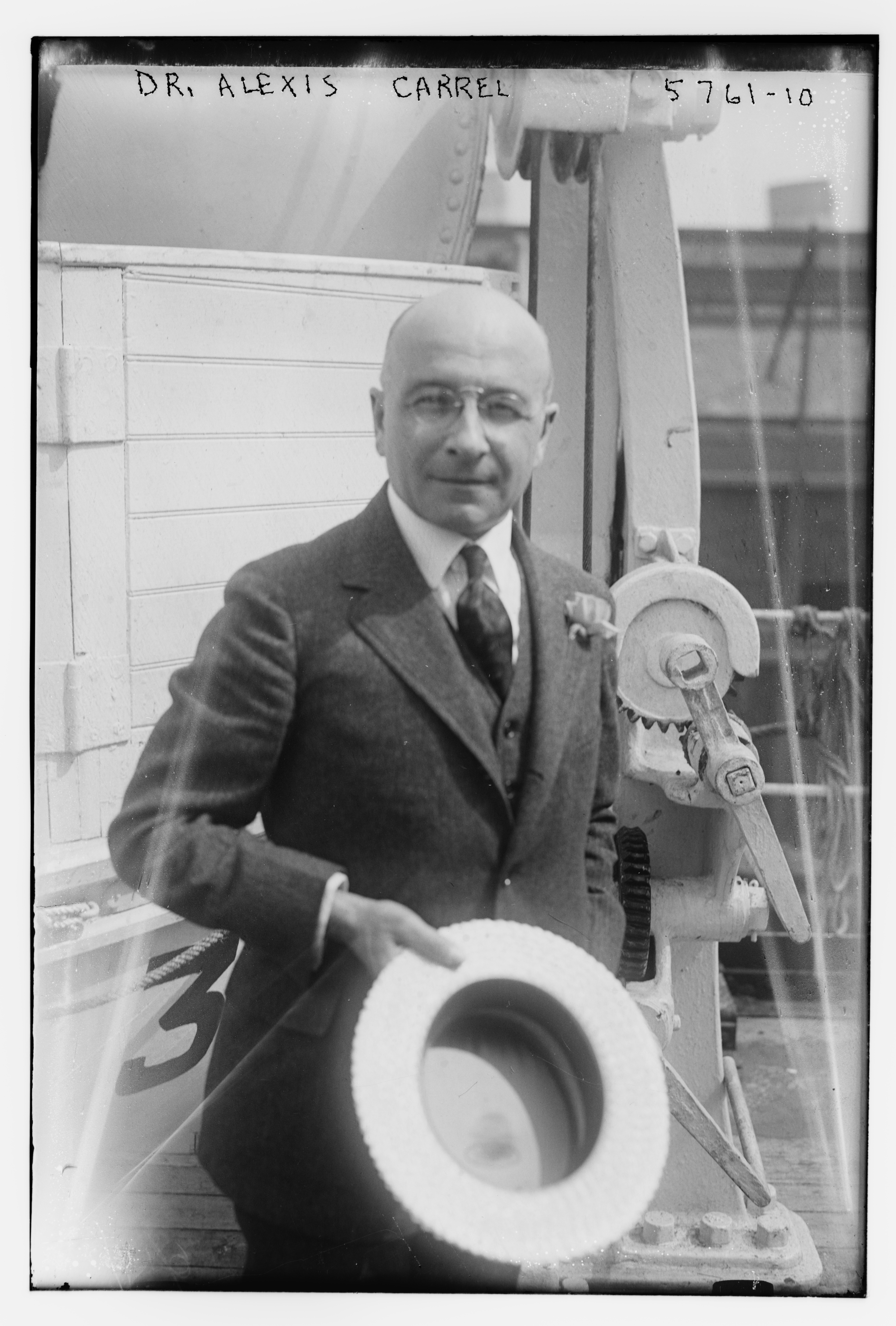
1902 CARREL, Alexis (1873 – 1944)
La technique opératoire des anastomoses vasculaires et la transplantation des viscères.
Carrel perfected the operation of arterial suture, end-to-end anastomosis of severed vessels with triple-threaded sutures. See also No. 3026.
GMN 2909 · https://historyofmedicine.com/id/4877
1902 CUSHING, Harvey Williams (1869 – 1939)
On the avoidance of shock in major amputations by cocainization of large nerve-trunks preliminary to their division.
William S. Halsted was first to use infiltration anesthesia (see No. 5679) and it was later developed by Cushing.
GMN 5689 · https://historyofmedicine.com/id/7419
1903 BONNET, L. M.
Sur la lésion dite sténose congénitale de l’aorte dans la région de l’isthme.
Distinction of infantile and adult types of coarctation of the aorta.
GMN 2814 · https://historyofmedicine.com/id/3483
1903 PAULI, Wolfgang Joseph (1869 – 1955)
Ueber Ionenwirkung und ihre therapeutische Verwendung.
Hypotensive action of thiocyanates first noted. Pauli was the father of the physicist Wolfgang Pauli (1900-1958).
GMN 2712 · https://historyofmedicine.com/id/4432
1903 JOSUÉ, Otto (1869 – 1923)
Athérôme aortique expérimental par injections répétées d’adrénaline dans les veines.
Experimental production of arteriosclerosis.
GMN 2910 · https://historyofmedicine.com/id/4879
1903 MÖNCKEBERG, Johann Georg (1877 – 1925)
Ueber die reine Mediaverkalkung der Extremitätenartien und ihr Verhalten zur Arteriosklerose.
“Mönckeberg’s sclerosis”. He described a form of medial sclerosis of the blood-vessels of the extremities. See also his later papers in Klin. Wschr.,1942, 52,1473-78, 1521-26.
GMN 2911 · https://historyofmedicine.com/id/4882
1903 WENCKEBACH, Karel Frederik (1864 – 1940)
Die Arrhythmie, als Austruck bestimmter Funktionsstörungen der Herzens: Eine physiologische-klinische Studie.
This monograph contains Wenckebach's obserations on the physiological bases of arrhythmias, along with accounts of their clinical manifestations. Wenckbach was the first to describe extracystoles in man, demonstrating…
GMN 11732 · https://historyofmedicine.com/id/13933
1903 HERING, Heinrich Ewald (1866 – 1948)
Analyse des Pulsus irregularis perpetuus.
Later called auricular fibrillation.
GMN 12247 · https://historyofmedicine.com/id/14462