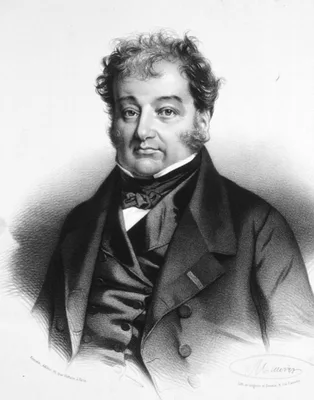
1793 CRUMPE, Samuel (1766 – 1796)
An inquiry into the nature and properties of opium: Wherein its component principles, mode of operation, and use or abuse in particular diseases, are experimentally investigated, and the opinions of former authors on these points impartially examined.
Crumpe undertook extensive experiments to understand the effects of opium. His book provided the first detailed description of the effects of narcotic withdrawal. Digital facsimile from the Hathi Trust at this link.
GMN 10590 · https://historyofmedicine.com/id/12783
1794 BALMIS, Francisco Javier de (1793 – 1819)
Demostracion de las eficaces virtudes nuevamente descubiertas en las raices de dos plantas de Nueva-España, especies de ágave y de begónia, para la curacion del vicio venéreo y escrofuloso ...
Balmis conducted experimental trials on the effectiveness of two Mexican plants, agave and begonia, which were believed, according to folk medicine practices in Mexico, to cure syphilis and scrofula. The trials confir…
GMN 8004 · https://historyofmedicine.com/id/10180
1794 BARHAM, Henry
Hortus Americanus, containing an account of the trees, shrubs, and other vegetable productions of South-America and the West-India islands, and particularly of the island of Jamaica; interspersed with many curious and useful observations, respecting their uses in medicine, diet, and mechanics.
Digital facsimile from Biodiversity Heritage Library at this link.
GMN 9989 · https://historyofmedicine.com/id/12178
1795 SOEMMERRING, Samuel Thomas von (1755 – 1830)
De morbis vasorum absorbentium corporis humani.
Soemmerring noted an association between pipe smoking and cancer of the lip (p. 109).
GMN 2609.1 · https://historyofmedicine.com/id/3088
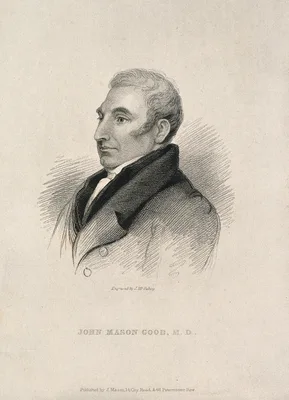
1795 GOOD, John Mason (1764 – 1827)
The history of medicine, so far as it relates to the profession of the apothecary, ... the origin of druggists, their gradual encroachments on compound pharmacy, and the evils to which the public are from thence exposed.
The first history of pharmacy in Britain. Good’s History was commissioned by the General Pharmaceutical Association, formed in 1794, of which the author was a prominent member. It was intended to protect the trade of …
GMN 10016 · https://historyofmedicine.com/id/12205
1798 DONOVAN, Edward (1768 – 1837)
An epitome of the natural history of the insects of China: Comprising figures and descriptions of upwards of one hundred new, singular, and beautiful species: together with some that are of importance in medicine, domestic economy, &c. The figures are accurately, drawn, engraved, and coloured, from speciemsn of the insects; the descriptions are arranged accordig to the system of Linnaeus, with references to the writings of Fabricius, and other systematic authors.
The first work in a Western language on the insects of China, including pharmaceutical aspects. For this work Donovan obtained specimens and information from George Macartney a British envoy to China. Includes 50 colo…
GMN 9082 · https://historyofmedicine.com/id/11261
1798 BARTON, Benjamin Smith (1766 – 1815)
Collections for an essay towards a materia medica of the United States. Read before the Philadelphia Medical Society, on the twenty-first of February, 1798.
Digital facsimile of the 1798 edition from the U.S. National Library of Medicine at this link. Digital facsimile of the much-expanded third edition (1810) from Google Books at this link.
GMN 9309 · https://historyofmedicine.com/id/11491
1799 AZEREDO, José Pinto de (1766 – 1810)
Ensaios sobre algumas enfermidades d'Angola....
Azeredo noted that the tropical fevers found in Brazil and Angola were very similar. He claimed to have achieved excellent results with his “new method” of treatment, which included the use of quinine, nux vomica, ars…
GMN 9070 · https://historyofmedicine.com/id/11249
1799 FERRIAR, John (1761 – 1815)
An essay on the medical properties of the digitalis purpurea or foxglove.
"John Ferriar...published the first monograph on digitalis after William Withering (1785). Ferriar was the first to suggest that digitalis was beneficial in dropsy (severe congestive heart failure), in part because it…
GMN 11592 · https://historyofmedicine.com/id/13791
1801 STEARNS, Samuel (1741 – 1810)
The American herbal, or materia medica.
The first herbal both produced and printed in the United States, as opposed to those which were reprints of European works. Includes information on native American remedies. Digital facsimile from the Medical Heritage…
GMN 1838.2 · https://historyofmedicine.com/id/2218
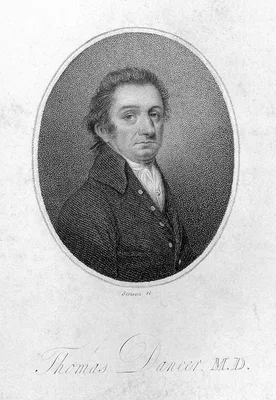
1801 DANCER, Thomas (1750 – 1811)
The medical assistant, or Jamaica practice of physic: Designed chiefly for the use of families and plantations.
Digital facsimile from the U.S. National Library of Medicine at this link.
GMN 9897 · https://historyofmedicine.com/id/12085
1802 DEROSNE, Charles Louis (1780 – 1846)
Sur l’opium.
Isolation of alkaloids from opium.
GMN 1838.3 · https://historyofmedicine.com/id/2252
1805 SERTÜRNER, Friedrich Wilhelm Adam (1783 – 1841)
Darstellung der reinen Mohnsäure (Opiumsäure); nebst einer chemischen Untersuchung des Opiums, mit vorzüglicher Hinsicht auf einen darin neu entdeckten Stoff.
Isolation of morphine from opium. This was the first isolation of an active ingredient from a plant.
GMN 1839 · https://historyofmedicine.com/id/2269
1806 CADET DE VAUX, Antoine-Alexis (1743 – 1828); CADET, Charles-Louis (1769 – 1821)
Dissertation sur le café; son historique, ses propriétés, et le procédé pour en obtenir la boisson la plus agréable, la plus salutaire et la plus économique; Par Ant.-Alexis Cadet-de-Vaux...Suivie de son analyse; par Charles-Louis Cadet.
Cadet de Vaux discussed the history of coffee, including the origins of the coffee bean and plant, the proper climate for growing coffee, coffee drinking culture and its introduction to Europe. He also described the b…
GMN 11630 · https://historyofmedicine.com/id/13830
1806 COXE, John Redman (1773 – 1864)
The American dispensatory, containing the operations of pharmacy; Together with the natural, chemical, pharmaceutical and medical history of the different substances employed in medicine; illustrated and explained, according to the principles of modern chemistry: Comprehending the improvements in Dr. Duncan's second edition of the Edinburgh new dispensatory. The arrangement simplified, and the whole adapted to the practice of medicine and pharmacy in the United States. With several copperplates, exhibiting the new system of chemical characters, and representing the most useful apparatus.
Coxe's "formulary" was the first attempt at standarization of drugs and their preparation in the United States. Digital facsimile from the U.S. National Library of Medicine at this link.
GMN 12134 · https://historyofmedicine.com/id/14343
1808 STEARNS, John (1770 – 1848)
Accounts of the pulvis parturiens, a remedy for quickening child-birth.
The first use of ergot in the induction of labor in America. Reprinted in H. Thoms: Classic Contributions to Obstetrics and Gynecology, 1935, pp. 21-23.
GMN 6164 · https://historyofmedicine.com/id/7751
1808 JACKSON, James (1777 – 1867); WARREN, John Collins (1778 – 1856); MASSACHUSETTS MEDICAL SOCIETY
The pharmacopoeia of the Massachusetts Medical Society,
The first state pharmacopeia issued in the United States. Jackson and Warren were the "Committee for the Pharmacopoeia." Digital facsimile from the Internet Archive at this link.
GMN 10067 · https://historyofmedicine.com/id/12256
1809 GOMES, Bernardino António (1769 – 1823)
Memoria sobre a canella do Rio de Janeiro offerecida ao Principe do Brazil nosso senhor: pelo Senado da Camara da mesma cidade no anno de 1798.
The earliest monograph on medicine published in Brazil. Digital facsimile from the U.S. National Library of Medicine at this link.
GMN 9064 · https://historyofmedicine.com/id/11243
1809 MAGENDIE, François (1783 – 1855)
Examen de l'action de quelques végétaux sur la moelle épinière. Lu a l'Institut, le vingt-quatre avril 1809.
In 1809 Magendie presented to the Académie des Sciences and to the Société Philomatique the results of his first experimental work, which he carried out in collaboration with the botanist and physician Alire Raffeneau…
GMN 9578 · https://historyofmedicine.com/id/11765
1810 GOMES, Bernardino António (1769 – 1823)
Ensaio sobre o cinchonino, e sobre sua influencia em a virtude da quina, e de outras cascas.
Gomes obtained a substance, which he named cinchonino, from cinchona bark. That it contained the active principle of cinchona was later proved by Pelletier and Caventou. For an English translation of the paper, see Ed…
GMN 1840 · https://historyofmedicine.com/id/2272
1811 TYLER, Mary Hunt Palmer (1775 – 1866)
The maternal physician; a treatise on the nurture and management of infants, from the birth until two years old. Being the result of sixteen years' experience in the nursery. Illustrated by extracts from the most approved medical authors
The first American book on pediatrics, in the tradition of "advice books" or childcare manuals for mothers. This was the first American printed book on a medical subject written by a woman. Pages 248-75 publish a list…
GMN 7801 · https://historyofmedicine.com/id/9973
1812 BUC'HOZ, Pierre-Joseph (1731 – 1807)
Traité usuel du chocolat, contenant la description et la culture du cacaotier ou cacaoïer, arbre qui produit le fruit avec lequel on fabrique le chocolat, celles de la canelle, de la vanille, du salep de Perse, de l'ambre gris, du sucre, et autres substances que l'on fait entrer dans la fabrication du chocolat, les différentes façons de préparer ce commestible pour en faire un aliment recherché et propre à flatter le goût de tous les consommateurs les plus distingués, ce qui lui a fait donner, avec just tire, le sur-non de METS Des DIEUX. On y fait voir assi son utilité précieuse dans médecine.
Digital facsimile from Google Books at this link.
GMN 13631 · https://historyofmedicine.com/id/15911
1813 AINSLIE, Whitelaw (1767 – 1837)
Materia medica of Hindoostan, and artisan’s and agriculturist’s nomenclature.
The first book in English on the materia medica of India, and a pioneering work in the field of Indian medical history. Ainslie joined the British East India Company as an assistant surgeon in 1788 and spent the next …
GMN 6975 · https://historyofmedicine.com/id/9141
1814 HENRY, Samuel
Botanic medicine: A new and complete American medical family herbal: Wherein is displayed the true properties and medical virtues of the plants, indigenous to the United States of America, together with Lewis' secret remedy newly discovered, which has been found infallible in the cure of that dreadful disease hydrophobia, produced by the bite of a mad dog.
Henry wrote that he had been a captive of the Indians during the Creek War and that he incorporated what he learned during his captivity. His work was one of the first illlustrated herbals published in the United Stat…
GMN 9641 · https://historyofmedicine.com/id/11828
1817 –1819 BARTON, William Paul Crillon (1786 – 1856)
Vegetable materia medica of the United States. 2 vols.
Barton served as a naval surgeon and, in 1815, became Professor of Botany at Philadelphia. Along with Bigelow (No. 1842) Barton’s work is one of the first two botanical works with colored plates issued in the United S…
GMN 1841 · https://historyofmedicine.com/id/2277
1817 –1820 BIGELOW, Jacob (1786 – 1879)
American medical botany, being a collection of the native medicinal plants of the United States, containing their botanical history and chemical analysis, and properties and uses in medicine, diet and the arts. 3 vols.
Bigelow was professor of materia medica and botany at Harvard. This work included native American remedies. It was the first book printed in the United States to include color plates printed in color. See R.J. Wolfe, …
GMN 1842 · https://historyofmedicine.com/id/2280
1817 MAGENDIE, François (1783 – 1855); PELLETIER, Pierre Joseph (1788 – 1842)
Mémoire sur l’émétine, et sur les trois espèces d’ipecacuanha.
Isolation of emetine. It was not until a century later that Vedder demonstrated its value in the treatment of amoebiasis. Also during 1817 Magendie and Pelletier published "Recherches chimiques et physiologiques sur l…
GMN 1843 · https://historyofmedicine.com/id/6304
1818 FACULTÉ DE MÉDECINE DE PARIS
Codex medicamentarius sive pharmacopoea gallica jussu regis optimi et ex mandato summi rerum internarum regni administri, editus a Facultate Medica Parisiensi anno 1818.
The first French national pharmacopeia. The French pharmacopeia became the model for later national attempts to publish national pharmacopeias. Notably the first U.S. pharmacopeia was issued in 1820. After a legal not…
GMN 10268 · https://historyofmedicine.com/id/12459
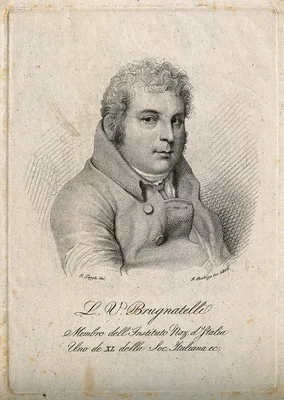
1818 BRUGNATELLI, Luigi Valentino (1761 – 1818)
Pharmacopoeia Geniki.
The first pharmacopeia printed in Turkey. This was a translation into Greek from Brugnatelli's Farmakopoea ad uso degli Speziali, e Medici Moderni della Repubblica Italiana. The printer in Istanbul was not identified.…
GMN 13075 · https://historyofmedicine.com/id/15327
1820 GUIBOURT, Nicholas Jean Baptiste Gaston (1790 – 1867)
Histoire abrégée des drogues simples. 2 vols.
GMN 2030 · https://historyofmedicine.com/id/2135
1820 SPALDING, Lyman (1775 – 1821)
Pharmacopoeia of the United States of America. 1820
The first official US pharmacopoeia. Spalding began campaigning for a national pharmacopeia in 1815. His efforts finally bore fruit in a national convention that met in 1820 and adopted a pharmacopeia based mainly on …
GMN 1845 · https://historyofmedicine.com/id/2297
1820 PARIS, John Ayrton (1785 – 1856)
Pharmacologia; or the history of medicinal substances, with a view to establish the art of prescribing. 3rd ed.
First description of cancer caused by arsenic (p. 133).
GMN 2073 · https://historyofmedicine.com/id/2539
1820 PELLETIER, Pierre Joseph (1788 – 1842); CAVENTOU, Joseph Bienaimé (1795 – 1877)
Recherches chimique sur les quinquinas.
Isolation of quinine.
GMN 5233 · https://historyofmedicine.com/id/7879
1820 –1821 RUNGE, Friedlieb Ferdinand (1795 – 1867)
Neueste phytochemische Entdeckungen zur Begründung einer wissenschaftlichen Phytochemie. 2 vols.
On pp. 144-146 of vol. 1 Runge reported the isolation of relatively pure caffeine for the first time. He called it "Kaffebase." Digital facsimile from Google Books at this link. In 1821 the French chemists Pierre-Jose…
GMN 11411 · https://historyofmedicine.com/id/13610
1821 MAGENDIE, François (1783 – 1855)
Formulaire pour la préparation et l’emploi de plusieurs nouveaux médicamens, tels que la noix vomique, la morphine, etc.
Magendie was the pioneer of experimental physiology in France. His Formulaire introduced into medical practice several of the newly discovered alkaloids, notably morphine, veratrine, brucine, piperine, emetine, as wel…
GMN 1846 · https://historyofmedicine.com/id/2302
1821 –1829 DESCOURTILZ, Michel Étienne (1777 – 1835); DESCOURTILZ, Jean-Théodore (1796 – 1855)
Flore pittoresque et médicale des Antilles, ou, Histoire naturelle des plantes usuelles des colonies françaises, anglaises, espagnoles et portugaises; par M. E. Descourtilz. Peinte par J. Th. Descourtilz. 8 vols.
Medical botany of the Caribbean, finely illustrated with colored plates after paintings by the author's son. Digital facsimile from the Biodiversity Heritage Library at this link.
GMN 8547 · https://historyofmedicine.com/id/10724
1821 ROQUES, Joseph R. (1772 – 1850)
Phytographie médicale, ornée de figures coloriées de grandeur naturelle, ou l’on expose l’histoire des poisons tirés du règne végétal, et les moyens de remédier a leurs effets délétères, avec des observations sur les propriétés et les usages des plantes héroïques. 2 vols.
Perhaps the most beautiful book on botanic poisons and their antidotes, including narcotics. Plates 1-15 cover mushrooms, and plate 175 depicts Cannabis sativa. With 180 plates printed in color à la poupée and finishe…
GMN 10647 · https://historyofmedicine.com/id/12840
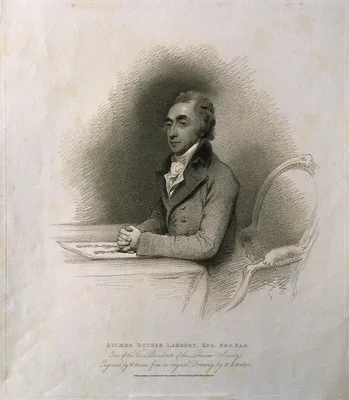
1821 HUMBOLDT, Friedrich Wilhelm Heinrich Alexander von (1769 – 1859); LÓPEZ, Hipólito Ruiz (1754 – 1816); LAMBERT, Aylmer Bourke (1761 – 1842); LAUBERT, Jean Charles (1762 – 1834)
An illustration of the genus cinchona; comprising descriptions of all the officinal Peruvian barks, including several new species. Baron de Humboldt's Account of the Cinchona forests of South America, and Laubert's Memoir on the different species of quinquina: To which are added several dissertations of Don Hippolito Ruiz on various medicinal plants of South America ... And a short account of the spikenard of the ancients.
Digital facsimile from Biodiversity Heritage Library at this link.
GMN 13324 · https://historyofmedicine.com/id/15591
1822 SCHENK, Johann Heinrich
Erfahrungen über die grossen Heilkräfte des Leberthrans gegen chronische Rheumatismen und besonders gegen das Hüft- und Lendenweh.
Schenk’s account of his experience with cod liver oil led to its general use on the continent of Europe. Author’s name incorrectly given as Scherer in original.
GMN 1847 · https://historyofmedicine.com/id/2309
1822 SÉRULLAS, Georges-Simon (1774 – 1832)
Mémoire sur l’iodure de potassium, l’acide hydriodique et sur un composé nouveau de carbone, d’iode et d’hydrogène.
Iodoform discovered. See also Sérrulas' Notes sur l'Hydriodate de potasse et l'Acide hydriodique. – Hydriodure de carbone; moyen d'obtenir, à l'instant, ce composé triple (1822), of which a digital facsimile is availa…
GMN 1848 · https://historyofmedicine.com/id/2314
1822 THOMSON, Samuel (1769 – 1843)
New guide to health; or botanic family physician, containing a complete system of practice, upon a plan entirely new; with a description of the vegetables made use of, and directions for preparing and adminstering them to cure disease. To which is prefixed a narrative of the life and medical discoveries of the author.
The "Bible" of Thomsonism or "Thomsonian medicine", which employed botanical remedies, often based on native American medicines. Digital facsimile from the Medical Heritage Library, Internet Archive, at this link.
GMN 6988 · https://historyofmedicine.com/id/9154
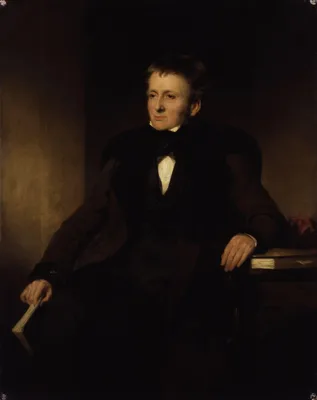
1822 DE QUINCEY, Thomas Penson (1785 – 1859)
Confessions of an opium eater.
First published anonymously in September and October 1821 in the London Magazine, 4, No. xxi, 293-312, and No. xxii, 353-79, the Confessions was released in book form in 1822, and, after various reprints, again in 185…
GMN 8904 · https://historyofmedicine.com/id/11082
1822 GOMES, Bernardino António (1769 – 1823)
Memoria sobre a virtude toenifuga da romeira, com observações zoologicas e zoonomicas relativas á toenea, e com huma estampa.
On the use of a root medicine to treat tapeworms, roundworms and similar parasites. The author refers to cases from Portuguese Africa, India and Brazil, and gives clinical observations based on his own case studies, s…
GMN 9071 · https://historyofmedicine.com/id/11250
1822 BIGELOW, Jacob (1786 – 1879)
A treatise on the materia medica, intended as a sequel to the Pharmacopoeia of the United States: Being an account of the origin, qualities and medical uses of the articles and compounds, which constitute that work, with their modes of prescription and administration.
Bigelow, who with Lyman Spalding, was largely responsible for the creation and publication in 1820 of the first U.S. pharmacopeia, published this valuable explanatory and supplementary volume two years later. It was p…
GMN 10068 · https://historyofmedicine.com/id/12257
1822 THOMSON, Samuel (1769 – 1843)
A narrative of the life and medical discoveries of Samuel Thomson: Containing an account of his system of practice, and the manner of curing disease with vegetable medicine, upon a plan entirely new; to which is added an introduction to his New Guide to Health, or Botanic Family Physician containing the principles upon which the system is founded, with remarks on fevers, steaming, poison &c.
Thomson issued this introductory work shortly before publication of his New Guide. Three issues appeared in 1822: one with 180 pages, another with 182 pages including testimonials, and a 204 page issue with the introd…
GMN 10751 · https://historyofmedicine.com/id/12947
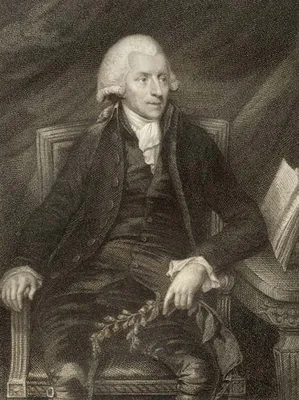
1822 WITHERING, William (1741 – 1799)
The miscellaneous tracts of the late William Withering. To which is prefixed a memoir of his life, character and writings. 2 vols.
Withering's collected works, with the exception of his A botanical arrangement of all the the vegetables naturally growing in the Great Britain. Includes the second edition of his monograph on the foxglove. Digital fa…
GMN 11738 · https://historyofmedicine.com/id/13939
1824 SCHÜTTE, D
Beobachtungen Über den Nutzen des Berger Leberthrans (Oleum jecoris Aselli, von Gadus asellus L.)
First report of the value of cod-liver oil in the treatment of rickets.
GMN 3730 · https://historyofmedicine.com/id/4511
1826 AINSLIE, Whitelaw (1767 – 1837)
Materia Indica; or, some account of those articles which are employed by the Hindoos and other eastern nations, in their medicine, arts, and agriculture; comprising also formulae, with practical observations, names of diseases in various eastern languages, and a copious list of oriental books immediately connected with general science. 2 vols.
Digital facsimile from the Internet Archive at this link.
GMN 8523 · https://historyofmedicine.com/id/10700
1827 –1834 GOEBEL, Karl Christian Traugott Friedemann (1794 – 1851); KUNZE, Gustav (1793 – 1851); SCHENK, Ernst
Pharmaceutische Waarenkunde mit illuminirten Kupfern nach der Natur gezeichnet von Ernst Schenk. Begonnen von Friedemann Goebel. Fortgesetzt von Gustav Kunze. 14 parts in 2 vols.
GMN 9545 · https://historyofmedicine.com/id/11731
1829 LUGOL, Jean Guillaume August (1786 – 1851)
Mémoire sur l’emploi de l’iode dans les maladies scrofuleuses.
Lugol’s solution. Digital facsimile from Google Books at this link.
GMN 1849.1 · https://historyofmedicine.com/id/2337