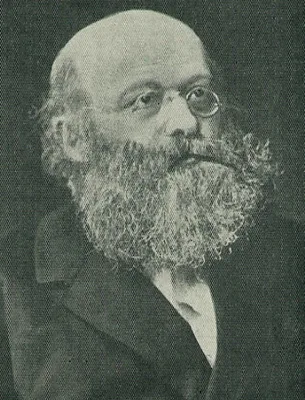
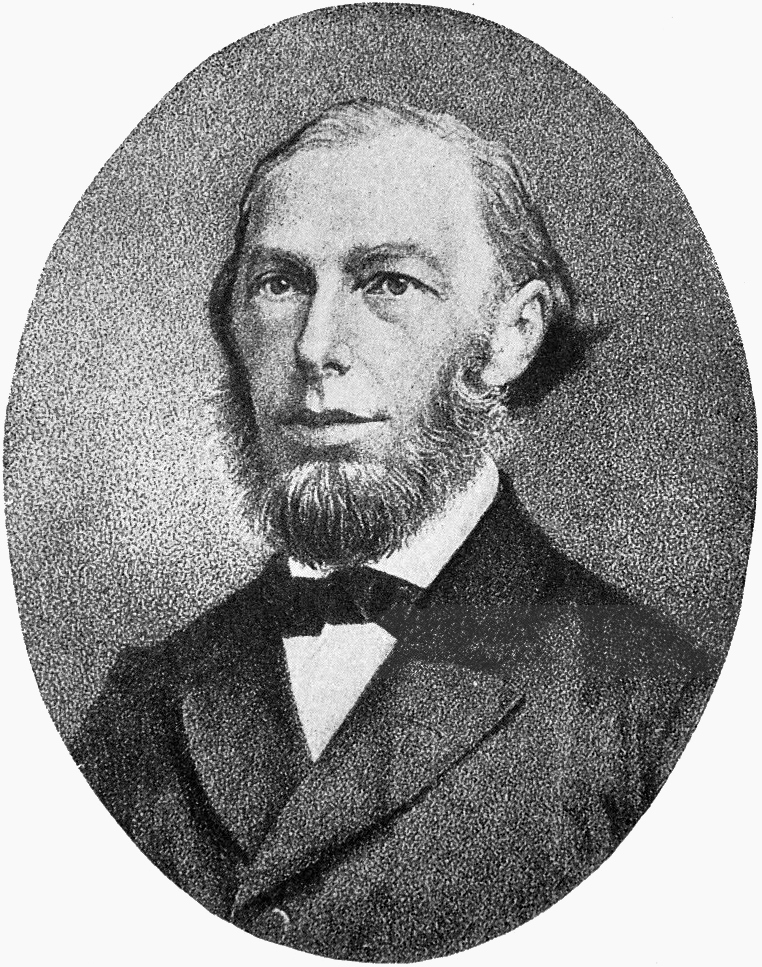
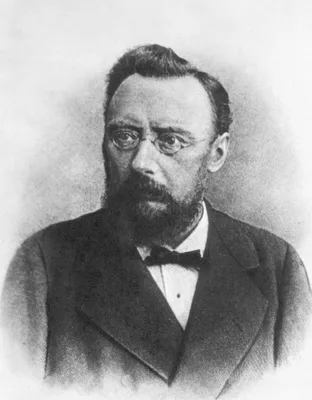
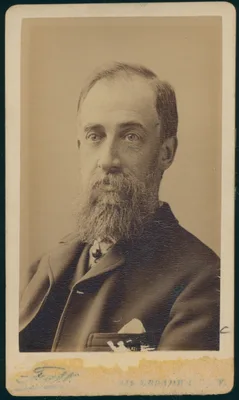
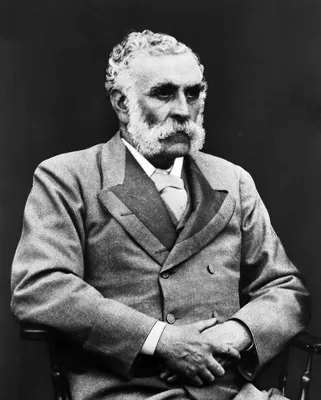
1860 GRAEFE, Friedrich Wilhelm Ernst Albrecht von (1828 – 1870)
Ueber Complication von Sehnervenentzündung mit Gehimkrankheiten
Graefe showed that most cases of blindness and impaired vision connected with cerebral disorders can be traced to optic neuritis rather than paralysis of the optic nerve.
GMN 4536 · https://historyofmedicine.com/id/8901
1862 DONDERS, Frans Cornelis (1818 – 1889)
Astigmatisme en cilindrische glazen.
Includes statement of “Donders’s law” – the rotation of the eye around the line of sight is not voluntary. French and German translations, 1862.
GMN 5889 · https://historyofmedicine.com/id/7354
1863 JACOBSON, Julius (1828 – 1889)
Ein neues und gefahrloses Operations-Verhfahren zur Heilung des grauen Staares.
Jacobson used a peripheral incision in his operation for cataract.
GMN 5891 · https://historyofmedicine.com/id/7361
1863 LIEBREICH, Richard (1830 – 1917)
Atlas der Ophthalmoscopie. Darstellung des Augengrundes im gesunden und krankhaften Zustande enthalten.
First atlas of the fundus. The author was an assistant to Helmholtz at the time of the invention of the ophthalmoscope. The work is illustrated with reproductions of his own paintings. Text in French and German. Engli…
GMN 5892 · https://historyofmedicine.com/id/7366
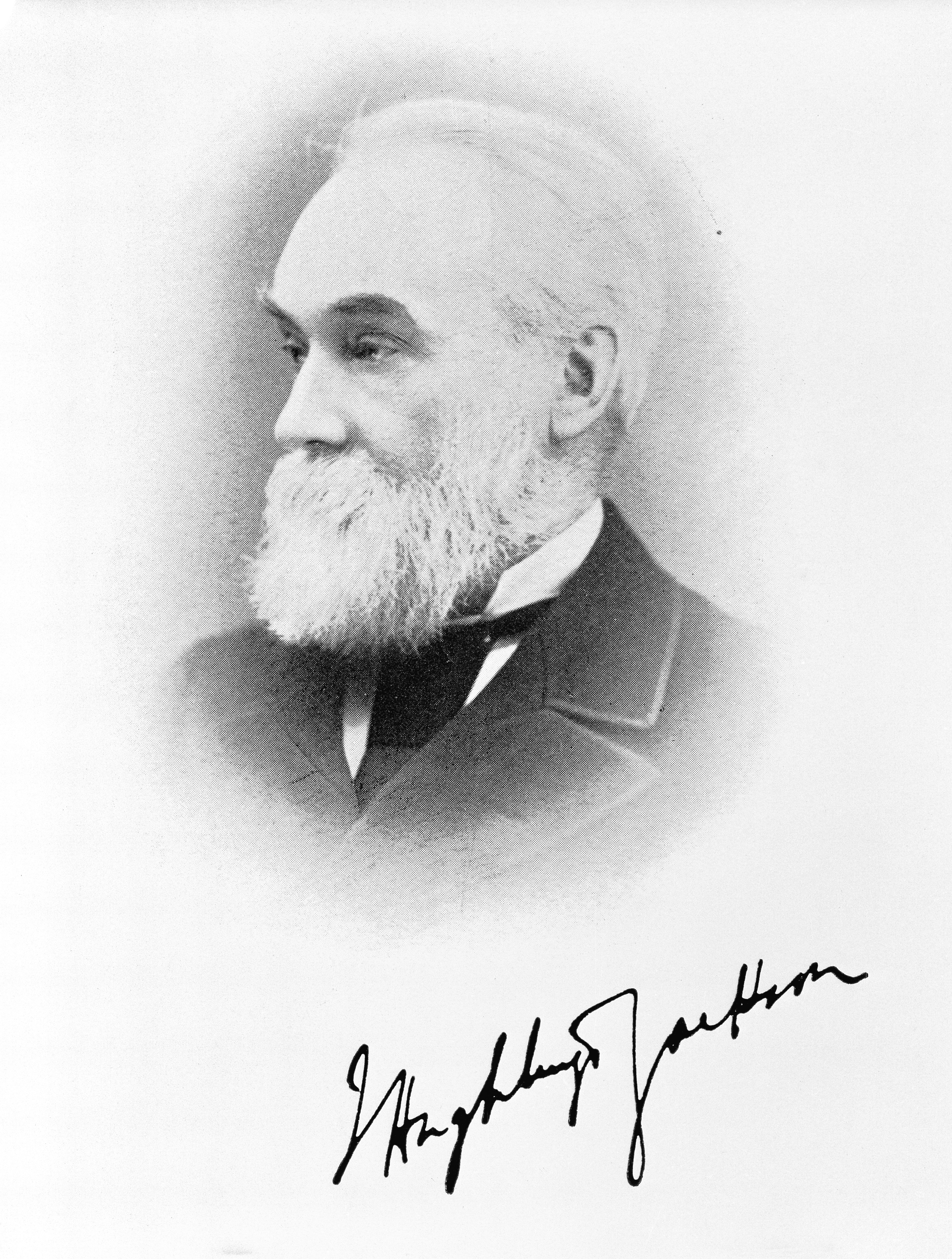
1863 –1865 JACKSON, John Hughlings (1835 – 1911)
Observations on defects of sight in brain disease.
In this work Jackson showed the importance of the ophthalmoscope in the investigation of diseases of the nervous system. Reprinted in Med. Classics, 1939, 3, 918-26.
GMN 4537 · https://historyofmedicine.com/id/8899
1864 DONDERS, Frans Cornelis (1818 – 1889)
On the anomalies of accommodation and refraction of the eye… Translated from the author’s manuscript by W.D. Moore.
Donders’s greatest work, the basis for all succeeding studies of the subject, and a classic of physiological optics. It contains Donders’s explanation of astigmatism, his definition of aphakia and hypermetropia, his s…
GMN 5893 · https://historyofmedicine.com/id/7470
1865 HOLMGREN, Alarik Frithiof (1831 – 1897)
Method att objectivera effecten av ljusintryck pa retina.
Discovery of the electroretinogram, the beginning of the use of electrophysiological methods for studying visual systems.
GMN 1511.1 · https://historyofmedicine.com/id/2602
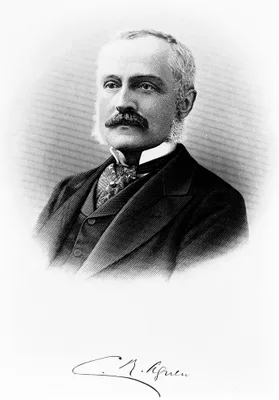
1865 –1872 AGNEW, Cornelius Rea (1830 – 1888)
A method of operating for divergent squint.
Agnew devised an operation for the treatment of divergent squint.
GMN 5894 · https://historyofmedicine.com/id/7374
1865 –1872 WILLIAMS, Henry Willard (1821 – 1895)
Suture of the flap, after extraction of cataract.
A method of suturing the flap after cataract extraction was introduced by Williams.
GMN 5895 · https://historyofmedicine.com/id/7379
1865 GRAEFE, Friedrich Wilhelm Ernst Albrecht von (1828 – 1870)
Ueber mordificirte Linearextraction.
Graefe’s improvement of the operation for cataract by the modified linear extraction reduced the incidence of eye loss from 10 to 2.3 per cent.
GMN 5897 · https://historyofmedicine.com/id/7387
1866 SCHULTZE, Max Johann Sigismund (1825 – 1874)
Zur Anatomie und Physiologie der Retina.
One of the greatest of all histologists, Max Schultze is remembered by ophthalmologists for his monograph on the nerve-endings in the retina.
GMN 1512 · https://historyofmedicine.com/id/2605
1866 GRAEFE, Friedrich Wilhelm Ernst Albrecht von (1828 – 1870)
Zur Lehre der sympathischen Ophthalmie.
A classic contribution to the literature of sympathetic ophthalmia.
GMN 5898 · https://historyofmedicine.com/id/7390
1866 PAGENSTECHER, Alexander (1828 – 1879)
Ueber die Extraktion des grauen Staares bei uneröffneter Kapsel durch den Scleralschnitt. IN Klinische Beobachtungen aus der Augenheilanstalt zu Wiesbaden, hrsg. von E.H. Pagenstecher u. T. Saemisch, Heft 3.
Extraction of the lens in the closed capsule through a scleral incision, for the treatment of cataract.
GMN 5896 · https://historyofmedicine.com/id/7474
1867 HELMHOLTZ, Hermann Ludwig Ferdinand von (1821 – 1894)
Handbuch der physiologischen Optik. 1 vol. and atlas.
Includes Helmholtz’s revival of the Young theory of color vision. English translation by J.P.C. Southall of 3rd German edition, 3 vols., Menasha, Wis., 1924-25.
GMN 1513 · https://historyofmedicine.com/id/2606
1867 GRAEFE, Friedrich Wilhelm Ernst Albrecht von (1828 – 1870)
Symptomenlehre der Augenmuskellähmungen.
The first thorough account of paralysis of the eye muscles, and the basis for their surgical treatment. The first section describes conditions resulting from injuries to the eye muscles. The second part outlines physi…
GMN 5899 · https://historyofmedicine.com/id/7394
1868 HERING, Karl Ewald Konstantin (1834 – 1918)
Die Lehre vom binokularen Sehen.
Hering’s law: that the corresponding muscles of the two eyes are always equally innervated. The book includes classic experiments and observations on eye movement control. English translation by B. Bridgeman and L. St…
GMN 1513.1 · https://historyofmedicine.com/id/2608
1868 ROTHMUND, August von (1830 – 1906)
Ueber Cataracten in Verbindung mit einer eigenthümlichen Haut-de-generation.
Poikiloderma congenitale (Rothmund).
GMN 4056.1 · https://historyofmedicine.com/id/5416
1868 GRAEFE, Friedrich Wilhelm Ernst Albrecht von (1828 – 1870)
Ueber Ceratoconus.
Classic description of conical cornea (keratoconus).
GMN 5900 · https://historyofmedicine.com/id/7398
1868 KNAPP, Jacob Hermann (1832 – 1911)
Die intraocularen Geschwülste nach eigenen klinischen Beobachtungen und anatomischen Untersuchungen.
English translation, New York, 1869.
GMN 5902 · https://historyofmedicine.com/id/7403
1869 HORNER, Johann Friedrich (1831 – 1886)
Ueber eine Form von Ptosis.
“Horner’s syndrome”, due to lesion of the cervical sympathetic. The same syndrome was evoked in animals by Pourfour du Petit in 1727 (see No. 1313). It is a proof that the sympathetic governs the pupillary, vasomotor,…
GMN 1328 · https://historyofmedicine.com/id/1354
1869 NOYES, Henry Dewey (1832 – 1900)
Retinitis in glycosuria.
First investigation of retinitis accompanying glycosuria.
GMN 3938 · https://historyofmedicine.com/id/5158
1869 JÄGER VON JAXTHAL, Eduard (1818 – 1884)
Opthalmoskopischer Hand-Atlas.
A fine atlas which was for many years unsurpassed. The illustrations were reproduced from Jaeger’s own paintings, each of which required from 20 to 50 sittings of from two to three hours each. English translation, Lon…
GMN 5904 · https://historyofmedicine.com/id/7411
1869 ROBERTSON, Douglas Moray Cooper Lamb Argyll (1837 – 1909)
On an interesting series of eye symptoms in a case of spinal disease, with remarks on the action of belladonna on the iris.
“Argyll Robertson pupil” first described. See also his later paper in the same journal, 1869, 15, 487-93. Reprinted in Med. Classics, 1937, 1, 851-76.
GMN 4540 · https://historyofmedicine.com/id/8902
1870 –1871 HOLMGREN, Alarik Frithiof (1831 – 1897)
Om retinaströmmen.
First demonstration of retinal action currents.
GMN 1514 · https://historyofmedicine.com/id/2611
1870 SAEMISCH, Edwin Theodor (1833 – 1909)
Das Ulcus corneae serpens und seine Therapie.
First description of serpiginous ulcer of the cornea and its treatment. Called also “Saemisch’s ulcer”.
GMN 5905 · https://historyofmedicine.com/id/7417
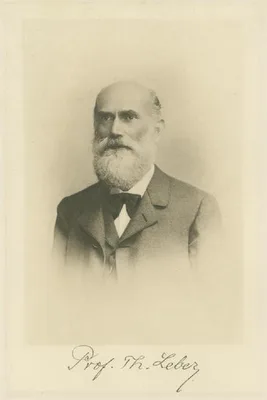
1871 LEBER, Theodor (1840 – 1917)
Ueber hereditäre und congenital-angelegte Sehnervenleiden.
First description of hereditary optic atrophy, “Leber’s optic atrophy”.
GMN 5906 · https://historyofmedicine.com/id/7420
1871 MONTMÉJA, Pierre Michel Arthur de (1841 – 1910); MEYER, Édouard (1838 – 1902)
Traité des opérations qui se pratiquent sur l'oeil.
Published in fascicules beginning in 1870. Includes 22 original mounted albumen photographs by Montméja illustrating chapters on cataract, iridectomy, strabismus, eyelids, and lacrymal passages. There are also 190 woo…
GMN 10123 · https://historyofmedicine.com/id/12312
1871 GRAEFE, Friedrich Wilhelm Ernst Albrecht von (1828 – 1870)
A. von Grafe's hinterlassene medizinische u. ophthalmologische Bibliothek, sowie ein Anhang von diversen medizinischen Werken und Suiten von medizinischen Journalen zu Antiquarpreisen durch die Hirschwald'sche Buchhandlung in Berlin.
GMN 13426 · https://historyofmedicine.com/id/15698
1872 –1875 HERING, Karl Ewald Konstantin (1834 – 1918)
Zur Lehre vom Lichtsinne. 6 parts.
Hering’s theory of color sense. First edition in book form (Vienna, 1878). Hering expanded this work in Grundzüge der Lehre vom Lichtsinn (1905-11; 1920) English translation of that expanded work by Leo M. Hurvich and…
GMN 1515 · https://historyofmedicine.com/id/2615
1873 LEBER, Theodor (1840 – 1917)
Studien über den Flüssigkeitswechsel im Auge.
Leber discovered how the ciliary body excretes intraocular fluid.
GMN 1515.1 · https://historyofmedicine.com/id/2616
1873 BERLIN, Rudolf (1833 – 1897)
Zur sogenannten Commotio retinae.
Berlin, professor of ophthalmology at Rostock, described the traumatic edema of the retina which is sometimes referred to as “Berlin’s edema”.
GMN 5907 · https://historyofmedicine.com/id/6779
1873 –1874 CUIGNET, Ferdinand Louis Joseph (1823 – 1890)
Kératoscopie.
Introduction of the shadow test (retinoscopy), sometimes called “Cuignet’s method”.
GMN 5908 · https://historyofmedicine.com/id/6782
1873 MOON, William (1818 – 1894)
Light for the blind: A history of the origin and success of Moon’s system of reading (embossed in various languages) for the blind.
Moon became totally blind at the age of 22. He taught other blind people and devised a simplified form of roman letters, embossed on paper, for use by blind readers. This was in 1845, and two years later he published …
GMN 5909 · https://historyofmedicine.com/id/6784
1873 –1875 GOWERS, Sir William Richard (1845 – 1915); PAGENSTECHER, Hermann (1844 – 1932); GENTH, Carl Philipp (1844 – 1904)
Atlas der pathologischen Anatomie des Augapfels. Atlas of the pathological anatomy of the eyeball
Text in German and English; Sir W. R. Gowers was responsible for the English translation. Digital facsimile from the Bayerische StaatsBibliothek at this link.
GMN 5910 · https://historyofmedicine.com/id/6787
1874 MITCHELL, Silas Weir (1829 – 1914)
Headaches, from heat-stroke, from fevers, after meningitis, from overuse of brain, from eyestrain.
Mitchell drew attention to the importance of eyestrain as a cause of headache.
GMN 4551 · https://historyofmedicine.com/id/411
1874 –1879 GUDDEN, Bernhard Aloys von (1824 – 1886)
Ueber die Kreuzung der Fasern im Chiasma nervorum opticorum.
Important studies on the partial decussation of optic paths.
GMN 1516 · https://historyofmedicine.com/id/2619
1874 –1878 BECKER, Otto Heinrich Enoch (1828 – 1890)
Atlas der pathologischen Topographie des Auges. 3 vols.
GMN 11619 · https://historyofmedicine.com/id/13819
1875 LEBER, Theodor (1840 – 1917)
Ueber die Erkrankungen des Auges bei Diabetes mellitus.
A record of Leber’s important studies on the disorders of the eye in diabetes.
GMN 3941 · https://historyofmedicine.com/id/5175
1875 O’NEILL, John
On the presence of a Filaria in “craw-craw”.
In 1874, while examining skin snips from craw-craw patients in Ghana, during his service on the H. M. S. Decoy, the Irish surgeon O’Neill discovered the subcutaneous microfilaria. This was the earliest known visual id…
GMN 5344.10 · https://historyofmedicine.com/id/6790
1875 ARLT, Carl Ferdinand von (1812 – 1887)
Ueber die Verletzungen des Auges mit besonderer Rücksicht auf deren gerichtsärztliche Würdigung.
English translation by Charles S. Turnbull as Injuries of the eye and their medico-legal aspect. (Philadelpha. 1878). Digital facsimile of the 1875 edition from the Internet Archive at this link; of the 1878 edition f…
GMN 5912 · https://historyofmedicine.com/id/6796
1876 SATTLER, Hubert (1844 – 1928)
Ueber den feineren Bau der Chorioidea des Menschen nebst Beiträgen zur pathologischen und vergleichenden Anatomie der Aderhaut.
“Sattler’s layer” of the choroid.
GMN 1518 · https://historyofmedicine.com/id/2622
1876 GOWERS, Sir William Richard (1845 – 1915)
The state of the arteries in Bright’s disease.
Gowers’s important account of the changes in the retinal vessels in Bright’s disease is reproduced in Willius & Keys, Cardiac classics, 1941, pp. 605-11.
GMN 4216 · https://historyofmedicine.com/id/6283
1876 LAQUEUR, Ludwig (1839 – 1909)
Ueber eine neue therapeutische Verwendung des Physostigmin.
Introduction of physostigmine in the treatment of glaucoma.
GMN 5913 · https://historyofmedicine.com/id/6799
1876 SAEMISCH, Edwin Theodor (1833 – 1909)
Der Frühjahrskatarrh. In: GRAEFE and SAEMISCH, Handbuch der gesammten Augenheilkunde
First description of vernal conjunctivitis.
GMN 5914 · https://historyofmedicine.com/id/6809
1876 –1877 HOLMGREN, Alarik Frithiof (1831 – 1897)
Om färgblindheten i dess förhallande till jernvägstrafiken och sjöväsendet.
A serious railway accident in Sweden in 1875 was believed by Holmgren to be due to color-blindness, and resulted in the above important paper dealing with the condition and its relation to railway and maritime traffic…
GMN 5916 · https://historyofmedicine.com/id/6815
1876 MAGNUS, Hugo Friedrich (1842 – 1907)
Geschichte des grauen Staares.
An early history of cataract.
GMN 5993 · https://historyofmedicine.com/id/7112
1877 BOLL, Franz Christian (1849 – 1879)
Zur Physiologie des Sehens und der Farbenempfindung.
Boll noted that visual purple is bleached on exposure to light.
GMN 1517 · https://historyofmedicine.com/id/2620
1877 HIRSCH, August (1817 – 1894)
Geschichte der Ophthalmologie. In: GRAEFE and SAEMISCH, Handbuch der gesammten Augenheilkunde 7, Theil 5, 235-554
The first systematic history of the subject.
GMN 5994 · https://historyofmedicine.com/id/7116
1877 FÖRSTER, Carl Friedrich Richard (1825 – 1902)
Beziehungen der Allgemein-Leiden und Organ-Erkrankungen zu Veränderungen und Krankheiten des Sehorgans. In: GRAEFE and SAEMISCH, Handbuch der gesammten Augenheilkunde, 7, Theil 5, 59-234
Förster was among the first to study the relationship between eye disease and general and organic disease of the body.
GMN 5915 · https://historyofmedicine.com/id/8615
1877 –1882 PLATEAU, Joseph Antoine Ferdinand (1801 – 1883)
Bibliographie analytique des principaux phénomènes subjectifs de la vision, depuis les temps anciens jusqu'a la fin du XVIIIe siècle, suivie d'une bibliographie simple pour la partie écoulée du siècle actuel.
Première section: Persistance des impressions sur la rétine. Deuxième section: couleurs accidentelles ordinaires du succession. Troisième section: images qui succèdent à la contemplation d'objets brillants. Quatrième …
GMN 9640 · https://historyofmedicine.com/id/11827