1538 ANONYMOUS
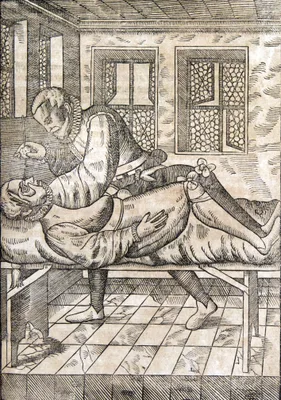
Ein newes hochnutzlichs Büchlin von erkantnus der Kranckheyten der Augen....
The first separate publication on diseases of the eye after Grassi (1474). This very rare anonymous work was intended, according to its title, to provide highly useful knowledge of the anatomy of the eye, and eye dise…
GMN 6932 · https://historyofmedicine.com/id/9097
1561 FRANCO, Pierre (1500 – 1561)
Traité des hernies... et autres excellentes parties de chirurgie assavior de la pierre, des cataractes des yeux, & autres maladies...
Greatly expanded second edition, including Franco's operations for cataract and urinary calculi. Digital facsimile from BnF Gallica at this link.
GMN 3574 · https://historyofmedicine.com/id/4161
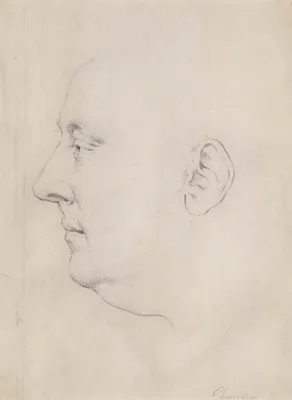
1583 BARTISCH, Georg (1535 – 1606)
̓Oφθαλμоδоύλεια das ist, Augendienst.
In this treatise on ophthalmic surgery Bartisch, who limited his practice to ophthalmology and hernia repair, left the first extensively illustrated account of any surgical specialty. Bartisch was a skilful operator a…
GMN 5817 · https://historyofmedicine.com/id/7024
1606 –1641 FABRY VON HILDEN, Wilhelm (Fabricius Hildanus) (1560 – 1624)
Observationum et curationum chirurgicarum centuriae. 6 vols.
Fabricius’s most important work; it was the best collection of case-records available for many years. Among other things, Fabricius used a magnet to extract an iron splinter from the eye – an idea suggested to him by …
GMN 5570 · https://historyofmedicine.com/id/6969
1623 DAZA DE VALDÉS, Benito (1591 – 1634)
Uso del los antojos para todo genero de vistas, en que se enseña a conocer los grados que a cada uno le faltan de su vista, y los que tienen qualesquier antojos.
The earliest scientific work dealing with spectacles. It includes sight testing tables and points out the value of convex lenses after cataract operations. Digital facsimile from the Internet Archive at this link. Eng…
GMN 5821 · https://historyofmedicine.com/id/7039
1656 ROLFINCK, Guerner (Werner) (1599 – 1673)
Dissertationes anatomicae methodo synthetica exaratae…
Rolfinck was the first to demonstrate the location of cataract in the lens.
GMN 5821.1 · https://historyofmedicine.com/id/7042
1707 MAÎTRE-JAN, Antoine (1650 – 1730)
Traité des maladies de l’oeil
Called “the Father of French ophthalmology”, Maître-Jan energetically supported Brisseau’s doctrine, ensuring its acceptance. As far back as 1692, Maître-Jan had proved that the opaque lens is cataract, but before Bri…
GMN 5824 · https://historyofmedicine.com/id/7056
1709 BRISSEAU, Michel (1676 – 1743)
Traité de la cataracte et du glaucoma.
Brisseau was the first to demonstrate the true nature and location of cataract. His book was reprinted in facsimile, 1921.
GMN 5825 · https://historyofmedicine.com/id/7061
1713 ANEL, Dominique (1679 – 1730)
Observation singulière sur la fistule lacrimale, dans la quelle l’on verrà, que la matière des fistules lacrimales s’evacuë très souvent par les points lacrimaux; en même tems l’on apprendrà la methode de les guérir radicalement, etc.
Lacrimal duct catheterized for the first time. See No. 5823. Digital facsimile from Google Books at this link.
GMN 5826 · https://historyofmedicine.com/id/7065
1722 SAINT-YVES, Charles de (1667 – 1733)
Nouveau traité des maladies des yeux.
Records the removal of a cataract “en masse” from a living subject. English edition, 1741. Digital facsimile of the 1722 edition from Biu Santé at this link.
GMN 5827 · https://historyofmedicine.com/id/7069
1729 DUDDELL, Benedict (1695 – )
A treatise of the diseases of the horny coat of the eye, and the various kinds of cataracts.
“Descemet’s membrane” was first described by Duddell. Descemet described it in 1758; see No. 1484.1.
GMN 1482 · https://historyofmedicine.com/id/2489
1729 CHESELDEN, William (1688 – 1752)
An account of some observations made by a young gentleman who was born blind, or lost his sight so early, that he had no remembrance of ever having seen, and was couch’d between 13 and 14 yrs. of age.
The versatile Cheselden made an artificial pupil in an eye in which the products of inflammation had closed or obscured the natural pupil. This iridotomy operation was, next to Daviel’s cataract operation, the most im…
GMN 5828 · https://historyofmedicine.com/id/7074
1748 DAVIEL, Jacques (1693 – 1762)
Lettre de M. Daviel, conseiller, chirurgien ordinaire du roi en survivance & par quartier, à M. de Joyeuse, docteur en médecine de l’Université de Montpellier ....
The first account of cataract extraction. Daviel also published this in the Mercure de France in September 1748, pp. 198-218. The separate edition, a 24-page pamphlet, was printed from a different setting of type.
GMN 13777 · https://historyofmedicine.com/id/16064
1753 DAVIEL, Jacques (1693 – 1762)
Sur une nouvelle méthode de guérir la cataracte par l’extraction du cristalin.
Daviel originated the modern method of treating cataract by extraction of the lens. By the time he made this official scientific report to the Academy of Surgery, Daviel had already tested his method on 206 cases, wit…
GMN 5829 · https://historyofmedicine.com/id/7078
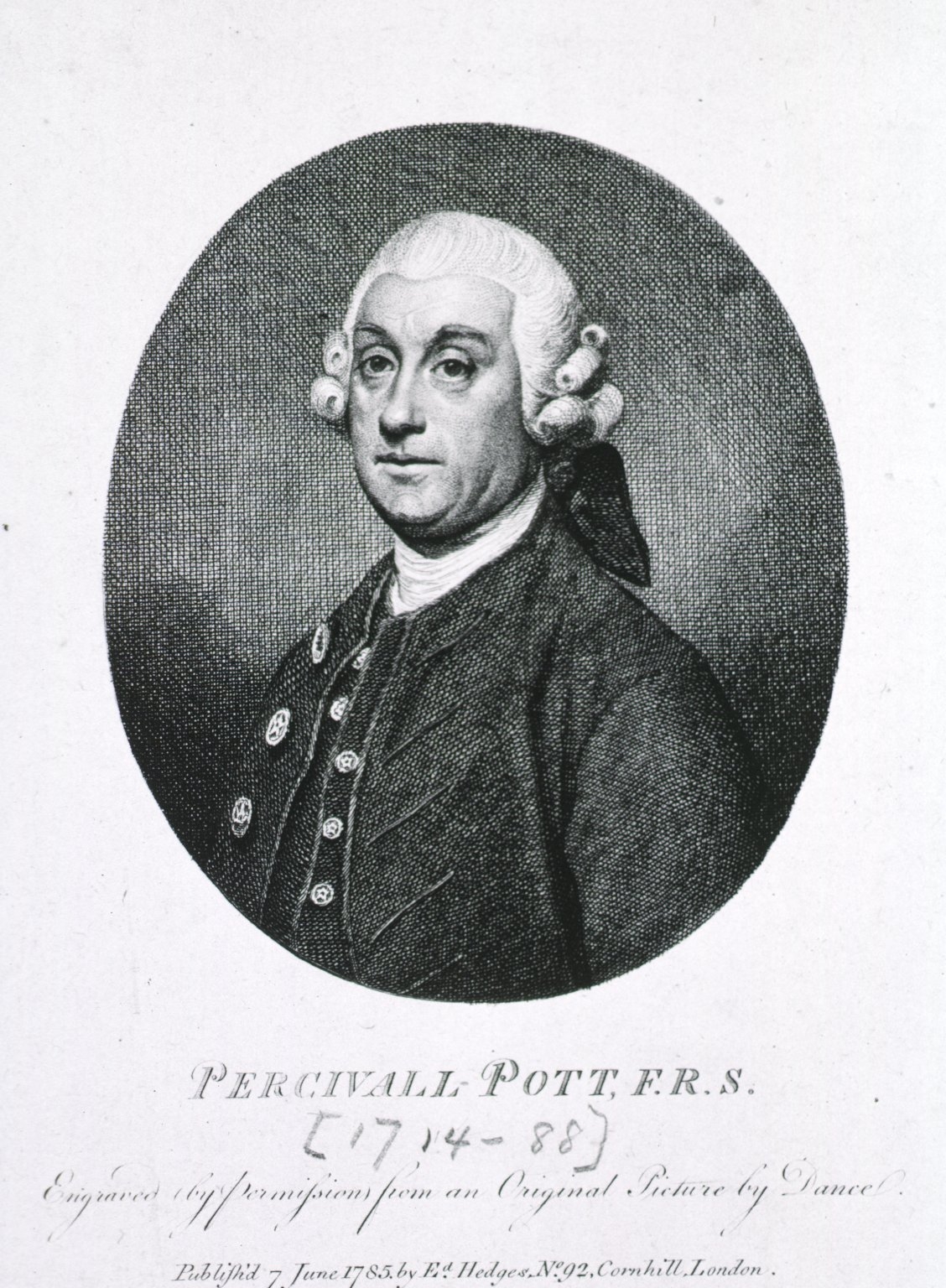
1775 POTT, Percivall (1714 – 1788)
Chirurgical observations relative to the cataract, the polypus of the nose, the cancer of the scrotum, etc.
Includes the first description of occupational cancer. By describing chimney sweeps” cancer of the scrotum, Pott was the first to trace the origin of a type of cancer to a specific external cause. The above work also …
GMN 2122 · https://historyofmedicine.com/id/2635
1789 –1790 PELLIER DE QUENGSY, Guillaume (1750 – 1835)
Précis ou cours d’ opérations sur la chirurgie des yeux. 2 vols.,
The first separate book on ophthalmic surgery.
GMN 5833.1 · https://historyofmedicine.com/id/7097
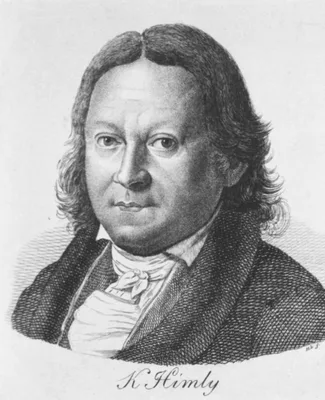
1801 HIMLY, Karl Gustav (1772 – 1837)
Ophthalmologische Beobachtungen und Untersuchungen oder Beyträge zur richtigen Kenntniss und Behandlung der Augen im gesunden und kranken Zustande. Erstes Stück.
Himly used hyoscyamine to dilate the pupil to facilitate removal of the lens. (p. 97).
GMN 5834.1 · https://historyofmedicine.com/id/7110
1801 SCHMIDT, Johann Adam (1759 – 1809)
Ueber Nachstaar und Iritis nach Staaroperationen.
Inflammation of the iris was named iritis by Schmidt. In 1801, with Himly, he founded the first journal devoted to ophthalmology, the Ophthalmologische Bibliothek. Digital facsimile of Schmidt's 1801 work from the Int…
GMN 5836 · https://historyofmedicine.com/id/7115
1811 LANGENBECK, Konrad Johann Martin (1776 – 1851)
Prüfung der Keratonyxis, einer neuen Methode den grauen Staar durch die Homhaut zu recliniren oder zu zerstückeln.
Langenbeck’s operation of iridencleisis for construction of artificial pupil. He was Professor of Anatomy and Surgery at Göttingen.
GMN 5841 · https://historyofmedicine.com/id/7149
1813 –1817 BEER, Georg Joseph (1763 – 1821)
Lehre von den Augenkrankheiten. 2 vols.
Beer is remembered for his textbook; the doctrines in it dominated practice for many years. He described the symptoms of glaucoma and noted the luminosity of the fundus in aniridia. He also presented for the first tim…
GMN 5842 · https://historyofmedicine.com/id/7153
1823 GUTHRIE, George James (1785 – 1856)
Lectures on the operative surgery of the eye.
Guthrie founded the Royal Westminster Ophthalmic Hospital, London, in 1816. He was the earliest teacher of the subject in the British Isles. The above includes important work on the artificial pupil.
GMN 5845 · https://historyofmedicine.com/id/7168
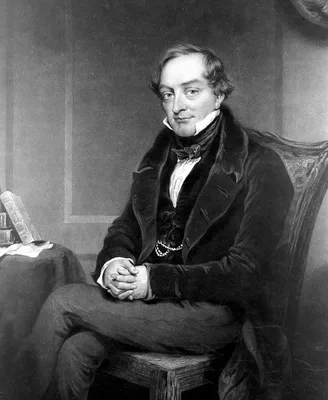
1833 LAWRENCE, Sir William (1783 – 1867)
A treatise on the diseases of the eye.
Based on lectures delivered by Lawrence at the London Ophthalmic Infirmary. He was a surgeon to St. Bartholomew’s Hospital; he succeeded Abernethy as lecturer on surgery and did much to advance the surgery of the eye.
GMN 5849 · https://historyofmedicine.com/id/7174
1837 BIGGER, Samuel Lenox L. (1809 – 1891)
An inquiry into the possibility of transplanting the cornea, with the view of relieving blindness…
Bigger, a Dublin surgeon, successfully grafted a cornea of one gazelle onto that of another. According to this paper, he first performed this operation in 1835 while he was “a prisoner with a Nomadic tribe of Arabs, a…
GMN 5850.1 · https://historyofmedicine.com/id/7181
1841 FERRALL, Joseph Michael [afterwards O’FERRALL] (1790 – 1860)
On the anatomy and pathology of certain structures in the orbit not previously described.
Ferrall’s operation for enucleation of the eyeball (p. 354).
GMN 5854 · https://historyofmedicine.com/id/7197
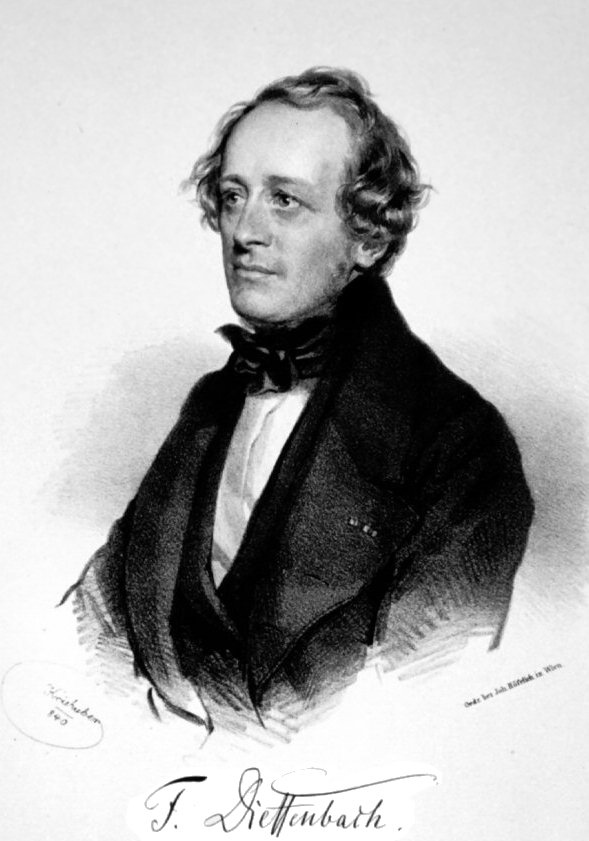
1842 DIEFFENBACH, Johann Friedrich (1792 – 1847)
Ueber das Schielen und die Heilung desselben durch eine Operation.
The first successful attempt at treating strabismus by myotomy. The operation was later abandoned owing to the frequently disastrous final effects. A preliminary paper appeared in Med. Ztg., 1839, 8, 227.
GMN 5856 · https://historyofmedicine.com/id/7204
1842 BOLTON, James (1812 – 1869)
A treatise on strabismus, with a description of new instruments designed to improve the operation for its cure.
GMN 5855 · https://historyofmedicine.com/id/7499
1844 –1850 SUŚRUTA, (Sushruta); HESSLER, Franz (1799 – 1890)
Suśrutas. Áyruvédas. Id est medicinae systema a venerabili d'hanvantare demonstratum a Suśruta discipulo compositum. Nunc primum ex Sanksríta in Latinum sermonem vertit, introductionem, annotationes et rerum indicem adjecit Dr. Franciscus Hessler. 3 vols.
First translation of the Suśruta Samhitā into Latin, and the first publication of this text in the West. Suśruta is said to have lived in the 6th or 5th centuries, BCE. The principal medical contribution of the ancien…
GMN 11 · https://historyofmedicine.com/id/35
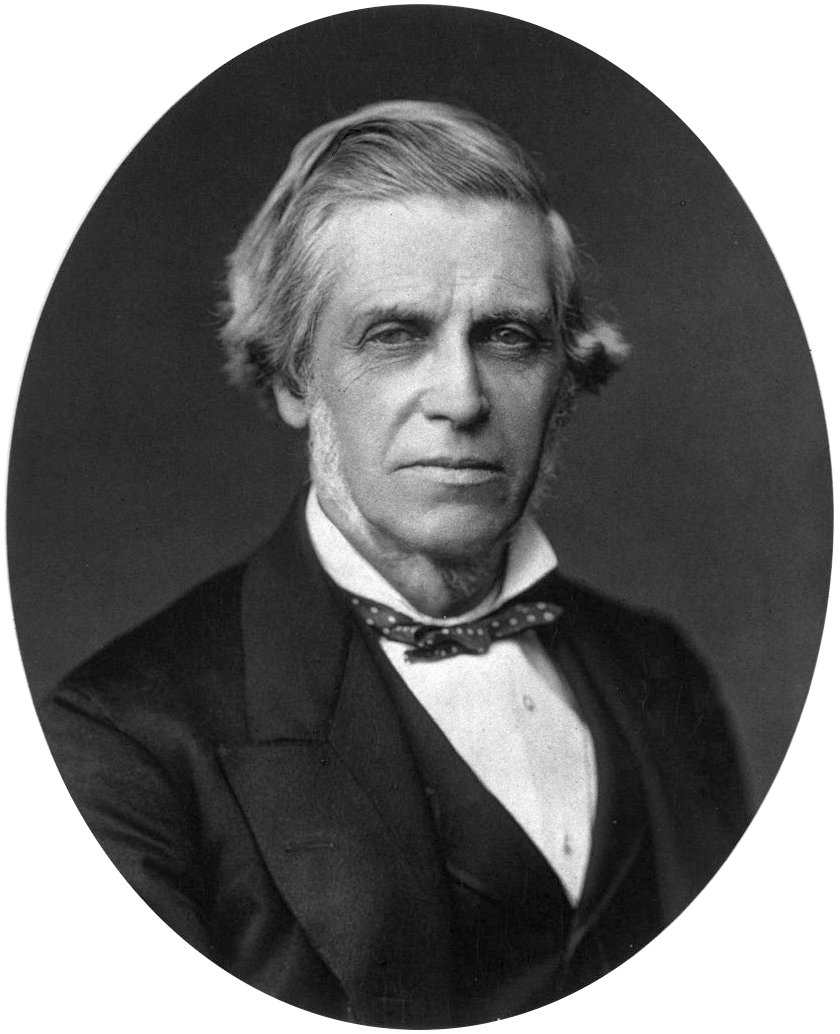
1849 BOWMAN, Sir William (1816 – 1892)
Lectures on the parts concerned in the operations on the eye, and on the structure of the retina.
Bowman did more than any other man to advance ophthalmic surgery in England. The above work is the first to include a sound description of the microscopical anatomy of the eye and the ciliary (“Bowman’s”) muscle. The …
GMN 1505 · https://historyofmedicine.com/id/2585
1850 DESMARRES, Louis Auguste (1810 – 1882)
Opérations qui se pratiquent sur les yeux.
GMN 5864 · https://historyofmedicine.com/id/7231
1851 –1856 ARLT, Carl Ferdinand von (1812 – 1887)
Die Krankheiten des Auges. 3 vols.
Arlt described granular conjunctivitis (“Arlt’s trachoma”) and an operation for transplantation of the ciliary bulbs in the treatment of distichiasis.
GMN 5865 · https://historyofmedicine.com/id/7234
1852 BOWMAN, Sir William (1816 – 1892)
Observations on artificial pupil, with a description of a new method of operating in certain cases.
Bowman devised an operation for the formation of an artificial pupil.
GMN 5867 · https://historyofmedicine.com/id/7245
1854 –1855 GRAEFE, Friedrich Wilhelm Ernst Albrecht von (1828 – 1870)
Notiz über die Behandlung der Mydriasis
GMN 5871 · https://historyofmedicine.com/id/7463
1855 –1856 GRAEFE, Friedrich Wilhelm Ernst Albrecht von (1828 – 1870)
Ueber die Coremorphosis als Mittel gegen chronische Iritis und Iridochorioiditis.
Graefe introduced iridectomy in the treatment of iritis and iridochoroiditis.
GMN 5873 · https://historyofmedicine.com/id/7268
1857 –1859 BOWMAN, Sir William (1816 – 1892)
On the treatment of lacrymal obstructions.
GMN 5879 · https://historyofmedicine.com/id/7278
1857 GRAEFE, Friedrich Wilhelm Ernst Albrecht von (1828 – 1870)
Beiträge zur Lehre vom Schielen und von der Schiel-Operation.
Graefe’s operation for strabismus.
GMN 5880 · https://historyofmedicine.com/id/7280
1860 MITCHELL, Silas Weir (1829 – 1914)
On the production of cataract in frogs by the administration of sugar.
GMN 5888 · https://historyofmedicine.com/id/7350
1863 JACOBSON, Julius (1828 – 1889)
Ein neues und gefahrloses Operations-Verhfahren zur Heilung des grauen Staares.
Jacobson used a peripheral incision in his operation for cataract.
GMN 5891 · https://historyofmedicine.com/id/7361
1865 –1872 AGNEW, Cornelius Rea (1830 – 1888)
A method of operating for divergent squint.
Agnew devised an operation for the treatment of divergent squint.
GMN 5894 · https://historyofmedicine.com/id/7374
1865 –1872 WILLIAMS, Henry Willard (1821 – 1895)
Suture of the flap, after extraction of cataract.
A method of suturing the flap after cataract extraction was introduced by Williams.
GMN 5895 · https://historyofmedicine.com/id/7379
1865 GRAEFE, Friedrich Wilhelm Ernst Albrecht von (1828 – 1870)
Ueber mordificirte Linearextraction.
Graefe’s improvement of the operation for cataract by the modified linear extraction reduced the incidence of eye loss from 10 to 2.3 per cent.
GMN 5897 · https://historyofmedicine.com/id/7387
1866 PAGENSTECHER, Alexander (1828 – 1879)
Ueber die Extraktion des grauen Staares bei uneröffneter Kapsel durch den Scleralschnitt. IN Klinische Beobachtungen aus der Augenheilanstalt zu Wiesbaden, hrsg. von E.H. Pagenstecher u. T. Saemisch, Heft 3.
Extraction of the lens in the closed capsule through a scleral incision, for the treatment of cataract.
GMN 5896 · https://historyofmedicine.com/id/7474
1867 GRAEFE, Friedrich Wilhelm Ernst Albrecht von (1828 – 1870)
Symptomenlehre der Augenmuskellähmungen.
The first thorough account of paralysis of the eye muscles, and the basis for their surgical treatment. The first section describes conditions resulting from injuries to the eye muscles. The second part outlines physi…
GMN 5899 · https://historyofmedicine.com/id/7394
1868 ROTHMUND, August von (1830 – 1906)
Ueber Cataracten in Verbindung mit einer eigenthümlichen Haut-de-generation.
Poikiloderma congenitale (Rothmund).
GMN 4056.1 · https://historyofmedicine.com/id/5416
1871 MONTMÉJA, Pierre Michel Arthur de (1841 – 1910); MEYER, Édouard (1838 – 1902)
Traité des opérations qui se pratiquent sur l'oeil.
Published in fascicules beginning in 1870. Includes 22 original mounted albumen photographs by Montméja illustrating chapters on cataract, iridectomy, strabismus, eyelids, and lacrymal passages. There are also 190 woo…
GMN 10123 · https://historyofmedicine.com/id/12312
1876 MAGNUS, Hugo Friedrich (1842 – 1907)
Geschichte des grauen Staares.
An early history of cataract.
GMN 5993 · https://historyofmedicine.com/id/7112
1878 SELLERBECK, Heinrich (1842 – )
Ueber Keratoplastik.
Sellerbeck was first to use human donor corneas for transplants. He was not very successful, probably because the antiseptics employed were too strong.
GMN 5916.1 · https://historyofmedicine.com/id/6818
1881 CREDÉ, Carl Siegmund Franz (1819 – 1892)
Die Verhütung der Augenentzüngung der Neugeborenen.
Credé introduced the practice of instillation of silver nitrate into the eyes of all newborn children as a preventive measure against ophthalmia neonatorum. Separate expanded edition with the same title, Berlin: A. Hi…
GMN 5924 · https://historyofmedicine.com/id/7555
1885 HIRSCHBERG, Julius (1843 – 1925)
Der Electromagnet in der Augenheilkunde.
The introduction of the electromagnet into ophthalmology. A pupil of Helmholtz, Hirschberg was one of the most voluminous writers in the field of ophthalmology. Besides his dictionary (see No. 5932) he wrote a classic…
GMN 5927 · https://historyofmedicine.com/id/6851
1885 MULES, Philip Henry (1843 – 1905)
On the surgical, physiological, and aesthetic advantages of the artificial vitreous body.
“Mules’s operation”, evisceration of the eyeball with insertion of artificial vitreous.
GMN 5928 · https://historyofmedicine.com/id/6855
1886 PANAS, Photinos (1832 – 1903)
D’un nouveau precédé opératoire applicable au ptosis congénital et au ptosis paralytique.
An operation for congenital and paralytic ptosis was introduced by Panas.
GMN 4572 · https://historyofmedicine.com/id/6856