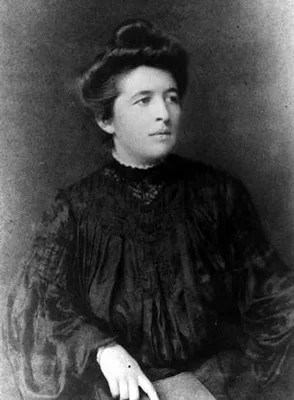
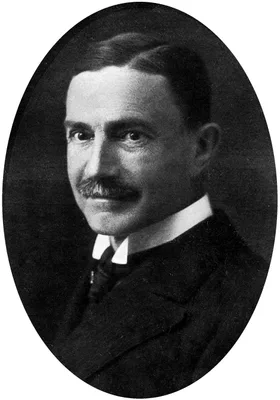
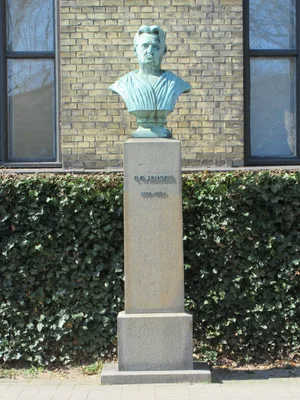
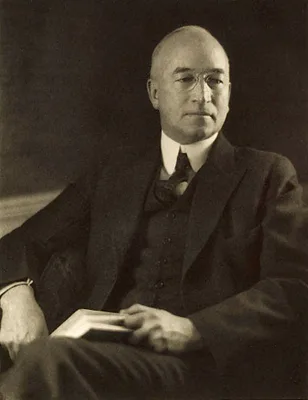
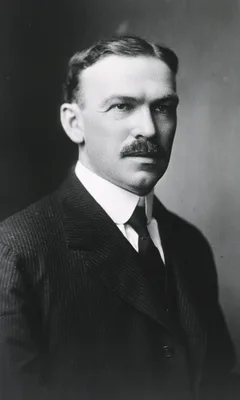
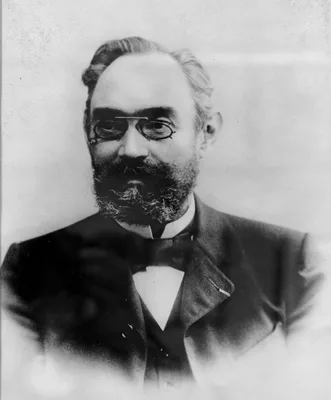
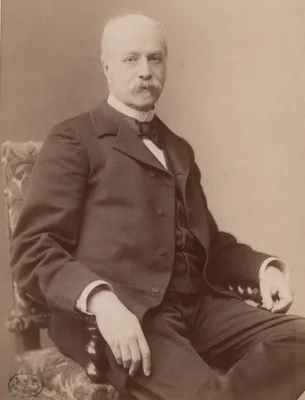
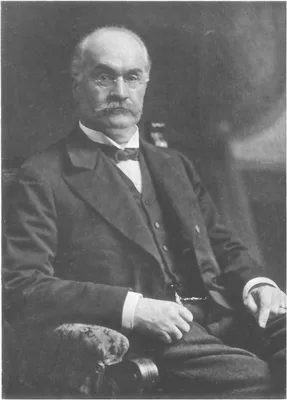
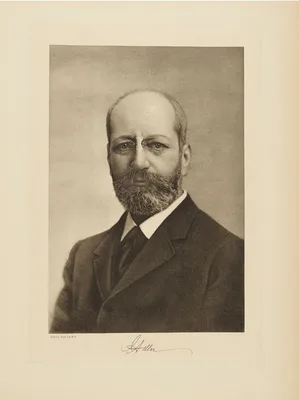
1901 FRÖHLICH, Alfred (1871 – 1953)
Ein Fall von Tumor der Hypophysis cerebri ohne Akromegalie.
Fröhlich’s classic description of dystrophia adiposogenitalis, pituitary tumor, with obesity and sexual infantilism (“Fröhlich’s syndrome”). Reprinted (in German) in Research Publications, Association for Nervous and …
GMN 3889 · https://historyofmedicine.com/id/4951
1901 BEATSON, Colonel Sir George Thomas (1848 – 1933)
The treatment of cancer of the breast by öophorectomy and thyroid extract.
GMN 5779 · https://historyofmedicine.com/id/6826
1902 BORST, Maximilian (1869 – 1946)
Die Lehre von den Geschwülsten. 2 vols.
“With this book the microscopical epoch in the evolution of the knowledge of cancer may be said to have been brought to a close” (Haagensen).
GMN 2625 · https://historyofmedicine.com/id/3179
1902 FRIEBEN, Ernst August Franz Albert (1875 – )
Cancroid des rechten Handrückens.
Frieben reported the carcinogenic effect of x-rays in man.
GMN 2625.1 · https://historyofmedicine.com/id/3181
1902 HANSEMANN, David Paul von (1858 – 1920)
Die mikroskopische Diagnose der bösartigen Geschwülste. 2te. Aufl.
Hansemann originated the theory of anaplasia.
GMN 2626 · https://historyofmedicine.com/id/3187
1902 MENDENHALL, Dorothy Mabel Reed (1874 – 1964)
On the pathological changes in Hodgkin’s disease, with especial reference to its relation to tuberculosis.
Dorothy Reed’s classic work on Hodgkin’s disease included a study of the histological picture. She described the proliferation of the endothelial and reticular cells, and the formation of lymphadenoma cells – “Dorothy…
GMN 3780 · https://historyofmedicine.com/id/4677
1903 LONDON, Efim Semenovich (1869 – 1939); GOLDBERG, S. W.
Zur Frage der Beziehungen zwischen Becquerelstrahlen und Hautaffectionen.
Records the first successful employment of radium in the treatment of cancer.
GMN 2627 · https://historyofmedicine.com/id/3197
1903 PERTHES, Georg Clemens (1869 – 1927)
Ueber den Einfluss der Röntgenstrahlen auf epitheliale Gewebe, insbesondere auf das Carcinom.
Perthes was among the first to study the inhibitory effect of x rays on carcinoma; he was a pioneer in radiotherapy.
GMN 2627.1 · https://historyofmedicine.com/id/3198
1903 JENSEN, Carl Oluf (1864 – 1934)
Experimentelle Untersuchungen über Krebs bei Mäusen.
Jensen carried rat sarcoma through as many as 40 generations of rodents without change in microscopic structure. His classic study discredited the theory of the infectivity of cancer, and established its inoculability…
GMN 2628 · https://historyofmedicine.com/id/3206
1903 SCHMIDT, Martin Benno (1863 – 1949)
Die Verbreitungswege der Karzinome und die Beziehung generalisierter Sarkome zu den leukämischen Neubildungen.
Schmidt supported the theory of the hematogenous origin of carcinoma metastases.
GMN 2629 · https://historyofmedicine.com/id/3209
1903 ALBARRAN Y DOMINGUEZ, Joaquin Maria (1860 – 1912); IMBERT, Léon (1868 – 1955)
Les tumeurs du rein.
Seminal work on renal tumors with unsurpassed descriptions of the clinical semiology of these diseases. In 1903 Albarran was the first "... to diagnose transitional cell carcinoma of the renal pelvis by detecting mali…
GMN 7217 · https://historyofmedicine.com/id/9384
1903 FREUND, Leopold (1868 – 1944)
Grundriss der gesammten Radiotherapie fuer praktische Aerzte.
The first textbook on radiation therapy. Digital facsimile from the Internet Archive at this link.
GMN 10606 · https://historyofmedicine.com/id/12799
1904 SJÖGREN, Tage Anton Ultimus (1859 – 1939)
Om Röntgenbehandling af sarkom.
GMN 2630 · https://historyofmedicine.com/id/3212
1904 –1905 SJÖGREN, Tage Anton Ultimus (1859 – 1939)
Om Röntgenbehandling af maligna svulster.
SeeNo. 2624.
GMN 2631 · https://historyofmedicine.com/id/3215
1905 RIBBERT, Moritz Wilhelm Hugo (1855 – 1920)
Die Entstehung des Carcinoms.
Ribbert was the modern protagonist of the theory of the embryonal origin of cancer.
GMN 2632 · https://historyofmedicine.com/id/3219
1905 YOUNG, Hugh Hampton (1870 – 1945)
The early diagnosis and radical cure of carcinoma of the prostate. Being a study of 40 cases and presentation of a radical operation which was carried out in four cases.
First radical prostatectomy for carcinoma.
GMN 4266.1 · https://historyofmedicine.com/id/5245
1906 BERGONIÉ, Jean (1857 – 1925); TRIBONDEAU, Louis Mathieu Frédéric Adrien (1872 – 1918)
Interprétation de quelques résultats de la radiothérapie et essai de fixation d’une technique rationelle.
Bergonié-Tribondeau law, “the sensitivity of cells to radiation varies directly with the reproductive capacity of the cells and inversely with their degree of differentiation” (Dorland).
GMN 2005 · https://historyofmedicine.com/id/1927
1906 –1907 GRAY, Alfred Leftwich (1873 – 1932)
The treatment of malignant diseases of the bladder through suprapubic incision, with report of a case.
Radiotherapy for carcinoma of bladder.
GMN 4194.1 · https://historyofmedicine.com/id/6134
1907 –1908 TYZZER, Ernest Edward (1875 – 1965)
A study of heredity in relation to the development of tumours in mice.
First experimental study of the heredity of mouse cancer.
GMN 2633 · https://historyofmedicine.com/id/3222
1907 –1928 WOLFF, Jacob (1861 – 1938)
Die Lehre von der Krebskrankheit von den ältesten Zeiten bis zur Gegenwart. 4 vols.
Exhaustive and accurate review of all the then-available information on cancer. Digital facsimile from Google Books at this link. English translation of vol. 1 as The science of cancerous disease from the earliest tim…
GMN 2661.1 · https://historyofmedicine.com/id/3445
1907 HUTCHISON, Sir Robert (1871 – 1960)
On suprarenal sarcoma in children with metastases in the skull.
Hutchison’s tumors.
GMN 3868 · https://historyofmedicine.com/id/4920
1907 BRENNER, Fritz (1877 – 1969)
Das Oophoroma folliculare.
“Brenner tumor”, earlier described by Orthmann (No. 6109). See the historical note in Cancer, 1956, 9, 217.
GMN 6118 · https://historyofmedicine.com/id/7569
1908 ELLERMANN, Vilhelm (1871 – 1924); BANG, O.
Experimentelle Leukämie bei Hühnern.
Cell-free transmission of fowl leukemia. Ellermann and Bang produced leukemia by means of a filterable agent.
GMN 3079.1 · https://historyofmedicine.com/id/3736
1908 GHEDINI, Giovanni (1877 – 1959)
Per la patogenesi e per la diagnosi delle malattie del sangue e degli organi emopoietici. Puntura esplorativa del midollo osseo.
Introduction of bone marrow biopsy by puncturing the shaft of the tibia.
GMN 3080 · https://historyofmedicine.com/id/3737
1908 MILES, William Ernest (1869 – 1947)
A method of performing abdomino-perineal excision for carcinoma of the rectum and of the terminal portion of the pelvic colon.
Miles devised the operation of abdomino-perineal resection.
GMN 3528.1 · https://historyofmedicine.com/id/4023
1908 DANLOS, Henri-Alexandre (1844 – 1912)
Un cas de cutis laxa avec tumeurs par contusion chronique des coudes et des genoux.
Ehlers-Danlos syndrome (see also No. 4132). Danlos noted the subcutaneous tumors that may occur in this condition.
GMN 4144 · https://historyofmedicine.com/id/5806
1908 CORNIL, André Victor (1837 – 1908)
Les tumeurs du sein.
GMN 5781 · https://historyofmedicine.com/id/6830
1908 SCHAUTA, Friedrich (1849 – 1919)
Die erweiterte vaginale Totalexstirpation des Uterus bei Kollumkarzinom.
Radical vaginal hysterectomy for carcinoma of the cervix.
GMN 6120 · https://historyofmedicine.com/id/7577
1909 LAZARUS-BARLOW, Walter Sydney (1865 – 1950)
The Croonian Lectures on radioactivity and carcinoma.
GMN 2635 · https://historyofmedicine.com/id/3227
1909 GUISEZ, Jean (1872 – 1944); BARCAT, Jean Jules (1875 – 1955)
Essais de traitement de quelques cas d’épithélioma de l’oesophage par les applications locales directes de radium.
Radium therapy by means of the esophagoscope.
GMN 3530 · https://historyofmedicine.com/id/4025
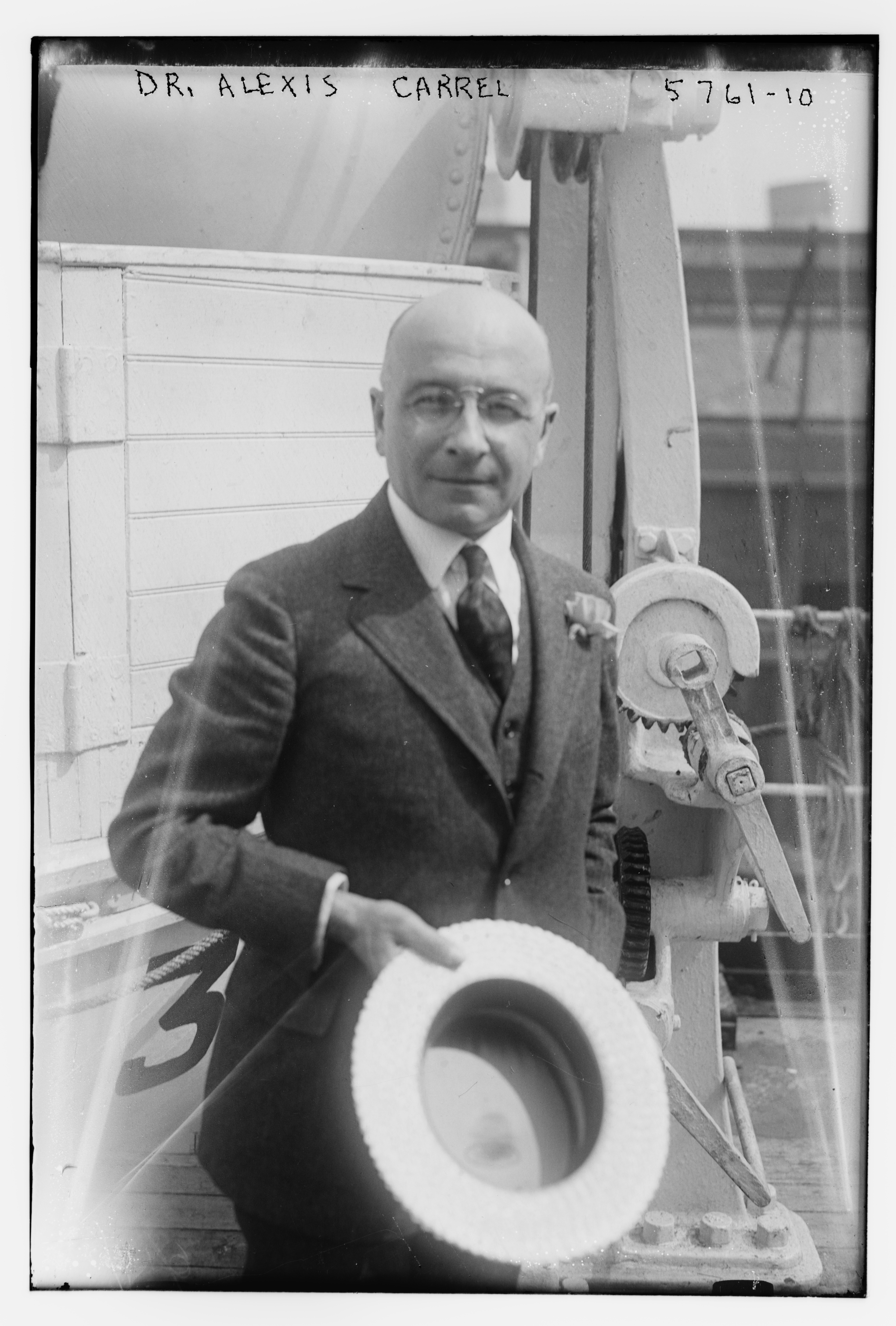
1910 CARREL, Alexis (1873 – 1944); BURROWS, Montrose Thomas (1884 – 1947)
Cultures de sarcome en dehors de l’organisme.
Using the Rous chicken sarcoma, Carrel and Burrows were the first to grow tumor tissue in vitro.
GMN 2636 · https://historyofmedicine.com/id/3234
1910 ROUS, Francis Peyton (1879 – 1970)
A transmissible avian neoplasm (sarcoma of the common fowl).
Original description of the chicken sarcoma (Rous sarcoma). Rous demonstrated that sarcomatous tumors in hens could be transmitted to normal hens by the injection of cell-free filtrates (virus) of the original tumor. …
GMN 2637 · https://historyofmedicine.com/id/3238
1910 MAYO, William James (1861 – 1939)
Removal of the rectum for cancer: statistical report of 120 cases.
Mayo’s radical operation for carcinoma of the rectum.
GMN 3534 · https://historyofmedicine.com/id/4031
1911 CLUNET, Pierre Édouard Jean (1878 – 1917)
Le cancer expérimental.
Experimental production of malignant tumors by means of x rays.
GMN 2637.1 · https://historyofmedicine.com/id/3240
1911 FREUND, Ernst (1863 – 1946); KAMINER, Gisa (1883 – 1941)
Zur Diagnose des Karzinoms.
A serum reaction, employed by Freund and Kaminer in 1910 for the diagnosis of cancer.
GMN 2638 · https://historyofmedicine.com/id/3243
1911 TROTTER, Wilfred Batten Lewis (1872 – 1939)
On certain clinically obscure malignant tumours of the naso-pharyngeal wall.
“Trotter’s syndrome”; deafness, palatal paralysis, and facial neuralgia, usually due to a nasopharyngeal carcinoma.
GMN 3319.1 · https://historyofmedicine.com/id/4542
1912 BAYON, Henry Peter George (1876 – 1952)
Epithelial proliferation induced by the injection of gasworks tar.
Experimental production of cancer by the injection of tar as a byproduct of the manufacture of coal gas.
GMN 2639 · https://historyofmedicine.com/id/3247
1912 ADLER, Isaac (1849 – 1918)
Primary malignant growths of the lungs and bronchi.
Digital facsimile from the Internet Archive at this link.
GMN 3192 · https://historyofmedicine.com/id/4229
1912 BOWEN, John Templeton (1857 – 1940)
Precancerous dermatosis. A study of two cases of chronic atypical epithelial proliferation.
Bowen, a Boston dermatologist, first described a precancerous dermatosis (“Bowen’s disease”), which is now considered to be a variant of an intra-epidermal basal cell epithelioma.
GMN 4148 · https://historyofmedicine.com/id/5835
1913 FIBIGER, Johannes (1867 – 1928)
Untersuchungen über eine Nematode (Spiroptera sp. n.) und deren Fähigkeit papillomatöse und carcinomatose Geschwulstbildungen im Magen der Ratte hervorzurufen.
Fibiger demonstrated that the roundworm, which he called Spiroptera carcinoma (but is correctly named Gongylonema neoplasticum), could cause stomach cancer (squamous cell carcinoma) in rats and mice. His experimental …
GMN 2640 · https://historyofmedicine.com/id/3257
1913 RESCHAD, Hassan; SCHILLING-TORGAU, V
Ueber eine neue Leukämie durch echte Uebergangsformen (Splenozytenleukämie) und ihre Bedeutung für die Selbständigkeit dieser Zellen.
Monocytic leukemia reported.
GMN 3082.1 · https://historyofmedicine.com/id/3744
1913 TOREK, Franz John A. (1861 – 1938)
The first successful case of resection of the thoracic portion of the oesophagus for carcinoma.
See also Arch. Surg. (Chicago), 1925, 10, 353-60, which reported that the patient was still living.
GMN 3540 · https://historyofmedicine.com/id/4045
1913 WARTHIN, Aldred Scott (1866 – 1931)
Heredity with reference to carcinoma: As shown by the study of the cases examined in the pathological laboratory of the University of Michigan, 1895-1913.
"In 1895, a young seamstress of his [Warthin's] acquaintance told him about her family's long history of cancer deaths.[6] Intrigued, he researched her family's history, searching death records and administering quest…
GMN 9443 · https://historyofmedicine.com/id/11626
1913 SALOMON, Albert (1883 – 1976)
Beiträge zur Pathologie und Klinik der Mammacarcinome.
In a study of 3,000 mastectomies, Salomon compared X-rays of the beasts (mammograms) to the actual removed tissue, paying close attention to microcalcifications. In doing so he was able to establish the difference in …
GMN 13264 · https://historyofmedicine.com/id/15530
1914 BOVERI, Theodor (1862 – 1915)
Zur Frage der Entstehung maligner Tumoren.
Boveri argued that malignancy arises as a consequence of chromosomal abnormalities, and that multiplication is an inherent property of cells. He predicted the existence of tumor suppressor mechanisms and was perhaps t…
GMN 7759 · https://historyofmedicine.com/id/9931
1915 HOFFMAN, Frederick Ludwig (1865 – 1946)
The mortality from cancer throughout the world.
GMN 2641 · https://historyofmedicine.com/id/3262
1916 LOEB, Leo (1869 – 1959); LATHROP, Abbie E. C. (1868 – 1918)
Further investigations on the origin of tumours in mice. III. On the part played by internal secretion in the spontaneous development of tumours.
Demonstration of the influence of an internal secretion on the development of spontaneous cancer. Castration of female mice of a strain in which mammary cancer was frequent reduced its incidence and delayed its growth.
GMN 2642 · https://historyofmedicine.com/id/3268
1916 YAMAGIWA, Katsusaburo (1863 – 1930); ICHIKAWA, Koichi (1888 – 1948)
Ueber die künstliche Erzeugung von Karzinom.
First experimental production of tar cancer in rabbits by painting with tar products. This was the first proof of chemical carcinogenesis.
GMN 2643 · https://historyofmedicine.com/id/3273
1916 TYZZER, Ernest Edward (1875 – 1965); LITTLE, Clarence Cook (1888 – 1971)
Further experimental studies on the inheritance of susceptibility to a transplantable tumour, carcinoma (J. W. A.) of the Japanese waltzing mouse.
Marks the beginning of the study of histocompatibility antigens.
GMN 2570 · https://historyofmedicine.com/id/3701
1917 CUSHING, Harvey Williams (1869 – 1939)
Tumors of the nervus acusticus and the syndrome of the cerebello-pontile angle.
Reprinted 1963.
GMN 4601 · https://historyofmedicine.com/id/552