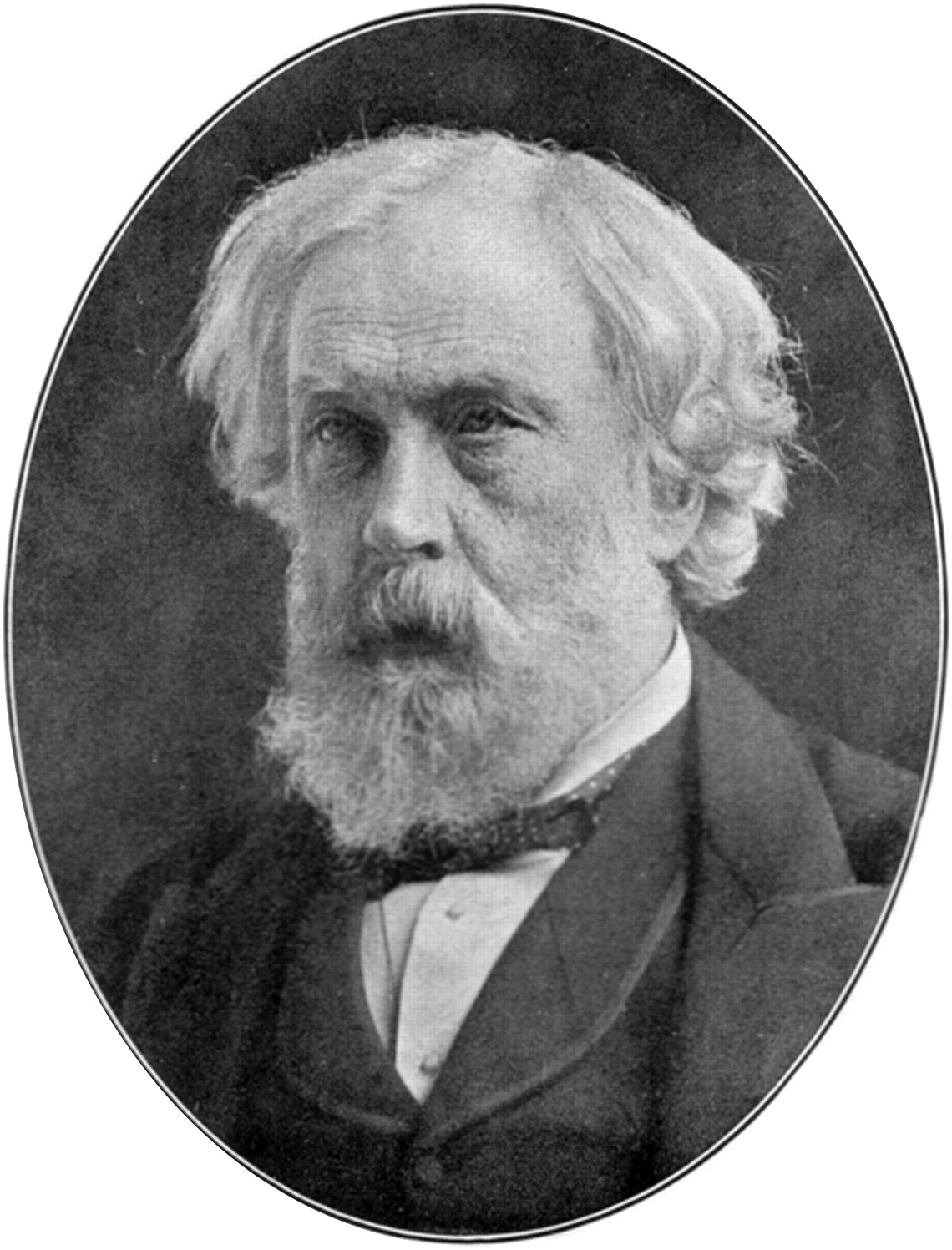
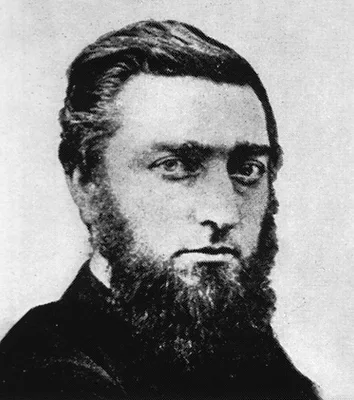
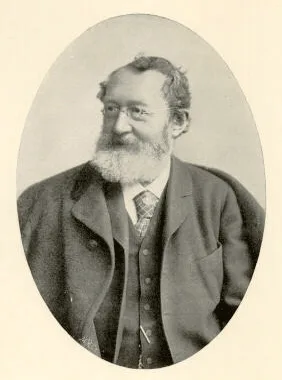
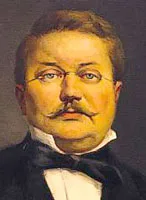
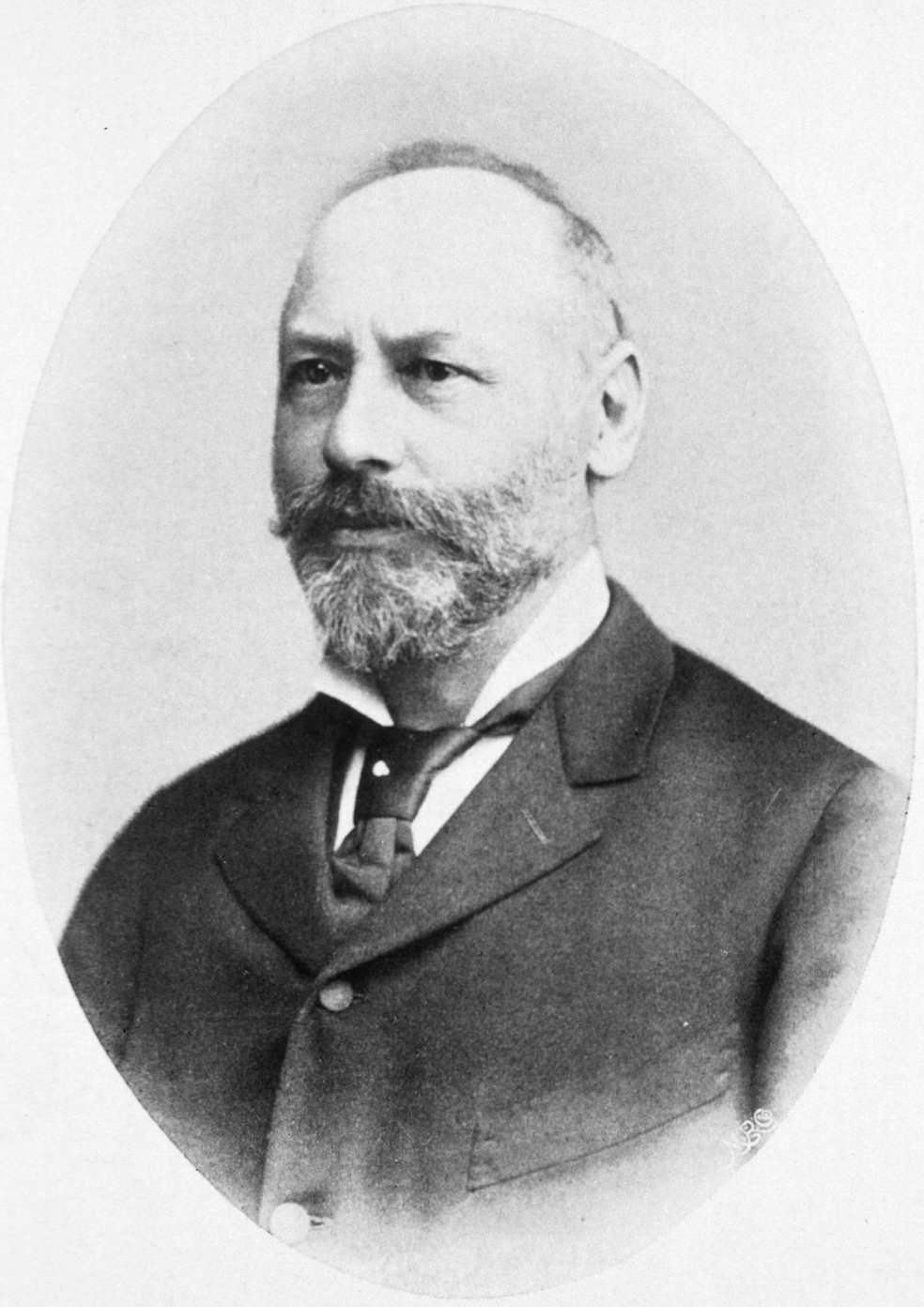
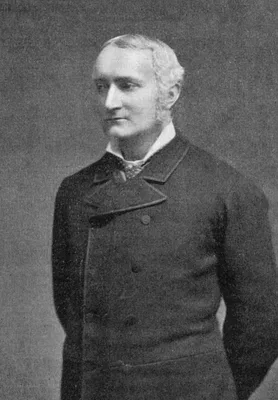
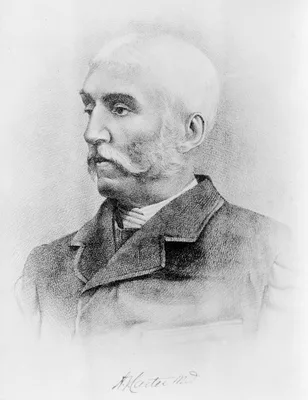
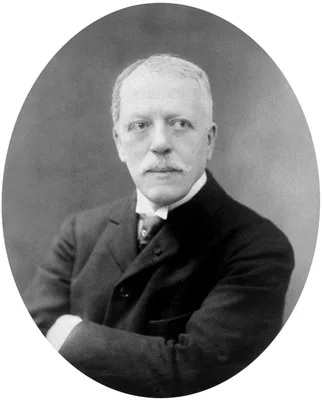
1861 –1862 BÄRENSPRUNG, Friedrich Wilhelm Felix von (1822 – 1864)
Die Gürtelkrankheit.
Herpes zoster first ascribed to a lesion of the spinal ganglia.
GMN 4640 · https://historyofmedicine.com/id/8866
1862 WILKS, Sir Samuel (1824 – 1911)
Disease of the skin produced by post mortem examinations, or verruca necrogenica.
Description of dissecting-room warts (verrucae necrogenicae),tuberculosis verrucosa cutis (also known as Lupus verrucosus, Prosector's wart, and "Warty tuberculosis"[ the cutaneous tuberculosis of Laennec, sometimes c…
GMN 4053 · https://historyofmedicine.com/id/5407
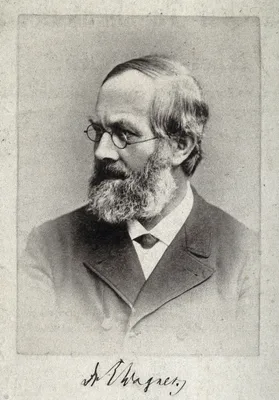
1863 WAGNER, Ernst Leberecht (1829 – 1888)
Fall einer selten Muskelkrankheit.
First recorded case of dermatomyositis, now regarded as a connective tissue disease.
GMN 4054 · https://historyofmedicine.com/id/5409
1864 FOX, William Tilbury (1836 – 1879)
On impetigo contagiosa, or porrigo.
“Impetigo of Tilbury Fox”, impetigo contagiosa, first described.
GMN 4055 · https://historyofmedicine.com/id/5411
1866 WAGNER, Ernst Leberecht (1829 – 1888)
Das Colloid-Milium der Haut.
Colloid degeneration of the skin (“Wagner’s disease”) was first described by Wagner who gave it the name “Colloid milium”.
GMN 4056 · https://historyofmedicine.com/id/5413
1868 ROTHMUND, August von (1830 – 1906)
Ueber Cataracten in Verbindung mit einer eigenthümlichen Haut-de-generation.
Poikiloderma congenitale (Rothmund).
GMN 4056.1 · https://historyofmedicine.com/id/5416
1869 NETTLESHIP, Edward (1845 – 1913)
Chronic urticaria leaving brown stains: nearly two years’ duration.
Urticaria pigmentosa (Mastocytosis of the skin) described by Nettleship, was named eponymically “Nettleship’s disease”.
GMN 4057 · https://historyofmedicine.com/id/5419
1869 PAXTON, Francis Valentine (1840 – 1924)
On a diseased condition of the hairs of the axilla, probably of parasitic origin.
Tinea nodosa (trichorrhexis nodosa, “Paxton’s disease”) first described.
GMN 4058 · https://historyofmedicine.com/id/5422
1869 –1870 TURNER, George Alexander (1845 – 1900)
Lafa Tokelau, or Tokelau ringworm.
First description, tinea imbricata. Turner described the disease while serving as a medical missionary in Samoa.
GMN 4059 · https://historyofmedicine.com/id/5424
1870 RITTERSHAIN, Gottfried von (1820 – 1883)
Dermatitis erysipelatosa; Gangraena; Enkephalitis.
First description of dermatitis exfoliativa neonatorum (“Rittershain’s disease”).
GMN 4060 · https://historyofmedicine.com/id/5432
1870 WILSON, Sir William James Erasmus (1809 – 1884)
On dermatitis exfoliativa.
Although Hippocrates mentioned this condition, Erasmus Wilson first named it and described it as we know it today. It has been called “Wilson’s disease”; an eponym discarded since its use to describe the progressive l…
GMN 4061 · https://historyofmedicine.com/id/5450
1872 HEBRA, Ferdinand Karl Franz Schwarzmann, Ritter von (1816 – 1880)
Ueber einzelne während der Schwangerschaft, dem Wochenbette und bei Uterinalkrankheiten der Frauen zu beobachtende Hautkrankheiten.
Hebra was the first to describe impetigo herpetiformis, more fully dealt with by Kaposi, his son-in-law.
GMN 4062 · https://historyofmedicine.com/id/5452
1872 KAPOSI, Moritz Kohn (1837 – 1902)
Idiopathisches multiples Pigmentsarkom der Haut.
First description of “Kaposi’s sarcoma” – multiple idiopathic hemorrhagic sarcoma. English translation in CA, 1982, 32, 342-47.
GMN 4063 · https://historyofmedicine.com/id/5455
1873 BAKER, William Morrant (1839 – 1896)
Erythema serpens.
First description of erythema serpens, usually called “erysipeloid of Rosenbach”, following the latter’s paper in Arch. klin. Chir., 1887, 36, 346.
GMN 4064 · https://historyofmedicine.com/id/5457
1873 FOX, William Tilbury (1836 – 1879)
On dysidrosis (an undescribed eruption).
Original description of dysidrosis (pompholyx).
GMN 4065 · https://historyofmedicine.com/id/5458
1874 CARTER, Henry Vandyke (1831 – 1897)
On mycetoma, or the fungus disease of India.
See No. 4047.
GMN 4066 · https://historyofmedicine.com/id/5459
1875 –1888 HUTCHINSON, Sir Jonathan (1828 – 1913)
Illustrations of clinical surgery. 2 vols.
Vol. 1 pp. 49-52: Hutchinson’s classic description of cheiropompholyx, dysidrosis (“Hutchinson’s disease”). The first description and illustration of sarcoidosis is on p. 42.
GMN 4067 · https://historyofmedicine.com/id/5464
1875 NEUMANN, Isidor (1832 – 1906)
Ueber eine noch wenig gekannte Hautkrankeit (Dermatitis circumscripta herpetiformis).
First description of porokeratosis (Mibelli).
GMN 4068 · https://historyofmedicine.com/id/5466
1875 –1876 TAYLOR, Robert William (1842 – 1908)
On a rare case of idiopathic localized or partial atrophy of the skin.
First description of the condition called by Herxheimer and Hartmann in 1902 “acrodermatitis chronica atrophicans”, and known eponymically as “Taylor’s disease”.
GMN 4069 · https://historyofmedicine.com/id/5471
1876 –1877 MILTON, John Laws (1820 – 1898)
On giant urticaria.
Although Quincke described angioneurotic edema with great precision and has given his name to it (“Quincke’s disease”, “Quincke’s edema”), Milton first noted it, calling it “giant urticaria”.
GMN 4070 · https://historyofmedicine.com/id/5477
1876 KOEBNER, Heinrich (1838 – 1904)
Zur Aetiologie der Psoriasis.
“Koebner phenomenon” – appearance at points of injury of any skin lesion that is not an ordinary manifestation or complication of the injury.
GMN 4070.1 · https://historyofmedicine.com/id/5483
1877 –1878 CROCKER, Henry Radcliffe (1845 – 1909); FOX, William Tilbury (1836 – 1879)
The minute anatomy of dysidrosis.
GMN 4073 · https://historyofmedicine.com/id/5495
1878 HUTCHINSON, Sir Jonathan (1828 – 1913)
Summer prurigo, prurigo aestivalis, seu prurigo adolescentium, seu acne-prurigo.
Hutchinson’s summer prurigo.
GMN 4074 · https://historyofmedicine.com/id/5504
1878 SQUIRE, Alexander John Balmanno (1836 – 1908)
On the treatment of psoriasis by an ointment of chrysophanic acid.
Introduction of chrysarobin in dermatology.
GMN 4075.1 · https://historyofmedicine.com/id/5512
1879 COTTLE, Ernest Wyndham (1847 – 1919)
Warty growths.
Original description of angiokeratoma (“Mibelli’s disease” – so named from the latter’s description of it in 1891; see No. 4105).
GMN 4071 · https://historyofmedicine.com/id/5489
1879 HUTCHINSON, Sir Jonathan (1828 – 1913)
Lectures on clinical surgery. Pt. 2.
On p. 298 is the first description of hydradenitis destruens suppurativa, later named “Pollitzer’s disease” from the latter’s important description of it in J. cutan. gen.-urin. Dis., 1892, 10, 9-24.
GMN 4075 · https://historyofmedicine.com/id/5508
1879 –1880 HARDAWAY, William Augustus (1850 – 1923)
A case of multiple tumors of the skin accompanied by intense pruritis.
First description of prurigo nodularis. In 1909 J. N. Hyde (Diseases of the skin, Philadelphia, p. 174) was responsible for its present name and for the eponym “Hyde’s disease”.
GMN 4076 · https://historyofmedicine.com/id/5517
1879 FOX, William Tilbury (1836 – 1879)
Notes on unusual or rare forms of skin disease. IV. Congenital ulceration of skin (two cases) with pemphigus eruption and arrest of development generally.
First description of epidermolysis bullosa.
GMN 4077 · https://historyofmedicine.com/id/5523
1880 PASTEUR, Louis (1822 – 1895)
De l’extension de la théorie des germes à l’étiologie de quelques maladies communes.
In this study of furunculosis (“boils”) and osteomyelitis Pasteur left the first recognizable descriptions of staphylococcus and streptococcus. The term streptococcus had been coined by Billroth in 1874; however, Past…
GMN 2492.1 · https://historyofmedicine.com/id/3143
1880 FOX, William Tilbury (1836 – 1879)
A clinical study of hydroa.
First description of dermatitis herpetiformis (“Duhring’s disease”; see No. 4083).
GMN 4078 · https://historyofmedicine.com/id/5566
1881 MAFFUCCI, Angelo (1845 – 1903)
Di un caso di encondroma et angioma multiplo. Contribuzione alla genesi embrionale dei tumori.
“Maffucci’s syndrome” – cavernous hemangioma with enchondromas of skeleton, producing deformities.
GMN 4079 · https://historyofmedicine.com/id/5567
1882 KAPOSI, Moritz Kohn (1837 – 1902)
Xeroderma pigmentosum.
Excellent pathological study of this condition (“Kaposi’s disease”), which he first described in Virchow’s Handbuch der speziellen Pathologie und Therapie, 1876, 2, 182.
GMN 4080 · https://historyofmedicine.com/id/5568
1882 RECKLINGHAUSEN, Friedrich Daniel von (1833 – 1910)
Ueber die multiplen Fibrome der Haut und ihre Beziehung zu den multiplen Neuromen
One of Virchow’s distinguished pupils, von Recklinghausen gave a classic description of neurofibromatosis, adding much to the knowledge of the condition, which later became known as “Recklinghausen’s disease”. The art…
GMN 4082 · https://historyofmedicine.com/id/8624
1884 LANDOUZY, Louis Théophile Joseph (1845 – 1917)
Fièvre zoster etexanthèmes zosteriformes.
Landouzy first suggested the infective nature of herpes.
GMN 4642 · https://historyofmedicine.com/id/717
1884 BALZER, Félix (1849 – 1929)
Recherches sur les caractères anatomiques du xanthélasma.
First description of skin changes and necropsy findings in pseudoxanthoma elasticum. See No. 4096.1 and Trans. St. John’s Hosp. Derm. Soc., 1972, 58, 235-50 (F.M. Pope).
GMN 4082.1 · https://historyofmedicine.com/id/5570
1884 DUHRING, Louis Adolphus (1845 – 1913)
Dermatitis herpetiformis.
Duhring’s best work in dermatology. He brought together, under the name of “dermatitis herpetiformis” (“Duhring’s disease”) the group of eruptions which morphologically lay between urticaria and the toxic erythemas on…
GMN 4083 · https://historyofmedicine.com/id/5573
1885 KAPOSI, Moritz Kohn (1837 – 1902)
Ueber eine neue Form von Hautkrankheit, “Lymphodermia perniciosa”.
First description of lymphoderma perniciosa, premycotic or leukemic erythrodermia.
GMN 4085 · https://historyofmedicine.com/id/5580
1886 KAPOSI, Moritz Kohn (1837 – 1902)
Lichen ruber monileformis – Korallen schnurartiger Lichen ruber.
Kaposi is credited with the first description of this condition, sometimes called “Kaposi’s disease”, and probably a rare variety of lichen planus.
GMN 4086 · https://historyofmedicine.com/id/5582
1886 NEUMANN, Isidor (1832 – 1906)
Ueber Pemphigus vegetans (frambösioides).
“Neumann’s disease” – pemphigus vegetans. This was first described by Alibert. English translation (New Sydenham Society), 1897.
GMN 4087 · https://historyofmedicine.com/id/5584
1886 VIDAL, Jean Baptiste Émile (1825 – 1893)
Du lichen (lichen, prurigo, strophulus).
“Vidal’s disease” – neurodermatitis.
GMN 4088 · https://historyofmedicine.com/id/5587
1887 BOCKHART, Max (1883 – 1921)
Ueber die Aetiologie und Therapie der Impetigo, des Furunkels und der Sykosis.
First description of impetigo circumpilaris infantilis (“Bockhart’s impetigo”).
GMN 4089 · https://historyofmedicine.com/id/5589
1887 GIOVANNINI, Sebastiano (1851 – 1920)
Ueber die normale Entwicklung und über einige Veränderungen der menschlichen Haare.
“Giovanni’s disease”. He described the developmental defect of hair follicles known as pili multigemini.
GMN 4090 · https://historyofmedicine.com/id/5592
1887 KAPOSI, Moritz Kohn (1837 – 1902)
Impetigo herpetiformis.
Although not the first to describe this condition, Kaposi established its status.
GMN 4091 · https://historyofmedicine.com/id/5595
1887 UNNA, Paul Gerson (1850 – 1929)
Das seborrhoische Ekzem.
Unna’s seborrhoeic eczema.
GMN 4092 · https://historyofmedicine.com/id/5597
1887 WHITE, James Clarke (1833 – 1916)
Dermatitis venenata: An account of the action of external irritants upon the skin.
White, a pupil of Hebra, was an outstanding personality in American dermatology; he held the first chair in that subject in the U.S.A. The eponym “White’s disease” refers to his description of keratosis follicularis i…
GMN 4093 · https://historyofmedicine.com/id/5601
1887 UNNA, Paul Gerson (1850 – 1929)
Beiträge zur Anatomie und Pathogenese der Urticaria simplex und Pigmentosa.
Unna reported that skin lesions of urticaria pigmentosa contained numerous mast cells. This was the first report of a primary mast cell disorder. Digital facsimile from deutsche-digitale-bibliothek.de at this link.
GMN 14172 · https://historyofmedicine.com/id/16487
1888 –1889 QUINQUAUD, Charles Eugene (1841 – 1894)
Folliculite épilante décalvante.
Folliculitis decalvans of Quinquaud first described. At about the same time, P. A. Robert described it independently in his thesis, Paris, 1889.
GMN 4094 · https://historyofmedicine.com/id/5604
1889 BESNIER, Ernest (1831 – 1909)
Lupus pernio de la face; synovites fongueuses (scrofulo-tuberculeuses) symétriques des extrémités supérieures.
Besnier–Boeck–Schaumann disease, Boeck’s sarcoid. Boeck (No. 4128) wrote a classic paper on the subject and later Schaumann’s paper (No. 4149) resulted in a triple eponym. (See No. 4067).
GMN 4095 · https://historyofmedicine.com/id/5608
1889 BURY, Judson Sykes (1852 – 1944)
A case of erythema with remarkable nodular thickening and induration of skin, associated with intermittent albuminuria.
Erythema elevatum diutinum (“Bury’s disease”).
GMN 4096 · https://historyofmedicine.com/id/5610
1889 CHAUFFARD, Anatole Marie Émile (1855 – 1932)
Xanthélasma disséminé et symétrique, sans insufficance hépatique.
In 1889 Chauffard gave an important description of pseudoxanthoma elasticum. Further reports on his patient were published by Besnier and Doyon, Darier, and Hallopeau and Laffitte, the last in Ann. Derm. Syph. (Paris)…
GMN 4096.1 · https://historyofmedicine.com/id/5614