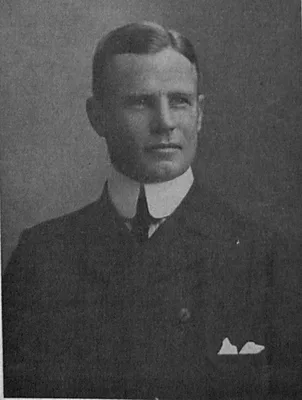
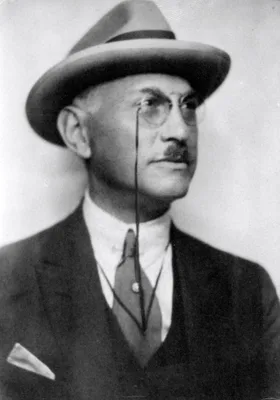
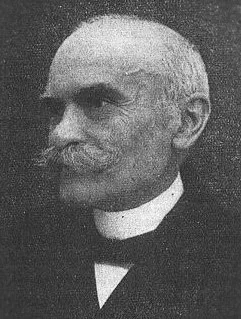
1889 DARIER, Ferdinand-Jean (1856 – 1938)
De la psorospermose folliculaire végétante.
Dyskeratosis follicularis was so well described by Darier that it is universally known as “Darier’s disease”. J. C. White also described it (see No. 4093) and the first description is accredited to H.C. Lutz (No. 4050).
GMN 4097 · https://historyofmedicine.com/id/5616
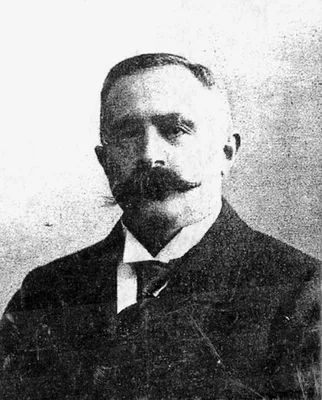
1889 JACQUET, Lucien (1860 – 1915)
Des érythèmes papuleux fessiers post-érosifs.
“Jacquet’s disease”, “Jacquet’s dermatitis”, papulo-lenticular erythema of the napkin area.
GMN 4099 · https://historyofmedicine.com/id/5624
1889 TAENZER, Paul (1858 – 1919)
Ueber das Ulerythema ophryogenes, eine noch nicht beschriebene Hautkrankheit.
Ulerythema ophryogenes (“Taenzer’s disease”) first described.
GMN 4100 · https://historyofmedicine.com/id/5628
1889 HALLOPEAU, François Henri (1842 – 1919)
Sur une nouvelle forme de dermatite pustuleuse chronique en foyer à progression excentrique.
Pyodermite végétante. Hallopeau described a suppurative form of Neumann’s pemphigus vegetans.
GMN 4101 · https://historyofmedicine.com/id/5631
1889 –1890 HUTCHINSON, Sir Jonathan (1828 – 1913)
A rare form of lupus (marginatus).
“Hilliard’s lupus”. Hutchinson made an innovation in terminology when he named the disease after the patient instead of the physician describing it. The Archives, which ran to 11 volumes, were written entirely by Hutc…
GMN 4098 · https://historyofmedicine.com/id/8951
1890 POLLITZER, Sigmund (1859 – 1937); JANOVSKY, Viktor (1847 – 1925)
Acanthosis nigricans. In: Int. Atlas seltener Hautkrankheiten, Heft 4, plates x-xi
First description of acanthosis nigricans.
GMN 4102 · https://historyofmedicine.com/id/5633
1890 PRINGLE, John James (1855 – 1922)
Ueber einen Fall von kongenitalem Adenoma sebaceum.
Sebaceous adenoma, type Pringle.
GMN 4103 · https://historyofmedicine.com/id/5637
1890 –1892 JADASSOHN, Josef (1863 – 1936)
Ueber eine eigenartige Form von Atrophia maculosa cutis.
“Jadassohn’s disease” – maculo-papular erythrodermia; Anetoderma erythematosum of Jadassohn.
GMN 4108 · https://historyofmedicine.com/id/5662
1891 –1892 HUTCHINSON, Sir Jonathan (1828 – 1913)
Infective angeioma or naevus-lupus.
Angioma serpiginosum.
GMN 4104 · https://historyofmedicine.com/id/5641
1891 MIBELLI, Vittorio (1860 – 1910)
L’angiocheratoma.
Mibelli gave the name to angiokeratoma although it had already been described by Cottle in 1877. It is also called “Mibelli’s disease”.
GMN 4105 · https://historyofmedicine.com/id/5646
1891 NONNE, Max (1861 – 1959)
Vier Fälle von Elephantiasis congenita hereditaria.
First description of hereditary oedema of the legs, generally known as “Milroy’s disease” or as “Meige’s disease” (No. 4129).
GMN 4106 · https://historyofmedicine.com/id/5648
1892 BESNIER, Ernest (1831 – 1909)
Première note et observations préliminaires pour servir d’introduction à l’étude des prurigos diathésiques (dermites multiformes prurigineuses chroniques exacerbantes et paroxystiques, du type du prurigo de Hebra).
“Besnier’s prurigo”.
GMN 4107 · https://historyofmedicine.com/id/5652
1892 MILROY, William Forsyth (1855 – 1942)
An undescribed variety of hereditary oedema.
Independently of Nonne (No. 4106) Milroy described congenital edema of the legs; it has been given the eponym “Milroy’s disease”.
GMN 4109 · https://historyofmedicine.com/id/5666
1892 UNNA, Paul Gerson (1850 – 1929)
Drei Favusarten.
Unna described the different fungi of favus. He founded the above-mentioned journal, and he is one of the most eminent figures in modern dermatology.
GMN 4110 · https://historyofmedicine.com/id/5671
1892 BÓKAY, János (1858 – 1937)
Das Auftreten von Varizellen unter eigentümlichen Verhältnissen.
Bokay was the first to suggest an etiological relationship between varicella and herpes zoster. See also his paper in Wien. klin. Wschr., 1909, 22, 1323-26.
GMN 5439.1 · https://historyofmedicine.com/id/7460
1893 ROBINSON, Andrew Rose (1845 – 1924)
Hidrocystoma.
Robinson wrote an excellent textbook on dermatology in 1884, the year in which he published the first description of hydrocystoma (“Robinson’s disease”).
GMN 4084 · https://historyofmedicine.com/id/5576
1893 DARIER, Ferdinand-Jean (1856 – 1938)
Dystrophie papillaire et pigmentaire.
Acanthosis nigricans.
GMN 4113 · https://historyofmedicine.com/id/5676
1893 MIBELLI, Vittorio (1860 – 1910)
Contributo allo studio della ipercheratosi dei canali sudoriferi (porokeratosis).
Mibelli is sometimes credited with the original description of porokeratosis (“Mibélli’s disease”), but Neumann described it in 1875 under the name of “dermatitis circumscripta herpetiformis”. See No. 4068.
GMN 4114 · https://historyofmedicine.com/id/5682
1893 RESPIGHI, Emilio (1860 – 1936)
Di una ipercheratosi non ancora descritta.
First description of hyperkeratosis excentrica, porokeratosis.
GMN 4115 · https://historyofmedicine.com/id/5686
1894 SABOURAUD, Raymond Jacques Adrien (1864 – 1938)
Les tricophyties humaines.
In his extensive studies of the role of fungi in skin diseases, Sabouraud revived and elaborated the discoveries of Gruby (Nos. 4030, 4034-36), which had remained neglected for half a century. See also No. 4116.
GMN 3999 · https://historyofmedicine.com/id/5065
1894 SABOURAUD, Raymond Jacques Adrien (1864 – 1938)
La teigne trichophytique et la teigne spéciale de Grüby.
GMN 4116 · https://historyofmedicine.com/id/5690
1894 VINCENT, Jean Hyacinthe (1862 – 1950)
Étude sur le parasite du “pied de Madura”.
Isolation of Streptothrix (Actinomyces) madurae.
GMN 4117 · https://historyofmedicine.com/id/5703
1895 KAPOSI, Moritz Kohn (1837 – 1902)
Lichen ruber acuminatus und Lichen ruber planus.
GMN 4120 · https://historyofmedicine.com/id/5707
1895 OSLER, Sir William (1849 – 1919)
On the visceral complication of erythema exudativum multiforme.
GMN 4121 · https://historyofmedicine.com/id/5711
1895 BUSSE, Otto Emil Franz Ulrich (1867 – 1922)
Ueber parasitäre Zelleinschlüsse und ihre Züchtung.
“Busse–Buschke disease” –blastomycosis of the skin due to Cryptococcus neoformans. See also No. 5529.2. Busse first described it in Zbl. Bakt., 1894, 16, 175-80.
GMN 5529.1 · https://historyofmedicine.com/id/6648
1896 DARIER, Ferdinand-Jean (1856 – 1938)
Des “tubercules” cutanées.
Darier grouped together, under the heading “tuberculides”, the skin eruptions associated with tuberculosis.
GMN 4122 · https://historyofmedicine.com/id/5719
1896 FORDYCE, John Addison (1858 – 1925)
A peculiar affection of the mucous membrane of the lips and the oral cavity.
Fordyce, remembered for the description of “Fox–Fordyce disease”, also described a pseudocolloid of the buccal mucosa, which is known as “Fordyce’s disease”.
GMN 4123 · https://historyofmedicine.com/id/5724
1896 MAJOCCHI, Domenico (1849 – 1929)
Sopra una dermatosi telangettode non ancora descritta “Purpura annularis” “Telangectasia follicularis annulata” studio clinico.
Purpuraannularis telangiectodes (Majocchi) first described.
GMN 4125 · https://historyofmedicine.com/id/5727
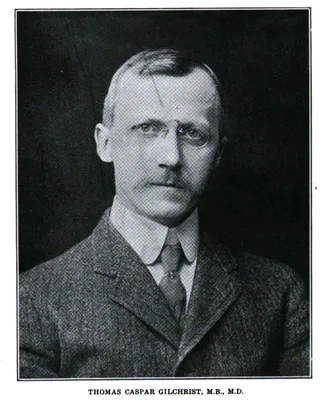
1896 GILCHRIST, Thomas Caspar (1862 – 1927)
A case of blastomycetic dermatitis in man.
Gilchrist’s description of blastomycosis (“Gilchrist’s disease”, “Busse-Buschke disease”, Nos. 5529.1 and 5529.2), is an important contribution to the knowledge of the infectious granulomata involving the skin.
GMN 5530.1 · https://historyofmedicine.com/id/6659
1898 MANSON, Sir Patrick (1844 – 1922)
Tropical diseases.
Manson has been called the “father of modern tropical medicine”. He had vast experience of disease in the Tropics and himself made many valuable contributions to the knowledge of this subject. He described tinea nigra…
GMN 2266 · https://historyofmedicine.com/id/2823
1898 SCHENCK, Benjamin Robinson (1873 – 1920)
On refractory subcutaneous abscesses caused by a fungus possibly related to the sporotricha.
Schenck first described a form of sporotrichosis, due to a pathogenic fungus, which later became known as Sporotrichum beurmanni, after more thorough studies upon it by de Beurmann in 1903.
GMN 4127 · https://historyofmedicine.com/id/5734
1899 BOECK, Caesar Peter Møller (1845 – 1917)
Multipelt benignt hud-sarcoid.
The syndrome of benign sarcoid (“Boeck’s sarcoid”) was first established by Boeck. English translation in J. cutan. gen.-urin. Dis., 1899, 17, 543-50. In 1940 Danbolt (Schweiz. med. Wschr., 1947, 77, 1149-50) reexamin…
GMN 4128 · https://historyofmedicine.com/id/5737
1900 HEAD, Sir Henry (1861 – 1940); CAMPBELL, Alfred Walter (1868 – 1937)
The pathology of herpes zoster and its bearing on sensory localisation.
Head and Campbell showed herpes zoster to be a hemorrhagic inflammation of the posterior nerve roots and the homologous spinal ganglia.
GMN 4644 · https://historyofmedicine.com/id/724
1900 BUSCHKE, Abraham (1868 – 1943)
Ueber Scleroedem.
Scleroedemaadultorum syndrome of Buschke.
GMN 4130 · https://historyofmedicine.com/id/5750
1900 KLIPPEL, Maurice (1858 – 1942); TRÉNAUNAY, Paul (1875 – )
Du naevus variqueux ostéo-hypertrophique.
“Klippel–Trenaunay syndrome”.
GMN 4131 · https://historyofmedicine.com/id/5754
1900 SEEBER, Guillermo Rodolfo (1876 – )
Un nuevo esporozoario parásito del hombre. Dos casos encontrados en pólipos nasales: Tesis presentada para optar al grado de doctor en medicina.
Rhinosporidiosis first described. Digital facsimile from bibliomedicinadigital.fmed.uba.ar at this link.
GMN 4131.1 · https://historyofmedicine.com/id/8628
1901 OSLER, Sir William (1849 – 1919)
On a family form of recurring epistaxis, associated with multiple telangiectases of the skin and mucous membranes.
“Rendu–Osler–Weber disease.” Multiple hereditary telangiectasis was first described by Legg (No. 2707) in 1876 and later by Rendu (No. 2710) and Weber (No. 2714). Reprinted in Medical Classics, 1939, 4, 243-53.
GMN 2711 · https://historyofmedicine.com/id/4430
1901 EHLERS, Edvard (1863 – 1937)
Cutis laxa. Neigung zu Haemorrhagien in der Haut, Lockerung mehrerer Artikulationen.
Description of the syndrome to which the name “Ehlers–Danlos syndrome” was later attached (see also No. 4144), earlier described by Tschernogubow: Cutis laxa, Mh. prakt. Derm., 1892, 14, 76.
GMN 4132 · https://historyofmedicine.com/id/5767
1901 JADASSOHN, Josef (1863 – 1936)
Ueber eine eigenartige Erkrankung der Nasenhaut bei Kindern (“Granulosis rubra nasi”).
In his important paper on granulosis rubra nasi, Jadassohn gave the condition its present name. Previously Pringle, 1894, and Luithlen, 1900, had described probable cases.
GMN 4133 · https://historyofmedicine.com/id/5769
1901 SCHAMBERG, Jay Frank (1870 – 1934)
A peculiar progressive pigmentary disease of the skin.
Schamberg’s progressive pigmentary dermatosis; first description.
GMN 4134 · https://historyofmedicine.com/id/5773
1902 BROCQ, Louis Anne Jean (1856 – 1928)
Les parapsoriasis.
“Brocq’s disease”; he proposed the term “parapsoriasis” for the condition which had previously been described under various names and often mistaken for other dermatoses.
GMN 4135 · https://historyofmedicine.com/id/5776
1902 FOX, George Henry (1846 – 1937); FORDYCE, John Addison (1858 – 1925)
Two cases of a rare papular disease affecting the axillary region.
“Fox–Fordyce disease”. These writers described a papular, itchy eruption, confined to the axillae, nipples and pubes, and considered to be due to a dysfunction of the apocrine glands.
GMN 4137 · https://historyofmedicine.com/id/5783
1902 HERXHEIMER, Karl (1861 – 1944); HARTMANN, Kuno
Ueber Acrodermatitis chronica atrophicans.
Taylor described the condition in 1876 (No. 4069) and Herxheimer and Hartmann named it, separating it from other atrophies which had been called by a number of different names.
GMN 4138 · https://historyofmedicine.com/id/5786
1904 SABOURAUD, Raymond Jacques Adrien (1864 – 1938)
Surla radiothérapie des teignes.
Sabouraud’s method of radiological treatment of ringworm.
GMN 4004 · https://historyofmedicine.com/id/5099
1904 SABOURAUD, Raymond Jacques Adrien (1864 – 1938)
Pityriasis et alopécies pelliculaires.
Classic account of the different varieties of Trichophyton.
GMN 4139 · https://historyofmedicine.com/id/5788
1905 JULIUSBERG, Max (1874 – )
Zur Kenntnis des Virus des Molluscum contagiosum des Menschen.
Juliusberg showed that the virus of molluscum contagiosum passed a Chamberland filter.
GMN 4140 · https://historyofmedicine.com/id/5793
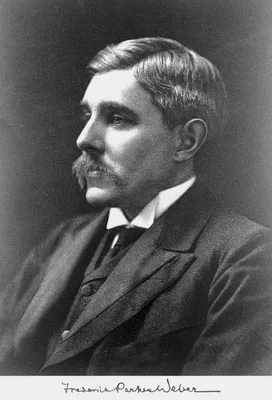
1907 WEBER, Frederick Parkes (1863 – 1962)
Multiple hereditary developmental angiomata (telangiectases) of the skin and mucous membranes associated with recurring haemorrhages.
“Rendu–Osler–Weber disease.”
GMN 2714 · https://historyofmedicine.com/id/4436
1907 JACOBI, Eduard (1862 – 1915)
Fall zur Diagnose (Poikiloderma vascularis atrophicans).
First description.
GMN 4141 · https://historyofmedicine.com/id/5796
1907 CIUFFO, Giuseppe (1870 – 1936)
Innesto positivo con filtrato de verruca volgare.
Ciuffo presented the first demonstration that a cell-free agent could induce a human tumor. He induced human warts on his own hand with a bacteria-free filtrate (a virus) prepared from excised wart tissue. The signifi…
GMN 4142 · https://historyofmedicine.com/id/5799
1907 PINKUS, Felix (1868 – 1947)
Ueber eine neue knötchenförmige Hauteruption; Lichen nitidus.
Original description of lichen nitidus, “Pinkus’s disease”. Pinkus first showed a case before the Berlin Dermatological Society on 3 Dec, 1901, and named it “lichen nitidus”.
GMN 4143 · https://historyofmedicine.com/id/5803