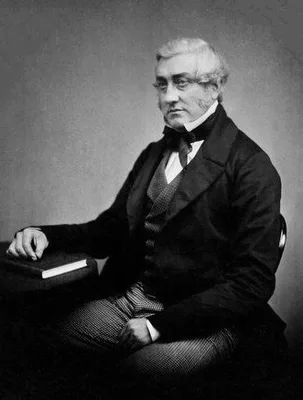
1820 –1847 FRORIEP, Robert Friedrich (1804 – 1861); FRORIEP, J. J. Ludwig Friedrich von (1779 – 1847)
Chirurgische Kupfertafeln. 4 vols.
This collection of 417 plates on surgical procedures, instruments, and bandages, with 4 pages of explanatory text, was published in 96 parts between 1820 and 1847. Fifty-two of the plates were issued hand-colored. The…
GMN 12750 · https://historyofmedicine.com/id/14996
1821 BARTON, John Rhea (1794 – 1871)
Remarks on certain injuries of the bones in children.
On bending fractures in children.
GMN 4411.1 · https://historyofmedicine.com/id/6178
1821 JAMESON, Horatio Gates (1788 – 1855)
Case of tumour of the superior jaw.
First excision of the superior maxilla, 11 Nov, 1820.
GMN 4446 · https://historyofmedicine.com/id/6352
1822 COOPER, Sir Astley Paston (1768 – 1841)
A treatise on dislocations, and on fractures of the joints.
Through this and numerous subsequent editions this was the principal reference work on the subject in England and America for 30 years. “Many later clinical modifications were developed from Cooper’s methods” (Bick).
GMN 4412.1 · https://historyofmedicine.com/id/6179
1822 MOTT, Valentine (1785 – 1865)
Case of osteo-sarcoma in which the right side of the lower jaw was removed successfully after tying the carotid artery.
Mott resected the entire half of the bone, necessitating a disarticulation at the temporo-mandibular joint.
GMN 4447 · https://historyofmedicine.com/id/6356
1823 DEADERICK, William Harvey (1773 – 1858)
Case of removal of a portion of the lower maxillary bone.
Deaderick resected a portion of the jaw in 1810. He wrote this paper to obtain priority over Mott (No. 4447).
GMN 4448 · https://historyofmedicine.com/id/55
1823 –1828 DELPECH, Jacques Mathieu (1777 – 1832)
Chirurgie clinique de Montpellier. 2 vols.
Delpech's work includes the first account of rhinoplasty in France. On 4 June 1823, Delpech performed the first of six cases of rhinoplasty by the Indian forehead flap method, and one (unsuccessful) with a flap from t…
GMN 4312 · https://historyofmedicine.com/id/6544
1824 ROGERS, David L. (1799 – 1877)
Case of osteo-sarcoma of the superior maxillary bone, with the operation for its removal.
Rogers removed nearly all of the upper jaw. Operation performed in 1810.
GMN 4449 · https://historyofmedicine.com/id/56
1825 SMITH, Nathan (1762 – 1829)
On the amputation of the knee-joint.
Smith amputated the knee-joint in 1824, being the first in America to do so.
GMN 4450 · https://historyofmedicine.com/id/57
1825 LOWELL, Charles (1793 – 1858)
Report of the trial of an action: Charles Lowell against John Faxon and Micajah Hawks, doctors of medicine, defendants, for malpractice in the capacity of physicians and surgeons: At the Supreme Judicial Court of Maine, holden at Machias for the county of Washington, June term, 1824, before the Hon. Nathan Weston, Jun., justice of the court.
A detailed narrative on the trial based on the transcript. Digital facsimile from the U.S. National Library of Medicine at this link.
GMN 11730 · https://historyofmedicine.com/id/13931
1826 DUPUYTREN, Guillaume, Le Baron (1777 – 1835)
Mémoire sur un déplacement originel ou congénital de la tête des fémurs.
First clear pathological description of congenital dislocation of the hip-joint. Dupuytren distinguished this syndrome caused by failure of fetal development of the acetabulum from deformities due to tuberculosis and …
GMN 4413 · https://historyofmedicine.com/id/6183
1826 WARREN, John Collins (1778 – 1856)
A letter to the Hon. Isaac Parker, chief justice of the Supreme court of the state of Massachusetts, containing remarks on the dislocation of the hip joint, occasioned by the publication of a trial which took place at Machias, in the state of Maine, June, 1824. By John C. Warren. With an appendix of documents from the trial necessary to illustrate the history of the case.
This work, illustrated with 5 plates, contains several clear and minute descriptions of dislocation of the hip joint. In the course of the monograph Warrenproved the possibility of a type of dislocation that was denie…
GMN 11728 · https://historyofmedicine.com/id/13929
1827 BARTON, John Rhea (1794 – 1871)
On the treatment of anchylosis, by the formation of artificial joints.
Barton performed a femoral osteotomy between the greater and lesser trochanters to secure motion in an ankylosed hip. This has been called the first successful arthroplasty. Reprinted in Clin. Orthop., 1984, 182, 4-13.
GMN 4451 · https://historyofmedicine.com/id/58
1827 MOTT, Valentine (1785 – 1865)
Successful amputation at the hip-joint.
This is “the first reported amputation at the hip joint found in the American medical literature” (Rutkow). See No. 4462.
GMN 4451.1 · https://historyofmedicine.com/id/59
1827 RODGERS, John Kearney (1793 – 1851)
Case of un-united fracture of the os brachii, successfully treated.
Successful wiring of ununited fracture of humerus.
GMN 4414 · https://historyofmedicine.com/id/6187
1827 HARRISON, Edward (1766 – 1838)
Pathological and practical observations on spinal diseases: illustrated with cases and engravings. Also, An inquiry into the origin and cure of distorted limbs.
Harrison founded the first infirmary for spinal diseases in London. See Weiner & Silver, "Edward Harrison and the treatment of spinal deformities in the nineteenth century," J. R. Coll. Phys. Edinb., 38 (2006) 265-71.…
GMN 13539 · https://historyofmedicine.com/id/15816
1827 PRAVAZ, Charles Gabriel (1791 – 1853)
Méthode nouvelle pour le traitement des déviations de la colonne vertébrale; précédée d'un examen critique des divers moyens employés par les orthopédistes modernes.
Digital facsimile from Google Books at this link.
GMN 14199 · https://historyofmedicine.com/id/16515
1828 SYME, James (1799 – 1870)
Case of osteo-sarcoma of the lower jaw.
Syme’s operation of excision of the lower jaw for osteosarcoma.
GMN 4453 · https://historyofmedicine.com/id/60
1828 MOTT, Valentine (1785 – 1865)
An account of a case of osteo-sarcoma of the left clavicle, in which exsection of that bone was successfully performed.
Valentine Mott was an outstanding figure in American surgery during the first half of the 19th century. A pupil of Astley Cooper, he particularly distinguished himself in vascular surgery and in operations involving t…
GMN 4452 · https://historyofmedicine.com/id/132
1828 BRODIE, Sir Benjamin Collins (1783 – 1862)
On trephining the tibia.
“Brodie’s abscess”. The patient was first seen in 1824. Brodie published an account of some further cases in Med.-chir. Trans., 1832, 17, 239-49, which paper is reprinted in Med. Classics, 1938, 2, 900-06.
GMN 4314 · https://historyofmedicine.com/id/5524
1828 DELPECH, Jacques Mathieu (1777 – 1832)
De l’orthomorphie. 2 vols. and atlas.
Delpech, Professor of Surgery at Montpellier, published a comprehensive treatise on deformities of the bones and joints. He established the tuberculous nature of Pott’s disease. Delpech did more than any other man tow…
GMN 4315 · https://historyofmedicine.com/id/5526
1828 RICHTER, Adolph Leopold (1798 – 1876)
Theoretisch-praktische Handbuch der Lehre von den Bruchen und Verrenkungen der Knochen. 1 vol. and atlas.
The remarkable atlas accompanying this work illustrates in remarkable detail all of the various types of dressings, splints and apparatus used in the treatment of fractures at the time.
GMN 4414.1 · https://historyofmedicine.com/id/6189
1829 –1830 HUTCHINSON, Alexander Copland
Removal of the arm, scapula and clavicle.
Records the first interscapulo-thoracic amputation, performed by Ralph Cuming (d. 1808), a naval surgeon, in 1808.
GMN 4455 · https://historyofmedicine.com/id/61
1829 SYME, James (1799 – 1870)
Three cases in which the elbow-joint was successfully excised.
GMN 4454 · https://historyofmedicine.com/id/134
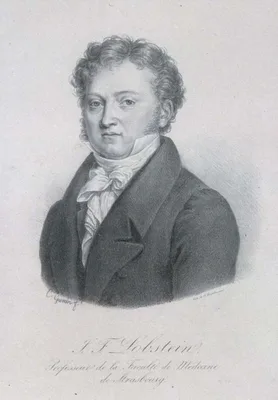
1829 –1833 LOBSTEIN, Jean Georges Chrétien Frédéric Martin (1777 – 1835)
Traité d’anatomie pathologique. 2 vols. and atlas.
Includes a historical review of the subject from the time of the Ancient Egyptians to Corvisart, and a summary of the advances in pathology during the preceding 50 years. Vol. 2, pp. 553-600 deals with diseases of the…
GMN 2288 · https://historyofmedicine.com/id/2915
1830 ROUX, Philibert Joseph (1780 – 1854)
Résection des os.
Among the French surgeons of the 19th century, Roux was second in importance only to Dupuytren. He performed staphylorrhaphy in 1819 and sutured the ruptured female peritoneum in 1832; he is also remembered on account…
GMN 4456 · https://historyofmedicine.com/id/62
1830 RANDOLPH, Jacob (1796 – 1848)
Some remarks on morbus coxarius, with an account of Dr. P. S. Physick’s method of treating this disease.
Randolph was the son-in-law of Philip Syng Physick. Physick’s method “consisted in the application of a carved splint, which would keep the limb strictly at rest, and prevent the least possible motion of the joint; an…
GMN 4316 · https://historyofmedicine.com/id/5528
1830 GROSS, Samuel David (1805 – 1884)
The anatomy, physiology, and diseases of the bones and joints.
The first American treatise on orthopedics. In his autobiography Gross wrote that, “The title was unfortunate; it should have been A practical treatise on fractures and dislocations, with an account of the diseases of…
GMN 4316.1 · https://historyofmedicine.com/id/5530
1831 SYME, James (1799 – 1870)
Treatise on the excision of diseased joints.
Syme, teacher and father-in-law of Lister, was one of the greatest of the Scottish surgeons. He is remembered for his method of amputation at the ankle (see No. 4459), for his speedy adoption of anesthesia and antisep…
GMN 4457 · https://historyofmedicine.com/id/63
1831 DUPUYTREN, Guillaume, Le Baron (1777 – 1835)
De la rétraction des doigts par suite d’une affection de l’aponévrose palmaire, opération chirurgicale qui convient dans ce cas.
Dupuytren devised an operation for the treatment of contracture of the palmar fascia (“Dupuytren’s contracture”). Reprinted, with translation, in Med. Classics, 1939, 4, 127-50. The condition was first mentioned by Pl…
GMN 4317 · https://historyofmedicine.com/id/5532
1831 AXMANN, Edmund
Merkwürdige Fragilität der Knochen ohne dyskrasische Ursache als krankhafte Eigenthümlichkeit dreier Geschwister.
Axmann of Wertheim described osteogenesis imperfecta occurring in himself and his two brothers. He referred to the occurrence of articular dislocations and blue sclerotics. See also No. 6367.
GMN 6358.1 · https://historyofmedicine.com/id/8256
1833 STROMEYER, Georg Friedrich Ludwig (1804 – 1876)
Die Durchschneidung der Achillessehne, als Heilmethode des Klumpfusses, durch zwei Fälle erläutert.
Successful tenotomy for clubfoot established the reputation of Stromeyer as an orthopedic surgeon.
GMN 4320 · https://historyofmedicine.com/id/5537
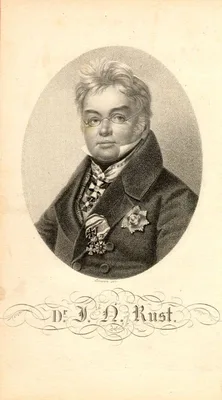
1834 RUST, Johann Nepomuk (1775 – 1840)
Aufsätze und Abhandlungen aus dem Gebiete der Medizin, Chirurgie und Staatsarzneikunde. 1, 196.
First description of “Rust’s disease” – tuberculous spondylitis of the cervical vertebrae.
GMN 4319 · https://historyofmedicine.com/id/5536
1838 STROMEYER, Georg Friedrich Ludwig (1804 – 1876)
Beiträge zur operativen Orthopädik.
Stromeyer is the founder of modern surgery of the locomotor system. He advocated and practised subcutaneous tenotomy for all deformities of the body arising from muscular defects.
GMN 4321 · https://historyofmedicine.com/id/5538
1838 BARTON, John Rhea (1794 – 1871)
Views and treatment of an important injury of the wrist.
“Barton’s fracture” of the radius.
GMN 4415 · https://historyofmedicine.com/id/6192
1838 WHITE, Anthony (1782 – 1849)
Excision of the head of the femur for disease of the hip-joint. IN: S. COOPER: A dictionary of practical surgery. 7th ed., pp. 272-73
White was the first to perform this operation, April 1821.
GMN 4458 · https://historyofmedicine.com/id/8864
1839 DUPUYTREN, Guillaume, Le Baron (1777 – 1835)
Leçons orales de clinique chirurgicale. 2me. éd. Tom. 3.
Pp. 455-61: Dupuytren was the first to treat wry neck by subcutaneous section of the sternomastoid muscle. This he did on 16 Jan, 1822. The operation was first reported in C. Averill: Short treatise on operative surge…
GMN 4322 · https://historyofmedicine.com/id/5539
1839 LITTLE, William John (1810 – 1894)
On the nature of club-foot and analogous distortions.
Little suffered from club-foot himself. This is the greatest English classic on the subject. See No. 4329.
GMN 4322.1 · https://historyofmedicine.com/id/5540
1839 BROWN, John Ball (1784 – 1862)
Operations on club-feet.
Brown was the first surgeon in the United States to specialize in orthopedics, founding the Orthopedic Infirmary of the City of Boston (soon renamed the Boston Orthopedic Institution) in 1838. Brown was also the first…
GMN 4322.2 · https://historyofmedicine.com/id/5541
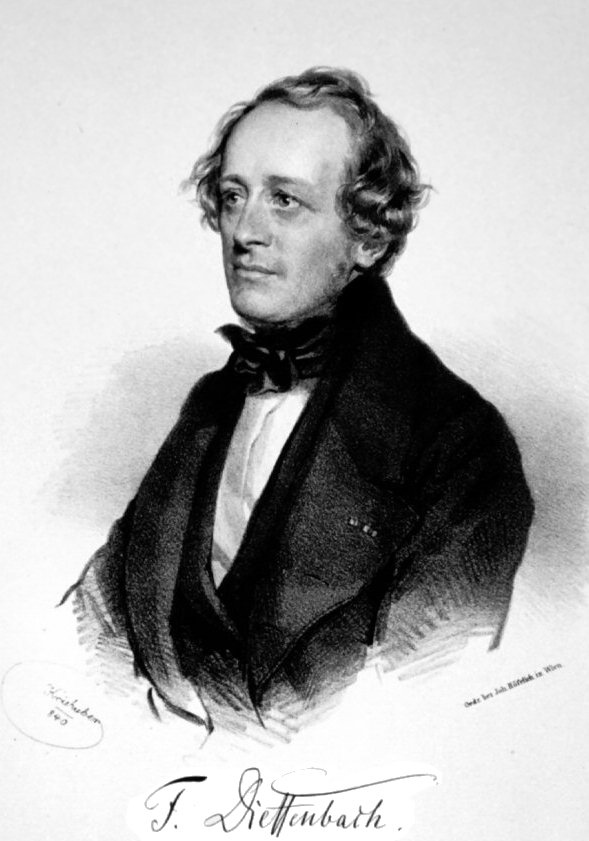
1841 DIEFFENBACH, Johann Friedrich (1792 – 1847)
Ueber die Durchschneidung der Sehnen und Muskeln.
Report on 140 cases of tenotomy for treatment of club-foot.
GMN 4323 · https://historyofmedicine.com/id/5542
1842 –1843 FERGUSSON, Sir William (1808 – 1877)
Excision of a portion of the scapula.
First description of operation for partial excision of scapula.
GMN 4323.1 · https://historyofmedicine.com/id/5544
1842 HEINE, Jacob (Jakob) (1799 – 1879)
Ueber spontane und congenitale Luxationen.
GMN 4416 · https://historyofmedicine.com/id/6193
1843 SYME, James (1799 – 1870)
Amputation at the ankle-joint.
“Syme’s amputation” at the ankle joint, an operation first successfully performed by him on 8 Sept, 1842.
GMN 4459 · https://historyofmedicine.com/id/64
1845 BUCK, Gurdon (1807 – 1877)
The knee-joint anchylosed at a right angle – restored nearly to a straight position after the excision of a wedge-shaped portion of bone, consisting of the patella, condyles and articular surface of the tibia.
Buck’s operation, “one of the more spectacular surgical feats by an American surgeon in the first half of the nineteenth century” (Rutkow). The paper is reprinted in Med. Classics, 1939, 3, 791-99.
GMN 4324 · https://historyofmedicine.com/id/5547
1845 DURLACHER, Lewis (1792 – 1864)
A treatise on corns, bunions, the diseases of nails, and the general management of the feet.
Durlacher, surgeon chiropodist to Queen Victoria, gave the first description of anterior metatarsalgia (p. 52), to which the name “Morton’s metatarsalgia” has been given (see No. 4341). Digital facsimile from the Inte…
GMN 4325 · https://historyofmedicine.com/id/5548
1845 –1848 DIEFFENBACH, Johann Friedrich (1792 – 1847)
Die operative Chirurgie. 2 vols.
Dieffenbach’s most comprehensive work, covering in addition to reconstructive procedures, virtually all other types of procedures including amputations, paracentesis, laparotomy, hysterectomy, dental extractions, etc.
GMN 5598.1 · https://historyofmedicine.com/id/7090
1846 DALRYMPLE, John (1804 – 1852)
On the microscopical character of mollifies ossium.
Report of the histological examination of bone material containing multiple myeloma from the patient described by Macintyre (No. 4327).
GMN 4325.1 · https://historyofmedicine.com/id/5550
1847 –1855 MALGAIGNE, Joseph François (1806 – 1865)
Traité des fractures et des luxations. 2 vols. and atlas.
This was Malgaigne’s greatest work. His description of bilateral vertical fracture of the pelvis (“Malgaigne’s fracture”) is in vol. 1, pp. 650-56. English translation of the first volume on fractures, Philadelphia, 1…
GMN 4417 · https://historyofmedicine.com/id/6197
1847 SMITH, Robert William (1807 – 1873)
A treatise on fractures in the vicinity of joints and on certain forms of accidental and congenital dislocations.
The first important work on fractures by an Irish author. It includes the description of “Smith’s fracture”. In his chapter “On fractures of the bones of the forearm in the vicinity of the wrist joint” Smith corrected…
GMN 4417.1 · https://historyofmedicine.com/id/6199
1848 JONES, Henry Bence (1814 – 1873)
On a new substance occurring in the urine of a patient with mollities ossium.
Bence Jones described the myelopathic albumosuria (Bence Jones proteinuria) seen in Macintyre’s patient (No. 4327). Preliminary notes in Lancet, 1847, 2, 88, and Proc. roy. Soc. Lond., 1847, 5, 673.
GMN 4326 · https://historyofmedicine.com/id/5552