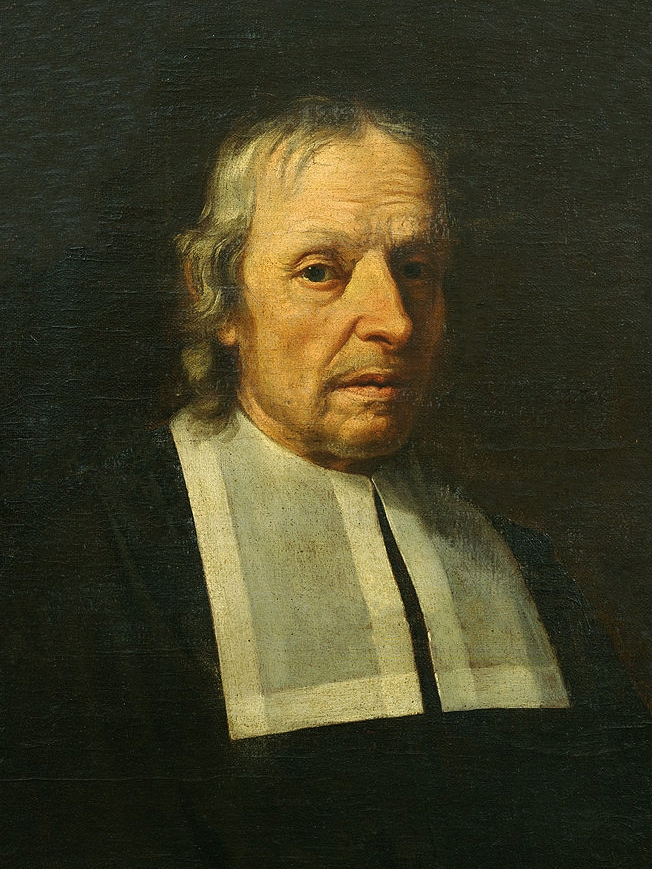
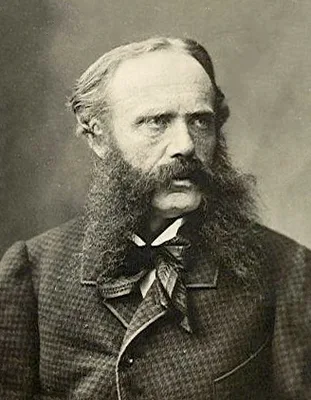
1693 CONNOR [O’CONNOR], Bernard (1666 – 1698)
Lettre écrite à Monsieur le Chevalier Guillaume de Waidegrave …contenant une dissertation physique sur la continuité de plusieurs os, à l’occasion d’une fabrique surprenante d’un tronc de squelette humain, où les vertebres, les côtes, l’os sacrum, & les os des iles, qui naturellement sont distincts & separés, ne font qu’un seul os continu & inseparable.
First description of ankylosing spondylitis. The British Museum copy of the title page of this work has been mutilated, apparently deliberately, in two places; the author’s surname may originally have appeared as “O’C…
GMN 4298 · https://historyofmedicine.com/id/5451
1700 MALPIGHI, Marcello (1628 – 1694)
Opera posthuma.
Page 68: first description of leontiasis ossea.
GMN 4299 · https://historyofmedicine.com/id/5453
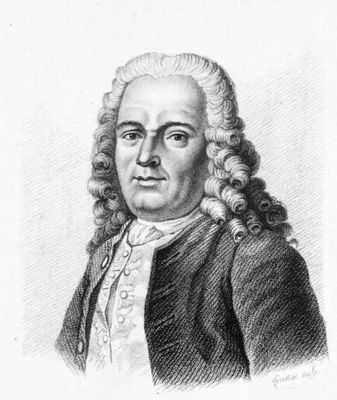
1705 PETIT, Jean Louis (1674 – 1750)
L’art de guérir les maladies des os. Ou l'on traite des luxations & des fractures, avec les instrumens necessaires & une machine de nouvelle invention pour les reduire: ensemble des exostoses & des caries, des anchyloses, des maladies des dents, & de la charte ou rachitis, maladie ordinaire aux enfans.
Petit was the first director of the Académie de Chirurgie, Paris. He is particularly remembered for his work on bone diseases. He invented the screw tourniquet, gave the first account of osteomalacia, and was first to…
GMN 4300 · https://historyofmedicine.com/id/5454
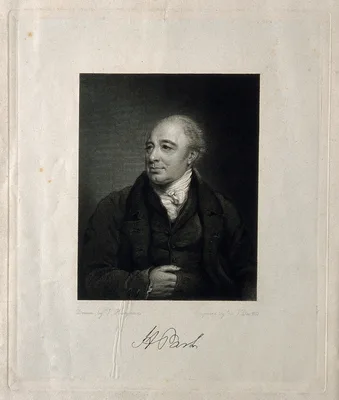
1733 PARK, Henry (1744 – 1831)
An account of a new method of treating diseases of the joints of the knee and elbow.
This was originally a letter to Pott. Park became famous for his operation of excision and arthrodesis as a treatment for destructive joint disease. The title page is misprinted “MDCCXXXIII”; the letter is dated 1783.…
GMN 4438 · https://historyofmedicine.com/id/6333
1744 PLATNER, Johann Zacharias (1694 – 1747)
De iis, qui ex tuberculis gibberosi fiunt.
Platner affirmed the tuberculous nature of humpback, which had earlier been surmised by Hippocrates and confirmed by Galen.
GMN 4302 · https://historyofmedicine.com/id/5460
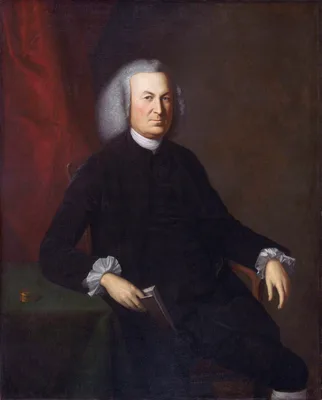
1745 CADWALADER, Thomas (1708 – 1779)
An essay on the West-India dry-gripes… to which is added, an extraordinary case in physick.
Cadwalader, an American pupil of Cheselden, left a classical account of lead colic and lead palsy. This was later shown by Benjamin Franklin, printer of the above work, to be due to the consumption of Jamaica rum whic…
GMN 2094 · https://historyofmedicine.com/id/2586
1751 DU VERNEY, Guichard-Joseph (Guichard Joseph Duverney) (1648 – 1730)
Traité des maladies des os. 2 vols.
Contains a description of the eponymous "Duverney fracture" and the first full description of osteoporosis. Digital facsimile from Google Books at this link.
GMN 7490 · https://historyofmedicine.com/id/9662
1766 MORAND, Sauveur-François (1697 – 1773)
Sur un enfant auquel il manquoit les deux clavicules, le sternum et les cartilages, qui dans l’état naturel l’attachent aux côtes.
First description of cleido-cranial dysostosis.
GMN 4302.2 · https://historyofmedicine.com/id/5465
1779 DAVID, Jean Pierre (1737 – 1784)
Dissertation sur les effets du mouvement et du repos dans les maladies chirurgicales.
Includes a description of Pott’s disease, with post-mortem findings, better than Pott’s own account. This is an important early work on the effect of movement and of rest in the treatment of joint conditions. English …
GMN 4303 · https://historyofmedicine.com/id/5469
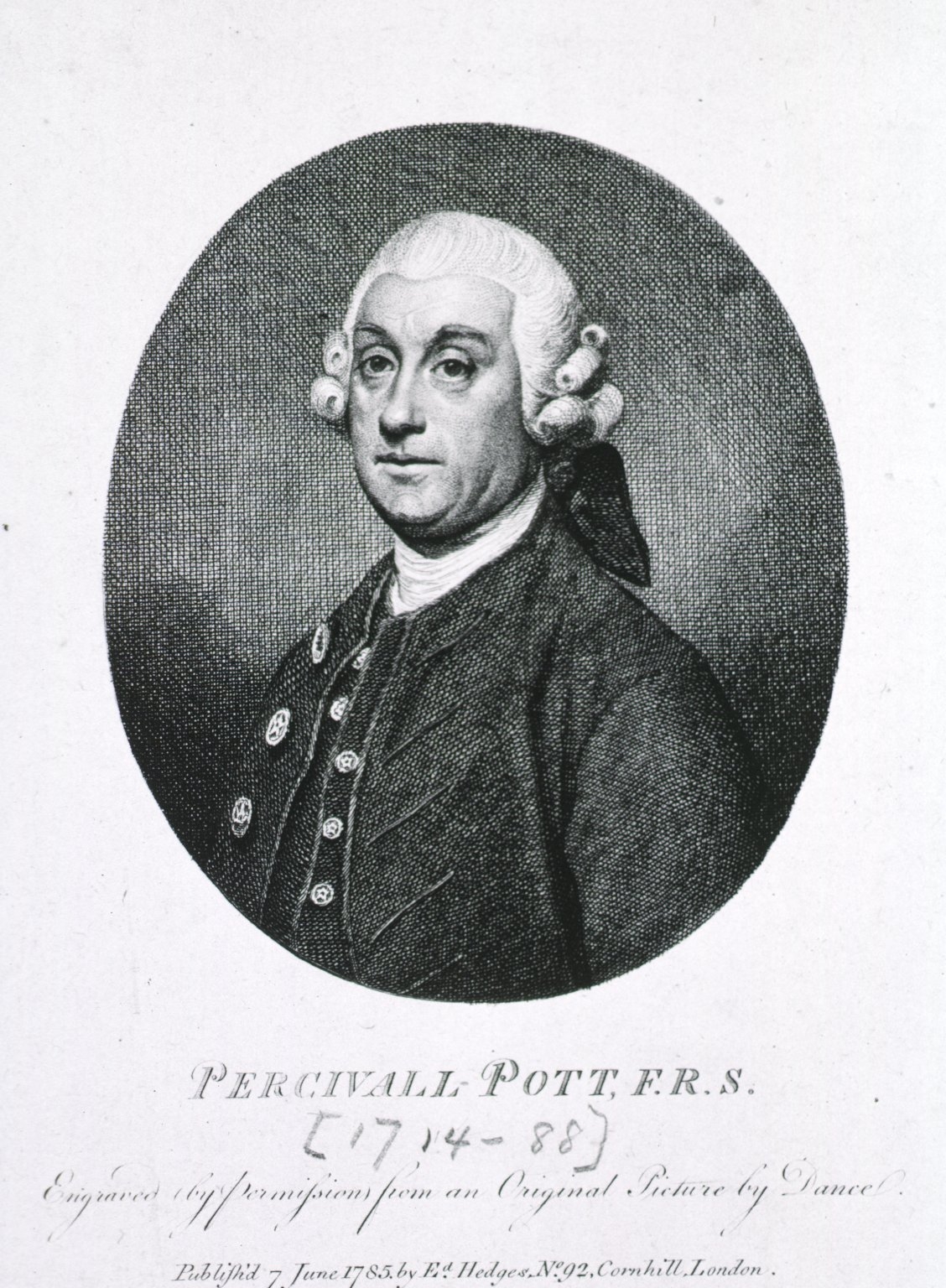
1779 POTT, Percivall (1714 – 1788)
Remarks on that kind of palsy of the lower limbs, which is frequently found to accompany a curvature of the spine.
“Pott’s disease”. Percival Pott, surgeon to St. Bartholomew’s Hospital for more than 40 years, left a classic description of spinal curvature due to tuberculous caries and causing paralysis of the lower limbs. He did …
GMN 4304 · https://historyofmedicine.com/id/5473
1788 EKMAN, Olaus Jacob
Dissertatio medica descriptionem et casus aliquot osteomalaciae sistens.
In his doctoral thesis Ekman gave an account of osteogenesis imperfecta in three generations. For extensive translation see No. 4404.1. K.S. Seedorff, Osteogenesis imperfecta, Copenhagen, 1949.
GMN 4304.1 · https://historyofmedicine.com/id/5474
1791 SOEMMERRING, Samuel Thomas von (1755 – 1830)
Abbildungen und Beschreibungen einiger Misgeburten.
Achondroplasia is first described on page 30 and pictured on plate 11. English translation in No. 2241.
GMN 4306 · https://historyofmedicine.com/id/5488
1794 RUSSELL, James (1755 – 1836)
A practical essay on a certain disease of the bones termed necrosis.
One of the first attempts at a complete and detailed description of necrosis. Russell was the first Professor of Clinical Surgery at Edinburgh.
GMN 4307 · https://historyofmedicine.com/id/5493
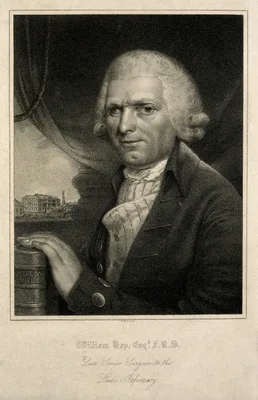
1803 HEY, William (1736 – 1819)
Practical observations in surgery.
Hey is remembered for “Hey’s saw” and “Hey’s internal derangement of the knee,” a phrase that he coined. He was an outstanding surgeon in his day; he founded and was senior surgeon of the General Infirmary, Leeds. He …
GMN 4308.1 · https://historyofmedicine.com/id/5506
1803 MOREAU, P. F.
Observations pratiques relatives à la résection des articulations affectées de carie.
Excision and arthrodesis in joint disease. Moreau was the first to excise the elbow. English translation, Glasgow, 1806. See No. 4438.
GMN 4440 · https://historyofmedicine.com/id/6340
1817 ROMBERG, Moritz Heinrich (1795 – 1873)
De rachitide congenita.
Classic description of achondroplasia. Romberg’s graduation thesis. English translation (Sydenham Society), 1853.
GMN 4310 · https://historyofmedicine.com/id/5513
1818 BRODIE, Sir Benjamin Collins (1783 – 1862)
Pathological and surgical observations on the diseases of the joints.
Brodie’s best work. It includes his description of hysterical pseudo-fracture of the spine and the first clinical description of ankylosing spondylitis. The fifth edition, 1850, gives (p. 77) a description of “Brodie’…
GMN 4311 · https://historyofmedicine.com/id/5515
1827 PRAVAZ, Charles Gabriel (1791 – 1853)
Méthode nouvelle pour le traitement des déviations de la colonne vertébrale; précédée d'un examen critique des divers moyens employés par les orthopédistes modernes.
Digital facsimile from Google Books at this link.
GMN 14199 · https://historyofmedicine.com/id/16515
1828 BRODIE, Sir Benjamin Collins (1783 – 1862)
On trephining the tibia.
“Brodie’s abscess”. The patient was first seen in 1824. Brodie published an account of some further cases in Med.-chir. Trans., 1832, 17, 239-49, which paper is reprinted in Med. Classics, 1938, 2, 900-06.
GMN 4314 · https://historyofmedicine.com/id/5524
1828 DELPECH, Jacques Mathieu (1777 – 1832)
De l’orthomorphie. 2 vols. and atlas.
Delpech, Professor of Surgery at Montpellier, published a comprehensive treatise on deformities of the bones and joints. He established the tuberculous nature of Pott’s disease. Delpech did more than any other man tow…
GMN 4315 · https://historyofmedicine.com/id/5526
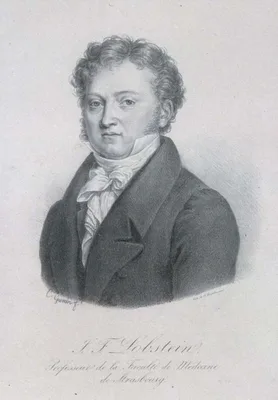
1829 –1833 LOBSTEIN, Jean Georges Chrétien Frédéric Martin (1777 – 1835)
Traité d’anatomie pathologique. 2 vols. and atlas.
Includes a historical review of the subject from the time of the Ancient Egyptians to Corvisart, and a summary of the advances in pathology during the preceding 50 years. Vol. 2, pp. 553-600 deals with diseases of the…
GMN 2288 · https://historyofmedicine.com/id/2915
1830 RANDOLPH, Jacob (1796 – 1848)
Some remarks on morbus coxarius, with an account of Dr. P. S. Physick’s method of treating this disease.
Randolph was the son-in-law of Philip Syng Physick. Physick’s method “consisted in the application of a carved splint, which would keep the limb strictly at rest, and prevent the least possible motion of the joint; an…
GMN 4316 · https://historyofmedicine.com/id/5528
1830 GROSS, Samuel David (1805 – 1884)
The anatomy, physiology, and diseases of the bones and joints.
The first American treatise on orthopedics. In his autobiography Gross wrote that, “The title was unfortunate; it should have been A practical treatise on fractures and dislocations, with an account of the diseases of…
GMN 4316.1 · https://historyofmedicine.com/id/5530
1831 AXMANN, Edmund
Merkwürdige Fragilität der Knochen ohne dyskrasische Ursache als krankhafte Eigenthümlichkeit dreier Geschwister.
Axmann of Wertheim described osteogenesis imperfecta occurring in himself and his two brothers. He referred to the occurrence of articular dislocations and blue sclerotics. See also No. 6367.
GMN 6358.1 · https://historyofmedicine.com/id/8256
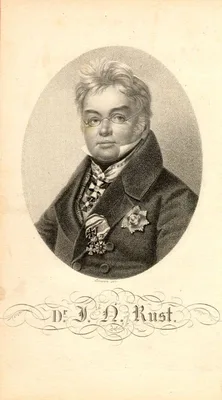
1834 RUST, Johann Nepomuk (1775 – 1840)
Aufsätze und Abhandlungen aus dem Gebiete der Medizin, Chirurgie und Staatsarzneikunde. 1, 196.
First description of “Rust’s disease” – tuberculous spondylitis of the cervical vertebrae.
GMN 4319 · https://historyofmedicine.com/id/5536
1845 DURLACHER, Lewis (1792 – 1864)
A treatise on corns, bunions, the diseases of nails, and the general management of the feet.
Durlacher, surgeon chiropodist to Queen Victoria, gave the first description of anterior metatarsalgia (p. 52), to which the name “Morton’s metatarsalgia” has been given (see No. 4341). Digital facsimile from the Inte…
GMN 4325 · https://historyofmedicine.com/id/5548
1846 DALRYMPLE, John (1804 – 1852)
On the microscopical character of mollifies ossium.
Report of the histological examination of bone material containing multiple myeloma from the patient described by Macintyre (No. 4327).
GMN 4325.1 · https://historyofmedicine.com/id/5550
1848 JONES, Henry Bence (1814 – 1873)
On a new substance occurring in the urine of a patient with mollities ossium.
Bence Jones described the myelopathic albumosuria (Bence Jones proteinuria) seen in Macintyre’s patient (No. 4327). Preliminary notes in Lancet, 1847, 2, 88, and Proc. roy. Soc. Lond., 1847, 5, 673.
GMN 4326 · https://historyofmedicine.com/id/5552
1850 MACINTYRE, William (1791 – 1857)
Case of mollities and fragilitas ossium.
Multiple myeloma first described.
GMN 4327 · https://historyofmedicine.com/id/5554
1853 LITTLE, William John (1810 – 1894)
On the nature and treatment of the deformities of the human frame.
Little was the first eminent orthopedic surgeon in the British Isles. He studied under Stromeyer and, in 1838, he founded the Orthopaedic Institution, now the (Royal) National Orthopaedic Hospital, London. The above w…
GMN 4329 · https://historyofmedicine.com/id/1293
1855 BREITHAUPT
Zur Pathologie des menschlichen Fusses.
First description of osteoperiostitis of the metatarsal bones, named “Busquet’s disease” after the latter’s description of it in Rev. Chir. (Paris), 1897, 17, 1065.
GMN 4330 · https://historyofmedicine.com/id/5557
1863 HENKE, Philipp Jakob Wilhelm von (1834 – 1896)
Contractur des Metatarsus.
Congenital metatarsus varus described.
GMN 4333 · https://historyofmedicine.com/id/5564
1864 ENGEL, Gerhard
Ueber einen Fall von cystoider Entartung des ganzen Skelettes.
First description of osteitis fibrosa cystica – hyperparathyroid bone disease, also known as “von Recklinghausen’s disease of bone”.
GMN 4335 · https://historyofmedicine.com/id/5650
1868 CHARCOT, Jean Martin (1825 – 1893)
Sur quelques arthropathies qui paraissent dépendre d’une lésion du cerveau ou de la moëlle épinière.
Charcot called attention to tabetic arthropathy, a condition which has since borne his name, while the tabetic joints he so well described are now known as “Charcot’s joints”.
GMN 4337 · https://historyofmedicine.com/id/1488
1868 –1869 WILKS, Sir Samuel (1824 – 1911)
Case of osteoporosis, or spongy hypertrophy of the bones (calvaria, clavicle, os femoris, and rib).
A classic account of osteitis deformans. Wilks was associated with Guy’s Hospital all his life. A kindly, charming man, he was described by Osler as one of the handsomest men in London in his time, even until the age …
GMN 4338 · https://historyofmedicine.com/id/5673
1870 WEGNER, Friedrich Rudolph Georg (1843 – 1917)
Ueber hereditäre Knochensyphilis bei jungen Kindern.
“Wegner’s disease” – osteochondritic separation of the epiphyses in congenital syphilis.
GMN 4339 · https://historyofmedicine.com/id/5678
1872 DUPLAY, Simon (1836 – 1924)
De la périarthrite scapulo-humérale et des raideurs de l’épaule qui en sont la conséquence.
“Frozen shoulder” syndrome described.
GMN 4339.2 · https://historyofmedicine.com/id/5689
1876 MORTON, Thomas George (1835 – 1903)
A peculiar and painful affection of the fourth metatarso-phalangeal articulation.
First complete description of anterior metatarsalgia (“Morton’s disease”). See also No. 4325.
GMN 4341 · https://historyofmedicine.com/id/5695
1876 SAYRE, Lewis Albert (1820 – 1900)
Lectures on orthopaedic surgery and diseases of the joints.
See Nos. 4344 & 4344.1.
GMN 4342.1 · https://historyofmedicine.com/id/5702
1876 SAYRE, Lewis Albert (1820 – 1900)
Report on Pott’s disease, or caries of the spine; treated by extension, and the plaster of Paris bandage.
Sayre was the first to use plaster of Paris as a support for the spinal column in scoliosis and Pott’s disease. His name is eponymically linked with Sayre’s jacket, a plaster of Paris jacket applied while the patient …
GMN 4344 · https://historyofmedicine.com/id/5714
1876 SMITH, Sir Thomas (1833 – 1909)
Haemorrhagic periostitis of the shafts of several of the long bones, with separation of the epiphyses.
Craniohypophyseal xanthomatosis was first reported by Sir Thomas Smith (see also No. 6359). Hand in 1893 (No. 6361), Schüller in 1915 (No. 6362), and Christian in 1919 (No. 6363) also reported cases, and the condition…
GMN 6360 · https://historyofmedicine.com/id/8259
1877 BAKER, William Morrant (1839 – 1896)
On the formation of synovial cysts in the leg in connection with disease of the knee joint.
“Baker’s cysts” of the knee-joint. Reprinted in Med. Classics, 1941, 5, 785-820.
GMN 4342 · https://historyofmedicine.com/id/5700
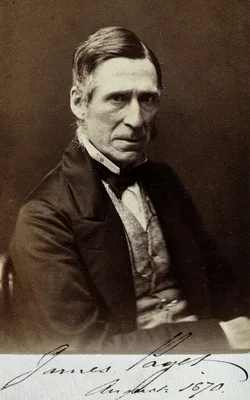
1877 PAGET, Sir James (1814 – 1899)
On a form of chronic inflammation of bones (osteitis deformans).
Paget was at one time Sergeant Surgeon to Queen Victoria. His classic description of osteitis deformans led that condition to be called “Paget’s disease”. Reprinted in Med. Classics, 1936, 1, 29-71.
GMN 4343 · https://historyofmedicine.com/id/5708
1877 SAYRE, Lewis Albert (1820 – 1900)
Spinal disease and spinal curvature, their treatment by suspension and the use of the plaster of Paris bandage.
Sayre’s monograph on his methods of treating tuberculosis of the spine and scoliosis is the first American surgical textbook to contain actual mounted photographs, some of which are remarkable for their artistic quali…
GMN 4344.1 · https://historyofmedicine.com/id/5717
1878 MADELUNG, Otto Wilhelm (1846 – 1926)
Die spontane Subluxation der Hand nach vorne.
“Madelung’s deformity” of the wrist. Madelung regarded the condition as a defect of growth of the wrist joint.
GMN 4345 · https://historyofmedicine.com/id/5720
1879 GROSS, Samuel Weissel (1837 – 1889)
Sarcoma of the long bones; based upon a study of one hundred and sixty-five cases.
First comprehensive work on bone sarcoma.
GMN 4346 · https://historyofmedicine.com/id/5723
1879 HELFERICH, Heinrich (1851 – 1945)
Ein Fall von sogenannter Myositis ossificans progressiver.
Helferich described the association of microdactyly with myositis ossificans progressiva.
GMN 4346.1 · https://historyofmedicine.com/id/5726
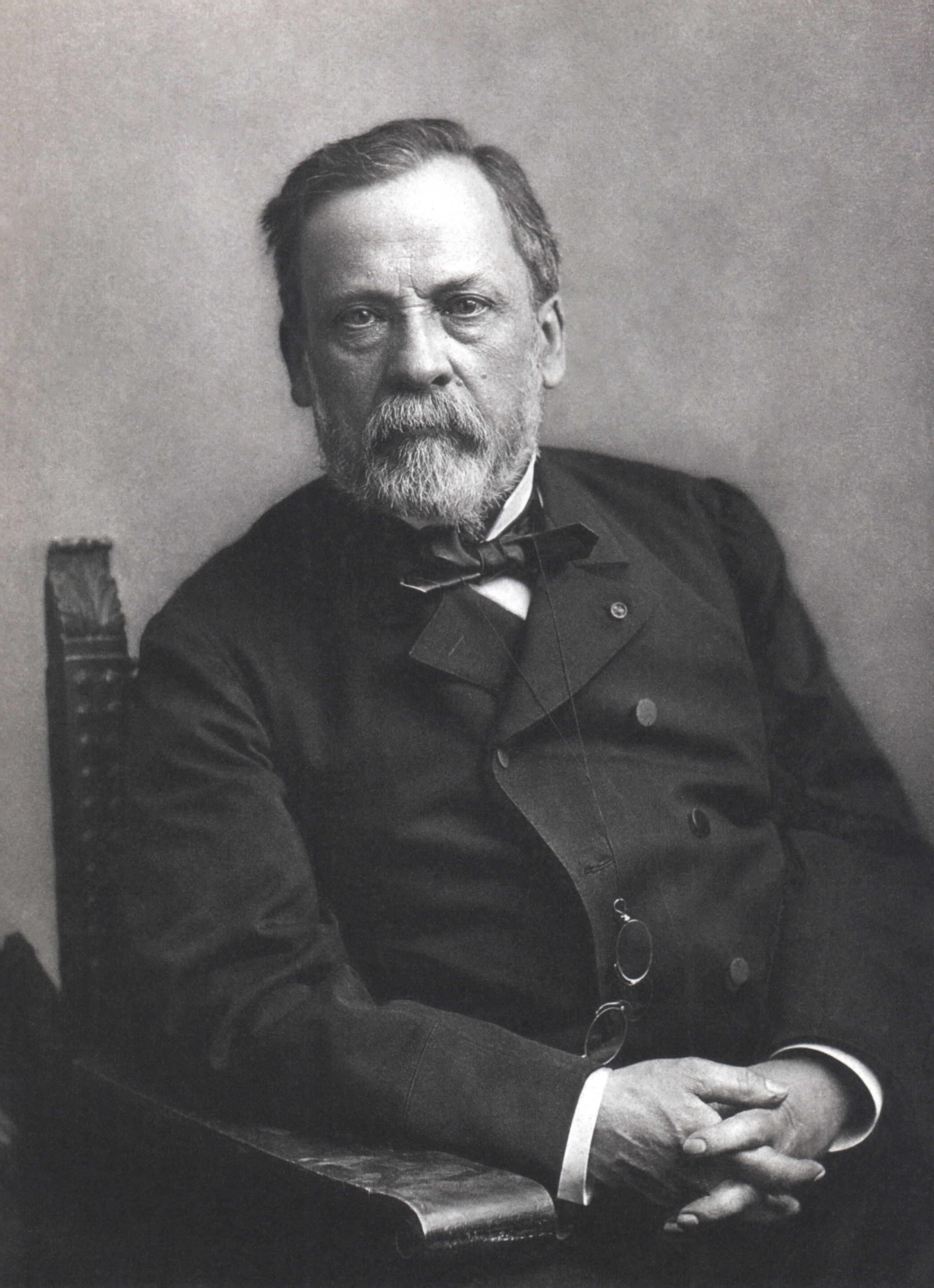
1880 PASTEUR, Louis (1822 – 1895)
De l’extension de la théorie des germes à l’étiologie de quelques maladies communes.
In this study of furunculosis (“boils”) and osteomyelitis Pasteur left the first recognizable descriptions of staphylococcus and streptococcus. The term streptococcus had been coined by Billroth in 1874; however, Past…
GMN 2492.1 · https://historyofmedicine.com/id/3143
1881 VOLKMANN, Richard von (1830 – 1889)
Die ischaemischen Muskellähmungen und Kontrakturen.
“Volkmann’s ischemic contracture” first described. English translation in Bick, Classics of orthopaedics.
GMN 5617 · https://historyofmedicine.com/id/7143
1883 –1884 STRÜMPELL, Ernst Adolf Gustav Gottfried (1853 – 1925)
Lehrbuch der speciellen Pathologie und Therapie der inneren Krankheiten. 2 vols.
Strümpell gave an excellent description of ankylosing spondylitis (“Strümpell’s disease”, the “spondylose rhizomélique” of Pierre Marie, No. 4368) on p. 152 of his Lehrbuch. See No. 2229. He published an important pap…
GMN 2229 · https://historyofmedicine.com/id/3786