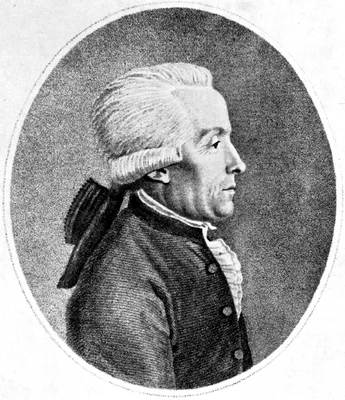
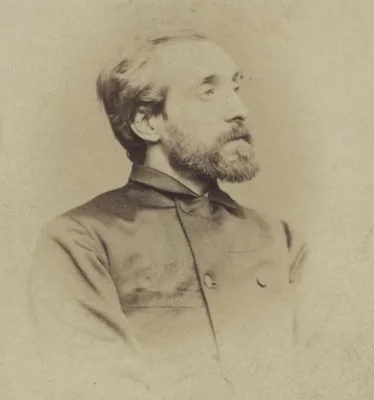
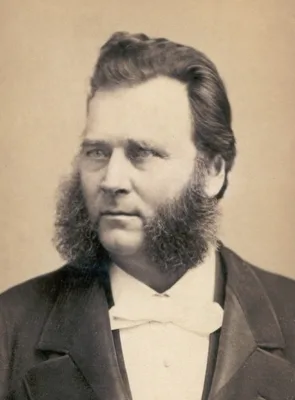
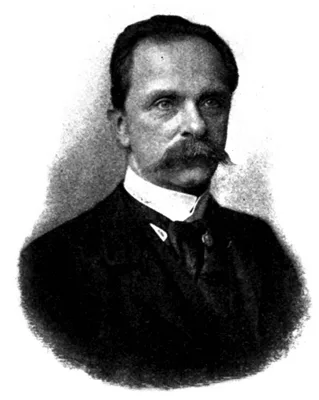
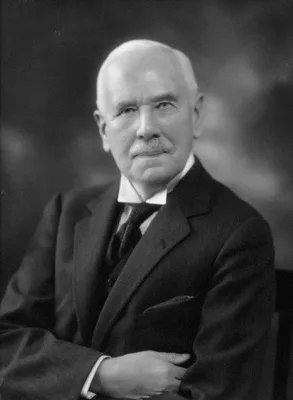
1788 VENEL, Jean-André (1740 – 1791)
Description de plusieurs nouveaux moyens mécaniques propres à prevénir, borner et même corriger dans certains cas les courbures latérales et la torsion de l’épine du dos.
Venel stressed the necessity for prolonged periods of recumbency, rather than exercise, in the correction of spinal curvature. He invented a corset and extension bed for treating spinal deformities. His extension bed …
GMN 4305 · https://historyofmedicine.com/id/5479
1810 JÖRG, Johann Christian Gottfried (1779 – 1856)
Ueber die Verkrümmungen des menschlichen Körpers und eine rationelle und sichere Heilart derselben.
Valentin considered this work on the correction of deformities of the spine, neck, rickets, clubfoot, etc. one of the first "scientific" treatises on orthopedics. Digital facsimile from digitale-bibliothek-mv.de at th…
GMN 13756 · https://historyofmedicine.com/id/16040
1813 BAYNTON, Thomas (1761 – 1820)
An account of a successful method of treating diseases of the spine.
By his advocacy of absolute rest in the horizontal position without the aid of caustics and setons, Baynton can be said to have introduced the modern treatment of spinal caries in England. The book is dedicated to Edw…
GMN 4309 · https://historyofmedicine.com/id/5509
1827 PRAVAZ, Charles Gabriel (1791 – 1853)
Méthode nouvelle pour le traitement des déviations de la colonne vertébrale; précédée d'un examen critique des divers moyens employés par les orthopédistes modernes.
Digital facsimile from Google Books at this link.
GMN 14199 · https://historyofmedicine.com/id/16515
1830 RANDOLPH, Jacob (1796 – 1848)
Some remarks on morbus coxarius, with an account of Dr. P. S. Physick’s method of treating this disease.
Randolph was the son-in-law of Philip Syng Physick. Physick’s method “consisted in the application of a carved splint, which would keep the limb strictly at rest, and prevent the least possible motion of the joint; an…
GMN 4316 · https://historyofmedicine.com/id/5528
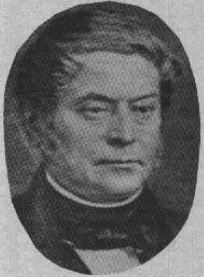
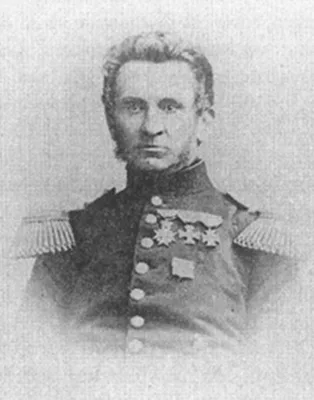
1852 MATHIJSEN, Antonius (1805 – 1878)
Nieuwe wijze van aanwending van het gips-verband bij beenbreuken. Eene bijdrage tot de militaire chirurgie.
Introduction of the modern plaster of Paris bandage. Two different French translations of the above work were published in journals in 1852-53. In 1854 Mathijsen published two separate expanded French versions, of whi…
GMN 4328 · https://historyofmedicine.com/id/5555
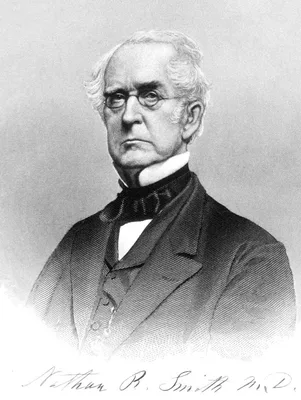
1860 SMITH, Nathan Ryno (1797 – 1877)
A new instrument for the treatment of fractures of the lower extremity.
Smith devised an anterior or suspensatory splint for use in the treatment of fractures of the femur. The apparatus was heavily used during the U.S. Civil War and was especially valuable in treating compound fractures.
GMN 4422 · https://historyofmedicine.com/id/6217
1867 SMITH, Nathan Ryno (1797 – 1877)
Treatment of fractures of the lower extremity, by use of the anterior suspensory apparatus.
GMN 4423 · https://historyofmedicine.com/id/6226
1875 THOMAS, Hugh Owen (1834 – 1891)
Diseases of the hip, knee and ankle joints, with their deformities, treated by a new and efficient method.
Thomas splint. Enlarged second edition, 1876. See No. 4348.
GMN 4340 · https://historyofmedicine.com/id/5693
1876 SAYRE, Lewis Albert (1820 – 1900)
Report on Pott’s disease, or caries of the spine; treated by extension, and the plaster of Paris bandage.
Sayre was the first to use plaster of Paris as a support for the spinal column in scoliosis and Pott’s disease. His name is eponymically linked with Sayre’s jacket, a plaster of Paris jacket applied while the patient …
GMN 4344 · https://historyofmedicine.com/id/5714
1877 SAYRE, Lewis Albert (1820 – 1900)
Spinal disease and spinal curvature, their treatment by suspension and the use of the plaster of Paris bandage.
Sayre’s monograph on his methods of treating tuberculosis of the spine and scoliosis is the first American surgical textbook to contain actual mounted photographs, some of which are remarkable for their artistic quali…
GMN 4344.1 · https://historyofmedicine.com/id/5717
1883 –1890 THOMAS, Hugh Owen (1834 – 1891)
Contributions to surgery and medicine. 8 pts.
Thomas was the veritable founder of modern orthopedics in the British Isles. The conservative methods introduced by him were developed by Sir Robert Jones. Thomas is remembered eponymically by the “Thomas splint”.
GMN 4348 · https://historyofmedicine.com/id/5739
1890 BRADFORD, Edward Hickling (1848 – 1926); LOVETT, Robert Williamson (1859 – 1924)
Treatise on orthopedic surgery.
Includes a description of the “Bradford frame”, used in the treatment of spinal disorders.
GMN 4353 · https://historyofmedicine.com/id/5763
1890 GLUCK, Themistocles (1853 – 1942)
Referat über die durch das moderne chirurgische Experiment gewonnen positive Resultate, betreffend die Naht und den Ersatz von Defecten.
The first total joint replacements: Gluck replaced the tuberculous knee joint of a 17 year old woman with a hinged ivory prosthesis on May 20, 1890, followed by a total wrist replacement in another patient three weeks…
GMN 7212 · https://historyofmedicine.com/id/9379
1891 HADRA, Berthold Ernest (1842 – 1903)
Wiring of the vertebrae as a means of immobilization in fracture and Pott’s disease.
“In a case of fracture-dislocation of the cervical spine (C 6-7) he [Hadra] performed open reduction, twisting metal wires around the spinous processes to stabilize the injured sector” (Bick). This is the first report…
GMN 4359.1 · https://historyofmedicine.com/id/5800
1891 HADRA, Berthold Ernest (1842 – 1903)
Wiring the spinal processes in Pott’s disease.
First spinal fusion.
GMN 4359.2 · https://historyofmedicine.com/id/5802
1894 PÉAN, Jules-Émile (1830 – 1898)
Des moyens prothétiques destinés à obtenir la réparation des parties osseuses.
Total prosthetic replacement of shoulder (p. 291) using an artificial joint made of hardened rubber and platinum. English translation in Bick, Classics of orthopaedics, 443-46.
GMN 4364.1 · https://historyofmedicine.com/id/5821
1898 PARKHILL, Clayton (1860 – 1902)
Further observations regarding the use of the bone-clamp in ununited fractures, fractures with malunion, and recent fractures with a tendency to displacement.
Parkhill introduced external fixation for the treatment of fractures.
GMN 4429.2 · https://historyofmedicine.com/id/6268
1907 LANE, Sir William Arbuthnot (1856 – 1943)
Clinical remarks on the operative treatment of fractures.
Lane’s plates and screws for union of fractures.
GMN 4430 · https://historyofmedicine.com/id/6271
1907 STEINMANN, Fritz (1872 – 1932)
Eine neue Extensionsmethode in der Frakturenbehandlung.
Steinmann nail or pin, for insertion through a distal fragment and controlled by direct skeletal traction. English translation in Bick, Classics of orthopaedics.
GMN 4431 · https://historyofmedicine.com/id/6275
1907 LAMBOTTE, Albin (1866 – 1956)
L’intervention opératoire dans les fractures.
Lambotte developed an external fracture fixation device using pins on either side of the fracture, connected by a solid rod.
GMN 4431.1 · https://historyofmedicine.com/id/6276
1909 KIRSCHNER, Martin (1879 – 1942)
Ueber Nagelextension.
Kirschner wire, for skeletal traction, and for stabilization of bone fragments or joint immobilization.
GMN 4378 · https://historyofmedicine.com/id/5887
1916 SAUERBRUCH, Ernst Ferdinand (1875 – 1951)
Die willkürlich bewegbare künstliche Hand: Eine Anleitung für Chirurgen und Techniker. Mit. anatomischen Beiträgen von G. Ruge and W. Felix.
GMN 9590 · https://historyofmedicine.com/id/11777
1918 PUTTI, Vittorio (1880 – 1940)
The utilization of the muscles of a stump to actuate artificial limbs: cinematic amputations.
Putti developed and improved kineplastic surgery.
GMN 4477 · https://historyofmedicine.com/id/76
1929 BÖHLER, Lorenz (1885 – 1973)
Technik der Knochenbruchbehandlung.
Böhler introduced several new methods and devised new apparatus for the treatment of fractures. His clinic in Vienna became world-famous. 12-13th ed., 1951.
GMN 4433 · https://historyofmedicine.com/id/6282
1930 PUTTI, Vittorio (1880 – 1940)
Historic artificial limbs.
GMN 7797 · https://historyofmedicine.com/id/9969
1938 HOFFMANN, Raoul
“Rotules à os” pour la réduction dirigée, non sanglante, des fractures (“ostéotaxis”).
Hoffmann, a Swiss general surgeon with a doctorate in theology and unusual skill in carpentry, developed the versatile Hoffmann system of external fixation devices.
GMN 4435.01 · https://historyofmedicine.com/id/6298
1939 SMITH-PETERSEN, Marius Nygaard (1886 – 1953)
Arthroplasty of the hip. A new method.
Vitallium cup arthroplasty.
GMN 4403 · https://historyofmedicine.com/id/6045
1949 BLOUNT, Walter Putnam (1900 – 1992); CLARKE, George R.
Control of bone growth by epiphyseal stapling: A preliminary report.
“Blount staple”. Unlike previous processes, epiphyseal stapling permitted subsequent correction.
GMN 4404.2 · https://historyofmedicine.com/id/6086
1949 RUSH, Leslie Vaughn (1905 – 1987); RUSH, H. Low (1897 – 1965)
Evolution of medullary fixation of fractures by the longitudinal pin.
“Rush pins”, made of specially hardened type 316 stainless steel, for fractures of the long bones.
GMN 4435.2 · https://historyofmedicine.com/id/6308
1950 JUDET, Jean (1905 – 1995); JUDET, Robert Louis (1909 – 1980)
The use of an artificial femoral head for arthroplasty of the hip joint.
Judet acrylic prosthesis.
GMN 4405 · https://historyofmedicine.com/id/6091
1959 BRANNON, Earl W.; KLEIN, Gerold
Experiences with a finger-joint prosthesis.
First prosthetic device for replacement of destroyed finger-joints.
GMN 4405.02 · https://historyofmedicine.com/id/6097
1961 CHARNLEY, Sir John (1911 – 1982)
Arthroplasty of the hip: a new operation.
Total hip replacement; Charnley arthroplasty.
GMN 4405.1 · https://historyofmedicine.com/id/6100
1962 HARRINGTON, Paul Randall (1911 – 1980)
Treatment of scoliosis: Correction and internal fixation by spine instrumentation.
The “Harrington rod” system for scoliosis and spine fracture surgery.
GMN 4405.2 · https://historyofmedicine.com/id/6109
1966 SWANSON, A. B.
A flexible implant for replacement of arthritic or destroyed joints in the hand.
“Swanson prosthesis” – flexible silicone rubber finger-joint prosthesis.
GMN 4405.4 · https://historyofmedicine.com/id/6123
1971 GUNSTON, Frank Herbert (1933 – 2016)
Polycentric knee arthoplasty: Prosthetic simulation of normal knee movement.
Total knee replacement (replacing diseased articular surfaces of both femur and tibia), holding the metal and plastic components in place with acrylic cement.
GMN 4405.5 · https://historyofmedicine.com/id/6128