c. 900 APOLLONIOS OF KITION (OR APOLLONIUS OF CITIUM; ἈΠΟΛΛΏΝΙΟΣ Ὁ ΚΙΤΙΕΎΣ) (-50 – )
The Nicetas codex.
The earliest surviving illustrated surgical codex was written and illuminated in Constantinople for the Byzantine physician Niketas (Nicetas) about 900 CE. It contains 30 full-page images illustrating the commentary o…
GMN 6817 · https://historyofmedicine.com/id/8980
1544 GUIDI, Guido [VIDIUS] (1508 – 1569)
Chirurgia e graeco in latinum conversa.
This elegantly printed and illustrated small folio included 210 text woodcuts, most probably after drawings by the school of Francesco Salviati (Francesco de'Rossi). It was issued from the press operated by Pierre Gau…
GMN 4406.1 · https://historyofmedicine.com/id/6142
1563 WÜRTZ, Felix [WIRTZ] (1510 – 1590)
Practica der Wundartzney.
Würtz was a friend of Gessner and an admirer of Paracelsus; his book went through many editions and was translated into English, French, and Dutch. It describes the treatment of gunshot wounds, fractures, and dislocat…
GMN 5563 · https://historyofmedicine.com/id/6933
1614 PLATER, Felix [PLATTER] (1536 – 1614)
Observationum in hominis affectibus plerisque, corpori & animo, functionum laesione, dolore, aliave molestia & vitio incommodantibus, libri tres.
First known report of a case of death from hypertrophy of the thymus, in an infant, is reported on p. 172; it is reproduced on p. 239 of J. Ruhräh’s Pediatrics of the past, New York, 1925. Platter first described flex…
GMN 3789 · https://historyofmedicine.com/id/4706
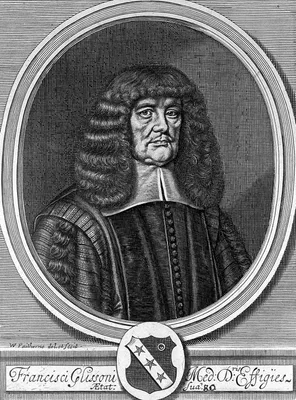
1650 GLISSON, Francis (1597 – 1677); BATE, George (1608 – 1668); REGEMORTER, Ahasuerus (Assuerus Regimorter) (1614 – 1650)
De rachitide sive morbo puerili, qui vulgo The Rickets dicitur tractatus.
Although anticipated by Whistler and others in the description of infantile rickets, Glisson’s account was the fullest that had till then appeared. He was first (Chap. 22) to describe infantile scurvy. Glisson’s book …
GMN 3729 · https://historyofmedicine.com/id/4509
1668 MEEKEREN, Job Janszoon van (1611 – 1666)
Heel- en geneeskonstige aanmerkingen.
Van Meekeren was first to record a bone graft. He states (Chap. 1) that he read a report of it in a letter received by the Rev. Engebert Sloot of Slooterdijk from John Kraanwinkel, a missionary in Russia, where the op…
GMN 5735 · https://historyofmedicine.com/id/6519
1679 YONGE, James (1646 – 1721)
Currus triumphalis, è terebinthô. Or an account of the many admirable vertues of oleum terebinthinae. More particularly, of the good effects produced by its application to recent wounds, especially with respect to the hemorrhagies of the veins, and arteries, and the no less pernicious weepings of the nerves, and lymphaducts. Where also, the common methods, and medicaments, used to restrain hemorrhagies, are examined, and divers of them censured. And lastly, A new way of amputation, and a speedier convenient method of curing stumps, than that commonly practised, is with divers other useful matters recommended to the military surgeon.…
Describes how Yonge used turpentine to arrest hemorrhage, and presents the first account of a flap amputation. It also shows that Yonge was familiar with tourniquets. Digital facsimile from Google Books at this link.
GMN 4436 · https://historyofmedicine.com/id/6326
1705 PETIT, Jean Louis (1674 – 1750)
L’art de guérir les maladies des os. Ou l'on traite des luxations & des fractures, avec les instrumens necessaires & une machine de nouvelle invention pour les reduire: ensemble des exostoses & des caries, des anchyloses, des maladies des dents, & de la charte ou rachitis, maladie ordinaire aux enfans.
Petit was the first director of the Académie de Chirurgie, Paris. He is particularly remembered for his work on bone diseases. He invented the screw tourniquet, gave the first account of osteomalacia, and was first to…
GMN 4300 · https://historyofmedicine.com/id/5454
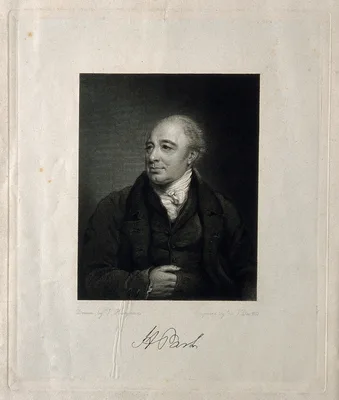
1733 PARK, Henry (1744 – 1831)
An account of a new method of treating diseases of the joints of the knee and elbow.
This was originally a letter to Pott. Park became famous for his operation of excision and arthrodesis as a treatment for destructive joint disease. The title page is misprinted “MDCCXXXIII”; the letter is dated 1783.…
GMN 4438 · https://historyofmedicine.com/id/6333
1751 DU VERNEY, Guichard-Joseph (Guichard Joseph Duverney) (1648 – 1730)
Traité des maladies des os. 2 vols.
Contains a description of the eponymous "Duverney fracture" and the first full description of osteoporosis. Digital facsimile from Google Books at this link.
GMN 7490 · https://historyofmedicine.com/id/9662
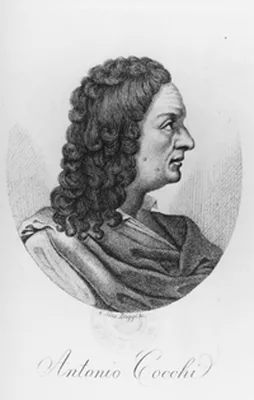
1754 SORANUS OF EPHESUS (ΣΩΡΑΝΌΣ) (100 – 150); ORIBASIUS (ὈΡΕΙΒΆΣΙΟΣ), [Oreibasius] (320 – 403); COCCHI, Antonio (1695 – 1757)
Graecorum chirurgici libri Sorani unus de fracturarum signis. Oribasii duo de fractis et de luxatis e collectione Nicetae ab antiquissimo et optimo codice Florentino descripti conversi atque edited ab Antonio Cocchio.
A scholarly edition of the Nicetas Codex containing various texts on fractures and luxations. Digital facsimile from Google Books at this link.
GMN 12175 · https://historyofmedicine.com/id/14385
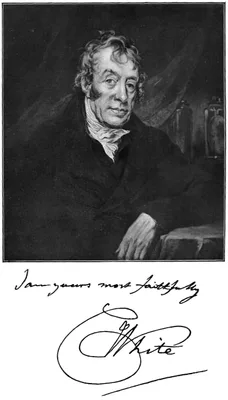
1762 WHITE, Charles (1728 – 1813)
An account of a new method of reducing shoulders (without the use of an ambe) which have been several months dislocated, in cases where the common methods have proved inefficient.
White’s method of reducing shoulder dislocations by means of suspending the patient from the affected arm. This method either reduced the dislocation entirely, or moved the head of the humerus into a position where it…
GMN 4407 · https://historyofmedicine.com/id/6145
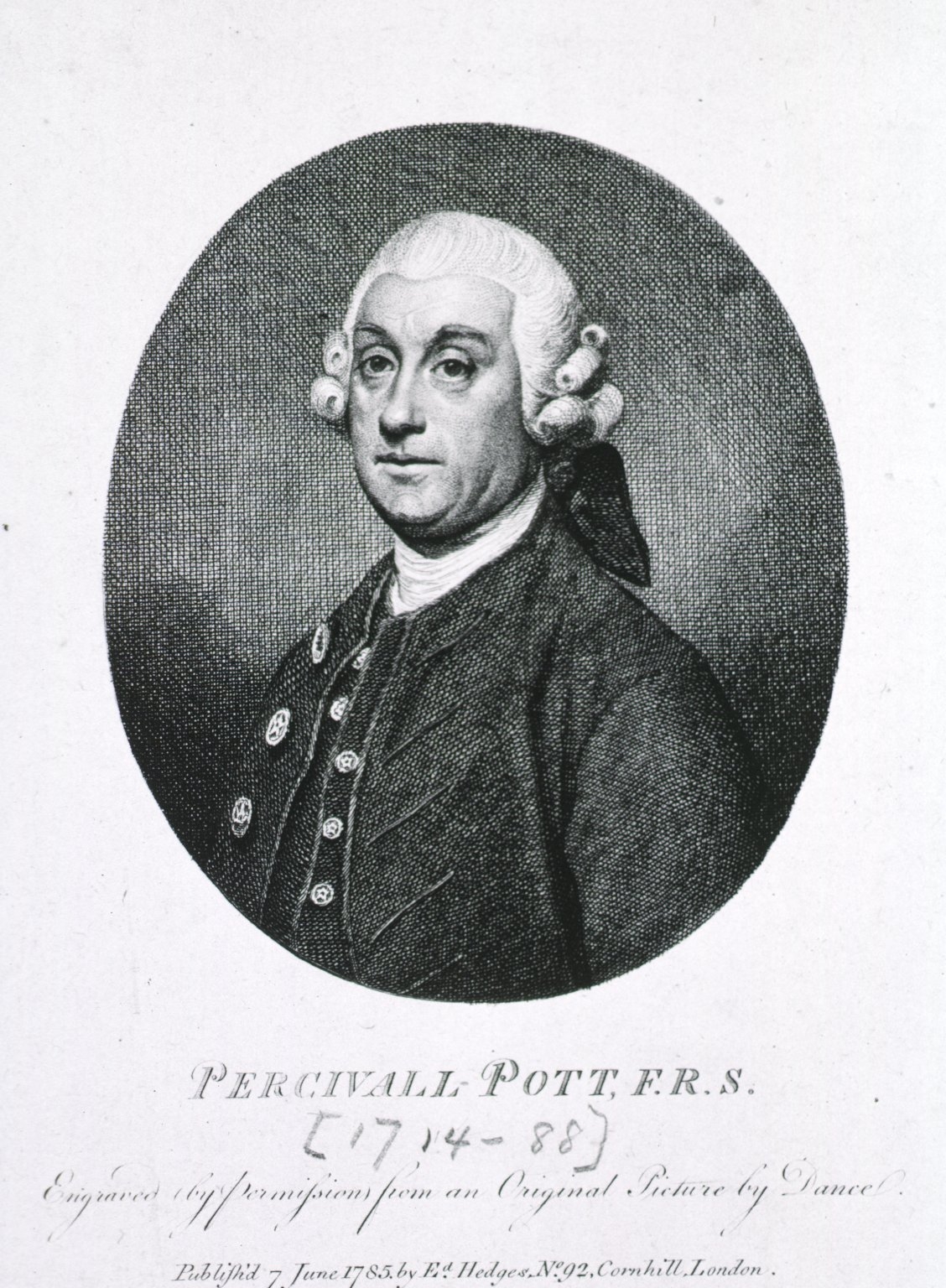
1768 POTT, Percivall (1714 – 1788)
Some few general remarks on fractures and dislocations.
The methods outlined by Pott in his classic work on fractures and dislocations were eventually adopted all over the world. He described (pp. 57-64) “Pott’s fracture” in this book, and he stressed the necessity for the…
GMN 4408 · https://historyofmedicine.com/id/6150
1770 WHITE, Charles (1728 – 1813)
An account of a case in which the upper head of the os humeri was sawed off, a large portion of the bone afterwards exfoliated, and yet the entire motion of the limb was preserved.
First recorded excision of the head of the humerus.
GMN 4437 · https://historyofmedicine.com/id/6329
1781 CAMPER, Petrus (Pieter) (1722 – 1789)
Dissertation sur la meilleure forme des souliers.
Classic discussion of childhood shoe-induced deformities. There was also an edition in Dutch published the same year. Digital facsimile of the edition in French from the Internet Archive at this link. English translat…
GMN 4305.1 · https://historyofmedicine.com/id/5484
1783 –1788 BELL, Benjamin (1749 – 1806)
A system of surgery. 6 vols.
Bell studied under the Monros at Edinburgh. He was surgeon to the Royal Infirmary, Edinburgh, for 29 years. He improved the methods of amputation, introducing the “triple incision of Bell”. Above is his best work.
GMN 5579 · https://historyofmedicine.com/id/7004
1788 VENEL, Jean-André (1740 – 1791)
Description de plusieurs nouveaux moyens mécaniques propres à prevénir, borner et même corriger dans certains cas les courbures latérales et la torsion de l’épine du dos.
Venel stressed the necessity for prolonged periods of recumbency, rather than exercise, in the correction of spinal curvature. He invented a corset and extension bed for treating spinal deformities. His extension bed …
GMN 4305 · https://historyofmedicine.com/id/5479
1789 CAMPER, Petrus (Pieter) (1722 – 1789)
Dissertatio de fractura patellae et olecrani.
GMN 4409 · https://historyofmedicine.com/id/6165
1791 –1792 FOURCROY, Antoine François, comte (1755 – 1809)
La médecine éclairée par les sciences physiques. 4 vols.
This work edited by Fourcroy contains in vol. 4 (pp. 85-88) the first description of Chopart’s method of partial amputation of the foot. This is in the form of a note by Lafiteau: “Observation sur une amputation parti…
GMN 4439 · https://historyofmedicine.com/id/6336
1798 –1799 BICHAT, Marie François Xavier (1771 – 1802); DESAULT, Pierre-Joseph (1744 – 1795)
Oeuvres chirurgicales de P. J. Desault....ou tableau de sa doctrine & de sa pratique dans le traitement des maladies externes. Ouvrage publié par Xav. Bichat, son èlève. 3 vols.
Desault was one of the first professors at the École Pratique de Chirurgie, Paris. He made many suggestions regarding the treatment of fractures and dislocations and is one of the founders of modern vascular surgery. …
GMN 2927 · https://historyofmedicine.com/id/7007
1803 SCARPA, Antonio (1752 – 1832)
Memoria chirurgica sui piedi torti congenita dei fanciulli.
First accurate description of the pathological anatomy of congenital club-foot. English translation, Edinburgh, 1818.
GMN 4308 · https://historyofmedicine.com/id/5497
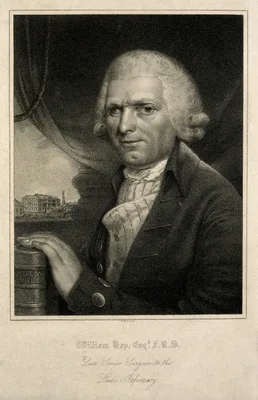
1803 HEY, William (1736 – 1819)
Practical observations in surgery.
Hey is remembered for “Hey’s saw” and “Hey’s internal derangement of the knee,” a phrase that he coined. He was an outstanding surgeon in his day; he founded and was senior surgeon of the General Infirmary, Leeds. He …
GMN 4308.1 · https://historyofmedicine.com/id/5506
1803 MOREAU, P. F.
Observations pratiques relatives à la résection des articulations affectées de carie.
Excision and arthrodesis in joint disease. Moreau was the first to excise the elbow. English translation, Glasgow, 1806. See No. 4438.
GMN 4440 · https://historyofmedicine.com/id/6340
1804 PHYSICK, Philip Syng (1768 – 1837)
A case of fracture of the os humeri, in which the broken ends of the bone not uniting the usual manner, a cure was effected by means of a seton.
The first paper on orthopedic surgery published in the United States. Physick introduced the use of the seton in the treatment of ununited fractures.
GMN 4409.1 · https://historyofmedicine.com/id/6169
1810 WACHTER, Georg Heinrich (1790 – 1864)
Diss. de articulis exstirpandis, imprimis de genu exstirpato.
GMN 4441 · https://historyofmedicine.com/id/6341
1812 –1817 LARREY, Dominique Jean (1766 – 1842)
Mémoires de chirurgie militaire, et campagnes. (Vol. 5 entitled Relation médicale de campagnes et voyages.) 5 vols.
Larrey was the greatest military surgeon in history. Of him Napoleon said: “C’est l’homme le plus vertueux que j’ai connu”. He was present at all Napoleon’s great battles and one of the few who stood by him on his abd…
GMN 2160 · https://historyofmedicine.com/id/888
1813 BAYNTON, Thomas (1761 – 1820)
An account of a successful method of treating diseases of the spine.
By his advocacy of absolute rest in the horizontal position without the aid of caustics and setons, Baynton can be said to have introduced the modern treatment of spinal caries in England. The book is dedicated to Edw…
GMN 4309 · https://historyofmedicine.com/id/5509
1814 COLLES, Abraham (1773 – 1843)
On the fracture of the carpal extremity of the radius.
Colles’s description of fracture of the carpal end of the radius led that type of fracture to be named “Colles’s fracture”. He was Professor of Surgery at Dublin for more than 30 years. Reprinted in Med. Classics, 194…
GMN 4410 · https://historyofmedicine.com/id/6172
1815 LISFRANC DE ST. MARTIN, Jacques [Lisfranc] (1790 – 1847)
Nouvelle méthode opératoire pour l’amputation partielle du pied dans son articulation tarso-métatarsienne.
“Lisfranc’s amputation” of the foot.
GMN 4443 · https://historyofmedicine.com/id/6346
1819 DUPUYTREN, Guillaume, Le Baron (1777 – 1835)
Mémoire sur la fracture de l’extrémité inférieure du péroné, les luxations et les accidens qui en sont la suite.
“Dupuytren’s fracture”, of the ankle, described in a learned 212-page review of ankle fractures, and of the normal anatomy and function of the ankle joint. “Of especial interest is the description of experimental frac…
GMN 4411 · https://historyofmedicine.com/id/6175
1820 DUPUYTREN, Guillaume, Le Baron (1777 – 1835)
Observation sur une résection de la mâchoire inférieure.
Dupuytren was the first successfully to excise the lower jaw, in 1812, as recorded in his Leçons orales, 1829, 2, 421-53. The above paper deals with a later operation of the same type.
GMN 4444 · https://historyofmedicine.com/id/6348
1820 GUTHRIE, George James (1785 – 1856)
A treatise on gun-shot wounds. 2nd. ed.
Successful amputation at the hip-joint, after the battle of Waterloo, 7 July, 1815.
GMN 4445 · https://historyofmedicine.com/id/6350
1820 –1847 FRORIEP, Robert Friedrich (1804 – 1861); FRORIEP, J. J. Ludwig Friedrich von (1779 – 1847)
Chirurgische Kupfertafeln. 4 vols.
This collection of 417 plates on surgical procedures, instruments, and bandages, with 4 pages of explanatory text, was published in 96 parts between 1820 and 1847. Fifty-two of the plates were issued hand-colored. The…
GMN 12750 · https://historyofmedicine.com/id/14996
1821 BARTON, John Rhea (1794 – 1871)
Remarks on certain injuries of the bones in children.
On bending fractures in children.
GMN 4411.1 · https://historyofmedicine.com/id/6178
1821 JAMESON, Horatio Gates (1788 – 1855)
Case of tumour of the superior jaw.
First excision of the superior maxilla, 11 Nov, 1820.
GMN 4446 · https://historyofmedicine.com/id/6352
1822 COOPER, Sir Astley Paston (1768 – 1841)
A treatise on dislocations, and on fractures of the joints.
Through this and numerous subsequent editions this was the principal reference work on the subject in England and America for 30 years. “Many later clinical modifications were developed from Cooper’s methods” (Bick).
GMN 4412.1 · https://historyofmedicine.com/id/6179
1822 MOTT, Valentine (1785 – 1865)
Case of osteo-sarcoma in which the right side of the lower jaw was removed successfully after tying the carotid artery.
Mott resected the entire half of the bone, necessitating a disarticulation at the temporo-mandibular joint.
GMN 4447 · https://historyofmedicine.com/id/6356
1823 DEADERICK, William Harvey (1773 – 1858)
Case of removal of a portion of the lower maxillary bone.
Deaderick resected a portion of the jaw in 1810. He wrote this paper to obtain priority over Mott (No. 4447).
GMN 4448 · https://historyofmedicine.com/id/55
1823 –1828 DELPECH, Jacques Mathieu (1777 – 1832)
Chirurgie clinique de Montpellier. 2 vols.
Delpech's work includes the first account of rhinoplasty in France. On 4 June 1823, Delpech performed the first of six cases of rhinoplasty by the Indian forehead flap method, and one (unsuccessful) with a flap from t…
GMN 4312 · https://historyofmedicine.com/id/6544
1824 ROGERS, David L. (1799 – 1877)
Case of osteo-sarcoma of the superior maxillary bone, with the operation for its removal.
Rogers removed nearly all of the upper jaw. Operation performed in 1810.
GMN 4449 · https://historyofmedicine.com/id/56
1825 SMITH, Nathan (1762 – 1829)
On the amputation of the knee-joint.
Smith amputated the knee-joint in 1824, being the first in America to do so.
GMN 4450 · https://historyofmedicine.com/id/57
1825 LOWELL, Charles (1793 – 1858)
Report of the trial of an action: Charles Lowell against John Faxon and Micajah Hawks, doctors of medicine, defendants, for malpractice in the capacity of physicians and surgeons: At the Supreme Judicial Court of Maine, holden at Machias for the county of Washington, June term, 1824, before the Hon. Nathan Weston, Jun., justice of the court.
A detailed narrative on the trial based on the transcript. Digital facsimile from the U.S. National Library of Medicine at this link.
GMN 11730 · https://historyofmedicine.com/id/13931
1826 DUPUYTREN, Guillaume, Le Baron (1777 – 1835)
Mémoire sur un déplacement originel ou congénital de la tête des fémurs.
First clear pathological description of congenital dislocation of the hip-joint. Dupuytren distinguished this syndrome caused by failure of fetal development of the acetabulum from deformities due to tuberculosis and …
GMN 4413 · https://historyofmedicine.com/id/6183
1826 WARREN, John Collins (1778 – 1856)
A letter to the Hon. Isaac Parker, chief justice of the Supreme court of the state of Massachusetts, containing remarks on the dislocation of the hip joint, occasioned by the publication of a trial which took place at Machias, in the state of Maine, June, 1824. By John C. Warren. With an appendix of documents from the trial necessary to illustrate the history of the case.
This work, illustrated with 5 plates, contains several clear and minute descriptions of dislocation of the hip joint. In the course of the monograph Warrenproved the possibility of a type of dislocation that was denie…
GMN 11728 · https://historyofmedicine.com/id/13929
1827 BARTON, John Rhea (1794 – 1871)
On the treatment of anchylosis, by the formation of artificial joints.
Barton performed a femoral osteotomy between the greater and lesser trochanters to secure motion in an ankylosed hip. This has been called the first successful arthroplasty. Reprinted in Clin. Orthop., 1984, 182, 4-13.
GMN 4451 · https://historyofmedicine.com/id/58
1827 MOTT, Valentine (1785 – 1865)
Successful amputation at the hip-joint.
This is “the first reported amputation at the hip joint found in the American medical literature” (Rutkow). See No. 4462.
GMN 4451.1 · https://historyofmedicine.com/id/59
1827 RODGERS, John Kearney (1793 – 1851)
Case of un-united fracture of the os brachii, successfully treated.
Successful wiring of ununited fracture of humerus.
GMN 4414 · https://historyofmedicine.com/id/6187
1827 HARRISON, Edward (1766 – 1838)
Pathological and practical observations on spinal diseases: illustrated with cases and engravings. Also, An inquiry into the origin and cure of distorted limbs.
Harrison founded the first infirmary for spinal diseases in London. See Weiner & Silver, "Edward Harrison and the treatment of spinal deformities in the nineteenth century," J. R. Coll. Phys. Edinb., 38 (2006) 265-71.…
GMN 13539 · https://historyofmedicine.com/id/15816
1828 SYME, James (1799 – 1870)
Case of osteo-sarcoma of the lower jaw.
Syme’s operation of excision of the lower jaw for osteosarcoma.
GMN 4453 · https://historyofmedicine.com/id/60
1828 MOTT, Valentine (1785 – 1865)
An account of a case of osteo-sarcoma of the left clavicle, in which exsection of that bone was successfully performed.
Valentine Mott was an outstanding figure in American surgery during the first half of the 19th century. A pupil of Astley Cooper, he particularly distinguished himself in vascular surgery and in operations involving t…
GMN 4452 · https://historyofmedicine.com/id/132