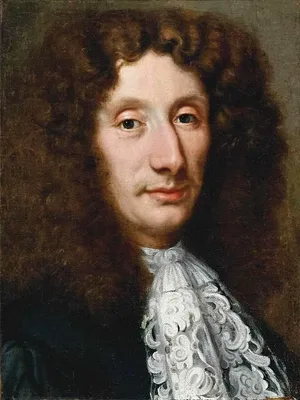
1671 REDI, Francesco (1626 – 1697)
Esperienze intorno a diverse cose naturali…
Includes the first scientific study of an electric fish. While the torpedo’s peculiar properties had provoked scientific speculation since at least the time of Aristotle, Redi was the first to perform an actual dissec…
GMN 294.1 · https://historyofmedicine.com/id/8839
1773 WALSH, John (1725 – 1795)
Of the electric property of the torpedo.
The first accurate study of the electrical organs of the torpedo fish were made by Walsh, who was given the Copley Medal of the Royal Society for his work on the subject. Walsh proved that the shock of the torpedo was…
GMN 589 · https://historyofmedicine.com/id/405
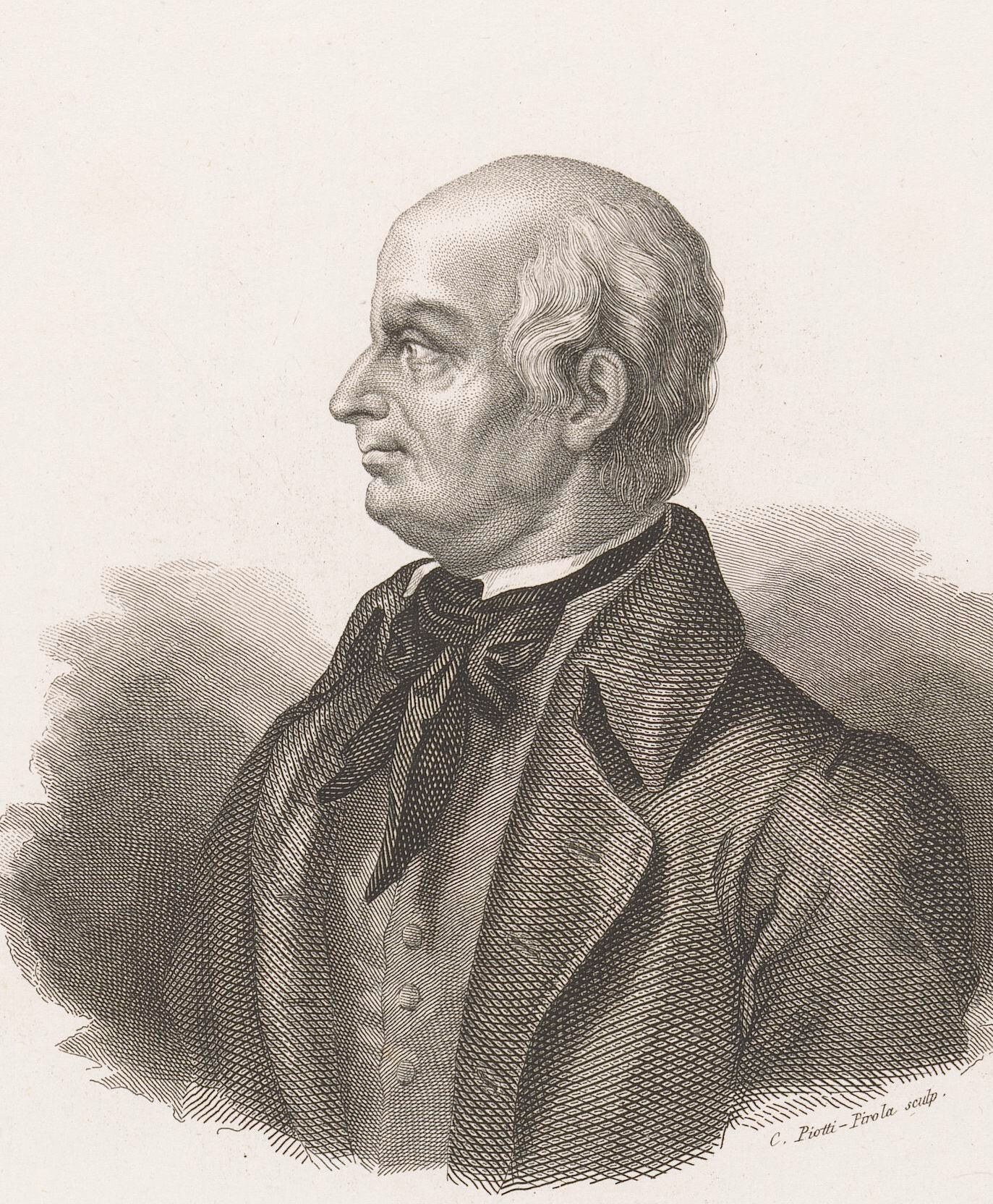
1783 SPALLANZANI, Lazzaro (1729 – 1799)
Lettera dell' Abate Spallanzani al Sig. Marchese Lucchesini.
Records on pp. 80-104 Spallanzani's work on the torpedo. In the 1780's Spallanzani turned to marine biology, making several trips to the Mediterranean region. On his visit to Portovenere in 1783 "he instituted the fir…
GMN 12037 · https://historyofmedicine.com/id/14245
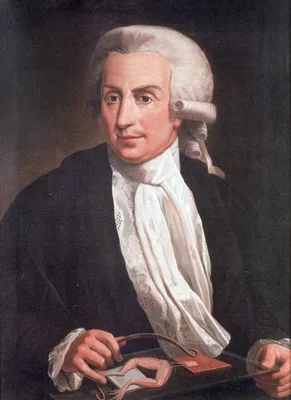
1791 GALVANI, Luigi (1737 – 1798)
De viribus electricitatis in motu musculari commentarius.
In the course of his experiments on irritable responses caused by static electricity applied to frog muscles, Galvani produced electric current from the contact of two different metals in a moist environment. Galvani …
GMN 593 · https://historyofmedicine.com/id/413
1794 GALVANI, Luigi (1737 – 1798)
Dell’uso e dell’attività dell arco conduttore nelle contrazioni dei muscoli.
The first account of Galvani’s electrical experiments without the presence of metals, in which he demonstrated the presence of electrical energy in living tissue by showing that convulsions in frog nerve-muscle prepar…
GMN 594.1 · https://historyofmedicine.com/id/376
1797 HUMBOLDT, Friedrich Wilhelm Heinrich Alexander von (1769 – 1859)
Versuche über die gereizte Muskel- und Nervenfaser: nebst Vermuthungen über den chemischen Process des Lebens in der Thier- und Pflanzenwelt. 2 vols.
Digital facsimile from The Medical Heritage Library, Internet Archive, at this link.
GMN 7119 · https://historyofmedicine.com/id/9286
1800 BICHAT, Marie François Xavier (1771 – 1802)
Recherches physiologiques sur la vie et la mort.
When Volta questioned the validity of experiments claiming to show responsiveness of an ex vivo heart, devoid of blood flow and nervous connections, Bichat obtained permission to experiment upon the freshly killed bod…
GMN 597 · https://historyofmedicine.com/id/387
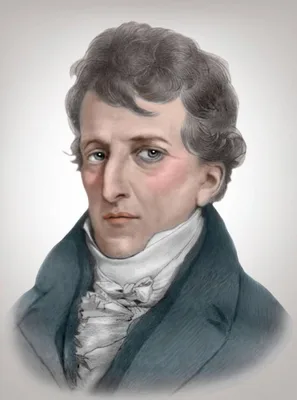
1801 GRAPENGIESSER, Carl Johann Christian (1764 – 1846)
Versuche des Galvanismus zur Heilung einiger Krankheiten.
Grapengiesser was the first physician to use Volta’s “pile”, the first battery, which Volta first described in print in 1800. Grapengiesser “noted that in paralyzed muscle excitability could be so poor that 150 elemen…
GMN 1988.1 · https://historyofmedicine.com/id/3813
1803 ALDINI, Giovanni (1762 – 1834)
An account of the late improvements in galvanism…
Nephew of Galvani (see No. 593), Aldini developed and promoted animal electricity. His sensational experiments on the body of a criminal executed at Newgate, conducted with Carpue (No. 1989) were significant for the p…
GMN 1989.1 · https://historyofmedicine.com/id/3817
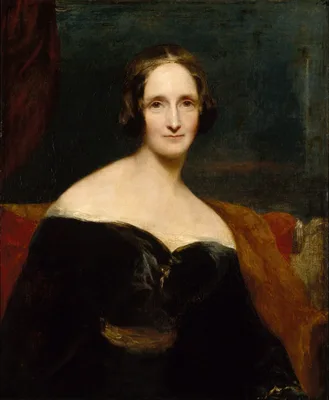
1818 SHELLEY, Mary Wollstonecraft (1797 – 1851)
Frankenstein; or, the modern prometheus. 3 vols.
The full digitized text of the 1818 is available from the Internet Archive at this link.
GMN 9692 · https://historyofmedicine.com/id/11879
1838 MATTEUCCI, Carlo (1811 – 1868)
Sur le courant électrique ou propre de la grenouille.
Matteucci established the difference of potential between injured nerve and its muscle.
GMN 605 · https://historyofmedicine.com/id/462
1843 MATTEUCCI, Carlo (1811 – 1868); HUMBOLDT, Friedrich Wilhelm Heinrich Alexander von (1769 – 1859)
Sur le courant électrique des muscles des animaux vivants ou récemment tués.
Matteucci’s “rheoscopic frog” effect.
GMN 608 · https://historyofmedicine.com/id/469
1843 DU BOIS-REYMOND, Emil (1818 – 1896)
Ueber den sogennanten Froschstrom.
First description and definition of electrotonus.
GMN 609 · https://historyofmedicine.com/id/470
1845 WEBER, Eduard Friedrich Wilhelm (1806 – 1871); WEBER, Ernst Heinrich (1795 – 1878)
Experimenta, quibus probatur nervos vagos rotatione machinae galvanomagneticae irritatos, motum cordis retardare et adeo intercipare.
The discovery of the inhibitory power of the vagus. Also published in Wagner’s Handwörterbuch der Physiologie, 1846, 3, 45-51. Partial translation in J. F. Fulton’s Selected readings in the history of physiology, 2nd …
GMN 807 · https://historyofmedicine.com/id/183
1848 –1884 DU BOIS-REYMOND, Emil (1818 – 1896)
Untersuchungen über thierische Elektricität. 2 vols.
A pupil of J. Müller, Emil du Bois-Reymond was the founder of modern electrophysiology. He introduced faradic stimulation and made an exhaustive investigation of physiological tetanus. Above is a collective edition of…
GMN 610 · https://historyofmedicine.com/id/473
1854 BROWN-SÉQUARD, Charles Édouard (1817 – 1894)
Note sur la découverte de quelques-uns des effets de la galvanisation du nerf grand sympathique au cou.
GMN 1325 · https://historyofmedicine.com/id/1337
1854 BROWN-SÉQUARD, Charles Édouard (1817 – 1894)
Sur les résultats de la section et de la galvanisation du nerf grand sympathique au cou.
GMN 1326 · https://historyofmedicine.com/id/1340
1854 GUITARD, Pierre-Isidore-Catherine (1821 – )
Histoire de l'électricité médicale, comprenant l'étude des instruments et appareils, le résumé des auteurs, un choix d'observations.
The first history of medical electricity and electrotherapy. Digital facsimile from Google Books at this link.
GMN 10439 · https://historyofmedicine.com/id/12632
1855 DUCHENNE DE BOULOGNE, Guillaume Benjamin Armand (1806 – 1875)
De l’électrisation localisée et de son application à la physiologie, à la pathologie, et à la thérapeutique.
Duchenne classified the electrophysiology of the entire muscular system and summed up his findings in the above work. The application of his results to pathological conditions marks him as the founder of electrotherap…
GMN 1995 · https://historyofmedicine.com/id/1848
1855 REMAK, Robert (1815 – 1865)
Ueber methodische Electrisirung gelähmter Muskeln.
Discovery of the motor points, the entry points of the nerves into the muscles – essential for stimulating the muscles by electricity.
GMN 1995.1 · https://historyofmedicine.com/id/1850
1856 KÖLLIKER, Rudolph Albert von (1817 – 1905); MÜLLER, Heinrich (1820 – 1864)
Nachweis der negativen Schwankung des Muskelstroms am natürlich sich contrahirenden Muskel.
Kölliker and Müller were the first to measure action currents from cardiac muscle.
GMN 618 · https://historyofmedicine.com/id/501
1857 ZIEMSSEN, Hugo Wilhelm von (1829 – 1902)
Die Electricität in der Medicin.
Ziemssen confirmed Remak’s discovery of the motor points, established their exact location, and published exact instructions for finding the motor points for stimulating the various muscles of the body.
GMN 1996 · https://historyofmedicine.com/id/1855
1858 JOBERT DE LAMBALLE, Antoine Joseph (1799 – 1867)
Des appareils l'electriques des poissons l'electriques. 2 vols. (Text and atlas).
Digital facsimile of the text from the Hathi Trust at this link.
GMN 12256 · https://historyofmedicine.com/id/14472
1859 PFLÜGER, Eduard Friedrich Wilhelm (1829 – 1910)
Untersuchungen über die Physiologie des Electrotonus.
One of the most interesting works of its time on the physiology of nerve. In it Pflüger first stated the laws governing the make and break stimulation of nerve with the galvanic current. Pflüger was a pupil of Müller …
GMN 621 · https://historyofmedicine.com/id/504
1862 DUCHENNE DE BOULOGNE, Guillaume Benjamin Armand (1806 – 1875)
Mécanisme de la physionomie humaine, ou analyse électro-physiologique de l’expression des passions applicable à la pratique des arts plastiques. Premier fascicule. [All published]. 1 volume of text plus atlas of photographs by Duchenne.
Duchenne studied the mechanism of facial expression during emotion; his atlas of photographs was the first medical book illustrated with photographs of living subjects. Darwin reproduced a number of his photographs in…
GMN 4973 · https://historyofmedicine.com/id/6392
1864 FICK, Adolph Eugen (1829 – 1901)
Untersuchungen über elektrische Nervenreizung.
Among the instruments introduced by Fick for the study of muscle and nerve physiology were the myotonograph, the cosine lever, and an improved thermopile.
GMN 623 · https://historyofmedicine.com/id/506
1867 DUCHENNE DE BOULOGNE, Guillaume Benjamin Armand (1806 – 1875)
Physiologie des mouvements demontrée à l’aide de l’expérimentation électrique et de l’observation clinique, et applicable à l’étude des paralysies et des déformations.
A monumental work, the result of twenty years’ study of electro-muscular stimulation “to determine the proper action which the muscles possess in life”. The book contains an excellent record of the kinesiology of the …
GMN 624 · https://historyofmedicine.com/id/507
1870 FRITSCH, Gustav Theodor (1838 – 1891); HITZIG, Eduard (1838 – 1907)
Ueber die elektrische Erregbarkeit des Grosshirns.
These workers showed that electrical stimulation of the frontal cortex in various experimental animals caused movements of the extremities of the opposite side of the body, thus proving the existence of a motor area i…
GMN 1405 · https://historyofmedicine.com/id/2049
1872 DUCHENNE DE BOULOGNE, Guillaume Benjamin Armand (1806 – 1875)
De l’électrisation localisée et de son application à la pathologie et à la thérapeutique. 3me. éd.
Early description, page 357, of partial brachial plexus paralysis, upper type (“Duchenne-Erb palsy”: see No. 4548). An English translation of the 3rd ed., by H. Tibbitts, actually appeared London in 1871, one year bef…
GMN 4543 · https://historyofmedicine.com/id/8906
1875 STIRLING, William (1851 – 1932)
Ueber die summation elektrischer Hautreize.
Stirling, a pupil of Ludwig, became a great teacher of physiology. His paper on the summation of electrical stimuli to the skin was a prize thesis.
GMN 629 · https://historyofmedicine.com/id/511
1875 CATON, Richard (1842 – 1926)
The electric currents of the brain.
Caton succeeded in leading off action potentials from the brains of animals, a first step towards the development of the electroencephalograph. See also Brit. med. J., 1877, 1, Suppl. 62-75.
GMN 1408.1 · https://historyofmedicine.com/id/2077
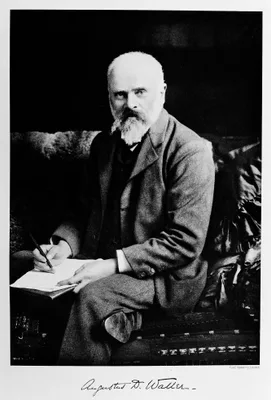
1883 WALLER, Augustus Désiré (1856 – 1922); WATTEVILLE, Armand de (1846 – 1925)
On the influence of the galvanic current on the excitability of the motor nerves of man.
GMN 1279 · https://historyofmedicine.com/id/2282
1889 SHARPEY-SCHAFER, Sir Edward Albert (1850 – 1935); HORSLEY, Sir Victor Alexander Haden (1857 – 1916)
A record of experiments upon the functions of the cerebral cortex.
A detailed analysis, by means of faradic stimulation, of the motor responses of the cerebral cortex, internal capsule, and spinal cord of higher primates.
GMN 1419 · https://historyofmedicine.com/id/2115
1890 TARCHANOFF, Ivan Romanovich [TARKHANOFF] (1848 – 1909)
Ueber die galvanischen Erscheinungen in der Haut des Menschen bei Reizungen der Sinnesorgane und bei verschiedenen Formen der psychischen Thätigkeit.
Psycho-galvanic reflex described.
GMN 1471 · https://historyofmedicine.com/id/2434
1891 HORSLEY, Sir Victor Alexander Haden (1857 – 1916); GOTCH, Francis (1853 – 1913)
On the mammalian nervous system, its functions, and their localisation determined by an electrical method.
Gotch and Horsley showed that electric currents are produced in the mammalian brain, and they recorded them with the string galvanometer of the capillary electrometer. Their work led eventually to the development of t…
GMN 1420.1 · https://historyofmedicine.com/id/2137
1895 BIEDERMANN, Wilhelm (1852 – 1929)
Elektrophysiologie.
First exhaustive treatise on electrophysiology. English translation, 2 vols., London, 1896-98.
GMN 644 · https://historyofmedicine.com/id/523
1896 BEAUREGARD, Emmanuel Henri (1851 – 1900); DUPUY, Pierre Edmond (1855 – 1904)
Note sur la variation éléctrique (courant d’action) déterminée dans le nerf acoustique par le son.
Beauregard and Dupuy recorded the action potential in the auditory nerve of the frog.
GMN 1569.1 · https://historyofmedicine.com/id/1267
1902 BERNSTEIN, Julius (1839 – 1917)
Untersuchungen zur Thermodynamik der bioelektrischen Ströme.
Bernstein’s studies on the nature of muscular contraction included the observation that changes in surface tension are a controlling factor in the development of the energy of muscular contraction.
GMN 653 · https://historyofmedicine.com/id/530
1903 –1904 LEDUC, Stéphane Armand Nicolas (1853 – 1939)
L’électrisation cérébrale.
Leduc reported the effects of a galvanic current on the brain. His work led the way to electric convulsion therapy, introduced by Carletti and Bini (No. 4962).
GMN 2003.2 · https://historyofmedicine.com/id/1923
1903 GOTCH, Francis (1853 – 1913)
The time relations of the photo-electric changes in the eyeball of the frog.
First correct electroretinograms.
GMN 1525.1 · https://historyofmedicine.com/id/2850
1927 ADRIAN, Edgar Douglas (1889 – 1977); MATTHEWS, Rachel
The action of light on the eye.
On the electrical discharges from the vertebrate optic nerve.
GMN 1528 · https://historyofmedicine.com/id/2854
1950 BRAZIER, Mary Agnes Burniston Brown (1904 – 1995)
Bibliography of electroencephalography, 1875-1948. Electroencephalography and Clinical Neurophysiology, Suppl. No. 1
Covers both normal and disease states. Suppl. No. 23 (1964), ed. M. Fink, covers the period 1951-62.
GMN 5016 · https://historyofmedicine.com/id/6603
1953 YASUDA, Iwao (1909 – 1983)
Fundamental aspects of fracture treatment. [In Japanese]
First electrically-induced osteogenesis. Yasuda demonstrated that small amounts of electric current applied to bone stimulated osteogenesis at the cathode. He was also the first to describe stress generated potentials…
GMN 4435.4 · https://historyofmedicine.com/id/6316
1965 STACEY, Ralph W.; WAXMAN, Bruce
Computers in biomedical research. Edited by Ralph W. Stacy and Bruce Waxman. 2 vols.
Section A, Chapter 2: "New mathematical methods in the life sciences" by George B. Dantzig. Section D, Chapter 12: "The application of computers to electroencephalography" by Mary A. B. Brazier. Section E, Chapter 13:…
GMN 8834 · https://historyofmedicine.com/id/11012
1967 LICHT, Sidney (1908 – 1979)
History of electrotherapy. In: Therapeutic electricity and ultraviolet radiation.
GMN 2068.10 · https://historyofmedicine.com/id/2425
1968 HARVARD AD HOC COMMITTEE ON BRAIN DEATH
A definition of irreversible coma. Report of the Ad Hoc Committee of the Harvard Medical School to examine the definition of brain death.
This report described the following characteristics of a permanently nonfunctioning brain, a condition it referred to as "irreversible coma," now known as brain death: 1. Unreceptivity and unresponsitivity--patient sh…
GMN 10044 · https://historyofmedicine.com/id/12233
1976 NEHER, Erwin (1944 – ); SAKMANN, Bert (1942 – )
Single-channel currents recorded from membrane of denervated frog muscle fibres.
In 1991 Neher and Sakmann were awarded the 1991 Nobel Prize in Physiology or Medicine for "their discoveries concerning the function of single ion channels in cells." They were also awarded the prize for the invention…
GMN 7454 · https://historyofmedicine.com/id/9626
1983 SCHECHTER, David Charles (1931 – )
Exploring the origins of electrical cardiac stimulation.
GMN 8755 · https://historyofmedicine.com/id/10933
1984 ROWBOTTOM, Margaret; SUSSKIND, Charles (1921 – 2004)
Electricity and medicine: A history of their interaction.
GMN 2068.21 · https://historyofmedicine.com/id/2479
2005 BORCK, Cornelis
Hirnströme: Eine Kulturgeschichte der Elektroenzephalographie.
Translated into English by Ann M. Hentschel as Brainwaves: A cultural history of electroencephalography. Abingdon, Oxford and New York: Routledge, 2018.
GMN 9945 · https://historyofmedicine.com/id/12133