1738 STUART, Alexander (1673 – 1742)
Dissertatio de structura et motu musculari.
This was the text of the first Croonian Lecture at the Royal Society. In it Stuart promoted a strictly hydraulic iatromechanism as a theory of muscular motion. This work was translated into English in 1739. Digital fa…
GMN 11713 · https://historyofmedicine.com/id/13914
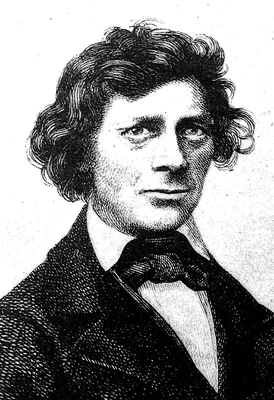
1836 WEBER, Eduard Friedrich Wilhelm (1806 – 1871); WEBER, Wilhelm Eduard (1804 – 1891)
Mechanik der menschlichen Gehwerkzeuge. 1 vol. and atlas.
A pioneering study of the physiology and biomechanics of motion and locomotion. The atlas contains four illustrations that were printed directly from actual bones embedded in plaster of Paris. This is one of the only …
GMN 604 · https://historyofmedicine.com/id/458
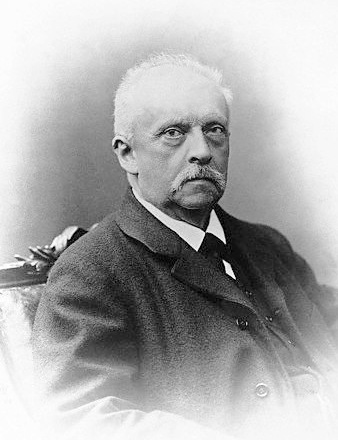
1847 HELMHOLTZ, Hermann Ludwig Ferdinand von (1821 – 1894)
Ueber die Erhaltung der Kraft, eine physikalische Abhandlung.
An epoch-making work which led the way to the acceptance of the fundamental physical doctrine of the conservation of energy.
GMN 611 · https://historyofmedicine.com/id/479
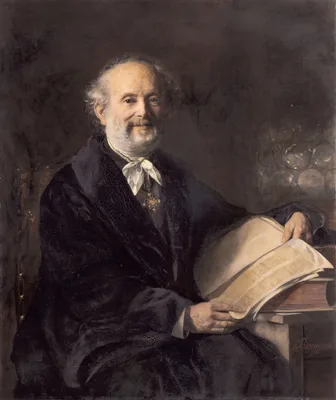
1856 FICK, Adolph Eugen (1829 – 1901)
Die medizinische Physik.
GMN 617 · https://historyofmedicine.com/id/500
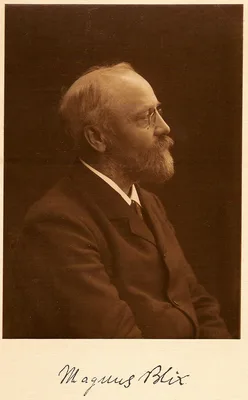
1884 BLIX, Magnus Gustav (1849 – 1904)
Experimentelle Beiträge zur Lösung der Frage über die specifische Energieder Hautnerven
Besides his investigation of the specific energies of cutaneous nerves, Blix is remembered for his work on the thermodynamics of muscular contraction; he designed a muscle indicator diagram; he was also the first to s…
GMN 1468 · https://historyofmedicine.com/id/2422
1891 BRAUNE, Christian Wilhelm (1831 – 1892); FISCHER, Otto (1861 – 1917)
Die Bewegungen des Kniegelenkes.
Investigation of the mechanics of motion of the knee joint on mathematical lines. See also No. 645.
GMN 637 · https://historyofmedicine.com/id/517
1891 CHAUVEAU, Jean Baptiste Auguste (1827 – 1917)
Le travail musculaire et l’énergie qu’il représente.
Important studies on thermodynamics of muscular work.
GMN 638 · https://historyofmedicine.com/id/518
1892 WOLFF, Julius (1836 – 1902)
Das Gesetz der Transformation der Knochen.
“Wolff’s law” stated that every change in form and function of a bone, or in its function alone, is followed by certain definite changes in its internal architecture and equally definite secondary alterations in its m…
GMN 641 · https://historyofmedicine.com/id/520
1895 –1904 BRAUNE, Christian Wilhelm (1831 – 1892); FISCHER, Otto (1861 – 1917)
Der Gang des Menschen. 1-6 Abt. (All published.)
Classic study of the human gait. The authors calculated the external and internal forces involved in walking and described the kinematics and kinetics of the movement. Because of Braune's death in 1892 he could only c…
GMN 645 · https://historyofmedicine.com/id/524
1902 BERNSTEIN, Julius (1839 – 1917)
Untersuchungen zur Thermodynamik der bioelektrischen Ströme.
Bernstein’s studies on the nature of muscular contraction included the observation that changes in surface tension are a controlling factor in the development of the energy of muscular contraction.
GMN 653 · https://historyofmedicine.com/id/530
1913 DOUGLAS, Claude Gordon (1882 – 1963); HENDERSON, Yandell (1873 – 1944); HALDANE, John Burdon Sanderson (1892 – 1964); SCHNEIDER, E. C. (1874 – 1854)
Physiological observations made on Pike’s Peak, Colorado, with special reference to adaptation to low barometric pressures.
GMN 957 · https://historyofmedicine.com/id/254
1920 HILL, Archibald Vivian (1886 – 1977); HARTREE, William (1870 – 1943)
The four phases of heat-production of muscle.
Hill and Hartree made valuable contributions to the knowledge of the thermodynamics of muscle. See also Physiol. Rev., 1922, 2, 310-41, and Hill, A. V., Trails and trials in physiology: a bibliography 1909-1964, 1965.…
GMN 659 · https://historyofmedicine.com/id/535
1972 RENBOURN, Edward Tobias
Materials and clothing in health and disease by E. T. Renbourn (with The biophysics of clothing materials by W. H. Rees).
GMN 13806 · https://historyofmedicine.com/id/16094