1478 CELSUS, Aulus Aurelius Cornelius (-25 – 50); FONTE, Bartolomeo della (Bartholomaeus Fontius) (1446 – 1513)
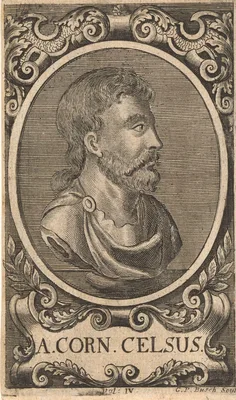
De medicina. Ed: Bartholomaeus Fontius.
De Medicina is the oldest Western medical document after the Hippocratic writings. Written about 30 CE, it remains the greatest medical treatise from ancient Rome, and the first Western history of medicine. Celsus’s s…
GMN 20 · https://historyofmedicine.com/id/4660
1478 GUY DE CHAULIAC, (Guido de Cauliaco) (1298 – 1368); PANIS, Nicolaus
Chirurgia [French]. Translated by Nicolaus Panis.
Guy de Chauliac studied medicine and surgery in Montpellier and Paris, and served as the personal physician to Popes Clement VI, Innocent VI and Urban V. His Chirurgia magna, written in the early 1360s, remained a sta…
GMN 3666.83 · https://historyofmedicine.com/id/5376
1556 FRANCO, Pierre (1500 – 1561)
Petit traité contenant une des parties principalles de chirurgie, laquelle les chirurgiens hernieres exercent.
Clifford Allbutt considered Franco the best lithotomist of the 16th century. His skill in extracting the stone by the perineal route was of a high order; in 1556 he introduced the operation of suprapubic cystotomy in …
GMN 3573 · https://historyofmedicine.com/id/5304
1561 FRANCO, Pierre (1500 – 1561)
Traité des hernies... et autres excellentes parties de chirurgie assavior de la pierre, des cataractes des yeux, & autres maladies...
Greatly expanded second edition, including Franco's operations for cataract and urinary calculi. Digital facsimile from BnF Gallica at this link.
GMN 3574 · https://historyofmedicine.com/id/4161
1583 BARTISCH, Georg (1535 – 1606)
̓Oφθαλμоδоύλεια das ist, Augendienst.
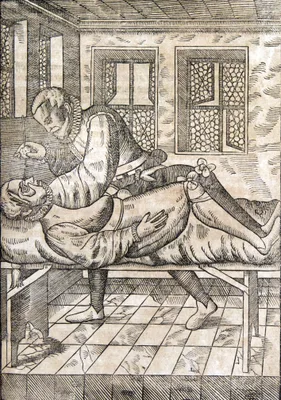
In this treatise on ophthalmic surgery Bartisch, who limited his practice to ophthalmology and hernia repair, left the first extensively illustrated account of any surgical specialty. Bartisch was a skilful operator a…
GMN 5817 · https://historyofmedicine.com/id/7024
1719 LITTRÉ, Alexis (1658 – 1726)
Observation sur une nouvelle espèce de hernie.
“Littre’s hernia” – so named from his description of diverticulum hernia. Later Richter (No. 3578) described this condition more fully.
GMN 3575 · https://historyofmedicine.com/id/4164
1756 POTT, Percivall (1714 – 1788)
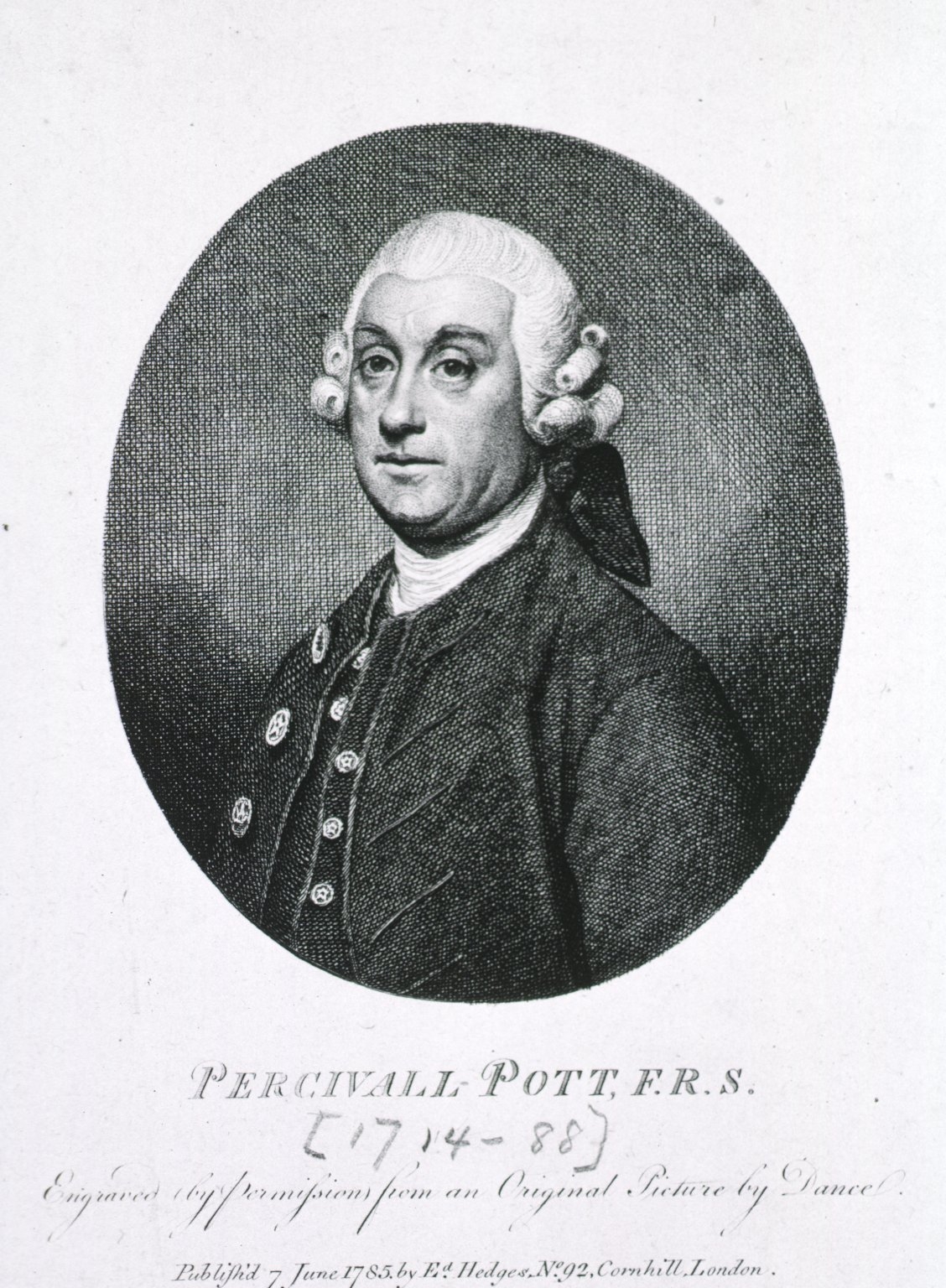
A treatise on ruptures.
Pott was surgeon to St. Bartholomew’s Hospital. Through a fall in the street he was confined to bed for many days, and during that period wrote his classic book on hernia. He refuted many of the old theories concernin…
GMN 3576 · https://historyofmedicine.com/id/4168
1774 PETIT, Jean Louis (1674 – 1750)
Traité des maladies chirurgicales et des opérations qui leur conviennent. 3 vols.
Records (Vol, 1, pp. 153, 160) the first successful operation for mastoiditis, performed by Petit in 1736. “Petit’s hernia” and “triangle” described (vol. 2, pp. 256-58). (See also No. 3357.) A lumbar hernia had previ…
GMN 3357 · https://historyofmedicine.com/id/4731
1778 –1779 RICHTER, August Gottlieb (1742 – 1812)
Abhandlung von den Brüchen.
Richter, lecturer on surgery at Göttingen, in his classic treatise on hernia, first described partial enterocele, or “Richter’s hernia” (Chap. 24).
GMN 3578 · https://historyofmedicine.com/id/4178
1793 GIMBERNAT Y ARBOS, Antonio de (1734 – 1816)
Nuevo método de operar en la hernia crural.
Description of Gimbernat’s operation for strangulated femoral hernia. In the same work he also described the ligament in the crural arch named after him. Gimbernat was a pioneer in ophthalmology, vascular surgery, and…
GMN 3579 · https://historyofmedicine.com/id/4182
1801 CAMPER, Petrus (Pieter) (1722 – 1789)
Icones herniarum. Editae a S. T. Soemmerring.
Camper illustrated his own work, and was an outstanding anatomical artist. His illustrations of hernias are of great value.
GMN 3580 · https://historyofmedicine.com/id/4187
1806 HESSELBACH, Franz Kaspar (1759 – 1816)
Anatomisch-chirurgische Abhandlung über den Ursprung der Leistenbrüche
Includes description of “Hesselbach’s hernia” and “triangle”. He wrote a further volume on the subject in 1814.
GMN 3582 · https://historyofmedicine.com/id/5360
1807 COOPER, Sir Astley Paston (1768 – 1841)
The anatomy and surgical treatment of inguinal and congenital hernia. London, Cox, 1804. The anatomy and surgical treatment of crural and umbilical hernia.
Cooper’s first book, luxuriously produced, in which he described for the first time the transversalis fascia, with full appreciation of its importance in hernia, as well as the superior pubic ligament with bears his n…
GMN 3581 · https://historyofmedicine.com/id/4191
1809 SCARPA, Antonio (1752 – 1832)
Sull’ernie. Memorie anatomico-chirurgiche.
This splendidly illustrated work with life-size plates includes the description of “Scarpa’s fascia” (creasteric fascia) and Scarpa’s triangle of the thigh.
GMN 3583 · https://historyofmedicine.com/id/4258
1817 CLOQUET, Jules Germain (1790 – 1883)
Recherches anatomiques sur les hernies de l’abdomen.
This is Cloquet’s medical thesis. It was followed by his thesis in competition for head of the anatomy section of the Paris Faculty: Recherches sur les causes et l’anatomie des hernies abdominales. Paris, Méquignon-Ma…
GMN 3585 · https://historyofmedicine.com/id/4267
1821 SCARPA, Antonio (1752 – 1832)
Sull’ernia del perineo.
Scarpa’s work on perineal hernia included a classic description of sliding hernia, or hernia of the large bowel. His contribution to the subject of hernia ranks with that of Cooper, and he did much toward modernizing …
GMN 3584 · https://historyofmedicine.com/id/4265
1822 ANDERSON, William; DURAND, Asher Brown (1796 – 1886)
System of surgical anatomy. Part first [all published]: On the structure of the groin, pelvis, and perineum. As connected with inguinal and femoral hernia; Tyeing the iliac arteries; and the operation of lithotomy. Illustrated by nine copper-plate engravings
Anderson trained at the Royal College of Surgeons in Edinburgh, emigrated to America in 1820 and, after delivering a series of anatomical lectures in New York under the patronage of Valentine Mott, became affiliated w…
GMN 13314 · https://historyofmedicine.com/id/15580
1833 KEY, Charles Aston (1793 – 1849)
A memoir on the advantages and practicability of dividing the stricture in strangulated hernia on the outside of the sac.
Introduction of the principle of dividing a stricture outside the sac in cases of strangulated hernia.
GMN 3586 · https://historyofmedicine.com/id/4274
1834 TUSON, Edward William (1802 – 1865)
The anatomy and surgery of inguinal and femoral hernia.
Published in the same large folio format as Tuson's Myology (1828), this was the largest work on hernia ever published with multiple hand-colored. lift-up flats on three plates.
GMN 10024 · https://historyofmedicine.com/id/12213
1838 LAWRENCE, Sir William (1783 – 1867)
Treatise on ruptures. 5th ed.
This was the standard text for many years. It first appeared in 1807 as Treatise on hernia.
GMN 3587 · https://historyofmedicine.com/id/4393
1841 LUKE, James (1798 – 1881)
Operation for strangulated hernia.
Luke’s operation for femoral hernia.
GMN 3588 · https://historyofmedicine.com/id/4398
1846 TEALE, Thomas Pridgin (1800 – 1867)
A practical treatise on abdominal hernia.
GMN 3589 · https://historyofmedicine.com/id/4401
1853 RIEUX, Léon
Considérations sur l’étranglement de l’intestin dans la cavité abdominale et sur un mode d’étranglement non décrit par les auteurs. Thèse pour le doctorat en médecine.... No. 128.
Retrocaecal hernia (“Rieux’s hernia”) first described. Digital facsimile from the Internet Archive at this link.
GMN 3590 · https://historyofmedicine.com/id/4404
1857 TREITZ, Václav (Wenzel) (1819 – 1872)
Hernia retroperitonealis. Ein Beitrag zur Geschichte innerer Hernien.
Treitz described retroperitoneal hernia through the duodeno-jejunal recess – “Treitz’s hernia”.
GMN 3591 · https://historyofmedicine.com/id/4407
1863 GRUBER, Wenzel Leopold (1814 – 1890)
Ueber einen Fall nicht incarcerierter, aber mit Incarceration des Ileum durch das Omentum complicirter Hernia interna mesogastrica.
“Gruber’s hernia” – internal mesogastric hernia.
GMN 3592 · https://historyofmedicine.com/id/4410
1871 MARCY, Henry Orlando (1837 – 1924)
A new use of carbolized catgut ligatures.
Marcy was the first to stress the importance of reconstruction of the internal ring following reduction of the sac.
GMN 3592.1 · https://historyofmedicine.com/id/4414
1877 CZERNY, Vincenz (1842 – 1916)
Studien zur Radikalbehandlung der Hernien.
GMN 3593 · https://historyofmedicine.com/id/4415
1878 MARCY, Henry Orlando (1837 – 1924)
The radical cure of hernia by the antiseptic use of the carbolized catgut ligature.
Marcy introduced antiseptic ligatures in the radical cure of hernia. See also No. 3601.
GMN 3594 · https://historyofmedicine.com/id/4416
1880 WARREN, Joseph H. (1831 – 1891)
Hernia, strangulated and reducible, with cure by subcutaneous injections.
The injection method of treating hernia remained a frequently utilized procedure until the 1930s.
GMN 3594.1 · https://historyofmedicine.com/id/4421
1885 EVE, Sir Frederic Samuel (1853 – 1916)
A case of strangulated hernia into the fossa intersigmoidea.
First definitely authenticated case of intersigmoid hernia.
GMN 3595 · https://historyofmedicine.com/id/4423
1886 MACEWEN, Sir William (1848 – 1924)
On the radical cure of oblique inguinal hernia by internal abdominal peritoneal pad, and the restoration of the valved form of the inguinal canal.
Macewen’s method for the radical cure of oblique inguinal hernia. The sac was folded into a pad and used as a plug at the internal ring, the ring being closed in layers. Reprinted in Brit. med. J., 1887, 2, 1263-71.
GMN 3596 · https://historyofmedicine.com/id/4425
1887 LUCAS-CHAMPIONNIÈRE, Just-Marie-Marcellin (1843 – 1913)
Cure radicale des hernies.
GMN 3597 · https://historyofmedicine.com/id/4427
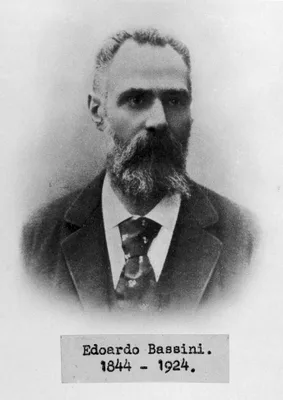
1889 BASSINI, Edoardo (1844 – 1924)
Nuovo metodo per la cura radicale dell’ ernia inguinale.
Bassini’s operation for the radical cure of inguinal hernia. His first account was unillustrated. Translation in J. Hist. Med., 1966, 21, 401-07. Bassini expanded his paper into an illustrated book with the same title…
GMN 3598 · https://historyofmedicine.com/id/4429
1889 HALSTED, William Stewart (1852 – 1922)
The radical cure of hernia.
Simultaneously with Bassini, Halsted devised the modern operation for the radical cure of inguinal hernia. This is known as the Halsted I repair. Later his technique differed much from that of Bassini. See also his la…
GMN 3599 · https://historyofmedicine.com/id/4431
1892 KOCHER, Emil Theodor (1841 – 1917)
Zur Radicalcur der Hernien.
Kocher’s hernia operation.
GMN 3600 · https://historyofmedicine.com/id/4433
1892 MARCY, Henry Orlando (1837 – 1924)
The anatomy and surgical treatment of hernia.
Marcy wrote a great deal on hernia, describing high ligation of the sac, transplantion of the spermatic cord, and careful reconstruction of the inguinal canal. This work, illustrated with 66 full-page plates, is one o…
GMN 3601 · https://historyofmedicine.com/id/4435
1893 BASSINI, Edoardo (1844 – 1924)
Nuovo metodo operativo per la cura radicale dell’ ernia crurale.
Bassini’s operation for femoral hernia.
GMN 3602 · https://historyofmedicine.com/id/4437
1893 FRANKS, Sir Kendal Matthew St John (1851 – 1920)
Resection of the intestine and immediate suture in gangrenous hernia.
Franks finally demonstrated the advantages of primary resection for gangrenous gut in strangulated hernia.
GMN 3603 · https://historyofmedicine.com/id/4439
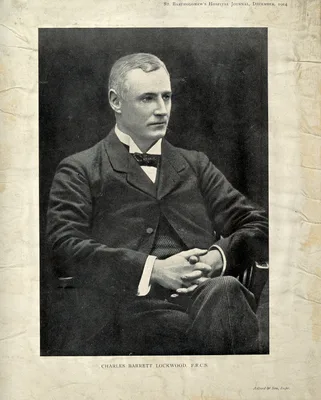
1893 LOCKWOOD, Charles Barrett (1856 – 1914)
The radical cure of femoral and inguinal hernia.
Lockwood’s operation for femoral hernia.
GMN 3604 · https://historyofmedicine.com/id/4442
1895 ANDREWS, Edward Wyllys (1856 – 1927)
Imbrication or lap joint method; a plastic operation for hernia.
Described imbrication of flaps in hernia repairs.
GMN 3604.1 · https://historyofmedicine.com/id/4469
1898 BLOODGOOD, Joseph Colt (1867 – 1935)
The transplantation of the rectus muscle in certain cases of inguinal hernia in which the conjoined tendon is obliterated.
Bloodgood’s operation for inguinal hernia. See also Ann. Surg., 1919, 70, 81-88.
GMN 3604.2 · https://historyofmedicine.com/id/4471
1898 LOTHEISSEN, Georg (1868 – 1941)
Zur Radikaloperation der Schenkelhernien.
Lotheissen’s operation for femoral hernia.
GMN 3605 · https://historyofmedicine.com/id/4473
1901 BATTLE, William Henry (1855 – 1936)
Abstract of a clinical lecture on femoral hernia.
Battle’s operation for femoral hernia.
GMN 3606 · https://historyofmedicine.com/id/4474
1901 MAYO, William James (1861 – 1939)
An operation for the radical cure of umbilical hernia.
Mayo’s operation for umbilical hernia.
GMN 3607 · https://historyofmedicine.com/id/4477
1907 FERGUSON, Alexander Hugh (1853 – 1912)
The technic of modern operations for hernia.
Includes description of the Ferguson operation.
GMN 3608.1 · https://historyofmedicine.com/id/4480
1908 SCHLOFFER, Hermann (1868 – 1937)
Chronisch entzündliche Bauchdeckengeschwülste nach Bruchoperationen.
“Schloffer’s tumor” – a rare inflammatory pseudotumor of the abdomen. It usually appears several years after abdominal surgery, including herniotomy, or trauma.
GMN 2634 · https://historyofmedicine.com/id/3226
1919 LAROQUE, G. Paul (1876 – 1934)
The permanent cure of inguinal and femoral hernia. A modification of the standard operative procedures.
Laroque combined a superior transperitoneal gridiron incision with a Bassini repair.
GMN 3608.2 · https://historyofmedicine.com/id/4494
1920 CHEATLE, Sir George Lenthal (1865 – 1951)
An operation for the radical cure of inguinal and femoral hernia.
First preperitoneal approach to hernia repair.
GMN 3608.3 · https://historyofmedicine.com/id/4496
1923 GALLIE, William Edward (1882 – 1959); LEMESURIER, Arthur Baker (1889 – 1982)
Living sutures in the treatment of hernia.
Gallie and LeMesurier used fascial sutures in their operation for inguinal hernia.
GMN 3609 · https://historyofmedicine.com/id/4498
1925 STROMAYR, Caspar ( – 1566); BRUNN, Walter Albert Ferdinand von (1876 – 1952)
Die Handschrift des Schnitt- und Augenarztes Caspar Stromayr in Lindau im Bodensee: In der Lindauer Handschrift (P.1.46) vom 4. Juli 1559. Mit einer historischen Einführung und Wertung von Walter von Brunn.
Stroymayr's manuscript was discovered in Lindau in 1909, and remained unpublished until the above edition, which reproduced his drawings in color. Like Bartisch (No. 5817) Stromayr specialized in hernia repair and eye…
GMN 3573.1 · https://historyofmedicine.com/id/8659