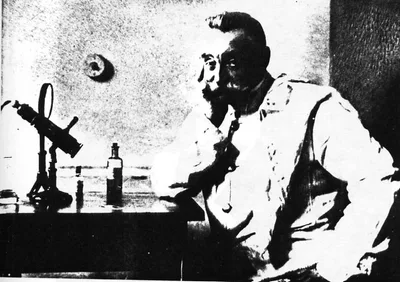
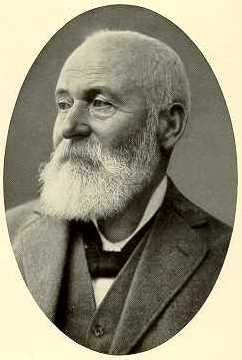
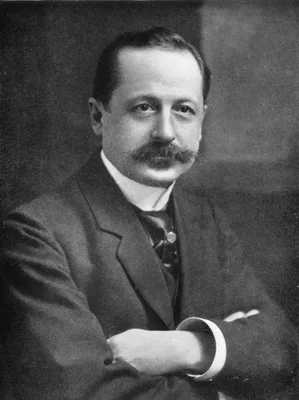
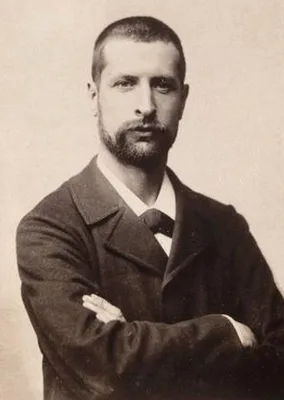
1890 BOSTROEM, Eugen Woldemar (1850 – 1928)
Untersuchungen über die Aktinomykose des Menschen.
Isolation of Actinomyces graminis from human actinomycosis, and staining method for Actinomyces.
GMN 5513 · https://historyofmedicine.com/id/6516
1890 WINOGRADSKY, Sergei Nikolaievich
Sur les organisms de la nitrification.
In his research on nitrifying bacteria Winogradsky discovered the first known form of chemoautotrophy in which organisms obtain energy by oxidation of electron donors in their environments without the intervention of …
GMN 12303 · https://historyofmedicine.com/id/14525
1891 NORDTMEYER, H
Ueber Wasserfiltration durch Filter aus gebrannter Infusorienerde.
Berkefeld kieselguhr filter.
GMN 2506.1 · https://historyofmedicine.com/id/3225
1891 ISRAEL, James Adolf (1848 – 1926); WOLFF, Max (1844 – 1923)
Ueber Reincultur des Actinomyces und seine Uebertragbarkeit auf Thiere.
Isolation of Actinomyces bovis, later called Actinomyces israelii.
GMN 5514 · https://historyofmedicine.com/id/6520
1892 LOEFFLER, Friedrich August Johann (1852 – 1915)
Ueber Epidemieen unter den im hygienischen Institute zu Greifswald gehaltenen Mäusen und über die Bekämpfung der Feldmausplage.
Isolation of Salm. typhi-murium.
GMN 2507 · https://historyofmedicine.com/id/3231
1892 NUTTALL, George Henry Falkiner (1862 – 1937); WELCH, William Henry (1850 – 1934)
A gas-producing bacillus (Bacillus aërogenes capsulatus nov. spec.) capable of rapid development in the blood-vessels after death.
Discovery of the gas gangrene bacillus (Welch bacillus) Cl. perfringens. Reprinted in Medical Classics, 1941, 5, 852-85.
GMN 2508 · https://historyofmedicine.com/id/3237
1892 STERNBERG, George Miller (1838 – 1915)
A manual of bacteriology.
Sternberg, U. S. Surgeon General 1893-1902, was a pioneer bacteriologist. Independently of Pasteur he discovered the pneumococcus and was first in America to photograph the tubercle bacillus. He sent Walter Reed off t…
GMN 2509 · https://historyofmedicine.com/id/3241
1892 STERNBERG, George Miller (1838 – 1915)
Practical results of bacteriological researches.
Sternberg demonstrated that the serum of an animal recovered from vaccinia possesses the property of neutralizing the activity of the causative virus. His test was readily adaptable for use in various host-systems.
GMN 2545.1 · https://historyofmedicine.com/id/3581
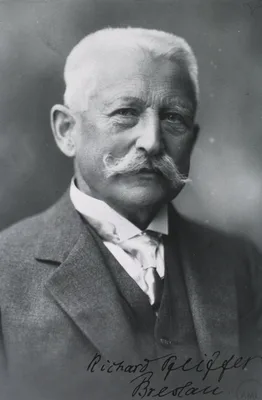
1892 PFEIFFER, Richard Friedrich Johannes (1858 – 1945)
Vorläufige Mittheilungen über die Erregerder Influenza.
Pfeiffer discovered a bacillus, Haemophilus influenzae, “Pfeiffer’s bacillus”, which he believed to be the causal organism of influenza.
GMN 5490 · https://historyofmedicine.com/id/6434
1892 WELCH, William Henry (1850 – 1934)
Conditions underlying the infection of wounds.
Discovery of Staph. epidermidis (albus) and its relation to the infection of wounds.
GMN 5621 · https://historyofmedicine.com/id/7179
1892 DÖDERLEIN, Albert Siegmund Gustav (1860 – 1941)
Das Scheidensekret und seine Bedeutung für das Puerperalfieber.
Döderlein's study of the vaginal secretion in relation to puerperal fever includes the first description of “Döderlein’s bacillus” (Lactobacillus). Döderlein introduced the concept of normal body bacteria or "normal b…
GMN 6279 · https://historyofmedicine.com/id/7999
1894 PFEIFFER, Richard Friedrich Johannes (1858 – 1945); ISAYEV, Vasily Isayevich (1854 – 1911)
Ueber die specifische Bedeutung der Choleraimmunität (Bakteriolyse).
Pfeiffer and Isayev recorded the occurrence of bacteriolysis in cholera vibrios under certain conditions: immune bacteriolysis, “Pfeiffer’s phenomenon”. Abridged English translation of second part in Bibel, Milestones…
GMN 2546 · https://historyofmedicine.com/id/3588
1894 LOEWENBERG, Benjamin Benno (1836 – 1905)
Le microbe de l’ozène.
Loewenberg found a bacillus of the Friedländer group in ozena.
GMN 3307 · https://historyofmedicine.com/id/4264
1894 PLAUT, Hugo Karl (1858 – 1928)
Studien zur bacteriellen Diagnostik der Diphtherie und der Anginen.
“Plaut’s angina” (necrotizing ulcerative gingivostomatitis). He noted the association of fusiform bacilli in ulcerating lesions of the tonsils. Vincent (see No. 3309) gave the first comprehensive description of this c…
GMN 3308.1 · https://historyofmedicine.com/id/4510
1894 UNNA, Paul Gerson (1850 – 1929)
Die Histopathologie der Hautkrankheiten.
This monumental work is a landmark in dermatological history. Sir Norman Walker translated it into English in 1896. Unna, short in stature but a giant among dermatologists, initiated the study of the skin by means of …
GMN 4000 · https://historyofmedicine.com/id/5072
1894 VINCENT, Jean Hyacinthe (1862 – 1950)
Étude sur le parasite du “pied de Madura”.
Isolation of Streptothrix (Actinomyces) madurae.
GMN 4117 · https://historyofmedicine.com/id/5703
1894 YERSIN, Alexandre Émile Jean (1863 – 1943)
La peste bubonique à Hong-Kong.
Yersin discovered the plague bacillus Pasteurella (Yersinia) pestis, isolating it from excised buboes. He published the first account of this organism. Preliminary note in C. R. Acad. Sci. (Paris), 1894, 119, 356.
GMN 5125 · https://historyofmedicine.com/id/6113
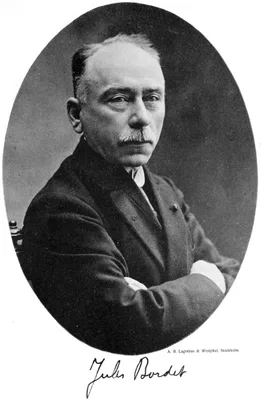
1895 BORDET, Jules Jean Baptiste Vincent (1870 – 1961)
Contribution à l’ étude du sérum chez les animaux vaccinés.
In Bordet’s classic paper on the properties of the sera of immunized animals he showed that two different substances (now known as sensitizing antibody and complement) are involved in the phenomenon of bacteriolysis. …
GMN 2547 · https://historyofmedicine.com/id/3592
1895 SCLAVO, Achille (1861 – 1930)
Sulla preparazione del siero anti-carbonchioso.
Specific anti-anthrax serum. German translation in Zbl. Bakt., 1895, 1 Abt., 18, 744-45.
GMN 5170 · https://historyofmedicine.com/id/6253
1895 ODRIOZOLA, Ernesto (1862 – 1921)
La erupción en la enfermedad de Carrión (verruga peruana).
“Carrion’s disease” (Oroya fever) was named by the Peruvian physician Ernesto Odriozola, after Daniel Alcides Carrión Garcia (1859-85), a student. In order to prove or disprove the connection between Oroya fever and v…
GMN 5530 · https://historyofmedicine.com/id/6655
1896 DURHAM, Herbert Edward (1866 – 1945); GRUBER, Max von (1853 – 1927)
Eine neue Methode zur raschen Erkennung des Choleravibrio und des Typhusbacillus.
The discovery of bacterial agglutination. Gruber and Durham discovered the agglutinating action of the serum of typhoid patients upon the typhoid bacillus. First briefly reported by Durham: On a special action of seru…
GMN 2549 · https://historyofmedicine.com/id/3604
1896 VINCENT, Jean Hyacinthe (1862 – 1950)
Sur l’étiologie et sur les lésions anatomo-pathologiques de la pourriture d’hôpital.
Vincent described a fusiform bacillus and a spirillum which, in association, were responsible for hospital gangrene. Later, in Arch. int. Laryng., 1898, 11, 44-48, he showed these two organisms to be present in “Vince…
GMN 3309 · https://historyofmedicine.com/id/4512
1896 MORAX, Victor (1866 – 1935)
Note sur un diplobacille pathogène pour la conjunctiva humaine.
Morax and Axenfeld (No. 5941) independently isolated a diplobacillus which causes a chronic conjunctivitis – the Morax – Axenfeld haemophilus.
GMN 5942 · https://historyofmedicine.com/id/6909
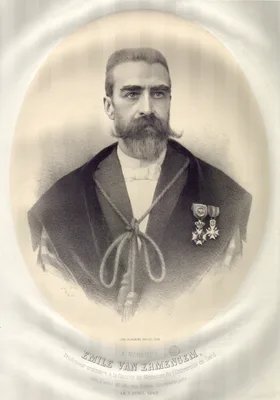
1897 ERMENGEM, Émile Pierre Marie van (1851 – 1932)
Contribution à l’ètude des intoxications alimentaires. Recherches sur des accidents à caractères botuliniques provoqués par du jambon.
Cl. botulinum was discovered by van Ermengem in cases of food poisoning.
GMN 2510 · https://historyofmedicine.com/id/3244
1897 SABOURAUD, Raymond Jacques Adrien (1864 – 1938)
La séborrhée grasse et la pelade.
Acne bacillus first cultivated.
GMN 4126 · https://historyofmedicine.com/id/5730
1897 BANG, Bernhard Laurits Frederik (1848 – 1932)
Die Aetiologie des seuchenhaften (“infectiösen”) Verwerfens.
Discovery of Brucella abortus.
GMN 5099 · https://historyofmedicine.com/id/6023
1897 KRÖNIG, Claus Ludwig Theodor Bernhard (1863 – 1918); MENGE, Karl (1864 – 1945)
Bakteriologie des weiblichen Genital-Kanales. 2 vols.
GMN 6106 · https://historyofmedicine.com/id/7541
1898 TRIBOULET, Henri (1864 – 1920); COYON, Amand (1871 – 1928)
Bactériologie du rhumatisme articulaire. Endocardite végétante mitrale provoquée chez le lapin par inoculation intra-veineuse d’un cocco-bacille en points doubles extraits du sang du rhumatisme articulaire aigu de l’homme.
Isolation of streptococci from patients with acute rheumatism reported.
GMN 4504.1 · https://historyofmedicine.com/id/99
1898 SMITH, Theobald (1859 – 1934)
A comparative study of bovine tubercle bacilli and of human bacilli from sputum.
First clear differentiation between the bovine and human types of tubercle bacillus.
GMN 2335 · https://historyofmedicine.com/id/3074
1898 DURHAM, Herbert Edward (1866 – 1945)
On an epidemic of gastro-enteritis associated with the presence of a variety of the Bacillus enteritidis (Gaertner), and with positive sero-diagnostic evidence (in vivo and in vitro).
Discovery of Salm. Aertrycke in patients suffering from food poisoning.
GMN 2513 · https://historyofmedicine.com/id/3256
1898 NOBELE, Jules de (1865 – 1946)
Du séro-diagnostic dans les affections gastro-intestinales d’origine alimentaire.
Discovery of Salmonella aertrycke, independently of Durham.
GMN 2514 · https://historyofmedicine.com/id/3259
1898 ROUX, Pierre Paul Émile (1853 – 1933); NOCARD, Edmond Isidore Etienne (1850 – 1903)
Le microbe de la péripneumonie.
Discovery of the causal organism of bovine pleuropneumonia, also known as lung plague. Nocard and Roux considered it a filterable virus but now known to be a mycoplasma.
GMN 3182 · https://historyofmedicine.com/id/4195
1898 GWYN, Norman Beechey (1875 – 1952)
On infection with a para-colon bacillus in a case with all the clinical features of typhoid fever.
Isolation of Salmonella paratyphi A.
GMN 5038 · https://historyofmedicine.com/id/5784
1898 SHIGA, Kiyoshi (1870 – 1957)
Ueber den Dysenteriebacillus (Bacillus dysenteriae).
Discovery of the dysentery bacillus, Shigella. Preliminary paper in the same journal, 1898, 23, 599-600.
GMN 5091 · https://historyofmedicine.com/id/6000
1899 PEREZ, Fernando (1863 – 1935)
Recherches sur la bactériologie de l’ozène.
Perez isolated an organism from the nose of patients suffering from ozena. He named it Coccobacillus foetidus ozaenae and considered it to be causally related to the disease.
GMN 3312 · https://historyofmedicine.com/id/4521
1900 MORO, Ernst (1874 – 1951)
Ueber die nach Gram färbbaren Bacillen des Säuglingsstuhles.
Isolation of Lactobacillus acidophilus.
GMN 2515 · https://historyofmedicine.com/id/3263
1900 WELCH, William Henry (1850 – 1934)
Morbid conditions caused by Bacillus aërogenes capsulatus.
Welch grouped together the diseases caused by Cl. perfringens, earlier discovered by him in association with Nuttall (see No. 2508).
GMN 2516 · https://historyofmedicine.com/id/3266
1900 KRUSE, Walther (1864 – 1943)
Ueber die Ruhr als Volkskrankheit und ihren Erreger.
Further work on dysentery by Kruse led to the coupling of his name with Shiga to designate both the “Shiga–Kruse bacillus” and “Shiga–Kruse disease”.
GMN 5092 · https://historyofmedicine.com/id/6002
1900 FLEXNER, Simon (1863 – 1946)
On the etiology of tropical dysentery.
The organism isolated by Flexner was at first thought to be identical with Shiga’s bacillus. Later Martini and Lentz, Z. Hyg., 1902, 41, 540, showed it to be different; it was named Bact. flexneri, and later Shigella …
GMN 5093 · https://historyofmedicine.com/id/6006
1900 POYNTON, Frederick John (1869 – 1943); PAINE, Alexander
The etiology of rheumatic fever.
After extensive bacteriological researches, Poynton and Paine considered that a diplococcus was the cause of rheumatic fever.
GMN 4505 · https://historyofmedicine.com/id/8890
1902 FLEXNER, Simon (1863 – 1946); NOGUCHI, Hideyo (1876 – 1928)
Snake venom in relation to haemolysis, bacteriolysis, and toxicity.
GMN 2110 · https://historyofmedicine.com/id/2613
1902 LIGNIÈRES, Joseph Léon Marcel (1868 – 1933); SPITZ, J
Actinobacilosis.
Discovery of the actinobacillus.
GMN 5531 · https://historyofmedicine.com/id/6671
1904 ROST, Ernest Reinhold (1872 – )
The cultivation of the Bacillus leprae.
Rost cultivated the leprosy bacillus, and he prepared leprolin, formerly used in treating leprosy.
GMN 2438 · https://historyofmedicine.com/id/2909
1904 NEUFELD, Fred Julius (1869 – 1945); RIMPAU, Willi (1877 – 1963)
Ueber die Antikörper des Streptokokken- und Pneumokokken-Immunserums.
Bacteriotropins named and described.
GMN 2560 · https://historyofmedicine.com/id/3679
1905 –1914 SMITH, Erwin Frink (1854 – 1927)
Bacteria in relation to plant diseases. 3 vols.
One of the most careful investigations of the bacterial diseases in plants was made by Smith, who conclusively demonstrated the existence of such diseases and proposed a scheme of classification for the bacteria conce…
GMN 2518 · https://historyofmedicine.com/id/3275
1905 CASTELLANI, Aldo (1877 – 1971)
On the presence of spirochaetes in two cases of ulcerated parangi (yaws).
Castellani demonstrated in scrapings of yaws tissue a spirochaete, T. pertenue, later found to be the causal organism. He thus finally established it as a distinct organism from the syphilis spirochaete. Preliminary n…
GMN 5306 · https://historyofmedicine.com/id/6557
1905 WELLMANN, Frederick Creighton (1871 – 1960)
On a spirochaete found in yaws papules.
Independently of Castellani (No. 5306) Wellmann discovered Treponema pertenue. "In addition to being an author, Wellman was also a doctor of tropical medicine, scientist, administrator, artist, educator, spy, and engi…
GMN 5307 · https://historyofmedicine.com/id/6559
1905 DUTTON, Joseph Everett (1877 – 1905); TODD, John Lancelot (1876 – 1949)
The nature of tick fever in the eastern part of the Congo Free State.
Independently of Ross and Milne, Dutton and Todd demonstrated relapsing fever in monkeys conveyed by infected ticks, Omithodorus moubata. The organism was named Sp. (now Borrelia) duttoni. Both Dutton and Todd contrac…
GMN 5318 · https://historyofmedicine.com/id/6610
1906 MORGAN, Harry de Riemer (1863 – 1931)
Upon the bacteriology of the summer diarrhoea of infants.
Morgan’s bacillus, Proteus morgani.
GMN 2518.1 · https://historyofmedicine.com/id/3281
1906 REUTER, Karl
Ueber Spirochaeta pallida in der Aortenwand bei Hellerscher Aortitis.
Treponema pallidum first discovered in the diseased aorta.
GMN 2824 · https://historyofmedicine.com/id/3531