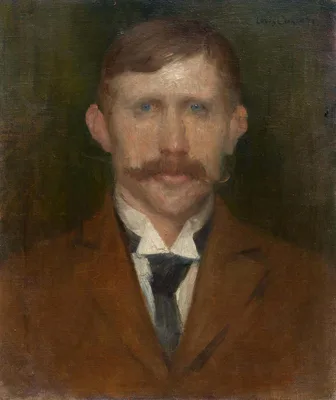
1653 HARTMAN [HARTMANNUS]
Thesis de carbunculo.
GMN 5160 · https://historyofmedicine.com/id/6222
1786 MÜLLER, Otto Friedrich (1730 – 1784)
Animalcula infusoria fluviatilia et marina, quae detexit, systematice descripsit et ad vivum delineari.
Müller was the first to attempt a systematic classification of infusoria. He published several papers on the subject, the best being the above posthumous work. Muller described 8 species of the genus Vibrio (included …
GMN 2466 · https://historyofmedicine.com/id/3031
1809 LINK, Johann Heinrich Friedrich (1767 – 1851)
Observationes in Ordines plantarum naturales. Dissertatio prima complectens Anandrarum ordines Epiphytas, Mucedines, Gastromycos et Fungo.
Link described Polyangium, the first bacterium to be described that is still recognized today. Link also described Penicillium for the first time.
GMN 11403 · https://historyofmedicine.com/id/13602
1838 EHRENBERG, Christian Gottfried (1795 – 1876)
Die Infusionsthierchen als vollkommene Organismen. 1 vol. and atlas of 64 hand-colored engraved plates.
In this monumental work in folio format Ehrenberg extended Otto Friedrich Müller’s bacteriological classification. Like Müller, he made no distinction between protozoa and bacteria, classing them both as infusoria. Hi…
GMN 111 · https://historyofmedicine.com/id/1664
1842 GOODSIR, John (1814 – 1867)
History of a case in which a fluid periodically ejected from the stomach contained vegetable organisms of an undescribed form.
First description of Sarcina ventriculi, discovered by Goodsir.
GMN 2471 · https://historyofmedicine.com/id/3048
1850 RAYER, Pierre François Olive (1793 – 1867)
Inoculation du sang de rate.
Rayer inoculated sheep with blood of other sheep dead of anthrax. Microscopically he saw the anthrax bacillus in the blood of the inoculated sheep. Rayer was associated with Davaine, who later, in Bull. Acad. Méd., 18…
GMN 5163 · https://historyofmedicine.com/id/6231
1855 POLLENDER, Franz Aloys Antoine (1799 – 1879)
Mikroskopische und mikrochemische Untersuchung des Milzbrandblutes sowie über Wesen und Kurdes Milzbrandes.
Pollender discovered the B. anthracis in 1849, but did not record this fact until 1855. He gave a more exact account of the organism than did Rayer (No. 5163).
GMN 5164 · https://historyofmedicine.com/id/6234
1857 PASTEUR, Louis (1822 – 1895)
Mémoire sur la fermentation appelée lactique.
First demonstration of the connection between a specific fermentation and the activity of a specific living micro-organism. This paper is often considered the beginning of bacteriology as a modern science. The above w…
GMN 2472 · https://historyofmedicine.com/id/3052
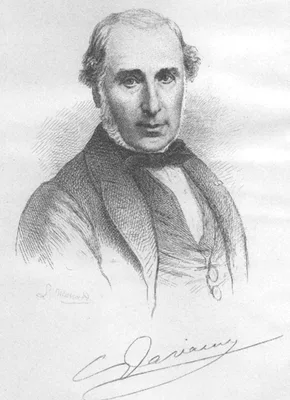
1863 DAVAINE, Casimir Joseph (1812 – 1882)
Recherches sur les infusoires du sang dans la maladie connue sous le nom de sang de rate.
Davaine showed that anthrax could be transmitted to sheep, horses, cattle, guinea-pigs, and mice, and that in such animals the bacilli did not appear in the blood until 4-5 hours before death.
GMN 5165 · https://historyofmedicine.com/id/6237
1865 DAVAINE, Casimir Joseph (1812 – 1882)
Recherches sur la nature et la constitution anatomique de la pustule maligne.
Davaine was the first conclusively to prove that a definite disease (anthrax) was due to a definite micro-organism (B. anthracis), and was thus one of the first to prove the germ theory of disease. He showed that the …
GMN 5166 · https://historyofmedicine.com/id/6239
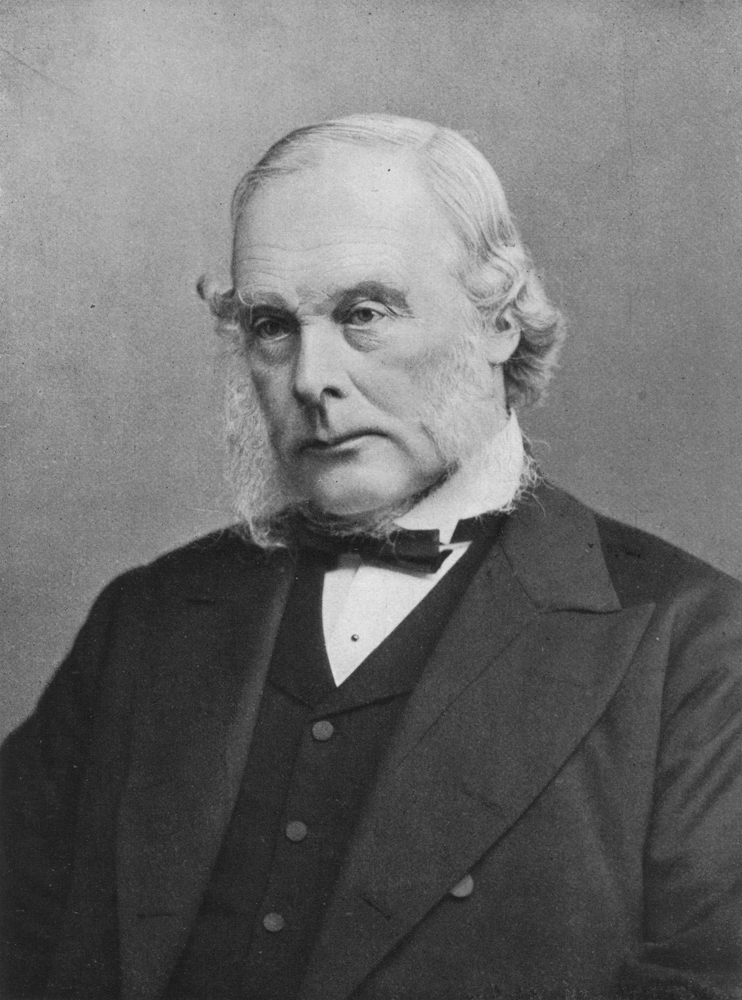
1873 LISTER, Joseph, 1st Baron Lister (1827 – 1912)
A further contribution to the natural history of bacteria and the germ theory of fermentative changes.
Isolation of Bacterium lactis, the specific micro-organism responsible for the lactic acid fermentation of milk.
GMN 2484 · https://historyofmedicine.com/id/3092
1873 OBERMEIER, Otto Hugo Franz (1843 – 1873)
Vorkommen feinster, eine Eigenbewegung zeigender Fäden im Blute von Recurrenskranken.
Discovery (in 1868) of Borrelia recurrentis, causative agent in relapsing fever.
GMN 5314 · https://historyofmedicine.com/id/6602
1874 HANSEN, Gerhard Henrik Armauer (1841 – 1912)
Indberetning til det Norske mediciniske Selskab i Christiania om en med understottelse af selskabet foretaghen reise for at anstille undersogelser angaende spedalskhedens arsager, tidels udforte sammen med forstander Hartwig.
Hansen discovered the leprosy bacillus on 28 February 1873. He had been stimulated by the previous work of Danielssen and Boeck, and his own demonstration of the leprosy bacillus is one of the earliest observations of…
GMN 2436 · https://historyofmedicine.com/id/2901
1874 BILLROTH, Christian Albert Theodor (1829 – 1894)
Untersuchungen über die Vegetationsformen von Coccobacteria septica und den Antheil, Welchen sie an der Enstehung und Verbreitung der accidentellen Wundkrankheiten Haben. Versuch einer wissenschaftlichen Kritik der verscheidenen Methoden antiseptischer Wundbehandlung.
Billroth provided the first account of streptocci wound infection, calling the bacteria Coccobacteria septica. When Billroth introduced antisepic techniques in his surgical practice the number of surgical patients wit…
GMN 12064 · https://historyofmedicine.com/id/14273
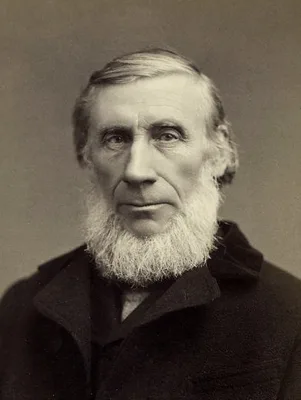
1876 TYNDALL, John (1820 – 1893)
The optical deportment of the atmosphere in relation to the phenomena of putrefaction and infection.
Tyndall observed the selective bacteria-inhibiting effect of Penicillium and the resistance of Ps. pyocyanea to it. See No. 2495.
GMN 1932 · https://historyofmedicine.com/id/2765
1876 KOCH, Robert Heinrich Hermann (1843 – 1910)
Die Aetiologie der Milzbrand-Krankheit, begründet auf die Entwicklungsgeschichte des Bacillus anthracis.
In 1876 Koch first obtained pure cultures of B. anthracis and described its complete life history. With Davaine (Nos. 5165-66) he did much to prove that infectious diseases are caused by living reproductive microorgan…
GMN 5167 · https://historyofmedicine.com/id/6243
1877 –1878 LISTER, Joseph, 1st Baron Lister (1827 – 1912)
On the lactic fermentation and its bearings on pathology.
Lister was the first to obtain a pure culture of a bacterium (Bact. lactis). Lister first presented the results of this research in an address to the Royal Society on December 18, 1877. Because of its historic signifi…
GMN 2489 · https://historyofmedicine.com/id/3115
1877 PASTEUR, Louis (1822 – 1895); JOUBERT, Jules François (1834 – 1910)
Charbon et septicémie.
Discovery of Vibrion septique (Cl. septicum), the first pathogenic anerobe to be found. Pasteur and Joubert were probably the first to realize the practical implications of antibiosis. They noted the antagonism betwee…
GMN 1932.1 · https://historyofmedicine.com/id/3134
1877 PASTEUR, Louis (1822 – 1895); JOUBERT, Jules François (1834 – 1910)
Étude sur la maladie charbonneuse.
Pasteur confirmed Koch’s results regarding anthrax; with Joubert he carried the bacillus through 100 generations and succeeded in producing anthrax from the last, thus disposing of the idea of a separate virus.
GMN 5168 · https://historyofmedicine.com/id/6246
1877 BOLLINGER, Otto (1843 – 1909)
Ueber eine neue Pilzkrankheit beim Rinde.
First effective description of Actinomyces bovis.
GMN 5510 · https://historyofmedicine.com/id/6511
1878 ISRAEL, James Adolf (1848 – 1926)
Neue Beobachtungen auf dem Gebiete der Mykosen des Menschen.
Israel contributed an important early paper on the ray fungus Actinomyces. He included some drawings made by Langenbeck in 1845 and was the first to describe a human case of actinomycosis.
GMN 5511 · https://historyofmedicine.com/id/6512
1879 NEISSER, Albert Ludwig Siegmund (1855 – 1916)
Ueber eine der Gonorrhoe eigentümliche Micrococcusform.
Discovery of the gonococcus – causal organism in gonorrhoea.
GMN 5208 · https://historyofmedicine.com/id/7802
1879 PASTEUR, Louis (1822 – 1895)
Septicémie puerpérale.
Description of the streptococcus of puerperal sepsis.
GMN 6278 · https://historyofmedicine.com/id/7997
1880 PASTEUR, Louis (1822 – 1895)
De l’extension de la théorie des germes à l’étiologie de quelques maladies communes.
In this study of furunculosis (“boils”) and osteomyelitis Pasteur left the first recognizable descriptions of staphylococcus and streptococcus. The term streptococcus had been coined by Billroth in 1874; however, Past…
GMN 2492.1 · https://historyofmedicine.com/id/3143
1880 PASTEUR, Louis (1822 – 1895); CHAMBERLAND, Charles (1851 – 1908); ROUX, Pierre Paul Émile (1853 – 1933)
Sur l’étiologie du charbon.
First use of attenuated bacteria for therapeutic purposes. See also the same journal, 1881, 92, 1378-83.
GMN 5169 · https://historyofmedicine.com/id/6251
1880 PONFICK, Emil (1844 – 1913)
Ueber Actinomykose.
Ponfick recognized the causative role of Actinomyces in human actinomycosis; he established the identity of the human and animal forms of the disease. He published a book on the subject, Die Actinomykose des Menschen,…
GMN 5512 · https://historyofmedicine.com/id/6513
1880 EBERTH, Carl Joseph (1835 – 1926)
Die Organismen in den Organen bei Typhus abdominalis.
Salmonella typhi, causal organism of typhoid, was discovered by Eberth. Some European writers refer to the disease as “Eberth’s disease”.
GMN 5030 · https://historyofmedicine.com/id/6764
1880 LEISTIKOW, Leo (1847 – 1917)
Ueber Bacterien bei den venerischen Krankheiten.
Leistikow was first to report the cultivation of the gonococcus.
GMN 5209 · https://historyofmedicine.com/id/7804
1881 OGSTON, Sir Alexander (1844 – 1929)
Report upon micro-organisms in surgical diseases.
Ogston showed that micrococci are constantly present in acute and chronic abscesses. He discovered Staphylococcus aureus. Ogston named staphylococcus in his paper, "Micrococcus poisoning," J. Anat. Physiol., 1882, 16,…
GMN 2494 · https://historyofmedicine.com/id/3152
1881 PARROT, Joseph (1829 – 1883)
L’organisme microscopique trouvé par M. Pasteur dans la maladie nouvelle provoquée par la salive d’un enfant mort de la rage.
Probably the earliest record of pneumococcus. Parrot reported the discovery made by Louis Pasteur.
GMN 3172 · https://historyofmedicine.com/id/4155
1881 STERNBERG, George Miller (1838 – 1915)
A fatal form of septicaemia in the rabbit, produced by the subcutaneous injection of human saliva.
In the same year as Pasteur, and independently, Sternberg discovered the pneumococcus (Streptococcus pneumoniae) demonstrating its carriage in the healthy human mouth.
GMN 3173 · https://historyofmedicine.com/id/4159
1881 KLEBS, Theodor Albrecht Edwin (1834 – 1913)
Der Bacillus des Abdominaltyphus und dertyphöse Process.
Klebs probably saw the typhoid bacillus before Eberth, reporting it later.
GMN 5031 · https://historyofmedicine.com/id/5741
1882 KOCH, Robert Heinrich Hermann (1843 – 1910)
Die Aetiologie der Tuberkulose.
Discovery of the tubercle bacillus announced March 24, 1882. This paper also contains a statement of “Koch’s postulates”. See also Nos. 2536 and 5167. Koch published a fuller account as "Die Aetiologie der Tuberkulose…
GMN 2331 · https://historyofmedicine.com/id/3057
1882 FEHLEISEN, Friedrich (1854 – 1924)
Ueber Erysipel.
Discovery of Strep pyogenes, infectious agent of scarlet fever and other streptococcal illnesses. Fehleisen cultured it from perierysipelas lesions on humans. English translation, 1886.
GMN 2496 · https://historyofmedicine.com/id/3168
1882 GESSARD, Carle (1850 – 1925)
Sur les colorations bleue et verte des linges à pansements.
Isolation of Pseudomonas aeruginosa (Ps. pyocyanea).
GMN 2497 · https://historyofmedicine.com/id/3173
1882 FRIEDLÄNDER, Carl (1847 – 1887)
Ueber die Schizomyceten bei der acuten fibrösen Pneumonie.
Isolation of Klebsiella pneumoniae (“Friedländer bacillus”), which Friedländer regarded as the causal organism in all cases of lobar pneumonia.
GMN 3174 · https://historyofmedicine.com/id/4160
1883 MALASSEZ, Louis Charles (1842 – 1909); VIGNAL, W.
Sur une forme de tuberculose sans bacilles.
Isolation of Pasteurella pseudotuberculosis.
GMN 2498 · https://historyofmedicine.com/id/3178
1883 KLEBS, Theodor Albrecht Edwin (1834 – 1913)
Ueber Diphtherie.
First account of Corynebacterium diphtheriae (Klebs–Loeffler bacillus), causal organism in diphtheria, discovered by Klebs.
GMN 5055 · https://historyofmedicine.com/id/5856
1883 KOCH, Robert Heinrich Hermann (1843 – 1910)
Bericht über die Thätigkeit der deutschen Cholerakommission in Aegypten und Ostindien.
Koch–Weeks bacillus, Hemophilus conjunctivitidis, or Hemophilus aegyptius. Koch discovered the bacilli of two varieties of Egyptian conjunctivitis. See also No. 5930.
GMN 5923 · https://historyofmedicine.com/id/6839
1884 FINKLER, Dittmar (1852 – 1912); PRIOR, J
Untersuchungen über Cholera nostras.
Finkler and Prior isolated Vibrio proteus from stools in a case of acute gastro-enteritis.
GMN 3481 · https://historyofmedicine.com/id/5685
1884 GAFFKY, Georg Theodor August (1850 – 1918)
Zur Aetiologie des Abdominaltyphus.
Gaffky was the first to grow pure cultures of Salmonella typhi; he showed it to be the true activator of the disease. English translation, New Sydenham Society, 1886. Digital facsimile of the 1884 printing from Google…
GMN 5032 · https://historyofmedicine.com/id/5747
1884 LOEFFLER, Friedrich August Johann (1852 – 1915)
Untersuchungen über die Bedeutung der Mikroorganismen für die Entstehung der Diphtherie beim Menschen, bei der Taube und beim Kalbe.
Loeffler succeeded in cultivating C. diphtheriae, the diphtheria bacillus. He reproduced the characteristic membrane by swabbing the mucous membranes of various animals with pure cultures of the bacillus. In this pape…
GMN 5056 · https://historyofmedicine.com/id/5859
1884 KOCH, Robert Heinrich Hermann (1843 – 1910)
Sechster Bericht der deutschen wissenschaftlichen Commission zur Ehrforschung der Cholera.
In this paper, dated 2 February 1884, written while Koch and his team were in Calcutta, Koch first published his discovery of the cholera bacillus and the main route of its transmission. He based his discovery on the …
GMN 5108 · https://historyofmedicine.com/id/6047
1884 NICOLAIER, Arthur (1862 – 1942)
Ueber infectiösen Tetanus.
The discovery of the tetanus bacillus, Clostridum tetani, is attributed to Nicolaier; he was, however, unable to isolate the organism in pure culture.
GMN 5148 · https://historyofmedicine.com/id/6182
1884 ROSENBACH, Anton Julius Friedrich (1842 – 1923)
Mikro-Organismen bei den Wund-Infections-Krankheiten des Menschen.
Rosenbach proved that streptococci and staphylococci are distinct and differentiated two strains of staphylococci (“aureus” and “albus”). He cultured cocci from a considerable range of septic conditions, thus more acc…
GMN 5619 · https://historyofmedicine.com/id/7159
1885 HAUSER, Gustav (1856 – 1935)
Ueber Fäulnissbacterien.
Isolation of Proteus vulgaris.
GMN 2502 · https://historyofmedicine.com/id/3199
1885 BUMM, Ernst (1858 – 1925)
Der Mikro-Organismus der gonorrhöischen Schleimhaut-Erkrankungen, Gonococcus-Neisser.
Bumm cultured the gonococcus. By human inoculations he demonstrated its pathogenicity in pure culture.
GMN 5209 · https://historyofmedicine.com/id/7808
1886 ESCHERICH, Theodor (1857 – 1911)
Die Darmbakterien des Säuglings und ihre Beziehungen zur Physiologie der Verdauung.
Includes the first account of Bact. coli infection. The organism was later renamed Escherichia coli (E.coli).
GMN 1017 · https://historyofmedicine.com/id/877
1886 SMITH, Theobald (1859 – 1934); SALMON, Daniel Elmer (1850 – 1914)
The bacterium of swine-plague.
Discovery of Salmonella choleraesuis. The Salmonellae tribe was named after Salmon, even though the discovery was made by Smith. See Bibel, Milestones in immunology (1988) 31-32.
GMN 2505 · https://historyofmedicine.com/id/3214
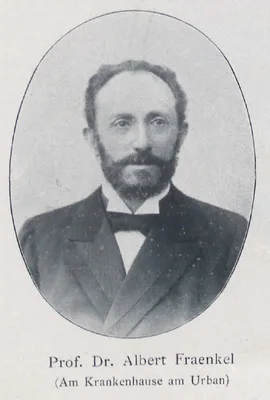
1886 FRAENKEL, Albert (1848 – 1916)
Die Mikrococcen der Pneumonie.
Fraenkel showed definitely that the organism found by Pasteur (No. 3172) and Sternberg (No. 3173) was a cause of pneumonia.
GMN 3175 · https://historyofmedicine.com/id/4165