1921 D'HÉRELLE, Félix Hubert (1873 – 1949)
Le bactériophage: Son rôle dans l'immunité.
D'Hérrelle cited several actual reports of successful treatment of bacterial infections by the injection of bacteriophages in animals and humans. These may be considered early attempts at direct gene transfer in vivo …
GMN 10196 · https://historyofmedicine.com/id/12385
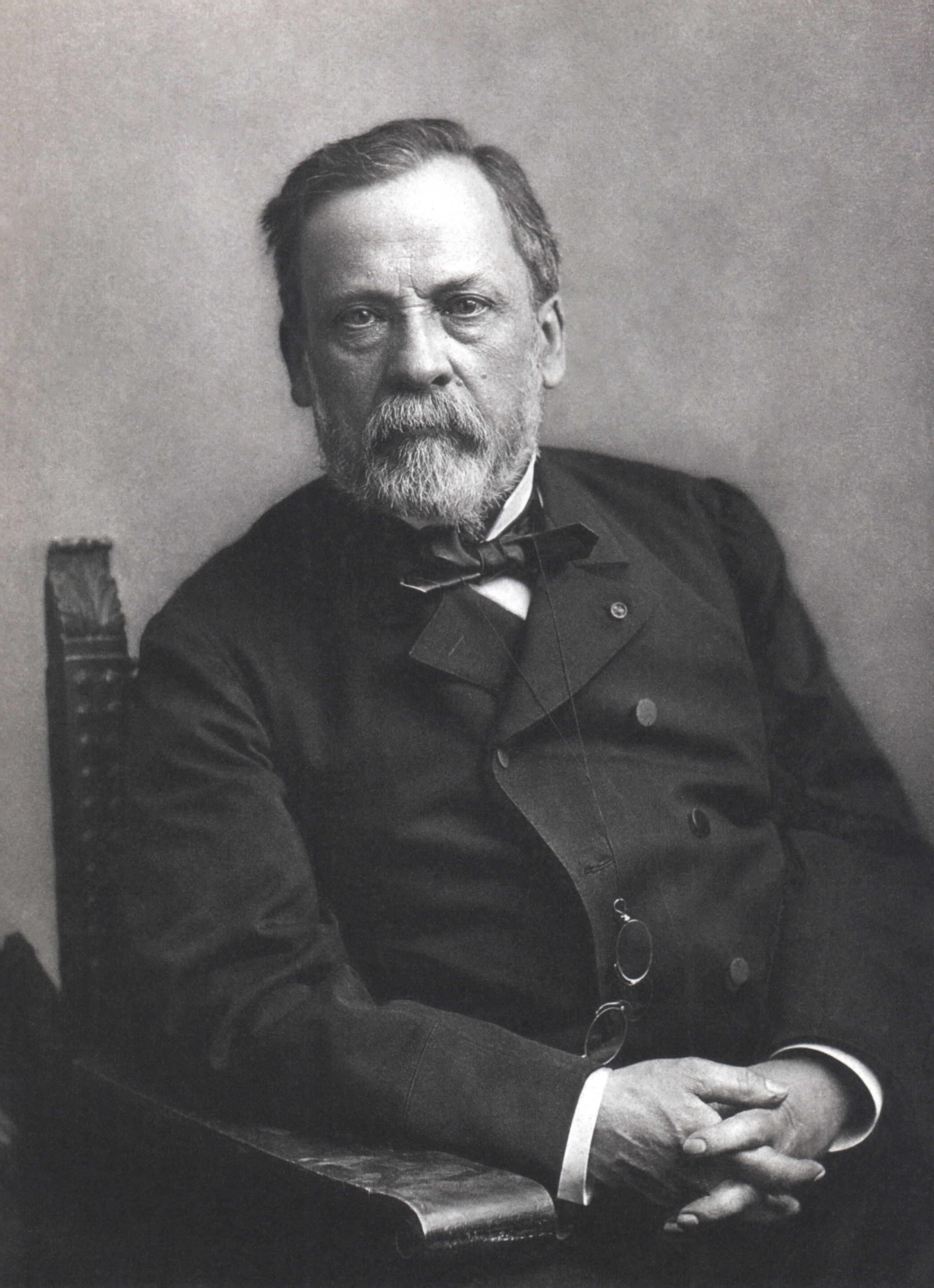
1922 –1939 PASTEUR, Louis (1822 – 1895); VALLERY-RADOT, Joseph Louis Pasteur (1886 – 1970)
Œuvres de Pasteur, réunies par Pasteur Vallery-Radot. 7 vols.
One of the founders of bacteriology, Pasteur's work on fermentation, the doctrine of spontaneous generation (which he exploded), virus diseases and preventive vaccinations, was fundamental. Digital facsimile of the co…
GMN 83 · https://historyofmedicine.com/id/1399
1923 ULLMANN, Egon Victor (1894 – 1962)
On the aetiology of the laryngeal papilloma.
In this classic paper Ullmann reported the transmission of the virus to animals.
GMN 3323 · https://historyofmedicine.com/id/4552
1923 SEN, Rajendra Kumar
A treatise on influenza, with special reference to the pandemic of 1918.
Sen, company doctor on the Hurmutty Tea Estate in Assam, estimated that the pandemic killed about 15,000,000 people in India.
GMN 12109 · https://historyofmedicine.com/id/14318
1925 KUNDRATITZ, Karl (1889 – 1975)
Experimentelle Übertragung von Herpes zoster auf den Menschen und die Beziehungen von Herpes zoster zu Varicellen.
First demonstration of the infectivity of herpes.
GMN 4652 · https://historyofmedicine.com/id/753
1925 GYE, William Ewart (1884 – 1952)
The aetiology of malignant new growths.
Gye advanced the theory that an ultramicroscopic virus combined with an intrinsic chemical factor were concerned in the production of the Rous sarcoma.
GMN 2647 · https://historyofmedicine.com/id/3291
1925 BARNARD, Joseph Edwin (1870 – 1949)
The microscopical examination of filterable viruses associated with malignant new growths.
Barnard supported, with photomicrographs, Gye’s theory concerning the origin of cancer.
GMN 2648 · https://historyofmedicine.com/id/3294
1925 GORDON, Mervyn Henry (1872 – 1953)
Studies of the viruses of vaccinia and variola.
Medical Research Council Special Report No. 98; a summary of the more important additions to the knowledge of the subject.
GMN 5432 · https://historyofmedicine.com/id/7409
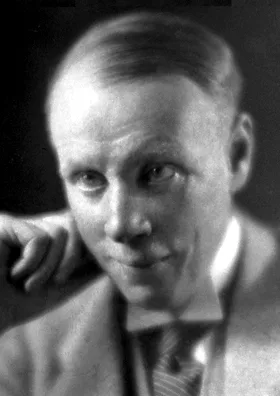
1925 LEWIS, Sinclair (1885 – 1951)
Arrowsmith.
"This novel has been inspirational for several generations of pre-medical and medical students. There is much agonizing along the way concerning career and life decisions. While detailing Arrowsmith's pursuit of the n…
GMN 10197 · https://historyofmedicine.com/id/12386
1926 LEDINGHAM, Sir John Charles Grant (1875 – 1944)
Studies on variola, vaccinia, and avian molluscum.
Ledingham’s diagnostic test.
GMN 5433 · https://historyofmedicine.com/id/7412
1926 D'HÉRELLE, Félix Hubert (1873 – 1949)
Le bactériophage et son comportement.
In this book d'Hérelle reported on the results of quantitative work based on the plaque-count, and dilution methods of assay that he invented. He described a three-step process for the life history of the bacteriophag…
GMN 14003 · https://historyofmedicine.com/id/16308
1928 MAITLAND, Hugh Bethune (1895 – 1972); MAITLAND, Mary L. Cowan ( – 1972)
Cultivation of vaccinia virus without tissue culture.
Introduction of “Maitland’s medium”.
GMN 5434.1 · https://historyofmedicine.com/id/7422
1928 STOKES, Adrian (1887 – 1927); ET AL
Experimental transmission of yellow-fever to laboratory animals.
Experimental infection of the monkey, Macacus rhesus, with the yellow fever virus. Stokes succumbed to yellow fever while investigating the disease. With J. H. Bauer and N. P. Hudson.
GMN 5462 · https://historyofmedicine.com/id/7575
1930 LEVINTHAL, Claude Walter (1886 – 1963)
Die Ätiologie der Psittakosis.
Discovery of the causal agent of psittacosis, Chlamydia psittaci. Simultaneously A. C. Coles (Lancet, 1930, 1, 1011-12) and R. D. Lillie (Publ. Hlth. Rep., Wash., 1930, 45, 773-78) made the same discovery, and the ele…
GMN 5539 · https://historyofmedicine.com/id/6726
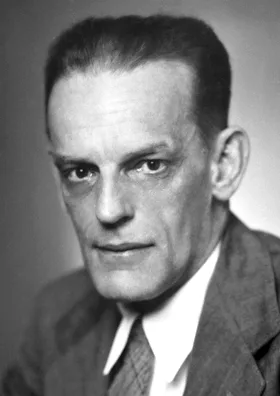
1930 THEILER, Max (1899 – 1972)
Studies on the action of yellow fever virus in mice.
The intracerebral protection test in mice, a test for the diagnosis of yellow fever and for the determination of its past existence in a community, was made possible by Theiler’s discovery that white mice are suscepti…
GMN 5463 · https://historyofmedicine.com/id/7579
1931 BURNET, Sir Frank Macfarlane (1899 – 1985); MACNAMARA, Annie Jean Dame (1899 – 1968)
Immunological differences between strains of poliomyelitis virus.
GMN 4670.5 · https://historyofmedicine.com/id/861
1931 ELFORD, William Joseph (1900 – 1952)
A new series of graded collodion membranes suitable for general bacteriological use, especially in filterable virus studies.
In his important studies on the filtration of virus preparations, Elford showed that different viruses possessed different and characteristic sizes.
GMN 2524 · https://historyofmedicine.com/id/3327
1931 WOODRUFF, Alice Miles; GOODPASTURE, Ernest William (1886 – 1960)
The susceptibility of the chorio-allantoic membrane of chick embryos to infection with the fowl-pox virus.
By their demonstration of the infection of the chorio-allantoic membrane with the virus of fowl pox, Woodruff and Goodpasture initiated wide-spread adoption of this host for the study of viruses.
GMN 2524.1 · https://historyofmedicine.com/id/3331
1931 SHOPE, Richard Edwin (1901 – 1966)
Swine influenza. III. Filtration experiments and etiology.
Isolation in pigs of influenzavirus A or influenza A virus. Full text available from PubMedCentral at this link.
GMN 5493 · https://historyofmedicine.com/id/6443
1931 DAUBNEY, Robert (1891 – ); HUDSON, John Richard
Enzootic hepatitis or Rift Valley fever. An undescribed virus disease of sheep, cattle and man from East Africa.
First description.
GMN 5541 · https://historyofmedicine.com/id/6730
1932 SHOPE, Richard Edwin (1901 – 1966)
A transmissible tumor-like condition in rabbits.
Shope papilloma virus (SPV), a benign infectious tumor due to a virus. This was the first mammalian tumor virus discovered. Full text from PubMedCentral at this link. See also Shope, "Infectious Papillomatosis of Rabb…
GMN 2656 · https://historyofmedicine.com/id/3328
1932 THOMSON, David (1884 – 1969); THOMSON, Robert (1888 – )
The common cold, with special reference to the part played by streptococci, pneumococci, and other organisms.
Annals of the Pickett-Thomson Research Lab., Vol. 8.
GMN 3204 · https://historyofmedicine.com/id/4321
1932 BEDSON, Sir Samuel Phillips (1886 – 1969); BLAND, J. O. W.
A morphological study of psittacosis virus, with the description of a developmental cycle.
Conclusive proof of the causal relationship of the psittacosis agent to the infection.
GMN 5541.1 · https://historyofmedicine.com/id/6735
1932 SAWYER, Wilbur Augustus (1879 – 1951); LLOYD, Wray Devere Marr (1902 – 1936)
Vaccination against yellow fever with immune serum and virus fixed for mice.
These workers devised an immune serum for prophylactic inoculation against yellow fever. With S. F. Kitchen and W. D. M. Lloyd.
GMN 5465 · https://historyofmedicine.com/id/7586
1932 THEILER, Max (1899 – 1972); HAAGEN, Eugen (1898 – 1972)
Untersuchungen über das Verhalten des Gelbfiebervirus in der Gewebekultur. Mit besonderer Berücksichtigung seiner Kultivierbarkeit.
Yellow fever virus grown in tissue culture.
GMN 5465.1 · https://historyofmedicine.com/id/7591
1933 MUCKENFUSS, Ralph S. (1916 – )
Encephalitis: studies on experimental transmission.
Isolation of the St. Louis encephalitis virus. With C. Armstrong and H. A. McCordock.
GMN 4656 · https://historyofmedicine.com/id/765
1933 LAIDLAW, Sir Patrick Playfair (1881 – 1940); ANDREWES, Sir Christopher Howard (1896 – 1988); SMITH, Wilson (1897 – 1965)
A virus obtained from influenza patients.
Smith, Andrewes, and Laidlaw first isolated the influenza A virus in humans. They successfully infected ferrets with filtered throat-washings from influenzal patients by intranasal instillation.
GMN 5494 · https://historyofmedicine.com/id/6445
1933 –1934 THOMSON, David (1884 – 1969); THOMSON, Robert (1888 – )
Influenza. 2 vols.
Annals of the Pickett Thomson Research Lab., Monograph 16. "In two massive volumes Thomson and Thomson reviewed the literature on influenza up to 1934" (Spink).
GMN 5495 · https://historyofmedicine.com/id/6451
1934 SABIN, Albert Bruce (1906 – 1993); WRIGHT, Arthur M.
Acute ascending myelitis following a monkey bite, with the isolation of a virus capable of reproducing the disease.
Herpesvirus simiae (B virus) infection; isolation of the virus.
GMN 4658 · https://historyofmedicine.com/id/770
1934 ARMSTRONG, Charles (1886 – 1967); LILLIE, Ralph Dougall (1896 – 1979)
Experimental lymphocytic choriomeningitis of monkeys and mice produced by a virus encountered in studies of the 1933 St. Louis encephalitis epidemic.
Isolation of the virus of benign lymphocytic choriomeningits.
GMN 4688 · https://historyofmedicine.com/id/966
1934 GOODPASTURE, Ernest William (1886 – 1960); JOHNSON, Claud D.
An investigation of the etiology of mumps.
Isolation of mumps virus.
GMN 5543 · https://historyofmedicine.com/id/6746
1935 STANLEY, Wendell Meredith (1904 – 1971)
Isolation of a crystalline protein possessing the properties of tobacco-mosaic virus.
Stanley first crystallized a virus— tobacco mosaic virus. The following year Bawden, Pirie, Bernal and Fankuchen (No. 12005) showed that tobacco mosaic virus molecules are asnisometric and consist of ribonucleoprotein…
GMN 2524.5 · https://historyofmedicine.com/id/3353
1935 HOSKINS, Meredith
A protective action of neurotropic against viscerotropic yellow fever virus in Macacus rhesus.
One of the first examples of an animal virus interference phenomenon was demonstrated by Hoskins.
GMN 2576.3 · https://historyofmedicine.com/id/4118
1935 BURNET, Sir Frank Macfarlane (1899 – 1985)
Propagation of the virus of epidemic influenza on the developing egg.
Cultivation of the influenza virus.
GMN 5496 · https://historyofmedicine.com/id/6453
1936 TANIGUCHI, Tenji (1889 – 1961); ET AL
A virus isolated in 1935 epidemic of summer encephalitis in Japan.
T. Taniguchi, M. Hosokawa, and S. Kuga established a virus etiology for Japanese B encephalitis.
GMN 4659 · https://historyofmedicine.com/id/774
1936 SABIN, Albert Bruce (1906 – 1993); OLITSKY, Peter Kosciusko (1886 – 1964)
Cultivation of poliomyelitis virus in vitro in human embryonic nervous tissue.
Isolation and propagation of the poliomyelitis virus in pure culture.
GMN 4670.6 · https://historyofmedicine.com/id/868
1936 SCHLESINGER, Max (1906 – 1937)
The Feulgen reaction of the bacteriophage substance.
Schlesinger showed that the fundamental constituents of bacteriophages consist mainly of approximately equal amounts of protein and DNA.
GMN 2524.6 · https://historyofmedicine.com/id/3356
1936 SHORTT, Henry Edward (1887 – 1987); ET AL
Cultivation of the viruses of sandfly fever and dengue fever on the chorioallantoic membrane of the chick-embryo.
Cultivation of the virus of phlebotomus fever. With R. S. Rao and C. S. Swaminath.
GMN 5480 · https://historyofmedicine.com/id/6369
1936 WEBSTER, Leslie Tillotson (1894 – 1943); CLOW, Anna D. (1905 – 1992)
Propagation of rabies virus in tissue culture and the successful use of culture virus as antirabic vaccine.
Webster and Clow succeeded in growing rabies virus in tissue culture.
GMN 5484.2 · https://historyofmedicine.com/id/6390
1936 BERNAL, John Desmond (1901 – 1971); BAWDEN, Sir Frederick Charles (1908 – 1972); PIRIE, Norman Wingate (1907 – 1997); FANKUCHEN, Isidor (1904 – 1964); ET AL
Liquid crystalline substances from virus infected plants.
Order of authorship in the original publication: Bawden, Pirie, Bernal, Fankuchen. The authors isolated and crystallized tobacco mosaic virus, finding for the first time that a virus contained nucleic acids, when othe…
GMN 12005 · https://historyofmedicine.com/id/14213
1937 THEILER, Max (1899 – 1972); SMITH, Hugh Hollingsworth (1902 – 1995)
The use of yellow fever virus modified by in vitro cultivation for human immunization.
Immunization without the use of immune serum. In 1951 Theiler was awared the Nobel Prize in Physiology or Medicine "for his discovery of an effective vaccine against yellow fever." This was the first Nobel Prize award…
GMN 5467 · https://historyofmedicine.com/id/7597
1937 BEAUDETTE, Fred Robert; HUDSON, C. B.
Cultivation of the virus of infectious bronchitis.
The authors were the first to isolate a pathogenic coronavirus in chickens. This was the first pathogenic coronavirus described. (Thanks to Juan Weiss for this reference and its interpretation.)
GMN 12008 · https://historyofmedicine.com/id/14216
1938 FOTHERGILL, Leroy Dryden (1901 – 1967); ET AL
Human encephalitis caused by the virus of the Eastern variety of equine encephalomyelitis.
Isolation of the virus of Eastern equine encephalitis from man. With J. H. Dingle, S. Farber, and M. L. Connerley.
GMN 4659.1 · https://historyofmedicine.com/id/780
1938 HOWITT, Beatrice Fay (1891 – )
Recovery of the virus of equine encephalomyelitis from the brain of a child.
Western equine encephalitis virus recovered from man.
GMN 4660 · https://historyofmedicine.com/id/783
1938 WOLLMAN, Eugène (1883 – 1943); WOLLMAN, Elisabeth (1888 – 1943)
Recherches sur le phénomène de Twort-d’Hérelle (bactériophage ou autolyse hérédo-contagieuse).
The Wollmans made important contributions to the knowledge on bacteriophage and lysogeny.
GMN 2576.7 · https://historyofmedicine.com/id/4125
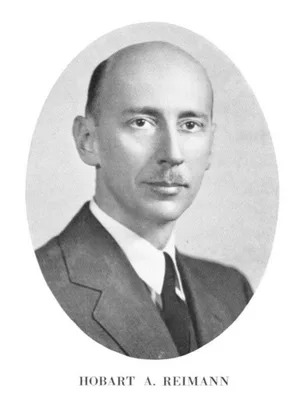
1938 REIMANN, Hobart Ansteth (1897 – 1986)
An acute infection of the respiratory tract with atypical pneumonia: A disease entity probably caused by a filterable virus.
Atypical pneumonia.
GMN 3211 · https://historyofmedicine.com/id/4348
1938 PLOTZ, Harry (1890 – 1947)
Culture “in vitro” du virus de la rougeole.
Successful cultivation of measles virus.
GMN 5449 · https://historyofmedicine.com/id/7492
1938 SHANNON, Raymond Corbett (1894 – 1945); ET AL
Yellow fever virus in jungle mosquitoes.
Haemagogus sp. shown to be vectors of yellow fever. With L. Whitman and M. Frania.
GMN 5467.1 · https://historyofmedicine.com/id/7600
1939 ZILBER, Lev Aleksandrovich (Alexandrovich) (1894 – 1966)
Vesennij (vesenne-letnij) endemiceskij klescevoj encefalit. [Vernal (verno-aestival) endemic tick-borne encephalitis.]
Isolation of the virus of spring–summer (Russian Far East) encephalitis.
GMN 4660.1 · https://historyofmedicine.com/id/785
1939 ARMSTRONG, Charles (1886 – 1967)
Successful transfer of the Lansing strain of poliomyelitis virus from the cotton rat to the white mouse.
Armstrong adapted the Lansing strain of poliomyelitis to the cotton rat and then to the mouse, greatly facilitating experimental work on the disease.
GMN 4671.2 · https://historyofmedicine.com/id/878