1861 –1862 BÄRENSPRUNG, Friedrich Wilhelm Felix von (1822 – 1864)
Die Gürtelkrankheit.
Herpes zoster first ascribed to a lesion of the spinal ganglia.
GMN 4640 · https://historyofmedicine.com/id/8866
1881 GALTIER, Pierre-Victor (1846 – 1908)
Les injections de virus rabique dans le torrent circulatoire ne provoquent pas l’éclosion de la rage et semblant conférer l’immunité. La rage peut être transmise par l’ingestion de la matiére rabique.
Galtier immunized sheep by inoculating rabid saliva in the veins; this did not produce the disease and protected the animals from a further inoculation. His work aroused the interest of Pasteur.
GMN 5481.3 · https://historyofmedicine.com/id/6378
1881 PASTEUR, Louis (1822 – 1895); CHAMBERLAND, Charles (1851 – 1908); ROUX, Pierre Paul Émile (1853 – 1933); THUILLIER, Louis (1856 – 1883)
Sur la rage.
This paper marks the beginning of Pasteur’s studies on rabies. English translation in R. Suzor, Hydrophobia: An account of M. Pasteur’s system…London, 1887.
GMN 5481.4 · https://historyofmedicine.com/id/6382
1884 LANDOUZY, Louis Théophile Joseph (1845 – 1917)
Fièvre zoster etexanthèmes zosteriformes.
Landouzy first suggested the infective nature of herpes.
GMN 4642 · https://historyofmedicine.com/id/717
1884 PASTEUR, Louis (1822 – 1895); CHAMBERLAND, Charles (1851 – 1908); ROUX, Pierre Paul Émile (1853 – 1933)
Nouvelle communication sur la rage.
Demonstration in the blood of the rabies virus. English translation in R. Suzor, Hydrophobia: An account of M. Pasteur’s system…London, 1887.
GMN 5482 · https://historyofmedicine.com/id/6383
1885 PASTEUR, Louis (1822 – 1895)
Méthode pour prévenir la rage après morsure.
Pasteur’s papers describing his rabies vaccine, and the results he attained with it gave further proof of the value of attenuated virus as a protective inoculum against infective diseases in man and animals. This is c…
GMN 2541 · https://historyofmedicine.com/id/3549
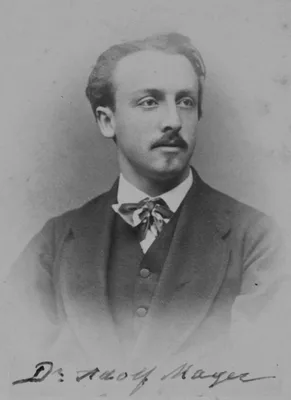
1886 MAYER, Adolf Eduard Maydolf (1843 – 1942)
Ueber die Mosaikkrankheit des Tabaks.
Mayer was first to describe and name tobacco mosaic disease and to demonstrate its infectious nature, that it could be transferred between plants, similar to bacterial infections. Translation in Phytopathological Clas…
GMN 2503.1 · https://historyofmedicine.com/id/3207
1886 BUIST, John Brown (1846 – 1915)
The life-history of the micro-organisms associated with variola and vaccinia. An abstract of results obtained from a study of smallpox and vaccination in the surgical laboratory of the University of Edinburgh.
The “Paschen elementary bodies” (No. 5430) were first recognized and demonstrated by Buist. Republished as an appendix to his Vaccinia and variola, London, 1887.
GMN 5427 · https://historyofmedicine.com/id/7375
1892 IVANOVSKI, Dmitri Iosifovich (Ivanowski; Iwanowski) (1864 – 1920)
Ueber die Mosaikkrankheit der Tabakspflanze.
The Russian botanist Ivanovski demonstrated that the agent responsible for tobacco mosaic disease could pass through the finest filter then available. This was the starting point of research into the etiology of virus…
GMN 2506.2 · https://historyofmedicine.com/id/3229
1892 BÓKAY, János (1858 – 1937)
Das Auftreten von Varizellen unter eigentümlichen Verhältnissen.
Bokay was the first to suggest an etiological relationship between varicella and herpes zoster. See also his paper in Wien. klin. Wschr., 1909, 22, 1323-26.
GMN 5439.1 · https://historyofmedicine.com/id/7460
1893 GUARNIERI, Guiseppe (1856 – 1918)
Ricerche sulla patogenesi ed etiologia dell’ infezione vaccinica e vaiolosa.
Guamieri described bodies found in the specific lesions of smallpox. Cytorrhyctes variolae guarnieri, which he believed to be the causative organism of the disease. Guarnieri bodies are found in all poxvirus infection…
GMN 5428 · https://historyofmedicine.com/id/7380
1898 BEIJERINCK, Martinus Willem (1851 – 1931)
Ueber ein Contagium vivum fluidum als Ursache der Fleckenkrankheit der Tabaksblätter.
Beijerinck confirmed the findings of Ivanovski. He showed that the tobacco mosaic virus would diffuse through agar. "Like Ivanovsky before him and Adolf Mayer, predecessor at Wageningen, Beijerinck could not culture t…
GMN 2512 · https://historyofmedicine.com/id/3254
1900 HEAD, Sir Henry (1861 – 1940); CAMPBELL, Alfred Walter (1868 – 1937)
The pathology of herpes zoster and its bearing on sensory localisation.
Head and Campbell showed herpes zoster to be a hemorrhagic inflammation of the posterior nerve roots and the homologous spinal ganglia.
GMN 4644 · https://historyofmedicine.com/id/724
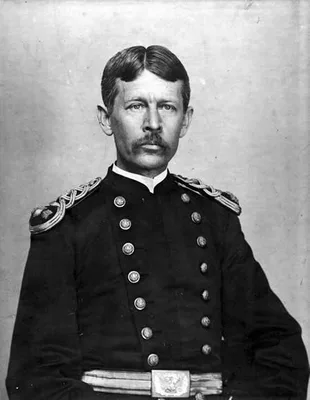
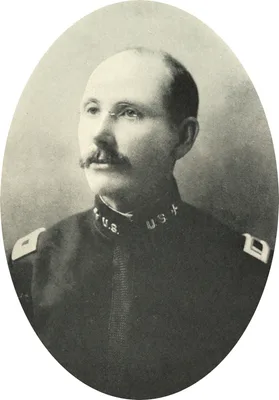
1902 REED, Walter (1851 – 1902)
Recent researches concerning the etiology, propagation, and prevention of yellow fever, by the United States Army Commission.
By 1902 Reed knew that the infectious agent of yellow fever was smaller than bacteria, though he did not specifically call it a virus. "In 1898, the passage of an animal pathogen through a Chamberland filter was repor…
GMN 11860 · https://historyofmedicine.com/id/14064
1903 NEGRI, Adelchi (1876 – 1912)
Contributo alio studio dell’ eziologia della rabia.
Discovery of the “Negri bodies” in rabies, the size of which makes viewing possible with a light microscope, and allows prompt microscopic diagnosis. German translation in Z. Hyg. InfektKr., 1903, 43, 507-28. Even tho…
GMN 5484 · https://historyofmedicine.com/id/6388
1903 REMLINGER, Paul (1871 – 1964)
Le passage du virus rabique à travers les filtres.
By demonstrating that the rabies organism is filterable Remlinger proved that rabies is a virus. The rabies virus was the second virus causing disease in humans to be identified. Remlinger made his discovery by follow…
GMN 14034 · https://historyofmedicine.com/id/16341
1905 –1906 TYZZER, Ernest Edward (1875 – 1965)
The histology of the skin lesions in varicella.
Tyzzer was first to recognize inclusion bodies in varicella.
GMN 5440 · https://historyofmedicine.com/id/7464
1907 HUNT, James Ramsay (1872 – 1937)
On herpetic inflammations of the geniculate ganglion: A new syndrome and its complications.
Herpes zoster oticus, also known as Ramsay Hunt syndrome type 2.
GMN 12253 · https://historyofmedicine.com/id/14468
1907 MAREK, József (1868 – 1952)
Multiple Nervenentzündung (Polyneuritis) bei Hühnern.
Marek's disease (fowl paralysis) later named by Peter Biggs, who determined that the disease was caused by Gallid alphaherpesvirus 2, and developed the first generation Marek's disease vaccine.
GMN 13400 · https://historyofmedicine.com/id/15672
1908 DOERR, Robert (1871 – 1952)
Ueber ein neues invisibles Virus.
Doerr showed the relation of phlebotomus fever to the sandfly, Phlebotomus.
GMN 5477 · https://historyofmedicine.com/id/6363
1908 FERMI, Claudio (1862 – 1952)
Über die Immunisierung gegen Wutkrankheit.
Fermi was the first to use chemical treatment of tissue suspensions of fixed rabies virus for the preparation of vaccine (Fermi vaccine). He introduced the use of carbolic acid for this purpose.
GMN 5484.1 · https://historyofmedicine.com/id/6389
1909 LANDSTEINER, Karl (1868 – 1943); POPPER, Erwin (1879 – 1955)
Uebertragung der Poliomyelitis acuta auf Affen.
Landsteiner and Popper were the first to isolate poliovirus and to transmit poliomyelitis to monkeys.
GMN 4669 · https://historyofmedicine.com/id/830
1909 DOERR, Robert (1871 – 1952); RUSS, Viktor Karl (1879 – )
Weitere Untersuchungen über das Pappatacifieber.
Doerr and Russ suggested that the virus of phlebotomus fever may be transmitted from one generation of infected Phlebotomus papatasii to another.
GMN 5478 · https://historyofmedicine.com/id/6366
1909 DOERR, Robert (1871 – 1952); ET AL
Das Pappatacifieber.
An Austrian military commission consisting of R. Doerr, K. Franz, and S. Taussig proved that the causal organism of pappataci fever was a virus and that Phlebotomus papatasii was the vector.
GMN 5479 · https://historyofmedicine.com/id/6367
1910 LANDSTEINER, Karl (1868 – 1943); LEVADITI, Constantin (1874 – 1953)
La poliomyélite experimental.
Serum from a monkey that had recovered from experimental poliomyelitis was mixed with an emulsion containing active polio virus; it failed to produce paralytic disease when injected into fresh monkeys.
GMN 4670.3 · https://historyofmedicine.com/id/853
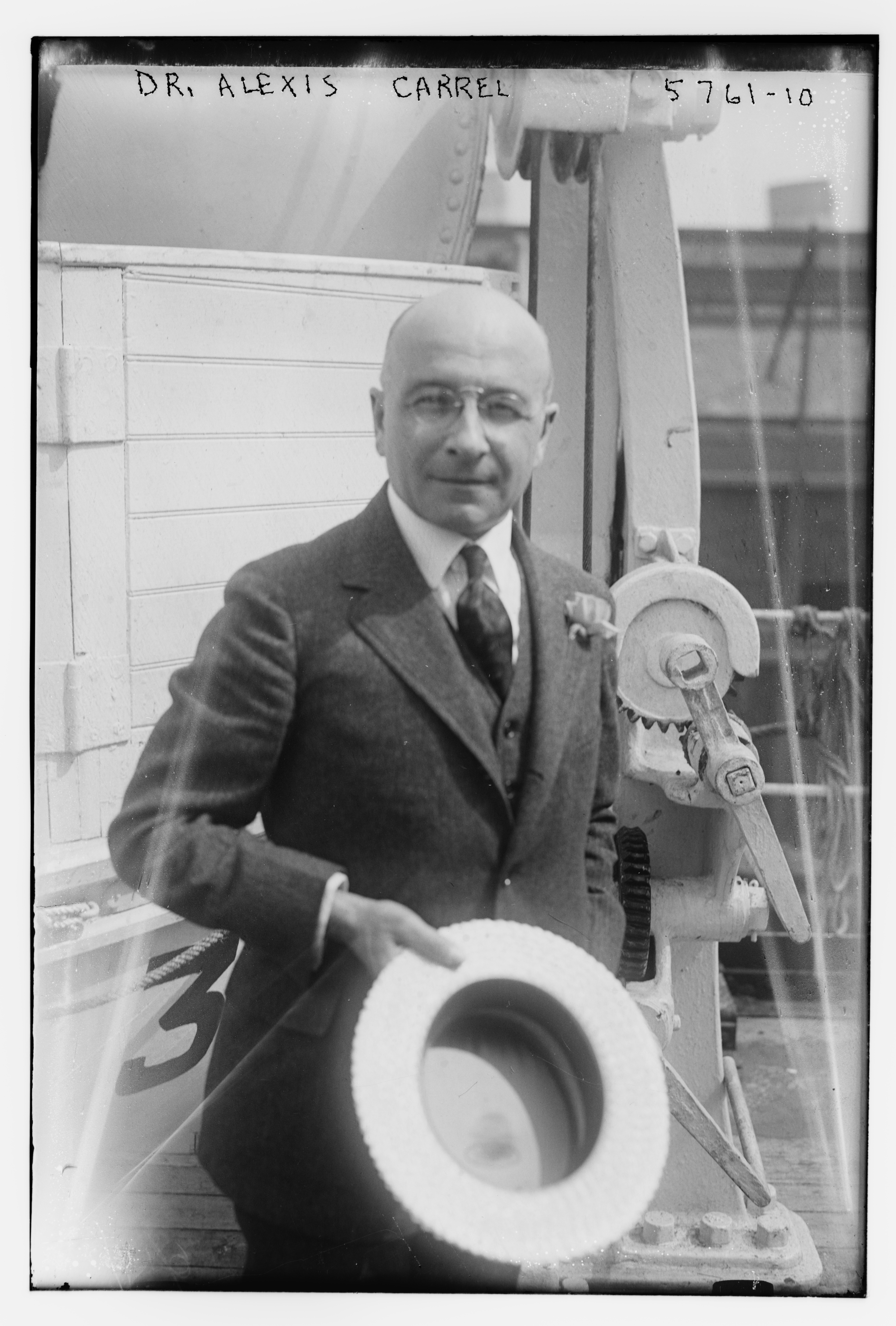
1910 CARREL, Alexis (1873 – 1944); BURROWS, Montrose Thomas (1884 – 1947)
Cultures de sarcome en dehors de l’organisme.
Using the Rous chicken sarcoma, Carrel and Burrows were the first to grow tumor tissue in vitro.
GMN 2636 · https://historyofmedicine.com/id/3234
1910 ROUS, Francis Peyton (1879 – 1970)
A transmissible avian neoplasm (sarcoma of the common fowl).
Original description of the chicken sarcoma (Rous sarcoma). Rous demonstrated that sarcomatous tumors in hens could be transmitted to normal hens by the injection of cell-free filtrates (virus) of the original tumor. …
GMN 2637 · https://historyofmedicine.com/id/3238
1911 REED, Walter (1851 – 1902); CARROLL, James (1854 – 1907)
Yellow fever: A compilation of various publications. Results of the work of Maj. Walter Reed, Medical Corps, United States Army, and the Yellow Fever Commission. Presented by Mr. Owen.
A convenient compilation of the work of Reed and his associates, including the work of James Carroll published after the death of Walter Reed. Digital facsimile from the Internet Archive at this link.
GMN 9373 · https://historyofmedicine.com/id/11556
1912 KLING, Carl (1887 – 1967)
Experimental and pathological investigation. In: Investigations on epidemic infantile paralysis, report from the State Medical Institute of Sweden to the XVth International Congress on Hygiene and Demography.
Kling, A. Pettersson, and W. Wernstedt recovered the poliomyelitis virus from the intestinal wall and contents, disproving the contention of Flexner that it was exclusively neurotropic.
GMN 4670.4 · https://historyofmedicine.com/id/857
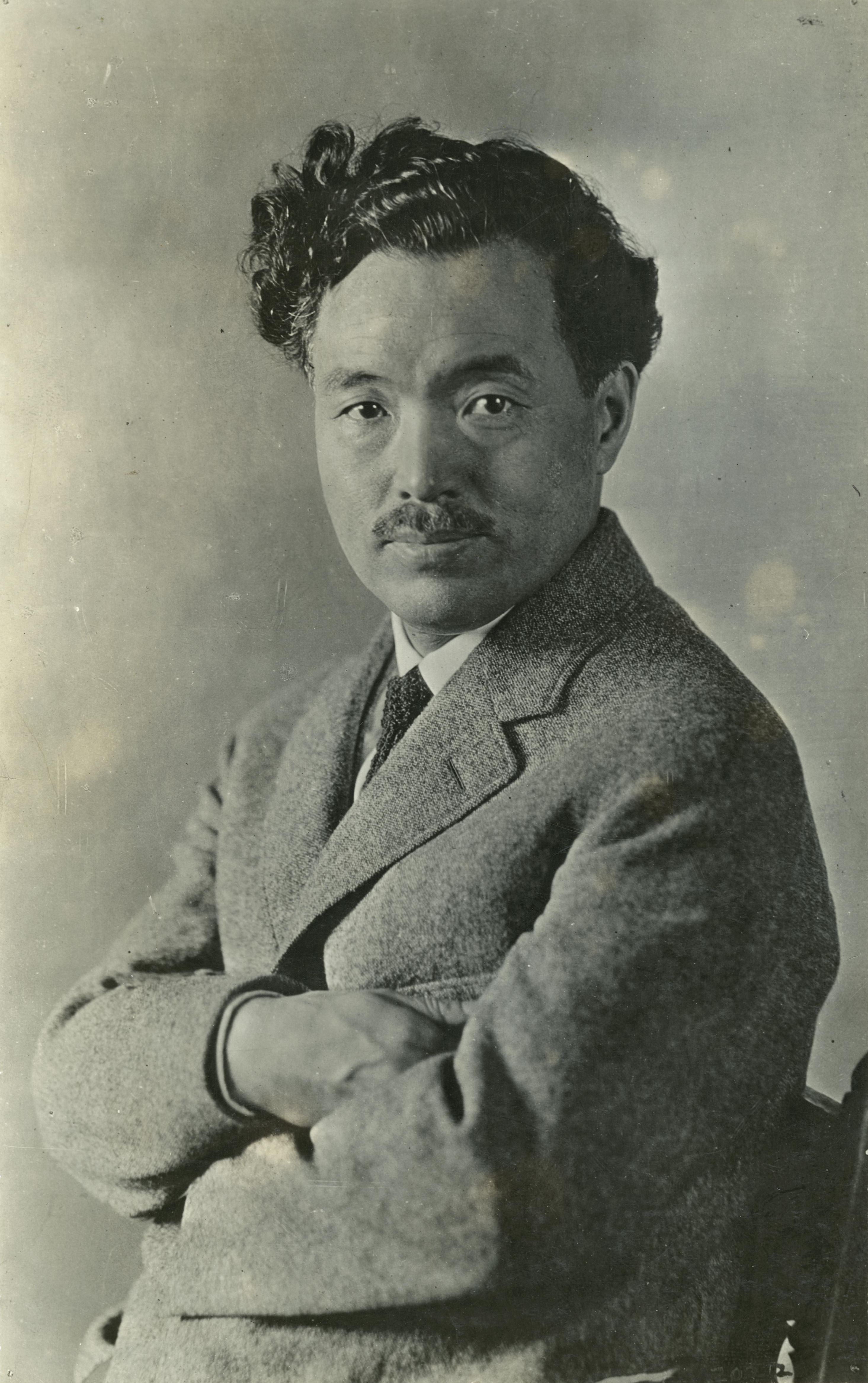
1915 NOGUCHI, Hideyo (1876 – 1928)
Pure cultivation in vivo of vaccine virus free from bacteria.
Noguchi obtained a pure culture of vaccinia virus.
GMN 5430.1 · https://historyofmedicine.com/id/7400
1920 GREAT BRITAIN. MINISTRY OF HEALTH
Report on the pandemic of influenza 1918-19.
Reports on Public Health and Medical Subjects, No. 4. The most widespread and serious pandemic of influenza occurred in 1918-19. It spread throughout Europe, Russia, Canada, S. America, New Zealand, Australia, Africa,…
GMN 5492 · https://historyofmedicine.com/id/6441
1920 ZAHORSKY, John (1871 – 1963)
Herpetic sore throat.
First description of herpangina, an acute infection associated with Coxsackie viruses.
GMN 5538 · https://historyofmedicine.com/id/6713
1921 LIPSCHÜTZ, Benjamin (1878 – 1931)
Untersuchungen über die Ätiologie der Krankheiten der Herpesgruppe (Herpes zoster, Herpes genitalis, Herpes febrilis).
Lipschütz’s account of herpes virus diseases included identification of the characteristic inclusion bodies (“Zosterkörperchen”).
GMN 2521.1 · https://historyofmedicine.com/id/3300
1923 SEN, Rajendra Kumar
A treatise on influenza, with special reference to the pandemic of 1918.
Sen, company doctor on the Hurmutty Tea Estate in Assam, estimated that the pandemic killed about 15,000,000 people in India.
GMN 12109 · https://historyofmedicine.com/id/14318
1925 KUNDRATITZ, Karl (1889 – 1975)
Experimentelle Übertragung von Herpes zoster auf den Menschen und die Beziehungen von Herpes zoster zu Varicellen.
First demonstration of the infectivity of herpes.
GMN 4652 · https://historyofmedicine.com/id/753
1925 GYE, William Ewart (1884 – 1952)
The aetiology of malignant new growths.
Gye advanced the theory that an ultramicroscopic virus combined with an intrinsic chemical factor were concerned in the production of the Rous sarcoma.
GMN 2647 · https://historyofmedicine.com/id/3291
1925 GORDON, Mervyn Henry (1872 – 1953)
Studies of the viruses of vaccinia and variola.
Medical Research Council Special Report No. 98; a summary of the more important additions to the knowledge of the subject.
GMN 5432 · https://historyofmedicine.com/id/7409
1926 LEDINGHAM, Sir John Charles Grant (1875 – 1944)
Studies on variola, vaccinia, and avian molluscum.
Ledingham’s diagnostic test.
GMN 5433 · https://historyofmedicine.com/id/7412
1928 MAITLAND, Hugh Bethune (1895 – 1972); MAITLAND, Mary L. Cowan ( – 1972)
Cultivation of vaccinia virus without tissue culture.
Introduction of “Maitland’s medium”.
GMN 5434.1 · https://historyofmedicine.com/id/7422
1928 STOKES, Adrian (1887 – 1927); ET AL
Experimental transmission of yellow-fever to laboratory animals.
Experimental infection of the monkey, Macacus rhesus, with the yellow fever virus. Stokes succumbed to yellow fever while investigating the disease. With J. H. Bauer and N. P. Hudson.
GMN 5462 · https://historyofmedicine.com/id/7575
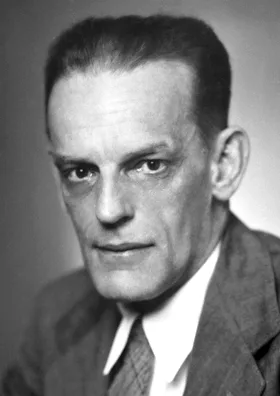
1930 THEILER, Max (1899 – 1972)
Studies on the action of yellow fever virus in mice.
The intracerebral protection test in mice, a test for the diagnosis of yellow fever and for the determination of its past existence in a community, was made possible by Theiler’s discovery that white mice are suscepti…
GMN 5463 · https://historyofmedicine.com/id/7579
1931 BURNET, Sir Frank Macfarlane (1899 – 1985); MACNAMARA, Annie Jean Dame (1899 – 1968)
Immunological differences between strains of poliomyelitis virus.
GMN 4670.5 · https://historyofmedicine.com/id/861
1931 SHOPE, Richard Edwin (1901 – 1966)
Swine influenza. III. Filtration experiments and etiology.
Isolation in pigs of influenzavirus A or influenza A virus. Full text available from PubMedCentral at this link.
GMN 5493 · https://historyofmedicine.com/id/6443
1932 SAWYER, Wilbur Augustus (1879 – 1951); LLOYD, Wray Devere Marr (1902 – 1936)
Vaccination against yellow fever with immune serum and virus fixed for mice.
These workers devised an immune serum for prophylactic inoculation against yellow fever. With S. F. Kitchen and W. D. M. Lloyd.
GMN 5465 · https://historyofmedicine.com/id/7586
1932 THEILER, Max (1899 – 1972); HAAGEN, Eugen (1898 – 1972)
Untersuchungen über das Verhalten des Gelbfiebervirus in der Gewebekultur. Mit besonderer Berücksichtigung seiner Kultivierbarkeit.
Yellow fever virus grown in tissue culture.
GMN 5465.1 · https://historyofmedicine.com/id/7591
1933 LAIDLAW, Sir Patrick Playfair (1881 – 1940); ANDREWES, Sir Christopher Howard (1896 – 1988); SMITH, Wilson (1897 – 1965)
A virus obtained from influenza patients.
Smith, Andrewes, and Laidlaw first isolated the influenza A virus in humans. They successfully infected ferrets with filtered throat-washings from influenzal patients by intranasal instillation.
GMN 5494 · https://historyofmedicine.com/id/6445
1934 SABIN, Albert Bruce (1906 – 1993); WRIGHT, Arthur M.
Acute ascending myelitis following a monkey bite, with the isolation of a virus capable of reproducing the disease.
Herpesvirus simiae (B virus) infection; isolation of the virus.
GMN 4658 · https://historyofmedicine.com/id/770
1934 GOODPASTURE, Ernest William (1886 – 1960); JOHNSON, Claud D.
An investigation of the etiology of mumps.
Isolation of mumps virus.
GMN 5543 · https://historyofmedicine.com/id/6746
1935 STANLEY, Wendell Meredith (1904 – 1971)
Isolation of a crystalline protein possessing the properties of tobacco-mosaic virus.
Stanley first crystallized a virus— tobacco mosaic virus. The following year Bawden, Pirie, Bernal and Fankuchen (No. 12005) showed that tobacco mosaic virus molecules are asnisometric and consist of ribonucleoprotein…
GMN 2524.5 · https://historyofmedicine.com/id/3353
1935 HOSKINS, Meredith
A protective action of neurotropic against viscerotropic yellow fever virus in Macacus rhesus.
One of the first examples of an animal virus interference phenomenon was demonstrated by Hoskins.
GMN 2576.3 · https://historyofmedicine.com/id/4118