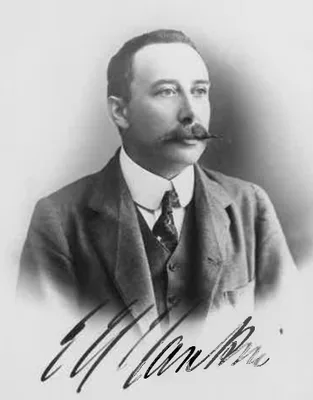
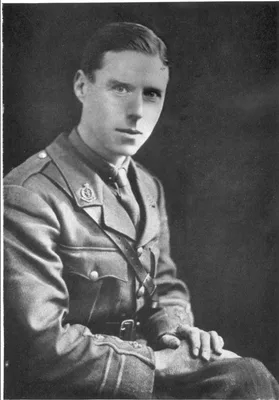
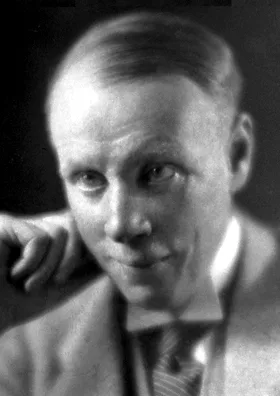
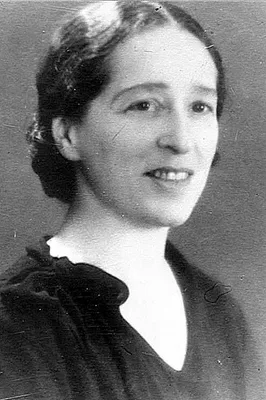
1896 HANKIN, Ernest Hanbury (1865 – 1939)
L'action bactericide des eaux de la Jumna et du Gange sur le vibrion du cholera.
Hankin described the antibacterial activity of a then-unknown source in the Ganges and Jumna Rivers in India. He noted that "It is seen that the unboiled water of the Ganges kills the cholera germ in less than 3 hours…
GMN 11380 · https://historyofmedicine.com/id/13579
1915 TWORT, Frederick William (1877 – 1950)
An investigation on the nature of ultra-microscopic viruses.
Twort discovered discovered bacteriophages, a type of virus that attacks bacteria (the term bacteriophage was coined by Félix d’Herelle, who in 1917 independently confirmed Twort’s discovery). The discovery of bacteri…
GMN 2571 · https://historyofmedicine.com/id/3705
1917 D'HÉRELLE, Félix Hubert (1873 – 1949)
Sur une microbe invisible antagoniste des bacilles dysentérique.
d'Herrelle discovered a microbe-eating virus that he called "bacteriophage." He made his discovery independently of the work of Frederick Twort, which was published two years earlier. (See No. 2571).
GMN 2572 · https://historyofmedicine.com/id/3687
1921 D'HÉRELLE, Félix Hubert (1873 – 1949)
Le bactériophage: Son rôle dans l'immunité.
D'Hérrelle cited several actual reports of successful treatment of bacterial infections by the injection of bacteriophages in animals and humans. These may be considered early attempts at direct gene transfer in vivo …
GMN 10196 · https://historyofmedicine.com/id/12385
1925 LEWIS, Sinclair (1885 – 1951)
Arrowsmith.
"This novel has been inspirational for several generations of pre-medical and medical students. There is much agonizing along the way concerning career and life decisions. While detailing Arrowsmith's pursuit of the n…
GMN 10197 · https://historyofmedicine.com/id/12386
1926 D'HÉRELLE, Félix Hubert (1873 – 1949)
Le bactériophage et son comportement.
In this book d'Hérelle reported on the results of quantitative work based on the plaque-count, and dilution methods of assay that he invented. He described a three-step process for the life history of the bacteriophag…
GMN 14003 · https://historyofmedicine.com/id/16308
1936 SCHLESINGER, Max (1906 – 1937)
The Feulgen reaction of the bacteriophage substance.
Schlesinger showed that the fundamental constituents of bacteriophages consist mainly of approximately equal amounts of protein and DNA.
GMN 2524.6 · https://historyofmedicine.com/id/3356
1938 WOLLMAN, Eugène (1883 – 1943); WOLLMAN, Elisabeth (1888 – 1943)
Recherches sur le phénomène de Twort-d’Hérelle (bactériophage ou autolyse hérédo-contagieuse).
The Wollmans made important contributions to the knowledge on bacteriophage and lysogeny.
GMN 2576.7 · https://historyofmedicine.com/id/4125
1942 LURIA, Salvador Edward (1912 – 1991); ANDERSON, Thomas Foxen (1911 – 1991)
The identification and characterization of bacteriophages with the electron microscope.
First identification, observation under the electron microscope, and reproduction of photomicrographs of bacteriophages taken through the electron microscope. Digital facsimile, but with poor reproductions of the two …
GMN 14004 · https://historyofmedicine.com/id/16309
1943 LURIA, Salvador Edward (1912 – 1991); DELBRÜCK, Max (1906 – 1981); ANDERSON, Thomas Foxen (1911 – 1991)
Electron microscope studies of bacterial viruses.
This work demonstrated the absorption of the phages on the host cell, and the lysis of the host cell and the liberation of a hundred or so daughter paritcles from each cell. It also showed that the particles multiply …
GMN 14005 · https://historyofmedicine.com/id/16310
1946 DELBRÜCK, Max (1906 – 1981); BAILEY, W. T.
Induced mutations in bacterial viruses.
Genetic recombination in bacteriophages. In 1969 Delbrück shared the Nobel Prize with A. D. Hershey and S. E. Luria "for their discoveries concerning the replication mechanism and the genetic structure of viruses."
GMN 2578.5 · https://historyofmedicine.com/id/4142
1949 DULBECCO, Renato (1914 – 2012); LURIA, Salvador Edward (1912 – 1991)
Genetic recombinations leading to production of active bacteriophage from ultraviolet inactivated bacteriophage particles.
In 1969 Luria shared the Nobel Prize in Physiology or Medicine in with Delbrück (No. 2578.5) and A. D. Hershey (No. 256) "for their discoveries concerning the replication mechanism and the genetic structure of viruses."
GMN 2526.1 · https://historyofmedicine.com/id/3458
1952 LURIA, Salvador Edward (1912 – 1991); HUMAN, Mary L.
A nonhereditary, host-induced variation of bacterial viruses.
Order of authorship in the original publication: Luria, Human. Luria and Human discovered the restriction modification system found in bacteria and other prokaryotic organisms. This system provides a defense against f…
GMN 12032 · https://historyofmedicine.com/id/14240
1962 ARBER, Werner (1929 – ); ROULLAND-DUSSOIX, Daisy (1936 – 2014)
Host specificity of DNA produced by escherichia coli. II. Control over acceptance of DNA from infecting phage lambda.
Order of authorship in the original publication: Dussoix, Arber. The authors discovered that restriction of DNA from infecting bacteriophage was due to the attack and breakdown of the modified bacteriophage's DNA by s…
GMN 12033 · https://historyofmedicine.com/id/14241
2020 HAMPTON, Hannah G.; WATSON, Bridget N. J.; FINERAN, Peter C.
The arms race between bacteria and their phage foes.
Order of authorship in the original publication: Hampton, Watson, Fineran. Summarizes, and documents with 173 references, the extensive research on the multitude of methods that bacteriophages use to disable the CRISP…
GMN 11868 · https://historyofmedicine.com/id/14072
2020 MENDOZA, Senen D.; NIEWEGLOWSKA, Eliza S.; GOVINDARAJAN, Sutharsan; ET AL
A bacteriophage nucleus like compartment shields DNA from CRISPR nucleases.
Order of authorship in the original publication: Mendoza, Nieweglowska, Govindarajan. The authors showed that the large phage that specifically infects a Pseudomonas bacterium segregates its DNA, which the phage CRISP…
GMN 11876 · https://historyofmedicine.com/id/14080
2020 DOUDNA, Jennifer Anne (1964 – ); AL-SHAYEB, Basem; SACHDEVA, Rohan; CHEN, Lin-Xin; ET AL
Clades of huge phages from across Earth's ecosystems.
Order of authorship in the original publication: Al-Shayeb, Sachdeva, Chen.... Doudna. Open access, available from nature.com at this link. This paper was a collaboration of about 50 scientists of diverse regions and …
GMN 11877 · https://historyofmedicine.com/id/14081