1491 CARRARA, Giovanni Michele Alberto da [Johannes Michael Alberti] (1438 – 1490)
De omnibus ingeniis augendae memoriae.
An early work on memory disorders and aids to memory. ISTC no. ia00210000. Digital facsimile from the Bayerische Staatsbibliothek at this link.
GMN 4511.01 · https://historyofmedicine.com/id/357
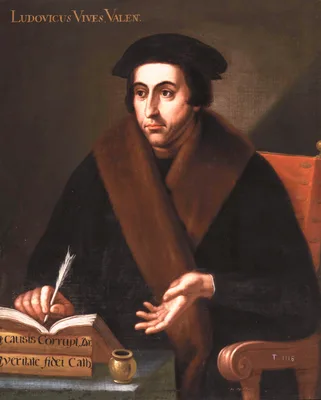
1538 VIVES, Juan Luis (1492 – 1540)
De anima et vita libri tres.
Vives anticipated Bacon and Descartes in developing an empirical psychology in which the mind was to be studied both through introspection and observation of others. From his exhaustive analysis of memory he developed…
GMN 4963.2 · https://historyofmedicine.com/id/6360
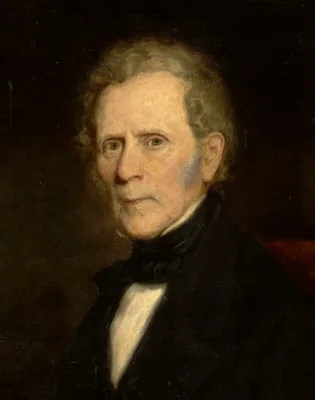
1798 CRICHTON, Alexander (1763 – 1856)
An inquiry into the nature and origin of mental derangement: comprehending a concise system of the physiology and pathology of the human mind, and a history of the passions and their effects. 2 vols.
In chapter 2 of vol. 1, pp. 254-90, “On Attention and its Diseases” Crichton described a mental state much like the inattentive subtype of Attention Deficit Hyperactivity Disorder (ADHD). He did not mention any sympto…
GMN 7978 · https://historyofmedicine.com/id/10154
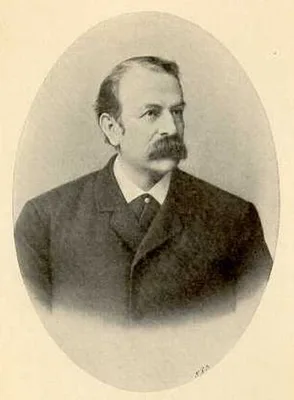
1887 BERLIN, Rudolf (1833 – 1897)
Eine besondere Art der Wortblindheit.
Berlin first suggested the term “dyslexia”. Digital facsimile from the Internet Archive at this link.
GMN 4627 · https://historyofmedicine.com/id/679
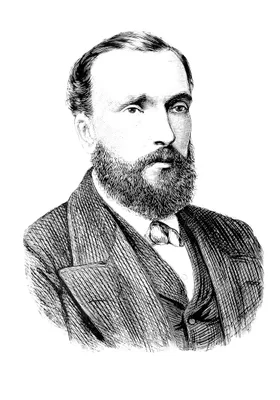
1887 KORSAKOFF, Sergei Sergeievich (1853 – 1900)
Disturbance of psychic activity in alcoholic paralysis.
“Korsakoff’s psychosis” or syndrome – alcoholic polyneuritis with loss and falsification of memory. A second paper on the subject in Ezhened. klin. Gaz., 1889, 9, 85, 115, 136, is translated into English in Neurology,…
GMN 4945 · https://historyofmedicine.com/id/6233
1898 BASTIAN, Henry Charlton (1837 – 1915)
A treatise on aphasia and other speech defects.
Bastian localized the auditory and visual centers, and he described word-blindness and word-deafness. (See also No. 4622.)
GMN 4629 · https://historyofmedicine.com/id/686
1902 STILL, Sir George Frederic (1868 – 1941)
The Goulstonian lectures on some abnormal psychical conditions in children. Delivered before the Royal College of Physicians of London on March 4th, 6th, and 11th, 1902.
Considered by many historians to be the scientific starting point of the study of Attention Deficit Hyperactivity Disorder (ADHD). Digital facsimile of the separate offprint from the Internet Archive at this link.
GMN 7979 · https://historyofmedicine.com/id/10155
1917 HINSELWOOD, James (1859 – 1919)
Congenital word-blindness.
GMN 4631 · https://historyofmedicine.com/id/691
1937 BRADLEY, Charles (1902 – 1979)
Behavior of children receiving benzedrine.
Bradley showed that racemic amphetamine, that is, the 50:50 mixture of d- and l-amphetamine isomers (Benzedrine®), was shown to reduce the impulsivity, distractibility, and inattention characteristic of Attention Defi…
GMN 7980 · https://historyofmedicine.com/id/10156
1954 MEIER, R; GROSS, F; TRIPOD, J
Ritalin, a new synthetic compound with specific analeptic components.
The authors identified Methylphenidate as a stimulant. It is sold under the trade name Ritalin, and other names.
GMN 7981 · https://historyofmedicine.com/id/10157