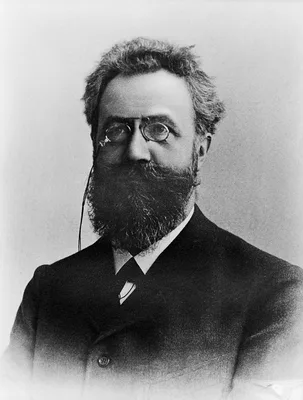
Ebbinghaus conducted a series of experiments on memory and forgetting using himself as subject. Out of this came concepts such as the learning curve and the forgetting curve, and the serial position effect. Digital fa…
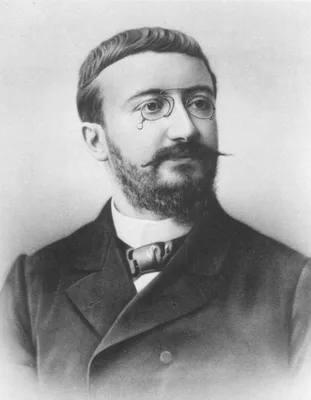
Once education was made mandatory for all French children from ages six to fourteen, it became necessary to determine which children might be considered retarded. To do so the question arose concerning what test shoul…
"Significance "Connections between cerebral cortex regions are known as association connections, and neural activity in the network formed by these connections is thought to generate cognition. Network analysis of mic…
"Significance "The cerebral cortex supports cognition and is a structure common to all mammals. The major cortical subdivisions (its gray matter regions) are connected by a complex network of axonal connections that i…
"Significance "The right and left cerebral hemispheres (together forming the endbrain) support cognition and affect, and, structurally, each hemisphere consists of a cortical sheet and set of deep nuclei (often called…