1470 CICERO, Marcus Tullius (-106 – -43)
Rhetorica ad C. Herennium.
First description of the "method of loci," the memory technique as known as the "memory palace." Because of its wide use during the Middle Ages this text survives in hundreds of medieval manuscripts. Fourteen printed …
GMN 13696 · https://historyofmedicine.com/id/15978
1490 ALBERTUS MAGNUS, [Albert von Bollstädt] (1195 – 1280)
Philosophia pauperum, sive Isagoge in libros Aristotelis physicorum, de coelo et mundo, de generatione et corruptione, meteororum et de anima.
This edition, chronologically the fourth printed, of Albertus's commentaries on various works of Aristotle, contains the first printed illustration of the brain, showing in profile the three-cell theory of brain funct…
GMN 6949 · https://historyofmedicine.com/id/9114
1491 CARRARA, Giovanni Michele Alberto da [Johannes Michael Alberti] (1438 – 1490)
De omnibus ingeniis augendae memoriae.
An early work on memory disorders and aids to memory. ISTC no. ia00210000. Digital facsimile from the Bayerische Staatsbibliothek at this link.
GMN 4511.01 · https://historyofmedicine.com/id/357
1512 NEMESIUS (ΝΕΜΈΣΙΟΣ), Bishop of Emesa (350 – )
Divini Gregorii Nyssae episcopi qui fuit frater Basilii Magni libri octo. I. De homine. II. De anima. III. De elementis. IIII. De viribus animae. V. De voltario etinuoltario. VI. De fato. VII. De libero arbitrio. VIII. De prouidentia.
Nemesius’ De natura hominis, a physiological and psychological study of man, was highly esteemed during the Middle Ages. Nemesius, who wrote in the 4th century CE, was one of the first to propose that mental processes…
GMN 571 · https://historyofmedicine.com/id/339
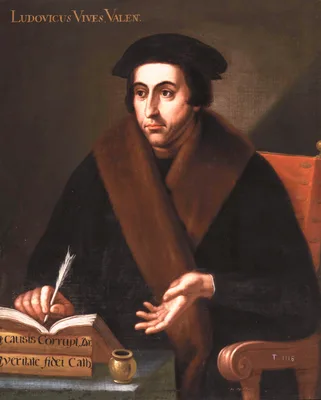
1538 VIVES, Juan Luis (1492 – 1540)
De anima et vita libri tres.
Vives anticipated Bacon and Descartes in developing an empirical psychology in which the mind was to be studied both through introspection and observation of others. From his exhaustive analysis of memory he developed…
GMN 4963.2 · https://historyofmedicine.com/id/6360
1887 KORSAKOFF, Sergei Sergeievich (1853 – 1900)
Disturbance of psychic activity in alcoholic paralysis.
“Korsakoff’s psychosis” or syndrome – alcoholic polyneuritis with loss and falsification of memory. A second paper on the subject in Ezhened. klin. Gaz., 1889, 9, 85, 115, 136, is translated into English in Neurology,…
GMN 4945 · https://historyofmedicine.com/id/6233
1949 HEBB, Donald Olding (1904 – 1985)
The organization of behavior: A neuropsychological theory.
Hebb connected the biological function of the brain as an organ together with the higher function of the mind. He studied how the function of neurons contributed to psychological processes such as learning. In this wo…
GMN 12735 · https://historyofmedicine.com/id/14981
1961 YOUNG, Morris Nathan (1909 – 2002)
Bibliography of memory.
The most complete bibliography to date on this subject. Regarding Young, see the unusually interesting obituary in The New York Times at this link.
GMN 6945 · https://historyofmedicine.com/id/9110
1995 BOS, Gerrit; IBN AL JAZZĀR, Ahmed Bin Jaafar Bin Brahim (Algizar) (895 – 979)
Ibn al-Jazzār on forgetfulness and its treatment. Critical edition of the Arabic text and the Hebrew translations with commentary and translation into English by Gerrit Bos.
GMN 8244 · https://historyofmedicine.com/id/10420
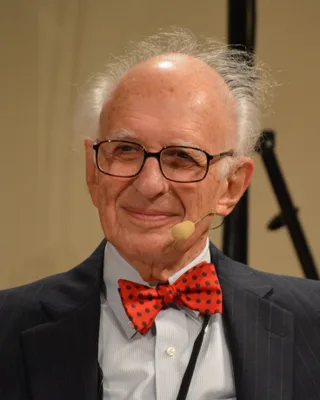
1996 KANDEL, Eric Richard (1929 – ); BAILEY, Craig Harrison; BARTSCH, Dusan
Toward a molecular definition of long-term memory storage.
"Abstract: The storage of long-term memory is associated with a cellular program of gene expression, altered protein synthesis, and the growth of new synaptic connections. Recent studies of a variety of memory process…
GMN 14252 · https://historyofmedicine.com/id/16572
2008 HANSON, Marta E.
"Hand mnemonics in classical Chinese medicine: Texts, earliest images, and arts of memory," Festschrift issued in honor of Nathan Sivin, Asia Major series 3, 21.1, 325-357.
GMN 9489 · https://historyofmedicine.com/id/11673
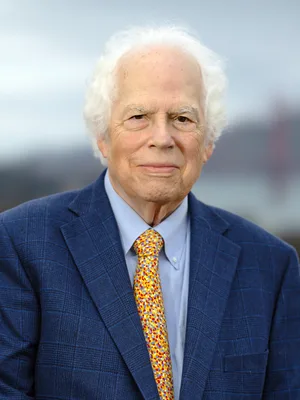
2014 PRUSINER, Stanley Benjamin (1942 – )
Madness and memory: The discovery of prions- a new biological principle of disease.
Prusiner discovered prions, the agent causing scrapie in sheep and goats, mad cow disease, and Creutzfeldt-Jakob disease in humans.
GMN 7624 · https://historyofmedicine.com/id/9796