1830 DENIS, Prosper Sylvain (1799 – 1863)
Recherches expérimentales sur le sang human considérè à l'état sain.
Denis discovered the presence of cholesterol (“cholestérine”) in the blood. This he announced on p. 110 of his Recherches expérimentales.
GMN 13909 · https://historyofmedicine.com/id/16201
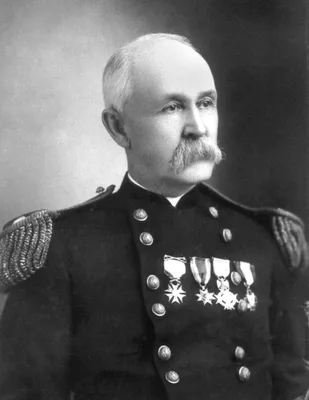
1892 STERNBERG, George Miller (1838 – 1915)
Practical results of bacteriological researches.
Sternberg demonstrated that the serum of an animal recovered from vaccinia possesses the property of neutralizing the activity of the causative virus. His test was readily adaptable for use in various host-systems.
GMN 2545.1 · https://historyofmedicine.com/id/3581
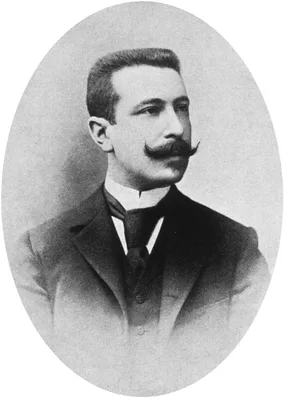
1896 WIDAL, Georges-Fernand Isidor (1862 – 1929); SICARD, Arthur
Recherches de la réaction agglutinante dans le sang et le sérum desséchés des typhiques et dans la sérosité des vesicatoires.
Developing the work of Gruber and Durham, Widal noted that a patient’s serum could be tested with bacteria of known type and his disease identified by this means. They demonstrated specific agglutinins in the blood of…
GMN 2550 · https://historyofmedicine.com/id/3664
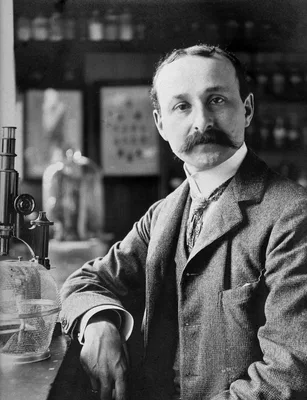
1897 KRAUS, Rudolf (1868 – 1932)
Über specifische Reactionen im keimfreien Filtraten aus Cholera, Typhus und Pestbouillonculturen, erzeugt durch homologes Serum.
The precipitin reaction, employed for the qualitative identification of antigens and antibodies. English translation in Bibel, Milestones in immunology,(1988) pp. 265-68.
GMN 2550.1 · https://historyofmedicine.com/id/3665
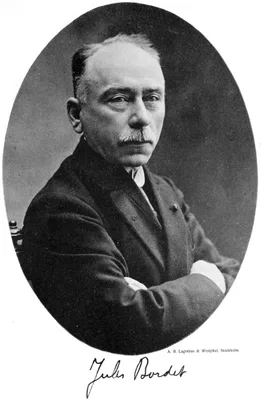
1901 BORDET, Jules Jean Baptiste Vincent (1870 – 1961); GENGOU, Octave (1875 – 1957)
Sur l’existence de substances sensibilisatrices dans la plupart des sérums antimicrobiens.
The Bordet–Gengou complement-fixation reaction is the basis of many tests for infection, notably the Wassermann test for syphilis, and reactions for gonococcus infection, glanders, hydatid disease. English translation…
GMN 2553 · https://historyofmedicine.com/id/3668
1904 NUTTALL, George Henry Falkiner (1862 – 1937)
Blood immunity and blood relationship, a demonstration of certain blood relationships amongst animals by means of the precipitin test for blood.
GMN 2561 · https://historyofmedicine.com/id/3682
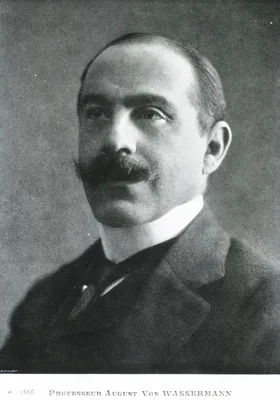
1906 WASSERMANN, August von (1866 – 1925); ET AL
Eine serodiagnostische Reaktion bei Syphilis.
The “Wassermann reaction”, a specific diagnostic blood test for syphilis, and a modification of the complement-fixation reaction of Bordet and Gengou. With A. Neisser and C. Bruck.
GMN 2402 · https://historyofmedicine.com/id/3363
1913 HIJMANS VAN DEN BERGH, Albert Abraham (1869 – 1943); SNAPPER, J
Die Farbstoffe des Blutserums. 1. Eine quantitative Bestimmung des Bilirubins im Blutserum.
The van den Bergh test.
GMN 3647 · https://historyofmedicine.com/id/4725
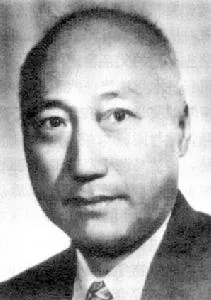
1919 FOLIN, Otto Knut Olof (1876 – 1934); WU, Hsien (1893 – 1959)
A system of blood analysis.
Folin–Wu test for blood sugar.
GMN 3922 · https://historyofmedicine.com/id/5053
1922 KAHN, Reuben Leon (1887 – 1979)
A simple quantative precipitation reaction for syphilis.
Kahn test.
GMN 2412 · https://historyofmedicine.com/id/3402
1922 KOLMER, John Albert (1886 – 1962)
Studies in the standardization of the Wassermann reaction. XXX. A new complement-fixation test for syphilis based upon the results of studies in the standardization of technic.
Kolmer test.
GMN 2413 · https://historyofmedicine.com/id/3404
1926 BENDIEN, Salomo Gerhard Tekla (1872 – 1942)
Haemagglutinegehalte van het bloedserum bij carcinoompatiënten.
Bendien test for the diagnosis of cancer. He published books in German and English on this subject in 1931. Modification by E. C. Lowe, Brit. med. J., 1932, 2, 1060.
GMN 2650 · https://historyofmedicine.com/id/3301
1928 –1929 MØLLER, Eggert Hugo Heiberg (1893 – 1978)
Studies of urea excretion.
Blood urea clearance test. With J. F. Mcintosh and D. D. Van Slyke.
GMN 4246 · https://historyofmedicine.com/id/5127
1931 BENEDICT, Stanley Rossiter (1884 – 1936)
The analysis of whole-blood. II. The determination of sugar and of saccharoids (non-fermentable copper-reducing substances).
Benedict’s test for blood-sugar.
GMN 3923 · https://historyofmedicine.com/id/5056
1932 EAGLE, Harry (1905 – 1992)
Studies in the serology of syphilis. VII. A new flocculation test for the serum diagnosis of syphilis.
Eagle flocculation test.
GMN 2414.1 · https://historyofmedicine.com/id/3409
1935 WINTROBE, Maxwell Myer (1901 – 1986); LANDSBERG, J. Walter (1907 – )
A standardized technique for the blood sedimentation test.
Wintrobe’s method for the determination of the erythrocyte sedimentation rate.
GMN 3096 · https://historyofmedicine.com/id/3785
1941 HIRST, George Keble (1909 – 1994)
The agglutination of red cells by allantoic fluid of chick embryos infected with influenza virus.
Discovery of virus hemagglutination. Between 1941 and 1942 Hirst developed the hemagglutination assay for quantifying the relative concentration of viruses, bacteria or antibodies.
GMN 2577 · https://historyofmedicine.com/id/4130
1945 COOMBS, Robert Royston Amos ( (1921 – 2006); ET AL
Detection of weak and “incomplete” Rh agglutinins: a new test.
Coombs’s test for detecting antibodies in various clinical scenarios, such as Rh disease and blood transfusion. With A. E. Mourant and R. R. Race. A fuller description appears in Brit. J. exp. Path.,1945, 26, 255-66.
GMN 3104 · https://historyofmedicine.com/id/3805
1945 WIENER, Alexander Solomon (1907 – 1976)
Conglutination test for Rh sensitization.
Conglutination test.
GMN 3105 · https://historyofmedicine.com/id/3808
1946 HARRIS, A
A microflocculation test for syphilis using cardiolipin antigen: preliminary report.
V. D. Research Laboratory test (Harris test). With A. A. Rosenberg and L. M. Riedel.
GMN 2418.1 · https://historyofmedicine.com/id/3423
1967 RATHLEV, Tara (1927 – 2009)
Haemagglutination test utilizing pathogenic Treponema pallidum for the sero-diagnosis of syphilis.
Treponemal hemagglutination (TPHA) test.
GMN 2419.4 · https://historyofmedicine.com/id/2879
1967 STEWART, George Louis (1936 – ); ET AL
Rubella-virus hemagglutination-inhibition test.
With five co-authors.
GMN 5509.4 · https://historyofmedicine.com/id/6510
2020 FEDER, Henry M. Jr.; REZUKE, William N.
Infectious mononucleosis diagnosed by Downey cells: Sometimes the old ways are better.
The Downey cell method for the diagnosis of infectious mononucleosis remains effective and cost-effective nearly 100 years after it was discovered: "An 18-year-old woman visited her physician because she had a fever, …
GMN 12117 · https://historyofmedicine.com/id/14326