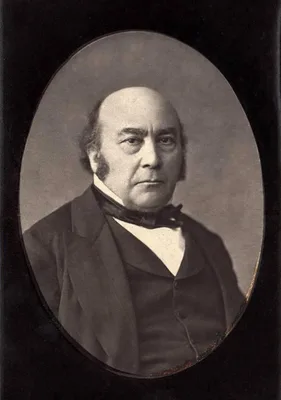
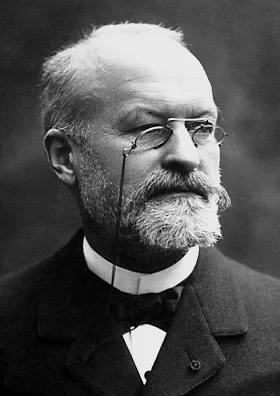
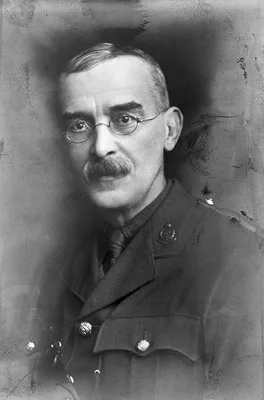
1841 VALENTIN, Gabriel Gustav (1810 – 1883)
Ueber ein Entozoon im Blute von Salmo fario.
Valentin was the first to discover a trypanosome; this was in a salmon. English translation in Kean (No. 2268.1).
GMN 5267.1 · https://historyofmedicine.com/id/8563
1843 GRUBY, David (1810 – 1898)
Recherches et observations sur une nouvelle espèce d’hématozoaire, Trypanosoma sanguinis.
Gruby discovered trypanosomes in the frog. He first suggested the name “trypanosome” to describe the parasite.
GMN 5268 · https://historyofmedicine.com/id/8569
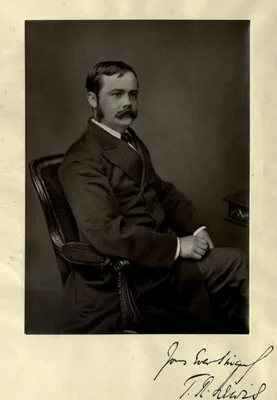
1878 LEWIS, Timothy Richards (1841 – 1886)
The microscopic organisms found in the blood of man and animals, and their relation to disease.
First description of a trypanosome (T. lewisi) in a mammal. Seoarate edition in book form with the same title: Calcutta: Office of the Superintendent of Government Printing, 1879.
GMN 5270.1 · https://historyofmedicine.com/id/8574
1891 NEPVEU, Gustav (1841 – 1903)
Étude sur les parasites du sang chez les paludiques.
Nepveu, whilst in Algeria, was the first to see trypanosomes in human blood.
GMN 5272 · https://historyofmedicine.com/id/8578
1902 FORDE, Robert Michael (1861 – 1948)
Some clinical notes on a European patient in whose blood a trypanosoma was observed.
In 1901 Forde saw (but did not at first recognize as such) trypanosomes in the blood of a patient in Gambia. (See No. 5275.)
GMN 5274 · https://historyofmedicine.com/id/8581
1902 DUTTON, Joseph Everett (1877 – 1905)
Preliminary note upon a trypanosome occurring in the blood of man.
Dutton was the first to recognize human trypanosomiasis. He saw Forde’s patient (see No. 5274) and named the trypanosome T. gambiense. Sleeping sickness itself has been referred to as “Dutton’s disease”. The first ann…
GMN 5275 · https://historyofmedicine.com/id/8584
1903 LEISHMAN, Sir William Boog (1865 – 1926)
On the possibility of the occurrence of trypanosomiasis in India.
An organism found by Leishman in 1900 was later described by him as possibly a trypanosome. C. Donovan found the same organism in blood in July 1903. The name Leishmania donovani (Leishman-Donovan bodies) was later at…
GMN 5295 · https://historyofmedicine.com/id/6442
1903 CASTELLANI, Aldo (1877 – 1971)
On the discovery of a species of trypanosoma in the cerebrospinal fluid of cases of sleeping sickness.
While in Uganda, Castellani discovered T. gambiense in human cerebrospinal fluid. A paper in Notes Rec. roy. Soc., 1973, 23, 93-110, discounts Castellani’s claim that although he first discovered trypanosomes in the c…
GMN 5276 · https://historyofmedicine.com/id/8585
1904 LAVERAN, Charles Louis Alphonse (1845 – 1922); MESNIL, Félix (1868 – 1938)
Trypanosomes et trypanosomiases.
Laveran and Mesnil discovered that trypanosomes could be maintained indefinitely in rats and mice by serial passage.
GMN 5278 · https://historyofmedicine.com/id/8590
1905 THOMAS, Harold Wolferstan (1875 – 1931); BREINL, Anton (1880 – 1944)
Report on trypanosomes, trypanosomiasis, and sleeping sickness, being an experimental investigation into their pathology and treatment.
Thomas and Breinl discovered that arsanilic acid, was more potent in the treatment of laboratory trypanosomiasis than arsenic in inorganic form. As a crystalline powder it was introduced medically as Atoxyl. Thomas an…
GMN 5279 · https://historyofmedicine.com/id/8592
1907 EHRLICH, Paul (1854 – 1915)
Chemotherapeutische Trypanosomen-Studien.
The first account of induced microbial drug resistance. Ehrlich encountered induced drug resistance in microbes while researching arsenical preparations as cures for sleeping sickness and other trypanosome-caused illn…
GMN 5281 · https://historyofmedicine.com/id/6342
1909 CHAGAS, Carlos Justiniano Ribiero (1879 – 1934)
Nova tripanozomiaze humana. Estudos sobre a morfolojia e o ciclo evolutivo do Schizotrypanum cruzi n.gen., n.sp., ajente etiolojico de nova entidade morbida do homen.
Chagas discovered T. cruzi, causal organism in American trypanosomiasis (“Chagas’s disease”). Partial English translation in Kean (No. 2268.1).
GMN 5283 · https://historyofmedicine.com/id/6345
1909 KLEINE, Friedrich Karl (1861 – 1950)
Positive Infektionsversuche mit Trypanosoma brucei durch Glossina palpalis.
Glossina was believed to transmit Trypanosoma mechanically to the new host until Kleine showed that the latter undergoes a developmental cycle in Glossina. English translation in Kean (No. 2268.1).
GMN 5283.1 · https://historyofmedicine.com/id/6347
1910 EHRLICH, Paul (1854 – 1915); HATA, Sahachiro (1873 – 1938)
Die experimentelle Chemotherapie der Spirillosen (Syphilis, Rückfallfieber, Hühnerspirillose, Frambösie).
After many experiments on the action of synthetic drugs upon spirochetal diseases, Ehrlich and Hata in 1909 discovered Arsphenamine (Salvarsan, "the arsenic that saves", also known as “606”), an effective treatment fo…
GMN 2403 · https://historyofmedicine.com/id/3366
1910 STEPHENS, John William Watson (1865 – 1946); FANTHAM, Harold Benjamin (1875 – 1937)
On the peculiar morphology of a trypanosome from a case of sleeping sickness and the possibility of its being a new species.
T. rhodesiense discovered.
GMN 5285 · https://historyofmedicine.com/id/6351
1912 BRUMPT, Alexandre Joseph Émile (1877 – 1951)
Le trypanosoma cruzi évolue chez Conorhinus megistus, Cimex lectularius, Cimex Boueti et Ornithodorus moubata. Cycle évolutif de ce parasite.
Life cycle of T. cruzi described. English translation in Kean (No. 2268.1).
GMN 5285.3 · https://historyofmedicine.com/id/6359
1926 LOEVENHART, Arthur Salomon (1878 – 1929); STRATMAN-THOMAS, Warren Kidwell (1894 – 1946)
On the chemotherapy of neurosyphilis and trypanosomiasis.
Study of the effect of twelve different substances in neurosyphilis and trypanosomiasis.
GMN 1915 · https://historyofmedicine.com/id/2682
1958 WIJERS, D. J. B.
Factors that may influence the infection rate of Glossina palpalis with Trypanomosoma gambiense. 1. The age of the fly at the time of the infected feed.
Wijers showed that the tsetse fly is infected during its first or second blood meal, but not afterwards, information of considerable importance in determining the criteria for the transmission of trypanosomiasis.
GMN 5289.1 · https://historyofmedicine.com/id/6373