1674 WELSCH, Georg Hieronymous (Velschius) (1624 – 1677)
Exercitatio de vena Medinensi, ad mentem Ebn Sinae [Ibn Sina] sive de dracunaculis veterum. Specimen exhibens novae versionis ex Arabico, cum commentario uberiori. Cui accedit altera, de vermiculis capillaribus infantium.
An exhaustive survey of dracontiasis, or guinea worm disease, based on the Arabic writings of Avicenna. Digital facsimile from Google Books at this link.
GMN 5336.1 · https://historyofmedicine.com/id/6702
1683 TYSON, Edward (1650 – 1708)
Lumbricus teres, or some anatomical observations on the round worm bred in human bodies.
Tyson gave one of the first descriptions of the anatomy of Ascaris lumbricoides.
GMN 2448 · https://historyofmedicine.com/id/2951
1684 REDI, Francesco (1626 – 1697)
Osservazioni … intomo agli animali viventi che si trovano negli animali viventi.
Redi was among the first of the parasitologists. He demonstrated the reproductive organs of Ascaris lumbricoides and also ascaris eggs. The results of his experiments appear in the above work, which also records his s…
GMN 2448.1 · https://historyofmedicine.com/id/2955
1700 ANDRY, Nicolas (1658 – 1742)
De la géneration des vers dans le corps de l’homme.
The first medical parasitology text– an exhaustive study of the parasites of man, the diseases associated with them and their treatment. Andry’s views were often ahead of his time. Unlike most of his contemporaries, h…
GMN 2448.2 · https://historyofmedicine.com/id/2958
1710 VALLISNERI, Antonio [VALLISNIERI] (1661 – 1730)
Considerazioni, e d'esperienze intorno alla generazione de' vermi ordinari del corpo umano fatte da Antonio Vallisnieri, e da lui scritte al Reverendissimo Padre D. Antonio Borromeo.
In this illustrated work on parasitic worms in the human body Vallisnieri proved that these worms were not due to spontaneous generation, but grew from eggs. Digital facsimile from Google Books at this link.
GMN 12048 · https://historyofmedicine.com/id/14256
1770 MONGIN
Sur un ver trouvé sous la conjunctive, à Maribou, isle Saint-Domingue.
First description of the worm Loa loa. Mongin was a French surgeon working in the West Indies. English translation in Kean (No. 2268.1).
GMN 5336.2 · https://historyofmedicine.com/id/6706
1795 CHISHOLM, Colin (1755 – 1825)
An essay on the malignant pestilential fever introduced into the West Indian Islands from Boullam, on the coast of Guinea, as it appeared in 1793 and 1794.
Chisholm, "Surgeon to his Majesty's Ordnance in Grenada," was apparently the first to observe the mode of transmission of the Guinea worm, Dracunculus medinensis. Chishom was also one of the first to recognize that th…
GMN 5336.3 · https://historyofmedicine.com/id/6710
1808 –1810 RUDOLPHI, Karl Asmund (1771 – 1832)
Entozoorum, sive verminum intestinalium, historia naturalis. 2 vols.
A system of helminthology. Rudolphi gave the name “echinococcus” to the common vesicular hydatid, describing three species. Digital facsimile from Biodiversity Heritage Library at this link .
GMN 2449 · https://historyofmedicine.com/id/2961
1819 RUDOLPHI, Karl Asmund (1771 – 1832)
Entozoorum synopsis cui accedunt mantissa duplex et indices locupletissimi.
In this work Rudolphi detailed the life cycle of nematode parasites of mankind, such as the parasitic roundworm Ascaris lumbricoides. Digital facsimile from Biodiversity Heritage Library at this link.
GMN 12115 · https://historyofmedicine.com/id/14324
1822 GOMES, Bernardino António (1769 – 1823)
Memoria sobre a virtude toenifuga da romeira, com observações zoologicas e zoonomicas relativas á toenea, e com huma estampa.
On the use of a root medicine to treat tapeworms, roundworms and similar parasites. The author refers to cases from Portuguese Africa, India and Brazil, and gives clinical observations based on his own case studies, s…
GMN 9071 · https://historyofmedicine.com/id/11250
1843 DUBINI, Angelo (1813 – 1902)
Nuovo verme intestinale umano (Agchylostoma duodenale), constituente un sesto genere dei nematoidei proprii dell’uomo.
Dubini first found the hookworm of ankylostomiasis in 1838. His account of 1843, describing it, named it Agchylostoma duodenale, a name etymologically erroneous. Partial English translation in Kean (No. 2268.1).
GMN 5353 · https://historyofmedicine.com/id/6935
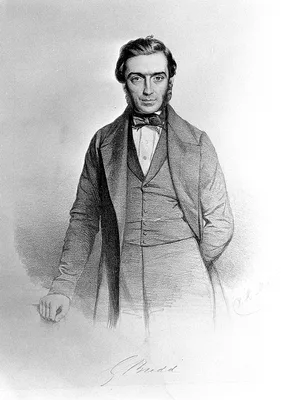
1845 BUDD, George (1808 – 1882)
On diseases of the liver.
Budd was Professor of Medicine at King’s College, London. Section III of the above book includes a description of that form of cirrhosis to which the name “Budd’s disease” has been applied. In the second edition, 1852…
GMN 3619 · https://historyofmedicine.com/id/4559
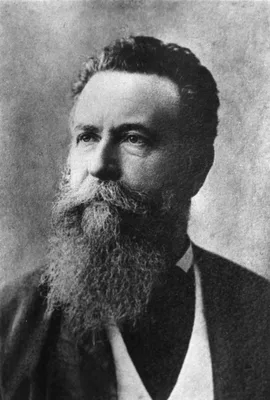
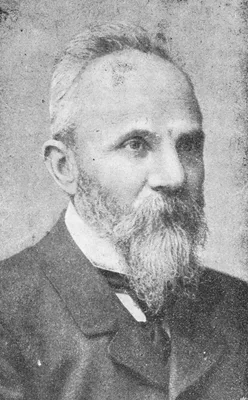
1845 SIEBOLD, Carl Theodor Ernst von [Karl] (1804 – 1885)
Bericht über die Leistungen im Gebiete der Helminthologie während des Jahres 1843 und 1844.
Siebold classified the hookworm as belonging to the Strongyloidae (pp. 220-21).
GMN 5354 · https://historyofmedicine.com/id/6939
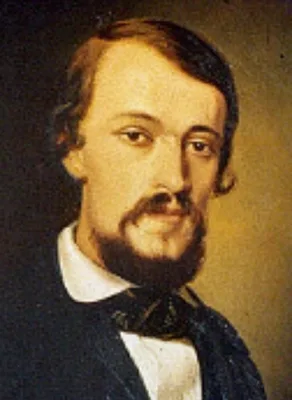
1852 BILHARZ, Theodor Maximilian (1825 – 1862)
Ein Beitrag zur Helminthographia humana aus brieflichen Mittheilungen des Dr. Bilharz in Cairo, nebst Bemerkungen von C. T. v. Siebold.
Discovery, in 1851, of Schistosoma haematobium, the parasite of bilharziasis. Bilharz was Professor of Zoology at Cairo. English translation in Rev. infect. Dis., 1984, 4, 727-32, and in Kean (No. 2268.1).
GMN 5339 · https://historyofmedicine.com/id/8612
1853 KÜCHENMEISTER, Gottlob Friedrich Heinrich (1821 – 1890)
Ueber Cestoden im allgemeinen und die des Menschen insbesondere, hauptsächlich mit Berücksichtigung ihrer Entwickelungsgeschichte, geographischen Verbreitung, Prophylaxe und Abtreibung; für Freunde der Naturwissenschaften, Aerzte, Medicinalpolizei-Beamte, Staats- und Privat-Oekonomen.
Kuchenmeister conducted research on tapeworms, trichinosis, and other parasites and wrote about it several works. In 1852, his theory that bladder-worms are juvenile tapeworms gained the attention of the medical profe…
GMN 2450 · https://historyofmedicine.com/id/2965
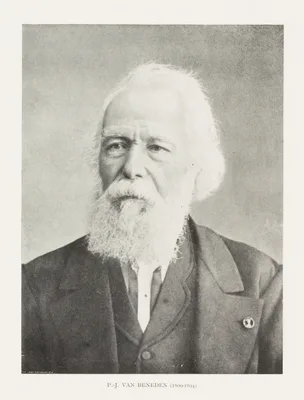
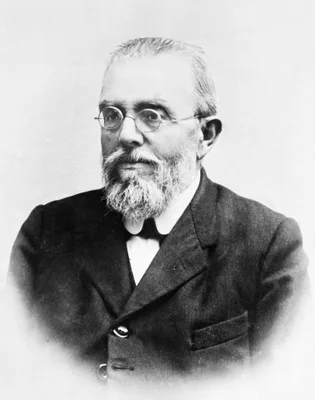
1858 BENEDEN, Pierre-Joseph van (1809 – 1894)
Mémoire sur les vers intestinaux.
Beneden's treatise on the development, transformation, and life-histories of parasitic worms won the Grand prix des sciences physiques of the Institut de France. It was published in the "International Scientific Serie…
GMN 10278 · https://historyofmedicine.com/id/12469
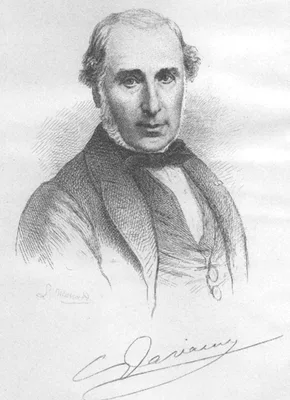
1860 DAVAINE, Casimir Joseph (1812 – 1882)
Traité des entozoaires et des maladies vermineuses.
GMN 2451 · https://historyofmedicine.com/id/2968
1862 –1876 LEUCKART, Karl Georg Friedrich Rudolf (1823 – 1898)
Die menschlichen Parasiten und die von ihnen herrührenden Krankheiten. 2 vols.
Includes the first complete and accurate account of the life history and morphology of Taenia echinococcus. Leuckart proved the relationship between hydatid cysts and minute tape-worms in dogs. English translation, Ed…
GMN 2453 · https://historyofmedicine.com/id/2973
1863 BASTIAN, Henry Charlton (1837 – 1915)
On the structure and nature of the Dracunculus or Guinea worm.
First detailed description.
GMN 5344.2 · https://historyofmedicine.com/id/6768
1863 DEMARQUAY, Jean Nicolas (1811 – 1875)
Note sur une tumeur des bourses contenant un liquide laiteux (galactocèle de Vidal) et renfermant de petits êtres vermiformes que l’on peut considérer comme les helminthes hèmatoïdes à l’étatd’embryon.
Description of the embryonic stage of Wuchereria bancrofti in hydrocele fluid.
GMN 5344.3 · https://historyofmedicine.com/id/6770
1864 –1869 COBBOLD, Thomas Spencer (1828 – 1886)
Entozoa. 2 pts.
Cobbold was the most distinguished helminthologist of his time. He named Filaria bancrofti, Bilharzia haematobia, and several other parasites. He was a friend of Manson, several of whose papers he communicated to the …
GMN 2452 · https://historyofmedicine.com/id/2971
1868 WUCHERER, Otto Eduard Heinrich (1820 – 1873)
Noticiar preliminar sobre vermes de uma especie ainda nao descripta, encontrados na urina de doentes de hematuria intertropical no Brazil.
In 1866 Wucherer saw the embryo form of the filaria worm. Later the name Wuchereria bancrofti was applied to it. English translation in Kean (No. 2268.1).
GMN 5344.6 · https://historyofmedicine.com/id/6781
1869 –1870 FEDCHENKO, Alexei Pavlovich (Aleksei FEDTSCHENKO) (1844 – 1873)
On the structure and reproduction of Filaria medinensis L.
Fedchenko, a Russian naturalist and explorer of central Asia, elucidated the life cycle of Dracunculus medinensis, the parasite of dracunculiasis. He discovered its means of transmission via copepod intermediate hosts…
GMN 5344.7 · https://historyofmedicine.com/id/8616
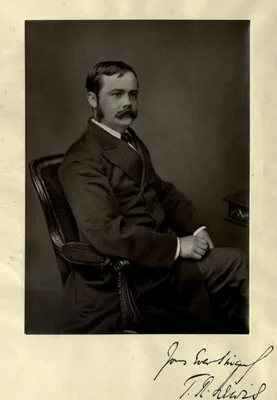
1871 LEWIS, Timothy Richards (1841 – 1886)
On a haemotozoon inhabiting human blood. Its relation to chyluria and other diseases.
Independently of Demarquay (No. 5344.3) and Wucherer (No. 5344.6), Lewis found microfilariae in the urine and blood in chyluria. He was first to use the term Filaria sanguinis hominis for the parasite.
GMN 5344.8 · https://historyofmedicine.com/id/6785
1875 MCCONNELL, James Frederick Parry (1848 – 1896)
Remarks on the anatomy and pathological relations of a new species of liver fluke.
First complete description of Chlonorchis sinensis.
GMN 5344.9 · https://historyofmedicine.com/id/6786
1875 O’NEILL, John
On the presence of a Filaria in “craw-craw”.
In 1874, while examining skin snips from craw-craw patients in Ghana, during his service on the H. M. S. Decoy, the Irish surgeon O’Neill discovered the subcutaneous microfilaria. This was the earliest known visual id…
GMN 5344.10 · https://historyofmedicine.com/id/6790
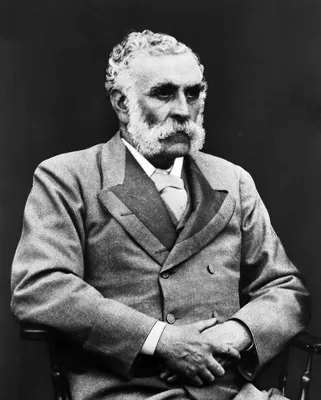
1877 MANSON, Sir Patrick (1844 – 1922)
Filaria sanguinis hominis.
GMN 5345 · https://historyofmedicine.com/id/6795
1877 MANSON, Sir Patrick (1844 – 1922)
Further observations on Filaria sanguinis hominis.
Manson showed that Wuchereria bancrofti, the cause of filarial elephantiasis in man, develops in, and is transmitted by, the Culex mosquito. This was the first proof that infective diseases are spread by animal vector…
GMN 5345.1 · https://historyofmedicine.com/id/6800
1877 LEWIS, Timothy Richards (1841 – 1886)
Filiaria sanguinis hominis - mature form.
Lewis made the critical connection/association of the worm, Filaria sanguinis,(Wuchereria bancrofti ) to Elephantiasis. This brief account appears to be a third person account summarizing Lewis's work written by an ed…
GMN 10787 · https://historyofmedicine.com/id/12983
1878 BANCROFT, Joseph (1836 – 1894)
Cases of filarious disease.
Discovery (1876) of Wuchereria bancrofti. Bancroft’s first report on this was in the form of a letter to T. S. Cobbold, who published it in Lancet, 1877, 2, 70-71.
GMN 5346 · https://historyofmedicine.com/id/6802
1878 GRASSI, Giovanni Battista (1854 – 1925); ET AL
Intornoall’Anchilostoma duodenale (Dubini).
Fecal diagnosis of hookworm disease. Before this time hookworm had been diagnosed only post mortem. With C. Parona and E. Parona. English translation in Kean (No. 2268.1).
GMN 5357 · https://historyofmedicine.com/id/6952
1879 MANSON, Sir Patrick (1844 – 1922)
Additional notes on filaria sanguinis hominis and filiaria disease.
On p. 36 of this paper Manson first described nocturnal periodicity in Filaria Bancrofti, an adaptation to the nocturnal biting habits of their mosquito vector. (Thanks to Juan Weiss for this reference and its interpr…
GMN 11248 · https://historyofmedicine.com/id/13445
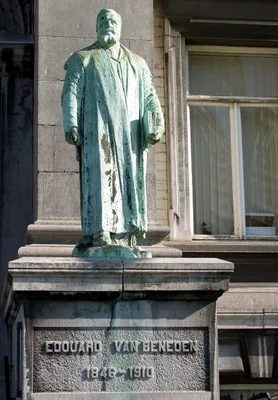
1883 BENEDEN, Edouard Joseph Louis Marie van (1846 – 1910)
Récherches sur la maturation de l’oeuf, la fécondation et la division cellulaire.
This work extended Hertwig’s work on fertilization (No. 495) down to the level of chromosomes, which were clearly visible in Ascaris after the sperm and egg united.
GMN 502.1 · https://historyofmedicine.com/id/1479
1883 MANSON, Sir Patrick (1844 – 1922)
The Filaria sanguinis hominis and certain new form of parasitic disease in India, China and warm countries.
A collection of several papers written by Manson.
GMN 2455 · https://historyofmedicine.com/id/2980
1884 MANSON, Sir Patrick (1844 – 1922)
The metamorphosis of Filaria sanguinis hominis in the mosquito.
Manson reported that the changes he had observed in ingested filariae took place in the mosquito thorax, not in the stomach as previously thought.
GMN 5346.3 · https://historyofmedicine.com/id/6810
1886 WUCHERER, Otto Eduard Heinrich (1820 – 1873)
Sobre a molestia vulgarmente denominada oppilaçao ou cançaço.
Wucherer confirmed Griesinger’s conclusion that the cause of tropical anemia was hookworm infestation. See also the same journal, 1869, 3, 170-72, 183-84, 198-200. English translation in Kean (No. 2268.1).
GMN 5356 · https://historyofmedicine.com/id/6947
1895 ROBERTSON, Douglas Moray Cooper Lamb Argyll (1837 – 1909)
Case of Filaria loa in which the parasite was removed from under the conjunctiva.
First detailed description of Loa loa. See also Trans. ophthal. Soc. U.K., 1897, 17, 227-32. Robertson first briefly mentioned this procedure and the Loa Loa worm in a brief article written for him by the editor of La…
GMN 5347.1 · https://historyofmedicine.com/id/6817
1896 LOOSS, Arthur (1861 – 1923)
Notizen zur Helminthologie Aegyptens. Die Lebensgeschichte des Anchylostomum duodenale (Dub.).
Looss elucidated the life cycle and mode of transmission of the hookworm. See also No. 5365. English translation in Kean (No. 2268.1).
GMN 5361 · https://historyofmedicine.com/id/6968
1901 LOOSS, Arthur (1861 – 1923)
Ueber das Eindringen der Ankylostomalarven in die menschliche Haut.
Looss discovered that hookworms can penetrate the skin; he himself became infected when hookworm culture accidentally spilled on his hands. English translation in Kean (No. 2268.1).
GMN 5362 · https://historyofmedicine.com/id/6971
1902 BENTLEY, Charles Albert (1873 – 1949)
On the causal relationship between “ground itch”, or “pani-ghao”, and the presence of the larvae of the Ankylostoma duodenale in the soil.
While a medical officer in the tea plantations in Assam, India, Bentley demonstrated the mode of entry of Ankylostoma into the body.
GMN 5362.1 · https://historyofmedicine.com/id/6980
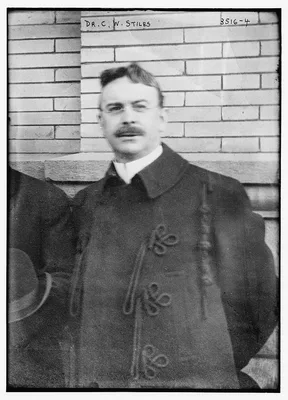
1902 STILES, Charles Wardell (1867 – 1941)
A new species of hookworm (Uncinaria americana) parasitic in man.
Discovery of the American species of hookworm, afterward re-named Necator americanus. It was later believed to have originated in Africa, being brought over by slaves.
GMN 5363 · https://historyofmedicine.com/id/6986
1902 STILES, Charles Wardell (1867 – 1941)
The significance of recent American cases of hookworm disease (Uncinariasis or Anchylostomiasis) in man.
In this paper Stiles fully characterized and extensively illustrated the American hookworm parasite that he first described in No. 5363. This species and the Schistosoma are the pathogenic organisms that can penetrate…
GMN 12114 · https://historyofmedicine.com/id/14323
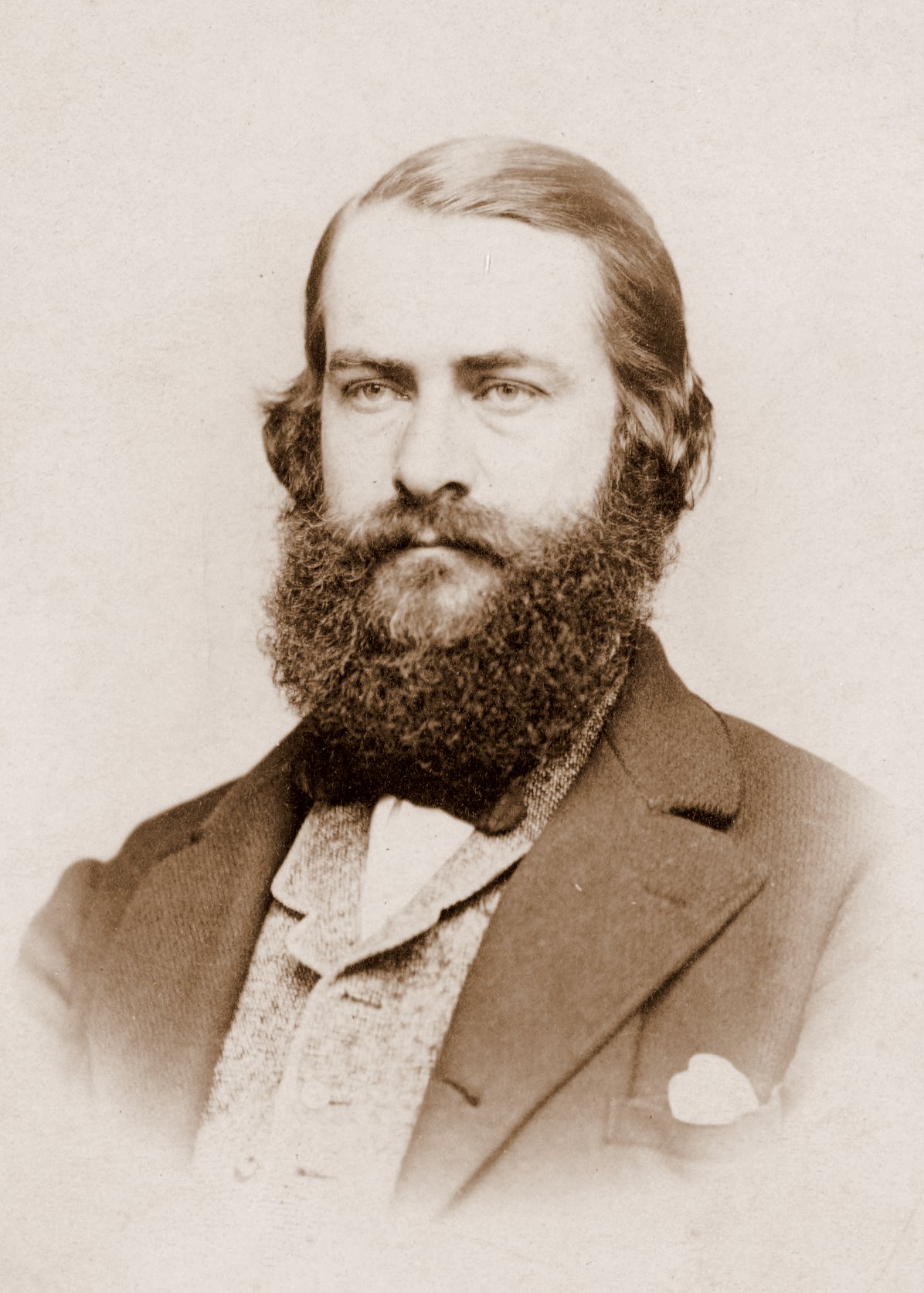
1904 LEIDY, Joseph (1823 – 1891)
Researches in helminthology and parasitology. With a bibliography of his contributions to science.
In vol. 46 of Smithsonian Miscellaneous Collections. Leidy was called the greatest descriptive naturalist in mid-19th century America.
GMN 2459 · https://historyofmedicine.com/id/3000
1905 –1911 LOOSS, Arthur (1861 – 1923)
The anatomy and life history of Agchylostoma duodenale Dub. A. monograph. 2 pts.
Vols. 3 and 4 of Records of the School of Medicine, Cairo. In 1898 Looss discovered that hookworm larvae can penetrate the skin. His monograph epitomized all knowledge of the condition to 1911.
GMN 5365 · https://historyofmedicine.com/id/6987
1910 PERRONCITO, Edoardo (1847 – 1936)
La malattia dei minatory dal S. Gottardo al Sempione.
Includes reprints of Perroncito’s earlier papers. He insisted on the parasitic origin of the disease as it occurred among the St. Gotthard tunnellers in 1880, and he introduced Felix mas as a vermifuge against hookworm.
GMN 5366 · https://historyofmedicine.com/id/6990
1913 LEIPER, Robert Thomson (1881 – 1969)
Important discovery in tropical medicine: Metamorphosis of Filaria Loa.
Leiper discovered diurnal periodicity in Filaria Loa, as the worm embryos are found in the blood only during day, as an adaptation to the day-biting habits of their insect vector, a biting fly of the genus Chrysopa. T…
GMN 11249 · https://historyofmedicine.com/id/13446
1917 RANSOM, Brayton Howard (1879 – 1925); FOSTER, Winthrop Davenport (1880 – 1918)
Life history of Ascaris lumbricoides and related forms.
GMN 2460 · https://historyofmedicine.com/id/3004
1929 LEIPER, Robert Thomson (1881 – 1969)
Landmarks in medical helminthology.
GMN 2463 · https://historyofmedicine.com/id/3014
1990 GROVE, David I.
A history of human helminthology.
GMN 13514 · https://historyofmedicine.com/id/15789
2005 TAYLOR, Mark J.; MAKUNDE, Williams Holmes; MCGARRY, Helen F.; ET AL
Macrofilaricidal activity after doxycycline treatment of Wuchereria bancrofti: A double blind randomized placebo-controlled trial.
Order of authorship in the original paper: Taylor, Makunde, McGarry.... The authors treated infection by the parasitic worm Wuchereria bancrofti, cause of elephantiasis (lymphatic filariasis), by killing the Wolbachia…
GMN 11193 · https://historyofmedicine.com/id/13390

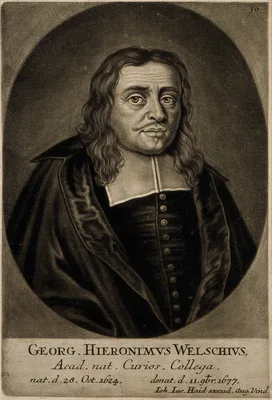
![SIEBOLD, Carl Theodor Ernst von [Karl] (1804 – 1885)](/media/portraits/231)