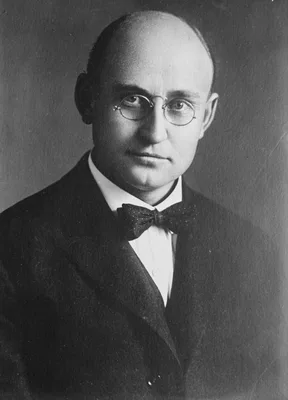
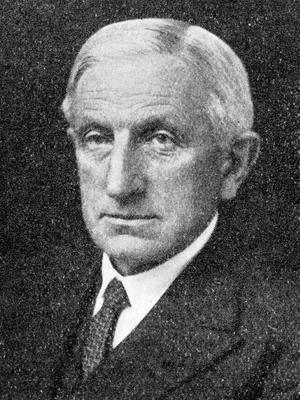
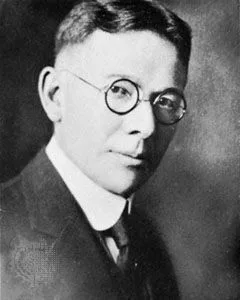
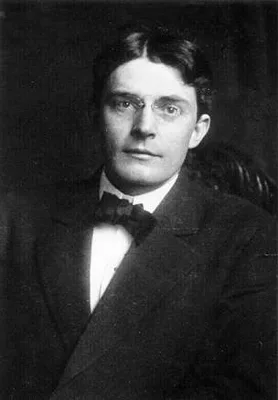
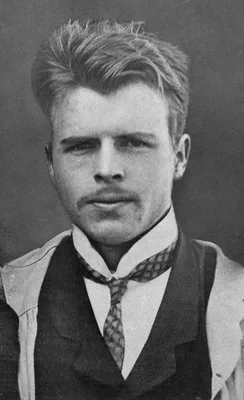
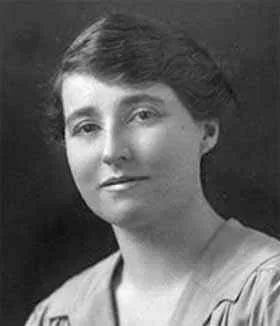
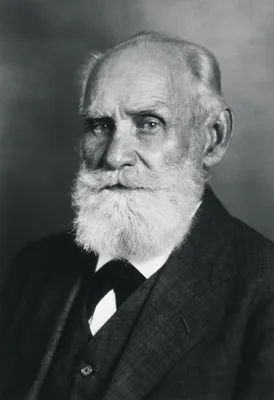
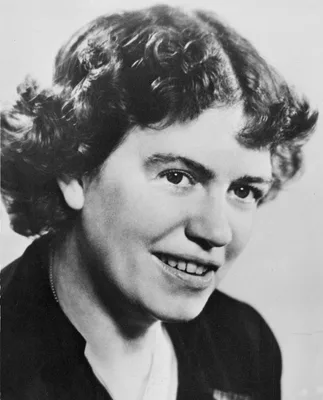
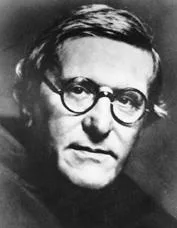
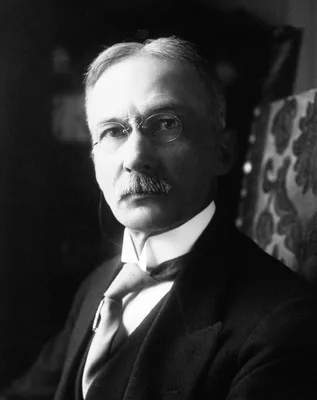
1887 BERLIN, Rudolf (1833 – 1897)
Eine besondere Art der Wortblindheit.
Berlin first suggested the term “dyslexia”. Digital facsimile from the Internet Archive at this link.
GMN 4627 · https://historyofmedicine.com/id/679
1887 KORSAKOFF, Sergei Sergeievich (1853 – 1900)
Disturbance of psychic activity in alcoholic paralysis.
“Korsakoff’s psychosis” or syndrome – alcoholic polyneuritis with loss and falsification of memory. A second paper on the subject in Ezhened. klin. Gaz., 1889, 9, 85, 115, 136, is translated into English in Neurology,…
GMN 4945 · https://historyofmedicine.com/id/6233
1890 JAMES, William (1842 – 1910)
The principles of psychology. 2 vols.
The foundation of the American school of experimental psychology. Under the influence of Wundt, James viewed psychology as an experimental science based on physiology. He founded the earliest laboratory for the study …
GMN 4977.2 · https://historyofmedicine.com/id/6398
1892 FERRY, Ervin Sidney (1868 – 1956)
Persistence of vision.
Ferry modified Weber’s law on the relationship between stimulus and sensation. Following the work of Porter, Proc. roy. Soc. (Lond.), 1898, 63, 347; 1902, 70, 313, the term “Ferry–Porter Law” came into being.
GMN 1473 · https://historyofmedicine.com/id/2440
1894 ELLIS, Henry Havelock (1859 – 1939)
Man and woman.
A study of the constitutional differences between man and woman.
GMN 187 · https://historyofmedicine.com/id/3437
1895 ZWAARDEMAKER, Hendrik (1857 – 1930)
Die Physiologie des Geruchs.
For his studies on olfaction and olfactometry Zwaardemaker developed the so-called “camera inodorata” (odorless chamber), or olfactometer. His instrument to check the patency of the nasal passages is still in use.
GMN 1474 · https://historyofmedicine.com/id/2443
1895 BALDWIN, James Mark (1861 – 1934)
The mental development of the child and the race.
A central text in the development of social psychology in North America; now also considered a pioneering study of adaptive learning, and in this sense a precursor to research in artificial intelligence. Digital facsi…
GMN 9320 · https://historyofmedicine.com/id/11502
1895 LE BON, Charles-Marie Gustave (1841 – 1931)
Psychologie des foules.
"Le Bon theorised that the new entity, the "psychological crowd", which emerges from incorporating the assembled population not only forms a new body but also creates a collective "unconsciousness". As a group of peop…
GMN 13330 · https://historyofmedicine.com/id/15598
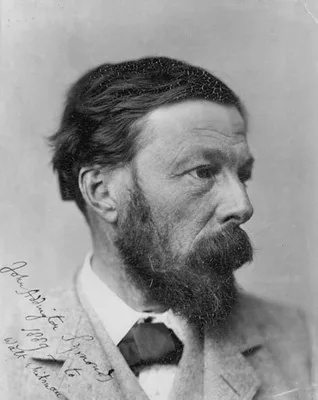
1896 ELLIS, Henry Havelock (1859 – 1939); SYMONDS, John Addington (1840 – 1893); KURELLA, Hans (1858 – 1916)
Das konträre Geschlechtsgefühl von Havelock Ellis und J. A. Symonds. Deutsche Original-Ausgabe Besorgt unter Mitwirkung von Dr. Hans Kurella.
This work, translated into English as Sexual inversion in 1897, became the first English language medical textbook on homosexuality. It was published as the second volume of Ellis's Studies in the psychology of sex. D…
GMN 9007 · https://historyofmedicine.com/id/11186
1896 BALDWIN, James Mark (1861 – 1934)
A new factor in evolution.
The Baldwin effect. "In evolutionary biology, the Baldwin effect describes the effect of learned behavior on evolution. In brief, James Mark Baldwin suggested that an organism's ability to learn new behaviors (e.g. to…
GMN 9319 · https://historyofmedicine.com/id/11501
1896 MANASEINA, Maria Mikhailovna (Marie de Manacéine) (1841 – 1903)
Le sommeil, tiers de notre vie. Pathologie, physiologie, hygiène, psychologie. Traduit de Russe avec l'autorisation de l'auteur par Ernest Jaubert.
Perhaps the first book on the physiology of sleep. The author examines the physiology, pathology, hygiene, and psychology of sleep, including the differences between the waking and sleeping states, the general phenome…
GMN 12454 · https://historyofmedicine.com/id/14686
1897 FREY, Maximilian (Max) Ruppert Franz von (1852 – 1932)
Untersuchungen über die Sinnesfunctionen der menschlichen Haut. I. Druckempfindung und Schmerz.
In his investigations on cutaneous sensibility Frey introduced his method of testing the sensitiveness of pressure points by means of bristles mounted in a handle.
GMN 1475 · https://historyofmedicine.com/id/2448
1898 BASTIAN, Henry Charlton (1837 – 1915)
A treatise on aphasia and other speech defects.
Bastian localized the auditory and visual centers, and he described word-blindness and word-deafness. (See also No. 4622.)
GMN 4629 · https://historyofmedicine.com/id/686
1900 FREUD, Sigmund (1856 – 1939)
Die Traumdeutung.
Freud’s greatest work, the influence of which has been felt far beyond the psychiatric and medical community. Here he refined his understanding of the operation of the unconscious, interpreted dreams on the basis of w…
GMN 4980 · https://historyofmedicine.com/id/6402
1900 –1928 ELLIS, Henry Havelock (1859 – 1939)
Studies in the psychology of sex. 7 vols.
Ellis's Studies represent a lifetime of research devoted to the subject, at first in the face of bitter opposition.
GMN 4981 · https://historyofmedicine.com/id/6403
1900 LAEHR, Bernhard Heinrich (1820 – 1905)
Die Literatur der Psychiatrie, Neurologie und Psychologie von 1459-1799. 3 vols.
GMN 5005 · https://historyofmedicine.com/id/6567
1902 STILL, Sir George Frederic (1868 – 1941)
The Goulstonian lectures on some abnormal psychical conditions in children. Delivered before the Royal College of Physicians of London on March 4th, 6th, and 11th, 1902.
Considered by many historians to be the scientific starting point of the study of Attention Deficit Hyperactivity Disorder (ADHD). Digital facsimile of the separate offprint from the Internet Archive at this link.
GMN 7979 · https://historyofmedicine.com/id/10155
1902 JUNG, Carl Gustav (1875 – 1961)
Zur Psychologie und Pathologie sogenannter occulter Phaeonomene.
Jung's M.D. thesis, in which he dealt for the first time with spiritualism in psychological terms, reporting data gathered at seances, and formulated the prototype of his theory of synchronicity. Digital facsimile fro…
GMN 12704 · https://historyofmedicine.com/id/14949
1902 JAMES, William (1842 – 1910)
The varieties of religious experience: A study in human nature. Being the Gifford Lectures on Natural Religion delivered at Edinburgh in 1901-1902.
Digital facsimile of the 33rd impression (1922) from the Internet Archive at this link.
GMN 12755 · https://historyofmedicine.com/id/15001
1903 BINET, Alfred (1857 – 1911)
L'Étude expérimentale de l'intelligence.
Once education was made mandatory for all French children from ages six to fourteen, it became necessary to determine which children might be considered retarded. To do so the question arose concerning what test shoul…
GMN 13067 · https://historyofmedicine.com/id/15319
1904 FREUD, Sigmund (1856 – 1939)
Zur Psychopathologie des Alltagslebens.
An exposition of psychoanalytic theory for a popular audience. Includes description and examples of the well-known “Freudian slip”. English translation, London, 1914.
GMN 4982 · https://historyofmedicine.com/id/6405
1904 GALEN, [Κλαύδιος Γαληνός; Galen of Pergamon] (129 – 216); HELMREICH, Georg (1849 – 1921)
Galeni De temperamentis libri III recensuit Georgius Helmreich.
Digital facsimile from the Hathi Trust at this link.
GMN 148 · https://historyofmedicine.com/id/8801
1905 FREUD, Sigmund (1856 – 1939)
Drei Abhandlungen zur Sexualtheorie.
The work which Freud considered second in importance only to his Die Traumdeutung. Freud’s epochal theory of infantile sexuality linked the forces motivating the development of body and mind from earliest infancy. Inf…
GMN 4983 · https://historyofmedicine.com/id/6406
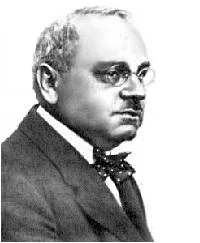
1907 ADLER, Alfred (1870 – 1937)
Studie über Minderwertigkeit von Organen.
Adler, a disciple of Freud, introduced the concept of the inferiority complex and the method of compensation needed to overcome it.
GMN 4984 · https://historyofmedicine.com/id/6407
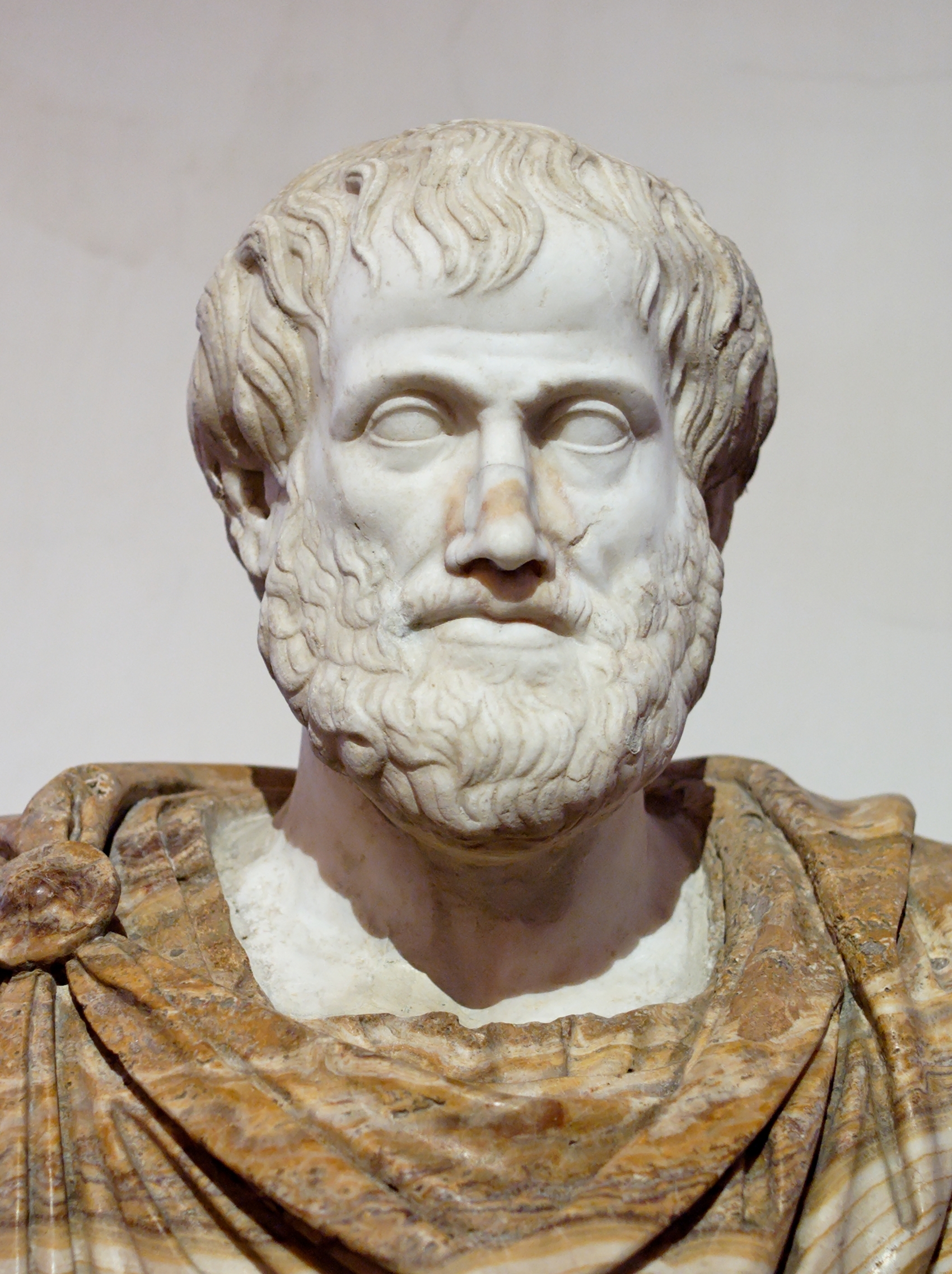
1908 –1952 ARISTOTLE (ἈΡΙΣΤΟΤΈΛΗΣ) (-384 – -322); SMITH, John Alexander (1863 – 1939); ROSS, Willliam David (1877 – 1971)
The works of Aristotle translated into English. Edited by J.A. Smith and W.D. Ross. 12 vols.
De motu animalium. De incessu animalium. In his Works, edited by J.A. Smith and W.D. Ross, 5, 698a-714b., Oxford, 1912. De Anima. In his Works… translated into English. Edited by J. A. Smith and W. D. Ross. 3, 402a-35…
GMN 18 · https://historyofmedicine.com/id/4491
1908 EWENS, George Francis William
Insanity in India: Its symptoms and diagnosis; with reference to the relation of crime and insanity.
Includes considerable discussion of the psychoactive effects of cannabis. Digital facsimile from the Hathi Trust at this link.
GMN 8246 · https://historyofmedicine.com/id/10422
1909 SIDIS, Boris (1867 – 1923)
An experimental study of sleep. (From the Physiological Laboratory of the Harvard Medical School and from Sidis' Laboratory).
Sidis emphasized his physiological approach in the wording of the title of this book. Digital facsimile from Google Books at this link.
GMN 12455 · https://historyofmedicine.com/id/14687
1911 BINET, Alfred (1857 – 1911); SIMON, Theodore (1873 – 1961)
La mesure du développement de l’intelligence chez les jeunes enfants.
Binet–Simon intelligence tests. As early as 1895 Binet had published a plan for studying intelligence. English translation, 1912.
GMN 4985 · https://historyofmedicine.com/id/6446
1911 JUNG, Carl Gustav (1875 – 1961)
Wandlungen und Symbole der Libido. Beiträge zur Entwicklungsgeschichte des Denkens.
Reprinted in book form, Leipzig, F. Deuticke, 1912. Jung was among the first to support Freud’s views on psychoanalysis, and was considered by Freud to be his most brilliant pupil. Jung applied psychoanalytic theory t…
GMN 4985.2 · https://historyofmedicine.com/id/6454
1912 ADLER, Alfred (1870 – 1937)
Über die nervösen Charakter.
Adler seceded from Freud’s psycho-analytical group and founded the school of individual psychology. English translation of above, 1917. See also his Practice and theory of individual psychology, 1924.
GMN 4985.1 · https://historyofmedicine.com/id/6449
1912 GODDARD, Henry Herbert (1866 – 1957)
The Kallikak family: A study in the heredity of feeble-mindedness.
When this book was published Goddard was Director of the Research Laboratory of the Training School at Vineland, New Jersey, for Feeble-minded Girls and Boys. Though this work drew wide attention to the problems of pe…
GMN 11535 · https://historyofmedicine.com/id/13734
1912 HOLLINGWORTH, Harry Levi (1880 – 1956)
The influence of caffeine on mental and motor efficiency. Columbia Contributions to Philosophy and Psychology, Vol. XX, No. 4.
"The Coca-Cola Company, facing a lawsuit from the federal government under the Pure Food and Drug Act, approached Hollingworth (after James McKeen Cattell and several other psychologists turned them down)[4] about inv…
GMN 13522 · https://historyofmedicine.com/id/15797
1916 TROTTER, Wilfred Batten Lewis (1872 – 1939)
Instincts of the herd in peace and war.
Trotter, a surgeon, also contributed to social psychology. In this work he popularized in English the concept, first developed by French sociologist, Gustave Le Bon, of an instinct over-riding the will of the individu…
GMN 13329 · https://historyofmedicine.com/id/15596
1917 HINSELWOOD, James (1859 – 1919)
Congenital word-blindness.
GMN 4631 · https://historyofmedicine.com/id/691
1917 TERMAN, Lewis Madison (1877 – 1957); ET AL
The Stanford revision and extension of the Binet–Simon scale for measuring intelligence.
GMN 4986 · https://historyofmedicine.com/id/6457
1918 VISCHER, Adolf Lukas (1884 – 1974)
Die Stacheldraht-Krankheit: Beiträge zur Psychologie des Kriegsgefangenen. 2 vols.
Translated into English as Barbed wire disease: A psychological study of prisoners of war. Translated from the German, with additions. London: Bale & Danielson, 1919.
GMN 13905 · https://historyofmedicine.com/id/16197
1919 WATSON, John Broadus (1878 – 1958)
Psychology from the standpoint of a behaviorist.
Watson was the principal exponent of behaviorist psychology. Digital facsimile from the Internet Archive at this link.
GMN 4987 · https://historyofmedicine.com/id/6463
1921 KRETSCHMER, Ernst (1884 – 1964)
Körperbau und Charakter.
Kretschmer has attempted to correlate body build and constitution with character and mentality.
GMN 4988 · https://historyofmedicine.com/id/6465
1921 RORSCHACH, Hermann (1884 – 1922)
Psychodiagnostik. 1 vol & atlas of test cards.
Rorschach test. 2nd ed., Bern, 1932. English translation, Bern, Huber, 1942. See the biography of Rorschach in Bull. Menninger Clin., 1954, 18, 173-219.
GMN 4988.1 · https://historyofmedicine.com/id/6470
1922 COUÉ DE LA CHATAIGNERAIE, Émile [Coué] (1857 – 1926)
La maîtrise de soi-même par l'autosuggestion consciente.
English translation as Self-mastery through conscious autosuggestion, New York: Markan Publishing Co., 1922. Digital facsimile of the English translation from the Internet Archive at this link.
GMN 9413 · https://historyofmedicine.com/id/11596
1923 ISSERLIS, Leon (1881 – 1966); WOOD, Frances Chick (1883 – 1919)
The relation between home conditions and the intelligence of school children. From data collected by the late Mrs. Frances Wood. Privy Council. Medical Report Council. Special reports series No. 74.
GMN 12588 · https://historyofmedicine.com/id/14827
1925 GESELL, Arnold Lucius (1880 – 1961)
The mental growth of the pre-school child: A psychological outline of normal development from birth to the sixth year, including a system of development diagnosis.
"The Maturational Theory of child development was introduced in 1925[1] by Dr. Arnold Gesell, an American educator, pediatrician and clinical psychologist whose studies focused on "the course, the pattern and the rate…
GMN 10610 · https://historyofmedicine.com/id/12803
1927 PARSONS, Sir John Herbert (1868 – 1957)
An introduction to the theory of perception.
GMN 1529 · https://historyofmedicine.com/id/2855
1927 ROST, Hans (1877 – 1970)
Bibliographie des Selbstmords mit textlichen Einführungen zu Jedem Kapitel.
Approaches the literature of suicide from many points of view including philosophical, medical, psychological, religious, literary, and artistic, as well as topics like family suicide, mass suicide and euthanasia, fro…
GMN 7698 · https://historyofmedicine.com/id/9870
1928 –1941 PAVLOV, Ivan Petrovich (1849 – 1936)
Lectures on conditioned reflexes. 2 vols.
Besides his work on digestion, Pavlov is remembered for his investigations upon conditioned reflexes. An English translation of another work by Pavlov, entitled Conditioned reflexes, appeared in 1927.
GMN 1445 · https://historyofmedicine.com/id/2244
1928 CRITCHLEY, MacDonald (1900 – 1997); KLÜVER, Heinrich (1897 – 1979)
Mescal: The "divine" plant and its psychological effects. With an introduction by Macdonald Critchley.
The first study of the psychological effects of mescaline.
GMN 8796 · https://historyofmedicine.com/id/10974
1928 MEAD, Margaret (1901 – 1978)
Coming of age in Samoa: A psychological study of primitive youth for western civilisation.
Mead based her study primarily on adolescent girls on the island of Ta'u in the Samoan Islands. The book detailed the sexual life of teenagers in Samoan society in the early 20th century, and theorized that culture ha…
GMN 10118 · https://historyofmedicine.com/id/12307
1929 KÖHLER, Wolfgang (1887 – 1967)
Gestalt psychology.
GMN 4991 · https://historyofmedicine.com/id/6487
1934 GESELL, Arnold Lucius (1880 – 1961)
An atlas of infant behavior: A systematic delineation of the forms and early growth of human behavior patterns... illustrated with 3,200 action photographs. Vol. l: Normative series, in collaboration with Helen Thompson and Catherine S. Amatruda. Selected bibliographies (p. 45). Vol. 2: Naturalistic series, in collaboration with Alice V. Keliher, Frances L. Ilg, and Jessie J. Carlson. (2 vols.)
Gesell, who originated the Child Study Center at Yale University, was the founder of the study of child development in the United States. He is best known for his groundbreaking studies of normal child development: be…
GMN 10609 · https://historyofmedicine.com/id/12802
1934 GEMELLI, Agostino (1878 – 1959); PASTORE, Giuseppina (1891 – 1983)
L'analisi electroacustica del linguaggio. 2 vols.
GMN 13231 · https://historyofmedicine.com/id/15495

![GALEN, [Κλαύδιος Γαληνός; Galen of Pergamon] (129 – 216)](/media/portraits/21)