1564 RONSSE, Boudewijn [Balduinus Ronsseus] (1525 – 1597)
De magnis Hippocratis lienibus, Pliniique stomacace, ac sceletyrbe, seu vulgo dicto scorbuto, libellus.
Jean de Joinville was probably the first, about 1250, to describe scurvy; Vasco da Gama noted its occurrence at sea, and Jacques Cartier mentioned it. Ronsse gave an early medical account describing how sailors cured …
GMN 3710 · https://historyofmedicine.com/id/4462
1598 WATESON, George
The cures of the diseased, in remote regions. Preventing mortalitie, incident in forraine attempts, of the English nation.
This book is the earliest work in English devoted to tropical medicine. It discusses sunstroke, tabardilla (possibly typhus or yellow fever), prickly heat, dysentery, erysipelas and scurvy. Facsimile reproduction, wit…
GMN 2262 · https://historyofmedicine.com/id/2805
1617 WOODALL, John (1570 – 1643)
The surgions mate, or, A treatise discouering faithfully and plainely the due contents of the surgions chest: the uses of the instruments, the vertues and operations of the medicines, the cures of the most frequent diseases at sea: namely, wounds, apostumes, vlcers, fistulaes, fractures, dislocations, with the true maner of amputation, the cure of the scuruie, the fluxes of the belly, of the collica and illiaca passio, tenasmus, and exitus ani, the callenture; with a briefe explanation of sal, sulphur, and mercury; with certaine characters, and tearmes of arte.
Woodall was the surgeon-general to the East India Company. This was the first textbook for naval surgeons. Woodall, surgeon to Saint Bartholomew's Hospital, was an early advocate of limes and lemons as a preventive me…
GMN 2144 · https://historyofmedicine.com/id/2726
1623 ABREU, Aleixo de (1568 – 1630)
Tratado de las siete enfermedades, de la inflammacion universal del higado, zirbo, pyloron, y riñones, y de la obstrucion, de la satiriasi, de la terciana y febre maligna, y passion hipocondriaca. Lleva otros tres tratados, del mal de Loanda, del guzano, y de las fuentes y sedales.
The first important work on tropical diseases. Only six copies of the original edition of this book are known. It includes full accounts of malaria, typhoid, and scurvy, and the first accurate descriptions of yellow f…
GMN 2262.1 · https://historyofmedicine.com/id/2808
1642 BONDT, Jacob de [Jacobus Bontius] (1592 – 1631)
De medicina Indorum.
Bontius was probably the first to regard tropical medicine as an independent branch of medical science. He spent the last four years of his life in the Dutch East Indies, and his book incorporates the experience he ga…
GMN 2263 · https://historyofmedicine.com/id/2816
1645 WHISTLER, Daniel (1619 – 1684)
Disputatio medica inauguralis, de morbo puerili Anglorum, quem patrio idiomate indigenae vocant The Rickets.
In his 26th year Whistler published his graduation thesis at Leiden; this was the first description of rickets as a definite disease manifesting itself by a more or less constant association of symptoms. Still (No. 63…
GMN 3727 · https://historyofmedicine.com/id/4502
1649 BOATE, Arnold [BOOTIUS]. (1600 – 1653)
Observationes medicae de affectibus omissis.
Boate who spent many years in Ireland, included a full first-hand account of rickets in Chapter 12 of the above book (“De tabe pectorea”). He showed how widespread the disease was at that time. Reprinted in Opuscula S…
GMN 3728 · https://historyofmedicine.com/id/4506
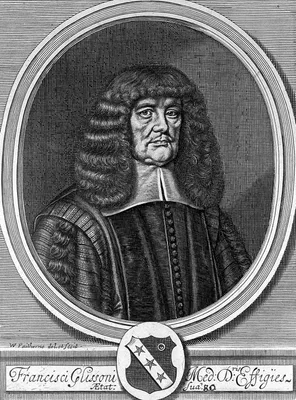
1650 GLISSON, Francis (1597 – 1677); BATE, George (1608 – 1668); REGEMORTER, Ahasuerus (Assuerus Regimorter) (1614 – 1650)
De rachitide sive morbo puerili, qui vulgo The Rickets dicitur tractatus.
Although anticipated by Whistler and others in the description of infantile rickets, Glisson’s account was the fullest that had till then appeared. He was first (Chap. 22) to describe infantile scurvy. Glisson’s book …
GMN 3729 · https://historyofmedicine.com/id/4509
1652 TULP, Nicolaes (1593 – 1674)
Observationes medicae.
One of the earliest accounts of beri-beri is on pp. 300-05 of this work. Tulp, notable as the demonstrator in Rembrandt’s “Anatomy Lesson”, was among the first, in the same book, to describe the ileo-caecal valve (“Tu…
GMN 3737 · https://historyofmedicine.com/id/4530
1685 DELLON, Charles Gabriel (1649 – 1710)
Traité des maladies particulières aux pays orientaux, et dans la route, et de leurs Remèdes. Par M.C.D.D.E.M.
At the age of 17, Dellon, who is sometimes referred to as Gabriel Dellon, embarked as second surgeon aboard the ship La Force. He arrived at Darman, in the Portuguese Indies, in 1673, where he was doctor to Luis de Me…
GMN 11128 · https://historyofmedicine.com/id/13324
1752 KNOLL, Johann Christian Friedrich (1726 – 1757)
Sendschreiben von den Wirkungen des Kafeetranks.
Discussing the consumption and reception of coffee from Britain to Turkey, Knoll dismissed criticisms of coffee, including that it reduced beauty and virility, or that it was contrary to Islam, instead promoting the m…
GMN 11719 · https://historyofmedicine.com/id/13920
1753 LIND, James (1716 – 1794)
A treatise of the scurvy.
Lind, founder of naval hygiene in England, wrote a classic treatise on scurvy, in which he described many important experiments he made on the disease. These experiments have been called “the first deliberately planne…
GMN 3713 · https://historyofmedicine.com/id/4467
1755 THIÉRY, François [THIERRY] (1719 – )
Description d’une maladie appelée mal de la rosa.
Thiérry wrote an account of pellagra from what he had seen or heard of Casal’s cases. His work antedates that of Casal in date of publication but is not a first-hand description. English translation in No. 2241.
GMN 3749 · https://historyofmedicine.com/id/4570
1757 LIND, James (1716 – 1794)
An essay on the most effectual means, of preserving the health of seamen, in the Royal Navy.
Lind is regarded as the founder of naval hygiene in England. Besides his work on scurvy (see No.3713), he is notable for the above book, which deals not only with the men but also with the appalling conditions in whic…
GMN 2151 · https://historyofmedicine.com/id/2746
1762 CASAL JULIÁN, Gaspar (1680 – 1759)
Historia natural, y medica de el Principado de Asturias.
The first recognizable description of pellagra is included on pp. 327-60 of this book, which was written in 1735 but not published until 1762, after the writer’s death. He called the disease mal de la rosa. Reprinted,…
GMN 1771 · https://historyofmedicine.com/id/3318
1771 FRAPOLLI, Francesco ( – 1773)
Animadversiones in morbum, vulgo pellagram.
In Frapolli’s careful description of pellagra, the disease was first given its present name. This book is also the first Italian account of the malady. Partial English translation in No. 2241.
GMN 3751 · https://historyofmedicine.com/id/4583
1776 PRINGLE, Sir John (1707 – 1782); COOK, James (1728 – 1779)
The method taken for preserving the health of the crew of H.M.S. the Resolution during her late voyage round the world. In: Sir John Pringle, A discourse upon some late improvements in the means for preserving the health of mariners.
Following the scurvy-preventing suggestions of James Lind, Cook lost only one man to disease on his second voyage from 1768-1771. Reprinted in Phil. Trans., 1776, 66, 402-06. See No. 2156.
GMN 3714 · https://historyofmedicine.com/id/4470
1785 BLANE, Sir Gilbert (1749 – 1834)
Observations on the diseases incident to seamen.
William Hunter recommended Blane as private physician to Admiral Rodney; Blane sailed with him to the W. Indies and became physician to the British Fleet. He was held in great esteem in the navy and was instrumental i…
GMN 2158 · https://historyofmedicine.com/id/842
1786 TROTTER, Thomas (1760 – 1832)
Observations on the scurvy.
GMN 3716 · https://historyofmedicine.com/id/4478
1786 –1789 STRAMBIO, Gaetano (1752 – 1831)
De pellagra. 3 vols.
By 1776, pellagra had attained serious proportions in Italy; Strambio was placed in charge of a hospital for the treatment of pellagrins, and he left an important account of the disease. He and Casal y Julian (No. 375…
GMN 3752 · https://historyofmedicine.com/id/4590
1803 BALME, Claude (1766 – 1850)
Observations et réflexions sur le scorbut, d'après celui qui a régné parmi les troupes françaises formant la garnison d'Alexandrie (en Egypte), pendant le Blocus et le Siége de cette ville, en l'an IX (1801), par les Armées combinées des Turcs et des Anglais.
The author was a military surgeon on Napoleon's Egyptian campaign. Digital facsimile from BnF Gallica at this link. (32pp.)
GMN 13611 · https://historyofmedicine.com/id/15891
1819 BALME, Claude (1766 – 1850)
Traité historique et pratique du scorbut, chez l'homme et les animaux, dans lequel se trouvent des observations intéressantes sur le traitement de quelques maladies, comme de la vénérienne, de la scrophuleuse, etc., et qui est suivi de plusieurs considérations sur les qualités, les devoirs et les prérogative du vrai médecin, et sur ses relations avec ses collégues et les différents membres de la société.
Digital facsimile from Google Books at this link.
GMN 13610 · https://historyofmedicine.com/id/15890
1824 SCHÜTTE, D
Beobachtungen Über den Nutzen des Berger Leberthrans (Oleum jecoris Aselli, von Gadus asellus L.)
First report of the value of cod-liver oil in the treatment of rickets.
GMN 3730 · https://historyofmedicine.com/id/4511
1835 MALCOLMSON, John Grant ( – 1844)
A practical essay on the history and treatment of beriberi.
A classic account, in which the author brought together all that was known about the disease in his day.
GMN 3738 · https://historyofmedicine.com/id/4533
1836 KREBEL, Rudolph
Der Scorbut in geschichtlich-literarischer, pathologischer, prophylactischer und therapeutischer Beziehung.
GMN 3717 · https://historyofmedicine.com/id/4481
1859 MÖLLER, Julius Otto Ludwig (1819 – 1887)
Ueber akute Rachitis.
Möller was the first to describe the acute form of rickets combined with scurvy now associated with the name of Barlow (No. 3720).
GMN 3718 · https://historyofmedicine.com/id/4483
1866 ROUSSEL, Jean Baptiste Victor Théophile (1816 – 1903)
Traité de la pellagre et des pseudo-pellagres.
Roussel was awarded a prize of 5,000 francs for this work.
GMN 3753 · https://historyofmedicine.com/id/4593
1869 LOMBROSO, Cesare (1836 – 1909)
Studii clinici ed esperimentali sulla natura, causa e terapia della pellagra.
Lombroso upheld the maize theory of the origin of pellagra. He believed that the symptoms were caused by a toxin which developed in deteriorated maize. Reprinted from Riv. clin. Bologna, 1869, 8, 289-314, 321-44.
GMN 3754 · https://historyofmedicine.com/id/4596
1878 CHEADLE, Walter Butler (1836 – 1910)
Three cases of scurvy supervening on rickets in young children.
Infantile scurvy was confused with rickets until Cheadle differentiated between the two conditions.
GMN 3719 · https://historyofmedicine.com/id/4486
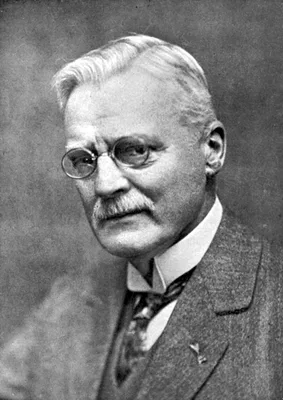
1880 –1884 BÄLZ, Erwin Otto Eduard von (1849 – 1933)
Kakke (Beriberi).
In his important account of beriberi, Baelz dealt with the Tokyo outbreak of 1881.
GMN 3739 · https://historyofmedicine.com/id/4537
1883 BARLOW, Sir Thomas (1845 – 1945)
On cases described as “acute rickets” which are probably a combination of scurvy and rickets, the scurvy being an essential, and the rickets a variable, element.
Classic description of infantile scurvy (“Barlow’s disease”), which includes the pathology of the condition. See also his earlier paper in Trans. int. med. Congr., 1881, 4, 116-28. Reprinted, but without the colored l…
GMN 3720 · https://historyofmedicine.com/id/4487
1885 POMMER, Gustav (1851 – 1935)
Untersuchungen über Osteomalacie und Rachitis.
Hess considered this the foremost contribution to the subject during the 19th century.
GMN 3731 · https://historyofmedicine.com/id/4514
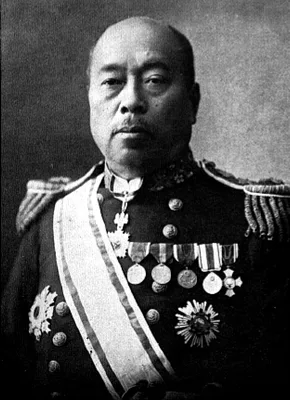
1885 KANEHIRO, Takaki (1849 – 1915)
On the cause and prevention of kakke.
Takaki was the first conclusively to show the dietary origin of beriberi. Measures introduced by him resulted in its eradication from the Japanese Navy, where it had previously been a serious problem.
GMN 3740 · https://historyofmedicine.com/id/4541
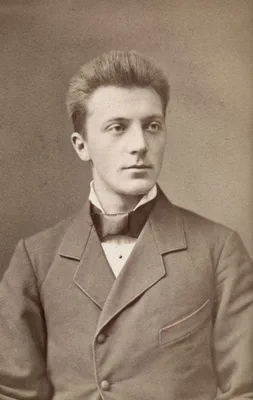
1890 EIJKMAN, Christiaan (1858 – 1930)
Polyneuritis bij hoenders.
Eijkman produced beriberi experimentally in fowls; from this he was led to conclude that a diet of over-milled rice was the chief cause, both in fowls and humans. Thus his work was of great importance in determining t…
GMN 3741 · https://historyofmedicine.com/id/4544
1901 GRIJNS, Gerrit (1865 – 1944)
Over polyneuritis gallinarum
Grijns succeeded Eijkman as director of the Research Laboratory for Pathological Anatomy and Bacteriology in Batavia. He was the first to adopt the view that beriberi was simply a “deficiency disease”, since he found …
GMN 3742 · https://historyofmedicine.com/id/4549
1907 HOLST, Axel (1860 – 1931)
Experimental studies relating to “ship-beri-beri” and scurvy
Experimental production of scurvy in guinea-pigs. Holst published further papers on the subject in the same journal, 1907, 7, 634-71, and in Z. Hyg., 1912, 72, 1-120, both with Theodor Froelich. Their work made it pos…
GMN 3721 · https://historyofmedicine.com/id/4489
1909 FRASER, Henry (1873 – 1930); STANTON, Sir Ambrose Thomas (1875 – 1938)
An inquiry concerning the etiology of beri-beri.
Studies from the Institute for Medical Research, F. M. S., No. 10. Careful and long-continued experiments on the aetiology of beriberi were carried out by Fraser and Stanton in Malaya.
GMN 3743 · https://historyofmedicine.com/id/4553
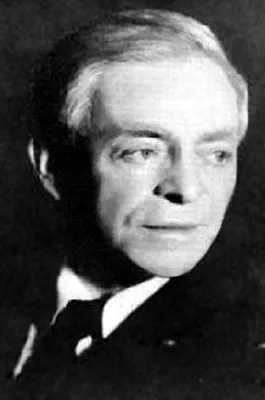
1911 –1912 FUNK, Casimir (1884 – 1967)
On the chemical nature of the substance which cures polyneuritis in birds induced by a diet of polished rice.
One of the earliest attempts to isolate what later became known as vitamin B1.See No. 1051. Funk determined the chemical nature of the substance in rice polishings which could cure beriberi.
GMN 1047 · https://historyofmedicine.com/id/582
1913 VEDDER, Edward Bright (1878 – 1952)
Beriberi
Important studies of beri-beri are recorded in this book. After its publication the author made many additional contributions to the literature on the subject.
GMN 3745 · https://historyofmedicine.com/id/4560
1914 GOLDBERGER, Joseph (1874 – 1929); ET AL
The treatment and prevention of pellagra.
With C. H. Waring and D. G. Willets. A collection of Goldberger’s most important papers with a list of his publications appeared in 1964.
GMN 3755 · https://historyofmedicine.com/id/4598
1918 –1919 MELLANBY, Sir Edward (1884 – 1955)
The part played by an “accessory factor” in the production of experimental rickets.
First convincing experimental evidence that rickets is a deficiency disease, curable by correct diet.
GMN 3733 · https://historyofmedicine.com/id/4520
1918 HURST, Sir Arthur Frederick (1879 – 1944)
Medical diseases of the war. Second edition
Roughly the first half of this work is on "war neuroses." The second half is on "infective and other disorders," including gas poisoning. Hurst greatly expanded the first section after experience as a neurologist in E…
GMN 8604 · https://historyofmedicine.com/id/10781
1919 DRUMMOND, Sir Jack Cecil (1891 – 1952)
Note on the role of the antiscorbutic factor in nutrition.
In 1920 Drummond suggested the term “vitamin”.
GMN 1053 · https://historyofmedicine.com/id/616
1919 ASCHOFF, Karl Albert Ludwig (1866 – 1942); KOCH, Walter Karl (1880 – 1962)
Der Skorbut.
GMN 3722 · https://historyofmedicine.com/id/4490
1919 HULDSCHINSKY, Kurt (1883 – 1941)
Heilung von Rachitis durch künstliche Höhensonne.
Rickets cured by ultraviolet irradiation.
GMN 3732 · https://historyofmedicine.com/id/4516
1919 MELLANBY, Sir Edward (1884 – 1955)
An experimental investigation on rickets.
In his important experiments on rickets, Mellanby both induced and controlled the disease by diet.
GMN 3734 · https://historyofmedicine.com/id/4522
1919 HARRIS, Henry Fauntleroy (1867 – 1926)
Pellagra.
GMN 3756 · https://historyofmedicine.com/id/4600
1920 GOLDBERGER, Joseph (1874 – 1929); WHEELER, George Alexander (1885 – 1981)
The experimental production of pellagra in human subjects by means of diet.
Goldberger was born in Central Europe in poor circumstances. He migrated to America, and following attendance at a lecture by Austin Flint, decided to study medicine. He entered the U. S. Public Health Service in 1899…
GMN 3757 · https://historyofmedicine.com/id/4603
1922 MCCOLLUM, Elmer Verner (1879 – 1967); ET AL
Studies on experimental rickets. XXI. An experimental demonstration of the existence of a vitamin which promotes calcium deposition.
Discovery of vitamin D. with N. Simmonds, J. E. Becker, and P. G. Shipley.
GMN 1054.1 · https://historyofmedicine.com/id/637
1925 STEENBOCK, Harry (1886 – 1967); ET AL
Fat-soluble vitamin. XXVI. Antirachitic property of milk and its increase by direct irradiation and by irradiation of the animal.
Demonstration that the therapeutic properties of ultra-violet light could be effectively stored in foods and later released after consumption. With E. B. Hart, C. A. Hoppert, and A. Black.
GMN 1056 · https://historyofmedicine.com/id/652