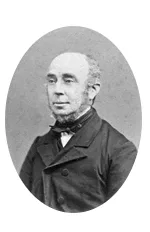
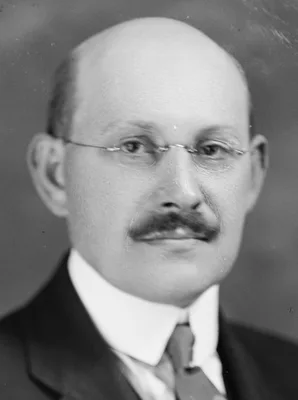
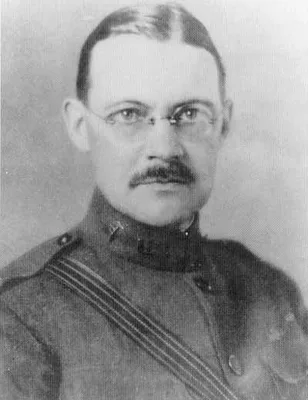
1816 –1817 MAGENDIE, François (1783 – 1855)
Précis élémentaire de physiologie. 2 vols.
The first modern physiology textbook, in which doctrine gave way to simple, precise descriptions of experimental facts. Vol. 2 contains Magendie’s classic demonstration of the importance of nitrogenous food, or protei…
GMN 1041.1 · https://historyofmedicine.com/id/1048
1819 BALME, Claude (1766 – 1850)
Traité historique et pratique du scorbut, chez l'homme et les animaux, dans lequel se trouvent des observations intéressantes sur le traitement de quelques maladies, comme de la vénérienne, de la scrophuleuse, etc., et qui est suivi de plusieurs considérations sur les qualités, les devoirs et les prérogative du vrai médecin, et sur ses relations avec ses collégues et les différents membres de la société.
Digital facsimile from Google Books at this link.
GMN 13610 · https://historyofmedicine.com/id/15890
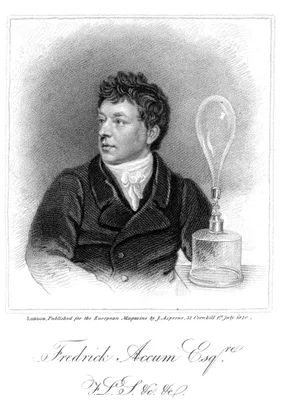
1820 ACCUM, Friedrich (1769 – 1838)
A treatise on the adulterations of food and culinary poisons: Exhibiting the fraudulent sophistications of bread, beer, wine, spirituous liquors, tea, coffee, cream, confectionery, vinegar, mustard, pepper, cheese, olive oil, pickles and other articles employed in domestic economy; and methods of detecting them.
One of the earliest exposures of food adulteration, written by a German chemist who spent most of his career in England. This sensational popular scientific work exposed established scandalous practices within the foo…
GMN 1604.2 · https://historyofmedicine.com/id/1865
1824 SCHÜTTE, D
Beobachtungen Über den Nutzen des Berger Leberthrans (Oleum jecoris Aselli, von Gadus asellus L.)
First report of the value of cod-liver oil in the treatment of rickets.
GMN 3730 · https://historyofmedicine.com/id/4511
1824 APPERT, Nicolas (1742 – 1841); COOPER, Thomas (1759 – 1839)
A treatise of domestic medicine, intended for families: in which the treatment of common disorders are alphabetically enumerated. To which is added, a practical system of domestic cookery, describing the best, most economical, and most wholesome methods of dressing victuals; intended for the use of families who do not affect magnificence in their style of living. Also, The art of preserving all kinds of animal and vegetable substances for many years, by M. Appert.
Digital facsimile from U.S. National Library of Medicine at this link.
GMN 13482 · https://historyofmedicine.com/id/15756
1835 MALCOLMSON, John Grant ( – 1844)
A practical essay on the history and treatment of beriberi.
A classic account, in which the author brought together all that was known about the disease in his day.
GMN 3738 · https://historyofmedicine.com/id/4533
1835 DUNGLISON, Robley (1798 – 1869)
On the influence of atmosphere and locality; change of air and climate; seasons; food; clothing; bathing; exercise; sleep; corporeal and intellectual pursuits, &c. &c. on human health; constituting elements of hygiéne.
Digital facsimile from the Internet Archive at this link.
GMN 10108 · https://historyofmedicine.com/id/12297
1836 KREBEL, Rudolph
Der Scorbut in geschichtlich-literarischer, pathologischer, prophylactischer und therapeutischer Beziehung.
GMN 3717 · https://historyofmedicine.com/id/4481
1839 BOUSSINGAULT, Jean-Baptiste Joseph Dieudonné (1801 – 1887)
Analyses comparées des alimens consommés et des produits rendus par une vache laitière.
The first analysis of foodstuffs and fertilizers. Boussingault made a balance of intake and outgo of nutrients in food and excreta.
GMN 992 · https://historyofmedicine.com/id/698
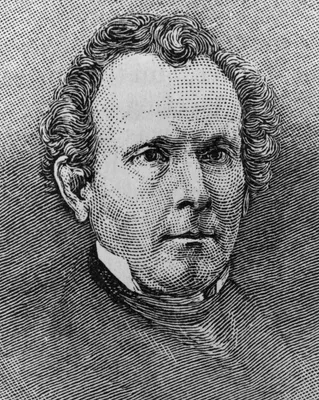
1839 GRAHAM, Sylvester (1794 – 1851)
Lectures on the science of human life. 2 vols.
The Reverend Sylvester Graham was an American Presbyterian minister and dietary reformer known for his emphasis on vegetarianism, the temperance movement, and eating whole-grain bread. "Around 1829, Graham invented th…
GMN 9305 · https://historyofmedicine.com/id/11487
1840 THEOPHILUS PROTOSPATHARIUS, (Θεόφιλος Πρωτοσπαθάριος) (650 – ); ERMERINS, Franz Zacharias (1808 – 1871); LEO THE PHYSICIAN, (Leon Iatrosophistes) (850 – ); CONSTANTINE IV, (Κωνσταντῖνος; Flavius Constantinus Augustus; Pogonatos) (652 – 685)
Anecdota medica graeca e codicibus MSS. expromsit. F. Z. Ermerins.
Extensively annotated critical texts of Theophilus Protospatharius, Leo the Physician, Constantinus Pogonatos (De cibis; On foods). Digital facsimile from Google Books at this link.
GMN 11832 · https://historyofmedicine.com/id/14035
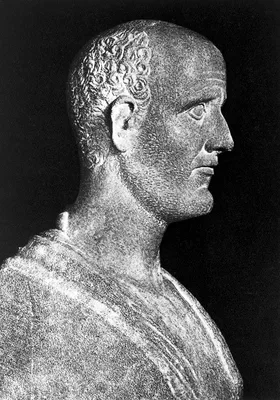
1841 ASCLEPIADES OF BITHYNIA (ἈΣΚΛΗΠΙΆΔΗΣ) (-124 – -40); WELZ, Robert Anton Ritter von (1814 – 1878)
Des Asclepiades von Bithynien Gesundheitsvorschriften, nach den vorhandenen Handschriften zum ersten Male vollständig bearbeitet und erläutert. Von Robert Ritter von Welz.
The Greek physician Asclepiades acquired a great reputation in Rome. His remedies included change of diet, friction, bathing, and exercise. The above edition includes Greek, Latin, and German texts. Digital facsimile …
GMN 1984 · https://historyofmedicine.com/id/8811
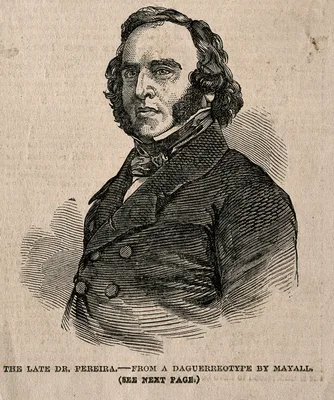
1843 PEREIRA, Jonathan (1804 – 1853)
A treatise on food and diet: With observations on the dietetical regimen suited for disordered states of the digestive organs; and an account of the dietaries of some of the principal metropolitan and other establishments for paupers, lunatics, criminals, children, the sick, &c.
Digital facsimile from the Internet Archive at this link.
GMN 12451 · https://historyofmedicine.com/id/14683
1855 LOMBARD, L.-M.
Le cuisinier et le médecin et le médecin et le cuisinier ou le cuisinier médecin et le médecin cuisinier ou l'art de conserver ou de rétablir sa santé par une alimentation convenable. Guide indispensable à toutes les personnes qu veulent connaitre leur tempérament, le gouverner en santé ou en maladie, selon les règles de l'hygiene, suivi d'un livre de cuisine d'économie domestique et d'hygiène alimentaire appliquée selon les divers tempéraments....les propriété à de toutes les substances alimentaires, des eaux minérales, leur influence sur les divers tempéraments, les maladies résultant des abus et excès, et le moyen de s'en préserver, par une Société médecins, de chimistes, du cuisiniers et d'officiers de bouche.
A comprehensive work, with a difficult and verbose title. The second printing, also published in 1855, included a frontispiece and an elaborate engraved title not illustrated in the BnF copy. Digital facsimile from Bn…
GMN 13338 · https://historyofmedicine.com/id/15606
1855 HASSALL, Arthur Hill (1817 – 1894)
Food and its adulterations: Comprising the reports of the analytical sanitary commission of "The Lancet" for the years 1851 to 1854 inclusive, revised and extended being records of the results of some thousands of original microscopical and chemical analyses of the solids and fluids consumed by all classes of the public; and containing the names and addresses of the various merchants, manufacturers, and tradesmen of whom the analysed articles were purchased.
Digital facsimile from wellcomecollection.org at this link. Significantly expanded as Food: its adulterations and methods for their detection, London: Longmans, Green, 1876. Digital facsimile of the 1876 edition from …
GMN 13734 · https://historyofmedicine.com/id/16018
1857 SOYER, Alexis Bénoit (1810 – 1858)
Soyer's culinary campaign. Being historical reminiscences of the late war. With the plain art of cookery for military and civil institutions, the army, navy, public, etc., etc.
During the Crimean War, Soyer, probably the most famous English celebrity chef of his time, joined the troups at his own expense to advise the army on cooking and diet. "Later he was paid his expenses and wages equiva…
GMN 8981 · https://historyofmedicine.com/id/11160
1859 SMITH, Edward (1819 – 1874)
Experimental inquiries into the chemical and other phenomena of respiration, and their modifications by various physical agents.
Smith invented a respirometer to study changes in respiratory function under various conditions. See also the following paper (pp. 715-42) on the effects of foods on respiration. For an account of his work in this and…
GMN 935.1 · https://historyofmedicine.com/id/182
1859 MÖLLER, Julius Otto Ludwig (1819 – 1887)
Ueber akute Rachitis.
Möller was the first to describe the acute form of rickets combined with scurvy now associated with the name of Barlow (No. 3720).
GMN 3718 · https://historyofmedicine.com/id/4483
1862 MUSSEY, Reuben Dimond (1780 – 1866)
Health: Its friends and foes.
This work, which promoted vegetarianism and abstinence from tobacco along with other hygiene and overall health advice, was written as the author stated in his preface, "to meet the comprehension of the general reader…
GMN 11311 · https://historyofmedicine.com/id/13509
1863 BANTING, William (1779 – 1878)
Letter on corpulence; address to the public.
Banting, a prominent English undertaker, and formerly obese, was the first to popularize a weight loss diet based on limiting intake of refined and easily digestible carbohydrates. He changed his diet at the suggestio…
GMN 3914 · https://historyofmedicine.com/id/5027
1866 ROUSSEL, Jean Baptiste Victor Théophile (1816 – 1903)
Traité de la pellagre et des pseudo-pellagres.
Roussel was awarded a prize of 5,000 francs for this work.
GMN 3753 · https://historyofmedicine.com/id/4593
1869 LOMBROSO, Cesare (1836 – 1909)
Studii clinici ed esperimentali sulla natura, causa e terapia della pellagra.
Lombroso upheld the maize theory of the origin of pellagra. He believed that the symptoms were caused by a toxin which developed in deteriorated maize. Reprinted from Riv. clin. Bologna, 1869, 8, 289-314, 321-44.
GMN 3754 · https://historyofmedicine.com/id/4596
1875 BOUCHARDAT, Apollinaire (1806 – 1886)
De la glycosurie ou diabète sucré; son traitement hygiénique.
Bouchardat used the fermentation test, polariscope and copper solutions for the detection of diabetes; he substituted fresh fats for carbohydrates, advised the avoidance of milk and alcohol, invented gluten bread and …
GMN 3940 · https://historyofmedicine.com/id/5166
1877 ANTHIMUS, (Ἄνθιμος) (500 – 550); ROSE, Valentin (1829 – 1916)
De observatione ciborum epistula ad Theudericum Regem Francorum. Iterum edidit Valentinus Rose.
De observatione ciborum ("On the Observance of Foods") by Anthimus, a Byzantine physician at the court of the Ostrogoth king Theodoric, concerns foods and their preparations as well as the use of foods for selected ai…
GMN 7118 · https://historyofmedicine.com/id/9285
1877 –1883 LECLERC, Lucien (1816 – 1893); IBN AL-BAYTĀR AL-MĀLAQĪ, Ḍiyāʾ Al-Dīn Abū Muḥammad ʿAbdllāh Ibn Aḥmad (Ibn al-Baytar) (1197 – 1248)
Traité des simples. 3 vols. Notices et extraits des manuscrits de la Bibliothèque nationale et autres bibliothèques, 1877, tome 23,1; tome 25,1; tome 26,1. Traduit par Lucien Leclerc.
Ibn al-Baytar systematically recorded the additions to pharmacy made by medieval Islamic physicians, who added between 300 and 400 types of medicines to the roughly one thousand known since antiquity. "Ibn al-Baitar’s…
GMN 8528 · https://historyofmedicine.com/id/10705
1878 CHEADLE, Walter Butler (1836 – 1910)
Three cases of scurvy supervening on rickets in young children.
Infantile scurvy was confused with rickets until Cheadle differentiated between the two conditions.
GMN 3719 · https://historyofmedicine.com/id/4486
1879 HAMMOND, William Alexander (1828 – 1900)
Fasting girls: their physiology and pathology.
Digital facsimile from Google Books at this link.
GMN 14295 · https://historyofmedicine.com/id/16619
1880 –1884 BÄLZ, Erwin Otto Eduard von (1849 – 1933)
Kakke (Beriberi).
In his important account of beriberi, Baelz dealt with the Tokyo outbreak of 1881.
GMN 3739 · https://historyofmedicine.com/id/4537
1881 LUNIN, Nikolai Ivanovich (1853 – 1937)
Ueber die Bedeutung der anorganischen Salze für die Ernährung des Thiers.
Working in Bunge’s laboratory, Lunin prepared synthetic milk diets and showed that they lacked an unknown factor necessary for animal growth, and that animals cannot live on a chemically pure (i.e. vitamin-free) diet.…
GMN 1042 · https://historyofmedicine.com/id/1052
1883 BARLOW, Sir Thomas (1845 – 1945)
On cases described as “acute rickets” which are probably a combination of scurvy and rickets, the scurvy being an essential, and the rickets a variable, element.
Classic description of infantile scurvy (“Barlow’s disease”), which includes the pathology of the condition. See also his earlier paper in Trans. int. med. Congr., 1881, 4, 116-28. Reprinted, but without the colored l…
GMN 3720 · https://historyofmedicine.com/id/4487
1885 POMMER, Gustav (1851 – 1935)
Untersuchungen über Osteomalacie und Rachitis.
Hess considered this the foremost contribution to the subject during the 19th century.
GMN 3731 · https://historyofmedicine.com/id/4514
1885 KANEHIRO, Takaki (1849 – 1915)
On the cause and prevention of kakke.
Takaki was the first conclusively to show the dietary origin of beriberi. Measures introduced by him resulted in its eradication from the Japanese Navy, where it had previously been a serious problem.
GMN 3740 · https://historyofmedicine.com/id/4541
1889 LUCIANI, Luigi (1840 – 1919)
Fisiologia del digiuni.
Luciani distinguished three stages of starvation in man – hunger, physiological inanition, and pathological inanition. Digital facsimile from Google Books at this link.
GMN 1013 · https://historyofmedicine.com/id/852
1890 EIJKMAN, Christiaan (1858 – 1930)
Polyneuritis bij hoenders.
Eijkman produced beriberi experimentally in fowls; from this he was led to conclude that a diet of over-milled rice was the chief cause, both in fowls and humans. Thus his work was of great importance in determining t…
GMN 3741 · https://historyofmedicine.com/id/4544
1901 GRIJNS, Gerrit (1865 – 1944)
Over polyneuritis gallinarum
Grijns succeeded Eijkman as director of the Research Laboratory for Pathological Anatomy and Bacteriology in Batavia. He was the first to adopt the view that beriberi was simply a “deficiency disease”, since he found …
GMN 3742 · https://historyofmedicine.com/id/4549
1904 CHITTENDEN, Russell Henry (1856 – 1943)
Physiological economy in nutrition.
Chittenden, founder of the first laboratory of physiological chemistry in the U.S.A., made many important experiments in nutrition, especially in connexion with the low protein diet advocated by him.
GMN 1043 · https://historyofmedicine.com/id/1054
1906 HOPKINS, Sir Frederick Gowland (1861 – 1947)
The analyst and the medical man.
Hopkins predicted the existence of vitamins as early as 1906. He fed animals a diet of zein which failed to maintain growth; however, the animals grew at once when casein was substituted. He concluded that “in the org…
GMN 1044 · https://historyofmedicine.com/id/1057
1906 LUSK, Graham (1866 – 1932)
The elements of the science of nutrition.
A classic exposition of respiratory and intermediary metabolism. Fourth edition, 1928. Reprint of Lusk’s personal annotated copy of the fourth edition, with biography and bibliography of his writings, New York, Johnso…
GMN 1045 · https://historyofmedicine.com/id/1059
1907 HOLST, Axel (1860 – 1931)
Experimental studies relating to “ship-beri-beri” and scurvy
Experimental production of scurvy in guinea-pigs. Holst published further papers on the subject in the same journal, 1907, 7, 634-71, and in Z. Hyg., 1912, 72, 1-120, both with Theodor Froelich. Their work made it pos…
GMN 3721 · https://historyofmedicine.com/id/4489
1908 IGNATOVSKI, Alexander I. (1875 – 1955)
[In Russian:] Changes in parenchymatous organs and in the aorta of rabbits under the influence of animal protein.
Experimental atherosclerosis produced by a cholesterol-rich diet of whole milk, egg yolks, and meat. French translation as" Influence de la nourriture animale sur l'organisme des lapins," Arch. Méd. exp. Anat. path.,1…
GMN 2913 · https://historyofmedicine.com/id/4886
1908 KELLOGG, John Harvey (1852 – 1943)
The Battle Creek Sanitarium system: History, organization, methods.
"John Harvey Kellogg is best known for the invention of the famous breakfast cereal, Corn Flakes, in 1878. Originally, he called this cereal Granula, which he later changed to Granola in 1881. However, due to patent r…
GMN 9307 · https://historyofmedicine.com/id/11489
1909 STEPP, Wilhelm Otto (1882 – 1963)
Versuche über Fütterung mit lipoidfreier Nahrung.
Stepp discovered that removal of fat from the diet greatly reduced its nutritive value, but that substitution of pure fats did not replace the deficiency. He thus discovered the existence of fat-soluble vitamins, with…
GMN 1046 · https://historyofmedicine.com/id/1061
1909 FRASER, Henry (1873 – 1930); STANTON, Sir Ambrose Thomas (1875 – 1938)
An inquiry concerning the etiology of beri-beri.
Studies from the Institute for Medical Research, F. M. S., No. 10. Careful and long-continued experiments on the aetiology of beriberi were carried out by Fraser and Stanton in Malaya.
GMN 3743 · https://historyofmedicine.com/id/4553
1911 –1912 FUNK, Casimir (1884 – 1967)
On the chemical nature of the substance which cures polyneuritis in birds induced by a diet of polished rice.
One of the earliest attempts to isolate what later became known as vitamin B1.See No. 1051. Funk determined the chemical nature of the substance in rice polishings which could cure beriberi.
GMN 1047 · https://historyofmedicine.com/id/582
1912 HOPKINS, Sir Frederick Gowland (1861 – 1947)
Feeding experiments illustrating the importance of accessory factors in normal dietaries.
In 1929 Hopkins shared the Nobel Prize in Physiology or Medicine with Eijkman "for his discovery of the growth-stimulating vitamins."
GMN 1048 · https://historyofmedicine.com/id/589
1913 MCCOLLUM, Elmer Verner (1879 – 1967); DAVIS, Marguerite (1887 – 1967)
The necessity of certain lipids in the diet during growth.
Discovery of “fat-soluble A” (vitamin A). See also J. biol. Chem., 1915, 23,181-246, in which the same authors showed the necessity in diet for at least two factors – “fat-soluble A” and “water-soluble B”.
GMN 1049 · https://historyofmedicine.com/id/594
1913 OSBORNE, Thomas Burr (1859 – 1929); MENDEL, Lafayette Benedict (1872 – 1935)
The relation of growth to the chemical constituents of the diet.
Like McCollum and Davis, Osborne and Mendel showed the necessity in diet of a factor which was later to be known as vitamin A.
GMN 1050 · https://historyofmedicine.com/id/599
1913 VEDDER, Edward Bright (1878 – 1952)
Beriberi
Important studies of beri-beri are recorded in this book. After its publication the author made many additional contributions to the literature on the subject.
GMN 3745 · https://historyofmedicine.com/id/4560
1913 ANICHKOV, Nikolai Nikolaevich (Anitschkow) (1885 – 1964); CHALATOV, Semen Sergeevich (1884 – 1951)
Ueber experimentelle Cholesterinsteatose und ihre Bedeutung für die Entstehung einiger pathologischer Prozesse.
Anichkov and Chalatov of St. Petersburg, Russia, discovered that atherosclerosis of large arteries is critically dependent on cholesterol. (Translated in Arteriosclerosis, 1983, 3, 178-182). The inflammatory nature of…
GMN 2915 · https://historyofmedicine.com/id/4890
1914 FUNK, Casimir (1884 – 1967)
Die Vitamine
A pioneer work in the study of vitamins. Much of the previous literature is reviewed. Funk introduced the term “vitamine”, later changed to “vitamin”. In 1912 (J. State Med., 20, 341) he postulated his theory of the e…
GMN 1051 · https://historyofmedicine.com/id/607