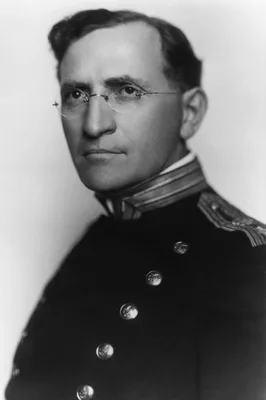
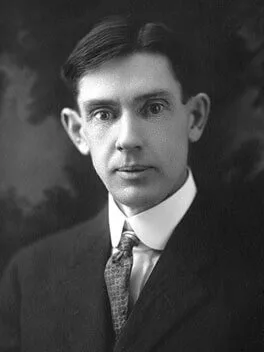
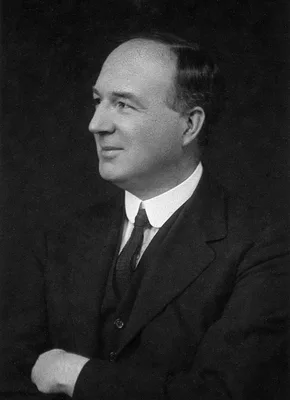
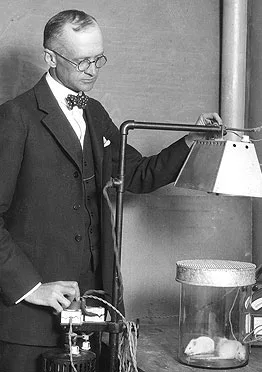
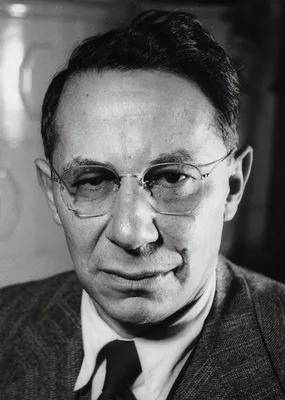
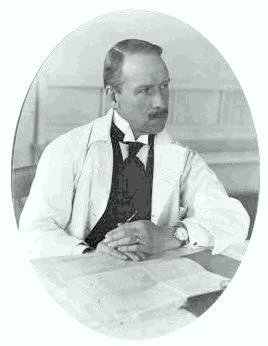
1914 GOLDBERGER, Joseph (1874 – 1929); ET AL
The treatment and prevention of pellagra.
With C. H. Waring and D. G. Willets. A collection of Goldberger’s most important papers with a list of his publications appeared in 1964.
GMN 3755 · https://historyofmedicine.com/id/4598
1918 MCCOLLUM, Elmer Verner (1879 – 1967)
The newer knowledge of nutrition.
GMN 1052 · https://historyofmedicine.com/id/612
1918 –1919 MELLANBY, Sir Edward (1884 – 1955)
The part played by an “accessory factor” in the production of experimental rickets.
First convincing experimental evidence that rickets is a deficiency disease, curable by correct diet.
GMN 3733 · https://historyofmedicine.com/id/4520
1918 HURST, Sir Arthur Frederick (1879 – 1944)
Medical diseases of the war. Second edition
Roughly the first half of this work is on "war neuroses." The second half is on "infective and other disorders," including gas poisoning. Hurst greatly expanded the first section after experience as a neurologist in E…
GMN 8604 · https://historyofmedicine.com/id/10781
1919 DRUMMOND, Sir Jack Cecil (1891 – 1952)
Note on the role of the antiscorbutic factor in nutrition.
In 1920 Drummond suggested the term “vitamin”.
GMN 1053 · https://historyofmedicine.com/id/616
1919 ASCHOFF, Karl Albert Ludwig (1866 – 1942); KOCH, Walter Karl (1880 – 1962)
Der Skorbut.
GMN 3722 · https://historyofmedicine.com/id/4490
1919 HULDSCHINSKY, Kurt (1883 – 1941)
Heilung von Rachitis durch künstliche Höhensonne.
Rickets cured by ultraviolet irradiation.
GMN 3732 · https://historyofmedicine.com/id/4516
1919 MELLANBY, Sir Edward (1884 – 1955)
An experimental investigation on rickets.
In his important experiments on rickets, Mellanby both induced and controlled the disease by diet.
GMN 3734 · https://historyofmedicine.com/id/4522
1919 HARRIS, Henry Fauntleroy (1867 – 1926)
Pellagra.
GMN 3756 · https://historyofmedicine.com/id/4600
1920 HESS, Alfred Fabian (1875 – 1933)
Scurvy, past and present.
Includes a history and bibliography.
GMN 3723 · https://historyofmedicine.com/id/4493
1920 GOLDBERGER, Joseph (1874 – 1929); WHEELER, George Alexander (1885 – 1981)
The experimental production of pellagra in human subjects by means of diet.
Goldberger was born in Central Europe in poor circumstances. He migrated to America, and following attendance at a lecture by Austin Flint, decided to study medicine. He entered the U. S. Public Health Service in 1899…
GMN 3757 · https://historyofmedicine.com/id/4603
1921 STEENBOCK, Harry (1886 – 1967); ET AL
Fat-soluble vitamine. VII. The fat-soluble vitamine and yellow pigmentation in animal fats with some observations on its stability to saponification.
Separation of vitamin A from vitamin D. With M. Sell and M. Van R. Buell.
GMN 1054 · https://historyofmedicine.com/id/635
1922 MCCOLLUM, Elmer Verner (1879 – 1967); ET AL
Studies on experimental rickets. XXI. An experimental demonstration of the existence of a vitamin which promotes calcium deposition.
Discovery of vitamin D. with N. Simmonds, J. E. Becker, and P. G. Shipley.
GMN 1054.1 · https://historyofmedicine.com/id/637
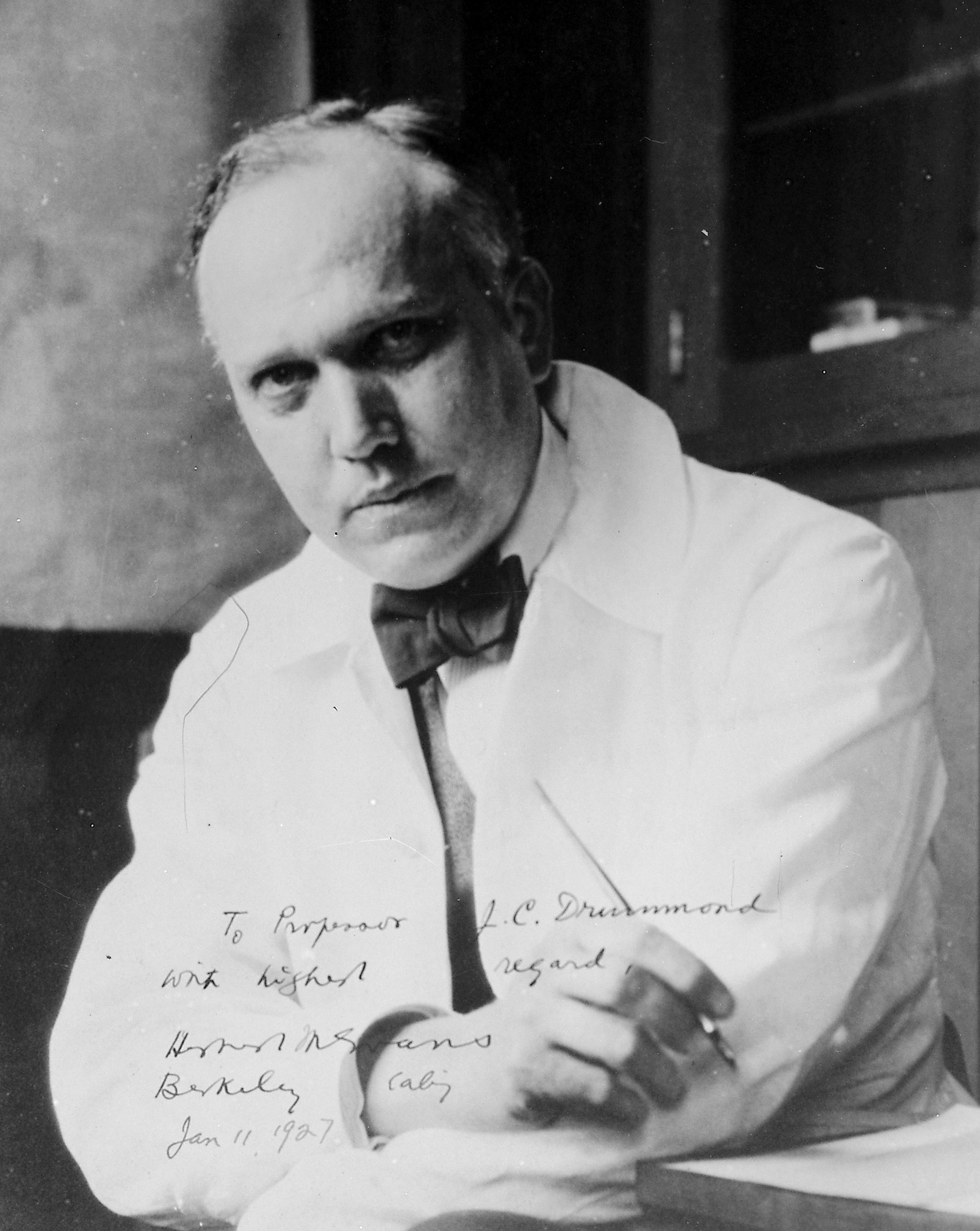
1922 EVANS, Herbert McLean (1882 – 1971); BISHOP, Katharine Scott (1889 – 1976)
On the existence of a hitherto unrecognized dietary factor essential for reproduction.
Discovery of vitamin E. See also their later paper in J. Amer. med. Ass.,1923, 81, 889-92.
GMN 1055 · https://historyofmedicine.com/id/641
1924 MARRIOTT, Williams McKim (1885 – 1936)
The food requirements of malnourished infants with a note on the use of insulin.
Marriott introduced the insulin-fattening method of treatment of malnutrition in infants.
GMN 6350 · https://historyofmedicine.com/id/8188
1925 STEENBOCK, Harry (1886 – 1967); ET AL
Fat-soluble vitamin. XXVI. Antirachitic property of milk and its increase by direct irradiation and by irradiation of the animal.
Demonstration that the therapeutic properties of ultra-violet light could be effectively stored in foods and later released after consumption. With E. B. Hart, C. A. Hoppert, and A. Black.
GMN 1056 · https://historyofmedicine.com/id/652
1926 GOLDBERGER, Joseph (1874 – 1929); ET AL
A further study of butter, fresh beef, and yeast as pellagra preventives, with consideration of the relation of factor P-P of pellagra (and black tongue of dogs) to vitamin B.
Anti-pellagra vitamin (B2, riboflavine). With G. A. Wheeler, R. D. Lillie, and L. M. Rogers.
GMN 1057 · https://historyofmedicine.com/id/656
1926 ROSENHEIM, Sigmund Otto (1871 – 1955); WEBSTER, Thomas Arthur
The anti-rachitic properties of irradiated sterols.
Proof that the irradiation of ergosterol formed vitamin D.
GMN 1058.1 · https://historyofmedicine.com/id/669
1926 STIEVE, Hermann (1886 – 1952)
Die Unfruchtbarkeit als Folge unnatürlicher Lebensweise.
Investigation of the effect of starvation and overfeeding on the gonads and on sexual capacity.
GMN 1227 · https://historyofmedicine.com/id/1918
1926 SAUERBRUCH, Ernst Ferdinand (1875 – 1951); GERSON, Max (1881 – 1959); ET AL
Ueber Versuche, schwere Formen der Tuberkulose durch diätetische Behandlung zu beeinflussen.
Gerson introduced a salt-restricted diet in the treatment of tuberculosis; this was subsequently modified by Sauerbruch and Herrmannsdorfer, becoming known as the “Gerson–Sauerbruch–Hermannsdorfer diet”. The scientifi…
GMN 2345 · https://historyofmedicine.com/id/3102
1926 JANSEN, Barned Coenraad Petrus (1884 – 1962); DONATH, Willem Frederik (1889 – 1957)
Antineuritische Vitamine.
Isolation of vitamin B1 (aneurine, thiamine), lack of which is a cause of beri-beri.
GMN 1058 · https://historyofmedicine.com/id/4562
1926 GOLDBERGER, Joseph (1874 – 1929); WHEELER, George Alexander (1885 – 1981)
A further study of butter, fresh beef, and yeast as pellagra preventatives, with consideration of the relation of factor P-P of pellagra (and black tongue of dogs) to vitamin B.
Anti-pellagra vitamin. With G. A. Wheeler, R. D. Lillie, and L. M. Rogers.
GMN 3758 · https://historyofmedicine.com/id/4606
1926 BUER, M. C.
Health, wealth and population in the early days of the industrial revolution.
Chapters on water supply, 18th physicians and pioneers of public health, the hospital and dispensary movement, general hygiene and midwifery, rickets and scurvy, antiseptics, smallpox, anti-typhus campaign, malaria, etc.
GMN 10467 · https://historyofmedicine.com/id/12660
1927 STEPP, Wilhelm Otto (1882 – 1963); GYÖRGY, Paul (1893 – 1976)
Avitaminosen und verwandte Krankheitszustände. Edited by W. Stepp and P. György.
Digital facsimile from Google Books at this link.
GMN 3706 · https://historyofmedicine.com/id/4453
1927 FIXSEN, Margaret Averil Boas (1899 – )
The effect of desiccation upon the nutritive properties of egg-white.
Demonstration of the effect of deprivation of biotin.
GMN 3724 · https://historyofmedicine.com/id/4495
1927 –1928 MCCARRISON, Sir Robert (1878 – 1960)
The experimental production of stone-in-the-bladder.
McCarrison’s experiments showed that urinary calculi could follow a diet probably deficient in vitamin A.
GMN 4296 · https://historyofmedicine.com/id/5406
1928 SZENT-GYÖRGYI, Albert (1893 – 1987)
Observations on the function of peroxidase systems and the chemistry of the adrenal cortex. Description of a new carbohydrate derivative.
Isolation of vitamin C, ascorbic acid. In 1937 Szent-Györgyi was awarded the Nobel Prize in Physiology or Medicine "for his discoveries in connexion with the biological combustion process with special reference to vit…
GMN 1059 · https://historyofmedicine.com/id/676
1928 WILLIAMS, Robert Runnels (1886 – 1965); WATERMAN, Robert Edward (1899 – 1987)
The tripartite nature of vitamin B.
Vitamin B3.
GMN 1060 · https://historyofmedicine.com/id/681
1929 BOURDILLON, Robert Benedict (1889 – 1971); ET AL
The absorption spectrum of vitamin D.
See No. 1065. With C. Fischmann, R. G. C. Jenkins, and T. A. Webster.
GMN 1061 · https://historyofmedicine.com/id/687
1929 DAM, Carl Pieter Henrik (1895 – 1976)
Cholesterinstoffwechsel in Hühnereiern und Hühnchen.
In 1943 Dam shared the Nobel Prize with Doisy "for discovery of vitamin K, the blood coagulating factor."
GMN 1062 · https://historyofmedicine.com/id/690
1929 HESS, Alfred Fabian (1875 – 1933)
Rickets, including osteomalacia and tetany.
Hess made numerous clinical observations on rickets and scurvy and discovered that antirachitic properties could be imparted to certain oils and to food by exposing them to ultra-violet rays. His book includes an impo…
GMN 3735 · https://historyofmedicine.com/id/4524
1929 –1930 MAXWELL, John Preston (1871 – 1961)
Further studies in osteomalacia.
Maxwell showed osteomalacia to be due to lack of vitamin D.
GMN 4396 · https://historyofmedicine.com/id/5991
1930 BURR, George Oswald (1896 – 1992); BURR, Mildred M.
On the nature and rôle of the fatty acids essential in nutrition.
Demonstration of the need of the body for certain unsaturated fatty acids (vitamin F).
GMN 1063 · https://historyofmedicine.com/id/694
1930 CARTER, Cyril William (1898 – ); ET AL
Maintenance nutrition in the adult pigeon and its relation to torulin (vitamin B1).
Discovery of vitamin B5, probably identical with nicotinic acid. With H. W. Kinnersley and R. A. Peters.
GMN 1064 · https://historyofmedicine.com/id/700
1930 MILKMAN, Louis Arthur (1895 – 1951)
Pseudofractures (hunger osteopathy, late rickets, osteomalacia): report of a case.
“Milkman’s syndrome”.
GMN 4398 · https://historyofmedicine.com/id/6005
1931 BOURDILLON, Robert Benedict (1889 – 1971); ET AL
The quantitative estimation of vitamin D by radiography.
Medical Research Council Special Report No. 158. R. B. Bourdillon, H. M. Bruce, C. Fischmann, R. G. C. Jenkins, and T. A. Webster isolated from irradiated ergosterol a crystalline compound, calciferol, which, weight f…
GMN 1065 · https://historyofmedicine.com/id/703
1931 BROWNING, Ethel (1891 – 1969)
The vitamins.
GMN 1066 · https://historyofmedicine.com/id/704
1931 KARRER, Paul (1889 – 1971); MORF, R.; SCHÖPP, K.
Zur Kenntnis des Vitamins-A aus Fischtranen.
In 1930 Karrer established the correct formula for carotene (the chief precursor of vitamin A), the first demonstration of the chemical structure of a vitamin. Shortly thereafter, he was able to determine the formula …
GMN 14238 · https://historyofmedicine.com/id/16557
1932 ASKEW, Frederic Anderton; ET AL
Crystalline vitamin D.
Written with R. B. Bourdillon, H. M. Bruce, R. K. Callow, J. St. L. Philpot, and T. A. Webster.
GMN 1067 · https://historyofmedicine.com/id/708
1932 SALMONSEN, Ella Maud (1885 – 1971)
Bibliographical survey of vitamins 1650-1930, with a section on patents by M. H. Wodlinger.
GMN 1092.5 · https://historyofmedicine.com/id/882
1933 REICHSTEIN, Tadeusz (1897 – 1996); ET AL
Synthese der d- und l-Ascorbinsäure (C-Vitamin).
T. Reichstein, A. Grüssner, and R. Oppenauer synthesized vitamin C.
GMN 1068 · https://historyofmedicine.com/id/711
1933 WILLIAMS, Roger John (1893 – 1988); ET AL
“Pantothenic acid”, a growth determinant of universal biological occurrence.
Discovery of pantothenic acid (vitamin B3). with C. M. Lyman, G. H. Goodyear, J. H. Truesdail, and D. Holaday.
GMN 1068.1 · https://historyofmedicine.com/id/722
1933 PARSONS, Sir Leonard Gregory (1879 – 1950)
Scurvy treated with ascorbic acid.
First case of infantile scurvy cured by the administration of ascorbic acid.
GMN 3725 · https://historyofmedicine.com/id/4497
1933 HALE, Fred
Pigs born without eyeballs.
Hale demonstrated that pregnant pigs fed a diet deficient in vitamin A gave birth to piglets with a variety of malformations, predominantly a lack of eyes. See also: Hale, F., 'The relation of vitamin A to anophthalmo…
GMN 7829 · https://historyofmedicine.com/id/10001
1933 HAWORTH, Sir Walter Norman (1883 – 1950); HIRST, Sir Edmund Langley (1898 – 1975)
Synthesis of ascorbic acid.
Haworth and Hirst successfully synthesized vitamin C in the laboratory. This was the first vitamin to be artificially produced. Their breakthrough made it possible for vitamin C, or ascorbic acid as Haworth called it,…
GMN 14280 · https://historyofmedicine.com/id/16602
1934 ELLINGER, Philipp (1887 – 1952); KOSCHARA, Walter (1904 – 1945)
The lyochromes: a new group of animal pigments.
Chemical formula of riboflavine (vitamin B2).
GMN 1069 · https://historyofmedicine.com/id/728
1934 EVANS, Herbert McLean (1882 – 1971); LEPKOVSKY, Samuel (1899 – 1984); MURPHY, Elizabeth A.
Vital need of the body for certain unsaturated fatty acids.
Isolation of vitamin F (linolenic acid).
GMN 1070 · https://historyofmedicine.com/id/733
1934 WENCKEBACH, Karel Frederik (1864 – 1940)
Das Beriberi-Herz.
Wenckebach wrote a classic account of the heart in beriberi.
GMN 3747 · https://historyofmedicine.com/id/4565
1934 MCCAY, Clive Maine (1898 – 1967); CROWELL, Mary F.
Prolonging the life span.
McCay proved that caloric restriction increases the life span of rats, a discovery that triggered extensive further research and experiments in the field of nutrition and longevity.
GMN 7245 · https://historyofmedicine.com/id/9414
1935 WILLIAMS, Cicely Delphine (1893 – 1992)
Kwashiorkor. A nutritional disease of children associated with a maize diet.
First accurate description. “Kwashiorkor” was the local name in Ghana for a nutritional disease of children, associated with a maize diet. The first modern account was probably that of L. Normet in Bull. Soc. Path. ex…
GMN 3759 · https://historyofmedicine.com/id/4609