1932 GROLLMAN, Arthur (1901 – 1980)
The cardiac output of man in health and disease.
GMN 2861 · https://historyofmedicine.com/id/4114
1932 LEWIS, Sir Thomas (1881 – 1945)
A lecture on vaso-vagal syncope and the carotid sinus mechanism.
Vaso-vagal syncope.
GMN 2862 · https://historyofmedicine.com/id/4128
1932 WOLFERTH, Charles Christian (1887 – 1965); WOOD, Francis Clark (1901 – 1990)
The electrocardiographic diagnosis of coronary occlusion by the use of chest leads.
Introduction of chest leads.
GMN 2863 · https://historyofmedicine.com/id/4132
1932 HINES, Edgar Alphonso Jr. (1905 – 1978); BROWN, George Elgie (1885 – 1935)
A standard stimulus for measuring vasomotor reactions: its application in the study of hypertension.
Cold-pressor test.
GMN 2717 · https://historyofmedicine.com/id/4441
1933 KARTAGENER, Manes (1897 – 1975)
Zur Pathogenese der Bronchiektasien. I. Mitteilung: Bronchiektasien bei Situs viscerum inversus.
Bronchiectasis and sinus maldevelopment associated with transposition of viscera – “Kartageners syndrome”.
GMN 3206 · https://historyofmedicine.com/id/4327
1933 BLUMGART, Hermann Ludwig (1895 – 1977); LEVINE, Samuel Albert (1891 – 1966); ET AL
Congestive heart failure and angina pectoris: The therapeutic effect of thyroidectomy on patients without clinical or pathologic evidence of thyroid toxicity.
Thyroidectomy for congestive heart failure and angina pectoris. With D. D. Berlin.
GMN 2899 · https://historyofmedicine.com/id/4387
1933 TARR, Leonard (1901 – ); ET AL
The circulation time in various clinical conditions determined by the use of sodium dehydrocholate.
Use of decholin sodium for estimation of circulation time. With B. S. Oppenheimer and R. V. Sagar.
GMN 2718 · https://historyofmedicine.com/id/4443
1933 WEISS, Soma (1898 – 1942); BAKER, James Porter (1913 – 1988)
The carotid sinus in health and disease: its rôle in the causation of fainting and convulsions.
The carotid sinus syndrome.
GMN 2921 · https://historyofmedicine.com/id/4910
1933 HYMAN, Albert S. (1893 – 1972); PARSONNET, Aaron E. (1889 – 1951)
The failing heart of middle life: The myocardiosis syndrome, coronary thrombosis, and angina pectoris with a section upon the medico-legal aspects of sudden death from heart disease.
"This pioneering monograph on the pathophysiology of coronary artery disease includes a detailed discussion of the recently recognized electrocardiographic features of myocardial infarction. Hyman invented a [external…
GMN 11668 · https://historyofmedicine.com/id/13869
1934 WILSON, Frank Norman (1890 – 1952); ET AL
Electrocardiograms that represent the potential variations of a single electrode.
Unipolar leads. With F. D. Johnston, A. G. MacLeod, and P. S. Barker.
GMN 2864 · https://historyofmedicine.com/id/4137
1934 GOLDBLATT, Harry (1891 – 1977); ET AL
Studies on experimental hypertension. 1. The production of persistent elevation of systolic blood pressure by means of renal ischemia.
Goldblatt discovered the role of the kidneys in the regulation of blood pressure. This was the first of Goldblatt’s papers on experimental hypertension, which established an aetiologic role for renal ischemia in the p…
GMN 2719 · https://historyofmedicine.com/id/4445
1934 WENCKEBACH, Karel Frederik (1864 – 1940)
Das Beriberi-Herz.
Wenckebach wrote a classic account of the heart in beriberi.
GMN 3747 · https://historyofmedicine.com/id/4565
1934 COOPER, William Morris (1894 – )
The treatment of varicose veins.
Cooper combined ligation with subsequent injection of 5 per cent sodium morrhuate in the treatment of varicose veins.
GMN 3005 · https://historyofmedicine.com/id/5332
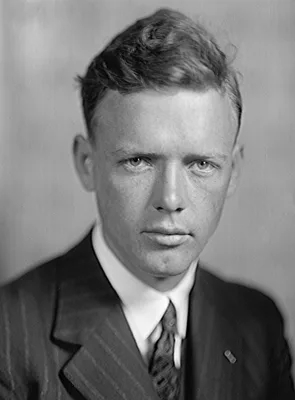
1935 LINDBERGH, Charles Augustus (1902 – 1974)
An apparatus for the culture of whole organs.
In 1931, the year before his son’s sensational kidnapping, the celebrity aviator began working with Alexis Carrel at the Rockefeller Institute on a perfusion pump which would allow the cultivation of whole organs in v…
GMN 858.1 · https://historyofmedicine.com/id/736
1935 IBN-AL-NAFIS (ALA-AL-DIN ABU AL-HASSAN ALI IBN ABI-HAZM AL-QARSHI AL-DIMASHQI; علاء الدين أبو الحسن عليّ بن أبي حزم القرشي الدمشقي ) (1210 – 1288); MEYERHOF, Max (1874 – 1945)
Ibn an Nafis und seine Theorie des Lungenkreislaufs.
Ibn-al-Nafis, a Syrian physician, described the lesser circulation in his commentary on the anatomy of the Canon of Avicenna, 1268. This was discovered in three Arabic MSS by Mohyi el Din el Tatawi, who included a Ger…
GMN 753 · https://historyofmedicine.com/id/1873
1935 –1936 PEET, Max Minor (1885 – 1949)
The surgical treatment of hypertension.
Peet operation for hypertension. Preliminary communication in Univ. Hosp. Bull. (Ann Arbor), 1935, 1,17-18.
GMN 3036 · https://historyofmedicine.com/id/3428
1935 HARRISON, Tinsley Randolph (1900 – 1978)
Failure of the circulation.
GMN 11608 · https://historyofmedicine.com/id/13808
1935 MASTER, Arthur M. (1896 – 1973)
The two-step test of myocardial function.
The “Master TwoStep” exercise tolerance test for the diagnosis of heart disease. Abstract "A simple quantitative “two-step” test of myocardial function is described, and tables of climbs are given for normal individua…
GMN 12265 · https://historyofmedicine.com/id/14482
1936 O’SHAUGHNESSY, Laurence Frederick (1900 – 1940)
An experimental method of providing a collateral circulation to the heart.
By attaching a pedicled omental graft to the surface of the heart (cardio-omentopexy), thus providing a collateral circulation to that organ, O’Shaughnessy made an important advance in the treatment of angina and card…
GMN 3037 · https://historyofmedicine.com/id/3447
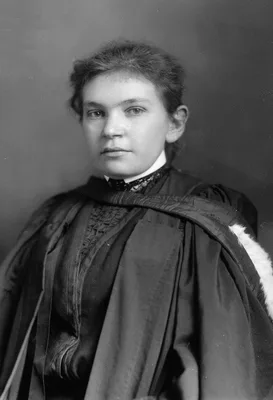
1936 ABBOTT, Maude Elizabeth Seymour (1869 – 1940)
Atlas of congenital cardiac disease.
GMN 2865 · https://historyofmedicine.com/id/4156
1936 SCHELLONG, Fritz (1891 – 1953)
Elektrographische Diagnostik der Herzmuskelerkrankungen.
Introduction of the vectorcardiogram.
GMN 2865.1 · https://historyofmedicine.com/id/4158
1936 BARKER, Marion Herbert (1899 – 1947)
The blood cyanates in the treatment of hypertension.
Barker made thiocyanate treatment a practical proposition in hypertension.
GMN 2720 · https://historyofmedicine.com/id/4447
1937 LERICHE, Henri Marie René (1879 – 1955); ET AL
Arterectomy.
Arterectomy in arterial thrombosis. With R. Fontaine and S. M. Dupertuis.
GMN 3038 · https://historyofmedicine.com/id/3450
1937 ROLLESTON, Sir Humphrey Davy (1862 – 1944)
The history of angina pectoris.
GMN 3157 · https://historyofmedicine.com/id/4093
1937 ROESLER, Hugo (1899 – 1961)
Clinical roentgenology of the cardiovascular system.
GMN 2866 · https://historyofmedicine.com/id/4163
1937 CASTELLANOS, Agustin Walfredo (1902 – 2000); ET AL
La angio-cardiografía radio-opaca.
Intravenous angiocardiography. This was the first publication that dealt with the normal cardiac structure and the changes seen in ventricular septal defect and pulmonary stenosis.
GMN 11568 · https://historyofmedicine.com/id/13767
1937 HEINRICH, Hahne
Die Geschichte der angeborenen Herzkrankheiten.
A history of congenital heart disease covering cyanosis, foetal endocarditis and various malformations. Bedford 850.
GMN 12352 · https://historyofmedicine.com/id/14576
1938 LEVY, Robert Louis (1888 – 1974); ET AL
Effects of induced oxygen want in patients with cardiac pain.
Diagnosis of cardiac pain. With A. L. Barach and H. G. Bruenn.
GMN 2867 · https://historyofmedicine.com/id/4170
1938
Praecordial leads in electrocardiography. A joint memorandum of a committee of the Cardiac Society of Gt. Britain and Ireland and the Committee of the American Heart Association.
PRECORDIAL LEADS
Also in Amer. Heart J.,1938, 15,107-08, 235-39. Precordial leads are also called unipolar leads.
GMN 2868 · https://historyofmedicine.com/id/4177
1938 ROBB, George Porter (1898 – 1983); STEINBERG, Israel (1902 – 1983)
A practical method of visualization of the chambers of the heart, the pulmonary circulation, and the great vessels in man.
Introduction of angiocardiography, which for the first time revealed the internal structure of the living heart. A fuller account by the same authors is in Amer. J. Roentgenol.,1939, 41,1-17.
GMN 2869 · https://historyofmedicine.com/id/4184
1939
STANDARDIZATION of methods of measuring the arterial blood pressure. A joint report of the committees appointed by the Cardiac Society of Great Britain and Ireland and the American Heart Association.
Digital facsimile from PubMedCentral at this link.
GMN 800 · https://historyofmedicine.com/id/154
1939 STARR, Isaac (1895 – 1989); ET AL
Studies on the estimation of cardiac output in man, and abnormalities in cardiac function, from the heart’s recoil and the blood’s impacts; the ballistocardiogram.
Introduction of the ballistocardiogram. With A. J. Rawson, H. A. Schroeder, and N. R. Joseph.
GMN 2870 · https://historyofmedicine.com/id/4189
1939 HOMANS, John (1877 – 1955)
Circulatory diseases of the extremities.
GMN 2722 · https://historyofmedicine.com/id/4452
1939 KEITH, Norman Macdonnell (1885 – 1976); WAGENER, Henry Patrick (1890 – 1961)
Diffuse arteriolar disease with hypertension and the associated retinal lesions.
The Keith–Wagener classification of fundal lesions. They classified essential hypertension into four groups.
GMN 2723 · https://historyofmedicine.com/id/4454
1939 WILSON, Clifford (1906 – 1997); BYROM, Frank Burnet (1902 – 1976)
Renal changes in malignant hypertension; experimental evidence.
Production of hypertension in rats by constriction of one renal artery, and important studies of the renal changes produced, which included degeneration of the renal arterioles.
GMN 2724 · https://historyofmedicine.com/id/4456
1939 SMITH, Harry Leroy (1887 – ); HORTON, Bayard Taylor (1895 – 1980)
Arteriovenous fistula of the lung associated with polycythemia vera: report of a case in which the diagnosis was made clinically.
GMN 2991 · https://historyofmedicine.com/id/5198
1940 LERICHE, Henri Marie René (1879 – 1955)
De la résection du carrefour aortico-iliaque avec double sympathectomie lombaire pour thrombose artéritique de l’aorte; le syndrome de l’oblitération termino-aortique par artérite.
Obliteration of the abdominal aorta.
GMN 3040 · https://historyofmedicine.com/id/3464
1940 SMITHWICK, Reginald Hammerick (1899 – 1987)
A technique for splanchnic resection for hypertension; preliminary report.
Smithwick operation for hypertension.
GMN 3041 · https://historyofmedicine.com/id/3469
1940 LAUBRY, Charles (1872 – 1960); ET AL
Grosse pulmonaire. Petite aorte. Affection congénitale.
Idiopathic dilatation of the pulmonary artery reported. With D. Routier and R. Heim de Balsac.
GMN 2923 · https://historyofmedicine.com/id/4919
1941 WILLIUS, Frederick Arthur (1888 – 1972); KEYS, Thomas Edward (1908 – 1995)
Cardiac classics. A collection of classic works on the heart and circulation with comprehensive biographic accounts of the authors.
Covers the literature up to 1912. Reprinted in 2 vols, as Classics of cardiology, New York, Dover, 1961. Reprinted again, with volume 3 by John A. Callahan, Thomas E. Keys & Jack E. Key, Malabar, Florida, Krieger, 198…
GMN 3158 · https://historyofmedicine.com/id/4094
1941 COURNAND, André Frédéric (1895 – 1988); RANGES, Hilmert Albert (1906 – 1969)
Catheterization of the right auricle in man.
First investigations with the cardiac catheter as a clinical method of investigation. In 1956 Cournand in 1956 shared the Nobel Prize in Physiology or Medicine with Forssmann (No. 2858) and Richards (No. 2883.2) "for …
GMN 2871 · https://historyofmedicine.com/id/4194
1941 SCHROEDER, Henry Alfred (1906 – 1975)
Studies on congestive heart failure. I. The importance of restriction of salt as compared to water.
Low-sodium diet in heart failure.
GMN 2873 · https://historyofmedicine.com/id/4196
1942 HERRICK, James Bryan (1861 – 1954)
A short history of cardiology.
GMN 3159 · https://historyofmedicine.com/id/4095
1942 GOLDBERGER, Emanuel (1913 – 1994)
A simple indifferent electrocardiographic electrode of zero potential and a technique of obtaining augmented, unipolar, extremity leads.
Augmented unipolar leads.
GMN 2875 · https://historyofmedicine.com/id/4197
1942 RICH, Arnold Rice (1893 – 1968)
The rôle of hypersensitivity in periarteritis nodosa; as indicated by seven cases developing during serum sickness and sulfonamide therapy.
Rich considered hypersensitivity to be an important factor in the aetiology of periarteritis nodosa.
GMN 2924 · https://historyofmedicine.com/id/4922
1942 HEPBURN, John (1888 – ); DAUPHINEE, James Arnold (1903 – 1983)
Successful removal of hemangioma of the lung followed by the disappearance of polycythemia.
First successful excision of arteriovenous aneurysm of the lung.
GMN 2992 · https://historyofmedicine.com/id/5249
1944 MCMICHAEL, Sir John (1904 – 1993); SHARPEY-SCHAFER, Edward Peter (1908 – 1963)
Cardiac output in man by a direct Fick method.
GMN 859 · https://historyofmedicine.com/id/741
1944 KEMPNER, Walter (1903 – 1997)
Treatment of kidney disease and hypertensive vascular disease with rice diet.
Kempner rice diet for the treatment of hypertension.
GMN 2725 · https://historyofmedicine.com/id/4461
1944 ALEXANDER, John (1891 – 1954); BYRON, Francis X.
Aortectomy for thoracic aneurysm.
Resection of saccular aneurysm of thoracic aorta.
GMN 2992.1 · https://historyofmedicine.com/id/5270
1944 FRANKLIN, Kenneth James (1897 – 1966); BARCLAY, Alfred Ernest (1876 – 1949); PRICHARD, Marjorie M. L.
The foetal circulation and cardiovascular system, and the changes that they undergo at birth.
The authors describe the first direct recording of the blood flow in an intact fetus, a fetal lamb. The authors performed this experiment cooperation with Sir Joseph Bancroft and Dr. D. H. Barron.
GMN 11548 · https://historyofmedicine.com/id/13747