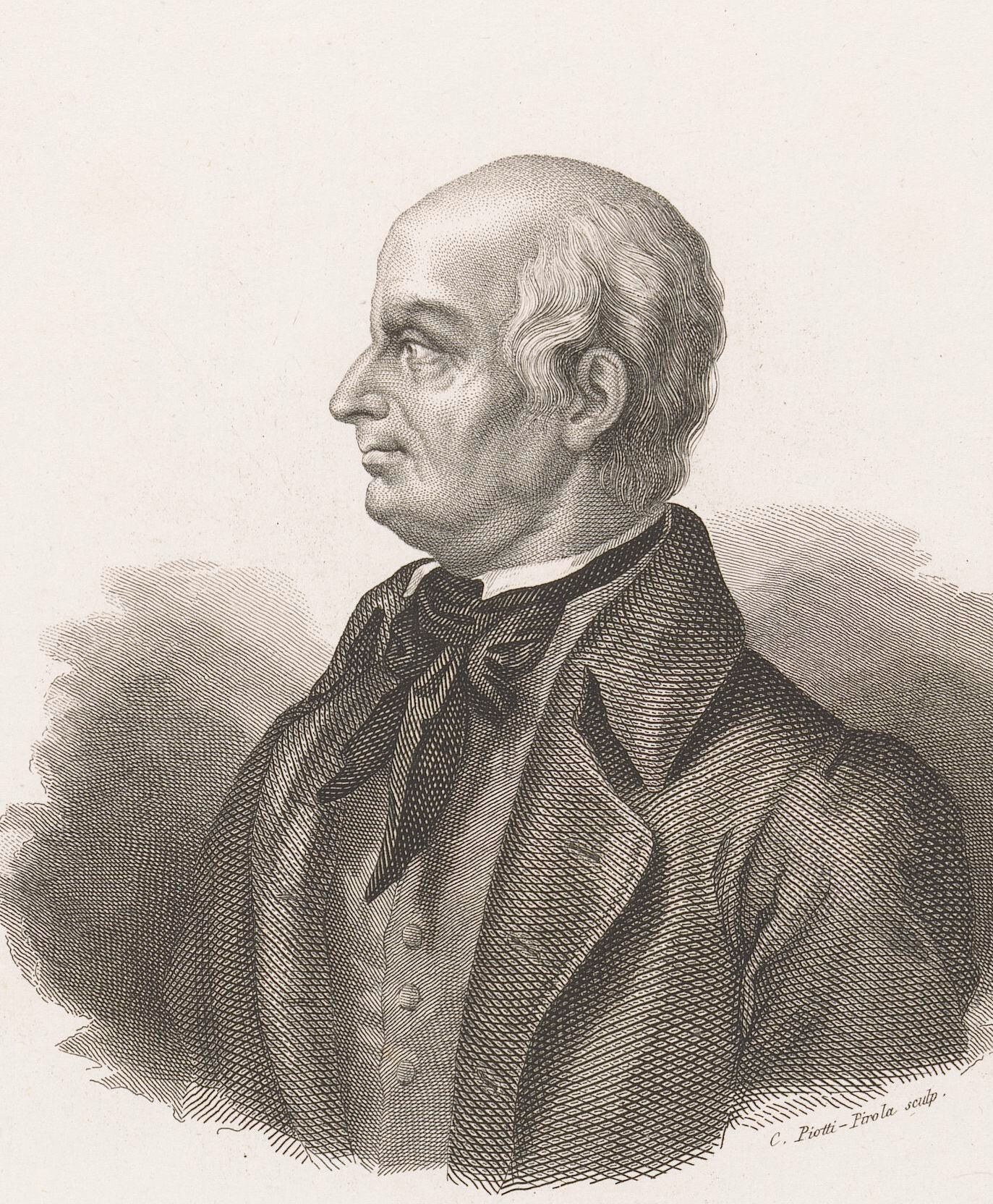
1783 SPALLANZANI, Lazzaro (1729 – 1799)
Lettera dell' Abate Spallanzani al Sig. Marchese Lucchesini.
Records on pp. 80-104 Spallanzani's work on the torpedo. In the 1780's Spallanzani turned to marine biology, making several trips to the Mediterranean region. On his visit to Portovenere in 1783 "he instituted the fir…
GMN 12037 · https://historyofmedicine.com/id/14245
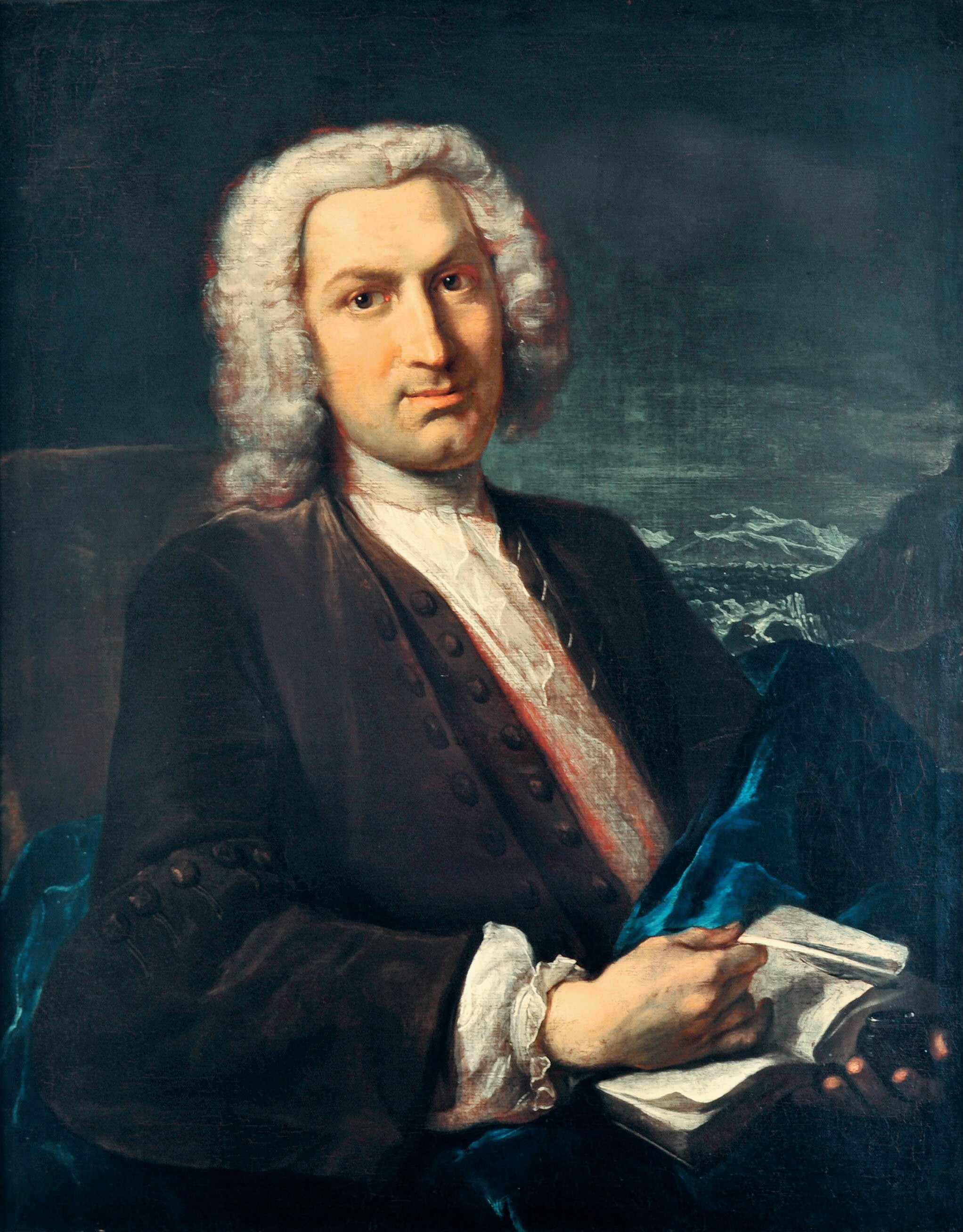
1783 HALLER, Albrecht von (1708 – 1777); HENRY, Thomas (1734 – 1816)
Memoirs of Albert de Haller, M.D. Member of the Sovereign Council of Berne; President of the University, and of the Royal Society of Gottingen; Fellow of the Royal Society of London, &c. Compiled, chiefly, from the elogium spoken before the Royal Academy of Sciences at Paris, and from the tributes paid to his memory by other foreign societies
This is illustrated with a small cameo portrati of Haller drawn and engraved by William Blake. Digital facsimile from Google Books at this link.
GMN 12689 · https://historyofmedicine.com/id/14934
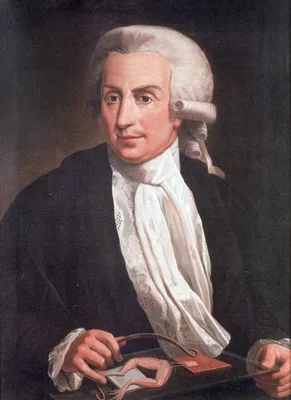
1791 GALVANI, Luigi (1737 – 1798)
De viribus electricitatis in motu musculari commentarius.
In the course of his experiments on irritable responses caused by static electricity applied to frog muscles, Galvani produced electric current from the contact of two different metals in a moist environment. Galvani …
GMN 593 · https://historyofmedicine.com/id/413
1794 GALVANI, Luigi (1737 – 1798)
Dell’uso e dell’attività dell arco conduttore nelle contrazioni dei muscoli.
The first account of Galvani’s electrical experiments without the presence of metals, in which he demonstrated the presence of electrical energy in living tissue by showing that convulsions in frog nerve-muscle prepar…
GMN 594.1 · https://historyofmedicine.com/id/376
1795 CRUIKSHANK, William Cumberland (1745 – 1800)
Experiments on the insensible perspiration of the human body.
Demonstration that carbon dioxide is given off by the skin. This book was first privately printed in 1779; above is the corrected edition.
GMN 595 · https://historyofmedicine.com/id/377
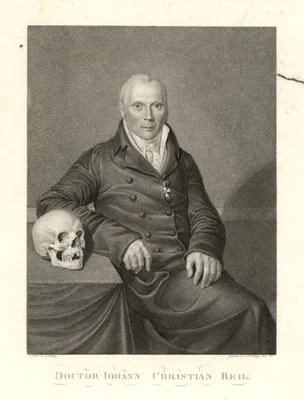
1796 REIL, Johann Christian (1759 – 1813)
Von der Lebenskraft.
Reil advanced the doctrine of the life-force as the chemical expression of physiological function. Like Glisson and Hunter, he recognized irritability as a specific property of tissue. He founded the Archiv für die Ph…
GMN 596 · https://historyofmedicine.com/id/380
1796 YOUNG, Thomas (1773 – 1829)
De corporis humani viribus conservatricibus dissertatio.
Young's thesis for his medical degree from Göttingen on the conservation of strength in the human body, which also contains, on the final four pages, the only extant fragment of Young's brief thesis on the human voice…
GMN 13243 · https://historyofmedicine.com/id/15508
1797 HUMBOLDT, Friedrich Wilhelm Heinrich Alexander von (1769 – 1859)
Versuche über die gereizte Muskel- und Nervenfaser: nebst Vermuthungen über den chemischen Process des Lebens in der Thier- und Pflanzenwelt. 2 vols.
Digital facsimile from The Medical Heritage Library, Internet Archive, at this link.
GMN 7119 · https://historyofmedicine.com/id/9286
1800 BICHAT, Marie François Xavier (1771 – 1802)
Recherches physiologiques sur la vie et la mort.
When Volta questioned the validity of experiments claiming to show responsiveness of an ex vivo heart, devoid of blood flow and nervous connections, Bichat obtained permission to experiment upon the freshly killed bod…
GMN 597 · https://historyofmedicine.com/id/387
1801 BICHAT, Marie François Xavier (1771 – 1802)
Anatomie générale, appliquée à la physiologie et à la médecine. 4 vols.
Bichat revolutionized descriptive anatomy. Where Morgagni and others had conceived of whole organs being diseased, Bichat showed how individual tissues could be separately affected. He covered tissue pathology, system…
GMN 403 · https://historyofmedicine.com/id/820
1801 GRAPENGIESSER, Carl Johann Christian (1764 – 1846)
Versuche des Galvanismus zur Heilung einiger Krankheiten.
Grapengiesser was the first physician to use Volta’s “pile”, the first battery, which Volta first described in print in 1800. Grapengiesser “noted that in paralyzed muscle excitability could be so poor that 150 elemen…
GMN 1988.1 · https://historyofmedicine.com/id/3813
1803 ALDINI, Giovanni (1762 – 1834)
An account of the late improvements in galvanism…
Nephew of Galvani (see No. 593), Aldini developed and promoted animal electricity. His sensational experiments on the body of a criminal executed at Newgate, conducted with Carpue (No. 1989) were significant for the p…
GMN 1989.1 · https://historyofmedicine.com/id/3817
1816 –1817 MAGENDIE, François (1783 – 1855)
Précis élémentaire de physiologie. 2 vols.
The first modern physiology textbook, in which doctrine gave way to simple, precise descriptions of experimental facts. Vol. 2 contains Magendie’s classic demonstration of the importance of nitrogenous food, or protei…
GMN 1041.1 · https://historyofmedicine.com/id/1048
1818 SHELLEY, Mary Wollstonecraft (1797 – 1851)
Frankenstein; or, the modern prometheus. 3 vols.
The full digitized text of the 1818 is available from the Internet Archive at this link.
GMN 9692 · https://historyofmedicine.com/id/11879
1821 MAGENDIE, François (1783 – 1855)
Mémoires sur le mécanisme de l’absorption chez les animaux à sang rouge et chaud.
Magendie, the pioneer of experimental physiology in France, demonstrated the absorption of fluids and semisolids to be a function of the blood-vessels, as well as of the lymphatics. He was the founder, in 1821, of the…
GMN 598 · https://historyofmedicine.com/id/425
1822 KERGARADEC, Jean Alexandre le Jumeau, vicomte de (1787 – 1877)
Mémoire sur l’auscultation appliquée à l’étude de la grossesse.
Although not the first to record the auscultation of the fetal heart sound, Le Jumeau (Kergaradec), a pupil of Laennec, brought the importance of this diagnostic procedure to the notice of the medical profession. Laen…
GMN 6171 · https://historyofmedicine.com/id/7764
1822 –1823 BROUSSAIS, François-Joseph-Victor (1772 – 1838)
Traité de physiologie appliquée à la pathologie. 2 vols.
Broussais was the inventor of "physiological medicine", a crucial step in the development of modern scientific medicine. (Ackerknecht, Bull. Hist. Med. 27, 320). Translated into English by John Bell and R. La Roche as…
GMN 10070 · https://historyofmedicine.com/id/12259
1824 EDWARDS, William Frédéric (1776 – 1842)
De l’influence des agens physiques sur la vie.
Edwards studied the influence of environmental factors on animal life, concluding that vital processes depend on external physical and chemical forces but are not entirely controlled by them. The work includes an acco…
GMN 145.56 · https://historyofmedicine.com/id/8796
1826 –1840 MÜLLER, Johannes Peter (1801 – 1858); BURDACH, Karl Friedrich (1776 – 1847); BAER, Karl Ernst Ritter von (1792 – 1876); RATHKE, Martin Heinrich (1793 – 1860); WAGNER, Rudolf Friedrich Johann Heinrich (Rudolph) (1805 – 1864)
Die Physiologie als Erfahrungswissenschaft. Edited by Karl Friedrich Burdach. 6 vols.
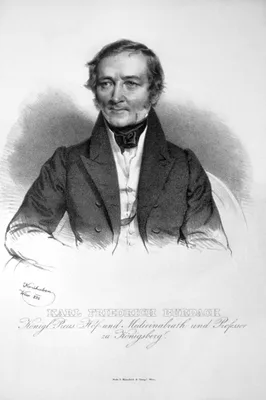
Burdach’s great textbook of physiology was planned to run to 10 vols., but the death of his wife quenched his enthusiasm for the task. Parts of the text were written by von Baer, Rathke, Johannes Müller, R. Wagner and…
GMN 599 · https://historyofmedicine.com/id/433
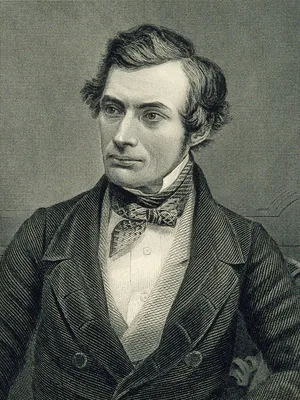
1830 SHARPEY, William (1802 – 1880)
On a peculiar motion excited in fluids by the surfaces of certain animals.
Sharpey was the first occupant of the chair of anatomy and physiology at University College, London, this chair being the first official recognition of physiology in any English medical school. He wrote a memorable pa…
GMN 600 · https://historyofmedicine.com/id/438
1831 HECKER, Justus Friedrich Karl (1795 – 1850)
Die Lehre vom Kreislauf vom Harvey. Eine historische Abhandlungen.
Perhaps the earliest essay by a professional historian on the pre-Harveian history of the circulation. Digital facsimile from Google Books at this link.
GMN 12346 · https://historyofmedicine.com/id/14570
1832 EDWARDS, William Frédéric (1776 – 1842); HODGKIN, Thomas (1798 – 1866); LISTER, Joseph Jackson (1786 – 1869); HOWARD, Luke (1772 – 1864); POUILLET, Claude Servais Mathias (1790 – 1868); FISHER, Alder
On the influence of physical agents on life, by W. F. Edwards. Translated from the French by Dr. Hodgkin and Dr. Fisher. To which are added, in the appendix, some observations on electricity by Dr. Edwards, M. Pouillet, and Luke Howard; on absorption, and the uses of the spleen, by Dr. Hodgkin; on the microscopic characters of the animal tissues and fluids, by J. J. Lister and Dr. Hodgkin, and some notes to the work of Dr. Edwards.
Digital facsimile from Google Books at this link.
GMN 12197 · https://historyofmedicine.com/id/14407
1833 BELL, Sir Charles (1774 – 1842)
The hand: Its mechanism and vital endowments as evincing design.
Classic work on the anatomy, physiology, bio-mechanics, comparative anatomy, and adaptive importance of the hand. Issued as a volume in a series entitled the "Bridgewater Treatises." The first edition has 288pp. An en…
GMN 411.1 · https://historyofmedicine.com/id/917
1834 –1840 MÜLLER, Johannes Peter (1801 – 1858)
Handbuch der Physiologie des Menschen.
The first modern, systematic textbook on physiology, presenting an authoritative and discerning survey of each aspect of the science. This is also one of the best reviews of physiological literature during the first p…
GMN 601 · https://historyofmedicine.com/id/443
1834 COXE, John Redman (1773 – 1864)
An inquiry into the claims of Doctor William Harvey to the discovery of the circulation of the blood; with a more equitable retrospect of that event. To which is added an introductory lecture delivered on the third of November, 18929, in vindication of Hippocrates from sundry charges of ignorance preferred against him by the late professor Rush.
Perhaps the earliest American monograph on the history of circulation. Keynes characterized this volume as "an elaborate and very learned attempt to belittle Harvey's achievement" Keynes, Life of William Harvey, p. 42…
GMN 12395 · https://historyofmedicine.com/id/14623
1835 –1859 SHARPEY, William (1802 – 1880); TODD, Robert Bentley (1809 – 1860)
The cyclopaedia of anatomy and physiology. Edited by Robert Bentley Todd. 5 vols.
Contributors included Richard Owen and Thomas Huxley, and physicians James Paget, James Young Simpson, and William Bowman.The discoveries of Purkynĕ and Valentin, together with additional observations by William Sharp…
GMN 603 · https://historyofmedicine.com/id/453
1836 WEBER, Eduard Friedrich Wilhelm (1806 – 1871); WEBER, Wilhelm Eduard (1804 – 1891)
Mechanik der menschlichen Gehwerkzeuge. 1 vol. and atlas.
A pioneering study of the physiology and biomechanics of motion and locomotion. The atlas contains four illustrations that were printed directly from actual bones embedded in plaster of Paris. This is one of the only …
GMN 604 · https://historyofmedicine.com/id/458
1836 –1838 MAGENDIE, François (1783 – 1855)
Leçons sur les phénomènes physiques de la vie. 4 vols.
Magendie, pioneer experimental physiologist, regarded pathology as only a modification of physiology, “medicine the physiology of the sick man”. By him clinical medicine was reconstructed on physiological lines.
GMN 2217 · https://historyofmedicine.com/id/1712
1838 MATTEUCCI, Carlo (1811 – 1868)
Sur le courant électrique ou propre de la grenouille.
Matteucci established the difference of potential between injured nerve and its muscle.
GMN 605 · https://historyofmedicine.com/id/462
1842 MAYER, Julius Robert von (1814 – 1878)
Bemerkungen über die Kräfte der unbelebten Natur.
Mayer demonstrated the principle of the conservation of energy as far as physiological processes are concerned.
GMN 606 · https://historyofmedicine.com/id/464
1842 –1853 WAGNER, Rudolf Friedrich Johann Heinrich (Rudolph) (1805 – 1864)
Handwörterbuch der Physiologie … hrsg. von R. Wagner.
Wagner was professor at Göttingen. His literary output was enormous. In the above work he contributed the sections on sympathetic nerves, nerve-ganglia, and nerve-endings. This work contained 63 extensive review artic…
GMN 607 · https://historyofmedicine.com/id/466
1842 THEOPHILUS PROTOSPATHARIUS, (Θεόφιλος Πρωτοσπαθάριος) (650 – ); GREENHILL, William Alexander (1814 – 1894)
Theophili Protospatharii De corporis humani fabrica libri v. Edidit Gulielmus Alexander Greenhill.
Extensively annotated Greek & Latin edition of this Byzantine treatise on anatomy and physiology, edited by William Alexander Greenhill. Digital facsimile from the Internet Archive at this link.
GMN 11109 · https://historyofmedicine.com/id/13305
1843 MATTEUCCI, Carlo (1811 – 1868); HUMBOLDT, Friedrich Wilhelm Heinrich Alexander von (1769 – 1859)
Sur le courant électrique des muscles des animaux vivants ou récemment tués.
Matteucci’s “rheoscopic frog” effect.
GMN 608 · https://historyofmedicine.com/id/469
1843 DU BOIS-REYMOND, Emil (1818 – 1896)
Ueber den sogennanten Froschstrom.
First description and definition of electrotonus.
GMN 609 · https://historyofmedicine.com/id/470
1845 WEBER, Eduard Friedrich Wilhelm (1806 – 1871); WEBER, Ernst Heinrich (1795 – 1878)
Experimenta, quibus probatur nervos vagos rotatione machinae galvanomagneticae irritatos, motum cordis retardare et adeo intercipare.
The discovery of the inhibitory power of the vagus. Also published in Wagner’s Handwörterbuch der Physiologie, 1846, 3, 45-51. Partial translation in J. F. Fulton’s Selected readings in the history of physiology, 2nd …
GMN 807 · https://historyofmedicine.com/id/183
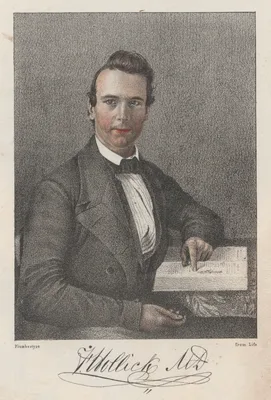
1845 HOLLICK, Frederick (1818 – 1900)
The origin of life: A popular treatise on the philosophy and physiology of reproduction, in plants and animals, including the details of human generation with a full description of the male and female organs. Illustrated by fine colored engravings on stone.
Digital facsimile of the 20th edition from Google Books at this link.
GMN 13761 · https://historyofmedicine.com/id/16046
1846 WEBER, Ernst Heinrich (1795 – 1878)
Der Tastsinn und das Gemeingefühl. In: Wagner’s Handwörterbuch der Physiologie, Braunschweig, 3, Abt. 2, 481-588.
English translation of Tastsinn, Academic Press, 1978.
GMN 1459 · https://historyofmedicine.com/id/2379
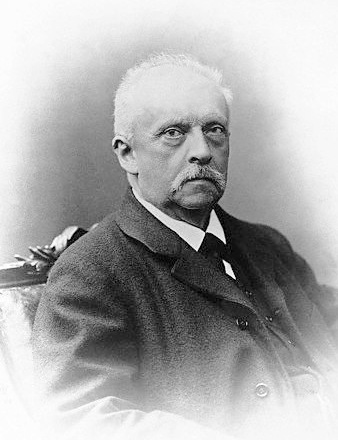
1847 HELMHOLTZ, Hermann Ludwig Ferdinand von (1821 – 1894)
Ueber die Erhaltung der Kraft, eine physikalische Abhandlung.
An epoch-making work which led the way to the acceptance of the fundamental physical doctrine of the conservation of energy.
GMN 611 · https://historyofmedicine.com/id/479
1848 –1884 DU BOIS-REYMOND, Emil (1818 – 1896)
Untersuchungen über thierische Elektricität. 2 vols.
A pupil of J. Müller, Emil du Bois-Reymond was the founder of modern electrophysiology. He introduced faradic stimulation and made an exhaustive investigation of physiological tetanus. Above is a collective edition of…
GMN 610 · https://historyofmedicine.com/id/473
1848 HELMHOLTZ, Hermann Ludwig Ferdinand von (1821 – 1894)
Ueber die Wärmeentwickelung bei der Muskelaction.
Helmholtz showed the muscles to be the principal source of animal heat.
GMN 612 · https://historyofmedicine.com/id/482
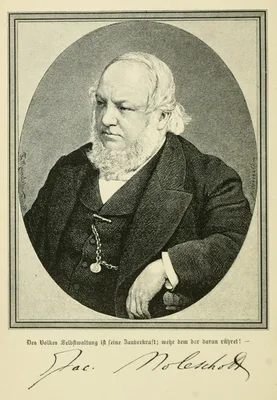
1851 MOLESCHOTT, Jacob (1822 – 1893)
Physiologie des Stoffwechsels in Pflanzen und Thieren.
GMN 613 · https://historyofmedicine.com/id/484
1853 FUNKE, Otto (1828 – 1879)
Atlas der physiologischen Chemie.
GMN 684 · https://historyofmedicine.com/id/803
1854 GRAHAM, Thomas (1805 – 1869)
On osmotic force.
Investigation of osmotic force; provided important information for the physiologists.
GMN 686 · https://historyofmedicine.com/id/825
1854 BROWN-SÉQUARD, Charles Édouard (1817 – 1894)
Note sur la découverte de quelques-uns des effets de la galvanisation du nerf grand sympathique au cou.
GMN 1325 · https://historyofmedicine.com/id/1337
1854 BROWN-SÉQUARD, Charles Édouard (1817 – 1894)
Sur les résultats de la section et de la galvanisation du nerf grand sympathique au cou.
GMN 1326 · https://historyofmedicine.com/id/1340
1854 GUITARD, Pierre-Isidore-Catherine (1821 – )
Histoire de l'électricité médicale, comprenant l'étude des instruments et appareils, le résumé des auteurs, un choix d'observations.
The first history of medical electricity and electrotherapy. Digital facsimile from Google Books at this link.
GMN 10439 · https://historyofmedicine.com/id/12632
1854 BERNARD, Claude (1813 – 1878); ATLEE, Walter Franklin (1828 – 1910)
Notes of M. Bernard's lectures on the blood; with an appendix by Walter F. Atlee.
This record of Bernard's actual lectures contains the first published description of Bernard's technique of right and left heart cathererization, a technique that Bernard invented. The appendix includes notes of lectu…
GMN 11549 · https://historyofmedicine.com/id/13748
1854 FLOURENS, Marie Jean Pierre (1794 – 1867)
Histoire de la découverte de la circulation du sang.
Digital facsimile from the Hathi Trust at this link. Revised edition, 1857, of which a digital facsimile is also available from the Hathi Trust at this link. Translated into English by J. C. Reeve as A history of the …
GMN 12342 · https://historyofmedicine.com/id/14566
1855 –1856 BERNARD, Claude (1813 – 1878)
Leçons de physiologie expérimentale appliquée à la médecine. 2 vols.
Claude Bernard made strenuous efforts to introduce experimental methods into physiology. The above includes his classic work on the function of the liver, pancreas, and gastric glands. Vol. 1, p. 126: Catheterization …
GMN 615 · https://historyofmedicine.com/id/493
1855 DUCHENNE DE BOULOGNE, Guillaume Benjamin Armand (1806 – 1875)
De l’électrisation localisée et de son application à la physiologie, à la pathologie, et à la thérapeutique.
Duchenne classified the electrophysiology of the entire muscular system and summed up his findings in the above work. The application of his results to pathological conditions marks him as the founder of electrotherap…
GMN 1995 · https://historyofmedicine.com/id/1848