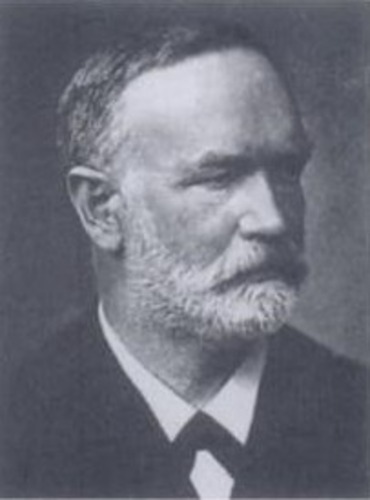
1895 –1904 BRAUNE, Christian Wilhelm (1831 – 1892); FISCHER, Otto (1861 – 1917)
Der Gang des Menschen. 1-6 Abt. (All published.)
Classic study of the human gait. The authors calculated the external and internal forces involved in walking and described the kinematics and kinetics of the movement. Because of Braune's death in 1892 he could only c…
GMN 645 · https://historyofmedicine.com/id/524
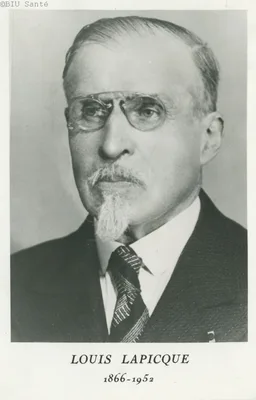
1895 –1928 RICHET, Charles Robert (1850 – 1935); LAPICQUE, Louis (1866 – 1952); LANGLOIS, Paul (1862 – 1923)
Dictionnaire de physiologie. Vols. 1 - 10, pt. 1. (All published).
By Richet, Langlois, Lapique and numerous co-authors. Covers "A" - Moelle épinière only. Digital facsimile from the Biodiversity Heritage Library at this link.
GMN 646 · https://historyofmedicine.com/id/525
1895 ZWAARDEMAKER, Hendrik (1857 – 1930)
Die Physiologie des Geruchs.
For his studies on olfaction and olfactometry Zwaardemaker developed the so-called “camera inodorata” (odorless chamber), or olfactometer. His instrument to check the patency of the nasal passages is still in use.
GMN 1474 · https://historyofmedicine.com/id/2443
1896 BEAUREGARD, Emmanuel Henri (1851 – 1900); DUPUY, Pierre Edmond (1855 – 1904)
Note sur la variation éléctrique (courant d’action) déterminée dans le nerf acoustique par le son.
Beauregard and Dupuy recorded the action potential in the auditory nerve of the frog.
GMN 1569.1 · https://historyofmedicine.com/id/1267
1896 ABEL, John Jacob (1857 – 1938); DAVIS, Walter S.
On the pigment of the negro's skin and hair.
"In the present state of our knowledge we can only say that it seems highly probable that the pigment of the negro's hair is not different from the dark pigment found in the hair of the white races, and we may infer t…
GMN 13072 · https://historyofmedicine.com/id/15324
1897 MARCET, William (1829 – 1900)
A contribution to the history of the respiration of man.
GMN 1573 · https://historyofmedicine.com/id/1310
1897 NEUBURGER, Max (1868 – 1955)
Die historische Entwicklung der experimentellen Gehirn- und Rückenmarksphysiologie vor Flourens.
Unsurpassed coverage of the experimental physiology of the brain and spinal cord up to the work of Flourens. The best edition is the extensively annotated English translation as The historical development of experimen…
GMN 1574 · https://historyofmedicine.com/id/1319
1898 –1900 SHARPEY-SCHAFER, Sir Edward Albert (1850 – 1935); SCHÄFER, Edward Albert (1850 – 1935); SHERRINGTON, Sir Charles Scott (1857 – 1952)
Text-book of physiology. Edited by Edward Schäfer. 2 vols.
A collective work and a classic textbook of physiology, edited by Schäfer using the original version of his last name. He was a pupil of Sharpey, and when that great man died without any known descendants Schäfer gave…
GMN 649 · https://historyofmedicine.com/id/608
1899 SOURY, Jules (1842 – 1915)
Le système nerveux centrale structure et fonctions. Histoire critique des théories et des doctrines. 2 vols.
Massive history of the anatomy and physiology of the nervous system from ancient Greece to the end of the 19th century, limited in its historical analysis. The second volume is a survey of end of 19th century opinions…
GMN 1574.1 · https://historyofmedicine.com/id/1323
1901 –1911 LUCIANI, Luigi (1840 – 1919)
Fisiologia dell’uomo. 4 vols.
5th edition (5 vols.), 1919-21; English translation (5 vols.), London, 1911-21. Luciani was professor of physiology successively at Siena, Florence, and Rome.
GMN 652 · https://historyofmedicine.com/id/529
1901 FOSTER, Sir Michael (1836 – 1907)
Lectures on the history of physiology.
Reprinted 1924 and (Dover Pubs.), 1970.
GMN 1575 · https://historyofmedicine.com/id/1327
1902 BERNSTEIN, Julius (1839 – 1917)
Untersuchungen zur Thermodynamik der bioelektrischen Ströme.
Bernstein’s studies on the nature of muscular contraction included the observation that changes in surface tension are a controlling factor in the development of the energy of muscular contraction.
GMN 653 · https://historyofmedicine.com/id/530
1902 STIRLING, William (1851 – 1932)
Some apostles of physiology.
Well illustrated, and finely printed, but dated history, by a pupil of Ludwig. See No. 629.
GMN 1576 · https://historyofmedicine.com/id/1331
1902 BOWDITCH, Henry Ingersoll (1808 – 1892); BOWDITCH, Vincent Yardley (1852 – 1929)
Life and correspondence of Henry Ingersoll Bowditch by his son, Vincent Y. Bowditch. 2 vols.
Digital facsimile from the Hathi Trust at this link.
GMN 12393 · https://historyofmedicine.com/id/14620
1903 –1904 LEDUC, Stéphane Armand Nicolas (1853 – 1939)
L’électrisation cérébrale.
Leduc reported the effects of a galvanic current on the brain. His work led the way to electric convulsion therapy, introduced by Carletti and Bini (No. 4962).
GMN 2003.2 · https://historyofmedicine.com/id/1923
1903 GOTCH, Francis (1853 – 1913)
The time relations of the photo-electric changes in the eyeball of the frog.
First correct electroretinograms.
GMN 1525.1 · https://historyofmedicine.com/id/2850
1903 FLINT (YOUNGER), Austin (1836 – 1915)
Collected essays and articles on physiology and medicine. 2 vols.
Flint was one of the founders of laboratory research on physiology in America. Besides the regular trade edition Flint issued a deluxe version of this set limited to 25 copies. Digital facsimile from Biodiversity Heri…
GMN 12166 · https://historyofmedicine.com/id/14376
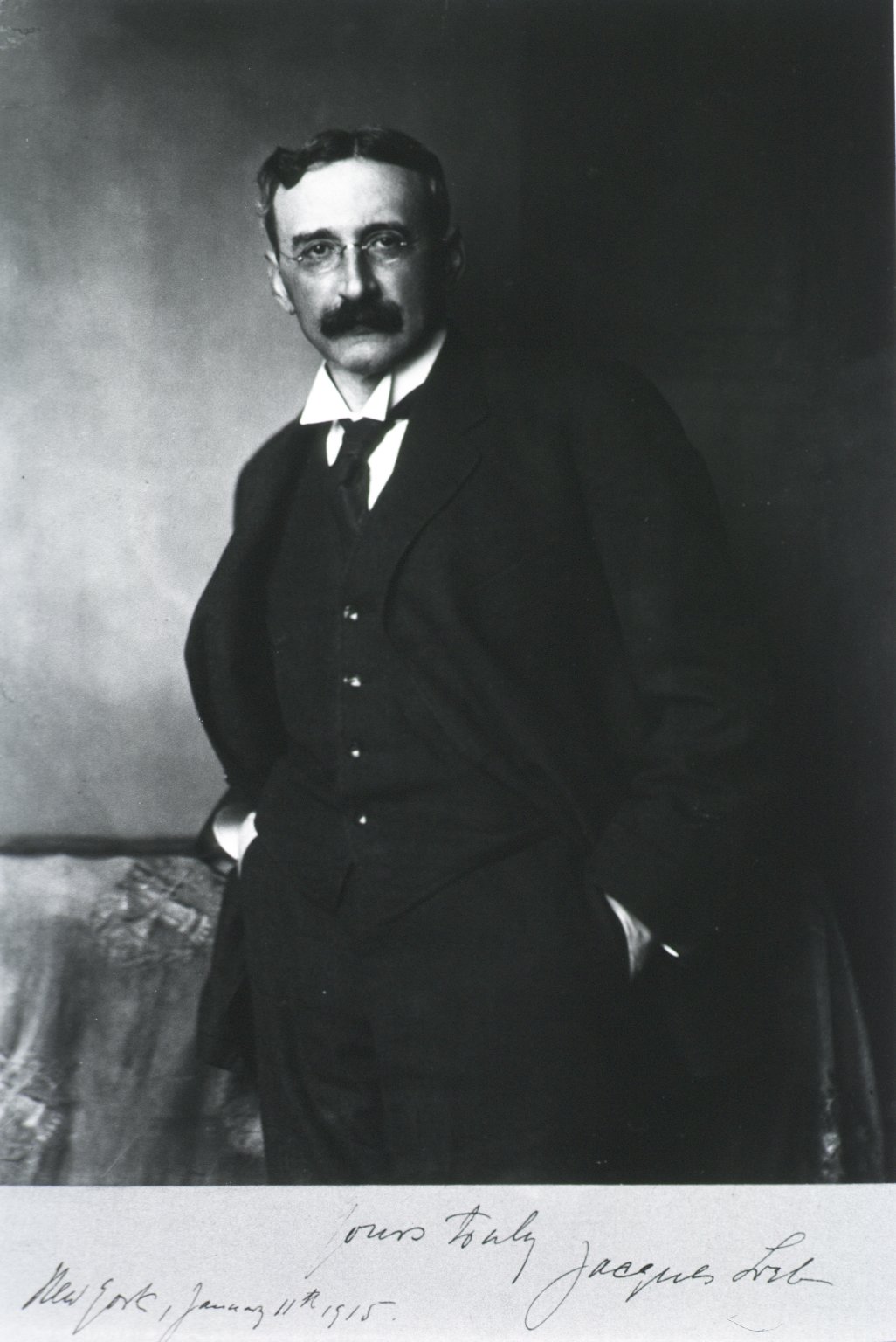
1906 LOEB, Jacques (1859 – 1924)
The dynamics of living matter.
GMN 654 · https://historyofmedicine.com/id/531
1906 CREMER, Max (1865 – 1935)
Über die direkte Ableitung der Aktionsströme des menschlichen Herzens vom Oesophagus und über das Elektrokardiogramm des Fötus.
Fetal electrocardiogram recorded. Cremer was also the first to record an electrocardiogram with an electrode in the esophagus.
GMN 843.1 · https://historyofmedicine.com/id/624
1907 –1909 GALEN, [Κλαύδιος Γαληνός; Galen of Pergamon] (129 – 216); HELMREICH, Georg (1849 – 1921)
De usu partium libri XVII ad codicum fidem recensuit Georgius Helmreich. 2 vols.
First separate edition, edited from the prior printed editions and the surviving early manuscripts, of Galen's treatise on the function, use and purpose of the individual parts of the body. In this treatise Galen expl…
GMN 570 · https://historyofmedicine.com/id/336
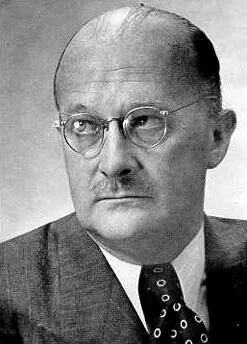
1907 WINDAUS, Adolf Otto Reinhold (1876 – 1959); VOGT, Karl (1880 – )
Synthese des Imidazolyläthylamins.
Synthesis of histamine.
GMN 1895.1 · https://historyofmedicine.com/id/2545
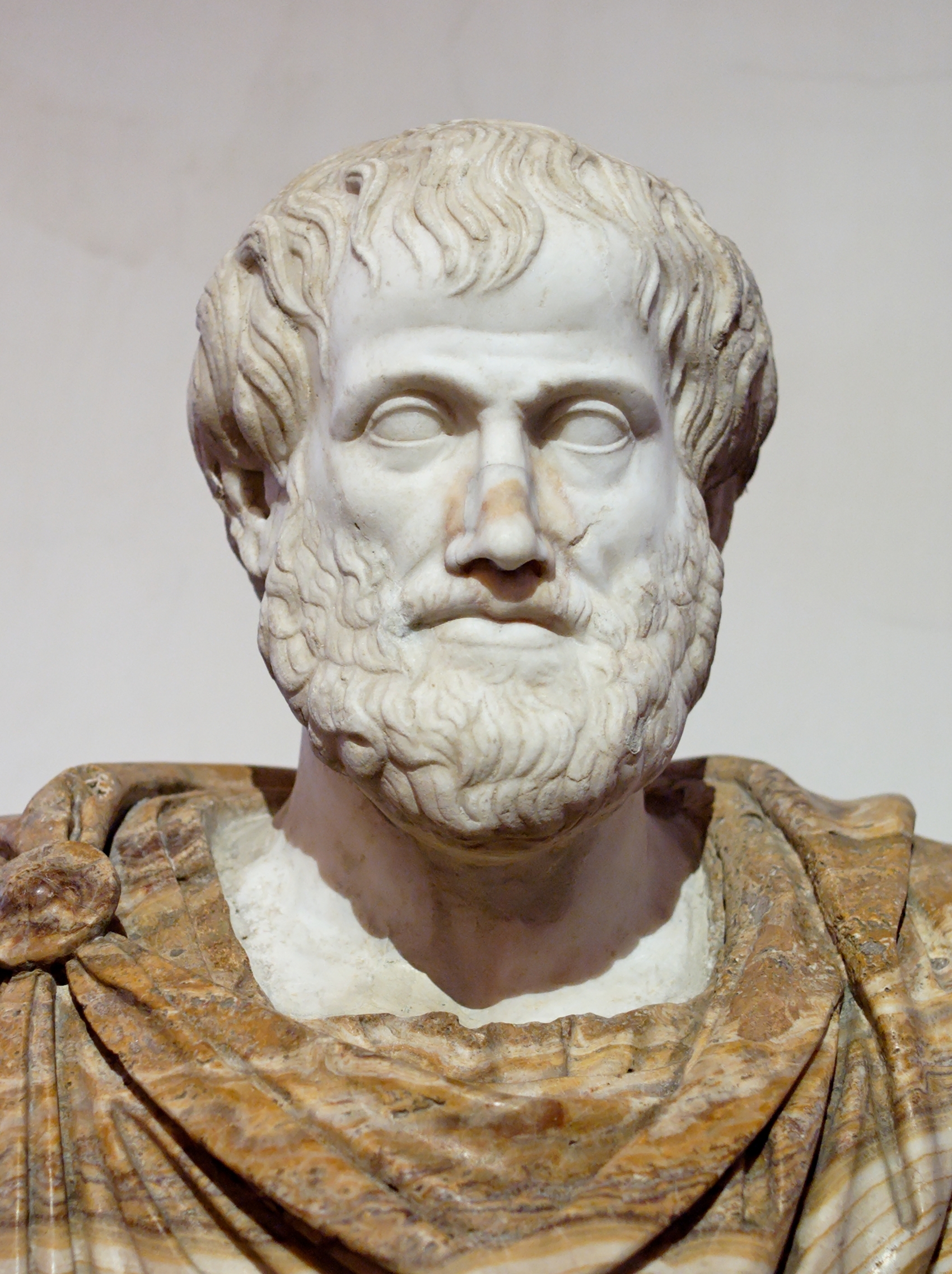
1908 –1952 ARISTOTLE (ἈΡΙΣΤΟΤΈΛΗΣ) (-384 – -322); SMITH, John Alexander (1863 – 1939); ROSS, Willliam David (1877 – 1971)
The works of Aristotle translated into English. Edited by J.A. Smith and W.D. Ross. 12 vols.
De motu animalium. De incessu animalium. In his Works, edited by J.A. Smith and W.D. Ross, 5, 698a-714b., Oxford, 1912. De Anima. In his Works… translated into English. Edited by J. A. Smith and W. D. Ross. 3, 402a-35…
GMN 18 · https://historyofmedicine.com/id/4491
1909 LAPICQUE, Louis (1866 – 1952)
Définition expérimentale de l’excitabilité.
Lapicque first defined “chronaxia”, the duration of excitation of tissue. Partial translation in J. F. Fulton’s Selected readings in the history of physiology, 2nd ed., 1966, pp. 233-34.
GMN 655 · https://historyofmedicine.com/id/532
1910 –1925 WINTERSTEIN, Hans (1879 – 1963)
Handbuch der vergleichenden Physiologie. 4 vols.
Edited by Winterstein.
GMN 656 · https://historyofmedicine.com/id/557
1910 TRAUBE, Isidor (1860 – 1943)
Die Theorie des Haftdrucks (Oberflächendrucks) und ihre Bedeutung für die Physiologie.
GMN 740 · https://historyofmedicine.com/id/1124
1910 DALE, Sir Henry Hallett (1875 – 1968); BARGER, George (1878 – 1939)
Chemical structure and sympathomimetic action of amines.
Discovery of histamine in an ergot extract.
GMN 1898 · https://historyofmedicine.com/id/2640
1910 STENO, Nicolas [Niels Steensen, Nicholaus Stenonis] (1638 – 1686); MAAR, Edward Vihelm Emil (1871 – 1940)
Opera philosophica. Edited by Vilhelm Maar. 2 vols.
Steno's collected works, presented in the original Latin with an introduction in English. Digital facsimile from biusante.parisdescartes.fr at this link.
GMN 7474 · https://historyofmedicine.com/id/9646
1913 DOUGLAS, Claude Gordon (1882 – 1963); HENDERSON, Yandell (1873 – 1944); HALDANE, John Burdon Sanderson (1892 – 1964); SCHNEIDER, E. C. (1874 – 1854)
Physiological observations made on Pike’s Peak, Colorado, with special reference to adaptation to low barometric pressures.
GMN 957 · https://historyofmedicine.com/id/254
1913 ABEL, John Jacob (1857 – 1938)
On the action of drugs and the function of the anterior lymph hearts in cardiectomized frogs.
Abel was one of America’s most distinguished pharmacologists. See A. M. Harvey. "Pharmacology’s giant," Johns Hopk. med. J., 1974, 135, 245-58.
GMN 849 · https://historyofmedicine.com/id/645
1914 ABEL, John Jacob (1857 – 1938); TURNER, Benjamin Bernard (1871 – 1945)
On the influence of the lymph hearts upon the action of convulsant drugs in cardiectomized frogs. II.
GMN 850 · https://historyofmedicine.com/id/650
1915 BAYLISS, Sir William Maddock (1860 – 1924)
Principles of general physiology.
Bayliss’s book treats of general physiology from the physical chemical point of view. For some years it remained the most important book of its kind, and today is still of great value for its historical information an…
GMN 658 · https://historyofmedicine.com/id/561
1915 CANNON, Walter Bradford (1871 – 1945)
Bodily changes in pain, hunger, fear, and rage. An account of recent researches into the function of emotional excitement.
Observation of the effect of strong emotions on gastrointestinal motility (No. 1029) led Cannon to examination of the sympathetic nervous system and its emergency function. Cannon showed the close connexion between th…
GMN 1124 · https://historyofmedicine.com/id/1241
1916 GALEN, [Κλαύδιος Γαληνός; Galen of Pergamon] (129 – 216); BROCK, Arthur John (1878 – 1947)
On the natural faculties. With an English translation by Arthur John Brock.
Greek-English edition in the Loeb Classical Library. This was one of the first, if not the actual first, modern English translations of Galen. Digital facsimile from the Internet Archive at this link.
GMN 569 · https://historyofmedicine.com/id/340
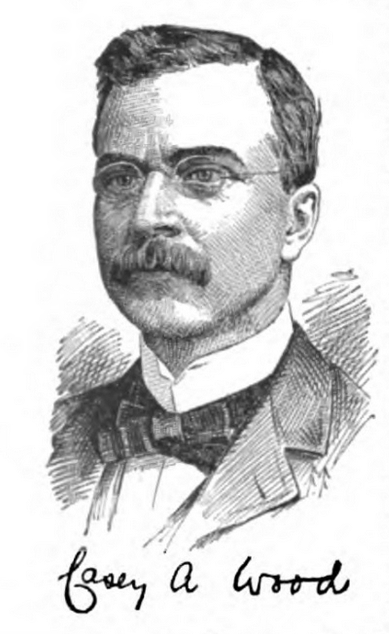
1917 WOOD, Casey Albert (1856 – 1942)
The fundus oculi of birds especially as viewed by the ophthalmoscope. A study in comparative anatomy and physiology. Illustrated by 143 drawings... also by sixty-one colored paintings prepared for this work by Arthur W. Head.
Digital facsimile from the Biodiversity Heritage Library, Internet Archive, at this link.
GMN 7116 · https://historyofmedicine.com/id/9283
1918 MEYERHOF, Otto Fritz (1884 – 1951)
Ueber das Vorkommen des Coferments des alcoholischen Hefegärung im Muskelgewebe und seine muttmassliche Bedeutung im Atmungsmechanismus.
In 1922 Meyerhof was awarded half of the Nobel Prize in Pysiology or Medicine "for his discovery of the fixed relationship between the consumption of oxygen and the metabolism of lactic acid in the muscle." The other …
GMN 959 · https://historyofmedicine.com/id/258
1918 –1973 PURKYNĔ, Jan Evangelista [PURKINJE] (1787 – 1869)
Sebrané spisy. Opera omnia. Tom. 1-12.
Purkynĕ was Professor of Physiology at Breslau and Prague. Eminent as physiologist and microscopist, he was first to use the microtome. See Kruta, V. J.E. Purkynĕ, Physiologist. A short account of his contributions…wi…
GMN 82 · https://historyofmedicine.com/id/1378
1920 HILL, Archibald Vivian (1886 – 1977); HARTREE, William (1870 – 1943)
The four phases of heat-production of muscle.
Hill and Hartree made valuable contributions to the knowledge of the thermodynamics of muscle. See also Physiol. Rev., 1922, 2, 310-41, and Hill, A. V., Trails and trials in physiology: a bibliography 1909-1964, 1965.…
GMN 659 · https://historyofmedicine.com/id/535
1920 MACEWEN, Sir William (1848 – 1924)
The growth and shedding of the antlers of the deer. The histological phenomena and their relation to the growth of bone.
The first study of the unusual and dramatic physiology of the annual growth and shedding of the antlers of deer. "The amount of bony matter annually secreted to form antlers of the larger deer is enormous, antlers of …
GMN 7000 · https://historyofmedicine.com/id/9166
1922 –1931 KAHN, Fritz (1888 – 1968)
Das Leben des Menschen. Eine volkstümliche Anatomie, Biologie, Physiologie und Entwicklungsgeschichte des Menschen. 5 vols.
By developing a new infographics style of illustration in which physiological processes and other technical medical and biological concepts were often depicted as, or compared to machines, Kahn made medical and biolog…
GMN 7649 · https://historyofmedicine.com/id/9821
1925 –1932 BETHE, Albrecht (1872 – 1954)
Handbuch der normalen und pathologischen Physiologie. Hrsg. von. A. Bethe, G. Bermann, etc. 18 vols.
GMN 662 · https://historyofmedicine.com/id/549
1926 FULTON, John Farquhar (1899 – 1960)
Muscular contraction and the reflex control of movement.
A detailed study of the physiology of skeletal muscle. A valuable historical introduction will be found on pp. 3-55, and the book includes an extensive bibliography.
GMN 663 · https://historyofmedicine.com/id/538
1927 ADRIAN, Edgar Douglas (1889 – 1977); MATTHEWS, Rachel
The action of light on the eye.
On the electrical discharges from the vertebrate optic nerve.
GMN 1528 · https://historyofmedicine.com/id/2854
1930 FEARING, Franklin (1892 – 1962)
Reflex action. A study in the history of physiological psychology.
Reprinted, New York, Hafner, 1964.
GMN 1577 · https://historyofmedicine.com/id/1334
1932 CANNON, Walter Bradford (1871 – 1945)
The wisdom of the body.
A discussion of the regulation of body fluids, hunger, thirst, temperature, oxygen supply, water, sugar, and proteins of the body, and the role of the sympathetic-adrenal mechanism.
GMN 664 · https://historyofmedicine.com/id/540
1932 HARTMANN, Alexis Frank Sr. (1898 – 1964); SENN, M. J. E.
Studies in the metabolism of sodium r-lactate. 1. Response of normal human subjects to the intravenous injection of sodium r-lactate. 2. Response of human subjects with acidosis to the intravenous injection of sodium r-lactate. 3. Reponse of human subjects with liver damage, disturbed mineral and water balance, and renal insufficiency to the intravenous injection ofsodium r-lactate.
Hartman added sodium lactate to the standard Ringer's solution to form Ringer's lactate solution, also known as Hartmann's solution.
GMN 12278 · https://historyofmedicine.com/id/14497
1934 CANNON, Walter Bradford (1871 – 1945)
The story of the development of our ideas of chemical mediation of nerve impulses.
GMN 1580 · https://historyofmedicine.com/id/1348
1934 KEATS, John (1795 – 1821); FORMAN, Maurice Buxton (1872 – 1957)
John Keats’s anatomical and physiological note book …edited by Maurice Buxton Forman.
Keats was a pupil and dresser at Guy’s Hospital from 1815-16, and was licensed to practice upon completion of his studies. While struggling to launch his poetic career he was often tempted to practice medicine, but ne…
GMN 6622.1 · https://historyofmedicine.com/id/7682
1935 LIEBEN, Fritz (1890 – 1966)
Geschichte der physiologischen Chemie.
Reprinted, Hildesheim, 1970.
GMN 1581 · https://historyofmedicine.com/id/1357
1935 IBN-AL-NAFIS (ALA-AL-DIN ABU AL-HASSAN ALI IBN ABI-HAZM AL-QARSHI AL-DIMASHQI; علاء الدين أبو الحسن عليّ بن أبي حزم القرشي الدمشقي ) (1210 – 1288); MEYERHOF, Max (1874 – 1945)
Ibn an Nafis und seine Theorie des Lungenkreislaufs.
Ibn-al-Nafis, a Syrian physician, described the lesser circulation in his commentary on the anatomy of the Canon of Avicenna, 1268. This was discovered in three Arabic MSS by Mohyi el Din el Tatawi, who included a Ger…
GMN 753 · https://historyofmedicine.com/id/1873
1935 MAYOW, John (1643 – 1679); FULTON, John Farquhar (1899 – 1960); LOWER, Richard (1631 – 1691)
A bibliography of two Oxford physiologists: Richard Lower 1631-1691, John Mayow 1643-1679
GMN 11516 · https://historyofmedicine.com/id/13715

![GALEN, [Κλαύδιος Γαληνός; Galen of Pergamon] (129 – 216)](/media/portraits/21)