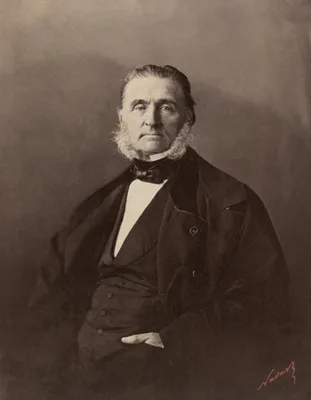
1861 TROUSSEAU, Armand (1801 – 1867)
Clinique médicale de l’Hôtel Dieu de Paris. 2 vols.
Trousseau, clinician of the Hôtel-Dieu, made important advances in the treatment of diphtheria, typhoid, scarlet fever and other conditions. In his book he emphasized the value of bedside observation. He supported the…
GMN 2221 · https://historyofmedicine.com/id/3760
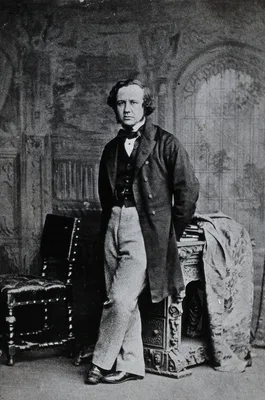
1862 MURCHISON, Charles (1830 – 1879)
A treatise on the continued fevers of Great Britain.
Murchison was one of the greatest clinical teachers London has ever known; of his many writings his book on continued fever is probably the most important. Digital facsimile from the Internet Archive at this link.
GMN 2220 · https://historyofmedicine.com/id/3756
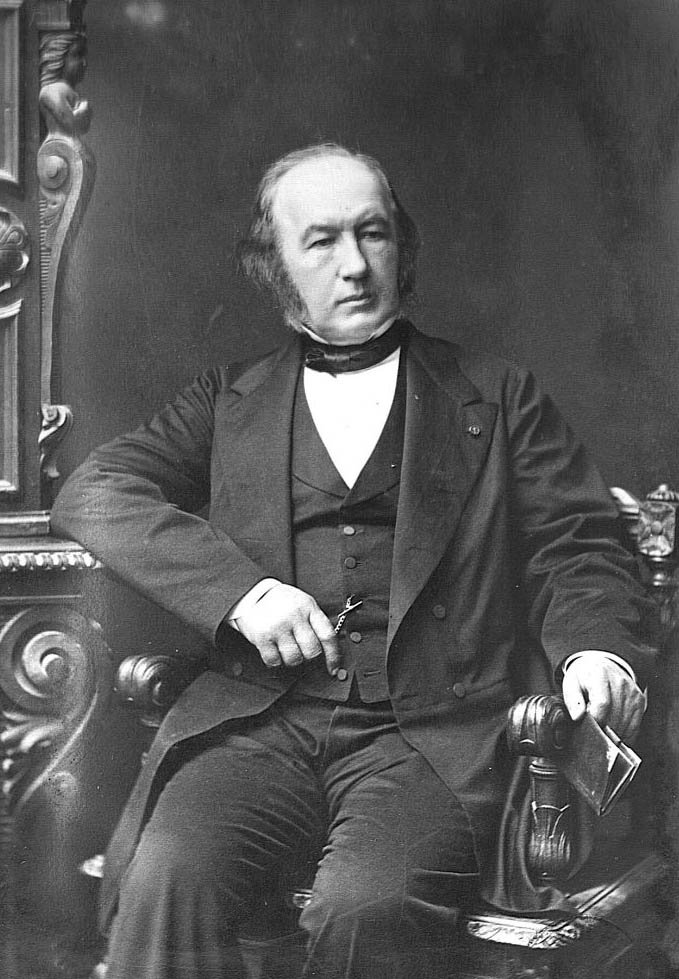
1865 BERNARD, Claude (1813 – 1878)
Introduction à l’étude de la médecine expérimentale.
Probably the greatest classic on the principles of physiological investigation and of the scientific method as applied to the life sciences. English translation, New York, 1927. See P.F. Cranefield, Claude Bernard’s r…
GMN 1766.501 · https://historyofmedicine.com/id/3211
1866 FLINT (ELDER), Austin (1812 – 1886)
A treatise on the principles and practice of medicine.
Digital facsimile of the 1868 third edition from Google Books at this link.
GMN 13196 · https://historyofmedicine.com/id/15457
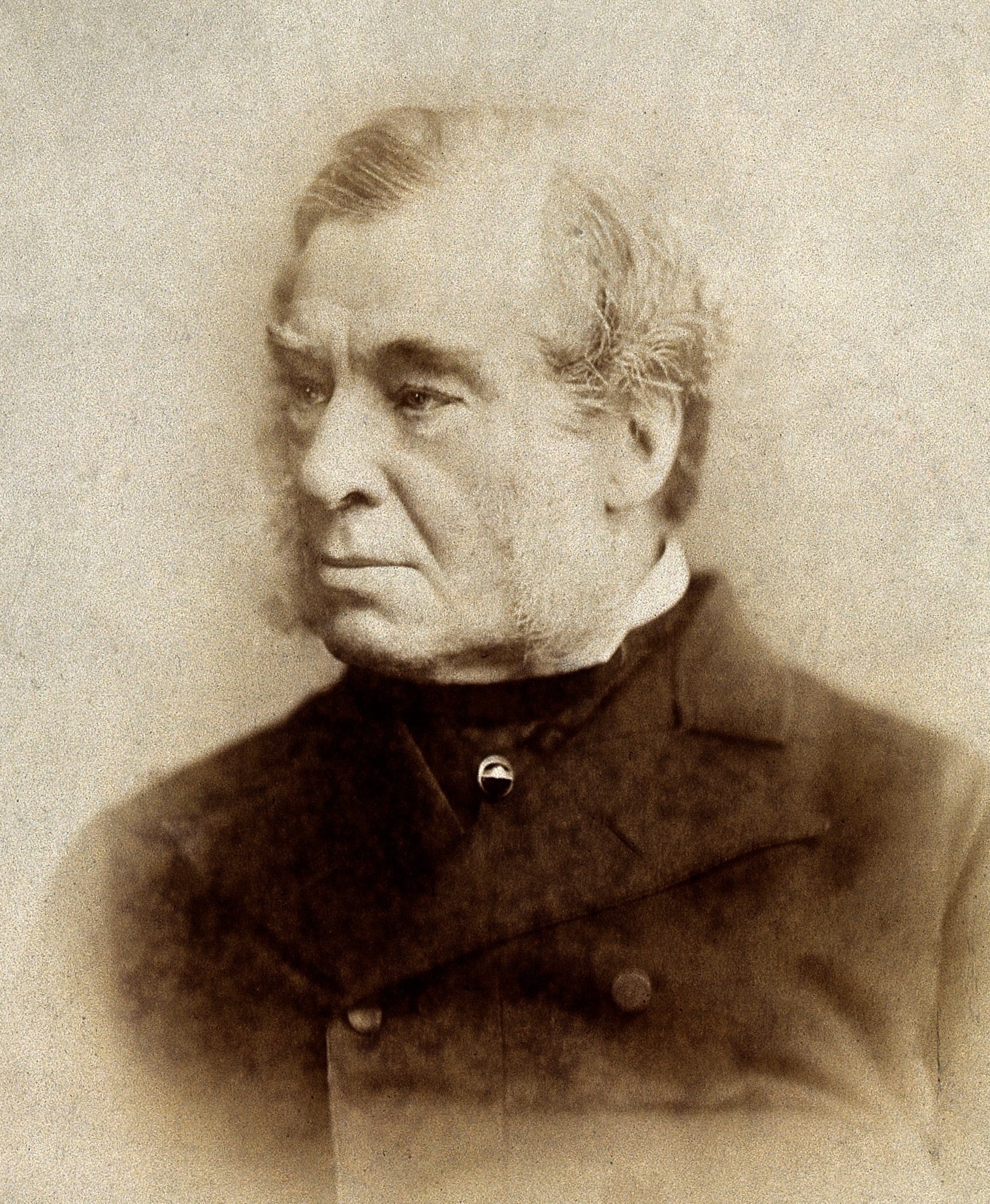
1868 ADDISON, Thomas (1793 – 1860)
A collection of the published writings.
Addison was a contemporary of Bright at Guy’s Hospital and a fine lecturer.
GMN 2223 · https://historyofmedicine.com/id/3768
1871 –1878 TRAUBE, Ludwig (1818 – 1876)
Zur Fieberlehre. In his: Gesammelte Beiträge zur Pathologie und Physiologie, 2 (1871) pt. 1, 624-56, 679-83; 3 (1878) 503-05, 582-87.
Digital facsimile of Vol. 2, pt. 1 from the Internet Archive at this link, of Vol. 3 at this link.
GMN 2224 · https://historyofmedicine.com/id/3776
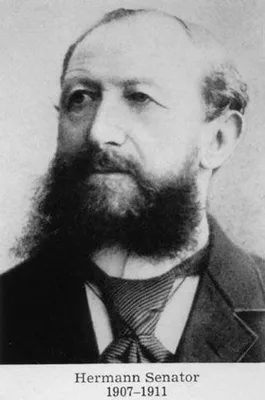
1873 SENATOR, Hermann (1834 – 1911)
Untersuchungen über den fieberhaften Process und seine Behandlung.
Senator was a director of the Charité Hospital in Berlin and later at the university polyclinic. His study of fever represents his best work.
GMN 2225 · https://historyofmedicine.com/id/3778
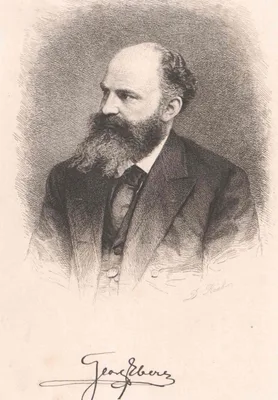
1875 EBERS, Georg Moritz (1837 – 1898); STERN, Ludwig Christian (1846 – 1911)
Papyros Ebers: Das hermetische Buch über die Arzeneimittel der alten Ägypter in hieratischer Schrift, herausgegeben mit Inhaltsangabe und Einleitung versehen von Georg Ebers, mit Hieroglyphisch-Lateinischem Glossar von Ludwig [Christian] Stern, mit Unterstützung des Königlich Sächsischen Cultusministerium. 2 vols.
The Ebers Papyrus dates from about 1552 BCE. It measures 20.23 m. in length and 30 cm. in height, and is, along with the Edwin Smith Papyrus, one of the two most important surviving medical papyri. It was written in h…
GMN 2 · https://historyofmedicine.com/id/26
1875 LIEBERMEISTER, Carl von (1833 – 1901)
Handbuch der Pathologie und Therapie des Fiebers.
GMN 2226 · https://historyofmedicine.com/id/3780
1875 DALTON, John Call (1825 – 1889)
Experimentation on animals, as a means of knowledge in physiology, pathology, and practical medicine.
Digital facsimile from the Hathi Trust at this link.
GMN 10829 · https://historyofmedicine.com/id/13025
1876 –1878 LATHAM, Peter Mere (1789 – 1875)
The collected works. 2 vols.
Latham, successively physician to Middlesex and St. Bartholomew’s hospitals, was an authority on cardiac disease and among the earliest in England to advocate auscultation. He held progressive views on medical educati…
GMN 2227 · https://historyofmedicine.com/id/3783
1876 CARDWELL, Edward, First Viscount Cardwell (1813 – 1886)
Report of the Royal Commission on the Practice of Subjecting Live Animals to Experiments for Scientific Purposes: With minutes and evidence and appendix.
This commission, or others with a similar name, seems to have continued intermittently in England for several decades, with the fourth report of the Royal Commission on Vivisection issued as late as 1908. Digital facs…
GMN 10839 · https://historyofmedicine.com/id/13035
1876 CYON, Elias von (Elie de Cyon; Ilya Fadeyevich Tsion) (1842 – 1912)
Methodik der physiologischen experimente und vivisectionen. 2 vols.
"This textbook and its remarkable atlas [of 54 plates] was used by Europe's leading physiologists as they expanded animal experimentation in an attempt to understand human function in health and disease" (W. Bruce Fye…
GMN 11574 · https://historyofmedicine.com/id/13773
1877 CHARAKA (-600 – -200); VIDYASAGARA, Jibananda
[Charaka Samhita. Edited by Jibananda Vidyasagara.]
Sanskrit text. Authorities vary as to the date of Charaka. He is said to have lived at times varying between 800 BCE and 78 CE. The Samhita, or Sanhita, is one of the most ancient and complete systems of Hindu medicin…
GMN 6485.91 · https://historyofmedicine.com/id/7973
1882 DALTON, John Call (1825 – 1889)
The experimental method in medical science.
Dalton, Professor of Physiology at the universities of Buffalo and Vermont, and the College of Physicians and Surgeons, New York, was the first American to devote his time exclusively to that subject. He was present a…
GMN 1571 · https://historyofmedicine.com/id/1297
1882 LIVON, Charles
Manuel de vivisections.
Extensively illustrated study of methods of conducting experiments involving vivisection.
GMN 11683 · https://historyofmedicine.com/id/13884
1884 BRYAN, Benjamin; COBBE, Frances Power (1822 – 1904)
The vivisectors' directory; being a list of the licensed vivisectors in the United Kingdom; together with the leading physiologists in foreign laboratories. Compiled from authentic sources. Edited by Benjamin Bryan, with a preface by Frances Power Cobbe.
A remarkably detailed listing of scientific and medical researchers conducting research involving vivisection with address information and details of their research. This information was published in order to supply d…
GMN 11682 · https://historyofmedicine.com/id/13883
1886 FAGGE, Charles Hilton (1838 – 1883)
The principles and practice of medicine. 2 vols.
Fagge was physician to Guy’s hospital and editor of Guy’s Hospital Reports. His important textbook was published posthumously.
GMN 2230 · https://historyofmedicine.com/id/3789
1891 HOWARD, Robert Palmer (1823 – 1889)
Notes on the practice of medicine.
This was Howard's only book. Osler, in his anonymous obituary of his mentor R. Palmer Howard (1823-1889), wrote, "As a teacher of medicine for thirty-three years, Dr. Howard enjoyed a unique reputation in his own coun…
GMN 11633 · https://historyofmedicine.com/id/13833
1892 OSLER, Sir William (1849 – 1919)
The principles and practice of medicine.
Osler’s textbook was the best English work on medicine of its time. He became Regius Professor of Medicine at Oxford in 1904. Besides being one of the greatest of all clinicians, he was possessed of a fine literary st…
GMN 2231 · https://historyofmedicine.com/id/3791
1894 –1902 HIPPOCRATES, [Ἱπποκράτης; Hippocrates of Kos] (-460 – -370); KÜHLEWEIN, Hugo (1847 – )
Hippocrates Opera. Recensuit H. Kuehlewein. 2 vols.
This Greek edition, originally planned to include the whole collection in seven volumes, was abandoned in 1907 with the founding of the Corpus Medicorum Graecorum series. Both editions employ manuscripts and methods u…
GMN 15 · https://historyofmedicine.com/id/36
1896 RICHARDSON, Sir Benjamin Ward (1828 – 1896)
Biological experimentation: Its function and limits.
Digital facsimile from Google Books at this link.
GMN 10836 · https://historyofmedicine.com/id/13032
1897 CAJAL, Santiago Ramón y (1852 – 1934)
Fundamentos racionales y condiciones téchnicas de la Investigación biológica.
For the second edition (Madrid: Fortanet, 1899) Ramón y Cajal changed the title to Reglas y consejos sobre investigación cientifica. He added Los tónicos de la voluntad to the fourth ediition (Madrid: Fortanet, 1916).…
GMN 8881 · https://historyofmedicine.com/id/11059
1901 LEFFINGWELL, Albert (1845 – 1916)
The vivisection question.
Leffingwell sought a middle ground between the anti-vivisectionists, who callled for the abolition of all experimentation, and vivisectionists who rejected any restraint. Digital facsimile from the Internet Archive at…
GMN 10833 · https://historyofmedicine.com/id/13029
1902 ERNST, Harold Clarence (1856 – 1922)
Animal experimentation: A series of statements indicating its value to biological and medical science.
Contributors included Charles Elliot, G. Stanley Hall, William T. Sedgwick, James J. Putnam, Henry P. Bowditch, William T. Porter, William T. Councilman, Theobald Smith, and members of the religious community. Digital…
GMN 10830 · https://historyofmedicine.com/id/13026
1904 OSLER, Sir William (1849 – 1919)
Aequanimitas with other addresses to medical students, nurses and practitioners of medicine.
A compilation of 19 addresses given by Osler in various settings. These include many of Osler's most famous essays concerning the philosophical and moral foundations of medicine. Osler wrote, "we are here not to get a…
GMN 7206 · https://historyofmedicine.com/id/9373
1907 STILLER, Berthold (1837 – 1922)
Die asthenische Konstitutionskrankheit.
“Stiller’s disease” – habitus asthenicus.
GMN 2233 · https://historyofmedicine.com/id/3797
1907 –1910 OSLER, Sir William (1849 – 1919); MCCRAE, Thomas (1870 – 1935)
Modern medicine, its theory and practice. In original contributions by American and foreign authors. Edited by William Osler, assisted by Thomas McCrae. 7 vols.
Osler contributed six chapters to this massive system of medicine: "The Evolution of Internal Medicine", "Diseases of the Arteries," "Aneurism," "Raynaud's Disease," "Diffuse Scleroderma," "Angioneurotic Oedema." Osle…
GMN 11290 · https://historyofmedicine.com/id/13487
1909 WRESZINSKI, Walter (1880 – 1935)
Der grosse medizinische Papyrus des Berliner Museums (Pap. Berl. 3038) in Facsimile und Umschrift mit Uebersetzung, Kommentar und Glossar. Herausg. von Walter Wreszinski.
BRUGSCH PAPYRUS
The Greater German Papyrus (Brugsch Papyrus) dates from about 1300 BCE. The above facsimile reproduction and translation forms vol. 1 of the Medizin der alten Aegypter series. Digital facsimile from the U.S. National …
GMN 4 · https://historyofmedicine.com/id/28
1910 EPPINGER, Hans (1879 – 1946); HESS, Leo (1879 – 1963)
Vagotonie: klinische Studie.
English translation, 1915.
GMN 2234 · https://historyofmedicine.com/id/3800
1910 MCCREA, Roswell Cheney (1876 – 1951)
The humane movement: A descriptive survey.
Concerns the origins and evolution of the humane movement that played a significant role in the emergence and growth of the antivivisection movement in the United States. Digital facsimile from Google Books at this link.
GMN 10835 · https://historyofmedicine.com/id/13031
1911 HURRY, Jameson Boyd (1857 – 1930)
Vicious circles in disease.
GMN 2235 · https://historyofmedicine.com/id/3801
1912 FRENCH, Herbert (1875 – 1951)
An index of differential diagnosis of main symptoms by various writers. Edited by Herbert French.
The first edition extended to more than 1000 pages. It had reached its 16th edition by 2016. Digital facsimile of the New York 1912 edition from the Internet Archive at this link.
GMN 10792 · https://historyofmedicine.com/id/12988
1914 KEEN, William Williams (1837 – 1932)
Animal experimentation and medical progress.
Digital facsimile from Google Books at this link.
GMN 10832 · https://historyofmedicine.com/id/13028
1923 –2012 JONES, William Henry Samuel (1876 – 1963); HIPPOCRATES, [Ἱπποκράτης; Hippocrates of Kos] (-460 – -370); WITHINGTON, Edward Theodore (1860 – 1947); POTTER, Paul M. J. (1944 – )
Hippocrates [Works] with an English translation by W.H.S. Jones, E.T. Withington, and Paul Potter. 12 vols.
Greek–English edition in the Loeb Classical Library.
GMN 16 · https://historyofmedicine.com/id/37
1924 COLEMAN, Sydney H.
Humane society leaders in America. With a sketch of the early history of the humane movement in England.
Digital facsimile from the Hathi Trust at this link.
GMN 10828 · https://historyofmedicine.com/id/13024
1930 AVICENNA, [Abū ʿAlī al-Ḥusayn ibn ʿAbd Allāh ibn Al-Hasan ibn Ali ibn Sīnā] (980 – 1037); GRÜNER, Oskar Cameron (1877 – 1972)
A treatise on the Canon of Medicine incorporating a translation of the First Book
This translation of Book I of the Canon accompanied by a large number of valuable notes and comments on the text, which bring out the close connection between Arabic and Chinese medicine, and the influence which Avice…
GMN 45 · https://historyofmedicine.com/id/8766
1935 FLIEGEL, Ludwig (1865 – 1947)
1000 Ärzte gegen die Vivisektion (wissenschaftliche Tierfolter) wegen ihrer Grausamkeit und Nutzlosigkeit.
Considered a classic of the anti-vivisection movement.
GMN 10831 · https://historyofmedicine.com/id/13027
1942 KLEMPERER, Paul (1887 – 1964); ET AL
Diffuse collagen disease; acute disseminated lupus erythematosus and diffuse scleroderma.
P. Klemperer, A. D. Pollack, and G. Baehr combined a number of diseases, hitherto regarded as unrelated, into an entity which they termed diffuse collagen disease.
GMN 2237 · https://historyofmedicine.com/id/3809
1946 THOREK, Max (1880 – 1960)
The face in health and disease.
GMN 2237.01 · https://historyofmedicine.com/id/3812
1948 HARGRAVES, Malcolm McCallum (1903 – ); ET AL
Presentation of two bone marrow elements: The “Tart” cell and the “L. E”. cell.
The Hargraves “L. E”. cell, a diagnostic aid in acute disseminated lupus erythematosus. With H. Richmond and R. J. Morton. First reported by Morton in A study of the bone marrow in cases of disseminated lupus erythema…
GMN 2237.1 · https://historyofmedicine.com/id/3818
1949 CHARAKA (-600 – -200)
The Charaka Samhita. 6 vols.
Edited and published with translations in Hindi, Gujerati and English. The Charaka Samhita is the oldest known Hindu text on Ayurveda (life sciences). It was followed by the Sushruta Samhita. Except for some topics an…
GMN 10 · https://historyofmedicine.com/id/34
1950 HIPPOCRATES, [Ἱπποκράτης; Hippocrates of Kos] (-460 – -370); CHADWICK, John (1920 – 1988); MANN, William Neville (1911 – 2001)
The medical works of Hippocrates. A new translation by J. Chadwick and W.N. Mann.
This collection of translations was partly reprinted with an introduction by G.E.R. Lloyd, and the addition of three new translations by I.M. Lonie as Hippocratic Writings, Harmondsworth: Penguin Classics, 1978.
GMN 16.1 · https://historyofmedicine.com/id/926
1950 SELYE, Hans (1907 – 1982)
The physiology and pathology of exposure to stress.
In his study of the etiology of the collagen disease Selye developed the idea that animals react to stress or injury by a certain sequence of physiological reactions – the “general adaptation syndrome”.
GMN 2238 · https://historyofmedicine.com/id/3821
1972 MATHER, Cotton (1663 – 1728)
The angel of Bethesda [1724] edited, with introduction and notes by Gordon W. Jones.
The only large systematic compilation of medical knowledge prepared in the Thirteen Colonies before the American revolution. The manuscript, which Mather finished in 1724, remained unpublished in the American Antiquar…
GMN 2199.1 · https://historyofmedicine.com/id/1598
1975 FRENCH, Richard D.
Antivivisection and medical science in Victorian society.
GMN 10263 · https://historyofmedicine.com/id/12454
1979 BAKER, Henry J.; LINDSEY, J. Russell; WEISBROTH, Steven H.
The laboratory rat, Volume 1: Biology and disease. Edited by Henry J. Baker, J. Russell Lindsey, Steven H. Weisbroth.
Chapter 1: Historical Foundations by J. Russell Lindsey.
GMN 8474 · https://historyofmedicine.com/id/10651
1981 MAGEL, Charles R. (1920 – 2014)
A bibliography on animal rights and related matters.
"... restricted to literature in the English language, with over 3200 entries; it is also confined to the thought and practices of the Western world, from Biblical times to 1980." Concerns much on animal experimentati…
GMN 10834 · https://historyofmedicine.com/id/13030
1986 ALTMAN, Lawrence K. (1937 – )
Who goes first? The story of self-experimentation in medicine.
GMN 10095 · https://historyofmedicine.com/id/12284
1987 RUPKE, Nicolaas Adrianus (1944 – )
Vivisection in historical perspective. Edited by Nicholaas A. Rupke.
GMN 10264 · https://historyofmedicine.com/id/12455

![HIPPOCRATES, [Ἱπποκράτης; Hippocrates of Kos] (-460 – -370)](/media/portraits/50)
![AVICENNA, [Abū ʿAlī al-Ḥusayn ibn ʿAbd Allāh ibn Al-Hasan ibn Ali ibn Sīnā] (980 – 1037)](/media/portraits/9572)