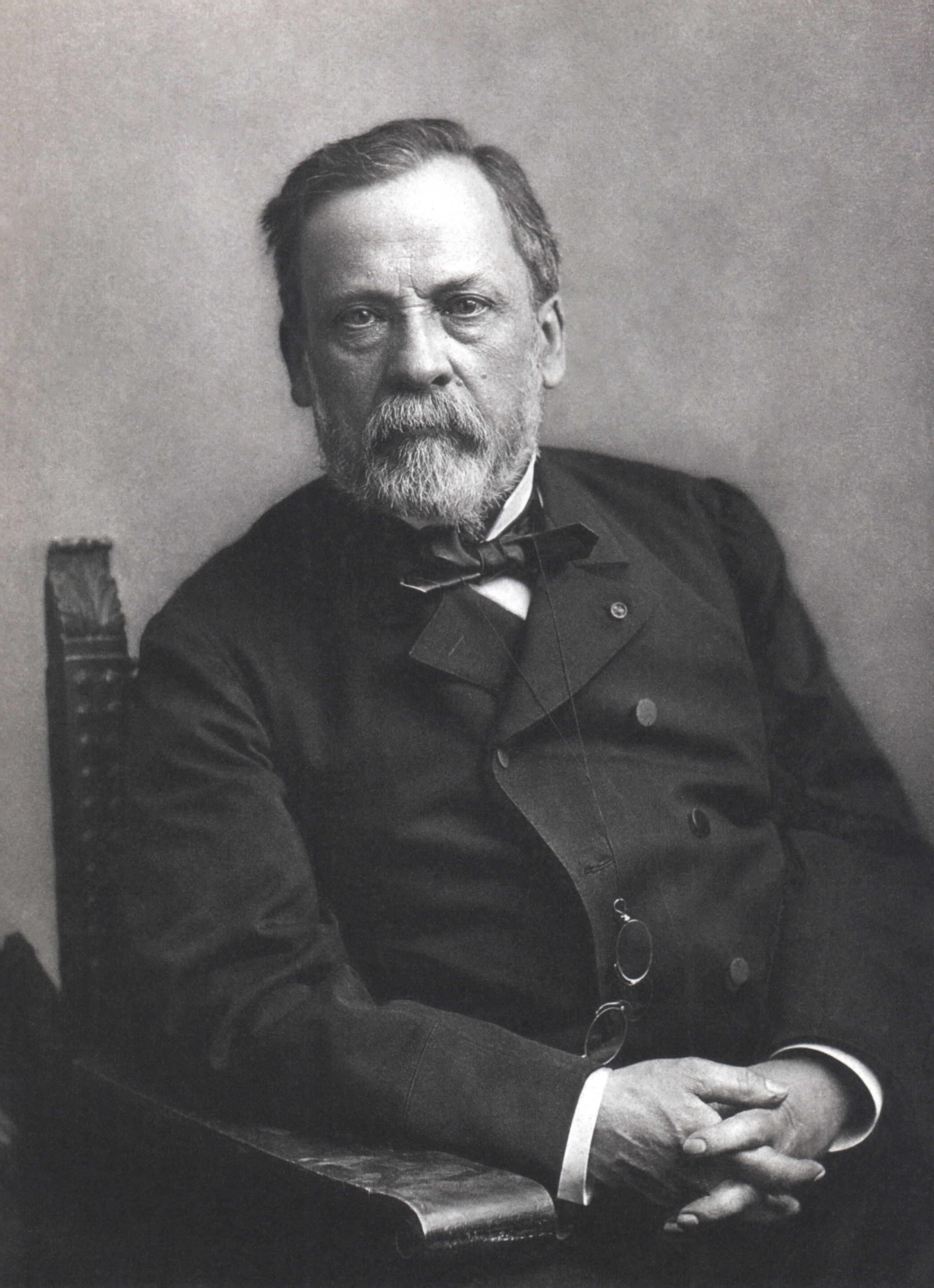
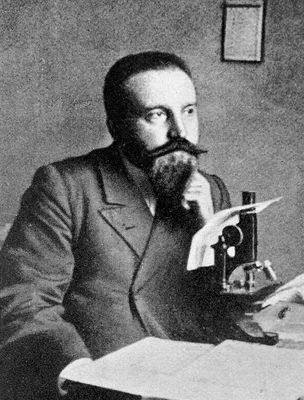
1870 PASTEUR, Louis (1822 – 1895)
Études sur la maladie des vers à soie. 2 vols.
This work saved the French silk industry, which had been crippled by the disease pébrine. After three years of research on the problem, Pasteur was able to show that the disease known as pébrine was caused by a parasi…
GMN 2481 · https://historyofmedicine.com/id/3081
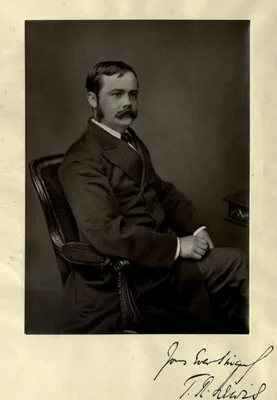
1871 LEWIS, Timothy Richards (1841 – 1886)
On a haemotozoon inhabiting human blood. Its relation to chyluria and other diseases.
Independently of Demarquay (No. 5344.3) and Wucherer (No. 5344.6), Lewis found microfilariae in the urine and blood in chyluria. He was first to use the term Filaria sanguinis hominis for the parasite.
GMN 5344.8 · https://historyofmedicine.com/id/6785
1875 LÖSCH, Friedrich (1840 – 1903)
Massenhafte Entwickelung von Amöben im Dickdarm.
Lösch discovered Entamoeba histolytica as the infective agent in amoebic dysentery. Before this time distinction between the different forms of dysentery had been made on purely clinical grounds. English translation i…
GMN 5184 · https://historyofmedicine.com/id/6320
1875 MCCONNELL, James Frederick Parry (1848 – 1896)
Remarks on the anatomy and pathological relations of a new species of liver fluke.
First complete description of Chlonorchis sinensis.
GMN 5344.9 · https://historyofmedicine.com/id/6786
1875 O’NEILL, John
On the presence of a Filaria in “craw-craw”.
In 1874, while examining skin snips from craw-craw patients in Ghana, during his service on the H. M. S. Decoy, the Irish surgeon O’Neill discovered the subcutaneous microfilaria. This was the earliest known visual id…
GMN 5344.10 · https://historyofmedicine.com/id/6790
1876 NORMOND, Louis Alexis (1834 – 1885)
Sur la maladie dite diarrhée de Cochinchine.
Normond found Strongyloides stercoralis, the causal parasite in strongyloidiasis. English translation in Kean (No. 2268.1).
GMN 5344.11 · https://historyofmedicine.com/id/6792
1877 MANSON, Sir Patrick (1844 – 1922)
Filaria sanguinis hominis.
GMN 5345 · https://historyofmedicine.com/id/6795
1877 MANSON, Sir Patrick (1844 – 1922)
Further observations on Filaria sanguinis hominis.
Manson showed that Wuchereria bancrofti, the cause of filarial elephantiasis in man, develops in, and is transmitted by, the Culex mosquito. This was the first proof that infective diseases are spread by animal vector…
GMN 5345.1 · https://historyofmedicine.com/id/6800
1877 LEWIS, Timothy Richards (1841 – 1886)
Filiaria sanguinis hominis - mature form.
Lewis made the critical connection/association of the worm, Filaria sanguinis,(Wuchereria bancrofti ) to Elephantiasis. This brief account appears to be a third person account summarizing Lewis's work written by an ed…
GMN 10787 · https://historyofmedicine.com/id/12983
1878 BANCROFT, Joseph (1836 – 1894)
Cases of filarious disease.
Discovery (1876) of Wuchereria bancrofti. Bancroft’s first report on this was in the form of a letter to T. S. Cobbold, who published it in Lancet, 1877, 2, 70-71.
GMN 5346 · https://historyofmedicine.com/id/6802
1878 GRASSI, Giovanni Battista (1854 – 1925); ET AL
Intornoall’Anchilostoma duodenale (Dubini).
Fecal diagnosis of hookworm disease. Before this time hookworm had been diagnosed only post mortem. With C. Parona and E. Parona. English translation in Kean (No. 2268.1).
GMN 5357 · https://historyofmedicine.com/id/6952
1878 LEWIS, Timothy Richards (1841 – 1886)
The microscopic organisms found in the blood of man and animals, and their relation to disease.
First description of a trypanosome (T. lewisi) in a mammal. Seoarate edition in book form with the same title: Calcutta: Office of the Superintendent of Government Printing, 1879.
GMN 5270.1 · https://historyofmedicine.com/id/8574
1878 –1879 ALEXANDER OF TRALLES [ἈΛΈΞΑΝΔΡΟΣ Ὁ ΤΡΑΛΛΙΑΝΌΣ; ALEXANDER TRALLIANUS] (525 – 605); PUSCHMANN, Theodor (1844 – 1899)
Alexander von Tralles. Original-Text und Übersetzung nebst einer einleitenden Abhandlung. Ein Beitrag zur Geschichte der Medicin. 2 vols.
Digital facsimile from the Internet Archive at this link.
GMN 8966 · https://historyofmedicine.com/id/11145
1879 MANSON, Sir Patrick (1844 – 1922)
Additional notes on filaria sanguinis hominis and filiaria disease.
On p. 36 of this paper Manson first described nocturnal periodicity in Filaria Bancrofti, an adaptation to the nocturnal biting habits of their mosquito vector. (Thanks to Juan Weiss for this reference and its interpr…
GMN 11248 · https://historyofmedicine.com/id/13445
1880 BÄLZ, Erwin Otto Eduard von (1849 – 1933)
Ueber parasitäre Hämoptoë (Gregarinosis pulmonum).
Description of the ova of Paragonimus (which Baelz named Gregarina pulmonalis) and its relationship to endemic hemoptysis. Translation in Kean (No. 2268.1), p. 602.
GMN 5346.1 · https://historyofmedicine.com/id/6804
1880 MANSON, Sir Patrick (1844 – 1922)
Distoma ringeri.
Manson made a fundamental contribution to knowledge on paragonimiasis with his description of its etiology and of the parasite. He named it Distoma ringeri after Dr. Ringer, who recovered it from the lung at necropsy;…
GMN 5346.2 · https://historyofmedicine.com/id/6808
1881 LAVERAN, Charles Louis Alphonse (1845 – 1922)
Un nouveau parasite trouvé dans le sang plusieurs malades atteints de fièvre palustre.
Laveran first saw the malaria parasite on 20 October 1880; he at once recognized its significance. He named it Oscillaria malariae. English translation in Kean (No. 2268.1). Laveran also published a monograph on the d…
GMN 5236 · https://historyofmedicine.com/id/7884
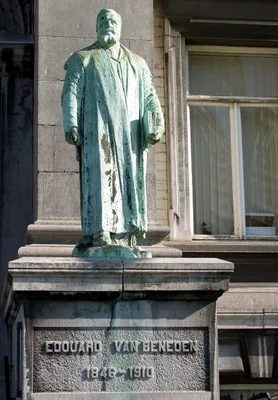
1883 BENEDEN, Edouard Joseph Louis Marie van (1846 – 1910)
Récherches sur la maturation de l’oeuf, la fécondation et la division cellulaire.
This work extended Hertwig’s work on fertilization (No. 495) down to the level of chromosomes, which were clearly visible in Ascaris after the sperm and egg united.
GMN 502.1 · https://historyofmedicine.com/id/1479
1883 BRAUN, Maximilian Gustav Christian Carl (1850 – 1930)
Die thierischen Parasiten des Menschen.
GMN 2454 · https://historyofmedicine.com/id/2976
1883 MANSON, Sir Patrick (1844 – 1922)
The Filaria sanguinis hominis and certain new form of parasitic disease in India, China and warm countries.
A collection of several papers written by Manson.
GMN 2455 · https://historyofmedicine.com/id/2980
1883 –1886 HIRSCH, August (1817 – 1894); CREIGHTON, Charles (1847 – 1927)
Handbook of geographical and historical pathology. Translated from the second German edition by Charles Creighton. Vol. 1.-Acute infective diseases. Vol. 2.-Chronic infective, toxic, parasitic, septic and constitutional diseases. Vol. 3.-Diseases of organs and parts.
This is the best edition of Hirsch's Handbuch. Digital facsimiles of all 3 vols. from the Internet Archive at this link.
GMN 8378 · https://historyofmedicine.com/id/10555
1884 MANSON, Sir Patrick (1844 – 1922)
The metamorphosis of Filaria sanguinis hominis in the mosquito.
Manson reported that the changes he had observed in ingested filariae took place in the mosquito thorax, not in the stomach as previously thought.
GMN 5346.3 · https://historyofmedicine.com/id/6810
1885 MARCHIAFAVA, Ettore (1847 – 1935); CELLI, Angelo (1857 – 1914)
Weitere Untersuchungen über die Malariainfection.
First accurate description of the malaria Plasmodium, discovered by Laveran in 1880. These writers were the first to adopt the name P. malariae.
GMN 5238 · https://historyofmedicine.com/id/7889
1885 DANILEVSKI, Vasili Iakovlevich (1852 – 1934)
Zur Parasitologie des Blutes.
Discovery of malaria parasites in birds. See also Ann. Inst. Pasteur, 1890, 4, 427-31.
GMN 5238.1 · https://historyofmedicine.com/id/7893
1886 –1890 BLANCHARD, Raphaël Anatole Émile (1857 – 1919)
Traité de zoologie médicale. 2 vols.
Digital facsimile from the Internet Archive at this link.
GMN 2456 · https://historyofmedicine.com/id/2983
1886 WUCHERER, Otto Eduard Heinrich (1820 – 1873)
Sobre a molestia vulgarmente denominada oppilaçao ou cançaço.
Wucherer confirmed Griesinger’s conclusion that the cause of tropical anemia was hookworm infestation. See also the same journal, 1869, 3, 170-72, 183-84, 198-200. English translation in Kean (No. 2268.1).
GMN 5356 · https://historyofmedicine.com/id/6947
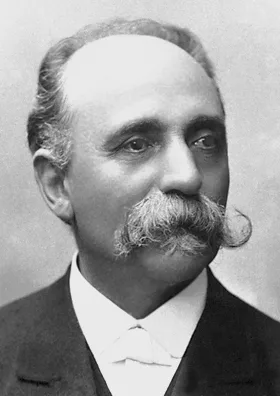
1886 GOLGI, Camillo (1844 – 1926)
Sull infezione malarica.
Description of the development of the parasite of quartan malaria. Golgi differentiated the tertian and quartan parasites by the periods of their respective developments.
GMN 5239 · https://historyofmedicine.com/id/7894
1889 GOLGI, Camillo (1844 – 1926)
Sul ciclo evolutivo dei parassiti malarica nella febbre terzana.
Golgi showed that the parasite of quartan differs from that of tertian malarial fever. English translation in Kean (No. 2268.1).
GMN 5240 · https://historyofmedicine.com/id/7895
1889 SMITH, Theobald (1859 – 1934)
Preliminary observations on the microorganism of Texas fever.
First report on the discovery of a Babesia, cause of Babesiosis. Smith first observed the microscopic organism in the summer of 1886, but mentioned Babes's work in this paper, perhaps resulting in Babes being credited…
GMN 10885 · https://historyofmedicine.com/id/13081
1890 CANALIS, Pietro (1856 – 1939)
Études sur l’infection malarique. Sur la variété parasitaire des corps en croissant de Laveran et sur les fièvres palustres qui en dérivent.
Canalis demonstrated and clearly differentiated Plasmodium falciparum from the species vivax and malariae.
GMN 5240.1 · https://historyofmedicine.com/id/7896
1891 GRASSI, Giovanni Battista (1854 – 1925); FELETTI, Raimondo (1851 – 1928)
Malariaparasiten in den Vögeln.
Confirmation of the work of Laveran.
GMN 5241 · https://historyofmedicine.com/id/7897
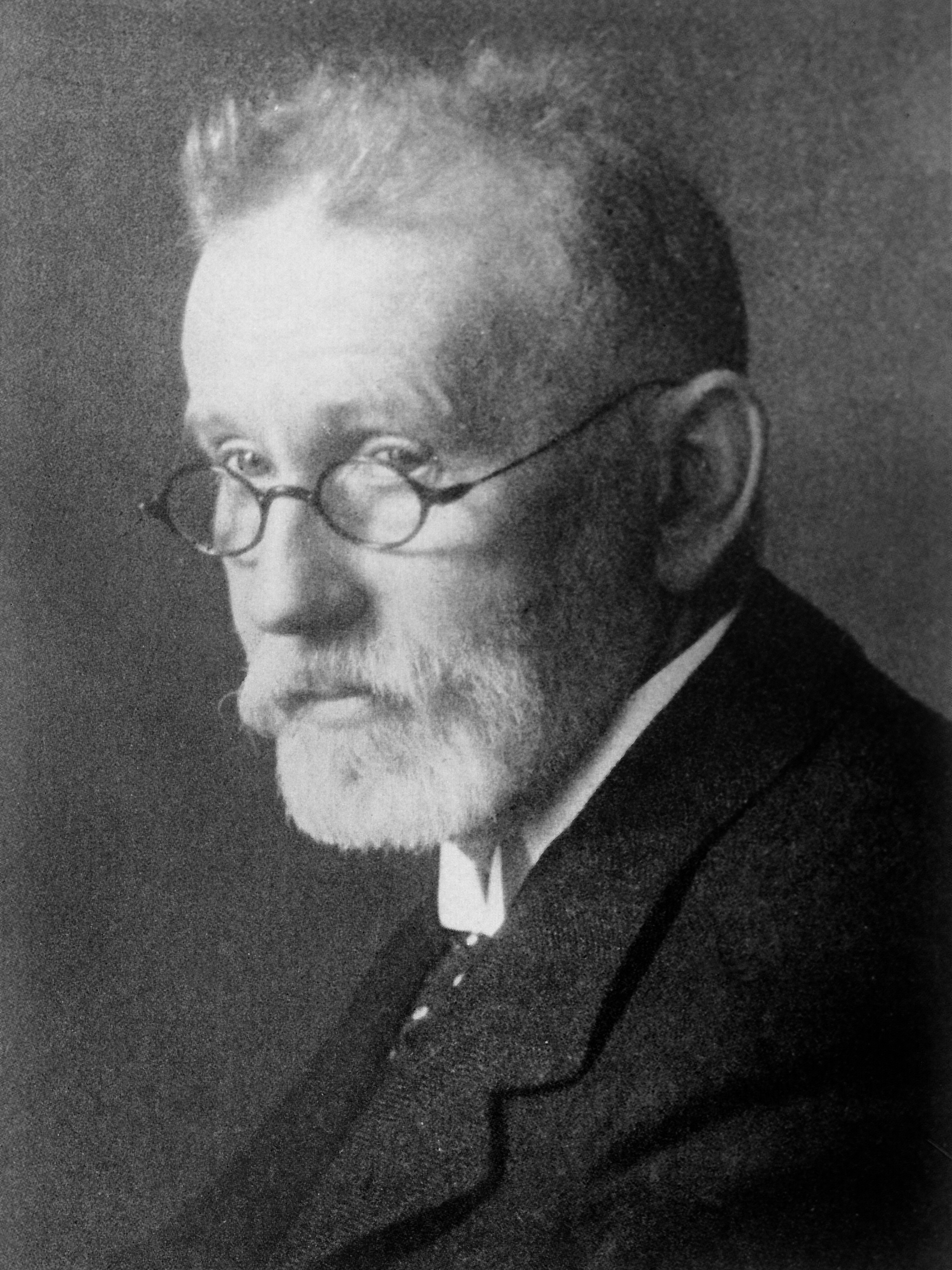
1891 EHRLICH, Paul (1854 – 1915); GUTTMANN, Paul (1834 – 1893)
Ueber die Wirkung des Methylenblau bei Malaria.
Guttmann and Ehrlich demonstrated methylene blue to be lethal in vitro for the malaria parasite – the beginning of Ehrlich’s work on chemotherapy.
GMN 5241.1 · https://historyofmedicine.com/id/7898
1891 ROMANOWSKY, Dmitri Leonidovich (1861 – 1921)
K voprosu o parazitologii i terapii bolotnoi likhoradki. [Parasitology and treatment of malarial fever.]
Romanovsky made important studies of the malaria parasite and introduced a special stain for its demonstration. German version in St. Petersburger med. Wschr., 1891, 8, 297-302, 306-15. English translation in Kean (No…
GMN 5242 · https://historyofmedicine.com/id/7899
1891 NEPVEU, Gustav (1841 – 1903)
Étude sur les parasites du sang chez les paludiques.
Nepveu, whilst in Algeria, was the first to see trypanosomes in human blood.
GMN 5272 · https://historyofmedicine.com/id/8578
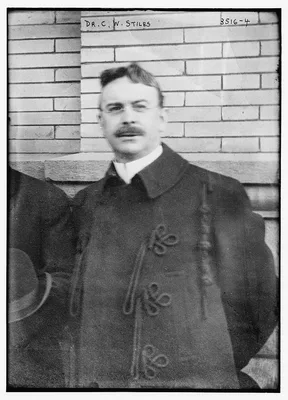
1892 –1982 HASSALL, Albert (1862 – 1942); STILES, Charles Wardell (1867 – 1941); ET AL
Index-catalogue of medical and veterinary zoology.
An index to the world's literature on parasites and parasitisms of man, of domestic animals, and of wild animals whose parasites may be transmitted to man and domestic animals. It also contains references to fur-beari…
GMN 355 · https://historyofmedicine.com/id/289
1892 GOLGI, Camillo (1844 – 1926)
Azione della chinina sui parasite malarici e sui corrispondente accessi febbrili.
French translation in Arch. ital. Biol., 1892, 17, 456-71.
GMN 5243 · https://historyofmedicine.com/id/7900
1893 SMITH, Theobald (1859 – 1934); KILBORNE, Frederick Lucius (1858 – 1936)
Investigations into the nature, causation and prevention of Texas or Southern cattle fever.
U.S. Bureau of Animal Industry, Bulletin No. 1. Discovery of the parasite of Texas cattle fever, Pyrosoma bigeminum, and proof that its transmission is due to the cattle tick, Boöphilus bovis. This was the first demon…
GMN 5529 · https://historyofmedicine.com/id/6646
1894 MANSON, Sir Patrick (1844 – 1922)
On the nature and significance of the crescentic and flagellated bodies in malarial blood.
Manson’s mosquito–malaria hypothesis. See also his Gulstonian Lectures in Lancet, 1896, 1, 695-98, 751-55, 831-33.
GMN 5245 · https://historyofmedicine.com/id/7902
1895 ROBERTSON, Douglas Moray Cooper Lamb Argyll (1837 – 1909)
Case of Filaria loa in which the parasite was removed from under the conjunctiva.
First detailed description of Loa loa. See also Trans. ophthal. Soc. U.K., 1897, 17, 227-32. Robertson first briefly mentioned this procedure and the Loa Loa worm in a brief article written for him by the editor of La…
GMN 5347.1 · https://historyofmedicine.com/id/6817
1896 LOOSS, Arthur (1861 – 1923)
Notizen zur Helminthologie Aegyptens. Die Lebensgeschichte des Anchylostomum duodenale (Dub.).
Looss elucidated the life cycle and mode of transmission of the hookworm. See also No. 5365. English translation in Kean (No. 2268.1).
GMN 5361 · https://historyofmedicine.com/id/6968
1897 MACCALLUM, William George (1874 – 1944)
On the flagellated form of the malarial parasite.
MacCallum reported at a meeting of the British Association his observation of the mode of fertilization of the malarial parasite of birds; two months later he announced that he had found the same to hold good for the …
GMN 5246 · https://historyofmedicine.com/id/7903
1897 ROSS, Sir Ronald (1857 – 1932)
On some peculiar pigmented cells found in two mosquitoes fed on malarial blood.
Ross proved that the mosquito was responsible for the transmission of malaria. On 20 August 1897, he found Laveran’s Plasmodium in the stomach of the Anopheles mosquito after it had fed on the blood of malaria patient…
GMN 5247 · https://historyofmedicine.com/id/7904
1898 BOROVSKII, Petr Fokich (1863 – 1932)
On sart sore.
First description of the protozoon later named Leishmania tropica. The paper is in Russian; for a translation, see C. A. Hoare, in Trans. roy. Soc. trop. Med. Hyg., 1938, 32, 78-90.
GMN 5294 · https://historyofmedicine.com/id/6438
1898 BROWN, Thomas Richardson (1872 – 1950)
Studies on trichinosis, with especial reference to the increase of the eosinophilic cells in the blood and muscle, the origin of these cells and their diagnostic importance.
Brown pointed out the occurrence of eosinophilia in trichinosis. A preliminary communication upon the subject, by W. S. Thayer, was published in C. R. XII Congr. int. Med., Moscou, 1897, 126-31.
GMN 5348 · https://historyofmedicine.com/id/6821
1898 LAVERAN, Charles Louis Alphonse (1845 – 1922)
Traité du paludisme.
GMN 5248 · https://historyofmedicine.com/id/7905
1898 OPIE, Eugene Lindsay (1873 – 1971)
On the haemocytozoa of birds.
Demonstration of sexual conjugation in the malaria parasite. See also No. 5250.
GMN 5249 · https://historyofmedicine.com/id/7906
1898 MACCALLUM, William George (1874 – 1944)
Notes on the pathological changes in the organs of birds infected with haemocytozoa.
MacCallum and Opie discovered the sexual phase of malaria parasites.
GMN 5250 · https://historyofmedicine.com/id/7907
1898 ROSS, Sir Ronald (1857 – 1932)
The rôle of the mosquito in the evolution of the malarial parasite.
Ross provided the last link in the chain demonstrating the complete life-cycle of the parasite of bird malaria. He found that mosquitoes which had fed on malaria-infected birds, and which had allowed the parasites to …
GMN 5251 · https://historyofmedicine.com/id/7908
1899 NUTTALL, George Henry Falkiner (1862 – 1937)
On the rôle of insects, arachnids and myriapods, as carriers in the spread of bacterial and parasitic diseases of man and animals. A critical and historical study.
GMN 2554 · https://historyofmedicine.com/id/3669
1899 BIGNAMI, Amico (1862 – 1929); GRASSI, Giovanni Battista (1854 – 1925)
Ciclo evolutivo della semilune nell’ Anopheles claviger.
Grassi and Bignami showed that the Plasmodium undergoes its sexual phase only in the Anopheles mosquito.
GMN 5252 · https://historyofmedicine.com/id/7909