1820 –1821 BELL, Sir Charles (1774 – 1842)
Illustrations of the great operations of surgery, trepan, hernia, amputation, aneurism, and lithotomy.
One of the most dramatically and beautifully illustrated works in the entire literature of surgery. Hand-colored copies show more blood than is usual for surgical treatises of this period. From publication in fascicul…
GMN 5588 · https://historyofmedicine.com/id/7040
1820 –1847 FRORIEP, Robert Friedrich (1804 – 1861); FRORIEP, J. J. Ludwig Friedrich von (1779 – 1847)
Chirurgische Kupfertafeln. 4 vols.
This collection of 417 plates on surgical procedures, instruments, and bandages, with 4 pages of explanatory text, was published in 96 parts between 1820 and 1847. Fifty-two of the plates were issued hand-colored. The…
GMN 12750 · https://historyofmedicine.com/id/14996
1821 SCARPA, Antonio (1752 – 1832)
Sull’ernia del perineo.
Scarpa’s work on perineal hernia included a classic description of sliding hernia, or hernia of the large bowel. His contribution to the subject of hernia ranks with that of Cooper, and he did much toward modernizing …
GMN 3584 · https://historyofmedicine.com/id/4265
1822 ANDERSON, William; DURAND, Asher Brown (1796 – 1886)
System of surgical anatomy. Part first [all published]: On the structure of the groin, pelvis, and perineum. As connected with inguinal and femoral hernia; Tyeing the iliac arteries; and the operation of lithotomy. Illustrated by nine copper-plate engravings
Anderson trained at the Royal College of Surgeons in Edinburgh, emigrated to America in 1820 and, after delivering a series of anatomical lectures in New York under the patronage of Valentine Mott, became affiliated w…
GMN 13314 · https://historyofmedicine.com/id/15580
1823 DAVIDGE, John Beale (1768 – 1829)
Extirpation of the parotid gland.
Although Béclard and possibly others may have extirpated the parotid before Davidge, this was the first published case.
GMN 3433.1 · https://historyofmedicine.com/id/5396
1824 LOUYER-VILLERMAY, Jean Baptiste (1776 – 1837)
Observations pour servir à l’histoire des inflammations de l’appendice du caecum.
Report of two cases of fatal peritonitis due to perforation of the appendix. Of this paper, H. A. Kelly says, “It at once established a definite place for lesions of the appendix in the category of recognized diseases”.
GMN 3561 · https://historyofmedicine.com/id/4075
1824 BÉCLARD, Pierre Augustin (1785 – 1825)
Extirpation de la parotide.
First excision of the parotid, 1823.
GMN 3434 · https://historyofmedicine.com/id/5398
1825 LABARRAQUE, Antoine Germain (1777 – 1850)
De l’emploi des chlorures d’oxide de sodium et de chaux.
First chlorine solution for disinfecting purposes. English translation, 1826.
GMN 5633 · https://historyofmedicine.com/id/7236
1826 LEMBERT, Antoine (1802 – 1851)
Mémoire sur l’entéroraphie avec la description d’un procédé nouveau pour pratiquer cette opération chirurgicale.
Description of what is now known as Lembert’s suture, which ensures that serous surface is applied to serous surface in suturing intestine – the foundation of all modern gastric and intestinal surgery. Dieffenbach (se…
GMN 3435 · https://historyofmedicine.com/id/5400
1827 MÊLIER, François (1798 – 1866)
Mémoire et observations sur quelques maladies de l’appendice cécale.
Mélier was the first to show the existence of chronic appendicitis; he recognized the causal relationship between the chronic affection and abscesses of the right iliac fossa and was first to suggest operative interve…
GMN 3562 · https://historyofmedicine.com/id/4076
1827 JAMESON, Horatio Gates (1788 – 1855)
Observations upon traumatic haemorrhage, illustrated by experiments upon living animals.
Jameson was surgeon to Baltimore Hospital for 20 years. This essay described some of the earliest multiple animal experiments used in American medical research.
GMN 5589 · https://historyofmedicine.com/id/7041
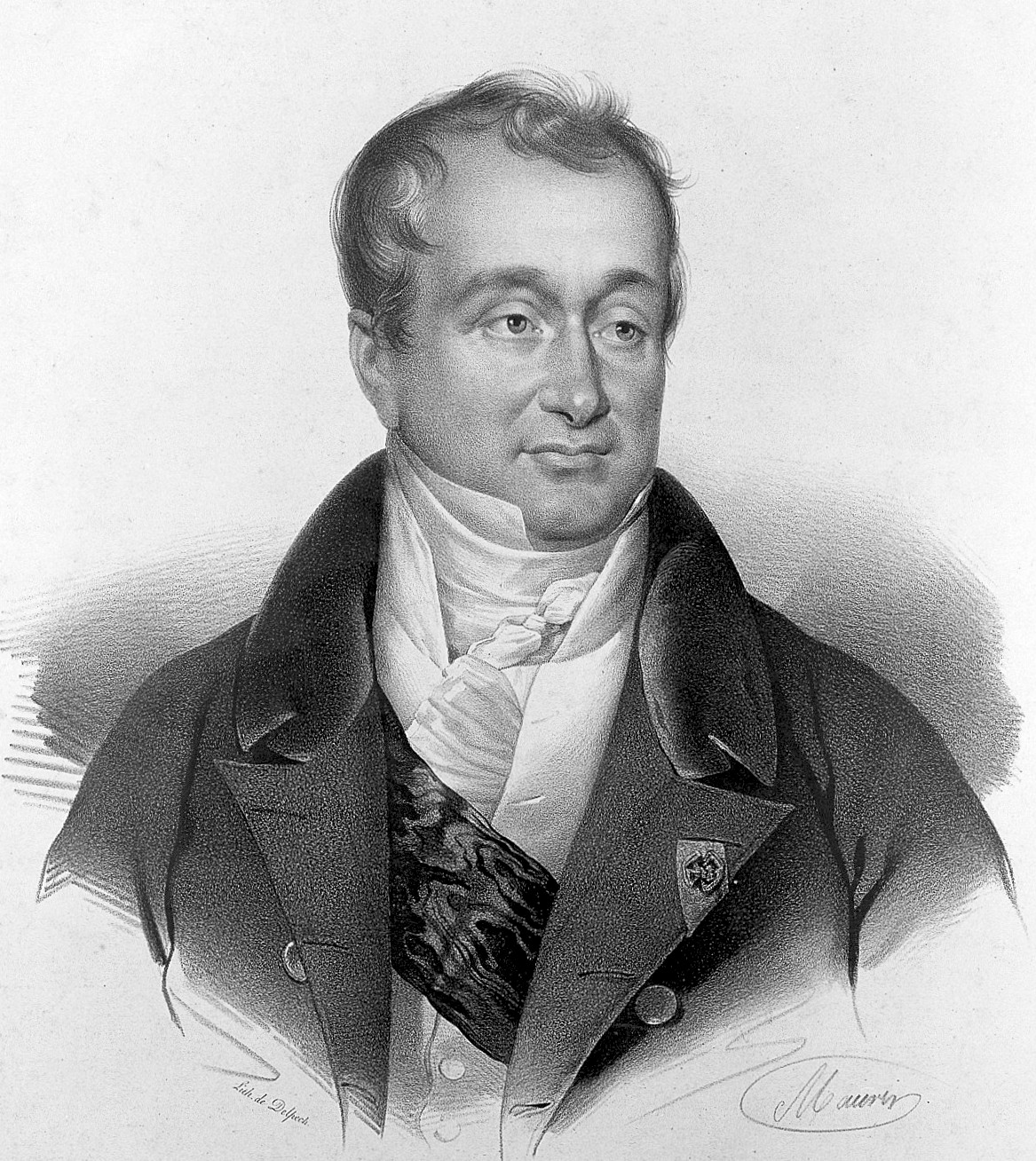
1829 DUPUYTREN, Guillaume, Le Baron (1777 – 1835)
Abcès développé dans le petit bassin.
“Dupuytren’s abscess” of the right iliac fossa.
GMN 3438 · https://historyofmedicine.com/id/5431
1829 JOBERT DE LAMBALLE, Antoine Joseph (1799 – 1867)
Traité théorique et pratique des maladies chirurgicales du canal intestinal. 2 vols.
Jobert, famous French surgeon, made his reputation on this book. He was at one time Consulting Physician to Louis XVIII.
GMN 3439 · https://historyofmedicine.com/id/5433
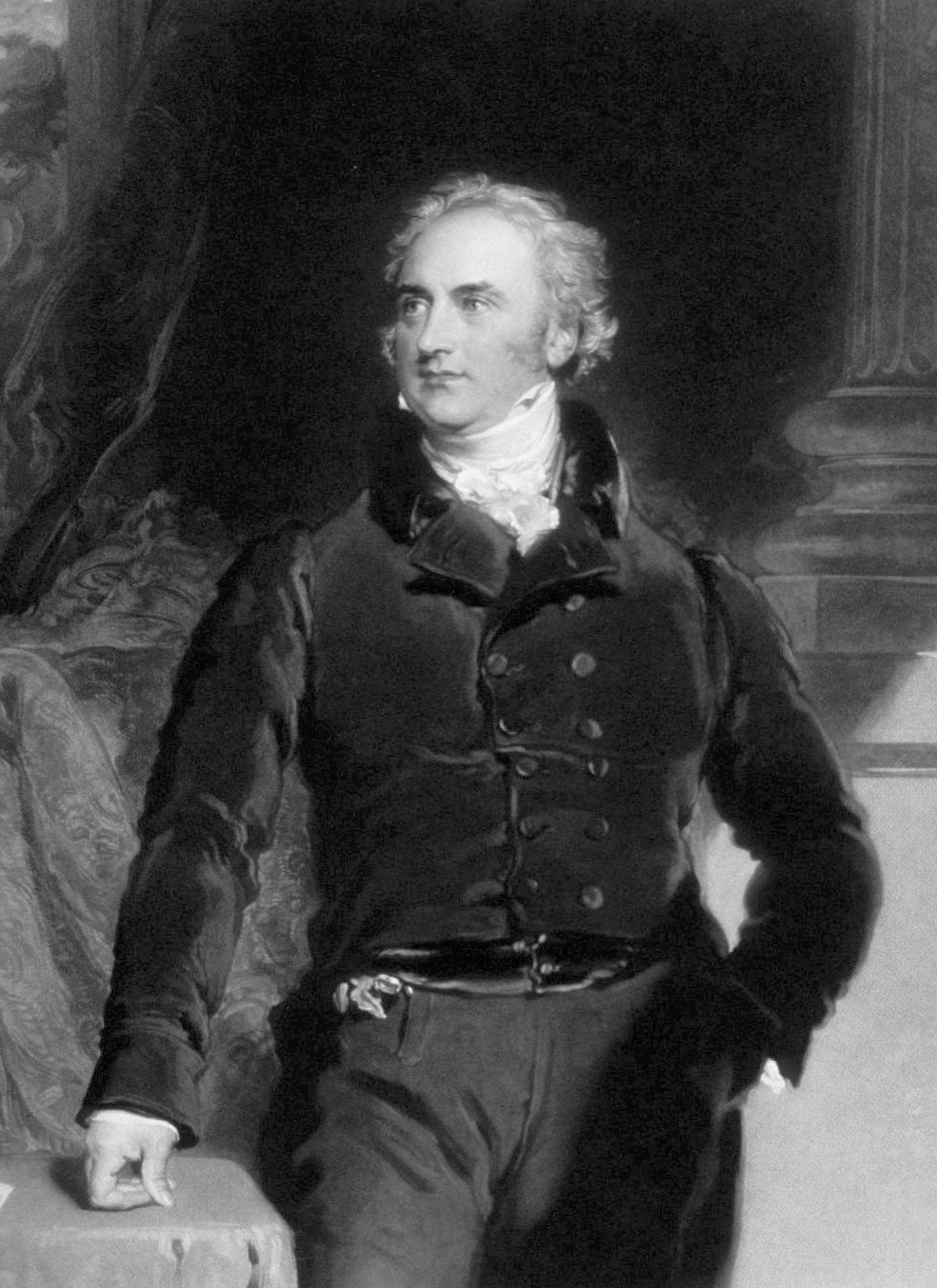
1829 COOPER, Sir Astley Paston (1768 – 1841)
Illustrations of the diseases of the breast.
Includes one of the earliest descriptions of hyperplastic cystic disease of the breast, which Cooper referred to as “hydatid disease”.
GMN 5769 · https://historyofmedicine.com/id/6794
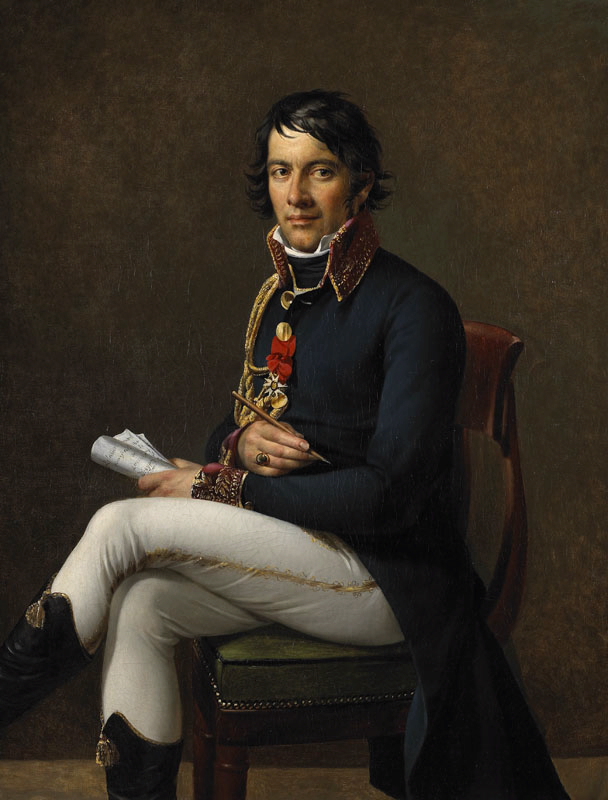
1829 –1836 LARREY, Dominique Jean (1766 – 1842)
Clinique chirurgicale, exercée particulièrement dans les camps et les hôpitaux militaires depuis 1792 jusqu’en 1829. 5 vols. plus atlas to vols. 1-3, and atlas to vol. 5.
Larrey’s most comprehensive surgical treatise, and the only one of his works that is extensively illustrated. Many of the plates concern surgical pathology.
GMN 5589.1 · https://historyofmedicine.com/id/7048
1830 LISFRANC DE ST. MARTIN, Jacques [Lisfranc] (1790 – 1847)
Mémoire sur l'excision de la partie inférieure du rectum, devenue carcinomateuse.
“The first successful operation for rectal cancer was performed by Lisfranc in 1826. This consisted of excising the anus and rectum via the perineum, which resulted in the functional equivalent of a perineal colostomy…
GMN 11150 · https://historyofmedicine.com/id/13347
1832 –1834 DUPUYTREN, Guillaume, Le Baron (1777 – 1835)
Leçons orales de clinique chirurgicale. 4 vols.
Dupuytren was born in poverty and died a millionaire. He became the best surgeon of his time in France. He was a “shrewd diagnostician, an operator of unrivaled aplomb, a wonderful clinical teacher, and a good experim…
GMN 2247 · https://historyofmedicine.com/id/7051
1832 VELPEAU, Alfred Armand Louis Marie (1795 – 1867)
Nouveaux éléments de médecine opératoire. 3 vols. and atlas.
In its time this was the most comprehensive work on operative surgery in France; it contains some useful historical information. The first English translation appeared in New York, 1835. The atlas for that edition was…
GMN 5592 · https://historyofmedicine.com/id/7062
1833 KEY, Charles Aston (1793 – 1849)
A memoir on the advantages and practicability of dividing the stricture in strangulated hernia on the outside of the sac.
Introduction of the principle of dividing a stricture outside the sac in cases of strangulated hernia.
GMN 3586 · https://historyofmedicine.com/id/4274
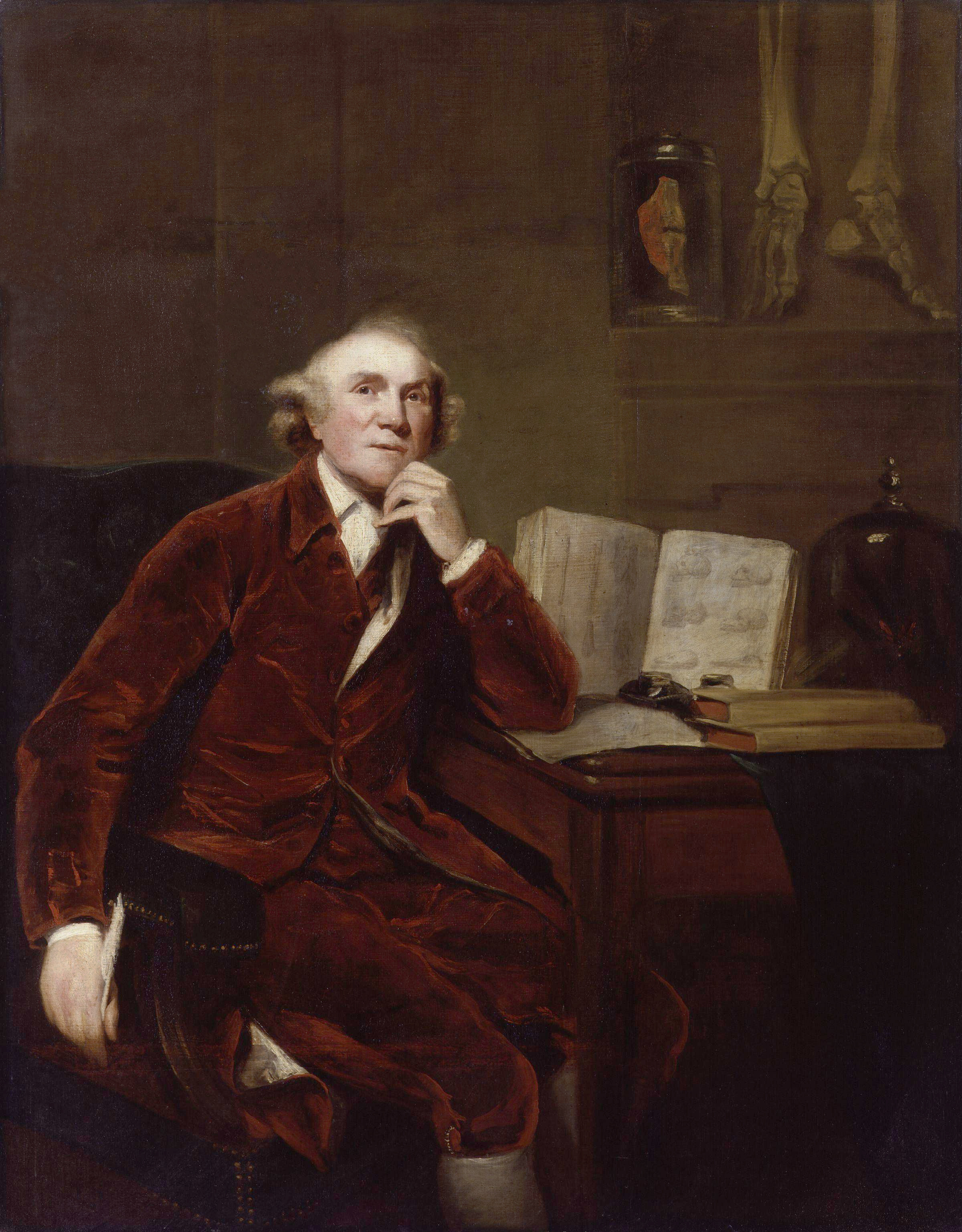
1833 HUNTER, John (1728 – 1793); PARKINSON, James (1755 – 1824); PARKINSON, John William Keys (1785 – 1838)
Hunterian reminiscences; being the substance of a course of lectures on the principles and practice of surgery, delivered by the late John Hunter, in the year 1785: Taken in short-hand, and afterwards fairly transcribed by the late James Parkinson ... Edited by his son, J.W.K. Parkinson ..., by whom are appended illustrative notes.
Digital facsimile from wellcomecollection.org at this link.
GMN 13149 · https://historyofmedicine.com/id/15408
1834 MALGAIGNE, Joseph François (1806 – 1865)
Manuel de médecine opératoire.
Malgaigne was a brilliant lecturer, notable also as a historian of medieval surgery. His Manuel was an important work on operative surgery, and was translated into English, German, Italian, and Arabic.
GMN 5591 · https://historyofmedicine.com/id/7055
1834 TUSON, Edward William (1802 – 1865)
The anatomy and surgery of inguinal and femoral hernia.
Published in the same large folio format as Tuson's Myology (1828), this was the largest work on hernia ever published with multiple hand-colored. lift-up flats on three plates.
GMN 10024 · https://historyofmedicine.com/id/12213
1835 –1837 HUNTER, John (1728 – 1793)
The works of John Hunter. With notes. Edited by J.F. Palmer. 4 vols. and atlas.
Hunter gave a great impetus to the study of morbid anatomy; he was the veritable founder of experimental and surgical pathology. He was responsible for the commencement of some of the greatest medical museums; the Hun…
GMN 78 · https://historyofmedicine.com/id/1314
1835 WILSON, John R. W.
A case of introsussception in which an operation was successfully resorted to…in December, 1831.
First operation for intussusception in the United States, performed in Rutherford County, Tennessee. The patient was a negro slave; the operation was a complete success. Reported by Wilson’s pupil, W.W. Thompson.
GMN 3440.1 · https://historyofmedicine.com/id/5440
1836 QUITTENBAUM, Carl Friedrich (1793 – 1852)
Commentatio de splenis hypertrophia et historia extirpationis splenis hypertrophici cum fortuna adversa.
While most people in Germany still considered splenectomy beyond the bounds of possibility, Quittenbaum performed the operation in 1829, establishing it as a surgical procedure.
GMN 3763 · https://historyofmedicine.com/id/4627
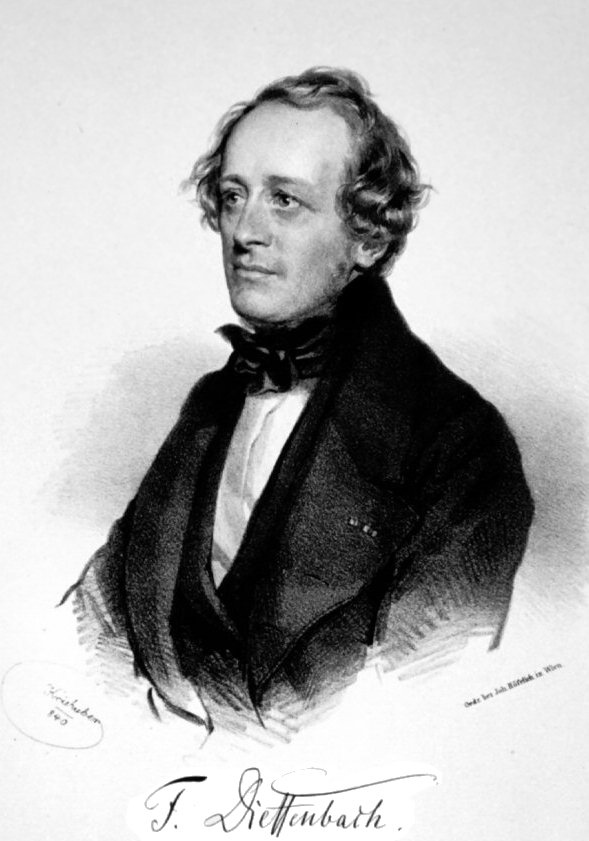
1836 DIEFFENBACH, Johann Friedrich (1792 – 1847)
Glückliche Heilung nach Ausscheidung eines Theiles des Darms und Netzes.
First account of a resection in which Lembert’s suture was successfully employed.
GMN 3441 · https://historyofmedicine.com/id/5441
1837 LISTON, Robert (1794 – 1847)
Practical surgery.
In his day Liston was the most dexterous and resourceful surgeon in the British Isles. He was the first in the country to remove the scapula and the first – on 21 Dec. 1846 – to perform a major operation with the aid …
GMN 3328 · https://historyofmedicine.com/id/4572
1838 LAWRENCE, Sir William (1783 – 1867)
Treatise on ruptures. 5th ed.
This was the standard text for many years. It first appeared in 1807 as Treatise on hernia.
GMN 3587 · https://historyofmedicine.com/id/4393
1838 MALGAIGNE, Joseph François (1806 – 1865)
Traité d’anatomie chirurgicale et de chirurgie expérimentale. 2 vols.
GMN 5594 · https://historyofmedicine.com/id/7071
1840 –1841 PARÉ, Ambroise (1510 – 1590); MALGAIGNE, Joseph François (1806 – 1865)
Oeuvres complètes d’Ambroise Paré revues et collationnées sur toutes les éditions, avec les variantes; ornées de 217 planches et du portrait de l'auteur; accompagnées de notes historiques et critiques et précédées d'une introduction sur l'origine et les progrès de la chirurgie en occident du sixième au seizième siècle, et sur la vie et les ouvrages d'Ambroise Paré. Par J.-F. Malgaigne. 3 vols.
The best edition of Paré’s works, edited by Malgaigne. An English translation of Pare's Oeuvres by Thomas Johnson appeared as early as 1634. See also No. 5565. Janet Doe published A bibliography of the works of Ambroi…
GMN 59 · https://historyofmedicine.com/id/961
1840 COOPER, Sir Astley Paston (1768 – 1841)
On the anatomy of the breast. 2 vols.
Anatomical sequel to No. 5769, with outstanding illustrations.
GMN 5769.1 · https://historyofmedicine.com/id/6798
1840 BRODIE, Sir Benjamin Collins (1783 – 1862)
Lecture on sero-cystic tumors of the breast.
“Brodie’s tumor”. Reprinted in Med. Classics, 1938, 2, 941-54.
GMN 5770 · https://historyofmedicine.com/id/6801
1840 MALGAIGNE, Joseph François (1806 – 1865)
Histoire de la chirurgie en Occident depuis de VIe jusqu’au XVIe siècle, et histoire de la vie et des travaux d’Ambroise Parè.
Billings considered Malgaigne “the greatest surgical historian and critic the world has ever seen”; Leonardo (No. 5812) says that his greatest contribution to surgery was his unique manner of evaluating surgical techn…
GMN 5790 · https://historyofmedicine.com/id/6865
1840 BRETT, Frederick Harrington
A practical essay on some of the principal surgical diseases of India.
Includes a discussion of the Hindu method of rhinoplasty and other plastic operations. Digital facsimile from the Internet Archive at this link.
GMN 8465 · https://historyofmedicine.com/id/10642
1841 LUKE, James (1798 – 1881)
Operation for strangulated hernia.
Luke’s operation for femoral hernia.
GMN 3588 · https://historyofmedicine.com/id/4398
1842 ANTYLLUS (ΑΝΤΥΛΛΟΣ) (150 – ); WOLZ, Friedrich Carl Franz
Antylli veteris chirurgi quae apud Oribasium libro xliv, xlv et L leguntur fragmenta. Dissertatio inauguralis chirurgico-historica....By Friedrich C. F. Wolz.
Antyllus, a Greek surgeon who lived in Rome during the second century CE. is particularly remembered for his work on the surgery of aneurysm. He was first to recognize two forms of aneurysm–one caused by dilatation an…
GMN 30 · https://historyofmedicine.com/id/4790
1842 FERGUSSON, Sir William (1808 – 1877)
A system of practical surgery.
Fergusson was the founder of conservative surgery. He was surgeon of the Royal Infirmary, Edinburgh, before being appointed to the chair of surgery at King’s College Hospital, London, a position to which he was succee…
GMN 5596 · https://historyofmedicine.com/id/7079
1842 FRITZE, Hermann Eduard (1811 – 1866); KLUGE, Karl Alexander Ferdinand (Carl) (1782 – 1844)
Arthroplastik oder die sämmtlichen, bisher bekannt gewordenen künstlichen Hände und Füsse, zum Ersatz dieser verloren gegangenen Gliedmassen, nach Manuscripten des...C. A. F. Kluge... bearbeitet und abgebildet von H. E. Fritze. Mit 26 in Stein gravirten Tafeln.
This work with its elaborate series of 26 lithographed schematic drawings was certainly the most comprehensive work on hand and foot protheses of its time. Digital facsimile from Google Books at this link.
GMN 12862 · https://historyofmedicine.com/id/15109
1843 MOTT, Valentine (1785 – 1865)
A nasal operation for the removal of a large tumour filling up the entire nostril and extending to the pharynx.
Removal of a fibrous growth from the nostril by division of the nasal and maxillary bones, July 8, 1841. Preliminary note in the same journal, 1842, 3, 257.
GMN 3259 · https://historyofmedicine.com/id/3933
1843 GROSS, Samuel David (1805 – 1884)
An experimental and critical inquiry into the nature and treatment of wounds of the intestines.
Reports of a series of experiments upon dogs to determine the best way to treat intestinal wounds. First published in West. J. Med. Surg., 1843. 7, 1-50, [81]-141, [161]-224.
GMN 3446 · https://historyofmedicine.com/id/5491
1844 –1850 SUŚRUTA, (Sushruta); HESSLER, Franz (1799 – 1890)
Suśrutas. Áyruvédas. Id est medicinae systema a venerabili d'hanvantare demonstratum a Suśruta discipulo compositum. Nunc primum ex Sanksríta in Latinum sermonem vertit, introductionem, annotationes et rerum indicem adjecit Dr. Franciscus Hessler. 3 vols.
First translation of the Suśruta Samhitā into Latin, and the first publication of this text in the West. Suśruta is said to have lived in the 6th or 5th centuries, BCE. The principal medical contribution of the ancien…
GMN 11 · https://historyofmedicine.com/id/35
1844 REYBARD, Jean François (1790 – 1863)
Mémoire sur une tumeur cancéreuse affectant l’iliaque du colon; ablation de la tumeur et de l’intestin; réunion directe et immédiate des deux bouts de cet organe. Guérison.
First intestinal resection for cancer.
GMN 3447 · https://historyofmedicine.com/id/5500
1844 –1859 NÉLATON, Auguste (1807 – 1873)
Elémens de pathologie chirurgicale. 5 vols.
Nélaton was a great teacher and operator at the Hôpital St. Louis. He invented several surgical instruments. The description of “Nélaton’s tumor” of bone appears in vol.. 2, p. 46, and on p. 441, “Nélaton’s line”.
GMN 5597 · https://historyofmedicine.com/id/7082
1844 PANCOAST, Joseph (1805 – 1882)
A treatise on operative surgery.
Pancoast was Professor of Anatomy and Surgery at Jefferson Medical College. He was a fine operator and devised a number of new surgical operations and instruments. This was work contains 80 fine lithographed plates, a…
GMN 5598 · https://historyofmedicine.com/id/7087
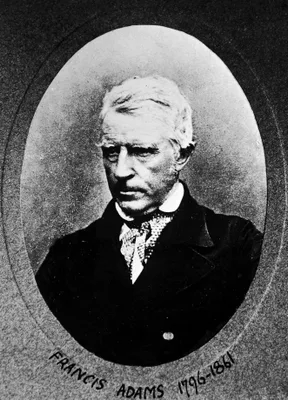
1844 –1847 PAUL OF AEGINA (ΠΑΥ͂ΛΟΣ ΑἸΓΙΝΉΤΗΣ; PAULUS AEGINETA) (625 – 690); ADAMS, Francis (1796 – 1861)
The seven books of Paulus Aegineta: Translated from the Greek, with a commentary embracing a complete view of the knowledge possessed by the Greeks, Romans, and Arabians on all subjects connected with medicine and surgery by Francis Adams. 3 vols.
Book VI is entirely devoted to operative surgery. Adams himself says that it “contains the most complete system of operative surgery which has come down to us from ancient times”. Book IV contains much information on …
GMN 8306 · https://historyofmedicine.com/id/10482
1845 –1848 DIEFFENBACH, Johann Friedrich (1792 – 1847)
Die operative Chirurgie. 2 vols.
Dieffenbach’s most comprehensive work, covering in addition to reconstructive procedures, virtually all other types of procedures including amputations, paracentesis, laparotomy, hysterectomy, dental extractions, etc.
GMN 5598.1 · https://historyofmedicine.com/id/7090
1846 TEALE, Thomas Pridgin (1800 – 1867)
A practical treatise on abdominal hernia.
GMN 3589 · https://historyofmedicine.com/id/4401
1846 BRODIE, Sir Benjamin Collins (1783 – 1862)
Lectures illustrative of various subjects in pathology and surgery.
Page 361 contains the first description of intermittent claudication in man. This was first reported (in the horse) by “Boullay” [?J. Bouley] in Arch. gén. Méd.,1831, 27, 425. P. 186: Brodie's test for insufficiency o…
GMN 2902 · https://historyofmedicine.com/id/4851
1847 BIRD, Golding (1814 – 1854); HILTON, John (1804 – 1878)
Case of internal strangulation of intestine relieved by operation.
Records the first operation for intestinal strangulation of the small intestine by Hilton at Guy’s Hospital. No anaesthetic was used; the patient died nine hours afterwards.
GMN 3449 · https://historyofmedicine.com/id/5507
1847 –1848 SEMMELWEIS, Ignaz Philipp (Ignác Fülöp) (1818 – 1865)
Höchst wichtige Erfahrungen über die Aetiologie der in Gebäranstalten epidemischen Puerperalfieber.
Semmelweis, pioneer of antisepsis in obstetrics, was the first to recognize that puerperal fever is a septicemia. He concluded that the doctors and students of Vienna’s First Obstetrical Clinic carried the infection o…
GMN 6275 · https://historyofmedicine.com/id/7990