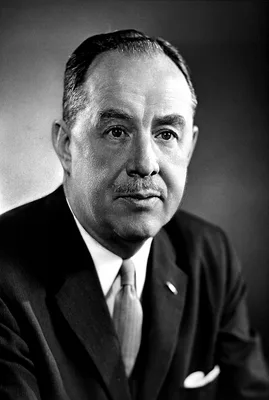
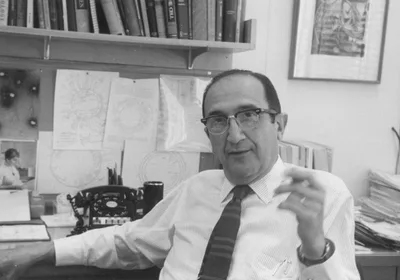
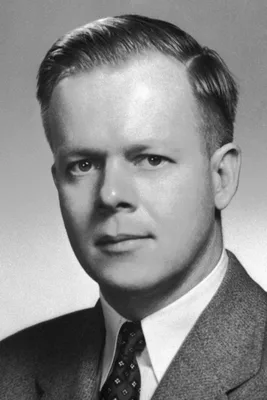
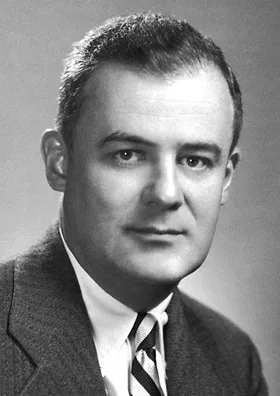
1939 DAWSON, James Robertson Jr. (1908 – 1986)
Infection of chicks and chick embryos with rabies.
Cultivation of rabies virus in the chick embryo. Soon afterwards I. J. Kligler and H. Bernkopf, Nature, 1939, 143, 899, made a similar report.
GMN 5484.3 · https://historyofmedicine.com/id/6391
1940 DURAND, Paul (1895 – 1961)
Virus filtrant pathogène pour l’homme et les animaux de laboratoire, et à affinité meningée et pulmonaire.
“Durand’s disease” – D virus infection. Durand isolated the virus from his own blood. See also the paper by G. M. Findlay, Trans. roy. Soc. trop. Med., 1942, 35, 303-18.
GMN 4661 · https://historyofmedicine.com/id/787
1940 JUNGEBLUT, Claus Washington (1897 – 1976); SANDERS, Murray Jonathan (1910 – 1987)
Studies of a murine strain of poliomyelitis virus in cotton rats and white mice.
Isolation of encephalomyocarditis virus.
GMN 4661.1 · https://historyofmedicine.com/id/789
1940 FRANCIS, Thomas Jr. (1900 – 1969)
A new type of virus from epidemic influenza.
Recovery of influenza B virus.
GMN 5498 · https://historyofmedicine.com/id/6460
1940 MAGILL, Thomas Pleines (1903 – 1999)
A virus from cases of influenza-like upper-respiratory infection.
Recovery of influenza B virus.
GMN 5499 · https://historyofmedicine.com/id/6462
1940 SMITHBURN, K. C.; HUGHES, T. P.; BURKE, A. W.; ET AL
A neurotropic virus isolated from the blood of a native in Uganda.
Order of authorship in the original paper: Smithburn, Hughes, Burke. In 1937 the authors isolated a virus from the blood of an adult female with fever from the Omogo West Nile district of Uganda, and named it West Nil…
GMN 10951 · https://historyofmedicine.com/id/13147
1941 HIRST, George Keble (1909 – 1994)
The agglutination of red cells by allantoic fluid of chick embryos infected with influenza virus.
Discovery of virus hemagglutination. Between 1941 and 1942 Hirst developed the hemagglutination assay for quantifying the relative concentration of viruses, bacteria or antibodies.
GMN 2577 · https://historyofmedicine.com/id/4130
1941 HARE, Ronald (1899 – 1986); MCCLELLAND, Laurella (1912 – 1993)
The absorption of influenza virus by red cells and a new in vitro method of measuring antibodies for influenza virus.
Independently of Hirst, McClelland and Hare discovered virus hemagglutination.
GMN 2578 · https://historyofmedicine.com/id/4133
1942 LURIA, Salvador Edward (1912 – 1991); ANDERSON, Thomas Foxen (1911 – 1991)
The identification and characterization of bacteriophages with the electron microscope.
First identification, observation under the electron microscope, and reproduction of photomicrographs of bacteriophages taken through the electron microscope. Digital facsimile, but with poor reproductions of the two …
GMN 14004 · https://historyofmedicine.com/id/16309
1943 SANDERS, Murray Jonathan (1910 – 1987); ALEXANDER, R. C.
Epidemic keratoconjunctivitis. I. Isolation and identification of a filterable virus.
GMN 5990 · https://historyofmedicine.com/id/7088
1943 SMADEL, Joseph Edwin (1907 – 1963); PHILIP, C. B.
Transmission of West Nile virus by infected Aedes albopictus.
The authors demonstrated that the Aedes albopictus mosquito is the vector of West Nile virus. (Thanks to Juan Weiss for this reference and its interpretation.)
GMN 10952 · https://historyofmedicine.com/id/13148
1943 LURIA, Salvador Edward (1912 – 1991); DELBRÜCK, Max (1906 – 1981); ANDERSON, Thomas Foxen (1911 – 1991)
Electron microscope studies of bacterial viruses.
This work demonstrated the absorption of the phages on the host cell, and the lysis of the host cell and the liberation of a hundred or so daughter paritcles from each cell. It also showed that the particles multiply …
GMN 14005 · https://historyofmedicine.com/id/16310
1946 DELBRÜCK, Max (1906 – 1981); BAILEY, W. T.
Induced mutations in bacterial viruses.
Genetic recombination in bacteriophages. In 1969 Delbrück shared the Nobel Prize with A. D. Hershey and S. E. Luria "for their discoveries concerning the replication mechanism and the genetic structure of viruses."
GMN 2578.5 · https://historyofmedicine.com/id/4142
1946 ENDERS, John Franklin (1897 – 1985); STOKES, Joseph Jr. (1896 – 1972); ET AL
Immunity in mumps. VI. Experiments on the vaccination of human beings with formolized mumps virus.
With E. P. Maris, and L. W. Kane.
GMN 5544.2 · https://historyofmedicine.com/id/6756
1948 DALLDORF, Gilbert Julius (1900 – 1979); SICKLES, Grace Mary (1898 – 1959)
An unidentified, filterable agent isolated from the feces of children with paralysis.
Isolation of the Coxsackie virus from the stool of a patient residing in Coxsackie, New York.
GMN 5545 · https://historyofmedicine.com/id/6761
1949 ENDERS, John Franklin (1897 – 1985); WELLER, Thomas Huckle (1915 – 2008); ROBBINS, Frederick Chapman (1916 – 2003)
Cultivation of the Lansing strain of poliomyelitis virus in cultures of various human embryonic tissues.
Enders, Weller, and Robbins grew the poliomyelitis virus in cultures of different tissues. Their method proved of great value in virus research, and removed the final obstacles to vaccine production. In 1974 Enders, W…
GMN 4671.1 · https://historyofmedicine.com/id/874
1949 DULBECCO, Renato (1914 – 2012); LURIA, Salvador Edward (1912 – 1991)
Genetic recombinations leading to production of active bacteriophage from ultraviolet inactivated bacteriophage particles.
In 1969 Luria shared the Nobel Prize in Physiology or Medicine in with Delbrück (No. 2578.5) and A. D. Hershey (No. 256) "for their discoveries concerning the replication mechanism and the genetic structure of viruses."
GMN 2526.1 · https://historyofmedicine.com/id/3458
1949 TAYLOR, Richard Moreland (1887 – 1981)
Studies on survival of influenza-virus between epidemics and antigenic variants of the virus.
Recovery of influenza C virus.
GMN 5500 · https://historyofmedicine.com/id/6464
1949 CURNEN, Edward Charles Jr. (1909 – 1997); MELNICK, Joseph Louis (1914 – 2001); ET AL
Disease resembling nonparalytic poliomyelitis associated with a virus pathogenic for infant mice.
Isolation of the Coxsackie virus from patients with poliomyelitis. With E. W. Shaw.
GMN 5546 · https://historyofmedicine.com/id/6763
1950 FLORIO, Lloyd Joseph (1910 – 1975); ET AL
Colorado tick fever. Isolation of the virus from Dermacentor andersoni in nature and a laboratory study of the transmission of the virus in the tick.
Isolation of the virus of Colorado tick fever. With M. S. Miller and E. R. Mugrage.
GMN 5546.1 · https://historyofmedicine.com/id/6766
1952 KOPROWSKI, Hilary (1916 – 2013); ET AL
Immune responses in human volunteers upon oral administration of a rodent-adapted strain of poliomyelitis virus.
Successful immunization against poliomyelitis with a living attenuated virus vaccine. With G. A. Jervis and T. W. Norton.
GMN 4672.1 · https://historyofmedicine.com/id/885
1952 HERSHEY, Alfred Day (1908 – 1997); CHASE, Martha Cowles (1927 – 2003)
Independent functions of viral protein and nucleic acid in growth of bacteriophage.
DNA shown to be the carrier of genetic information in virus reproduction. In 1969 Hershey shared the Nobel Prize in Physiology or Medicine with S. E. Luria and M. Delbrück for "for their discoveries concerning the rep…
GMN 256 · https://historyofmedicine.com/id/8697
1952 DICK, George Williamson Auchinvole (1914 – 1997); KITCHEN, S. F.; HADDOW, Alexander John (1912 – 1978)
Zika virus (I). Isolations and serological specificity.
First description of Zika virus, an arbovirus native to Africa. The authors named the virus after the Zika forest in Uganda, where they were searching for Yellow Fever. Instead they isolated a new virus in samples tak…
GMN 7864 · https://historyofmedicine.com/id/10036
1952 DICK, George Williamson Auchinvole (1914 – 1997)
Zika virus. (II). Pathogenicity and physical properties.
Dick's second paper on the Zika virus, immediately following his first paper in the same volume of the same journal (see no. 7864). First statement that the Aedes aegypti mosquito is the vector of transmission of the …
GMN 10939 · https://historyofmedicine.com/id/13135
1952 SMITHBURN, K. C.
Neutralizing antibodies against certain recently isolated viruses in the sera of human beings residing in East Africa.
First report of human illness caused by Zika virus, detected in Uganda and Tanzania. 38 patients had neutralizing antibodies to Zika virus in their blood serum, proving that they had been infected by the virus. (Thank…
GMN 10940 · https://historyofmedicine.com/id/13136
1952 ENDERS, John Franklin (1897 – 1985); WELLER, Thomas Huckle (1915 – 2008); ROBBINS, Frederick Chapman (1916 – 2003); ET AL
Studies on the cultivation of poliomyelitis viruses in tissue culture.
Order of authorship in the original publication: Weller, Enders, Robbins. In this paper the authors describe their improved method for culturing poliomyelitis viruses in "normal kidney tissue." Followed by Robbins, We…
GMN 11103 · https://historyofmedicine.com/id/13299
1952 LURIA, Salvador Edward (1912 – 1991); HUMAN, Mary L.
A nonhereditary, host-induced variation of bacterial viruses.
Order of authorship in the original publication: Luria, Human. Luria and Human discovered the restriction modification system found in bacteria and other prokaryotic organisms. This system provides a defense against f…
GMN 12032 · https://historyofmedicine.com/id/14240
1952 DULBECCO, Renato (1914 – 2012)
Production of plaques in monolayer tissue cultures by single particles of an animal virus.
Following Max Delbruck's advice, Dulbecco visited the major centers of animal virus work in the US in order to discover a way to quantitatively assay animal viruses by a plaque technique, similar to the technique that…
GMN 13999 · https://historyofmedicine.com/id/16303
1953 SALK, Jonas Edward (1914 – 1995); ET AL
Studies in human subjects on active immunization against poliomyelitis. 1. A preliminary report of experiments in progress.
Killed-virus vaccine. With four co-authors.
GMN 4672.2 · https://historyofmedicine.com/id/889
1953 ROWE, Wallace Prescott (1926 – 1983); ET AL
Isolation of a cytopathogenic agent from human adenoids undergoing spontaneous degeneration in tissue culture.
Discovery of adenoviruses. With R. J. Huebner, L. K. Gilmore, R. H. Parrott, and T. G. Ward.
GMN 2526.2 · https://historyofmedicine.com/id/3659
1953 KUROYA, Masahiko (1921 – 1976)
Newborn virus pneumonitis (type Sendai). II. The isolation of a new virus possessing hemagglutinin activity.
M. Kuroya, N. Ishida, and T. Shiratori isolated the first recognized Sendai (para-influenza) virus.
GMN 3215.3 · https://historyofmedicine.com/id/4374
1953 WELLER, Thomas Huckle (1915 – 2008)
Serial propagation in vitro of agents producing inclusion bodies derived from varicella and herpes zoster.
Isolation of the varicella-herpes virus.
GMN 5440.1 · https://historyofmedicine.com/id/7466
1954 ENDERS, John Franklin (1897 – 1985); PEEBLES, Thomas C. (1921 – 2010)
Propagation in tissue cultures of cytopathogenic agents from patients with measles.
Isolation of measles virus.
GMN 5449.2 · https://historyofmedicine.com/id/7498
1954 JACOB, François (1920 – 2013); WOLLMAN, Élie Léo (1917 – 2008)
Induction spontanée du développement du bactériophage lambda au cours de la recombinaison génétique, chez Escherichia coli K 12.
Wollman and Jacob discovered zygotic induction. This occurs when a bacterial cell carrying the silenced DNA of a bacteriophage transfers the viral DNA along with its own DNA in its chromosome to another bacterial cell…
GMN 13994 · https://historyofmedicine.com/id/16298
1954 VOGT, Marguerite (1913 – 2007); DULBECCO, Renato (1914 – 2012)
Plaque formation and isolation of pure lines with poliomyelitis viruses.
Dulbecco and Vogt were the first to successfully grow the poliovirus in vitro. They were also able to plaque purify it-- an essential step for subsequent vaccine production.
GMN 14000 · https://historyofmedicine.com/id/16304
1955 SABIN, Albert Bruce (1906 – 1993)
Immunization of chimpanzees and human beings with avirulent strains of poliomyelitis virus.
Sabin reported the successful immunization of chimpanzees by oral and I.M. route using the Brunhilde, Mahoney and Leon strains of polio virus. On p. 1055 he reported the experimental results on humans given a "single …
GMN 4672.3 · https://historyofmedicine.com/id/894
1955 FRAENKEL-CONRAT, Heinz Ludwig (1910 – 1999); WILLIAMS, Robley Cook (1908 – 1995)
Reconstitution of active tobacco mosaic virus from its inactive protein and nucleic acid components.
First reconstitution of a virus.
GMN 2527 · https://historyofmedicine.com/id/3465
1955 SCHAFFER, Frederick Leland (1921 – ); SCHWERDT, Carlton Everett (1917 – 1995)
Crystallization of purified MEF-1 poliomyelitis virus particles.
First crystallization of an animal virus.
GMN 2527.1 · https://historyofmedicine.com/id/3471
1955 HENLE, Gertrude Szpingier (1912 – 2006); DEINHARDT, Friedrich W. (1926 – 1992)
Propagation and primary isolation of mumps virus in tissue culture.
GMN 5546.3 · https://historyofmedicine.com/id/6771
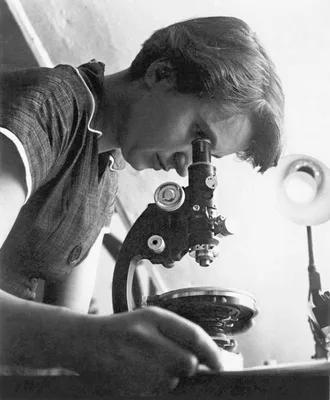
1955 FRANKLIN, Rosalind Elsie (1920 – 1958)
Structure of tobacco mosaic virus.
The first discovery of the geometry of a protein structure. Franklin, whose X-ray photographs of DNA were crucial to Watson and Crick's discovery of the molecule's double helix structure in 1953, began researching the…
GMN 14001 · https://historyofmedicine.com/id/16306
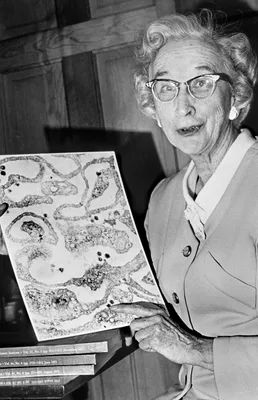
1956 SMITH, Margaret Gladys (1896 – 1970)
Propagation in tissue culture of a cytopathogenic virus from human salivary gland virus (SGV) disease.
Isolation of cytomegalovirus
GMN 2527.2 · https://historyofmedicine.com/id/3473
1956 GIERER, Alfred (1929 – ); SCHRAMM, Gerhard (1910 – 1989)
Infectivity of ribonucleic acid from tobacco mosaic virus.
Proof that nucleic acid produces infectivity. See also Z. Naturf., 1956, 11b, 138-42.
GMN 2578.17 · https://historyofmedicine.com/id/4154
1957 STEWART, Sarah Elizabeth (1905 – 1976); ET AL
The induction of neoplasms with a substance released from mouse tumors by tissue culture.
Isolation of polymavirus (papovavirus). With B. E. Eddy, A. M. Gochenour, N. G. Borgese, and G E. Grubbs.
GMN 2660.10 · https://historyofmedicine.com/id/3394
1957 ISAACS, Alick (1921 – 1967); LINDENMANN, Jean (1924 – 2015)
Virus interference. I. The interferon.
Discovery of interferon type I, a protein that interferes with viral replication. "While working together at the NIMR, Lindenmann and Isaacs noticed that if they killed viruses using heat and applied the dead viruses …
GMN 2578.22 · https://historyofmedicine.com/id/4236
1957 CHANOCK, Robert Merritt (1904 – 2010); ET AL
Recovery from infants with respiratory illness of a virus related to chimpanzee coryza agent (CCA).
Respiratory syncytial virus. With B. Roizman and R. Myers.
GMN 3215.4 · https://historyofmedicine.com/id/4375
1957 FEIFAN, Tang
Studies on the etiology of trachoma with special reference to isolation of the virus in chick embryo.
Isolation of trachoma agent, Chlamydia trachomatis. With H. L. Chang, Y. T. Huang, and K. C. Wang.
GMN 5991.1 · https://historyofmedicine.com/id/7102
1958 LUMSDEN, Leslie Leon (1875 – 1946)
St. Louis encephalitis in 1933; observations on epidemiological features.
In a report to the Surgeon General in 1933, Lumsden concluded that the Culex mosquito was the vector of the St. Louis encephalitis virus. His report was not published until 1958.
GMN 4661.2 · https://historyofmedicine.com/id/791
1960 VOGT, Marguerite (1913 – 2007); DULBECCO, Renato (1914 – 2012)
Virus-cell interaction with a tumour-producing virus.
Polyomavirus (papovavirus) shown to be capable of transforming cells in culture. Full text from PubMedCentral at this link.
GMN 2660.13 · https://historyofmedicine.com/id/3399
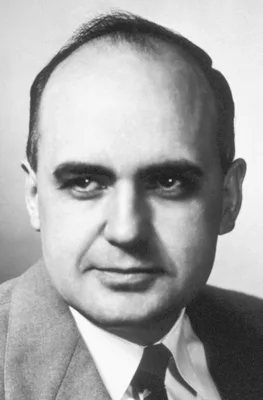
1960 SWEET, Benjamin Hersh (1924 – ); HILLEMAN, Maurice Ralph (1919 – 2005)
The vacuolating virus SV40.
Simian virus type 40, a polyomavirus found in both monkeys and humans.
GMN 2527.3 · https://historyofmedicine.com/id/3477
1962 WELLER, Thomas Huckle (1915 – 2008); NEVA, Franklin Allen (1922 – 2011)
Propagation in tissue culture of cytopathic agents from patients with rubella-like illness.
Isolation of rubella virus. It was simultaneously isolated by P. D. Parkman, et al. (No. 5509.2.)
GMN 5509.1 · https://historyofmedicine.com/id/6505