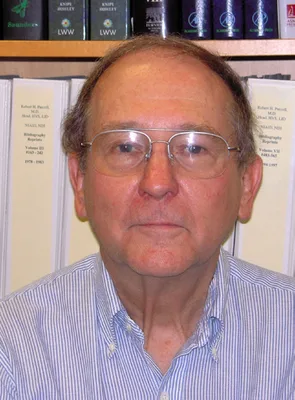
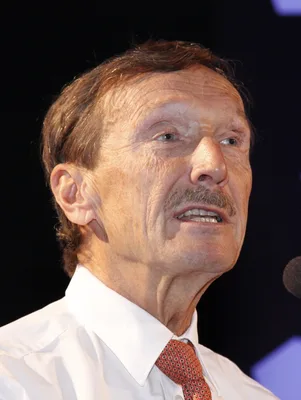
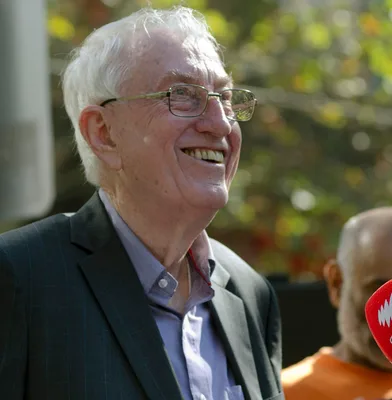
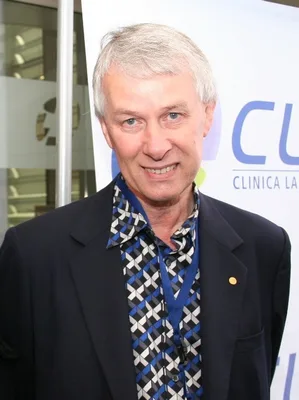
1962 PARKMAN, Paul Douglas (1932 – ); BUESCHER, Col. Edward L. (1925 – 1989); ARTENSTEIN, Malcolm S. (1930 – 1976)
Recovery of rubella virus from army recruits.
Isolation of the rubella virus.
GMN 5509.2 · https://historyofmedicine.com/id/6507
1962 MCLEAN, Donald M.; MCQUEEN, Joan; PETITIE, H. Elizabeth; ET AL
Powassan virus: Field investigations in Northern Ontario, 1959-1961.
The authors isolated a virus from the brain of a child who died of encephalitis in Powassan, Ontario, and named it the Powassan virus. They posited a tick vector and possible rodent natural hosts. (Thanks to Juan Weis…
GMN 10920 · https://historyofmedicine.com/id/13116
1962 ARBER, Werner (1929 – ); ROULLAND-DUSSOIX, Daisy (1936 – 2014)
Host specificity of DNA produced by escherichia coli. II. Control over acceptance of DNA from infecting phage lambda.
Order of authorship in the original publication: Dussoix, Arber. The authors discovered that restriction of DNA from infecting bacteriophage was due to the attack and breakdown of the modified bacteriophage's DNA by s…
GMN 12033 · https://historyofmedicine.com/id/14241
1964 EPSTEIN, Michael Anthony (1921 – ); BARR, Yvonne (1932 – 2016)
Cultivation in vitro of human lymphoblasts from Burkitt’s malignant lymphoma.
Order of authorship in the original publication: Epstein, Barr. Discovery of the Epstein-Barr virus, a human herpes virus causing infectious mononucleosis, and implicated in Burkitt’s lymphoma and other forms of cance…
GMN 2660.17 · https://historyofmedicine.com/id/3410
1964 EPSTEIN, Michael Anthony (1921 – ); BARR, Yvonne (1932 – 2016); ACHONG, Bert Geoffrey (1928 – 1996)
Virus particles in cultured lymphoblasts from Burkitt’s lymphoma.
Order of authorship in the original publication: Epstein, Achong, Barr. Presence of herpes-like virus particles in Burkitt’s tumor cells reported. The Epstein-Barr virus was the first human cancer-causing virus to be …
GMN 2660.18 · https://historyofmedicine.com/id/3414
1964 HAHON, Nicholas (1924 – 2016)
Selected papers on virology.
GMN 2581.4 · https://historyofmedicine.com/id/4341
1965 BLUMBERG, Baruch Samuel (1925 – 2011); ALTER, Harvey James (1935 – ); VISNICH, S.; ET AL
A “new” antigen in leukemia sera.
(Order of authorship in the original publication: Blumberg, Alter, Visnich.) Discovery of Australia antigen, hepatitis B antigen, Aa, later called HBsAg. Blumberg received half of the Nobel Prize for Medicine in Biolo…
GMN 3666.4 · https://historyofmedicine.com/id/4823
1965 MIYAMOTO, Kaneatsu; MATSUMOTO, Seiichi
The nature of the Negri Body.
The first visual proof, by publication of electron micrographs at 25,000 magnification, that Negri bodies contain enormous numbers of rabies virus particles. Digital facsimile from rupress.org at this link. (Thanks to…
GMN 14035 · https://historyofmedicine.com/id/16343
1966 PARKMAN, Paul Douglas (1932 – ); MEYER, Harry Martin Jr. (1928 – 2001); ET AL
Attenuated rubella virus. II. Production of an experimental live-virus vaccine and clinical trial.
With T. C. Panos.
GMN 5509.3 · https://historyofmedicine.com/id/6509
1966 TYRRELL, David Arthur John (1925 – 2005); BYNOE, M. L.
Cultivation of viruses from a high proportion of patients with colds.
"The history of human coronaviruses began in 1965 when Tyrrell and Bynoe found that they could passage a virus named B814. It was found in human embryonic tracheal organ cultures obtained from the respiratory tract of…
GMN 11918 · https://historyofmedicine.com/id/14123
1967 STEWART, George Louis (1936 – ); ET AL
Rubella-virus hemagglutination-inhibition test.
With five co-authors.
GMN 5509.4 · https://historyofmedicine.com/id/6510
1967 SIEGERT, Rudolf (1914 – 1988); ET AL
Zur Ätiologie einer unbekannten, von Affen ausgegangenen menschlichen Infektionskrankheit.
Isolation, identification and structure of the Marburg virus. WITH H. L. Shu, W. Sienczka, D. Peters, and G. Müller.
GMN 7865 · https://historyofmedicine.com/id/10037
1967 HENLE, Gertrude Szpingier (1912 – 2006); HENLE, Werner (1910 – 1987); DIEHL, Volker S. (1938 – ); HAUSEN, Harald zur (1936 – ); KOHN, G.
Herpes-type virus and chromosome marker in normal leukocytes after growth with irradiated Burkitt cells.
Hausen and colleagues showed for the first time that a cancer virus (Epstein-Barr virus) can transform healthy cells (lymphocytes) into cancer cells. This showed that viruses can cause cancer cell formation. (Order of…
GMN 12662 · https://historyofmedicine.com/id/14906
1968 HENLE, Gertrude Szpingier (1912 – 2006); HENLE, Werner (1910 – 1987); DIEHL, Volker S. (1938 – )
Relation of Burkitt’s tumor-associated herpes-type virus to infectious mononucleosis.
The Henles and Diehl showed that Epstein-Barr virus is the aetiological agent in infectious mononucleosis.
GMN 5487.1 · https://historyofmedicine.com/id/6427
1968 BLUMBERG, Baruch Samuel (1925 – 2011); BAYER, Manfred E. (1928 – 2015); WERNER, Barbara G.
Particles associated with Australia antigen in the sera of patients with leukemia, Down's syndrome and hepatitis.
Particles with the appearance of a virus were detected by electron microscopy in the serum of individuals with Au. These were subsequently shown to be the surface antigen particles, different from the whole virus part…
GMN 6840 · https://historyofmedicine.com/id/9004
1968 DULBECCO, Renato (1914 – 2012); SAMBROOK, J.; WESTPHAL, H.; SRINVASAN, P. R.
The integrated state of viral DNA in SV40-transformed cells.
Dulbecco and his group demonstrated that the infection of normal cells with certain types of viruses (oncoviruses) led to the incorporation of virus-derived genes into the host-cell genome, and that this event lead to…
GMN 13947 · https://historyofmedicine.com/id/16245
1969 –1972 BLUMBERG, Baruch Samuel (1925 – 2011); MILLMAN, Irving (1923 – 2012)
Vaccine against viral hepatitis and process. Serial No. 864,788 filed 10 /8 /[19]69. Patent 3636191 issued 1/ 18/ [19]72.
First description of the hepatitis B vaccine, the first cancer vaccine, US patent 3636191A. Millman and Blumberg discovered that the blood of individuals carrying the hepatitis B virus contained particles of the outsi…
GMN 6841 · https://historyofmedicine.com/id/9005
1970 BALTIMORE, David (1938 – )
Viral RNA-dependent DNA polymerase: RNA-dependent DNA polymerase in virions of RNA tumour viruses.
In 1970 Baltimore and Temin discovered that certain viruses that have their genes in the form of RNA can copy the RNA "backward" into DNA in infected cells. The enyzme, reverse transcriptase, enables the manufacture o…
GMN 2660.22 · https://historyofmedicine.com/id/3429
1970 TEMIN, Howard Martin (1934 – 1994); MIZUTANI, Satoshi
RNA-dependent DNA polymerase in virions of Rous sarcoma virus.
Discovery of reverse transcriptase. "In 1969, Temin and a postdoctoral fellow, Satoshi Mizutani, began searching for the enzyme that was responsible for the phenomenon of viral RNA being transferred into proviral DNA.…
GMN 2660.23 · https://historyofmedicine.com/id/3432
1970 BIGGS, Peter Martin (1926 – ); ET AL
Field trials with an attentuated cell associated vaccine for Marek's disease.
In 1959 Biggs moved to the Houghton Poultry Research Station (HPRS) to form and head a unit to study lymphoid tumor conditions of the domestic fowl. He gave the name Marek’s disease to one of the tumor conditions, aft…
GMN 2660.26 · https://historyofmedicine.com/id/3438
1970 DANE, David Maurice Surrey (1923 – 1998); CAMERON, C. H.; BRIGGS, E. Moya
Virus-like particles in serum of patients with Australia-antigen-associated hepatitis.
(Order of authorship in the original publication: Dane, Cameron, Briggs.) The authors showed that the "Australian antigen" was a virus causing hepatitis B. (Thanks to Juan Weiss for this reference and its interpretati…
GMN 12305 · https://historyofmedicine.com/id/14527
1970 SHERLOCK, Sheila Patricia Violet Dame (1918 – 2001); NIAZI, S. P.; FOX, R. A.
Chronic liver disease and primary liver-cell cancer with hepatitis-associated (Australia) antigen in serum.
(Order of authorship in the original publication: Sherlock, Niazi, Fox...). The authors demonstrated that the hepatitis B virus can cause cancer. (Thanks to Juan Weiss for this reference and its interpretation.)
GMN 12306 · https://historyofmedicine.com/id/14528
1970 BLUMBERG, Baruch Samuel (1925 – 2011); MILLMAN, Irving (1923 – 2012); BAYER, Manfred E. (1928 – 2015); LOEB, Lawrence A.
Australia antigen (a hepatitis-associated antigen). Purification and physical properties.
Purification of the Australia antigen and investigation of its physical properties. (Order of authorship in the original publication: Millman, Loeb, Bayer, Blumberg.) Blumberg shared the 1976 Nobel Prize in Physiology…
GMN 12321 · https://historyofmedicine.com/id/14544
1971 PAUL, John Rodman (1893 – 1971)
A history of poliomyelitis.
GMN 4672.5 · https://historyofmedicine.com/id/937
1971 BALTIMORE, David (1938 – )
Expression of animal virus genomes.
The Baltimore classification of virus groups places viruses into one of seven groups depending on a combination of their nucleic acid (DNA or RNA), strandedness (single-stranded or double-stranded), sense, and method …
GMN 12010 · https://historyofmedicine.com/id/14218
1973 SHOPE, Thomas
Malignant lymphoma in cottontop marmosets after inoculation with Epstein–Barr virus.
Epstein-Barr virus as a cause of Burkitt’s lymphoma. With D. DeChairo and G. Miller.
GMN 2660.25 · https://historyofmedicine.com/id/3436
1973 WIKTOR, Tadeusz Jan (1921 – 1986)
Human cell culture rabies vaccine. Antibody response in man.
Human diploid cell vaccine. With S. A. Plotkin and D. W. Grella. See also Develop, biol. Standard., 1978, 40, 3-9.
GMN 5484.4 · https://historyofmedicine.com/id/6393
1973 FEINSTONE, Stephen Mark; KAPIKIAN, Albert Zaven (1930 – 2014); PURCELL, Robert Harry (1935 – )
Hepatitis A: Detection by immune electron microscopy of a viruslike antigen associated with acute illness.
Identification of the Hepatitis A virus.
GMN 12652 · https://historyofmedicine.com/id/14895
1974 ZINKERNAGEL, Rolf Martin (1944 – ); DOHERTY, Peter Charles (1940 – )
Restriction of in vitro T cell-mediated cytotoxicity in lymphocytic choriomeningitis within a syngeneic or semiallogeneic system.
Doherty and Zinkernagel discovered how a class of white blood cells known as T cells kill virus-infected cells in the body, and so present the spread of viruses. In 1998 Zinkernagel and Doherty were awarded the Nobel …
GMN 7453 · https://historyofmedicine.com/id/9625
1975 DULBECCO, Renato (1914 – 2012)
From the molecular biology of oncogenic DNA viruses to cancer. Les Prix Nobel en 1975, pp. 172-80.
In 1975 Dulbecco shared the Nobel Prize in Physiology or Medicine with David Baltimore and Howard Martin Temin "for their discoveries concerning the interaction between tumour viruses and the genetic material of the c…
GMN 2660.27 · https://historyofmedicine.com/id/3440
1975 COSSART, Yvonne E.; FIELD, A. M.; CANT, B.; ET AL
Parvovirus-like particles in human sera. Preliminary communication.
Order of authorship in the original paper: Cossart, Field, Cant. First description of Parvovirus B19, the first human parvovirus discovered. It is among the smallest DNA viruses and is most often known for causing dis…
GMN 11190 · https://historyofmedicine.com/id/13387
1977 PATTYN, Stefaan Rogier (1927 – 2008); GROEN, Guido van der
Isolation of Marburg-like virus from a case of haemorrhagic fever in Zaire.
Ebola virus, named after the Ebola River where an outbreak occurred in 1976. Specifically the outbreak was centered in Yambuku, a small village in Mongala Province in northern Democratic Republic of the Congo (formerl…
GMN 7866 · https://historyofmedicine.com/id/10038
1977 HUGHES, Sally Smith
Virus: A history of the concept
GMN 8672 · https://historyofmedicine.com/id/10849
1977 JOHNSON, Karl M.; LANGE, James V.; WEBB, Patricia; ET AL
Isolation and partial characterization of a new virus causing acute haemorrhagic fever in Zaire.
The first of three papers published in Lancet back to back describing the discovery of Ebola Virus Disease. In this paper the authors described isolation of the virus, imaged it with an electron microscope, and named …
GMN 10923 · https://historyofmedicine.com/id/13119
1977 CHOW, Louise Tsi (1943 – ); GELINAS, Richard E.; BROKER, Thomas R.; ROBERTS, Richard John Sir (1943 – )
An amazing sequence arrangement at the 5' ends of adenovirus 2 messenger RNA.
Discovery of introns. In 1993 Roberts shared the Nobel Prize in Physiology or Medicine with Phillip A. Sharp "for their discoveries of split genes." It was frequently suggested that Chow deserved a share of that prize…
GMN 11043 · https://historyofmedicine.com/id/13239
1977 BERGET, Susan M.; MOORE, Claire; SHARP, Philip Allen (1944 – )
Spliced segments at the 5' terminus of adenovirus 2 late mRNA.
Discovery of introns simultaneously with Roberts, Chow, Broker (No. 11043). Sharp's electron microscopist, Berget, visualized the introns in the electron microscope. James D. Watson took note of the profound significa…
GMN 11044 · https://historyofmedicine.com/id/13240
1978 WATERSON, Anthony Peter (1923 – 1983); WILKINSON, Lise
An introduction to the history of virology.
GMN 2581.9 · https://historyofmedicine.com/id/4351
1978 PATTYN, Stefaan Rogier (1927 – 2008)
Ebola virus haemorrhagic fever. Edited by Stefan R. Pattyn.
Among the essays in this book two are of special note: 1. Piot, P., Sureau, P., Breman, J.G., Clinical aspects of Ebola virus infection in Yambuku area, Zaire, 1976 (pp. 157-166). This is the first clinical descriptio…
GMN 10924 · https://historyofmedicine.com/id/13120
1978 ALTER, Harvey James (1935 – ); PURCELL, Robert Harry (1935 – ); HOLLAND, Paul; ET AL
Transmissible agent in non-A, non-B hepatitis.
The first paper recording the discovery of what was, eleven years later in 1989, named the hepatitis C virus (see No. 12653). Harvey Alter and colleagues inoculated the serum/plasma of 4 patients with non-A/non-B hepa…
GMN 13540 · https://historyofmedicine.com/id/15817
1978 ZAMECNIK, Paul Charles (1912 – 2009); STEPHENSON, Mary Louise (1921 – 2009)
Inhibition of Rous sarcoma virus replication and cell transformation by a specific oligodeoxynucleotide (tridecamer deoxyribonucleotide/hybridization competitor/hybridon).
Zamecnick and Stephenson reported the first example of specific inhibition of gene expression by an oligonucleotide when they demonstrated that a short oligonucleotide inhibited Rous sarcoma virus replication in cell …
GMN 13969 · https://historyofmedicine.com/id/16271
1980 WORLD HEALTH ORGANIZATION
The global eradication of smallpox. Final report of the Global Commission for the Certification of Smallpox Eradication.
On 8 May 1980, the World Health Organization officially announced that “smallpox eradication has been achieved throughout the world”. The upper cover of this report reproduces an electron micrograph of a specimen of v…
GMN 5434.2 · https://historyofmedicine.com/id/8621
1980 GALLO, Robert Charles (1937 – ); POIESZ, Bernard J.; RUSCETTI, Francis W.; ET AL
Detection and isolation of type C retrovirus particles from fresh and cultured lymphocytes of a patient with cutaneous T-cell lymphoma.
Order of authorship in the original publication: Poiesz, Ruscetti,... Gallo. Gallo and associates announced the discovery of a human retrovirus with type C morphology causing a cutaneous T-cell lymphoma. Gallo named t…
GMN 11057 · https://historyofmedicine.com/id/13253
1981 BALTIMORE, David (1938 – ); RACANIELLO, Vincent R. (1953 – )
Molecular cloning of poliovirus cDNA and determination of the complete nucleotide sequence of the viral genome.
The poliovirus genome. Digital facsimile from PNAS through PubMedCentral at this link.
GMN 9175 · https://historyofmedicine.com/id/11354
1981 KITAMURA, Naomi; WIMMER, Eckard (1936 – )
Primary structure, gene organization and polypeptide expression of poliovirus RNA.
The poliovirus genome. With around 10 co-authors. "The primary structure of the poliovirus genome has been determined. The RNA molecule is 7,433 nucleotides long, polyadenylated at the 3′ terminus, and covalently link…
GMN 9176 · https://historyofmedicine.com/id/11355
1982 GALLO, Robert Charles (1937 – ); KALYANARAMAN, V. S.; SARNGADHARAN, M. G.; ET AL
A new subtype of human T-cell leukemia virus (HTLV-II) associated with a T-cell variant of hairy cell leukemia.
Order of authorship in the original publication: Kalyanaraman, Sarngadharan,... Gallo. Discovery by Gallo of HTLV-II, which like HTLV-I, is carcinogenic. (Thanks to Juan Weiss for this entry and its interpretation.)
GMN 11058 · https://historyofmedicine.com/id/13254
1983 MONTAGNIER, Luc Antoine (1932 – ); BARRÉ-SINOUSSI, Françoise (1947 – ); ET AL
Isolation of a T-lymphotropic retrovirus from a patient at risk for acquired immune deficiency syndrome (AIDS).
Isolation of the human immunodeficiency virus (HIV-1). In 2008 Barré-Sinoussi and Montagnier shared half of the Nobel Prize in Physiology and Medicine "for their discovery of human immunodeficiency virus." The other h…
GMN 6996 · https://historyofmedicine.com/id/9162
1983 ANDERSON, M. J.; JONES, S. E.; FISHER-HOCH, Susan P.; ET AL
Human parvovirus, the cause of erythema infectiosum (Fifth disease)?
This single page document was published as a Letter to the Editor of The Lancet. Order of authorship of the letter: Anderson, Jones, Fisher-Hoch.... Identification of human parvovirus as the cause of "Fifth disease". …
GMN 11191 · https://historyofmedicine.com/id/13388
1983 HAUSEN, Harald zur (1936 – ); DÜRST, Matthias; GISSMANN, Lutz (1949 – ); IKENBERG, Hans (1954 – )
A papillomavirus DNA from a cervical carcinoma and its prevalence in cancer biopsy samples from different geographic regions,
Zur Hausen and colleageus identified HPV 16 DNA in cervical cancer tumors by Southern blot hybridization. Digital facsimile from PubMedCentral at this link.
GMN 12663 · https://historyofmedicine.com/id/14907
1983 MIKESELL, Oliver H. Perry (1952 – 2002); IVINS, Bruce Edwards (1946 – 2008); RISTROPH, Joseph David (1942 – 2011); ET AL
Evidence for plasmid mediated toxin production in Bacillus anthracis.
The authors illustrated and proved that “heating V770-NPI-R containing anthrax strains, to exactly 42.5 degrees centigrade, as Pasteur and colleagues reported in GM 14211, essentially ‘cured’ these strains of their pl…
GMN 14212 · https://historyofmedicine.com/id/16528
1984 GALLO, Robert Charles (1937 – ); POPOVIC, Mikulas; ET AL
Detection, isolation, and continuous production of cytopathic retroviruses (HTLV-III) from patients with AIDS and pre-AIDS.
Gallo, Popovic, and colleagues demonstrated that a retrovirus they had isolated, called HTLV-III, was the cause of AIDS. M. G. Sarngadharan, and E. Read. Bibcode:1984Sci...224..497P. doi:10.1126/science.6200935. PMID …
GMN 6997 · https://historyofmedicine.com/id/9163