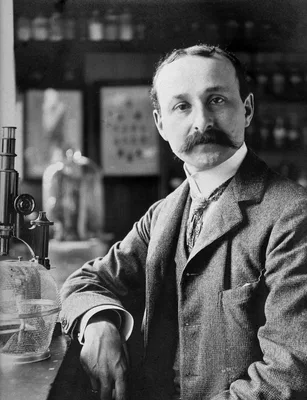
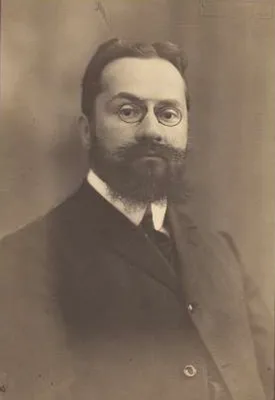
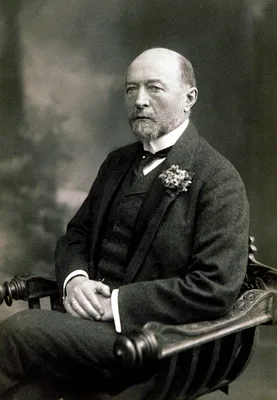
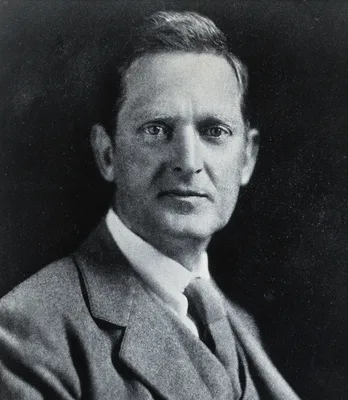
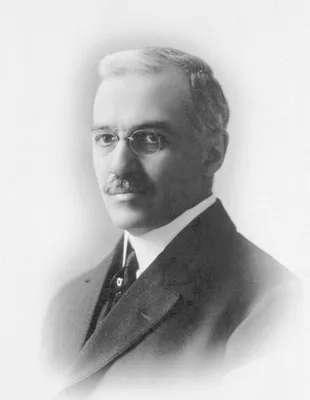
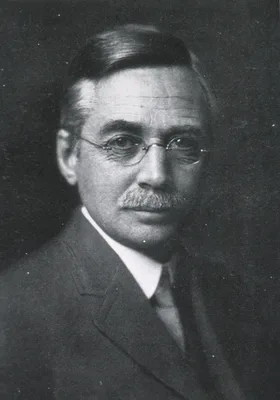
1901 METCHNIKOFF, Élie [MECHNIKOV] (1845 – 1916)
L’immunité dans les maladies infectieuses.
A classic study of the mechanisms concerned in specific antibacterial immunity, and one of Metchnikoff’s best works. Russian edition: Nevospriimchivost’ k infekcionnim boleznyam. St. Petersburg: K.L. Rikker, 1903. Eng…
GMN 2555 · https://historyofmedicine.com/id/3670
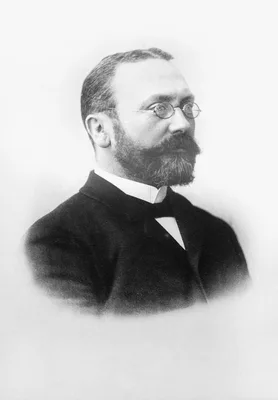
1901 EHRLICH, Paul (1854 – 1915)
Die Schutzstoffe des Blutes.
In this paper on humoral immunity in humans Ehrlich addressed the bacteriocidal property of the blood, attributing that to antibodies and antitoxins. Digital facsimile from pei.de at this link. (Thanks to Juan Weiss f…
GMN 12438 · https://historyofmedicine.com/id/14670
1902 WASSERMANN, August von (1866 – 1925)
Hämolysine, Cytotoxine and Präcipitine.
GMN 2556 · https://historyofmedicine.com/id/3671
1903 KYES, Preston (1875 – 1949); SACHS, Hans (1877 – 1945)
Zur Kenntniss der Cobragift activirenden Substanzen.
English translation in Ehrlich, Studies in immunity, 1910.
GMN 2112 · https://historyofmedicine.com/id/2617
1903 KYES, Preston (1875 – 1949)
Ueber die Isolirung von Schlangengift-Lecithiden.
English translation in Ehrlich, Studies in immunity, 1910.
GMN 2113 · https://historyofmedicine.com/id/2618
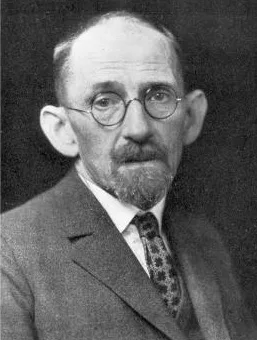
1903 –1904 WRIGHT, Sir Almroth Edward (1861 – 1947); DOUGLAS, Stewart Ranken (1871 – 1936)
An experimental investigation of the rôle of the blood fluids in connection with phagocytosis.
Wright and Douglas showed the existence of thermolabile substances (opsonins) in normal and immune serum.
GMN 2558 · https://historyofmedicine.com/id/3673
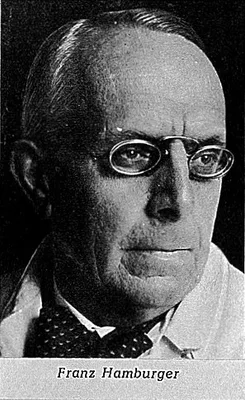
1903 MORO, Ernst (1874 – 1951); HAMBURGER, Franz (1874 – 1954)
Ueber die biologisch nachweisbaren Veränderungen des menschlichen Blutes nach den Seruminjektion.
Serum sickness first described.
GMN 2591.1 · https://historyofmedicine.com/id/4403
1903 UHLENHUTH, Paul Theodor (1870 – 1957)
Zur Lehre von der Unterscheidung verschiedener Eiweissarten mit Hilfe spezifischer Sera.
Demonstration of organ-specific antigens, in this case in the proteins of the lens of the eye.
GMN 2557 · https://historyofmedicine.com/id/4419
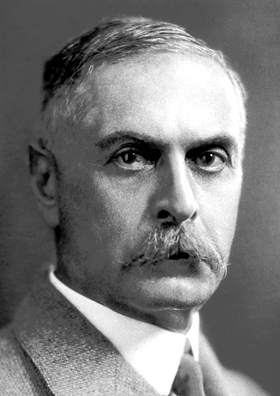
1904 LANDSTEINER, Karl (1868 – 1943); DONATH, Julius (1870 – 1950)
Über paroxysmale Hämoglobinurie.
The first description of an auto-antibody, and of an auto-immune disease, paroxysmal cold hemoglobinuria. See A.M. Silverstein, A history of immunology, New York, Academic Press, 1989, Ch. 8, The Donanth-Landsteiner a…
GMN 2558.1 · https://historyofmedicine.com/id/3674
1904 EHRLICH, Paul (1854 – 1915)
Gesammelte Arbeiten über Immunitätsforschung.
Reprints Ehrlich’s writings on immunology to date, as well as three papers by Kyes (Nos. 2111-3). English translation, with two more chapters by Ehrlich and Sachs, and one by Ehrlich, New York, 1906.
GMN 2559 · https://historyofmedicine.com/id/3676
1904 NEUFELD, Fred Julius (1869 – 1945); RIMPAU, Willi (1877 – 1963)
Ueber die Antikörper des Streptokokken- und Pneumokokken-Immunserums.
Bacteriotropins named and described.
GMN 2560 · https://historyofmedicine.com/id/3679
1904 NUTTALL, George Henry Falkiner (1862 – 1937)
Blood immunity and blood relationship, a demonstration of certain blood relationships amongst animals by means of the precipitin test for blood.
GMN 2561 · https://historyofmedicine.com/id/3682
1906 OTTO, Richard (1872 – 1952)
Das Theobald Smithsche Phänomen der Serum-Ueberfindlichkeit. In Gedenkschr. f.d. verstorb. Generalstabsarzt… von Leuthold, 1, 153-72
The “Theobald Smith phenomenon” was not reported by Smith but communicated by him to Ehrlich. Later Otto published details of the results obtained in his study of the phenomenon.
GMN 2594 · https://historyofmedicine.com/id/2953
1906 RICKETTS, Howard Taylor (1871 – 1910)
Infection, immunity and serum therapy.
GMN 2564 · https://historyofmedicine.com/id/3678
1906 KOLLE, Wilhelm (1868 – 1935); HETSCH, Heinrich (1873 – 1947)
Die experimentelle Bakteriologie und die Infektionskrankheiten.
English translation, 2 vols., London, Allen & Unwin, 1934.
GMN 2562 · https://historyofmedicine.com/id/3688
1906 METCHNIKOFF, Élie [MECHNIKOV] (1845 – 1916)
Quelques remarques sur le lait aigri.
Metchnikoff researched the effect of lactic acid produced by Lactobacilli on other non-desirable bacteria in the digestive tract. He thus expanded Döderlein's (No. 6279) concept of "normal flora" beyond the vagina. Tr…
GMN 2563 · https://historyofmedicine.com/id/3690
1906 HAFFKINE, Waldemar Mordecai Wolff (1860 – 1930)
Les inoculations antipesteuses.
Haffkine developed an anti-bubonic plague vaccine (killed bouillon cultures), for use in man.
GMN 5129 · https://historyofmedicine.com/id/6133
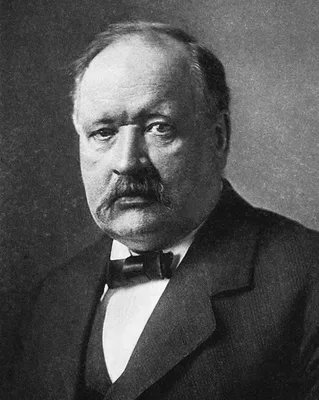
1907 ARRHENIUS, Svante August (1859 – 1927)
Immunochemistry. The application of the principles of physical chemistry to the study of the biological antibodies.
Arrhenius defined immunochemistry, and laid out its frontiers.
GMN 2564.1 · https://historyofmedicine.com/id/3681
1907 MAREK, József (1868 – 1952)
Multiple Nervenentzündung (Polyneuritis) bei Hühnern.
Marek's disease (fowl paralysis) later named by Peter Biggs, who determined that the disease was caused by Gallid alphaherpesvirus 2, and developed the first generation Marek's disease vaccine.
GMN 13400 · https://historyofmedicine.com/id/15672
1908 SCHICK, Béla (1877 – 1967)
Kutanreaktion beil Impfung mit Diphtherietoxin.
The Schick test for the determination of susceptibility to diphtheria.
GMN 5065 · https://historyofmedicine.com/id/5896
1908 FERMI, Claudio (1862 – 1952)
Über die Immunisierung gegen Wutkrankheit.
Fermi was the first to use chemical treatment of tissue suspensions of fixed rabies virus for the preparation of vaccine (Fermi vaccine). He introduced the use of carbolic acid for this purpose.
GMN 5484.1 · https://historyofmedicine.com/id/6389
1909 EHRLICH, Paul (1854 – 1915)
Beiträge zur experimentellen Pathologie und Chemotherapie.
GMN 2565 · https://historyofmedicine.com/id/3683
1910 WOLFF-EISNER, Alfred (1877 – 1948)
Handbuch der experimentellen Serumtherapie.
GMN 2566 · https://historyofmedicine.com/id/3685
1910 NEUFELD, Fred Julius (1869 – 1945); HAENDEL, Ludwig (1869 – 1939)
Weitere Untersuchungen über Pneumokokken-Heilsera. III. Mitteilung. Über Vorkommen und Bedeutung atypischer Varietäten des Pneumokokkus.
New antipneumococcus serum.
GMN 3190 · https://historyofmedicine.com/id/4223
1910 RUSSELL, Brigadier Frederick Fuller (1870 – 1960)
The control of typhoid in the Army by vaccination.
Russell carried out important and long-continued investigations on anti-typhoid vaccination in the U.S. Army, demonstrating beyond question its value in selected groups. The war of 1914-18 confirmed the value of the w…
GMN 5042 · https://historyofmedicine.com/id/5817
1911 FREEMAN, John (1877 – 1962)
Further observations on the treatment of hay fever by hypodermic inoculations of pollen vaccine.
See No. 2600.3.
GMN 2600.4 · https://historyofmedicine.com/id/2997
1911 MUCH, Hans (1880 – 1932)
Die Immunitätswissenschaft.
GMN 2567 · https://historyofmedicine.com/id/3689
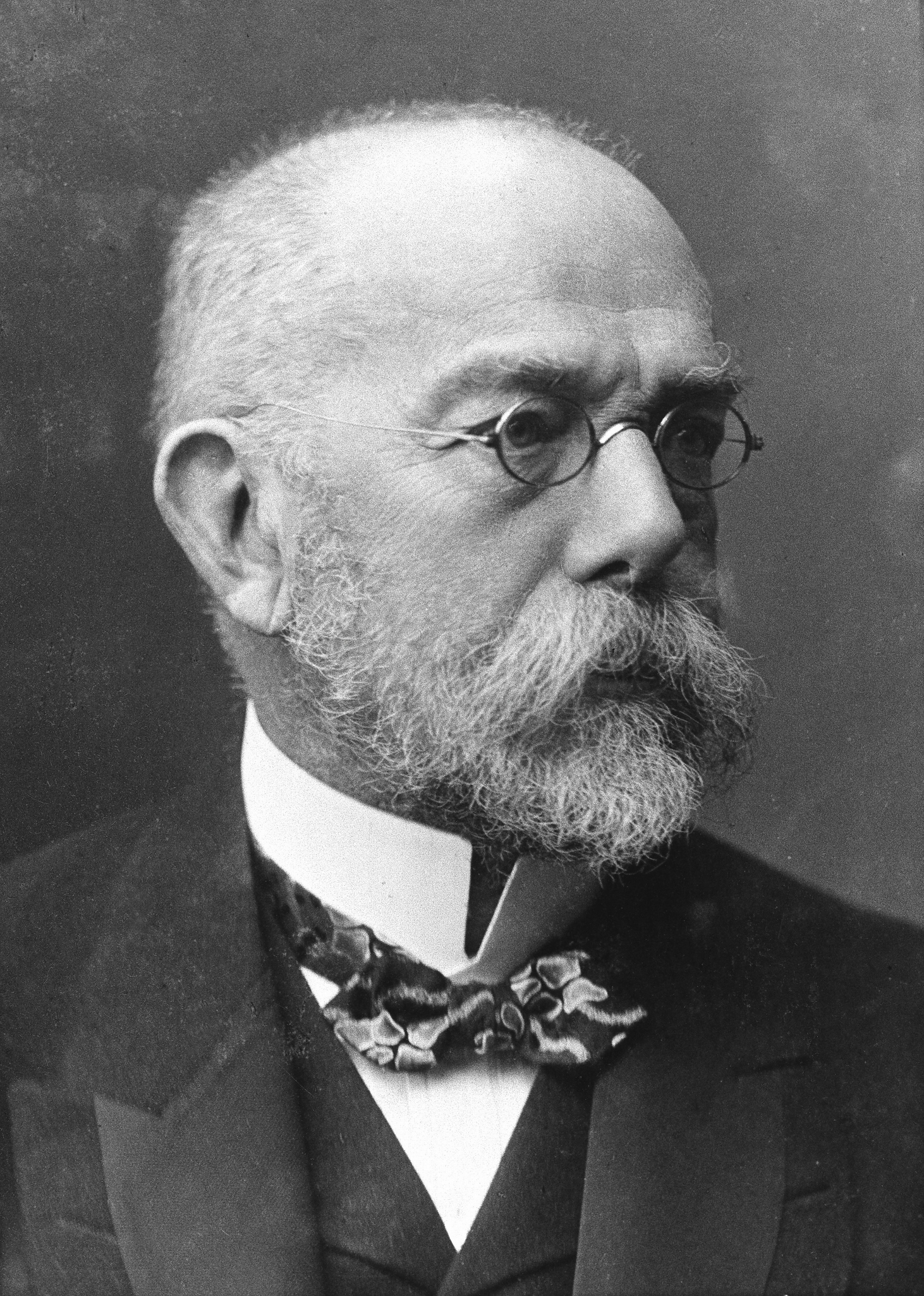
1912 KOCH, Robert Heinrich Hermann (1843 – 1910); GAFFKY, Georg Theodor August (1850 – 1918); SCHWALBE, Julius (1866 – 1930); PFUHL, Ernst (1876 – 1940)
Gesammelte Werke von Robert Koch. Unter Mitwirkung von G. Gaffky and E. Pfuhl. Herausgegeben von J. Schwalbe. 2 vols. [in 3).
For his work on tuberculosis Koch received the Nobel Prize in 1905. Digital facsimile from the Internet Archive at this link. See T.D. Brock, Robert Koch: A life in medicine and bacteriology, Madison, WS: Science-Tech…
GMN 86 · https://historyofmedicine.com/id/1437
1912 SCHÖNE, Georg ( – 1960)
Die heteroplastiche und homöoplastiche Transplantation.
Schöne coined the term “transplantation immunity”. He set out general rules governing the acceptance or rejection of tumor grafts which are essentially the same as the modern “laws of transplantation”. This is a compr…
GMN 2567.1 · https://historyofmedicine.com/id/3691
1913 DOCHEZ, Alphonse Raymond (1882 – 1964); GILLESPIE, Louis John (1886 – 1941)
A biological classification of pneumococci by means of immunity reactions.
Dochez and Gillespie differentiated four types of pneumococci.
GMN 3192.1 · https://historyofmedicine.com/id/4234
1913 SCHICK, Béla (1877 – 1967)
Die Diphtherietoxin – Hautreaktion des Menschen als Vorprobe der prophylaktischen Diphtherieheilseruminjektion.
Schick developed his test for use as an indication as to whether or not prophylactic injections of antitoxin are necessary in children already exposed to diphtheria. English translation in J. Mt. Sinai Hosp., 1938, 5,…
GMN 5066 · https://historyofmedicine.com/id/5897
1913 BEHRING, Emil Adolf von (1854 – 1917)
Ueber ein neues Diphtherieschutzmittel.
Toxin–antitoxin for immunization against diphtheria.
GMN 5067 · https://historyofmedicine.com/id/5899
1914 ZINSSER, Hans (1878 – 1940)
Infection and resistance.
GMN 2568 · https://historyofmedicine.com/id/3695
1914 PARK, William Hallock (1863 – 1939); ET AL
Active immunization in diphtheria and treatment by toxin-antitoxin.
With A. Zingher and M. H. Serota. Park was an early advocate of diphtheria immunization with toxin-antitoxin. A second paper is in the same journal, 1915, 65, 2216-20.
GMN 5068 · https://historyofmedicine.com/id/5900
1915 HEKTOEN, Ludvig (1863 – 1951)
The influence of the x-ray on the production of antibodies.
Proof that x rays suppress the antibody response.
GMN 2569 · https://historyofmedicine.com/id/3697
1915 TWORT, Frederick William (1877 – 1950)
An investigation on the nature of ultra-microscopic viruses.
Twort discovered discovered bacteriophages, a type of virus that attacks bacteria (the term bacteriophage was coined by Félix d’Herelle, who in 1917 independently confirmed Twort’s discovery). The discovery of bacteri…
GMN 2571 · https://historyofmedicine.com/id/3705
1915 NOGUCHI, Hideyo (1876 – 1928)
Pure cultivation in vivo of vaccine virus free from bacteria.
Noguchi obtained a pure culture of vaccinia virus.
GMN 5430.1 · https://historyofmedicine.com/id/7400
1916 COOKE, Robert Anderson (1880 – 1960); VANDER VEER, Albert (1841 – 1929)
Human sensitization.
The concept of atopy had its origin in the report by Cooke and Vander Veer in 1916.
GMN 2600.6 · https://historyofmedicine.com/id/3007
1916 TYZZER, Ernest Edward (1875 – 1965); LITTLE, Clarence Cook (1888 – 1971)
Further experimental studies on the inheritance of susceptibility to a transplantable tumour, carcinoma (J. W. A.) of the Japanese waltzing mouse.
Marks the beginning of the study of histocompatibility antigens.
GMN 2570 · https://historyofmedicine.com/id/3701
1921 PRAUSNITZ, Otto Carl Willy [Carl Prausnitz-Giles] (1876 – 1963); KÜSTNER, Heinz (1897 – 1964)
Studien über die Ueberempfindlichkeit.
Prausnitz–Küstner reaction. These workers demonstrated antibodies in the blood of persons suffering from atopic allergic diseases. They produced local passive sensitization by intracutaneous injection of serum from a …
GMN 2601.1 · https://historyofmedicine.com/id/3017
1921 D'HÉRELLE, Félix Hubert (1873 – 1949)
Le bactériophage: Son rôle dans l'immunité.
D'Hérrelle cited several actual reports of successful treatment of bacterial infections by the injection of bacteriophages in animals and humans. These may be considered early attempts at direct gene transfer in vivo …
GMN 10196 · https://historyofmedicine.com/id/12385
1922 –1939 PASTEUR, Louis (1822 – 1895); VALLERY-RADOT, Joseph Louis Pasteur (1886 – 1970)
Œuvres de Pasteur, réunies par Pasteur Vallery-Radot. 7 vols.
One of the founders of bacteriology, Pasteur's work on fermentation, the doctrine of spontaneous generation (which he exploded), virus diseases and preventive vaccinations, was fundamental. Digital facsimile of the co…
GMN 83 · https://historyofmedicine.com/id/1399
1923 –1924 HEIDELBERGER, Michael (1888 – 1991); AVERY, Oswald Theodore Jr. (1877 – 1955)
The soluble specific substance of pneumococcus.
Heidelberger, Avery, and their colleagues made a chemical study of the antigenic constituents of the pneumococcus, separating the polysaccharide antigens.
GMN 2573.2 · https://historyofmedicine.com/id/3704
1924 CALMETTE, Léon Charles Albert (1863 – 1933); GUÉRIN, Camille (1872 – 1961); WEILL-HALLÉ, Benjamin (1875 – 1958); ET AL
Essai d’immunisation contre l’infection tuberculeuse.
B.C.G. (Bacille Calmette–Guérin) vaccine was first produced in 1906 and subcultured for 13 years. It was first used as a prophylactic against tuberculosis in children in 1921. It remains in use. See also No. 2346.
GMN 2343 · https://historyofmedicine.com/id/3094
1924 LITTLE, Clarence Cook (1888 – 1971)
The genetics of tissue transplantation in mammals.
Little established that the homograft reaction was due to genetic differences between donor and recipient.
GMN 2573.1 · https://historyofmedicine.com/id/3699
1924 KASSOWITZ, Karl Erhard (1886 – 1978)
Ueber cutane Hautreaktion mittels Diphtherie-Toxin zum Nachweis der Diphtherie-Immunität.
The “scratch test”, a cutaneous reaction for determination of susceptibility to diphtheria.
GMN 5069 · https://historyofmedicine.com/id/5907
1924 DICK, George Frederick (1881 – 1967); DICK, Gladys Rowena Henry (1881 – 1963)
A scarlet fever antitoxin.
Following their successful attempts to establish individual susceptibility to scarlet fever, these workers prepared an antitoxin for immunization.
GMN 5083 · https://historyofmedicine.com/id/5951
1924 DOCHEZ, Alphonse Raymond (1882 – 1964); SHERMAN, Lillian
The significance of Streptococcus hemolyticus in scarlet fever and the preparation of a specific anti-scarlatinal serum by immunization of the horse to Streptococcus hemolyticus-scarlatinae.
Dochez and Sherman immunized a horse by repeated injections of scarlet fever toxin. A serum obtained from the horse blanched a scarlet fever rash and, when injected subcutaneously, caused marked amelioration of the ea…
GMN 5084 · https://historyofmedicine.com/id/5955
1925 BESREDKA, Alexandre (1870 – 1940)
Immunisation locale; pansements spécifiques.
Besredka’s vaccine, sensitized vaccine. English translation, Baltimore, 1927.
GMN 2574 · https://historyofmedicine.com/id/3708
1925 WELLS, Henry Gideon (1875 – 1943)
The chemical aspects of immunity.
GMN 2575 · https://historyofmedicine.com/id/3710