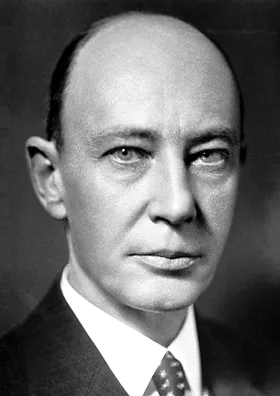
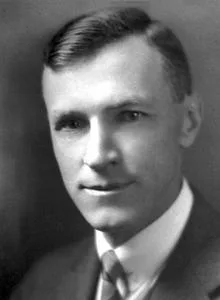
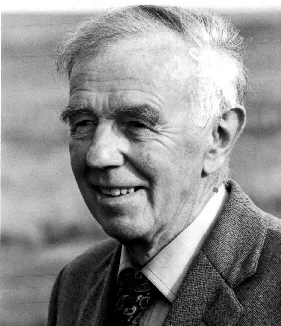
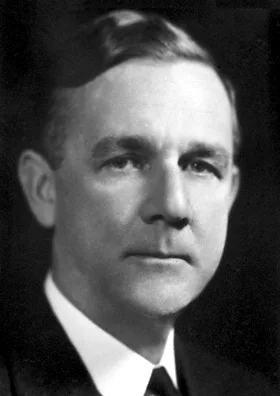
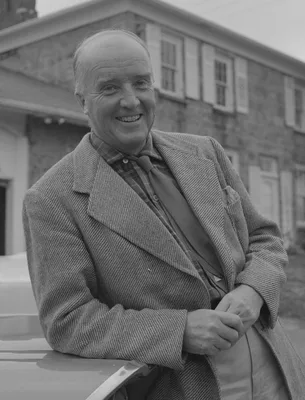
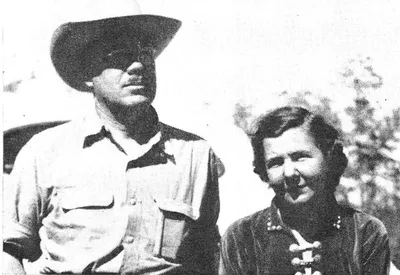
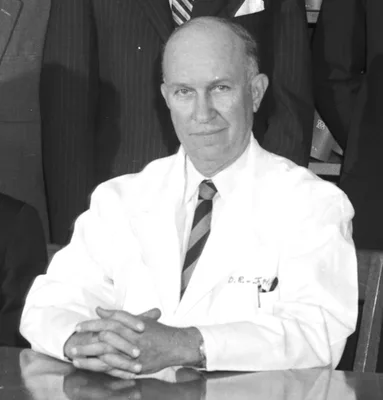
1926 MINOT, George Richards (1885 – 1950); MURPHY, William Parry (1892 – 1987)
Treatment of pernicious anemia by a special diet.
Introduction of raw liver diet in the treatment of pernicious anemia. This treatment ranks as one of the greatest modern advances in therapy. See also the later paper in the same journal, 1927, 89,759-66. Reprinted in…
GMN 3140 · https://historyofmedicine.com/id/3950
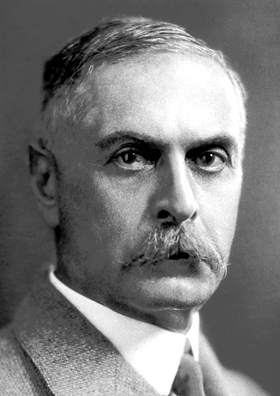
1927 LANDSTEINER, Karl (1868 – 1943); LEVINE, Philip (1900 – 1987)
A new agglutinable factor differentiating individual human bloods.
Discovery of M and N agglutinogens. See also the same journal, pp. 941-42.
GMN 910 · https://historyofmedicine.com/id/1064
1927 COOLEY, Thomas Benton (1871 – 1945); ET AL
Anemia in children, with splenomegaly and peculiar changes in the bones.
“Cooley’s erythroblastic anemia”, thalassemia. With E. R. Witwer and O. P. Lee. An earlier brief account by Cooley and Lee appeared in Trans. Amer. Pediat. Soc.,1925, 37, 29.
GMN 3141 · https://historyofmedicine.com/id/3951
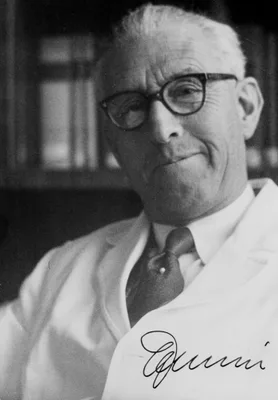
1927 FANCONI, Guido (1892 – 1979)
Familiäre infantile perniziösaartige Anämie (perniziöses Blutbild und Konstitution).
“Fanconi’s syndrome”, congenital hypoplasia of bone marrow with multiple congenital defects occurring as a familial disease.
GMN 3142 · https://historyofmedicine.com/id/3953
1927 PEABODY, Francis Weld (1881 – 1927)
The pathology of the bone marrow in pernicious anaemia.
Peabody studied the bone marrow in pernicious anemia. He suggested that failure of blood formation rather than hemolysis was the main defect in the disease, and that the benefit from liver feeding was due to a factor …
GMN 3142.1 · https://historyofmedicine.com/id/3955
1927 ARINKIN, Mikhail (1876 – 1948)
"Methodology of examining bone marrow in live patients, with haemopoietic disease."
Needle puncture of bone marrow biopsy. (In Russian.) German account in Folia haemat. (Lpz.), 1929, 38, 233-40. English translation from the German in Bick, Classics of orthopaedics, 339-44.
GMN 3088 · https://historyofmedicine.com/id/8947
1928 PELGAR, Karel (1885 – 1931)
Demonstratie van een paar zeldzaam voorkomende typen van bloedlichaampjes en bespreking der patiënten.
See No. 3092.
GMN 3089 · https://historyofmedicine.com/id/3766
1929 BLUMGART, Hermann Ludwig (1895 – 1977); WEISS, Soma (1898 – 1942); ROBB, George Porter (1898 – 1983)
The velocity of blood flow in health and disease as measured by the effect of histamine on the minute vessels.
Measurement of circulation time.
GMN 3090 · https://historyofmedicine.com/id/3769
1929 CASTLE, William Bosworth (1897 – 1990)
Observations on the etiologic relationship of achylia gastrica to pernicious anemia. I. The effect of the administration to patients with pernicious anemia of the contents of the normal human stomach recovered after the ingestion of beef muscle.
Castle showed pernicious anemia to be due to absence from the gastric juice of a substance (Castle’s intrinsic factor, hemopoietin) that reacts with an extrinsic factor present in many foodstuffs to form the anti-pern…
GMN 3143 · https://historyofmedicine.com/id/3960
1929 STURGIS, Cyrus Cressey (1891 – 1966); ISAACS, Raphael (1891 – 1965)
Desiccated stomach in the treatment of pernicious anemia.
Sturgis and Isaacs showed that stomach tissue contains a factor active in the treatment of pernicious anemia.
GMN 3144 · https://historyofmedicine.com/id/3964
1929 HARVEY, Samuel Clark (1886 – 1953)
The history of hemostasis.
Reprinted with additions and corrections from Annals of Medical History, N. S. Vol. I, No. 2, March, 1929.
GMN 11003 · https://historyofmedicine.com/id/13199
1930 GÄNSSLEN, Max (1859 – 1969)
Ein hochwirksamer, injizierbarer Leberextrakt.
Gänsslen introduced an injectable liver extract in the treatment of pernicious anemia.
GMN 3144.1 · https://historyofmedicine.com/id/3968
1930 WINTROBE, Maxwell Myer (1901 – 1986)
Classification of the anemias on the basis of differences in the size and hemoglobin content of the red corpuscles.
Wintrobe’s classification of the anemias.
GMN 3145 · https://historyofmedicine.com/id/3973
1931 HUËT, Gauthier Jean (1879 – 1970)
Over een familiaire anomalie der leucocyten.
Pelger–Huët anomaly of the nuclei of the leucocytes; see also No. 3089. German translation in Klin. Wschr., 1932, 11,1264-66.
GMN 3092 · https://historyofmedicine.com/id/3773
1931 TAYLOR, Francis Henry Laskey (1900 – 1959); CASTLE, William Bosworth (1897 – 1990)
Intravenous use of extract of liver.
GMN 3145.1 · https://historyofmedicine.com/id/3977
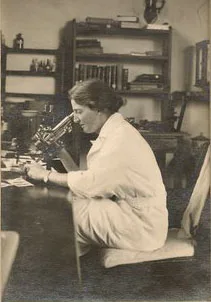
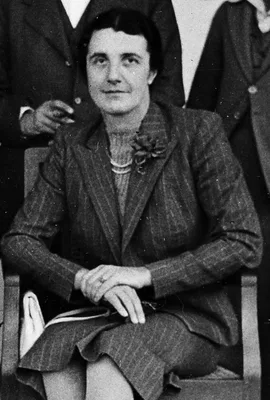
1931 WILLS, Lucy (1888 – 1964)
Treatment of “pernicious anaemia of pregnancy” and “tropical anaemia”, with special reference to yeast extract as a curative agent.
First observations of hemopoietic effect of folic acid.
GMN 3146 · https://historyofmedicine.com/id/3981
1932 DAVIDSON, Sir Leybourne Stanley Patrick (1894 – 1981)
The classification and treatment of anaemia, with special reference to the nutritional factor.
Davidson’s classification of the anemias.
GMN 3147 · https://historyofmedicine.com/id/3986
1932 DIAMOND, Louis Klein (1902 – 1999); BLACKFAN, Kenneth Daniel (1883 – 1941); BATY, James M.
Erythroblastosis fetalis and its association with universal edema of the fetus, icterus gravis neonatorum and anemia of the newborn.
The authors described and named this syndrome/illness of newborns for the first time, including pathological findings, clinical data, lab abnormalities, presentation and course of illness. Order of authorship in the o…
GMN 14087 · https://historyofmedicine.com/id/16398
1933 TILLETT, William Smith (1892 – 1974); GARNER, Raymond Loraine (1906 – )
The fibrinolytic activity of hemolytic streptococci.
Tillett and Garner discovered a substance elaborated by a strain of haemolytic streptococcus which promoted lysis of fibrin and is now known as streptokinase.
GMN 1924.1 · https://historyofmedicine.com/id/2711
1934 MACFARLANE, Robert Gwyn (1907 – 1987); BARNETT, Burgess (1888 – 1944)
The haemostatic possibilities of snake-venom.
Snake venom used in the treatment of hemophilia.
GMN 3093 · https://historyofmedicine.com/id/3777
1934 SALAH, M.
Sternal puncture; preliminary note.
Needle for sternal puncture.
GMN 3094 · https://historyofmedicine.com/id/3779
1934 VAUGHAN, Janet Maria (1899 – 1993)
The anemias.
GMN 14203 · https://historyofmedicine.com/id/16519
1935 QUICK, Armand James (1894 – 1977)
The prothrombin in hemophilia and in obstructive jaundice.
Quick’s method for determination of prothrombin clotting time. See also Amer. J. med. Sci.,1935, 190,501-11.
GMN 3095 · https://historyofmedicine.com/id/3782
1935 WINTROBE, Maxwell Myer (1901 – 1986); LANDSBERG, J. Walter (1907 – )
A standardized technique for the blood sedimentation test.
Wintrobe’s method for the determination of the erythrocyte sedimentation rate.
GMN 3096 · https://historyofmedicine.com/id/3785
1935 WILKINSON, John Frederick (1897 – 1998); ISRAЁLS, Martin Cyril Gordon
Achresthic anaemia.
Achrestic anemia described.
GMN 3148 · https://historyofmedicine.com/id/3989
1936 BERGENHEIM, Bengt Ludvig (1898 – ); FÅHRAEUS, Robert (Robin) Sanno (1888 – 1968)
Über spontane Hämolysinbildung im Blut, unter besonderer Berücksichtigung der Physiologie der Milz.
Lysolechtin found in normal blood.
GMN 911 · https://historyofmedicine.com/id/1071
1936 WHIPPLE, George Hoyt (1878 – 1976); BRADFORD, William Leslie (1898 – 1983)
Mediterranean disease – thalassemia (erythroblastic anemia of Cooley); associated pigment abnormalities simulating hemochromatosis.
Whipple and Bradford contributed a classic paper on the pathology of thalassemia, a name introduced by them.
GMN 3148.1 · https://historyofmedicine.com/id/3991
1936 SÉZARY, Albert (1880 – 1956); LEVY-COBLENTZ, G.; CHAUVILLON, P.
Dermographisme et mastocytose.
Sézary and colleagues first reported systemic mastocytosis.
GMN 14173 · https://historyofmedicine.com/id/16488
1937 PATEK, Arthur Jackson Jr. (1904 – 1991); TAYLOR, Francis Henry Laskey (1900 – 1959)
Hemophilia. II. Some properties of a substance obtained from normal human plasma effective in accelerating the coagulation of hemophilic blood.
Antihemophilic globulin (factor VIII).
GMN 3096.1 · https://historyofmedicine.com/id/3787
1937 GORER, Peter Alfred (1907 – 1961)
The genetic and antigenic basis of tumour transplantation.
Gorer made the initial discoveries which formed the basis of transplantation genetics. He studied mouse blood groups and described an antigen in erythrocytes (antigen II). His studies established the laws of transplan…
GMN 2576.5 · https://historyofmedicine.com/id/4121
1937 BEST, Charles Herbert (1899 – 1978); MURRAY, Donald Walter Gordon (1894 – 1976); ET AL
Heparin and the thrombosis of veins following injury.
Order of authorship in the original publication: Murray, Jaques, Perrett, Best. Heparin was discovered by Jay McLean and William Henry Howell in 1916; however it was not tested as an anticoagulant in clinical trials u…
GMN 3019 · https://historyofmedicine.com/id/5417
1938 BUTT, Hugh Roland (1910 – 2008); SNELL, Albert Markley (1896 – 1960)
The use of vitamin K and bile in treatment of the haemorrhagic diathesis in cases of jaundice.
Vitamin K used in the treatment of hemorrhagic disease.
GMN 3097 · https://historyofmedicine.com/id/3790
1938 CAMINOPETROS, J
Recherches sur l’anémie érythroblastique infantile des peuples de la Méditerranée orientale. Étude anthropologique, étiologique et pathogénique. La transmission héréditaire de la maladie.
First evidence that thalassemia is genetically determined. Earlier report in Kliniki, Athens, 1936, 12, No. 5.
GMN 3148.2 · https://historyofmedicine.com/id/3993
1938 WILLS, Lucy (1888 – 1964); EVANS, Barbara Dorothy Fordyce (1909 – 1995)
Tropical macrocytic anaemia: Its relation to pernicious anaemia.
GMN 3149 · https://historyofmedicine.com/id/3996
1938 DAMESHEK, William (1900 – 1969); SCHWARTS, Steven Otto (1911 – )
Hemolysins as the cause of clinical and experimental hemolytic anemias.
Acquired hemolytic anemia was the first condition to be recognized as an auto-immune disease.
GMN 3787.1 · https://historyofmedicine.com/id/4694
1938 HAUROWITZ, Felix (1896 – 1987)
Das Gleichgewicht zwischen Hämoglobin and Sauerstoff.
Haurowitz discovered that crystalline deoxyhemoglobin changes in shape and color on reaction with oxygen, suggesting that it is a molecular lung.
GMN 6915 · https://historyofmedicine.com/id/9080
1938 DARROW, Ruth Renter (1895 – 1956)
Icterus gravis (erythroblastosis) neonatorum.
Darrow was the first to identify the cause of hemolytic disease of the newborn (HDN). Three years prior to the discovery of antibodies against the Rh antigen, Darrow correctly hypothesized that the disease was caused …
GMN 14088 · https://historyofmedicine.com/id/16399
1939 BOYD, William Clouser (1903 – 1983)
Blood groups.
Boyd showed that blood groups are inherited and not changed by environment.
GMN 912 · https://historyofmedicine.com/id/1069
1939 LEVINE, Philip (1900 – 1987); STETSON, Rufus Edwin (1914 – 1967)
An unusual case of intra-group agglutination.
Discovery of the Rh antigen.
GMN 912.1 · https://historyofmedicine.com/id/1074
1939 LAWRENCE, John Hundale (1904 – 1991); ET AL
Studies on leukemia with the aid of radioactive phosphorus.
Therapeutic use of radioactive isotopes for the treatment of leukemia. John H. Lawrence was the brother of Ernest Orlando Lawrence, inventor of the cyclotron; John Lawrence also worked at the Lawrence Berkeley Nationa…
GMN 3098 · https://historyofmedicine.com/id/3792
1939 JORPES, Johann Erik (1894 – 1973)
Heparin: Its chemistry, physiology and application in medicine.
In the early 1930s Jorpes began work on the isolation and structure of heparin. In 1936 he successfully purified heparin and subsequently demonstrated that it was localized in the mast cells of tissues. In the same ye…
GMN 11670 · https://historyofmedicine.com/id/13871
1940 HOGAN, Albert Garland (1884 – 1961); PARROTT, Ernest Milford (1903 – 1994)
Anemia in chicks caused by a vitamin deficiency.
Isolation of vitamin Bc (folic acid, pteroylglutamic acid). Preliminary communication in J. biol. Chem., 1939, 128, xlvi-xlvii.
GMN 1086 · https://historyofmedicine.com/id/841
1940 LANDSTEINER, Karl (1868 – 1943); WIENER, Alexander Solomon (1907 – 1976)
An agglutinable factor in human blood recognized by immune sera for Rhesus blood.
Recognition of the Rh antigen
GMN 912.2 · https://historyofmedicine.com/id/1078
1940 LAWRENCE, John Hundale (1904 – 1991)
Nuclear physics and therapy: preliminary report on a new method for the treatment of leukemia and polycythemia.
Radio-phosphorus in treatment of leukemia.
GMN 3099 · https://historyofmedicine.com/id/3795
1941 MOUREAU, Paul (1904 – 1968)
Recherches sur un nouvel hémo-agglutinogéne du sang humain.
Moureau discovered the Rh factor independently of Levine and others whose work was not known to him owing to the military occupation of Belgium. See also his paper in Amer. J. clin. Path., 1946, 16, 373-79.
GMN 912.3 · https://historyofmedicine.com/id/1081
1941 LEVINE, Philip (1900 – 1987); ET AL
The rôle of iso-immunization in the pathogenesis of erythroblastosis fetalis.
Erythroblastosis fetalis due to rhesus incompatibility (Rh disease) between mother and child. With L. Burnham, E. M. Katzin, and P. Vogel.
GMN 3100 · https://historyofmedicine.com/id/3796
1941 STAHMANN, Mark Arnold (1914 – 2000); LINK, Karl Paul Gerhard (1901 – 1978); ET AL
Studies on the hemorrhagic sweet clover disease. V. Identification and synthesis of the hemorrhagic agent.
Isolation of dicoumarol (3:3-methylene-bis-4-hydroxycoumarin). With C. F. Huebner.
GMN 3102 · https://historyofmedicine.com/id/3798
1941 HIRST, George Keble (1909 – 1994)
The agglutination of red cells by allantoic fluid of chick embryos infected with influenza virus.
Discovery of virus hemagglutination. Between 1941 and 1942 Hirst developed the hemagglutination assay for quantifying the relative concentration of viruses, bacteria or antibodies.
GMN 2577 · https://historyofmedicine.com/id/4130
1944 COHN, Edwin Joseph (1892 – 1953); ARMSTRONG, S. Howard Jr.; ONCLEY, John Lawrence (1910 – 2004); HUGHES, Walter L. (1915 – 2008); STRONG, Laurence E.
Chemical, clinical, and immunological studies on the products of human plasma fractionation. I. The characterization of the protein fractions of human plasma.
Cohn invented fractionation of plasma proteins, also called blood fractionation. (Order of authorship in the original publication: Cohn, Oncley, Strong, Hughes, Armstrong.) Digital facsimile from PubMedCentral at this…
GMN 751.2 · https://historyofmedicine.com/id/1840
1944 GRÖNWALL, Anders Johan Troed (1912 – 1989); INGLEMAN, Björn
Untersuchungen über Dextran und sein Verhalten bei parenteraler Zufuhr.
Introduction of dextran as plasma substitute.
GMN 2028 · https://historyofmedicine.com/id/2057