1556 RODRIGUES DE CASTELO BRANCO, João (Amato Lusitano; Amatus Lusitanus) (1511 – 1568)
Curationum medicinalium centuriae quatuor.
Contains (Cent. iii, curat. 70, p. 286) first recorded case of purpura as a separate entity, not associated with fever. English translation of this section in Major, Classic descriptions of disease, 3rd. ed., 1945, p.…
GMN 3049 · https://historyofmedicine.com/id/3655
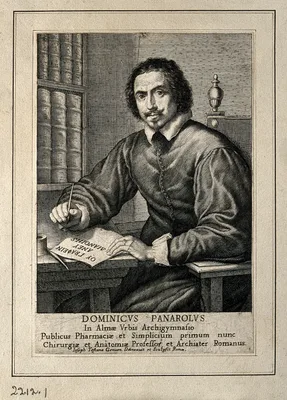
1652 PANAROLI, Domenico (1587 – 1657)
Iatrologismorum seu medicinalium observationum pentecostae quinque utilibus praeceptis.
Panaroli described hemolytic jaundice of the newborn.
GMN 3050 · https://historyofmedicine.com/id/3657
1735 BEHRENS, Rudolph August (1700 – 1748)
Epistolica dissertatio altera pro spicilegio observationum de morbo maculoso haemorrhagico et noxiis nonnulis mytulis perscripta.
Behrens gave the name “morbus maculosus haemorrhagicus” to the disease purpura haemorrhagica. His paper is reprinted in Werlhof’s Opera medica, Hannover, 1775, 2,615-36.
GMN 3051 · https://historyofmedicine.com/id/3672
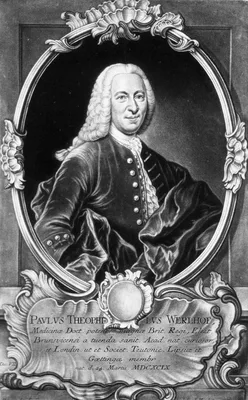
1735 WERLHOF, Paul Gottlieb (1699 – 1767)
Disquisitio medica et philologica de variolis et anthracibus.
Werlhof gave a classic description of purpura haemorrhagica (“Werlhof’s disease”).
GMN 3052 · https://historyofmedicine.com/id/3675
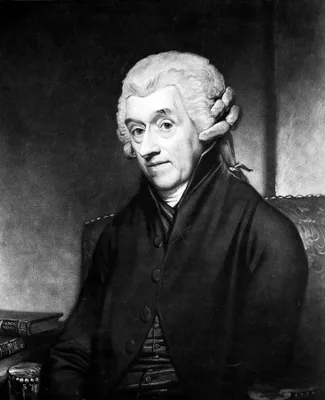
1802 HEBERDEN, William Sr. (1710 – 1801)
Commentarii de morborum historia et curatione.
Samuel Johnson called Heberden “the last of our learned physicians”. The above work included all his important papers, which had earned him his great reputation, and which are dealt with elsewhere in this database (se…
GMN 2207 · https://historyofmedicine.com/id/3677
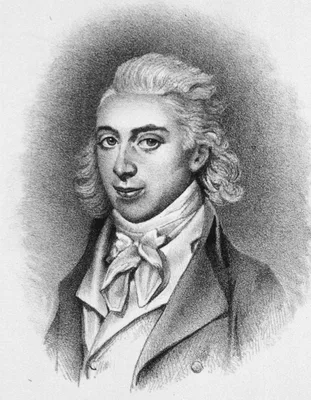
1803 OTTO, John Conrad (1774 – 1844)
An account of an haemorrhagic disposition existing in certain families.
Otto recognized and adequately described hemophilia, noting that females are not affected but may transmit the disease. His paper is one of the first great contributions to medicine in North America. Reproduced in Maj…
GMN 3054 · https://historyofmedicine.com/id/3680
1811 BURNS, Allan (1781 – 1813)
Observations on the surgical anatomy of the head and neck.
Burns was the first to suggest (p. 31) ligature of the innominate artery. His book describes “Burns’s space”, the fascial space at the suprasternal notch. The first recorded case of chloroma (myeloid sarcoma, granuloc…
GMN 3055 · https://historyofmedicine.com/id/832
1820 NASSE, Christian Friedrich (1778 – 1851)
Von einer erblichen Neigung zu tödtlichen Blutungen.
In his description of hemophilia Nasse stressed the immunity of females, despite their ability to transmit the disease. This fact has become known as “Nasse’s law”.
GMN 3056 · https://historyofmedicine.com/id/3692
1837 SCHÖNLEIN, Johann Lucas (1793 – 1864)
Peliosis rheumatica. In his Allgemeine und specielle Pathologie und Therapie, 2, 48-49.
“Schönlein’s disease” (purpura) first described. English translation in No. 2241.
GMN 3058 · https://historyofmedicine.com/id/3698
1840 –1841 LANE, Samuel Armstrong (1802 – 1892)
Successful transfusion of blood.
Blood transfusion used in treatment of hemophilia.
GMN 3058.1 · https://historyofmedicine.com/id/3700
1843 ADDISON, William (1802 – 1881)
Experimental and practical researches on inflammation and on the origin and nature of tubercles of the lungs.
Addison made important observations on the blood corpuscles. He is by some considered “the world’s first hematologist”. He gave the first description of leucocytosis, so named by Virchow in 1858, and he anticipated Co…
GMN 3059 · https://historyofmedicine.com/id/3703
1844 –1845 DONNÉ, Alfred François (1801 – 1878); FOUCAULT, Jean Bernard Léon (1819 – 1868)
Cours de microscopie. 1 vol. and atlas.
Donne's and Foucault's work was the first biomedical textbook to be illustrated with images made from photomicrographs, in this case daguerreotypes of blood cells. Among its noteworthy images are the first microphotog…
GMN 267.1 · https://historyofmedicine.com/id/8743
1845 BENNETT, John Hughes (1812 – 1875)
Case of hypertrophy of the spleen and liver, in which death took place from suppuration of the blood.
First definite description of leukemia as a blood disorder; a case under the care of Sir R. Christison but reported by Bennett. On p. 400 of the same journal is a report of a case by D. Craigie, referring to a patient…
GMN 3061 · https://historyofmedicine.com/id/3711
1845 VIRCHOW, Rudolf Ludwig Karl (1821 – 1902)
Weisses Blut.
Only six weeks after Bennett, Virchow independently published a report on the necropsy of a case of leukemia. He gave the condition its present name. For translation, see Major, Classic descriptions of disease, 3rd. e…
GMN 3062 · https://historyofmedicine.com/id/3713
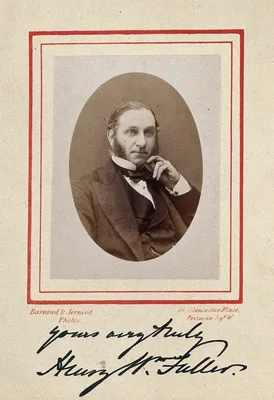
1846 FULLER, Henry William (1820 – 1873)
Particulars of a case in which enormous enlargement of the spleen and liver, together with dilatation of all the blood vessels of the body, were found coincident with a peculiarly altered condition of the blood.
Leukemia diagnosed during life as the result of a blood examination.
GMN 3062.1 · https://historyofmedicine.com/id/3714
1855 GRANDIDIER, Johann Ludwig (1810 – )
Die Haemophilie oder die Bluterkrankheit.
First full clinical description of hemophilia.
GMN 3063 · https://historyofmedicine.com/id/3715
1856 VIRCHOW, Rudolf Ludwig Karl (1821 – 1902)
Ueber farblose Blutkörperchen und Leukämie. In his Gesammelte Abhandlungen zur wissenschaftlichen Medicin, pp. 147-218.
Includes his paper on “weisses Blut” (see No. 3062) and three later papers on leukemia. See No. 3006.
GMN 3064 · https://historyofmedicine.com/id/3731
1857 FRIEDREICH, Nikolaus (1825 – 1882)
Ein neuer Fall von Leukämie.
Acute leukemia first described.
GMN 3064.1 · https://historyofmedicine.com/id/3716
1865 BABINGTON, Benjamin Guy (1794 – 1866)
Hereditary epistaxis.
GMN 3064.2 · https://historyofmedicine.com/id/3717
1868 HENOCH, Eduard Heinrich (1820 – 1910)
Über den Zusammenhang von Purpura und Intestinalstörungen.
“Henoch’s purpura”. Henoch described a form of purpura with abdominal symptoms first mentioned by Heberden (No. 3053). See also the same journal, 1874, 11,622, 641-43. This paper is translated into English in No. 2241.
GMN 3065 · https://historyofmedicine.com/id/3718
1870 NEUMANN, Franz Ernst Christian (1834 – 1918)
Ein Fall von Leukämie mit Erkrankung des Knochenmarkes.
Neumann was the first to note changes in the bone marrow in leukemia, and he proposed the term “myelogenous leukemia”.
GMN 3066 · https://historyofmedicine.com/id/3719
1875 ORTH, Johannes (1847 – 1923)
Ueber das Vorkommen von Bilirubinkrystallen bei neugebornen Kindern.
Kernicterus first described.
GMN 3067 · https://historyofmedicine.com/id/3720
1879 WINCKEL, Franz Carl Ludwig von (1837 – 1911)
Ueber eine bisher nicht beschriebene endemisch aufgetretene Erkrankung Neugeborener.
First description of “Winckel’s disease” of the newborn, characterized by icterus, hemorrhage, hemoglobinuria, and cyanosis.
GMN 6338 · https://historyofmedicine.com/id/8146
1886 TREVES, Sir Frederick (1853 – 1923)
A case of haemophilia: pedigree through five generations.
True hemophilia in a female. The family was the subject of several later investigations, the last being reported in Lancet, 1973, 2,734.
GMN 3067.1 · https://historyofmedicine.com/id/3721
1887 HENOCH, Eduard Heinrich (1820 – 1910)
Ueber Purpura fulminans.
First description.
GMN 3068 · https://historyofmedicine.com/id/3722
1890 KÖNIG, Franz (1832 – 1910)
Die Gelenkerkrankungen bei Blutern mit Berücksichtigung der Diagnose.
König gave a detailed description of joint involvement in hemophilia.
GMN 3069 · https://historyofmedicine.com/id/3723
1891 EHRLICH, Paul (1854 – 1915)
Farbenanalytische Untersuchungen zur Histologie und Klinik des Blutes.
Extension of Ehrlich’s work on the differential blood count. By means of his methods of staining blood cells Ehrlich differentiated two types of leukemia, lymphatic and myelogenous.
GMN 3069.1 · https://historyofmedicine.com/id/928
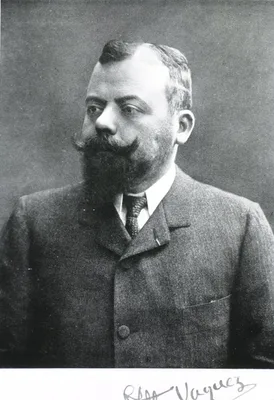
1892 VAQUEZ, Louis Henri (1860 – 1936)
Sur une forme spéciale de cyanose s’accompagnant d’hyperglobulie excessive et persistante.
Vaquez first described polycythemia vera (erythremia). Osler’s paper on the subject (No. 3073) made it generally known in the English-speaking world, and the condition has since been named “Vaquez–Osler disease”. For …
GMN 3070 · https://historyofmedicine.com/id/3725
1901 BROWN, Philip King (1869 – 1940); OPHÜLS, William (1871 – 1933)
A fatal case of acute primary infectious pharyngitis.
First recorded case of extreme leucopenia.
GMN 3072 · https://historyofmedicine.com/id/3727
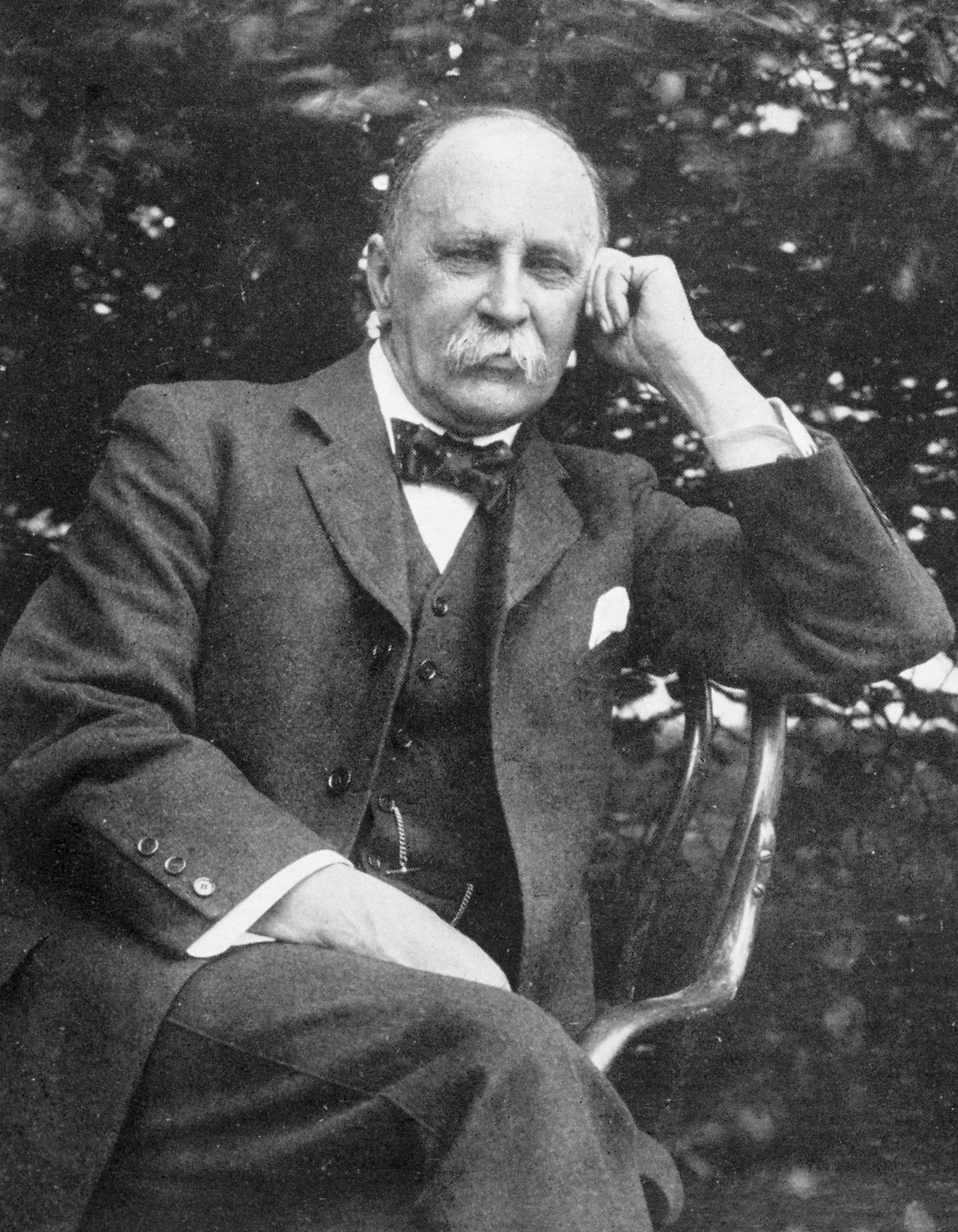
1903 OSLER, Sir William (1849 – 1919)
Chronic cyanosis, with polycythaemia and enlarged spleen: a new clinical entity.
When describing polycythemia with cyanosis, Osler thought it a new entity, but later acknowledged the priority of Vaquez’s description (No. 3070). Reprinted in Med. Classics, 1939, 4,254-75.
GMN 3073 · https://historyofmedicine.com/id/3728
1903 WOLFF-EISNER, Alfred (1877 – 1948)
Ueber eine Methode zur Untersuchung des lebenden Knochenmarks von Thieren und über das Bewegungsvermögen der Myelocyten.
Wolff-Eisner trephined the tibia and femur of experimental animals and suggested biopsy of bone marrow as a clinical procedure.
GMN 3074 · https://historyofmedicine.com/id/3729
1905 GAISBÖCK, Felix (1868 – 1955)
Die Bedeutung der Blutdruckmessung für die Praxis.
Includes (p. 396) description of “Geisböck’s disease” – polycythemia hypertonica.
GMN 3076 · https://historyofmedicine.com/id/3732
1905 STERNBERG, Carl (1872 – 1935)
Pathologie der Primärerkrankungen des lymphatischen und hämatopoetischen Apparates.
Includes (p. 151) Sternberg’s description of lymphogranulomatosis, which was given the eponym “Sternberg’s disease”.
GMN 3077 · https://historyofmedicine.com/id/3733
1907 TÜRK, Wilhelm (1871 – 1916)
Septische Erkrankungen bei Verkümmerung des Granulozytensystems.
First reported case of complete agranulocytosis.
GMN 3079 · https://historyofmedicine.com/id/3735
1908 ELLERMANN, Vilhelm (1871 – 1924); BANG, O.
Experimentelle Leukämie bei Hühnern.
Cell-free transmission of fowl leukemia. Ellermann and Bang produced leukemia by means of a filterable agent.
GMN 3079.1 · https://historyofmedicine.com/id/3736
1908 GHEDINI, Giovanni (1877 – 1959)
Per la patogenesi e per la diagnosi delle malattie del sangue e degli organi emopoietici. Puntura esplorativa del midollo osseo.
Introduction of bone marrow biopsy by puncturing the shaft of the tibia.
GMN 3080 · https://historyofmedicine.com/id/3737
1908 PFANNENSTIEL, Hermann Johann (1862 – 1909)
Ueber den habituellen Ikterus de Neugeborenen.
First detailed description of familial icterus gravis neonatorum.
GMN 3080.1 · https://historyofmedicine.com/id/3740
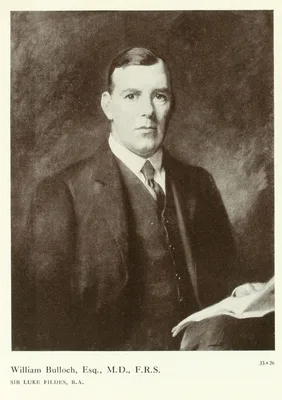
1911 BULLOCH, William (1868 – 1941); FILDES, Sir Paul Gordon (1882 – 1971)
Haemophilia.
Bulloch and Fildes, in their detailed account of hemophilia, claimed to have established immunity to the disease in females, and denied the authenticity of published cases of female hemophilia. They confirmed the law …
GMN 3081 · https://historyofmedicine.com/id/3741
1913 RESCHAD, Hassan; SCHILLING-TORGAU, V
Ueber eine neue Leukämie durch echte Uebergangsformen (Splenozytenleukämie) und ihre Bedeutung für die Selbständigkeit dieser Zellen.
Monocytic leukemia reported.
GMN 3082.1 · https://historyofmedicine.com/id/3744
1915 FRANK, Alfred Erich (1884 – 1957)
Die essentielle Thrombopenie (konstitutionelle Purpura-Pseudo-Hämophilie).
Frank’s essential thrombopenia.
GMN 3083 · https://historyofmedicine.com/id/3746
1922 SCHULTZ, Werner (1878 – 1944)
Gangräneszierende Prozesse und Defekt des Granulocytensystems.
“Schultz’s syndrome” – first description of agranulocytic angina. Schultz reported four cases of necrotic ulcerative infection of the throat with complete or almost complete disappearance of polymorphonuclears. To des…
GMN 3086 · https://historyofmedicine.com/id/3753
1923 SEYFARTH, Paul Carly (1890 – 1950)
Die Sternumtrepanation, ein einfache Methode zur diagnostischen Entnahme von Knochenmark bei Lebenden.
Bone marrow biopsy by sternal puncture.
GMN 3087 · https://historyofmedicine.com/id/3754
1925 HART, Alfred Purvis (1887 – 1954)
Familial icterus gravis of the new-born and its treatment.
Successful exchange transfusion.
GMN 3087.1 · https://historyofmedicine.com/id/3757
1926 WILLEBRAND, Erik Adolf von (1870 – 1949)
Hereditär pseudohemofili.
Von Willebrand’s disease, pseudo-hemophilia type B, an hereditary bleeding disorder affecting both sexes.
GMN 3087.2 · https://historyofmedicine.com/id/3759
1927 ARINKIN, Mikhail (1876 – 1948)
"Methodology of examining bone marrow in live patients, with haemopoietic disease."
Needle puncture of bone marrow biopsy. (In Russian.) German account in Folia haemat. (Lpz.), 1929, 38, 233-40. English translation from the German in Bick, Classics of orthopaedics, 339-44.
GMN 3088 · https://historyofmedicine.com/id/8947
1928 PELGAR, Karel (1885 – 1931)
Demonstratie van een paar zeldzaam voorkomende typen van bloedlichaampjes en bespreking der patiënten.
See No. 3092.
GMN 3089 · https://historyofmedicine.com/id/3766
1929 BLUMGART, Hermann Ludwig (1895 – 1977); WEISS, Soma (1898 – 1942); ROBB, George Porter (1898 – 1983)
The velocity of blood flow in health and disease as measured by the effect of histamine on the minute vessels.
Measurement of circulation time.
GMN 3090 · https://historyofmedicine.com/id/3769
1931 HUËT, Gauthier Jean (1879 – 1970)
Over een familiaire anomalie der leucocyten.
Pelger–Huët anomaly of the nuclei of the leucocytes; see also No. 3089. German translation in Klin. Wschr., 1932, 11,1264-66.
GMN 3092 · https://historyofmedicine.com/id/3773
1934 MACFARLANE, Robert Gwyn (1907 – 1987); BARNETT, Burgess (1888 – 1944)
The haemostatic possibilities of snake-venom.
Snake venom used in the treatment of hemophilia.
GMN 3093 · https://historyofmedicine.com/id/3777
1934 SALAH, M.
Sternal puncture; preliminary note.
Needle for sternal puncture.
GMN 3094 · https://historyofmedicine.com/id/3779